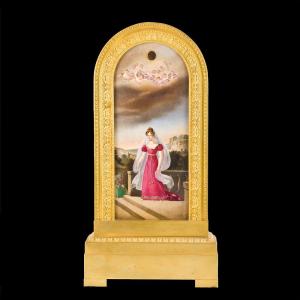


"escapement" Clock With A Painted Porcelain Plaque Depicting The Duchess Of Berry
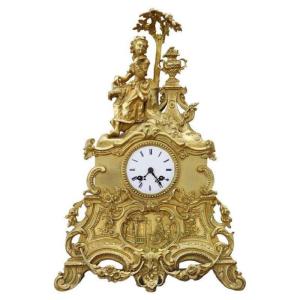
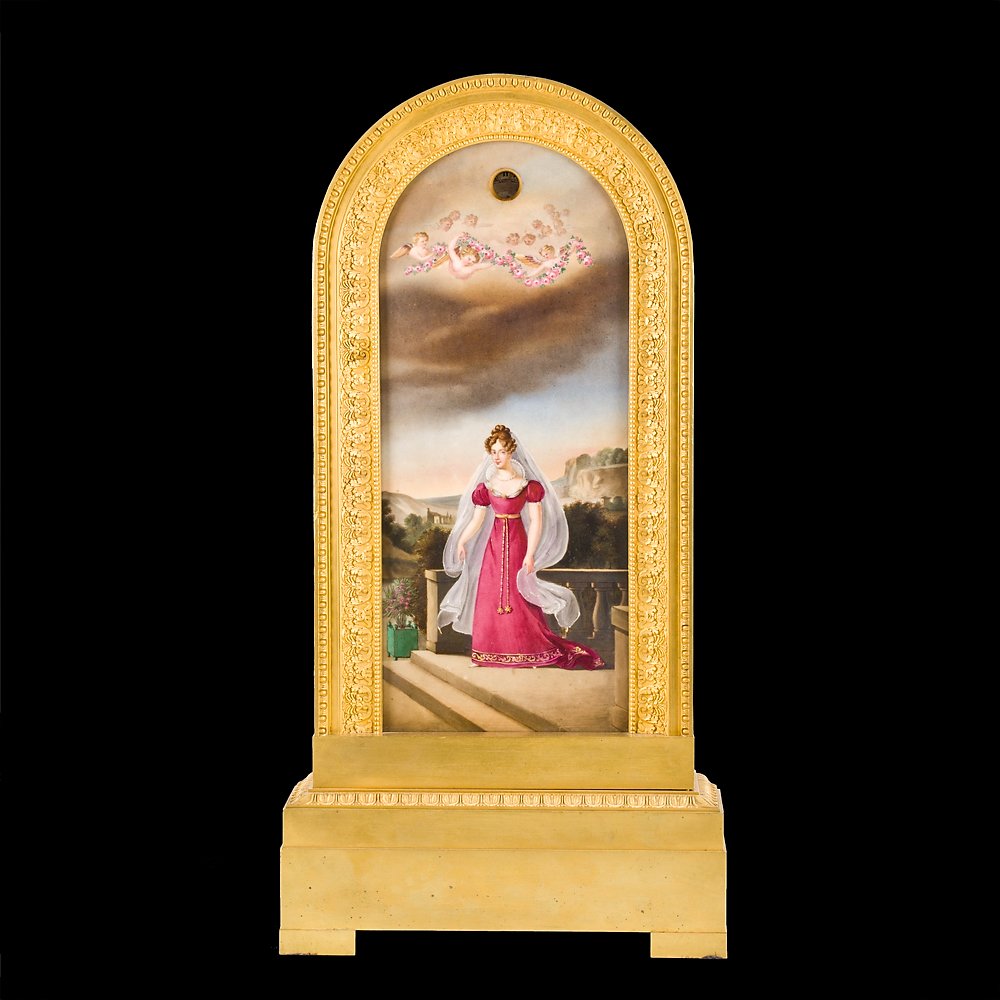
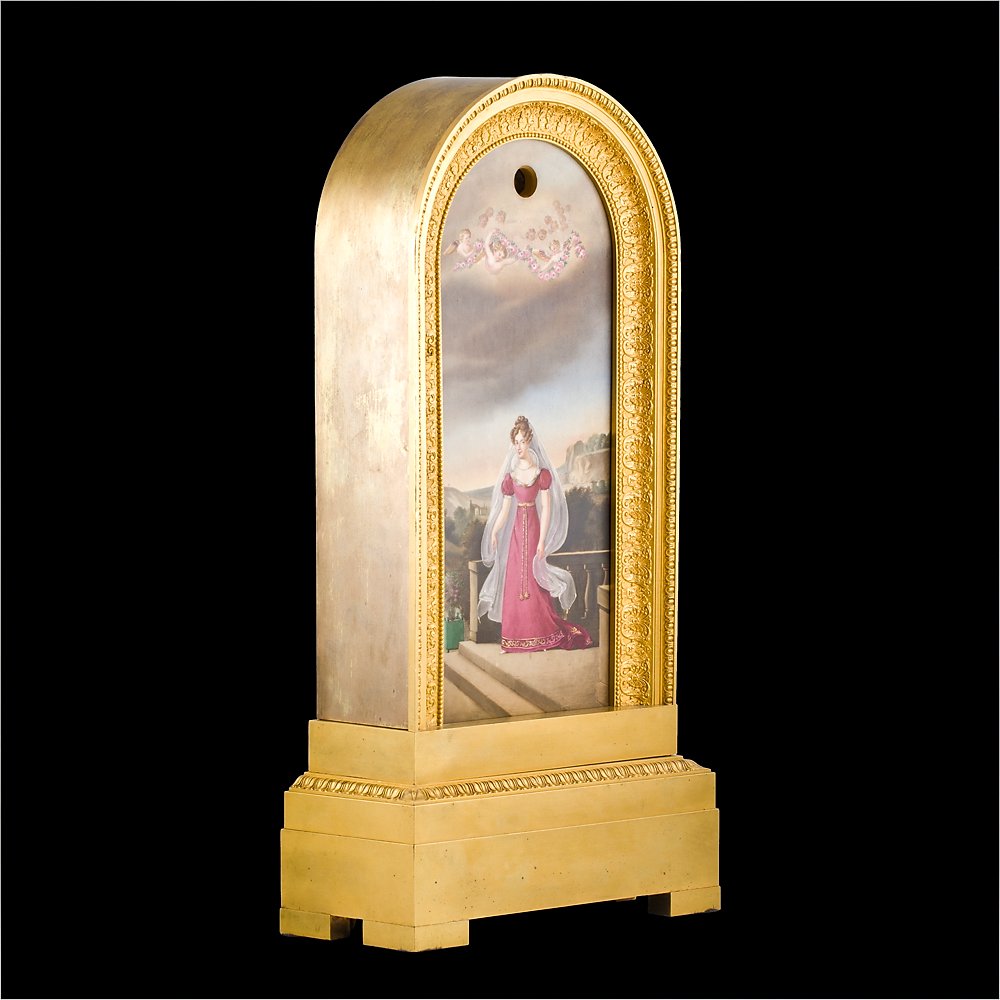
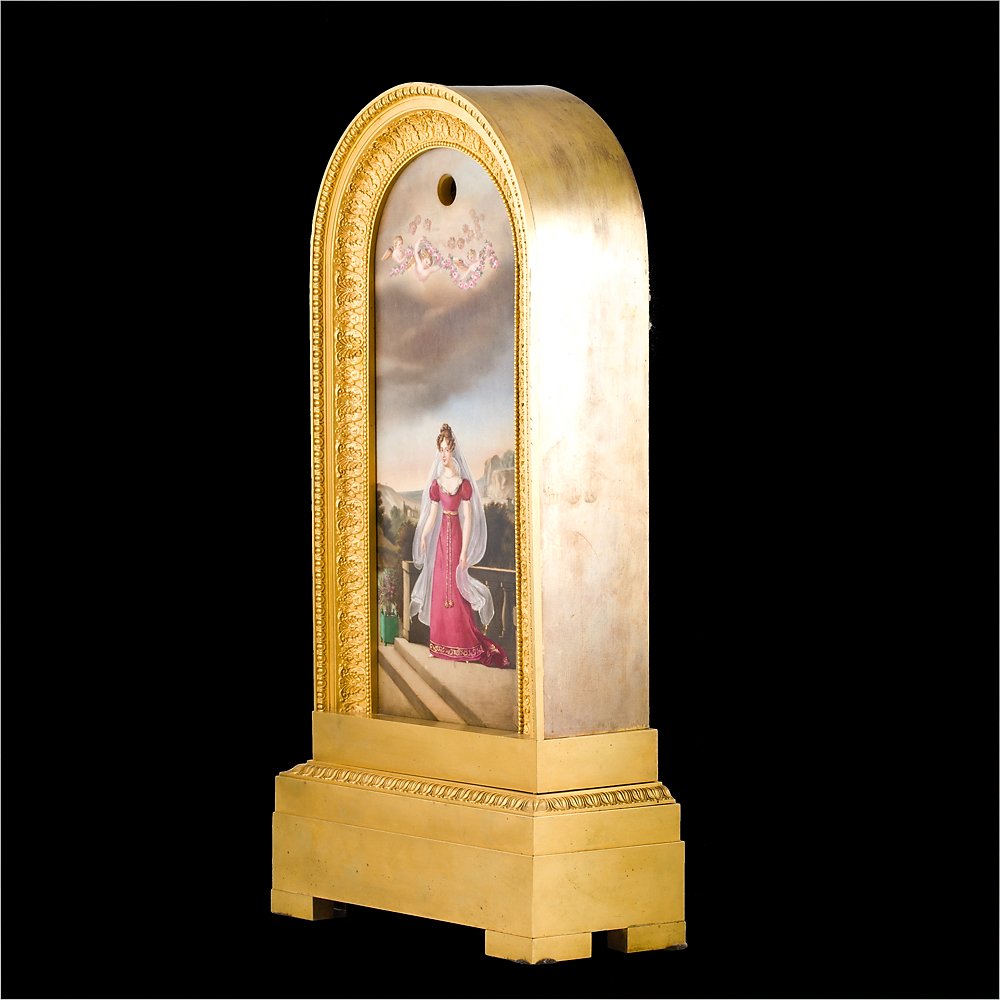
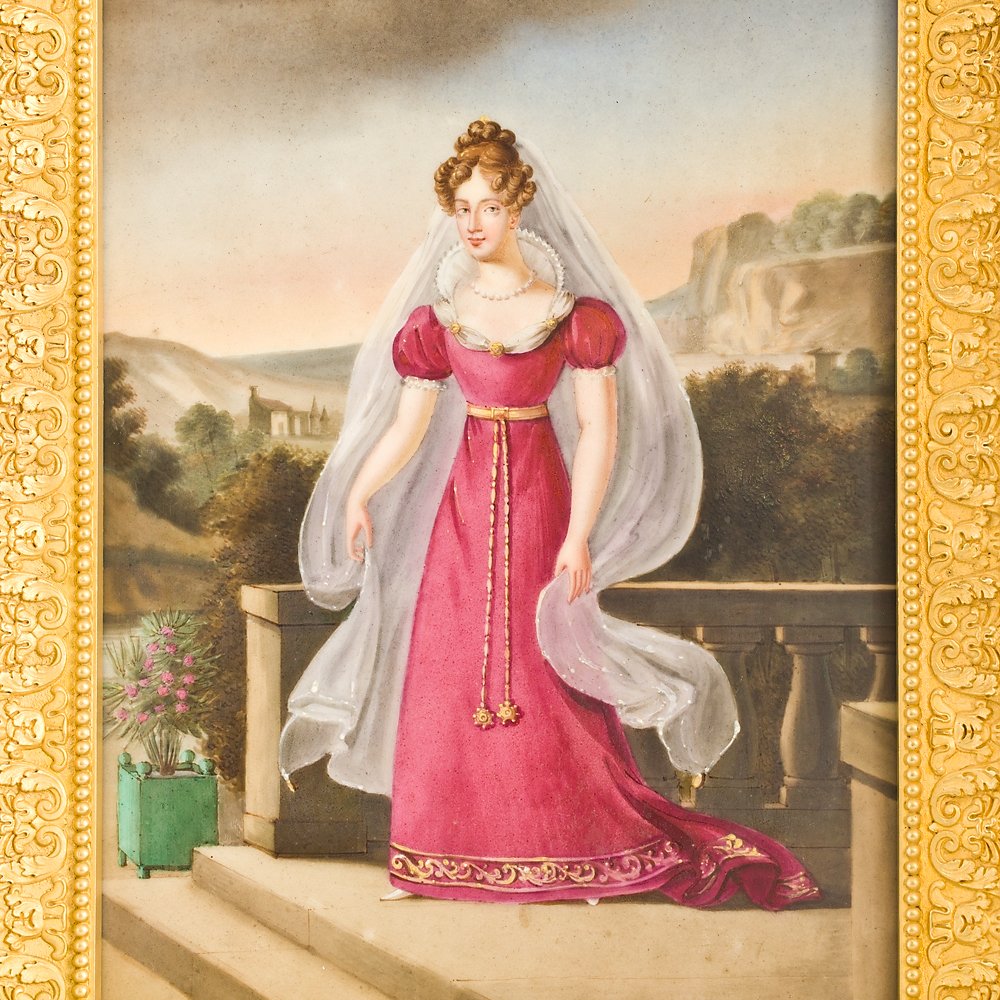
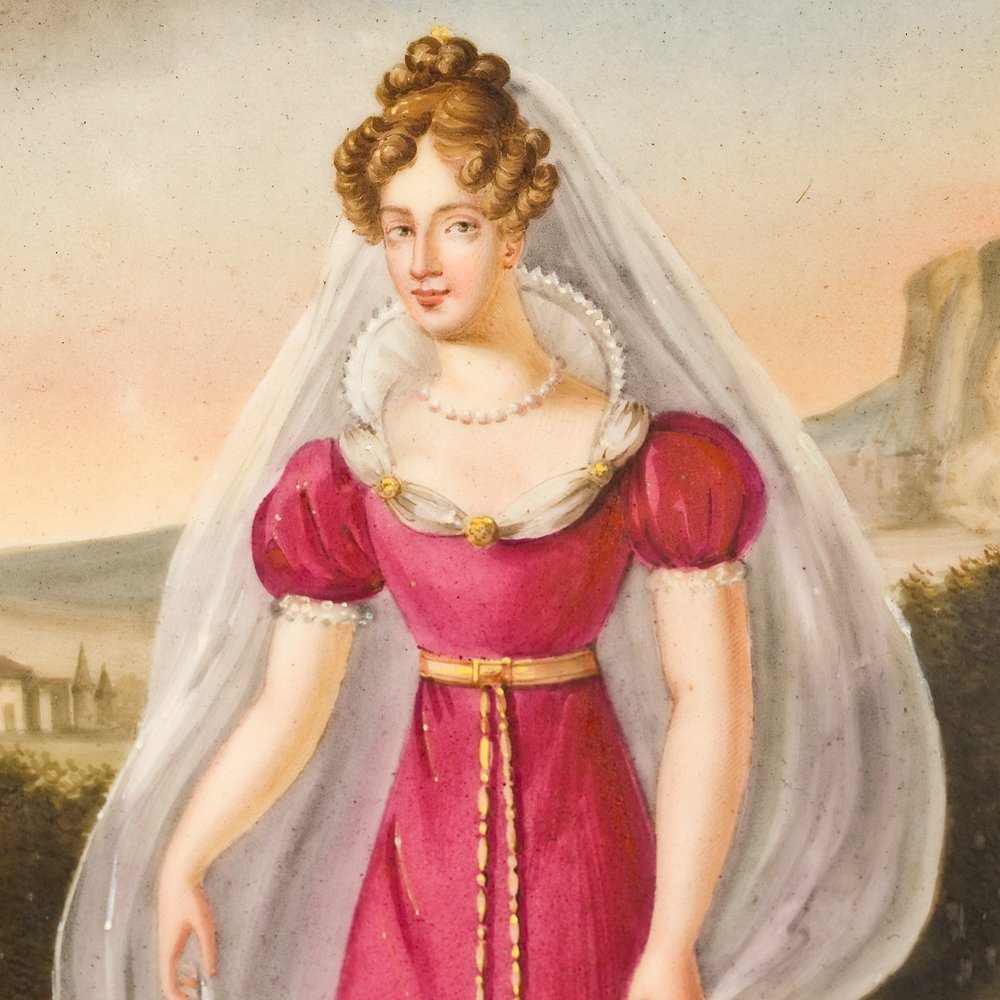
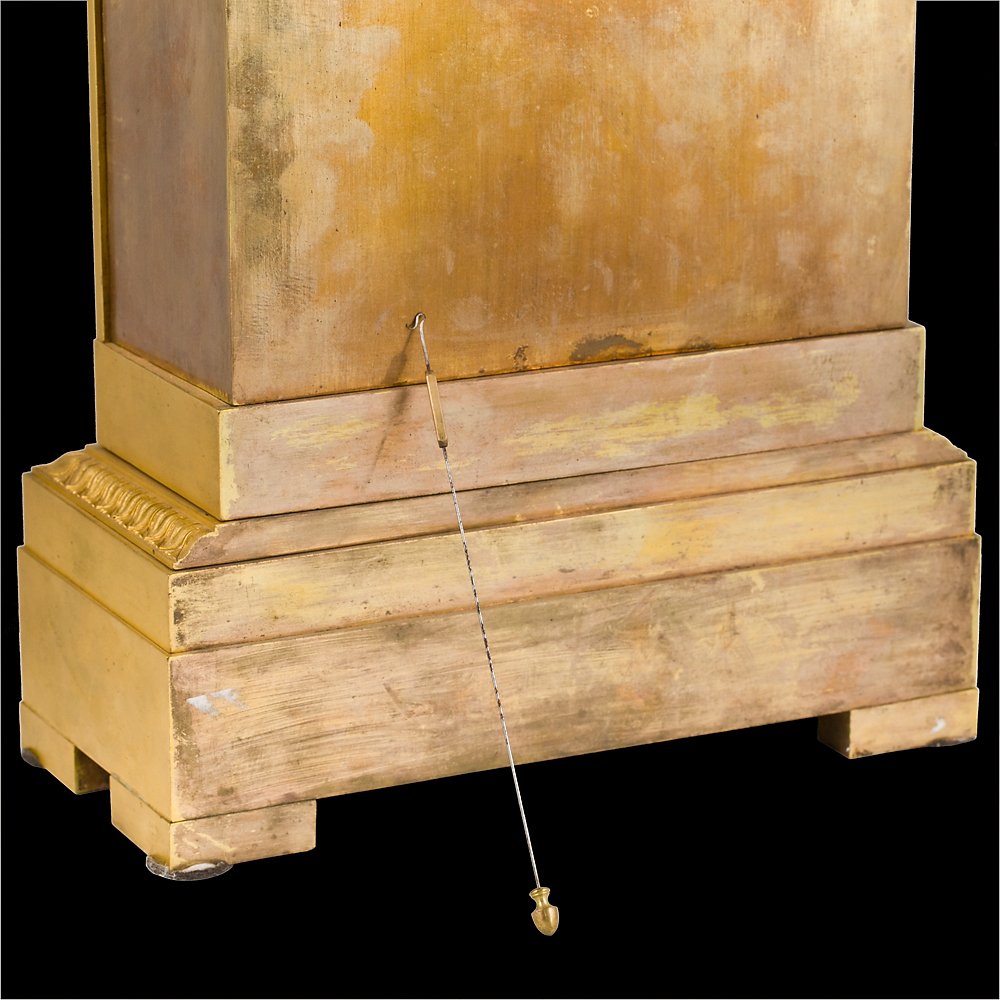
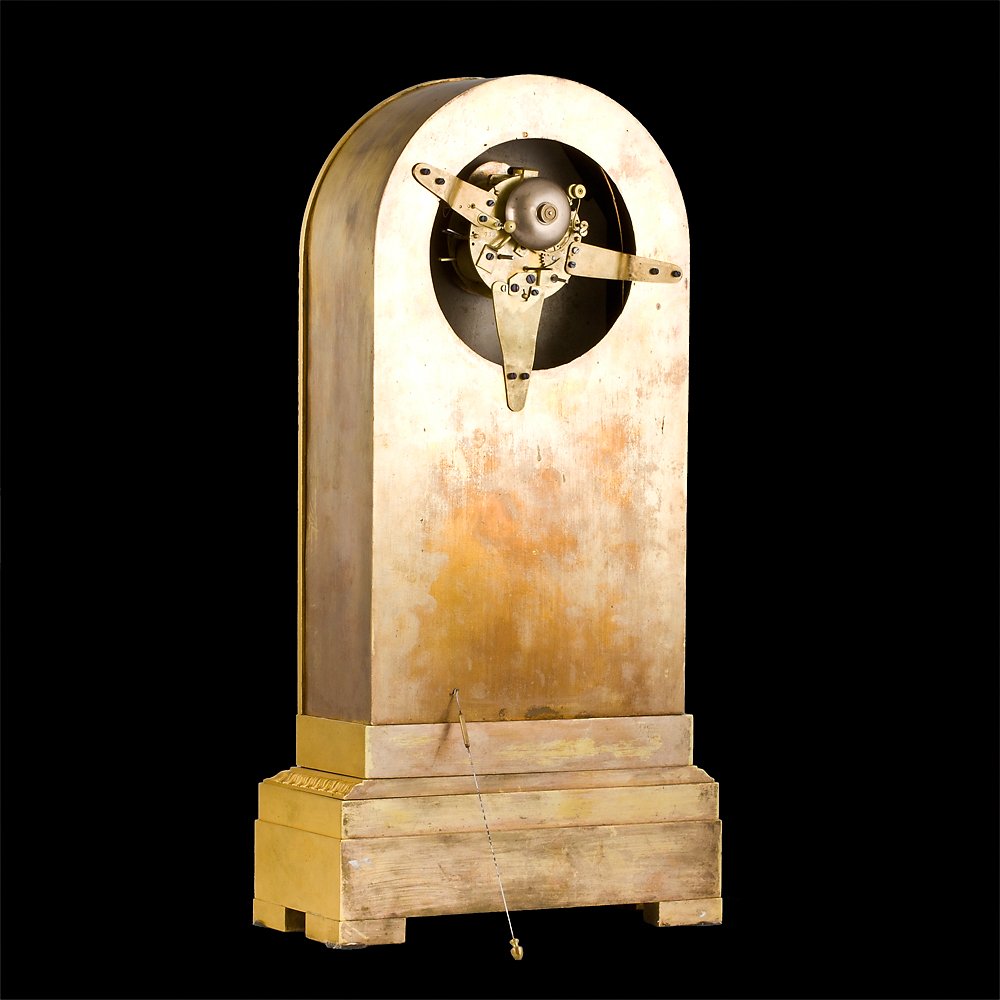
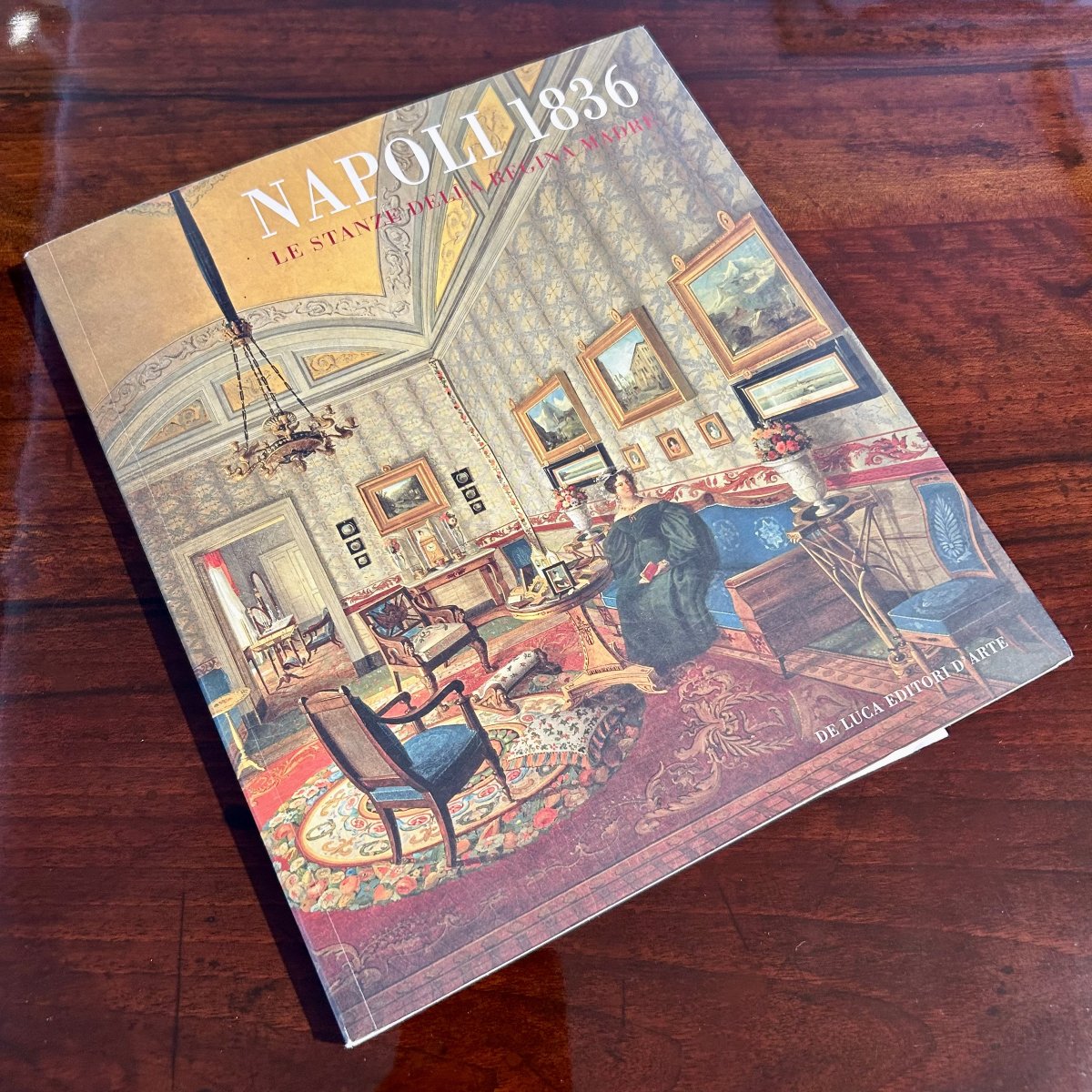
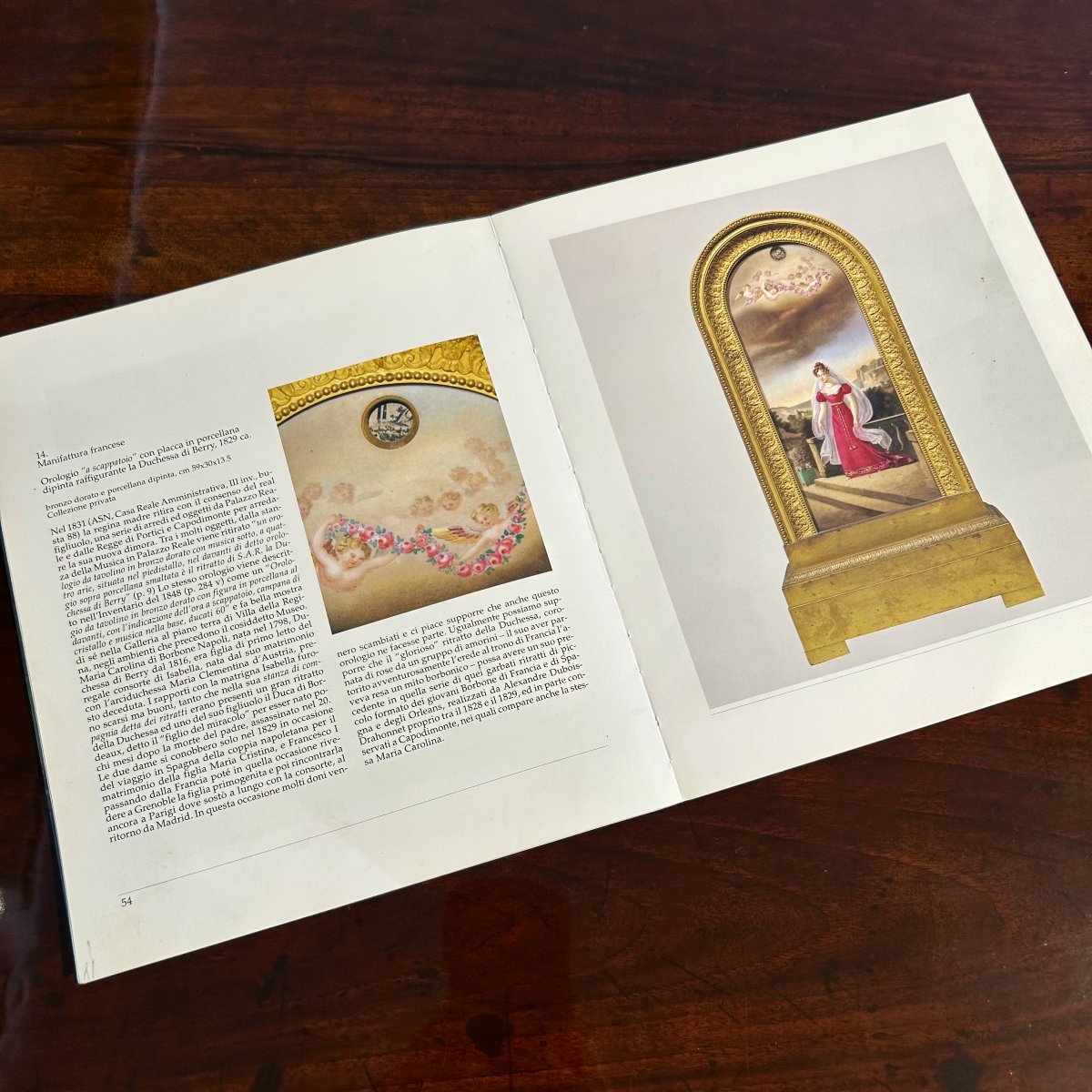
"Escapement" clock with a painted porcelain plaque depicting the Duchess of Berry, ca. 1829. Of French origin, made of gilded bronze and painted porcelain. (Published in the book “Naples 1836 – The Queen Mother’s Rooms” by De Luca Editori d’Arte.
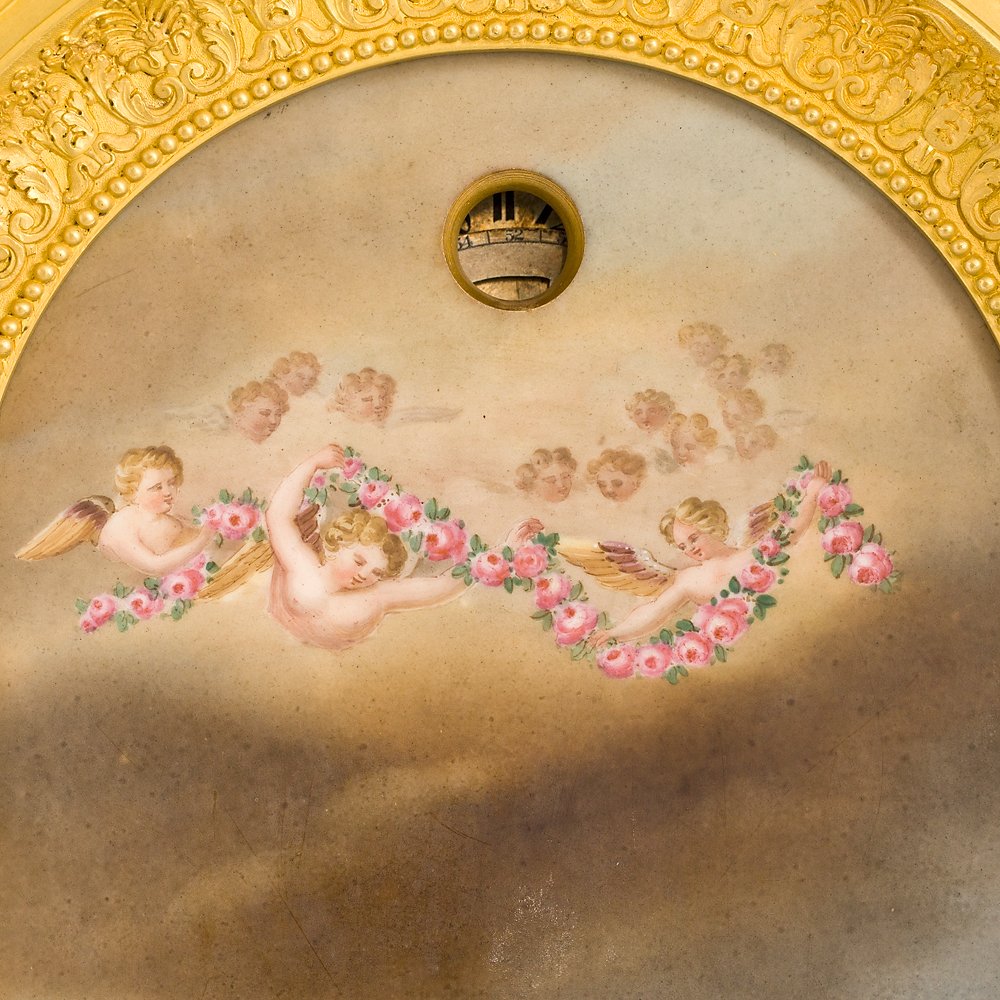
In 1831 (ASN, Royal Administrative Office, Inv. No. III, envelope 88), the Queen Mother, with the consent of her royal son, withdrew a series of furnishings and objects from the Royal Palace and the Royal Palaces of Portici and Capodimonte to furnish her new residence. Among the many objects, “a gilded bronze table clock with music below, playing four arias, located in the pedestal; on the front of said clock, on glazed porcelain, is the portrait of H.R.H. the Duchess of Berry” (p. 9) The same clock is described in the 1848 Inventory (p. 284v) as a “gilded bronze table clock with a porcelain figure on the front, with an escapement time-keeping mechanism, a crystal bell, and music in the base, 60 ducats,” and is proudly displayed in the Gallery on the ground floor of Villa della Regina, in the rooms leading up to the so-called Museum.
Maria Carolina of Bourbon-Naples, born in 1798 and Duchess of Berry from 1816, was the daughter from the first marriage of Isabella’s royal consort, born of his marriage to Archduchess Maria Clementina of Austria, who died young. Her relationship with her stepmother Isabella was limited but cordial, so much so that in her reception room—known as the “Portrait Room”—there was a large portrait of the Duchess and one of her son, the Duke of Bordeaux, known as the “miracle child” because he was born just a few months after the death of his father, who had been assassinated in 1820.
The two ladies did not meet until 1829, during the Neapolitan couple’s trip to Spain for the wedding of their daughter Maria Cristina, and Francis I, passing through France, was able on that occasion to see his eldest daughter again in Grenoble and then meet her once more in Paris, where he stayed for a long time with his wife on their return from Madrid. On this occasion, many gifts were exchanged, and we like to suppose that this clock was among them. Likewise, we can assume that the “glorious” portrait of the Duchess, crowned with roses by a group of cherubs—her adventurous birth of the heir to the French throne had made her a Bourbon legend —may have its precedent in that series of elegant small-format portraits of the young Bourbons of France and Spain and of the Orléans, painted by Alexandre Dubois Drahonnet precisely between 1828 and 1829, and partly preserved at Capodimonte, in which Maria Carolina herself also appears.
Period: 19th century;
Provenance: France;
Dimensions: Height: 59 cm; Width: 30 cm; Depth: 13.5 cm.
Condition: Excellent condition;
Documentation: Certificate of authenticity;
Support: We are at your disposal for further clarification, information, and images;
Shipping: Available throughout Italy, Europe, and the rest of the world. Reasonable prices, maximum security, and full traceability. (To be arranged privately).
We wish you a good day
Antichità Goglia
In 1831 (ASN, Royal Administrative Office, Inv. No. III, envelope 88), the Queen Mother, with the consent of her royal son, withdrew a series of furnishings and objects from the Royal Palace and the Royal Palaces of Portici and Capodimonte to furnish her new residence. Among the many objects, “a gilded bronze table clock with music below, playing four arias, located in the pedestal; on the front of said clock, on glazed porcelain, is the portrait of H.R.H. the Duchess of Berry” (p. 9) The same clock is described in the 1848 Inventory (p. 284v) as a “gilded bronze table clock with a porcelain figure on the front, with an escapement time-keeping mechanism, a crystal bell, and music in the base, 60 ducats,” and is proudly displayed in the Gallery on the ground floor of Villa della Regina, in the rooms leading up to the so-called Museum.
Maria Carolina of Bourbon-Naples, born in 1798 and Duchess of Berry from 1816, was the daughter from the first marriage of Isabella’s royal consort, born of his marriage to Archduchess Maria Clementina of Austria, who died young. Her relationship with her stepmother Isabella was limited but cordial, so much so that in her reception room—known as the “Portrait Room”—there was a large portrait of the Duchess and one of her son, the Duke of Bordeaux, known as the “miracle child” because he was born just a few months after the death of his father, who had been assassinated in 1820.
The two ladies did not meet until 1829, during the Neapolitan couple’s trip to Spain for the wedding of their daughter Maria Cristina, and Francis I, passing through France, was able on that occasion to see his eldest daughter again in Grenoble and then meet her once more in Paris, where he stayed for a long time with his wife on their return from Madrid. On this occasion, many gifts were exchanged, and we like to suppose that this clock was among them. Likewise, we can assume that the “glorious” portrait of the Duchess, crowned with roses by a group of cherubs—her adventurous birth of the heir to the French throne had made her a Bourbon legend —may have its precedent in that series of elegant small-format portraits of the young Bourbons of France and Spain and of the Orléans, painted by Alexandre Dubois Drahonnet precisely between 1828 and 1829, and partly preserved at Capodimonte, in which Maria Carolina herself also appears.
Period: 19th century;
Provenance: France;
Dimensions: Height: 59 cm; Width: 30 cm; Depth: 13.5 cm.
Condition: Excellent condition;
Documentation: Certificate of authenticity;
Support: We are at your disposal for further clarification, information, and images;
Shipping: Available throughout Italy, Europe, and the rest of the world. Reasonable prices, maximum security, and full traceability. (To be arranged privately).
We wish you a good day
Antichità Goglia
25 000 €
Period: 19th century
Style: Other Style
Condition: Excellent condition
Material: Bronze
Reference (ID): 1791365
Availability: In stock
Print