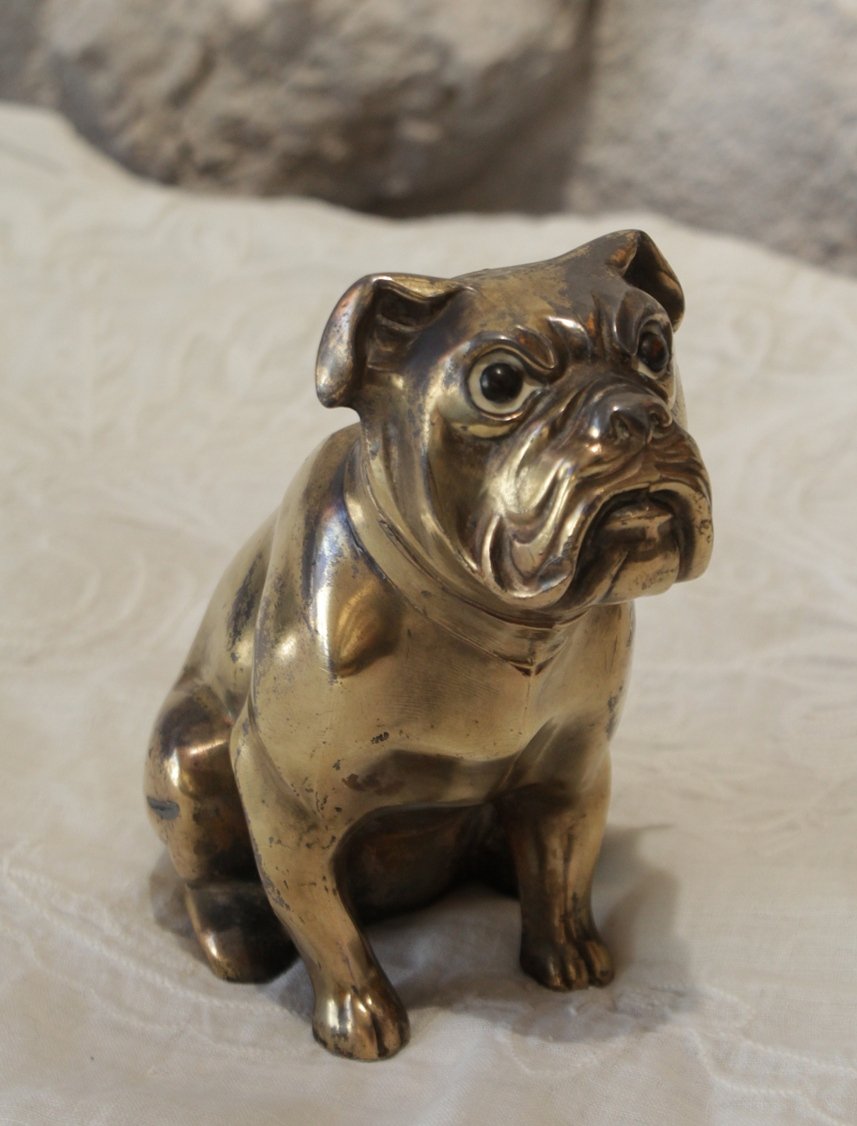
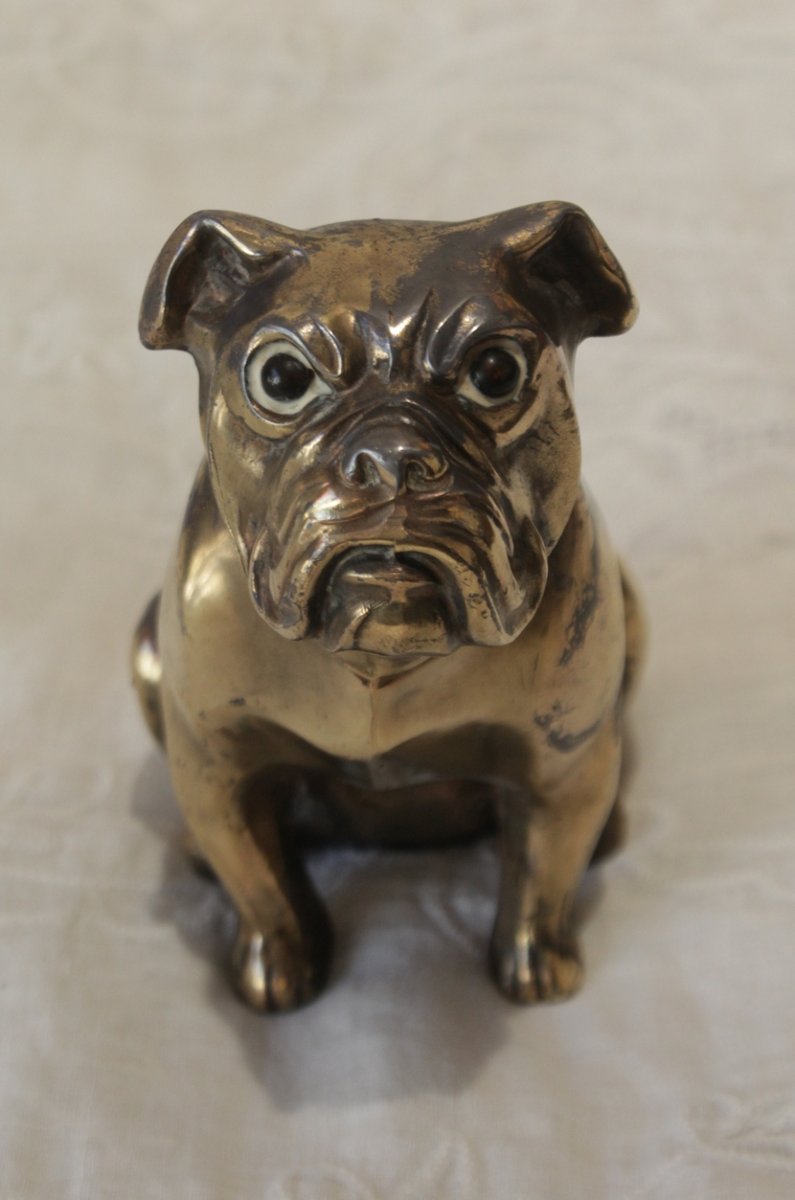
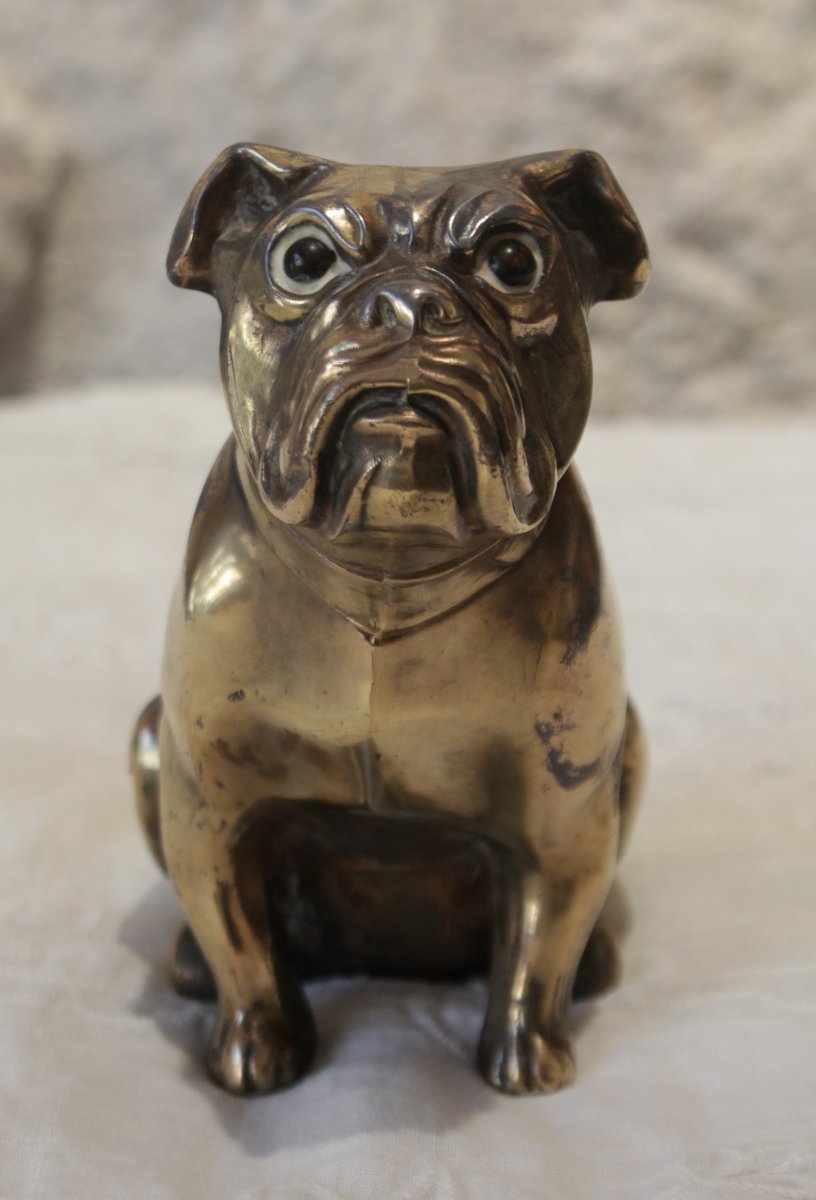
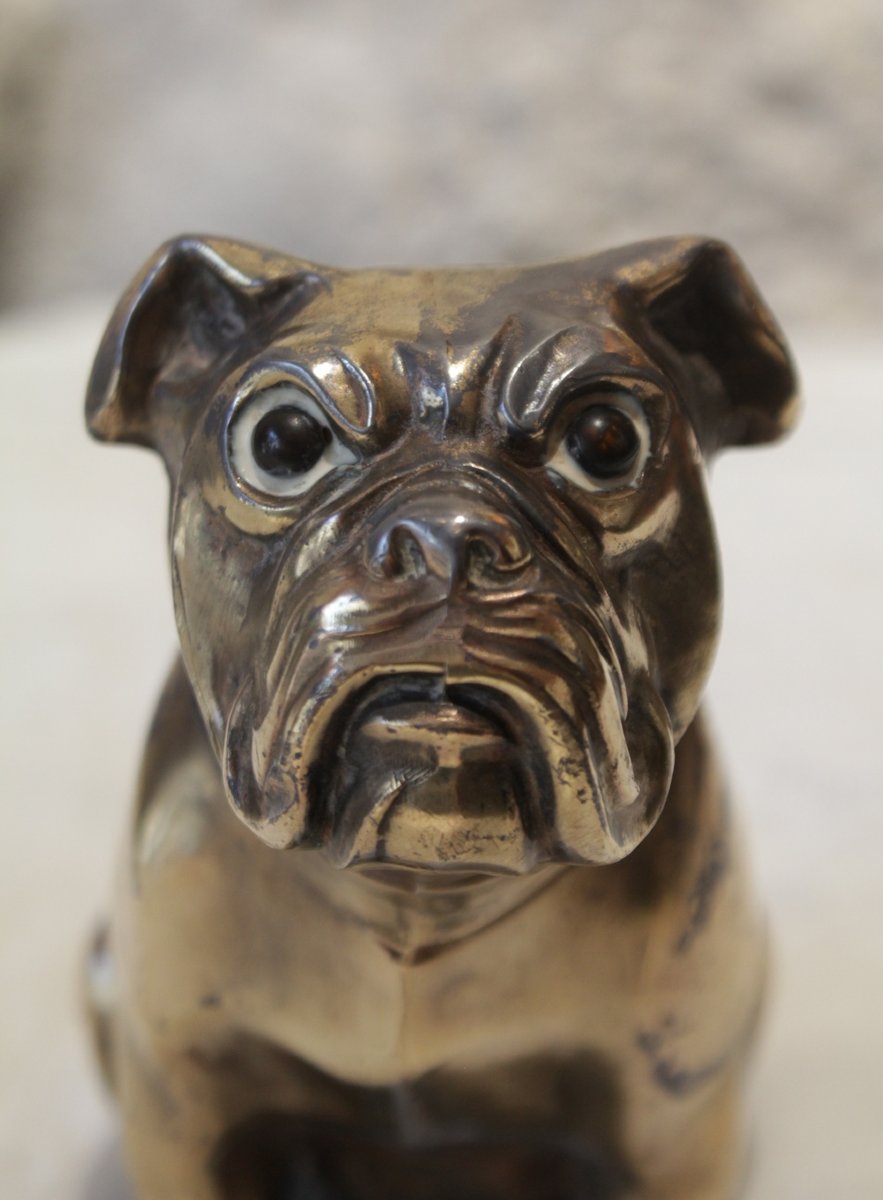
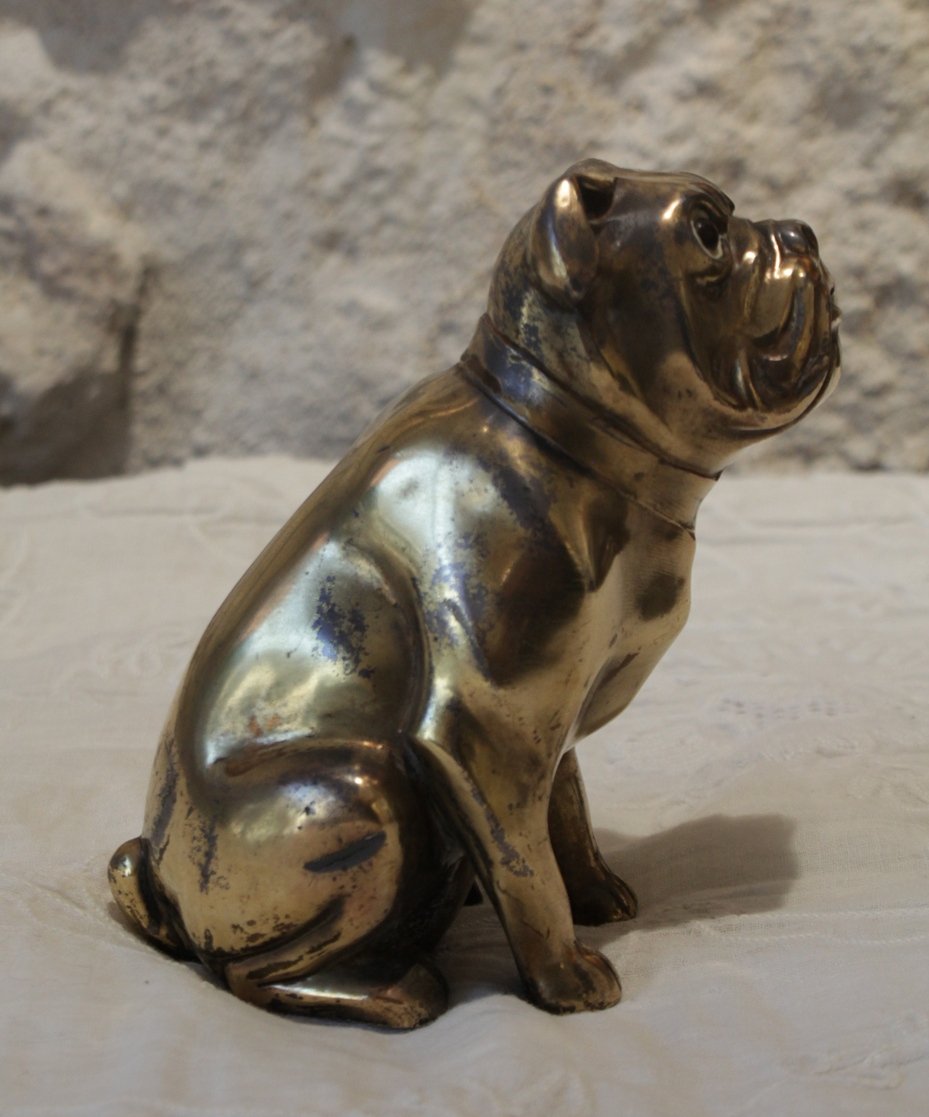
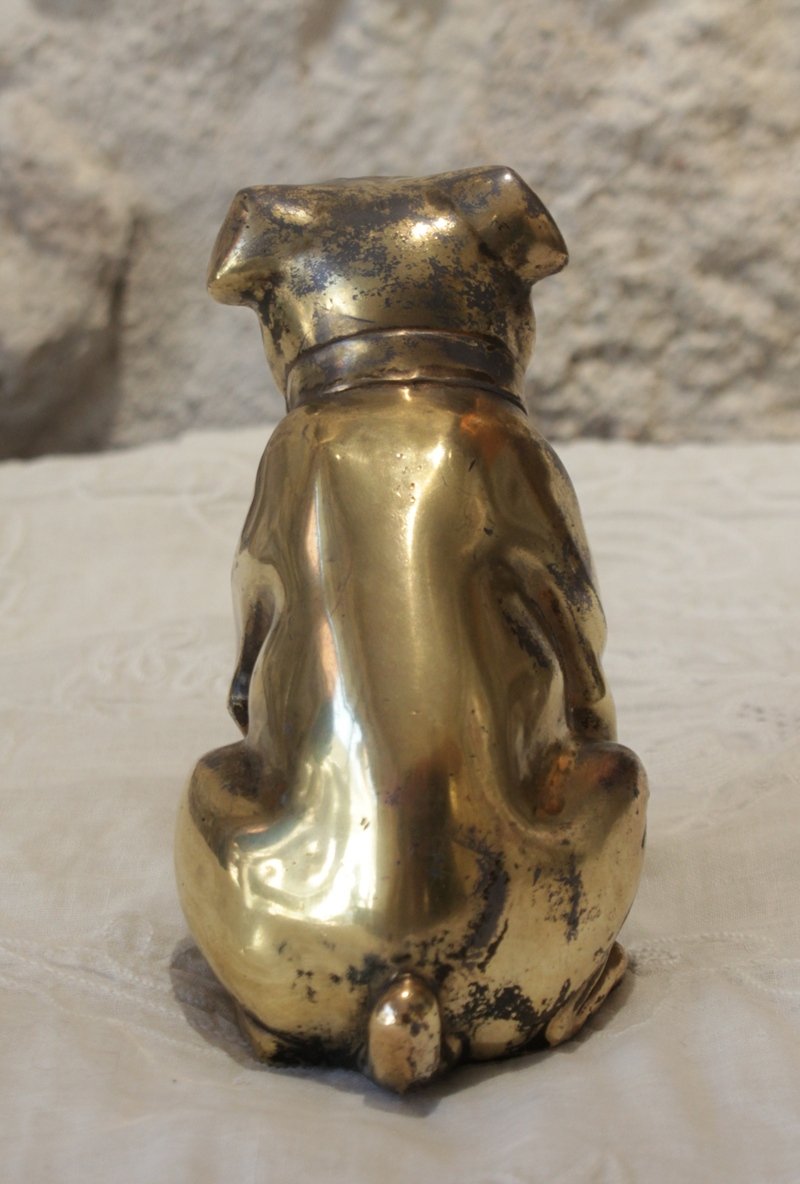
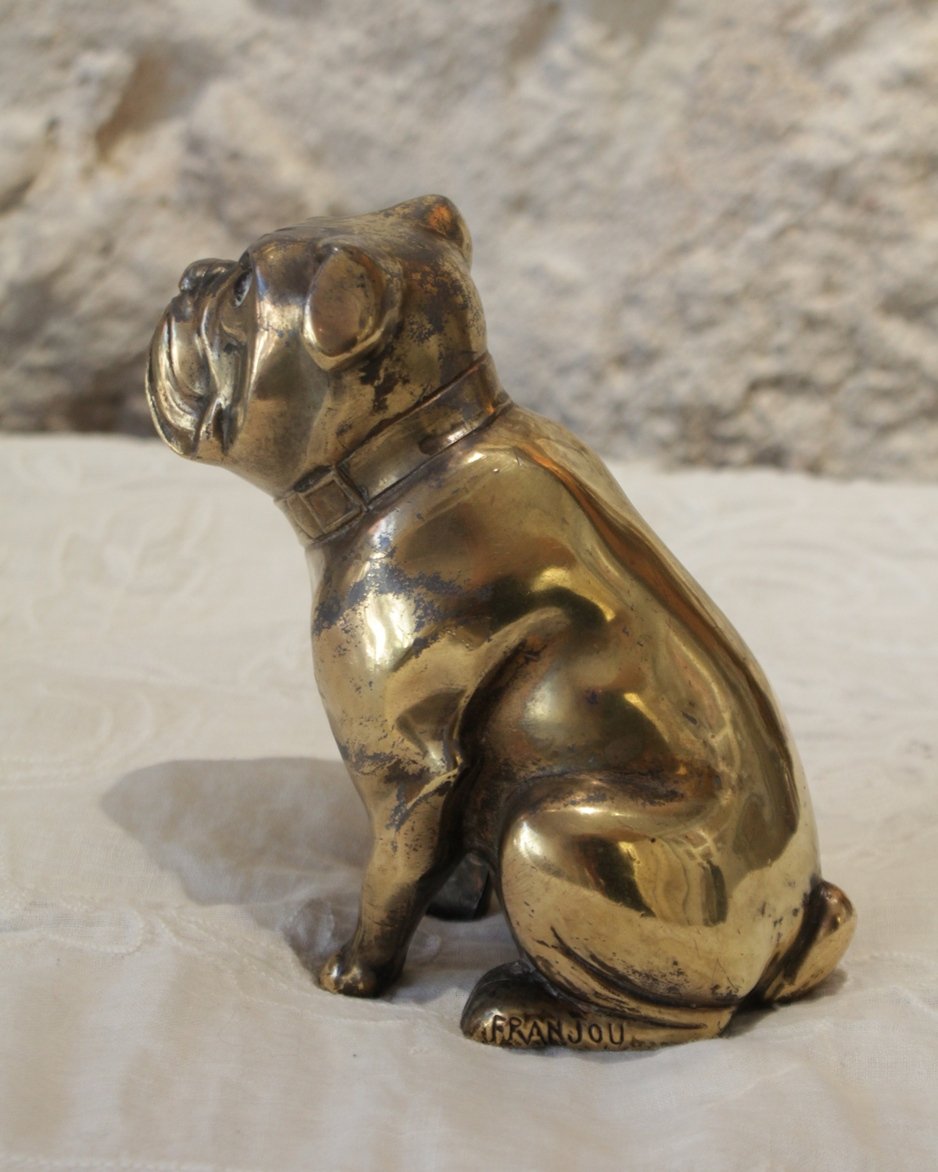
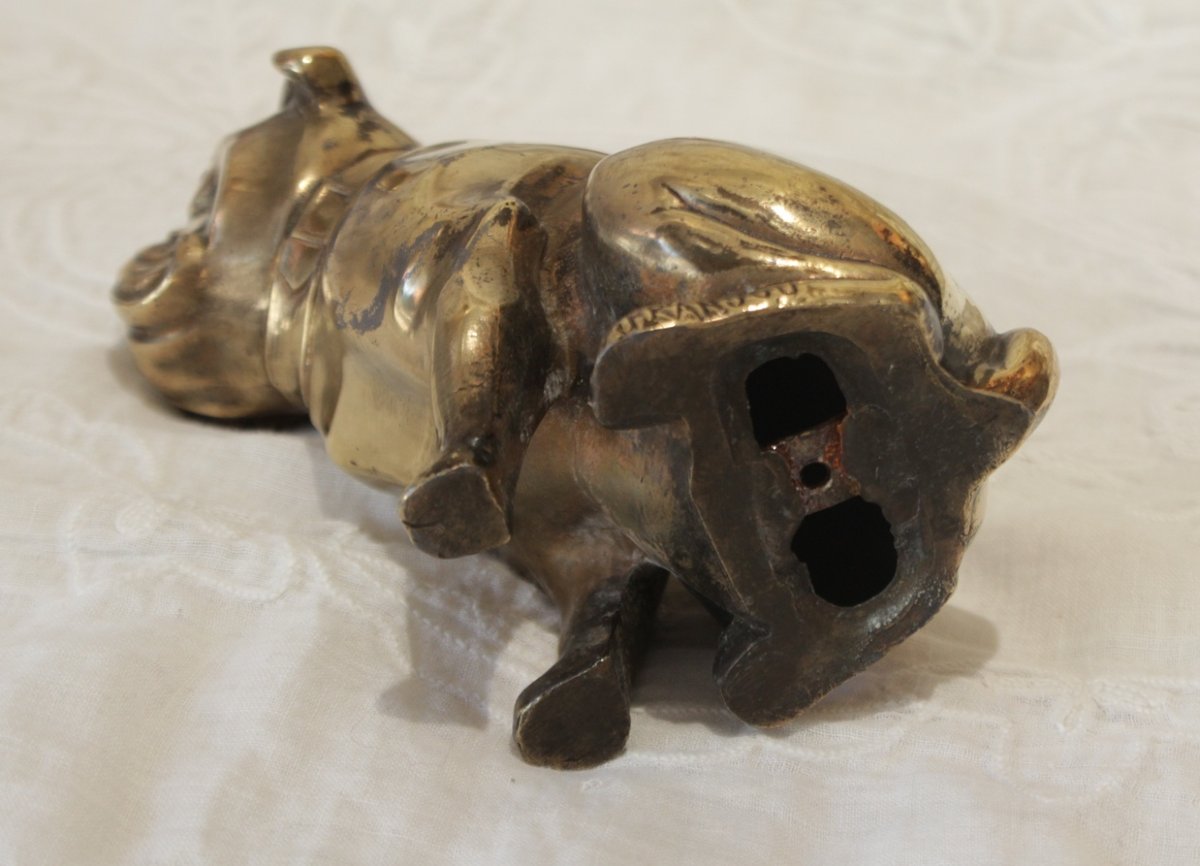
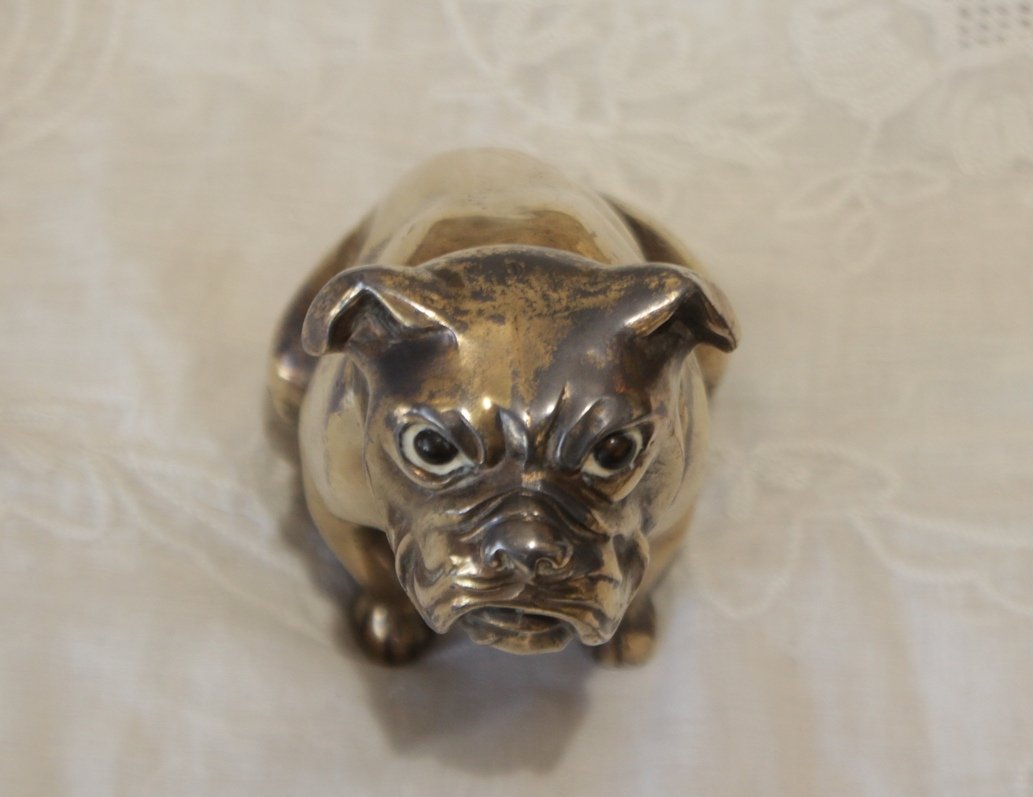
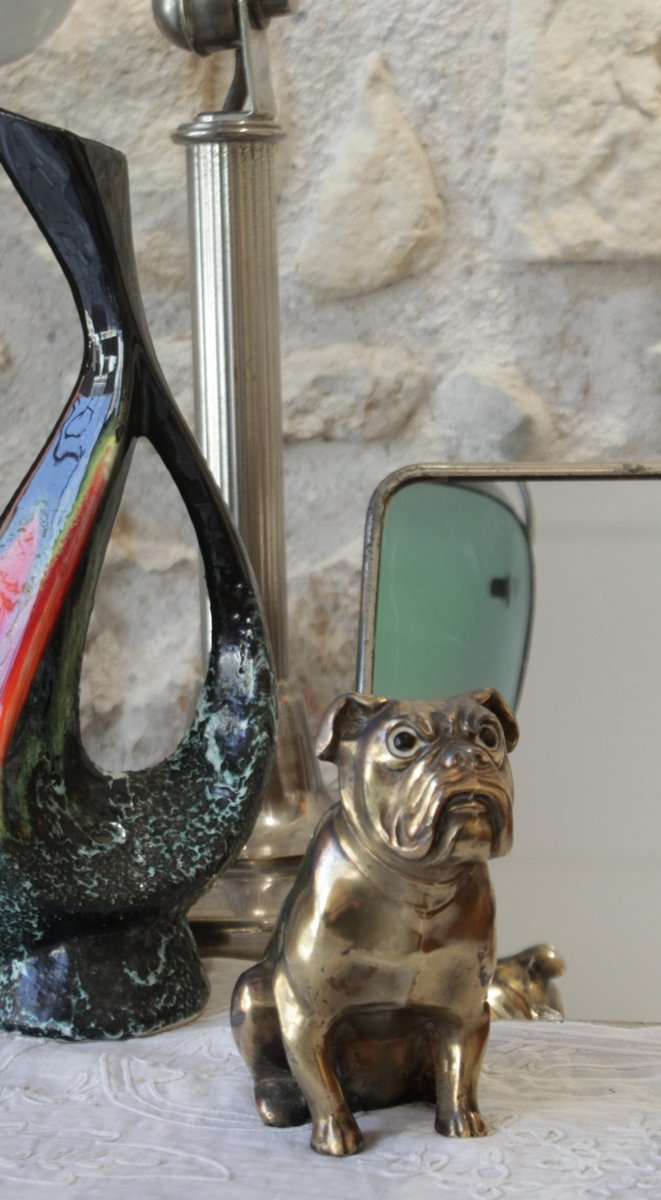


Bulldog Sculpture Signed 'franjou' For Hippolyte Moreau (1832-1926)
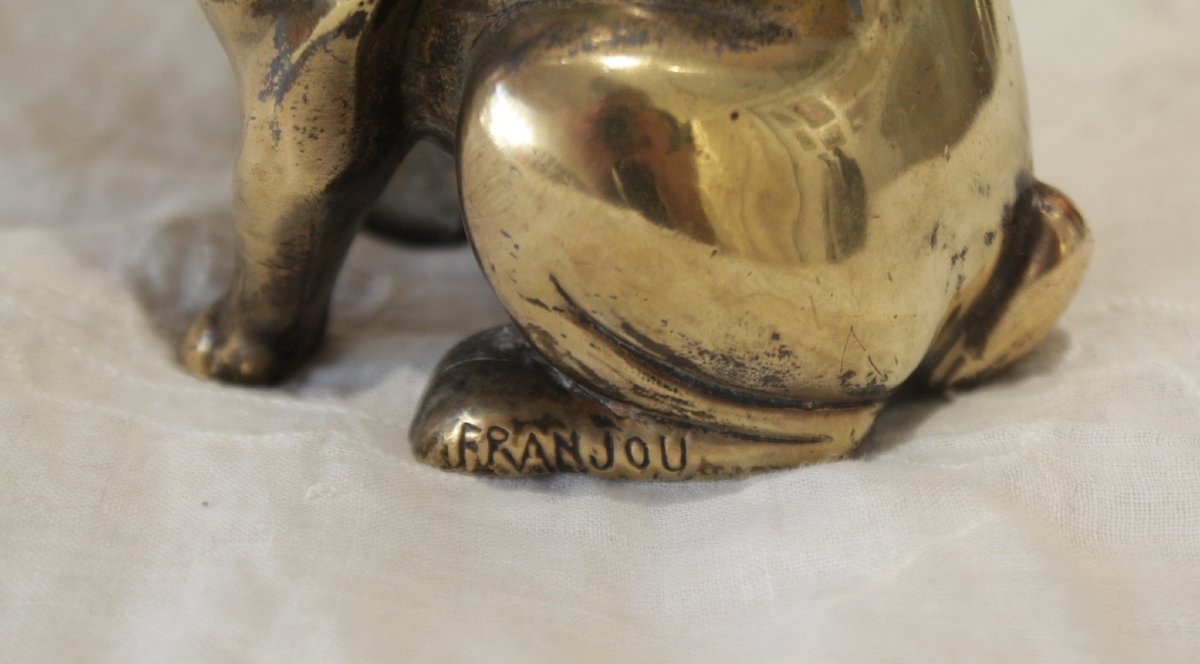
Sculpture made of a gold- and silver-plated metal alloy depicting a seated Bulldog, with eyes made of sulfide. Signed on the base "Franjou," a pseudonym for Hippolyte Moreau (1832–1926); see description below. Traces of oxidation and metal discoloration.
Dated circa 1920.
Dimensions: H 11.5 x W 10 x D 6.5 cm
Hippolyte Moreau (1832–1926), known as “Franjou”
Born in Dijon on April 1, 1832, Hippolyte François Moreau belonged to one of the most important French dynasties of 19th-century sculptors. The son of sculptor Jean-Baptiste-Louis-Joseph Moreau and brother of Mathurin Moreau and Auguste Moreau, he received his early training in his father’s studio before continuing his studies in Paris under François Jouffroy at the École des Beaux-Arts.
Beginning in 1863, Hippolyte Moreau exhibited regularly at the Salon des Artistes Français, where he presented decorative sculptures. His work is distinguished by refined elegance, delicate modeling, and a consistent focus on female figures, children, allegories, and genre scenes. He won a medal at the 1878 World’s Fair and another award at the 1900 World’s Fair, thus cementing a career recognized by his contemporaries.
Like many sculptors of the Belle Époque, Hippolyte Moreau simultaneously produced a significant body of art for the mass market. His bronzes, regules, pewter pieces, vases, trinket dishes, letter openers, and decorative objects were distributed by the major Parisian foundries and enjoyed widespread success among a bourgeois clientele seeking affordable works of art. This production contributed significantly to the spread of his style far beyond academic circles.
A more private aspect of his work is linked to the pseudonym “ Franjou”, under which he signed some of his decorative creations—particularly objects reflecting Art Nouveau and the emerging Art Deco styles, such as car mascots, inkwells, paperweights, and animal sculptures. The choice of this pseudonym seems to have allowed the artist to distinguish this production of decorative objects from his work officially exhibited at the Salon, while also catering to a rapidly expanding market in the early 20th century. The works signed “Franjou” demonstrate his ability to adapt to changing tastes and new markets in the decorative arts.
Period: 20th century
Style: Art Deco
Condition: En l'etat
Material: Metal
Width: 10
Height: 11,5
Depth: 6,5
Reference (ID): 1785602
Availability: In stock