

André Devambez (1867–1944) Portrait Of A Woman At The Absinthe Bistro
Artist: André Devambez
André DEVAMBEZ
(Paris, 1867 – Paris, 1944)
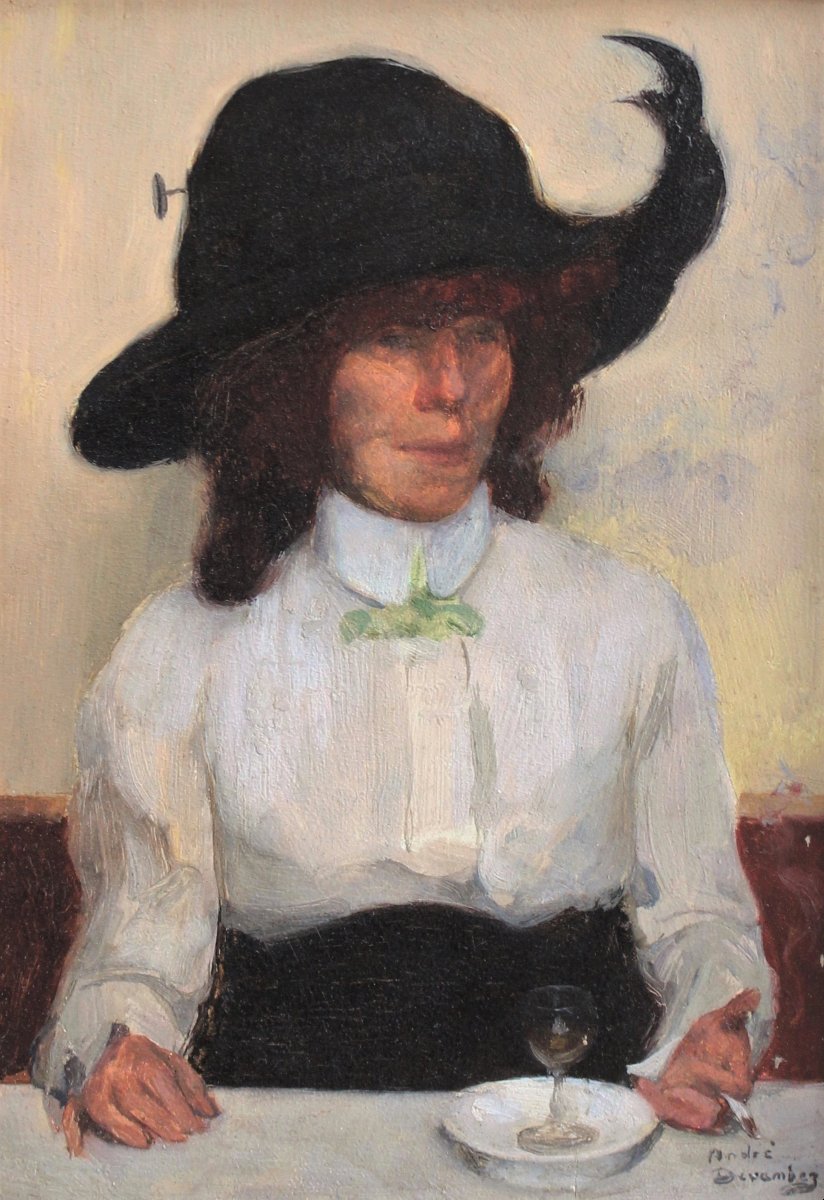
Portrait of a Woman in a Bistro
Oil on mahogany panel
H. 22 cm; W. 16 cm
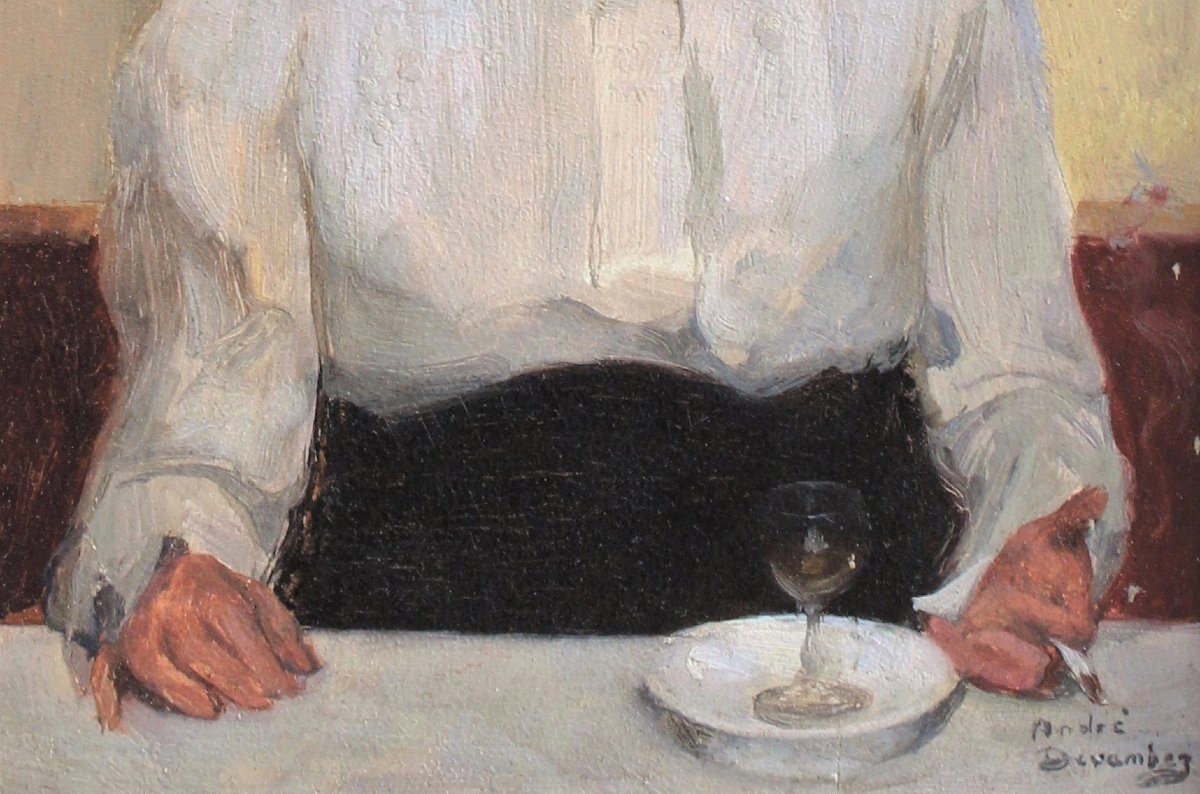
Signed lower right
Circa 1905/1910
Provenance: Galerie de la Scala (68, rue La Boétie, Paris 8th arrondissement), then passed down through the family
Exhibition: The painting will be featured (on loan) in the exhibition dedicated to André Devambez at the Musée des Beaux-Arts in Rennes (February–May 2022) and the Musée du Petit-Palais in Paris (September–December 2022)
The son of the famous engraver and publisher Édouard Devambez, the young André showed an interest in and talent for drawing from a very early age.
A student of Benjamin Constant and Jules Lefebvre at the Académie Julian, he continued his training at the École des Beaux-Arts in Paris and won the Grand Prix de Rome in 1890, though he had already participated in his first Salon des Artistes Français in 1889. Upon his return to Paris in 1896 after his studies in Rome, he initially contributed to magazines (L'Illustration and Le Rire, for example) with humorous and satirical drawings, and he also illustrated menus and programs, and created posters. But he would soon become known for his paintings. Alongside his large Salon canvases and his compositions for stage sets, he produced a prolific body of small genre paintings, often filled with tenderness and humor: beach scenes (in Yport) or scenes of urban life teeming with small figures (subway platforms, air shows, public parks, bus lines, carnivals…), small portraits of drinkers and philosophers, and vignettes featuring artisans, duelists, swordsmen, or other bandits. By the time of his first solo exhibition in 1913 at the Georges Petit Gallery, he had already achieved popular fame and public recognition (Legion of Honor in 1911, regular participation in the Salon). He was particularly appreciated for his bird’s-eye views and his depictions of crowds.
The war, during which he was seriously wounded, inspired him to paint works on this theme, but did not interrupt his success as an unclassifiable artist with a wide range of expressive styles.
An article in the Larousse mensuel illustré devoted to him in 1930 speaks of the “realism of his figures, the polar opposite of conventional academicism… impeccable and exquisite execution…heir to the fine traditions of the Dutch and Flemish masters...”
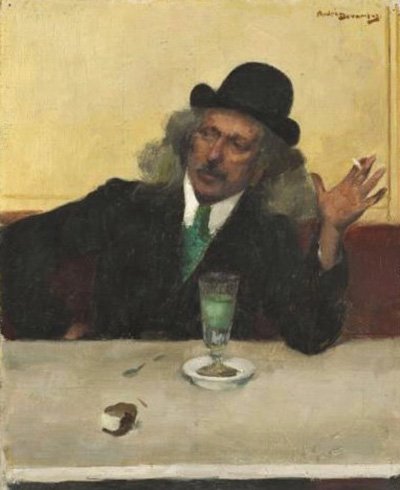
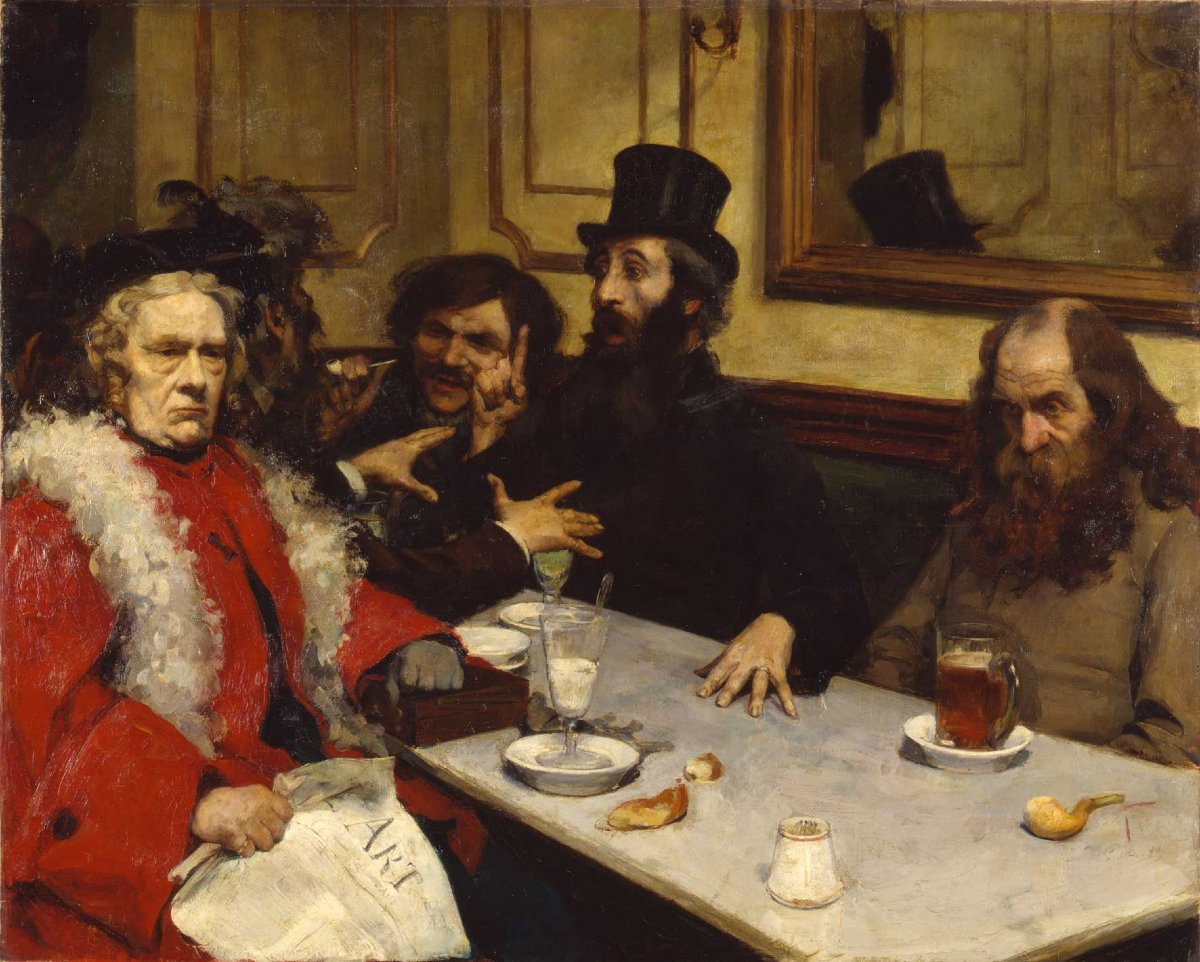
Our painting, with its powerful presence, belongs to the series of what Devambez called his Incompris(in reference to his painting at the 1904 Salon, Les Incompris, now in the Quimper Museum) and which he was particularly fond of: types of drinkers, poets, or artists drowning their sorrows or seeking inspiration in alcohol, lost philosophers... alone or in groups, inspired by the patrons of bistros, where alcohol consumption—particularly of absinthe—was very high at the time. Art historian Gustave Soulier writes on this subject: “It is as if we were encountering a sort of new Daumier in Mr. Devambez".
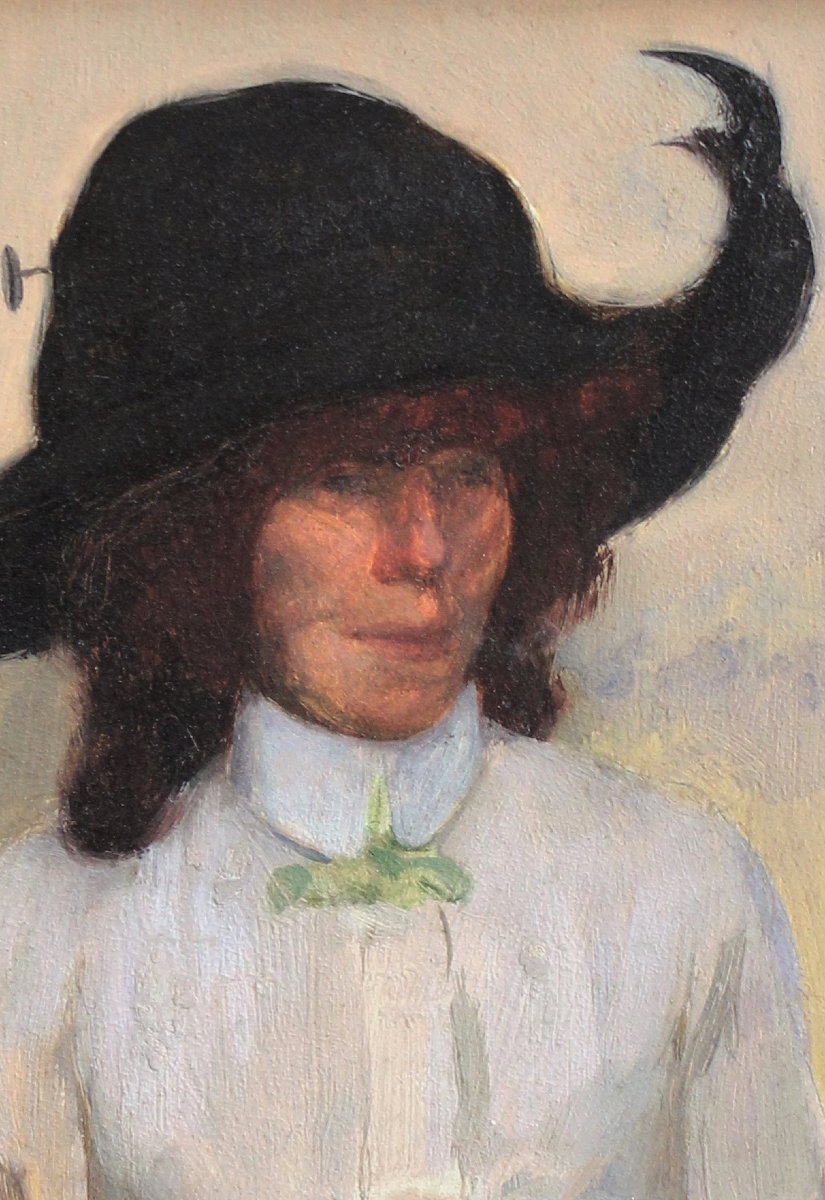
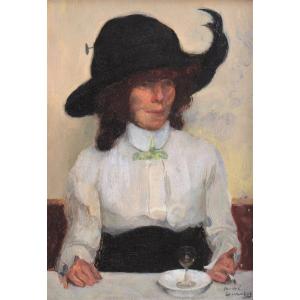
Somewhere between humor and tragedy, these characters are often decked out in grotesque hats—too big, too small, dented, or of incredible shapes, like that of our female drinker. She has a weathered face, showing signs of premature aging possibly due to alcohol and tobacco abuse. Whether she is simply an emancipated woman (there is a painting by Devambez titled The Feminist—could this be the one?) smoking her cigarette and drinking her drink alone, or an elderly prostitute hoping to still attract a hypothetical client, the café seems to her more a place of refuge than a venue for conversation and debate.
Our work, in terms of its subject and composition, can be compared to the painting (27 x 21 cm) housed at the Petit-Palais Museum in Paris, titled Au Café, which depicts an absinthe drinker smoking a cigarette, believed to be the singer-songwriter Marcel Legay.
(Paris, 1867 – Paris, 1944)
Portrait of a Woman in a Bistro
Oil on mahogany panel
H. 22 cm; W. 16 cm
Signed lower right
Circa 1905/1910
Provenance: Galerie de la Scala (68, rue La Boétie, Paris 8th arrondissement), then passed down through the family
Exhibition: The painting will be featured (on loan) in the exhibition dedicated to André Devambez at the Musée des Beaux-Arts in Rennes (February–May 2022) and the Musée du Petit-Palais in Paris (September–December 2022)
The son of the famous engraver and publisher Édouard Devambez, the young André showed an interest in and talent for drawing from a very early age.
A student of Benjamin Constant and Jules Lefebvre at the Académie Julian, he continued his training at the École des Beaux-Arts in Paris and won the Grand Prix de Rome in 1890, though he had already participated in his first Salon des Artistes Français in 1889. Upon his return to Paris in 1896 after his studies in Rome, he initially contributed to magazines (L'Illustration and Le Rire, for example) with humorous and satirical drawings, and he also illustrated menus and programs, and created posters. But he would soon become known for his paintings. Alongside his large Salon canvases and his compositions for stage sets, he produced a prolific body of small genre paintings, often filled with tenderness and humor: beach scenes (in Yport) or scenes of urban life teeming with small figures (subway platforms, air shows, public parks, bus lines, carnivals…), small portraits of drinkers and philosophers, and vignettes featuring artisans, duelists, swordsmen, or other bandits. By the time of his first solo exhibition in 1913 at the Georges Petit Gallery, he had already achieved popular fame and public recognition (Legion of Honor in 1911, regular participation in the Salon). He was particularly appreciated for his bird’s-eye views and his depictions of crowds.
The war, during which he was seriously wounded, inspired him to paint works on this theme, but did not interrupt his success as an unclassifiable artist with a wide range of expressive styles.
An article in the Larousse mensuel illustré devoted to him in 1930 speaks of the “realism of his figures, the polar opposite of conventional academicism… impeccable and exquisite execution…heir to the fine traditions of the Dutch and Flemish masters...”
Our painting, with its powerful presence, belongs to the series of what Devambez called his Incompris(in reference to his painting at the 1904 Salon, Les Incompris, now in the Quimper Museum) and which he was particularly fond of: types of drinkers, poets, or artists drowning their sorrows or seeking inspiration in alcohol, lost philosophers... alone or in groups, inspired by the patrons of bistros, where alcohol consumption—particularly of absinthe—was very high at the time. Art historian Gustave Soulier writes on this subject: “It is as if we were encountering a sort of new Daumier in Mr. Devambez".
Somewhere between humor and tragedy, these characters are often decked out in grotesque hats—too big, too small, dented, or of incredible shapes, like that of our female drinker. She has a weathered face, showing signs of premature aging possibly due to alcohol and tobacco abuse. Whether she is simply an emancipated woman (there is a painting by Devambez titled The Feminist—could this be the one?) smoking her cigarette and drinking her drink alone, or an elderly prostitute hoping to still attract a hypothetical client, the café seems to her more a place of refuge than a venue for conversation and debate.
Our work, in terms of its subject and composition, can be compared to the painting (27 x 21 cm) housed at the Petit-Palais Museum in Paris, titled Au Café, which depicts an absinthe drinker smoking a cigarette, believed to be the singer-songwriter Marcel Legay.
24 000 €
Period: 20th century
Style: Art Nouveau
Condition: Perfect condition
Material: Oil painting on wood
Length: 22 cm hors cadre
Width: 16 cm hors cadre
Reference (ID): 1785204
Availability: In stock
Print