THIS OBJECT WAS SOLD
F. Duret – Young Fisherman Dancing The Tarantella And Neapolitan Dancer – Quesnel Edition.
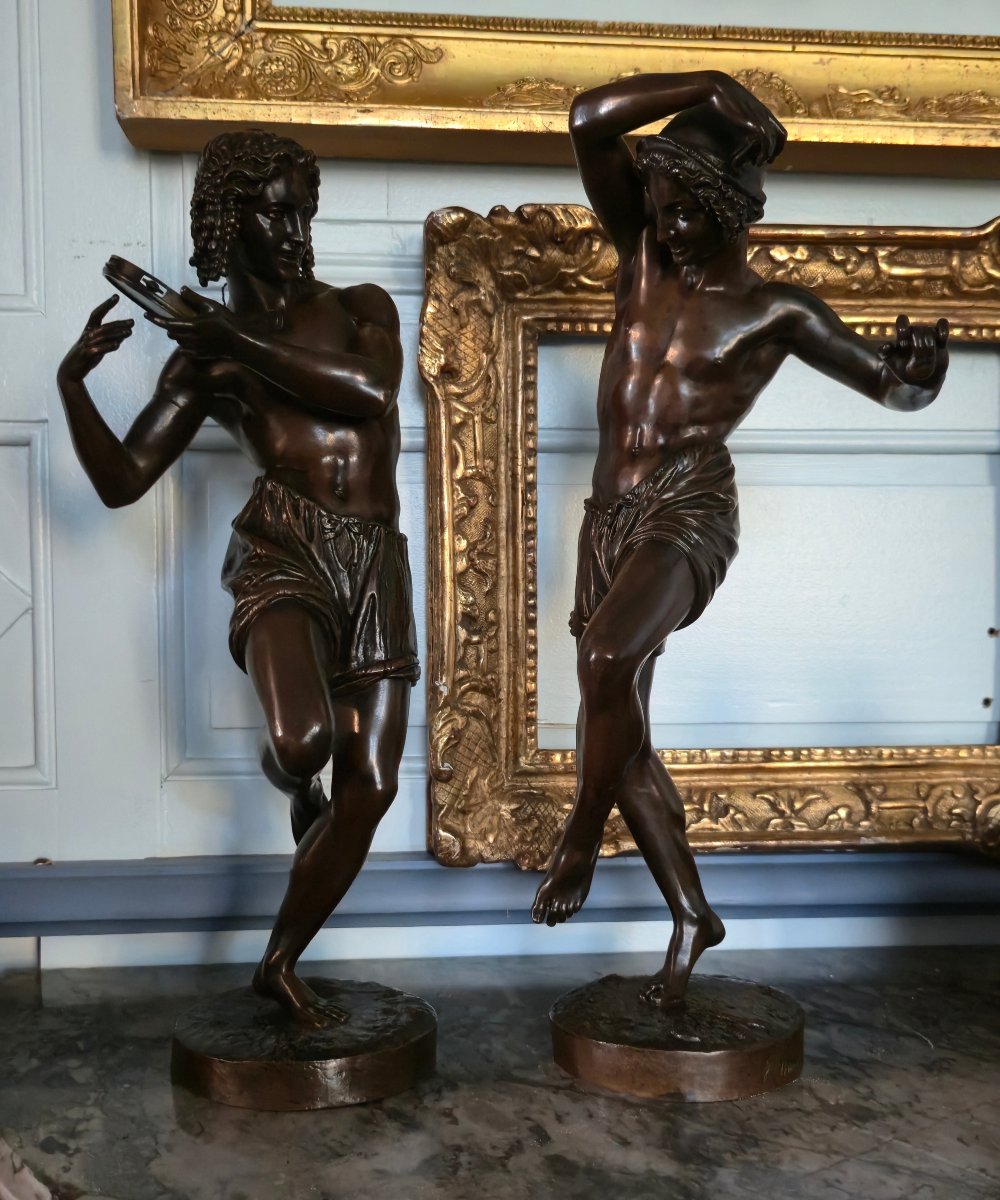
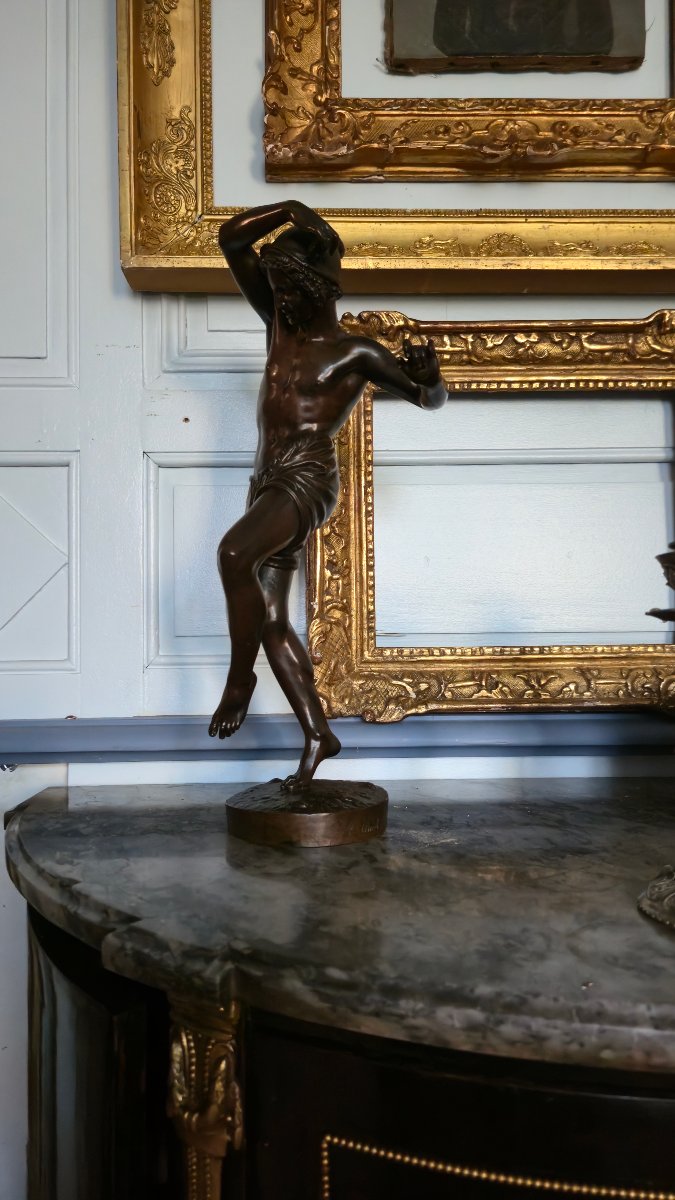
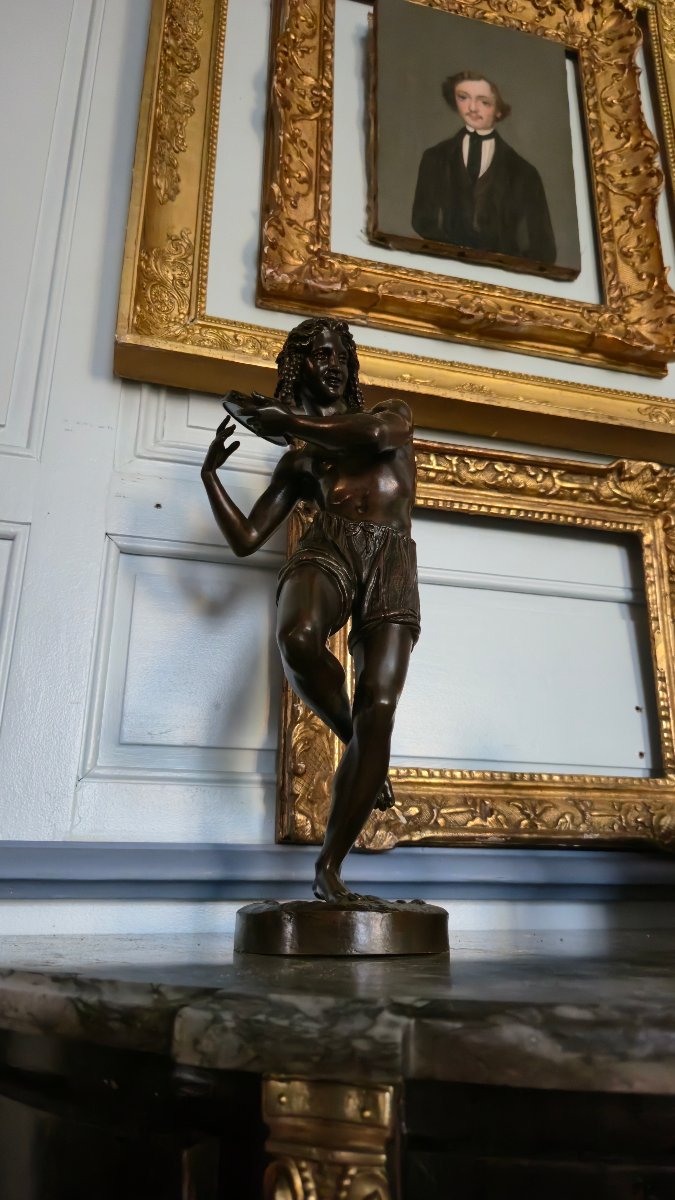
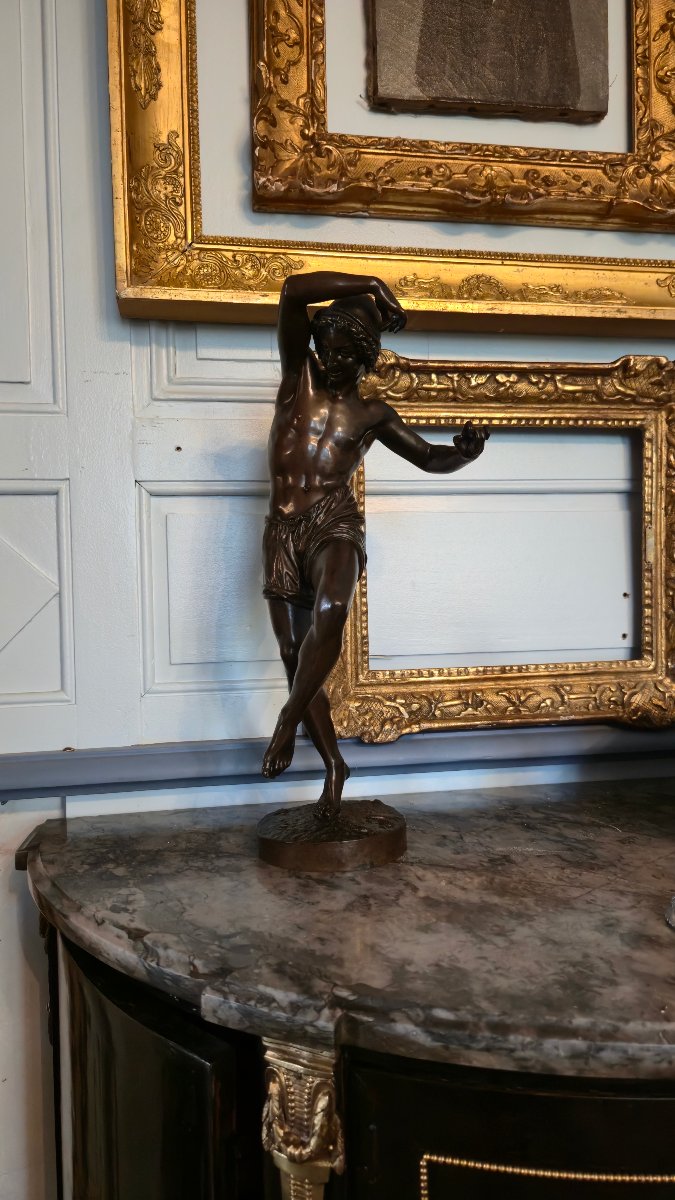

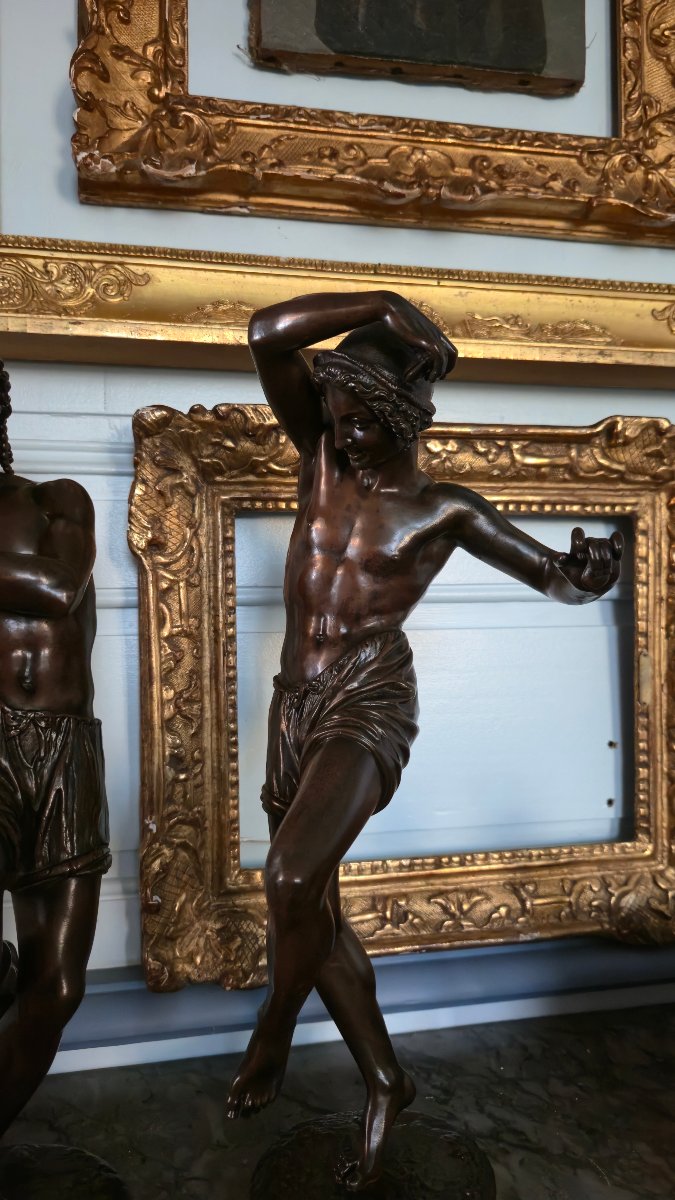
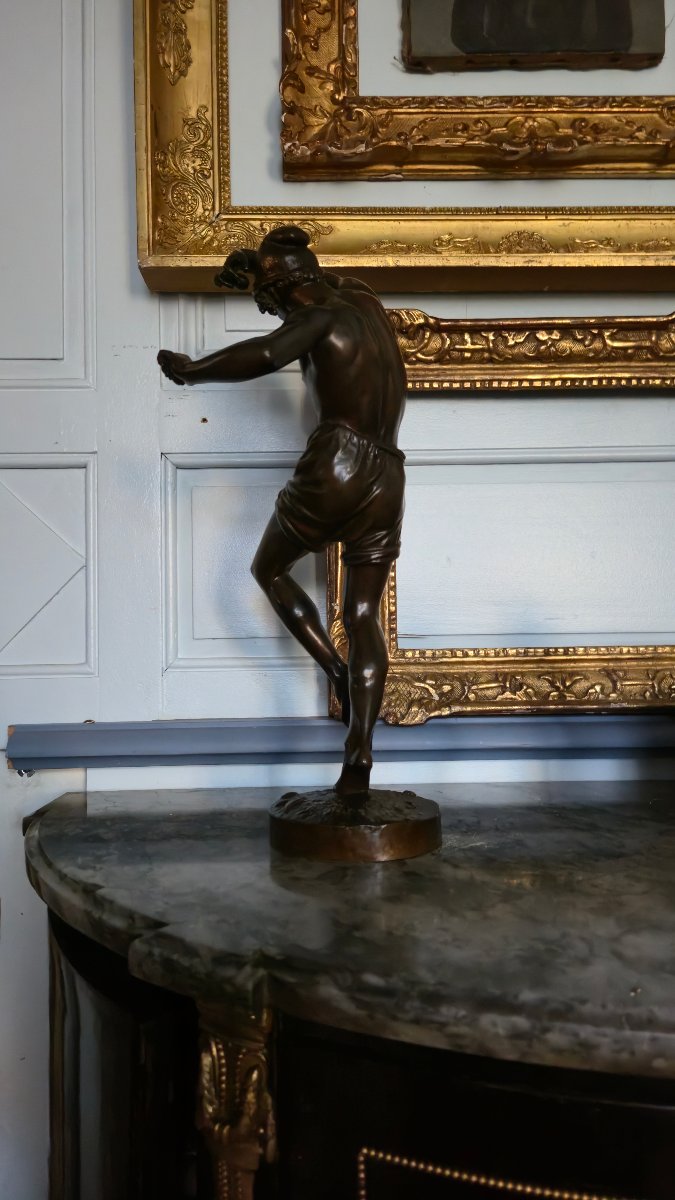
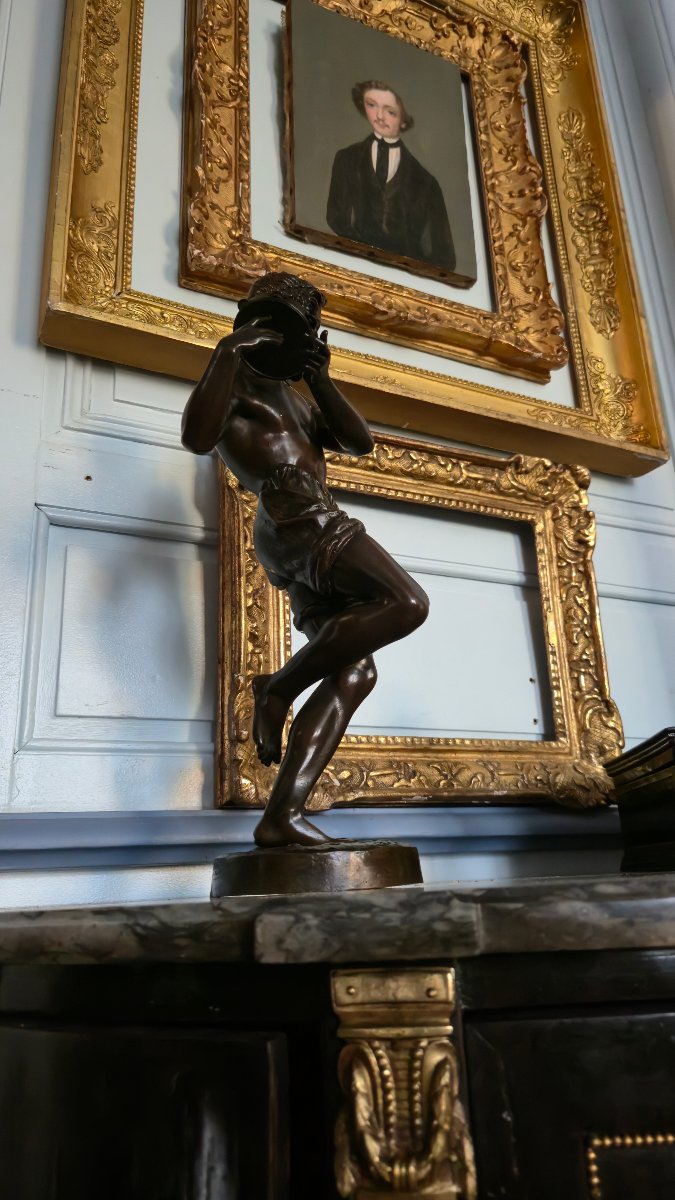
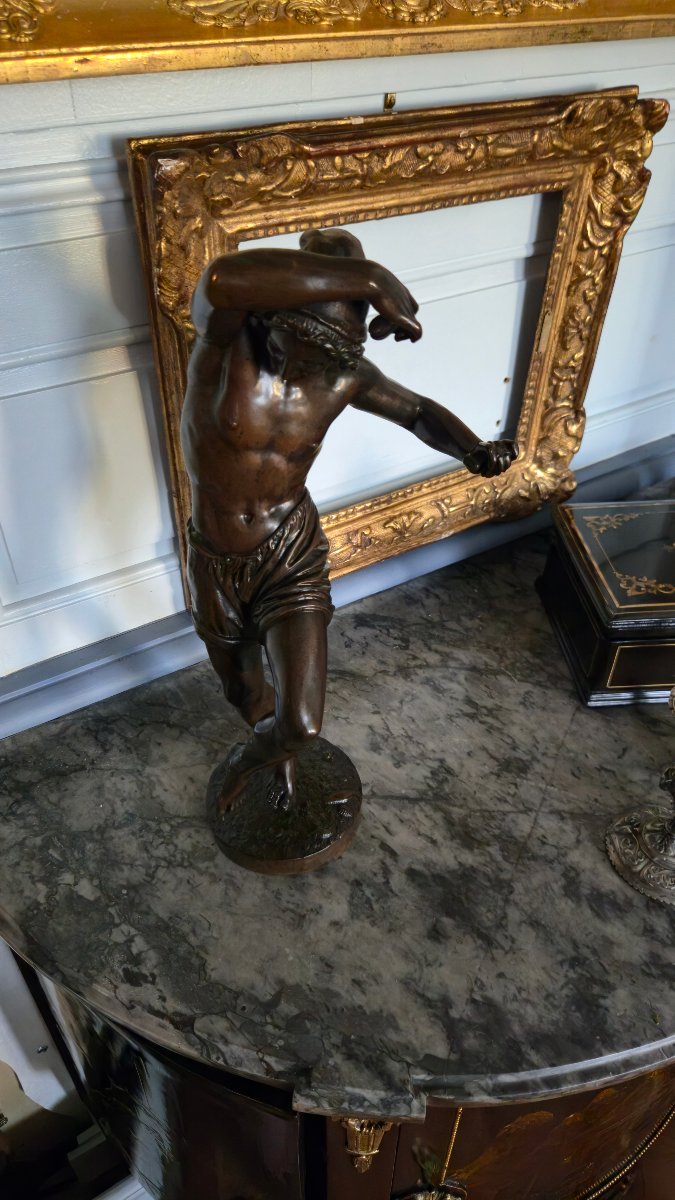
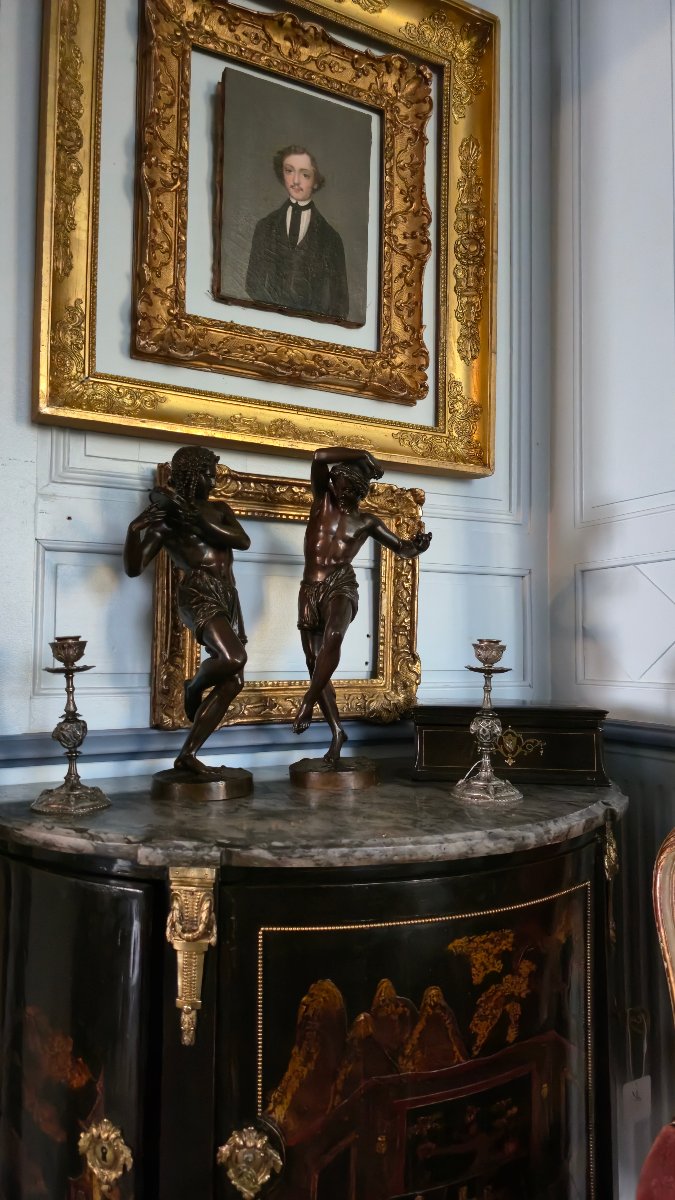
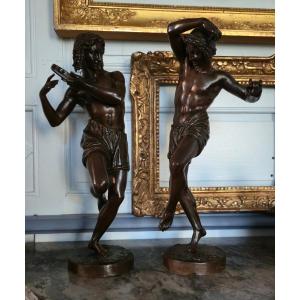


A pair of bronzes with a nuanced brown patina depicting *The Young Fisherman Dancing the Tarantella* and *The Neapolitan Dancer with a Tambourine*, two of the most iconic works by the sculptor Francisque Joseph Duret (1804–1865). Cast by the prestigious Parisian foundry Quesnel, these sculptures perfectly illustrate the revival of French Romantic sculpture in the first half of the 19th century.
A student of François-Joseph Bosio at the École des Beaux-Arts in Paris, Francisque Duret won the Grand Prix de Rome in 1823. His stay in Italy had a lasting impact on his work. Fascinated by Naples, its inhabitants, their costumes, and their folk dances, he drew new inspiration from the city that moved away from strict academicism to give rise to compositions full of naturalness, movement, and life.
*The Young Fisherman Dancing the Tarantella*, presented at the 1833 Salon, was an immediate success. Admired for the accuracy of its anatomy, the balance of its composition, and the spontaneity of its pose, the work was acquired by the French government, and the monumental model is now housed in the Louvre Museum. Duret continued this Italian-inspired theme with *The Neapolitan Dancer with a Tambourine*, presented at the 1838 Salon, conceived as a companion piece to *The Young Fisherman*. The two figures celebrate youth, music, and dance in a profoundly romantic style in which movement becomes one of the primary means of expression.
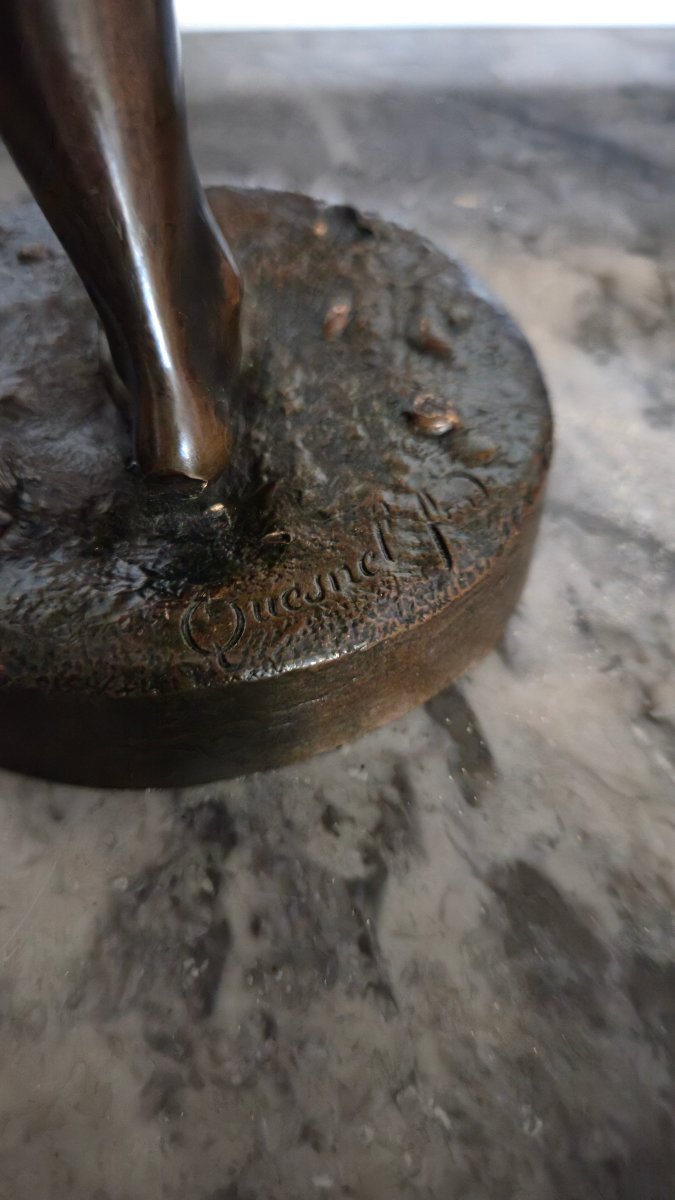
These models were cast by Quesnel, one of the most important Parisian art foundries of his time. After operating under the name Richard & Quesnel, the firm continued its business under the sole name of Quesnel beginning in 1836. It collaborated with several of France’s greatest sculptors, including David d’Angers, James Pradier, François Rude, Antoine-Louis Barye, and Francisque Duret. The bibliography notes that Quesnel obtained the casting rights for *The Young Fisherman Dancing the Tarantella* and *The Neapolitan Dancer*, before Delafontaine took over production in the mid-1850s. These sculptures, both marked “Quesnel fondeur,” are thus among the earliest editions of these famous models.
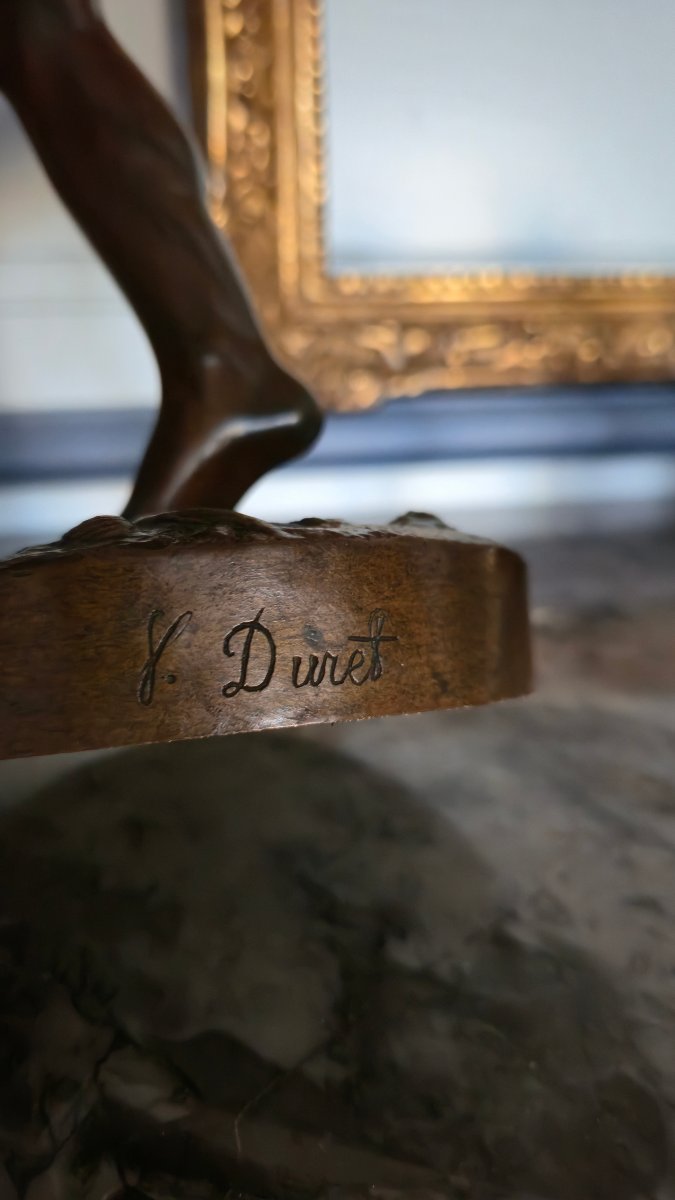
*The Young Fisherman Dancing the Tarantella* also bears the incised signature “F. Duret” on the plinth. The Neapolitan Dancer is also marked “Quesnel fondeur” on the pedestal.
This pair captivates with the remarkable quality of its casting and chiseling. The figures are rendered with great finesse, the drapery retains all its suppleness, and the accessories—fishing net, tambourine, and plant motifs—demonstrate particularly meticulous craftsmanship. The poses, remarkably balanced, showcase Duret’s talent for capturing movement with naturalness and elegance.
Both bronzes retain their original brown patina, which is particularly beautiful and richly nuanced. There are only a few slight historical distortions on the bases, which do not affect their stability or their presentation quality.
Given their quality of craftsmanship, their provenance from a limited edition, and their essential place in the body of work by Francisque Duret, these two bronzes constitute a remarkable testament to 19th-century French Romantic sculpture.
Dimensions:
- Young Fisherman Dancing the Tarantella: 44 cm high.
- Neapolitan Dancer with a Tambourine: 43 cm high.
Bibliography:
Pierre Kjellberg, *Les Bronzes du XIXᵉ siècle*, Les Éditions de l’Amateur, pp. 304–305.
A student of François-Joseph Bosio at the École des Beaux-Arts in Paris, Francisque Duret won the Grand Prix de Rome in 1823. His stay in Italy had a lasting impact on his work. Fascinated by Naples, its inhabitants, their costumes, and their folk dances, he drew new inspiration from the city that moved away from strict academicism to give rise to compositions full of naturalness, movement, and life.
*The Young Fisherman Dancing the Tarantella*, presented at the 1833 Salon, was an immediate success. Admired for the accuracy of its anatomy, the balance of its composition, and the spontaneity of its pose, the work was acquired by the French government, and the monumental model is now housed in the Louvre Museum. Duret continued this Italian-inspired theme with *The Neapolitan Dancer with a Tambourine*, presented at the 1838 Salon, conceived as a companion piece to *The Young Fisherman*. The two figures celebrate youth, music, and dance in a profoundly romantic style in which movement becomes one of the primary means of expression.
These models were cast by Quesnel, one of the most important Parisian art foundries of his time. After operating under the name Richard & Quesnel, the firm continued its business under the sole name of Quesnel beginning in 1836. It collaborated with several of France’s greatest sculptors, including David d’Angers, James Pradier, François Rude, Antoine-Louis Barye, and Francisque Duret. The bibliography notes that Quesnel obtained the casting rights for *The Young Fisherman Dancing the Tarantella* and *The Neapolitan Dancer*, before Delafontaine took over production in the mid-1850s. These sculptures, both marked “Quesnel fondeur,” are thus among the earliest editions of these famous models.
*The Young Fisherman Dancing the Tarantella* also bears the incised signature “F. Duret” on the plinth. The Neapolitan Dancer is also marked “Quesnel fondeur” on the pedestal.
This pair captivates with the remarkable quality of its casting and chiseling. The figures are rendered with great finesse, the drapery retains all its suppleness, and the accessories—fishing net, tambourine, and plant motifs—demonstrate particularly meticulous craftsmanship. The poses, remarkably balanced, showcase Duret’s talent for capturing movement with naturalness and elegance.
Both bronzes retain their original brown patina, which is particularly beautiful and richly nuanced. There are only a few slight historical distortions on the bases, which do not affect their stability or their presentation quality.
Given their quality of craftsmanship, their provenance from a limited edition, and their essential place in the body of work by Francisque Duret, these two bronzes constitute a remarkable testament to 19th-century French Romantic sculpture.
Dimensions:
- Young Fisherman Dancing the Tarantella: 44 cm high.
- Neapolitan Dancer with a Tambourine: 43 cm high.
Bibliography:
Pierre Kjellberg, *Les Bronzes du XIXᵉ siècle*, Les Éditions de l’Amateur, pp. 304–305.
Explore similar pieces and discover your ideal find:
bronze sculptures