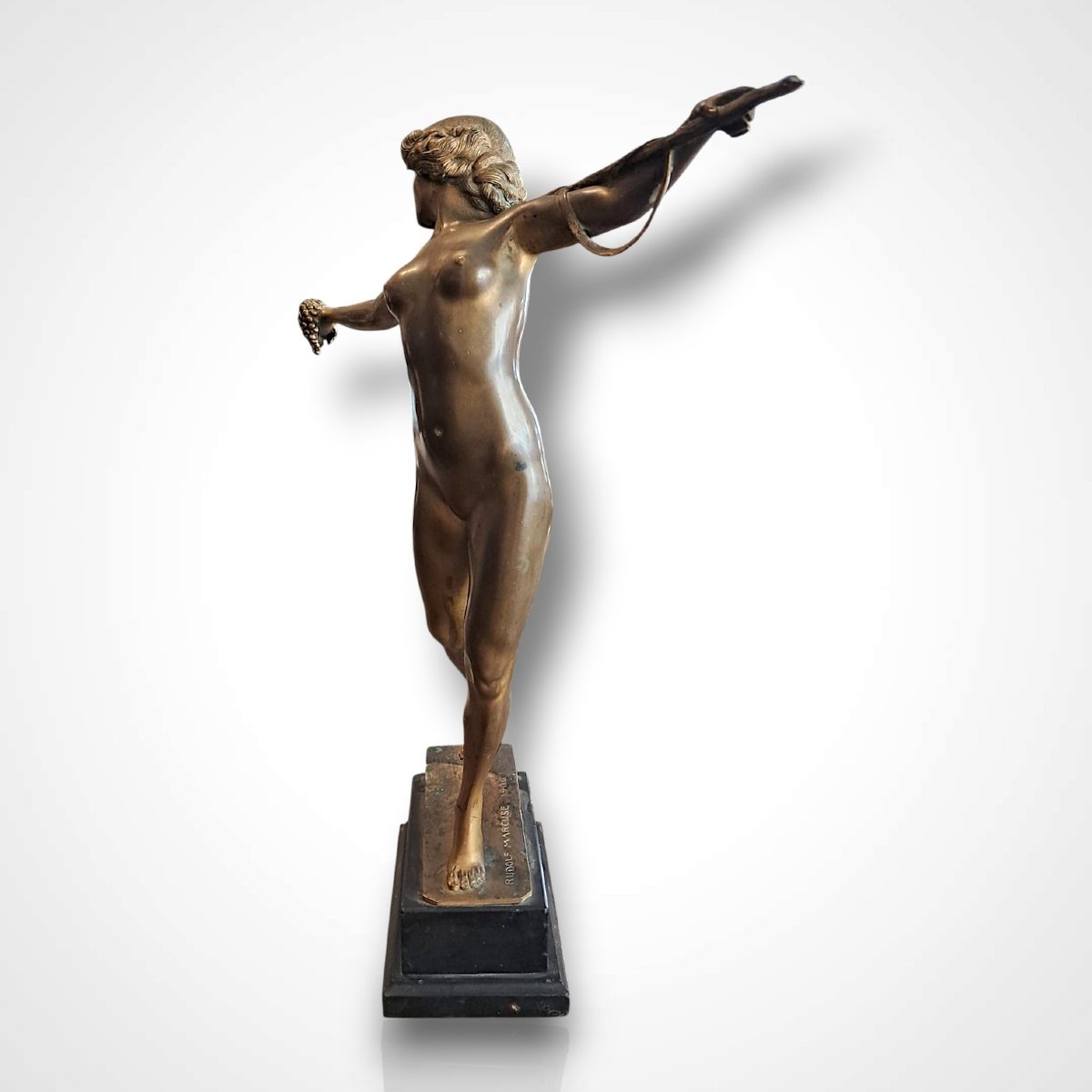
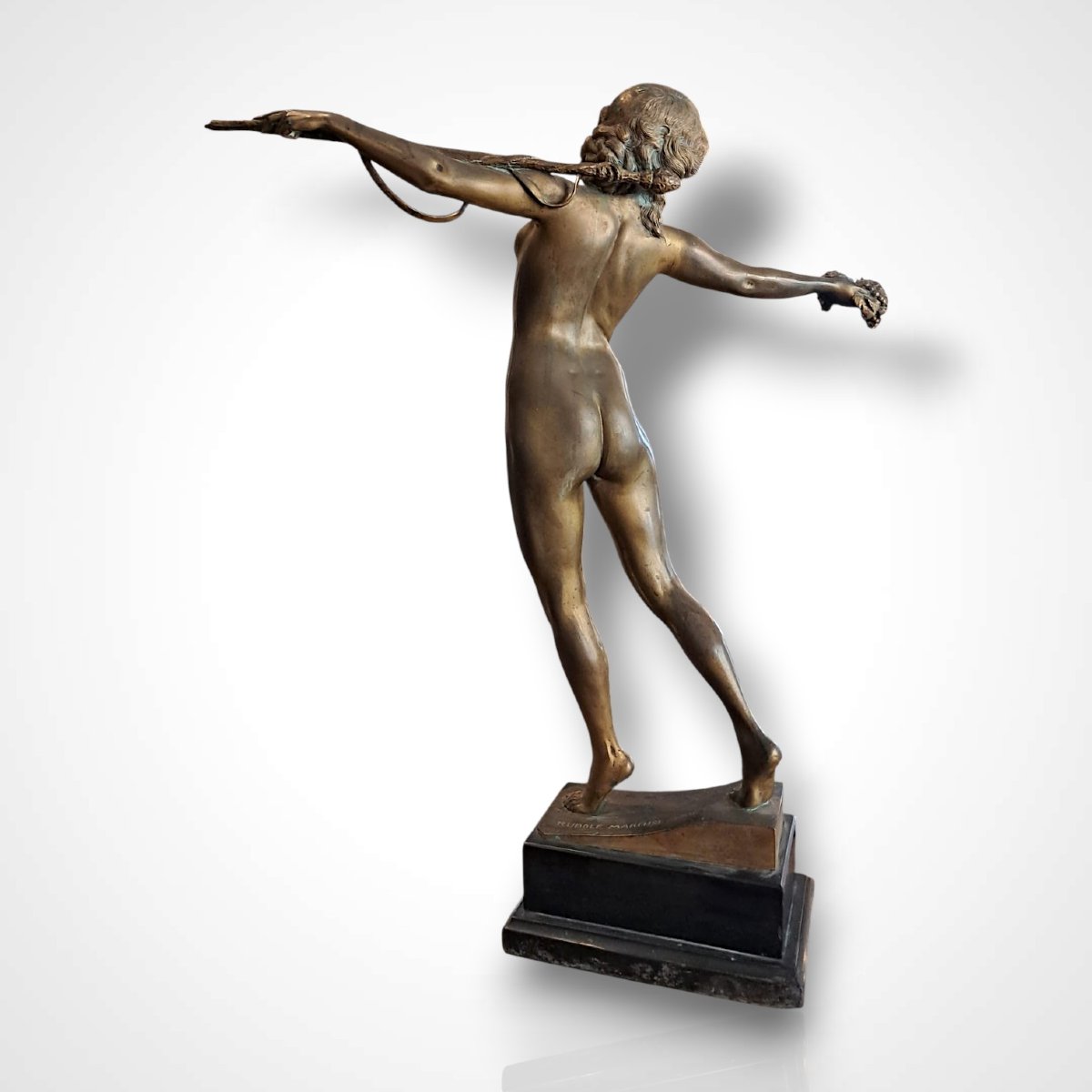
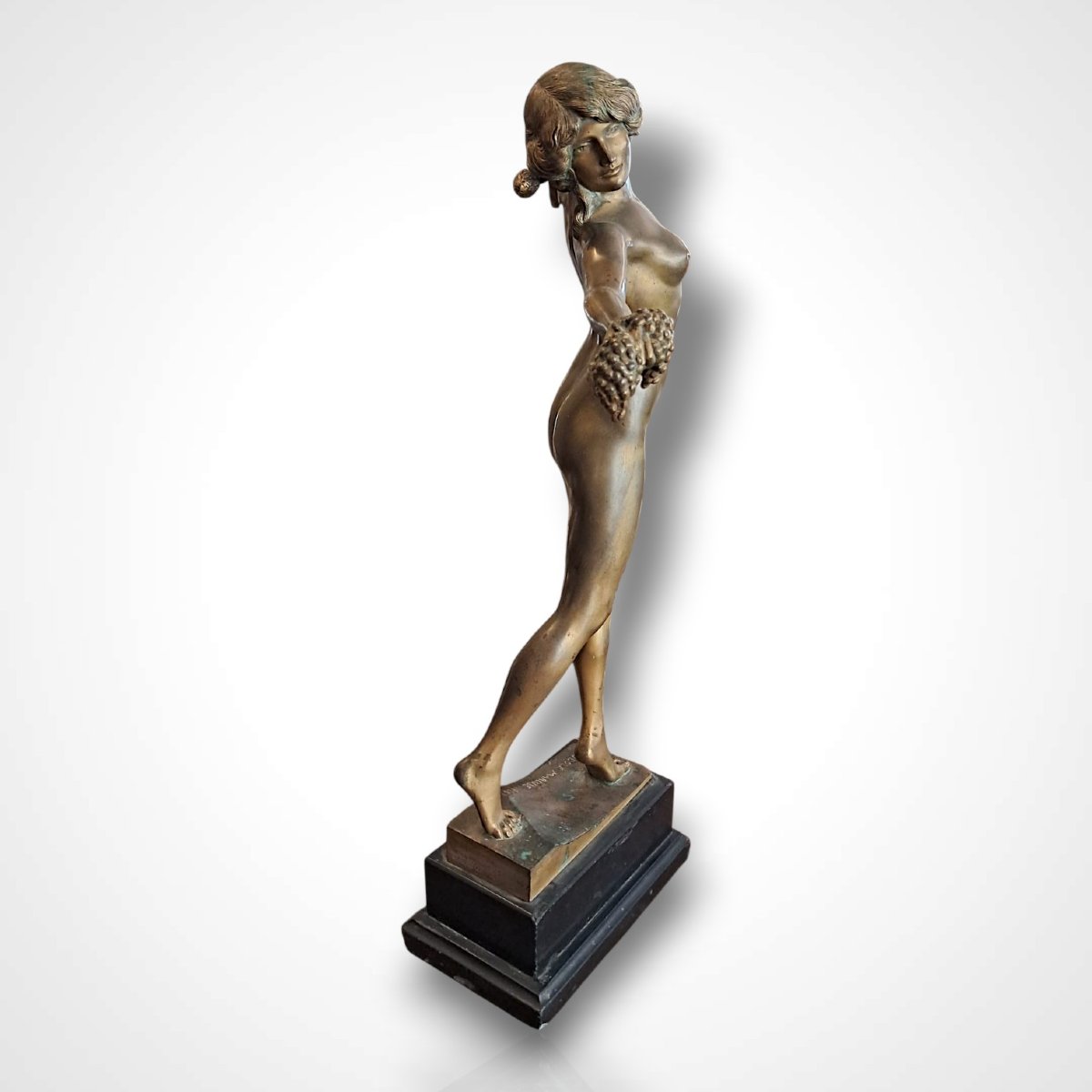

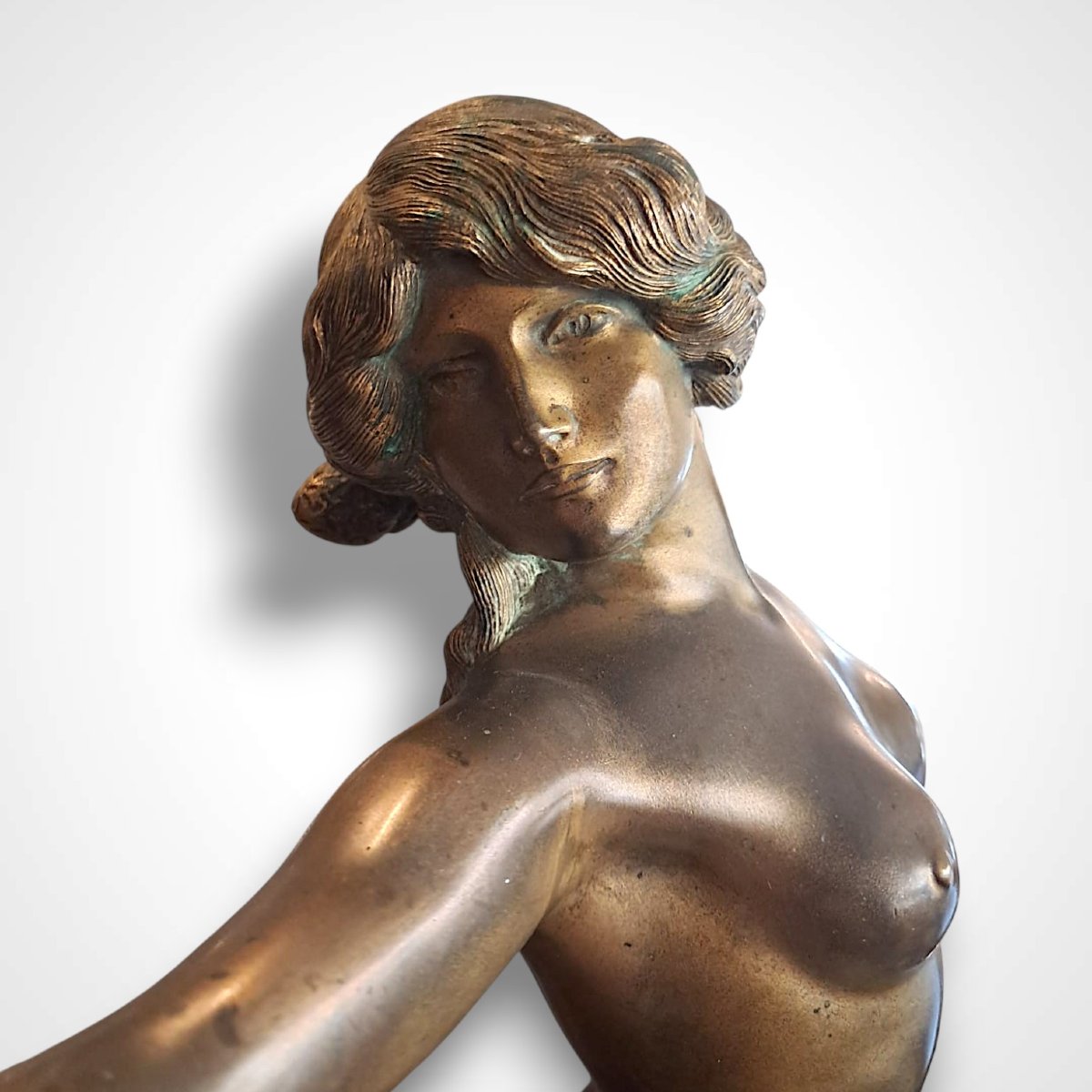
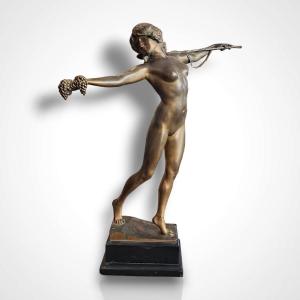


Rudolf Marcuse, Bacchante, Bronze, Early 20th Century
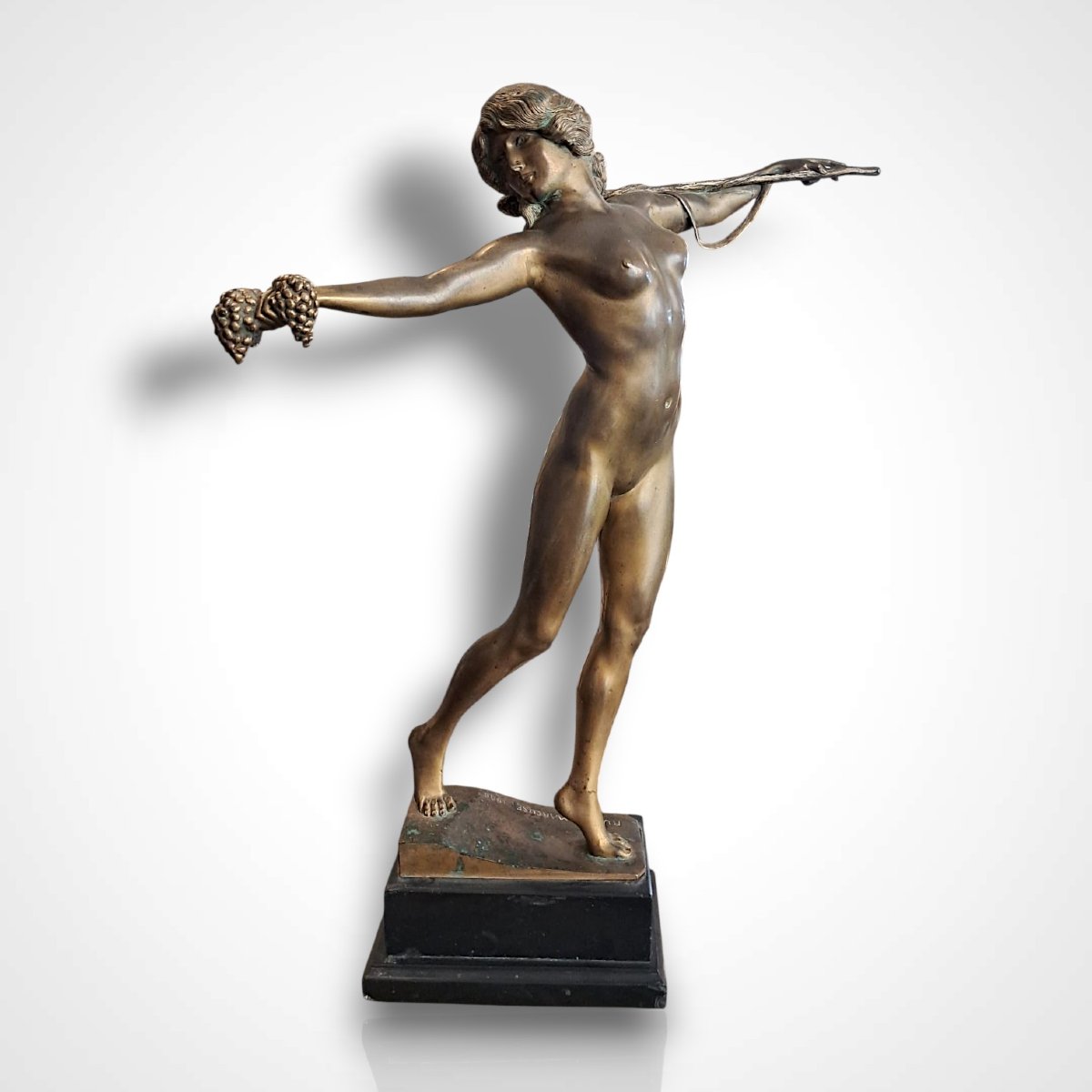
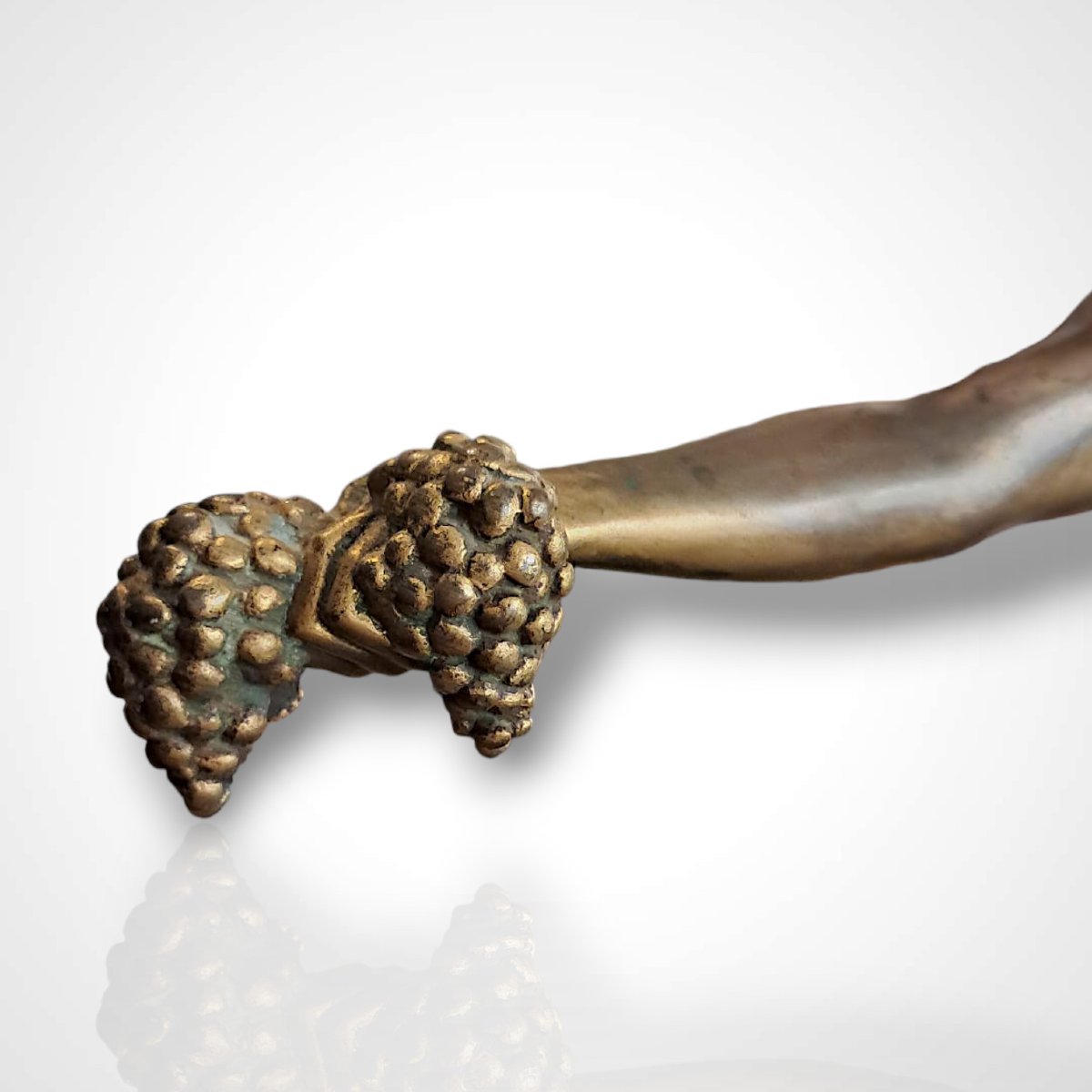
A patinated bronze sculpture resting on a black marble pedestal and depicting a Bacchante captured in the midst of a dance step. In one hand she holds a bunch of grapes and in the other a thyrsus, an attribute traditionally associated with Bacchus and his followers, consisting of a wooden shaft wrapped with a taenia (ribbon) and topped with a pine cone.
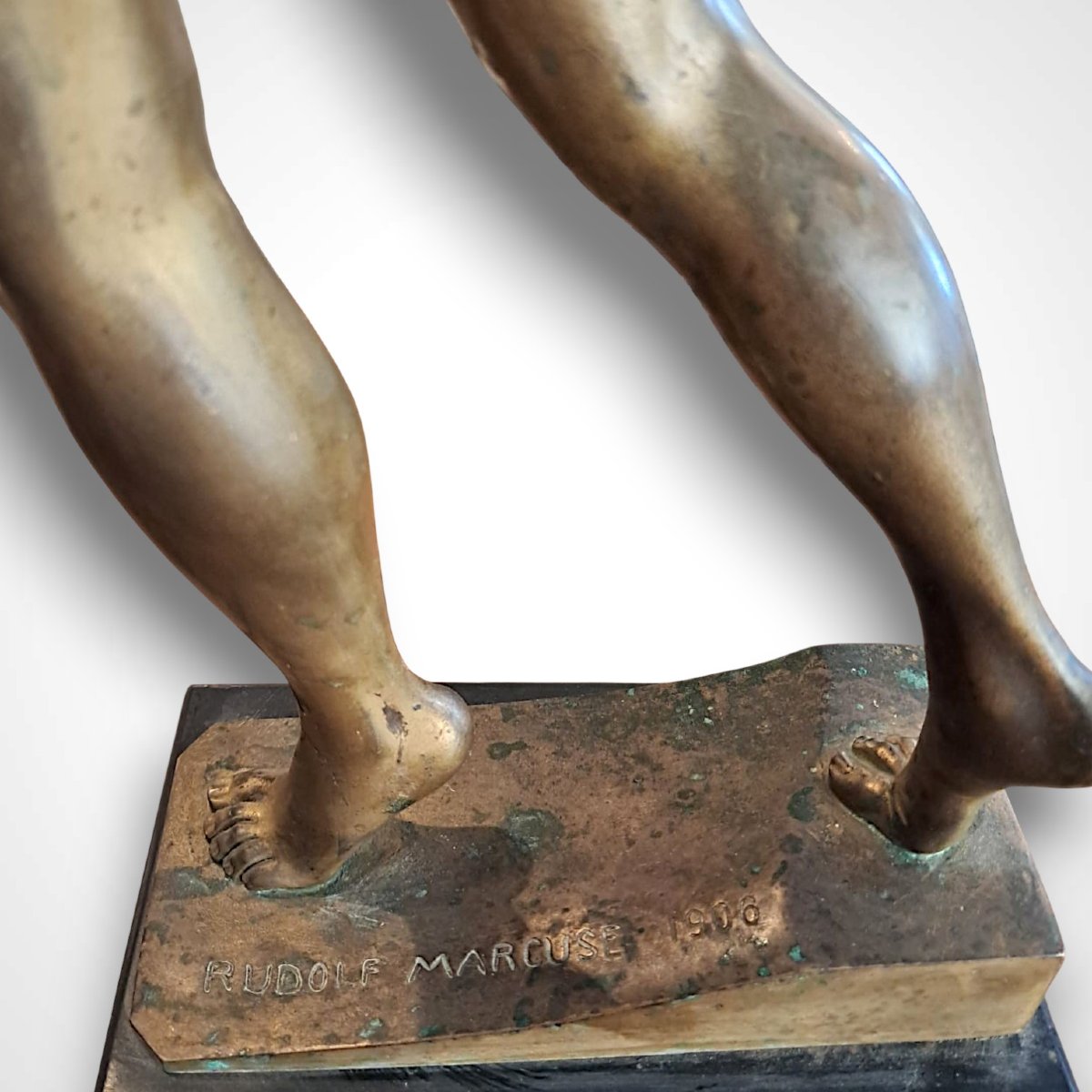
Signed “RUDOLF MARCUSE 1906” on the pedestal.
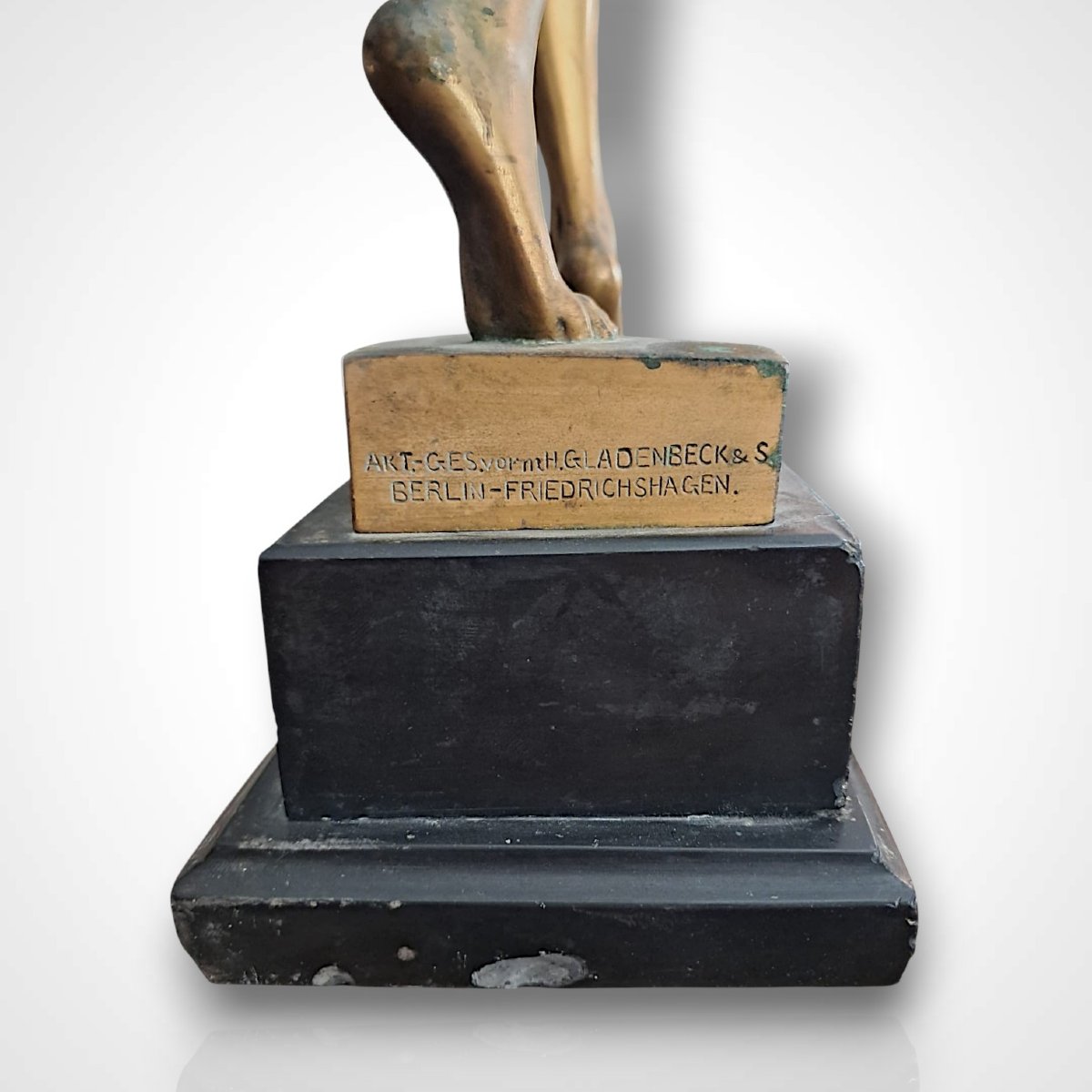
Inscription “AKT.-GES. vorm. H. GLADENBECK & S. / BERLIN-FRIEDRICHSHAGEN,” which can be translated as “Joint-stock company formerly H. Gladenbeck & Sons, Berlin-Friedrichshagen”. This is the mark of H. Gladenbeck & Sohn, the leading German foundry active in Berlin between 1851 and 1948.
Rudolf Marcuse (1878–1940) was a German sculptor trained at the Berlin Academy of Fine Arts. A winner of the Prix de Rome from the Prussian Academy of Arts in 1910, he stayed at Villa Strohl-Fern and, that same year, received a gold medal at the Brussels International Exposition. He primarily created small-scale bronze sculptures inspired by Art Nouveau and Art Deco, but also designed figurines for the Schwarzburg Porcelain Workshops, the Royal Berlin Porcelain Manufactory, and the Rosenthal Manufactory. During World War I, he continued his artistic work by creating sculptures of prisoners from various ethnic groups for a museum project that ultimately never came to fruition. In the 1930s, due to his Jewish heritage, the National Socialist Party revoked the grants he had been receiving from the Prussian Ministry of Culture, and he eventually emigrated to England, where he spent the rest of his life.
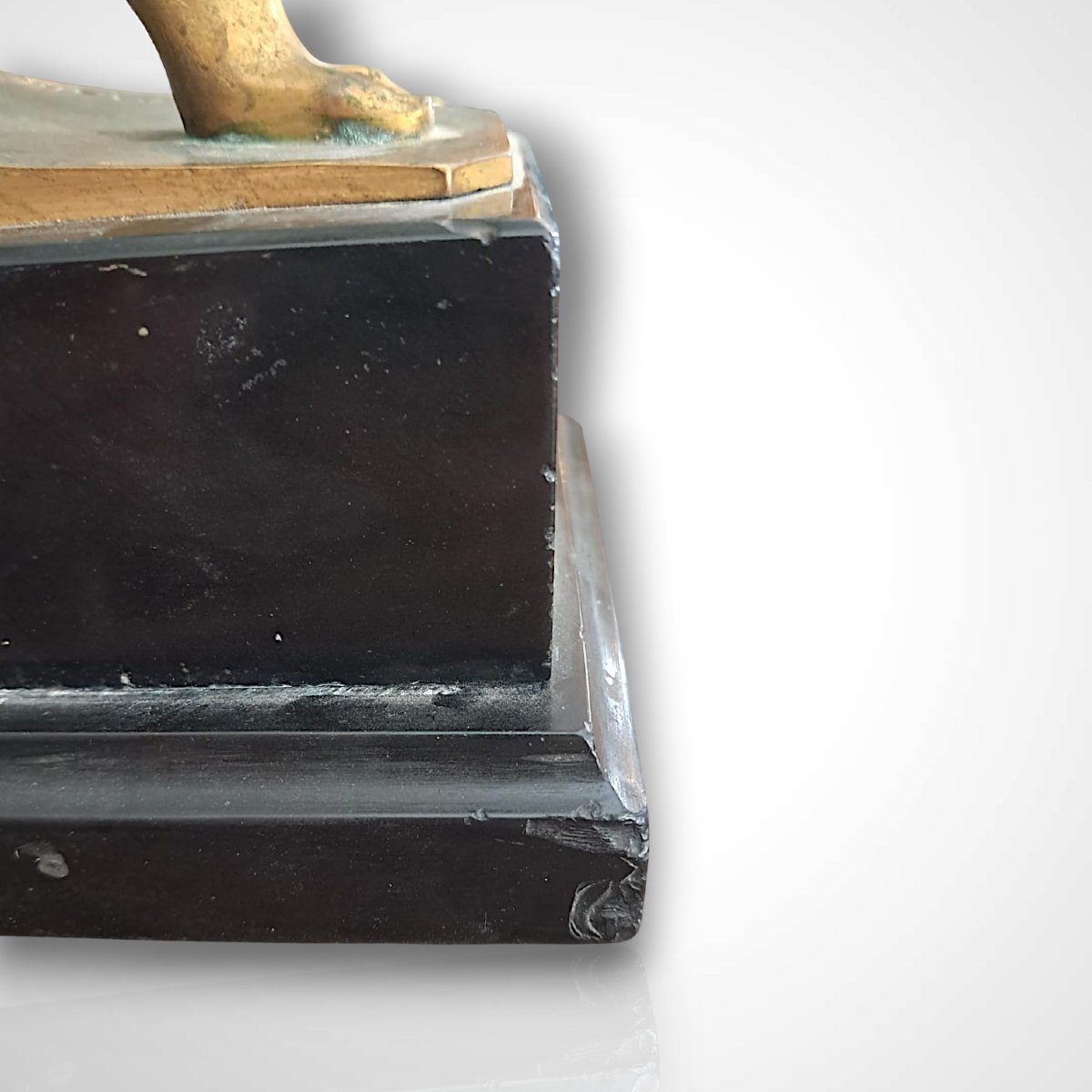
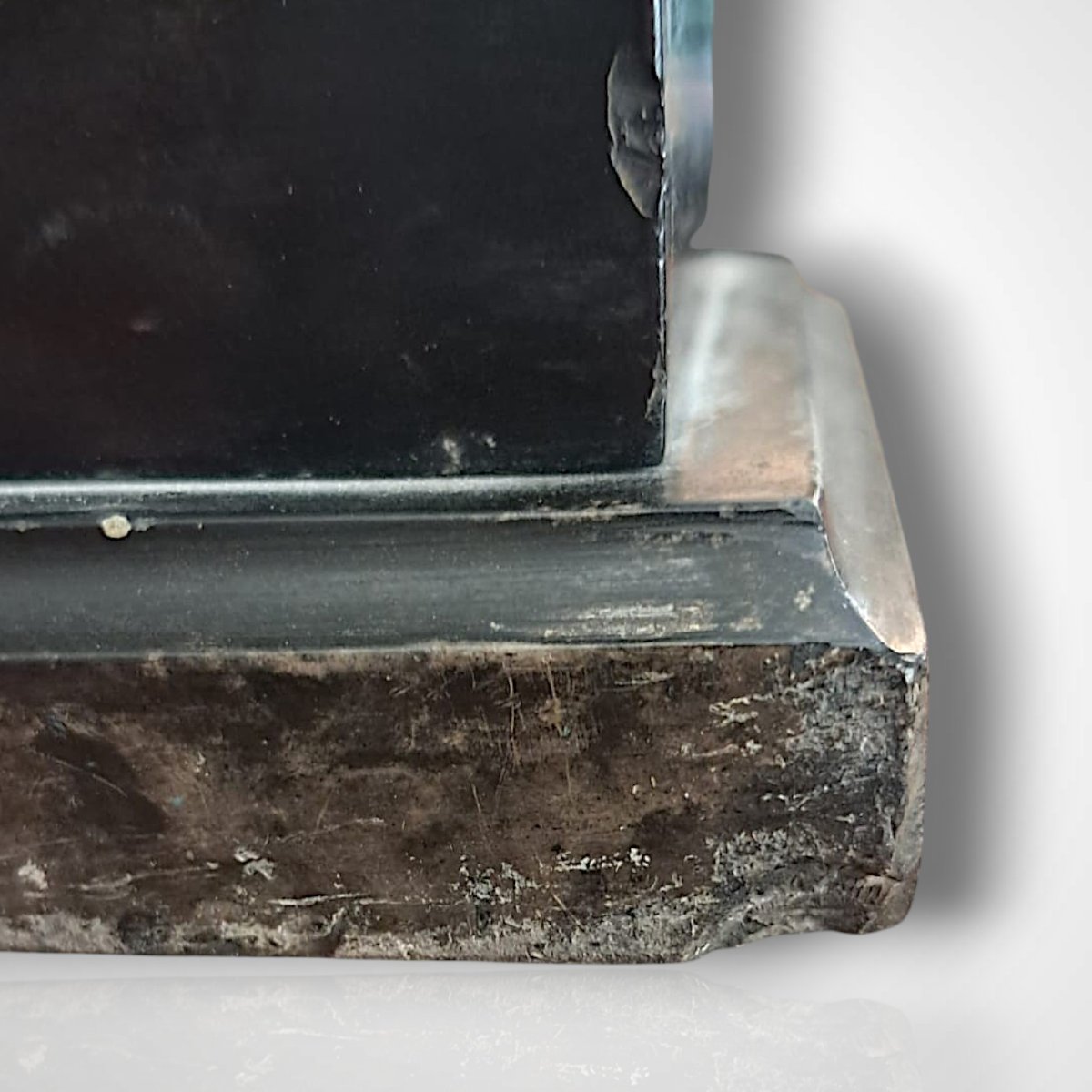
Signs of wear and chips on the marble base.
Good overall condition.
Art Nouveau period.
Dimensions:
H: 47 cm
L: 40 cm
W: 19 cm
Period: 20th century
Style: Art Nouveau
Condition: Good condition
Material: Bronze
Length: 40 cm
Width: 19 cm
Height: 47 cm
Reference (ID): 1783900
Availability: In stock