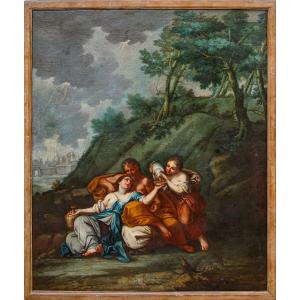


Circle Of Marcantonio Franceschini (bologna, 1648–1729), Loth And His Daughters
Circle of Marcantonio Franceschini (Bologna, 1648 – 1729)
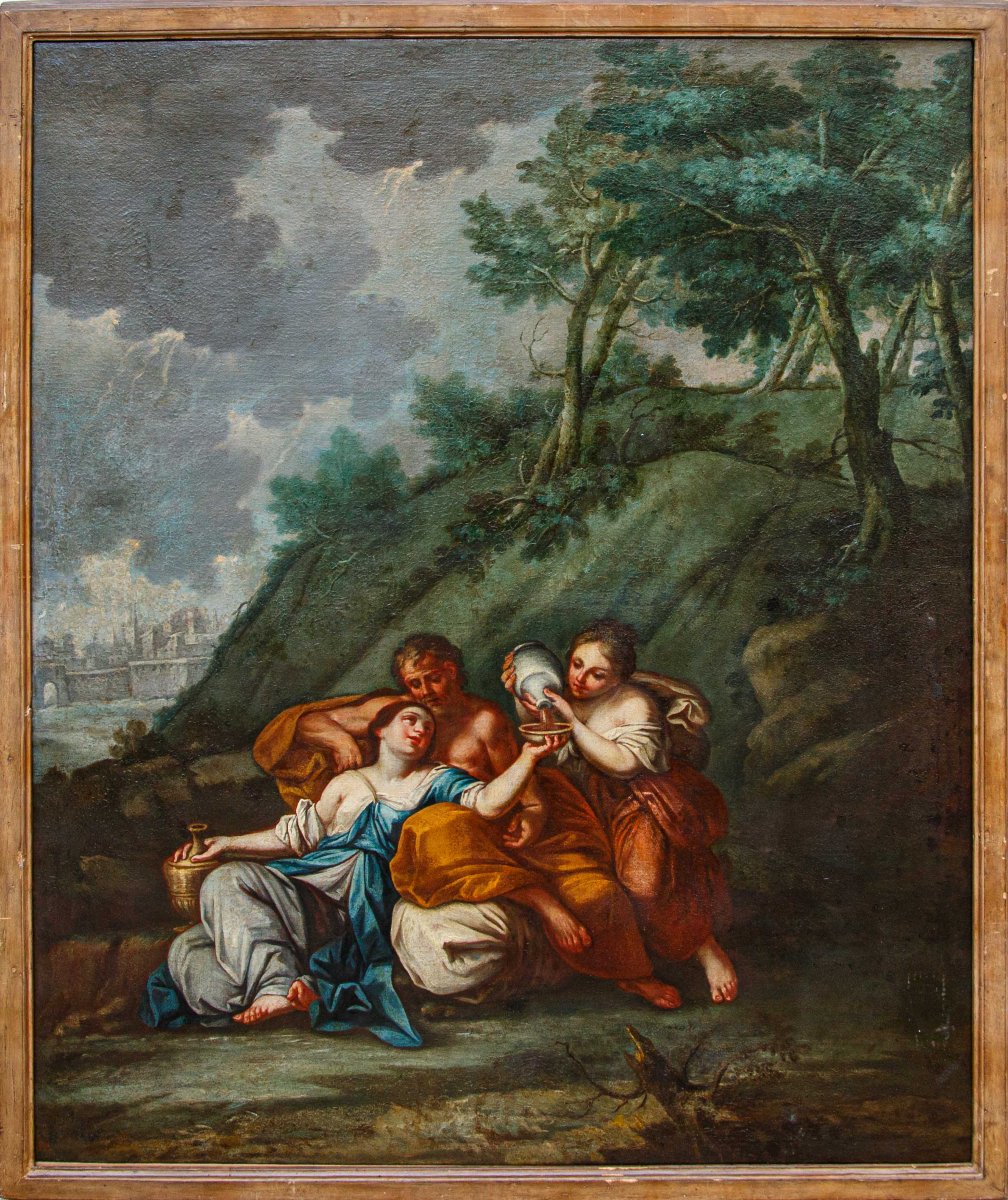
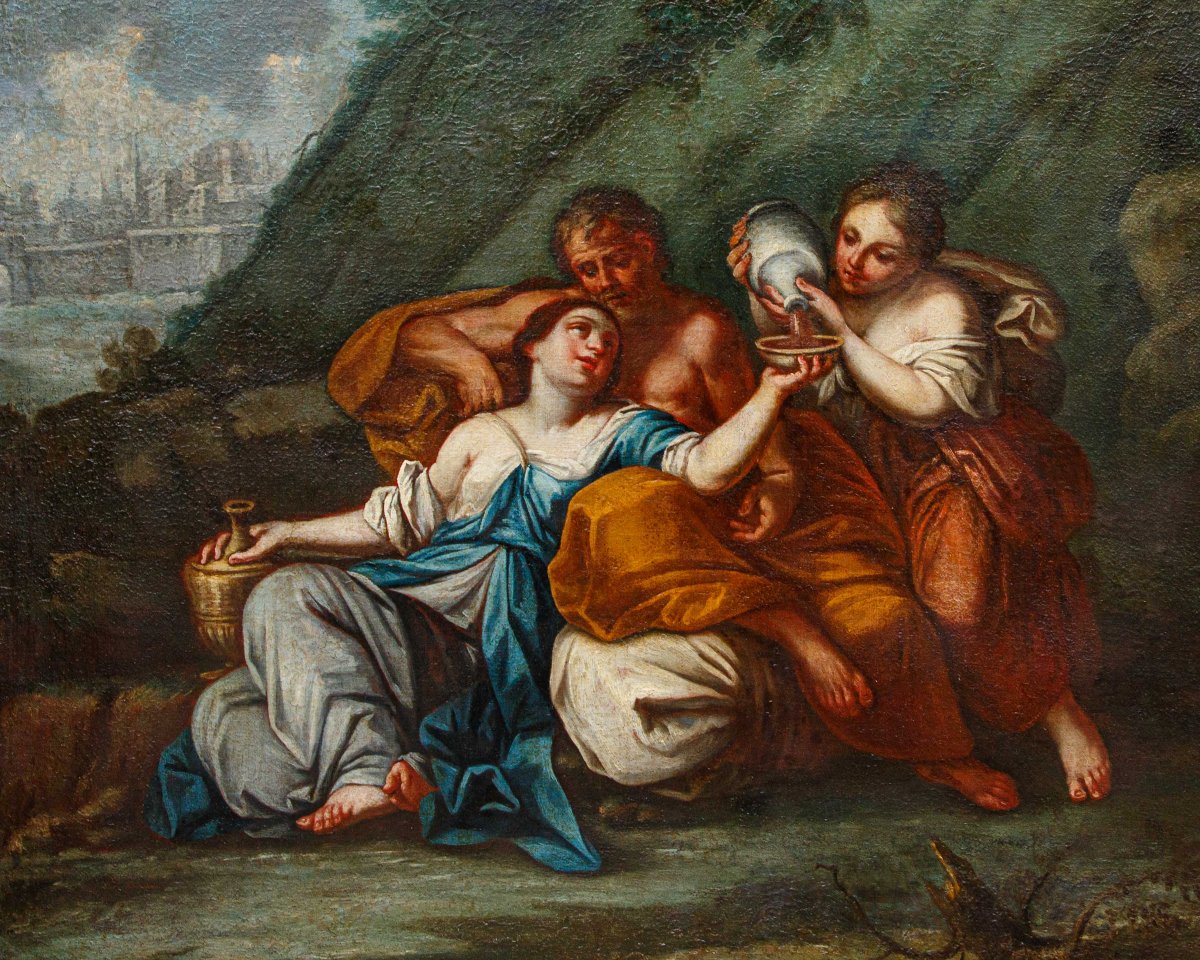
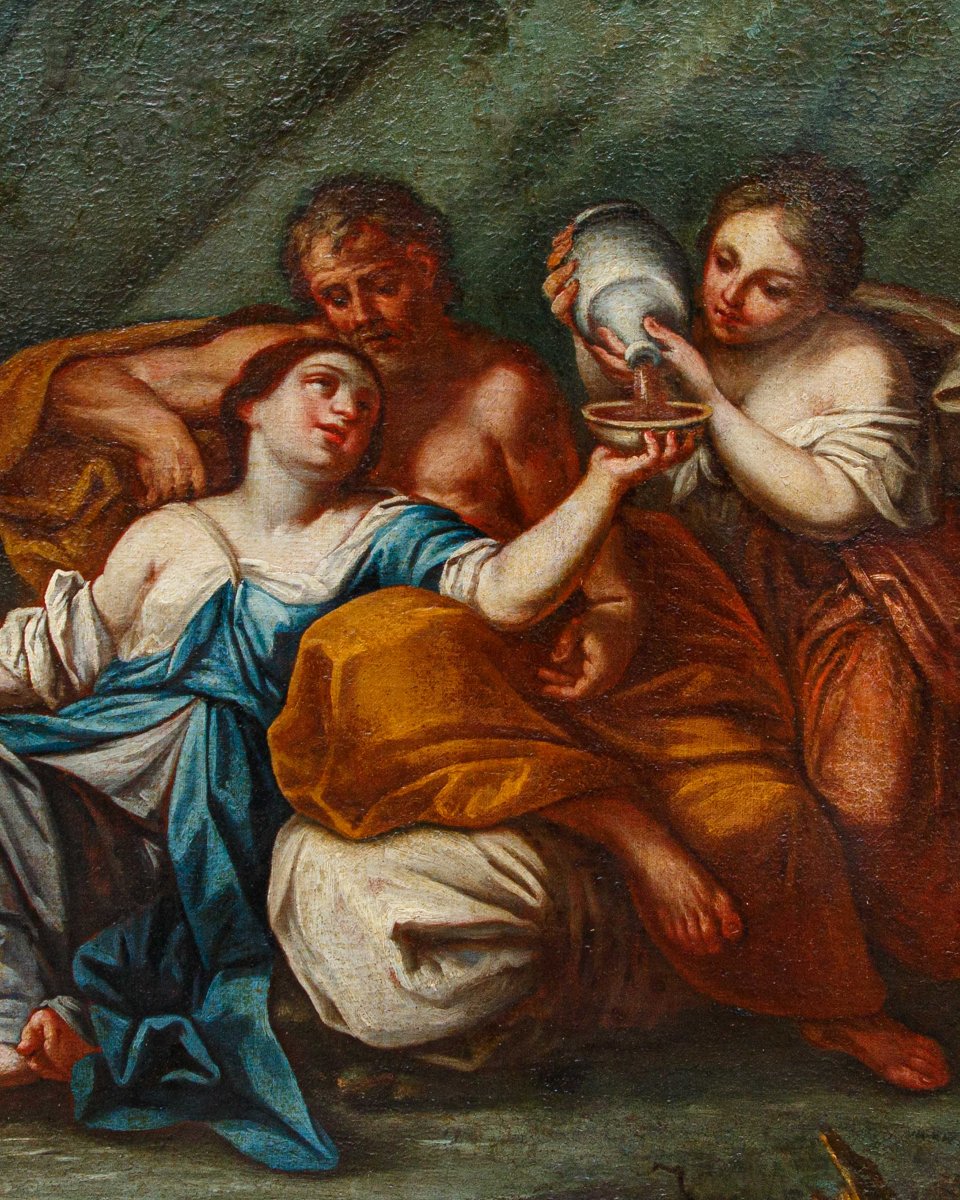
Loth and his daughters
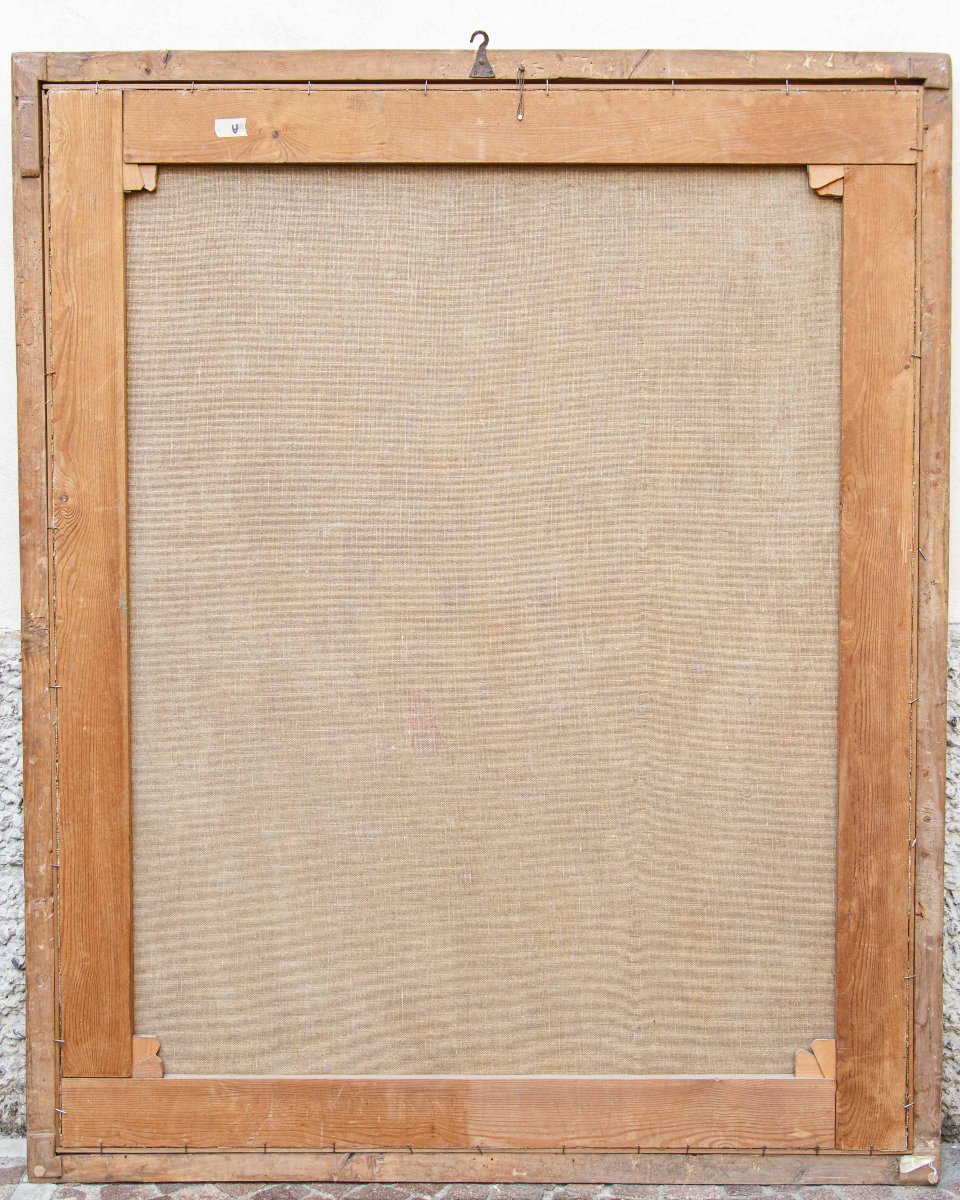
Oil on canvas, 152 x 123 cm
With frame, 163 x 133 cm
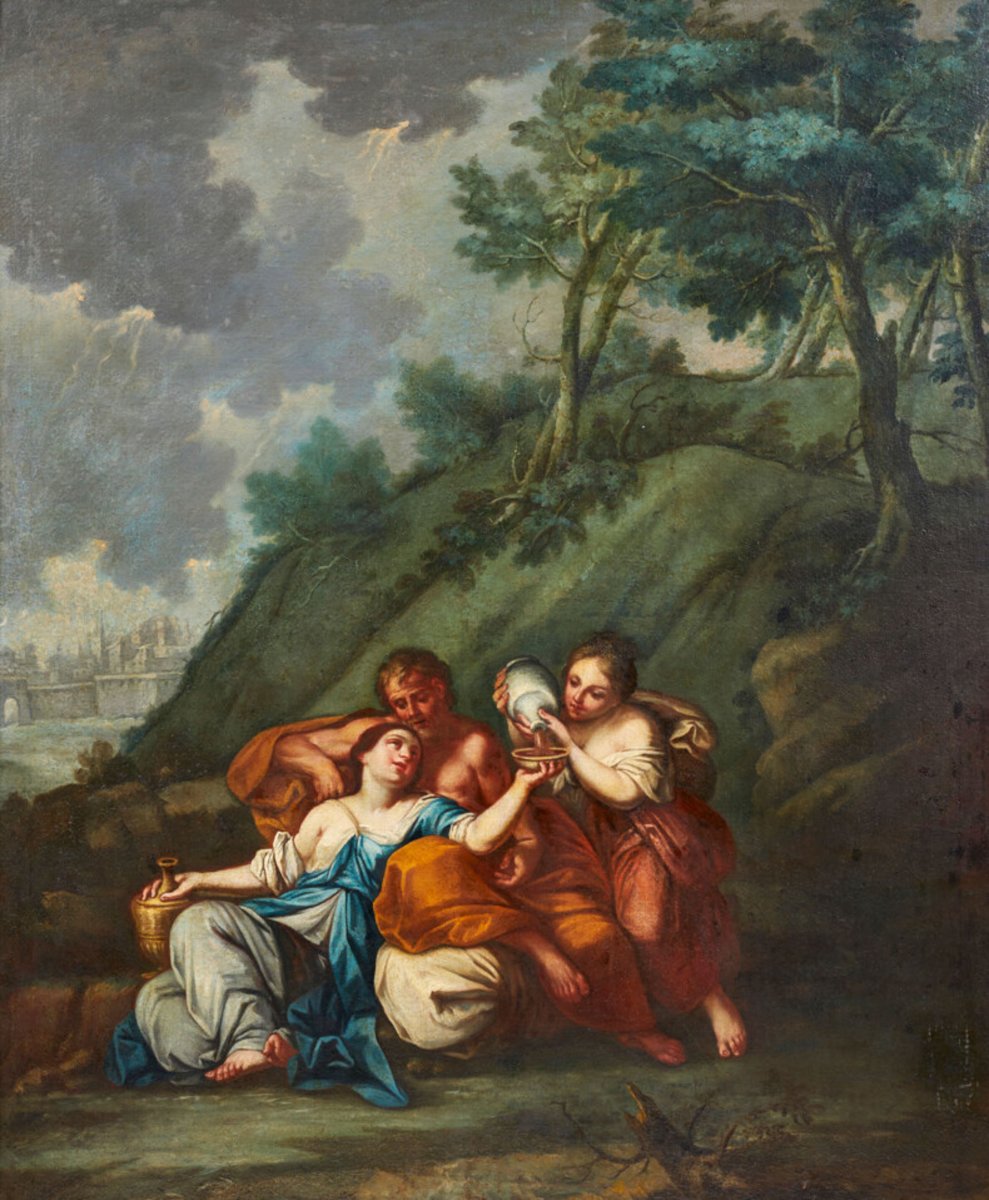
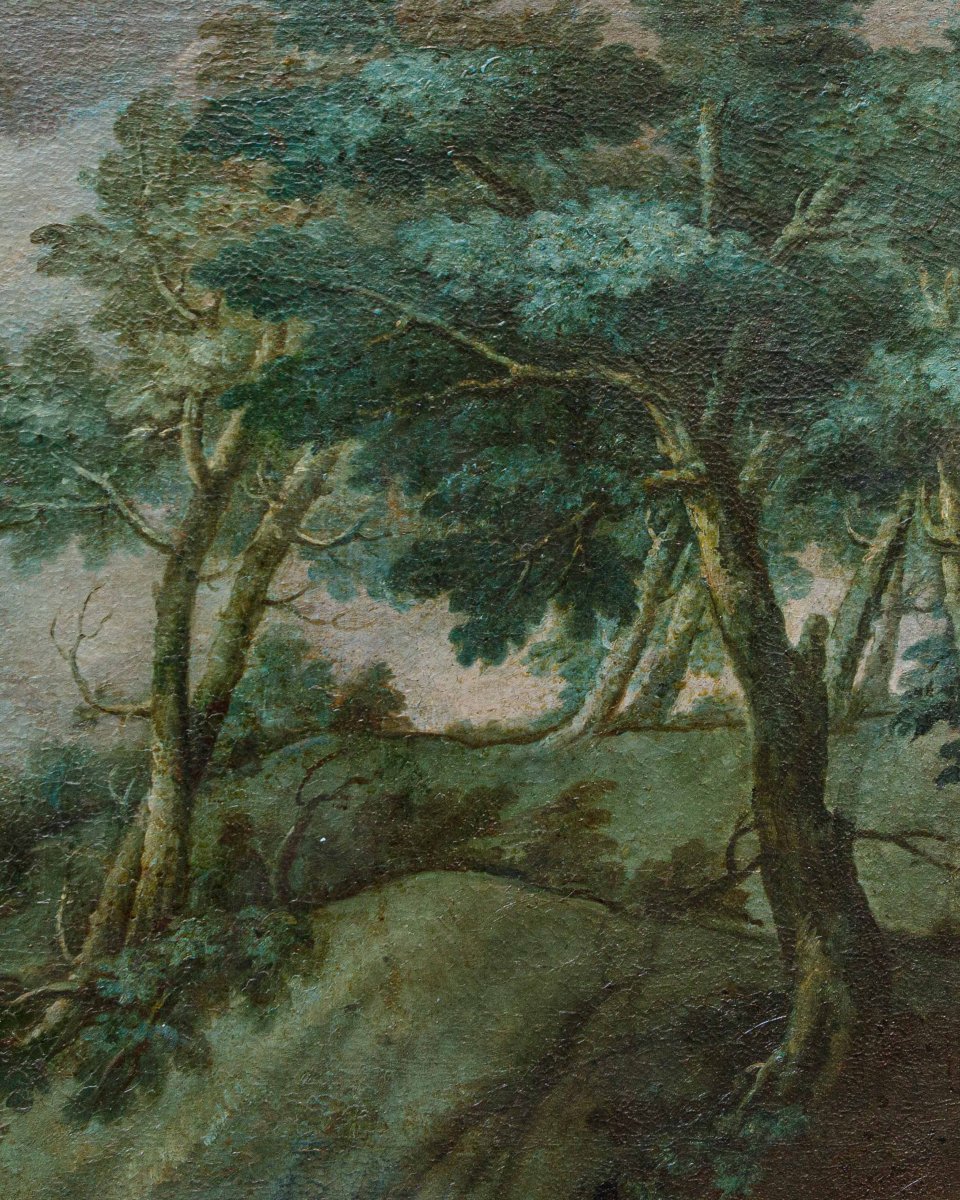
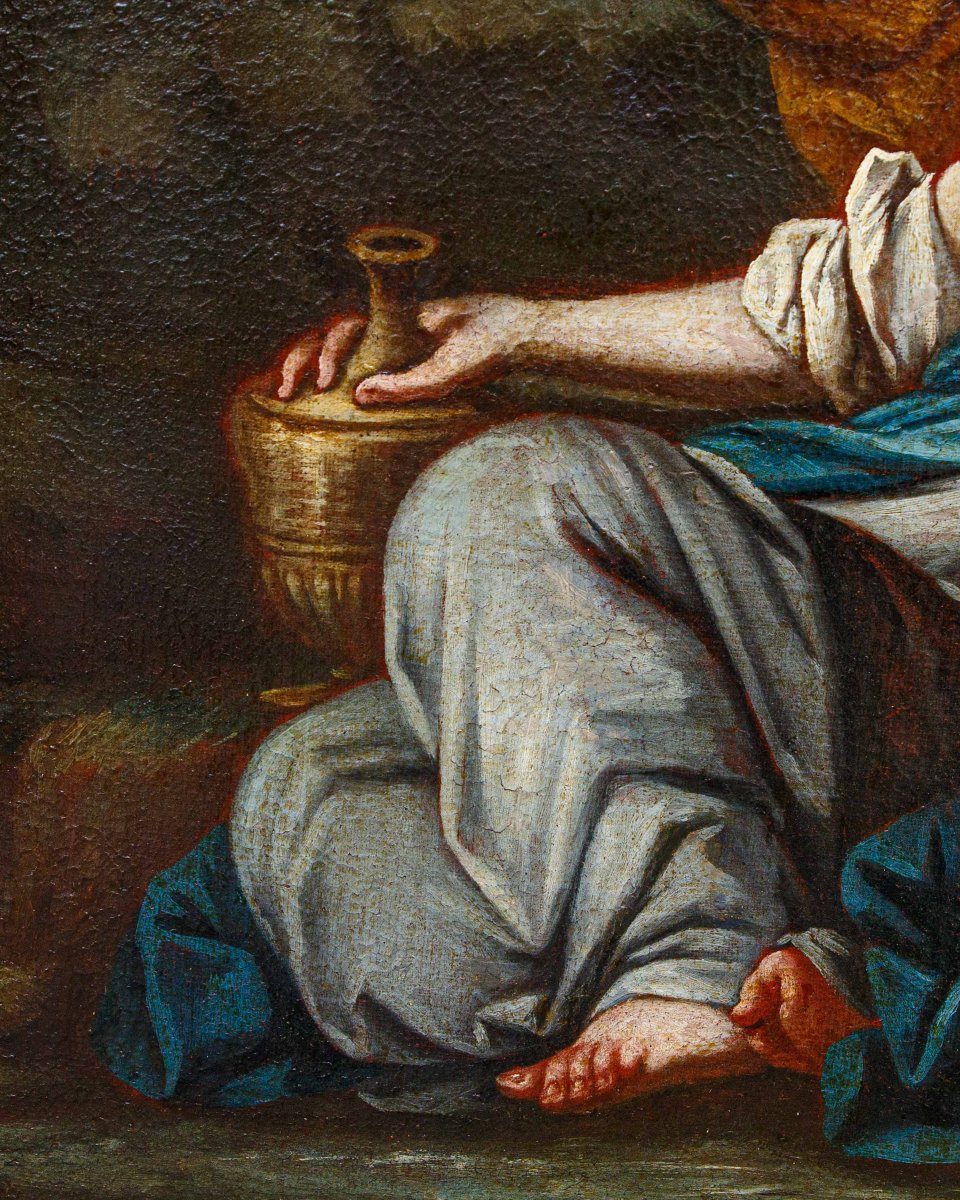
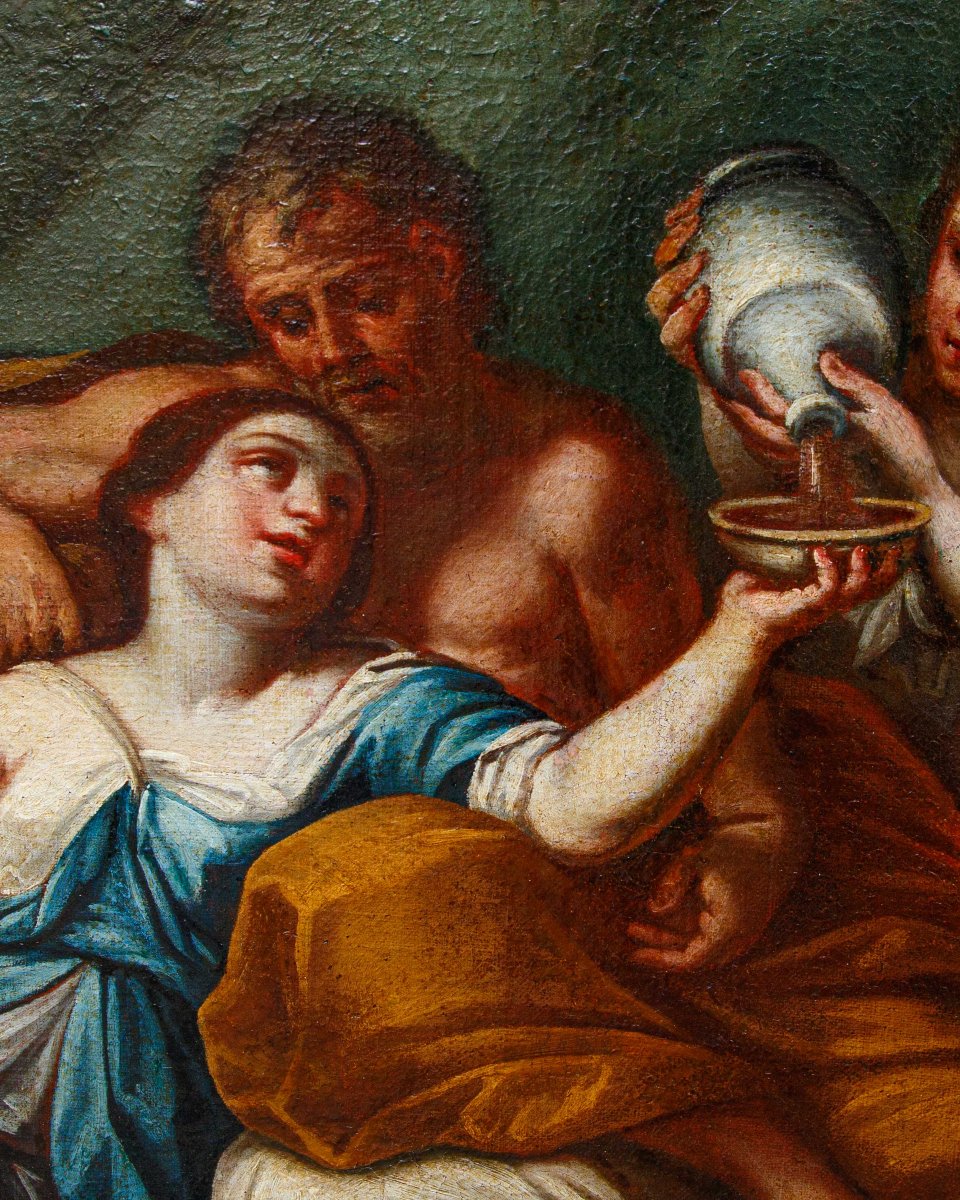
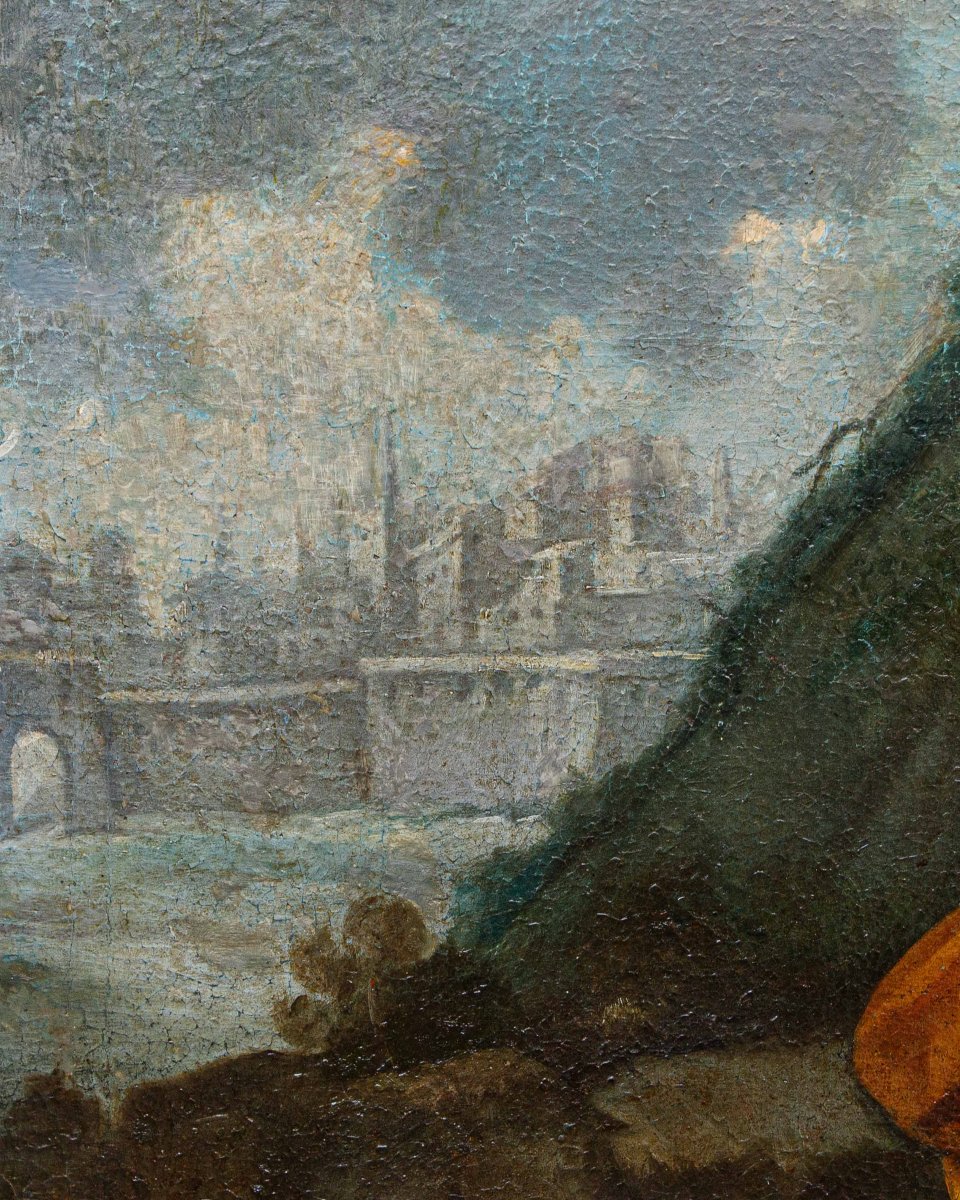
The idyllic setting of the scene, the rich colours and rosy faces, as well as the pose of the daughter, undoubtedly recall the works of the Bolognese painter Marcantonio Franceschini (Bologna, 5 April 1648 – Bologna, 24 December 1729), as can be clearly seen in the painting of the same subject by the Dulwich Picture Gallery. But comparisons can be found throughout Franceschini's work; for example, The Birth of Adonis from the Dresden Gemäldegalerie Alte Meister, Adam and Eve from the Mauritshuis, Armida Attempts to Kill the Sleeping Rinaldo from the Museo Civico in Modena, and The Seasons from the Pinacoteca Nazionale in Bologna. Franceschini's style is characterized by decorative accuracy, compositional elegance, and a controlled chromatic sensitivity. Although a fully Baroque artist, he was able to mitigate the drama and dynamism typical of that period with a more measured, academic and idealized tendency, often heir to the classicism of Guido Reni and Domenichino.
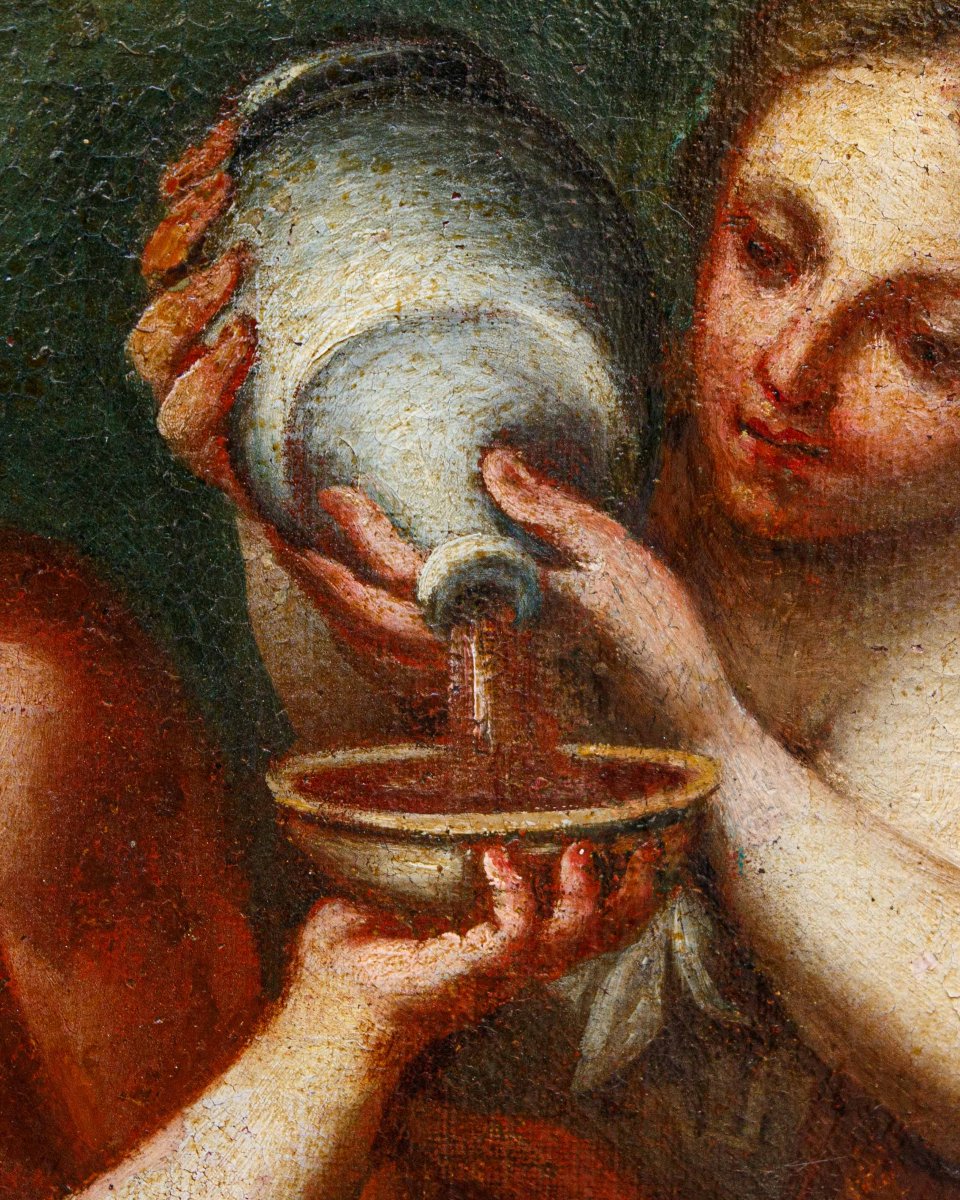
The episode depicted here is that of Loth and his daughters, as’ as told in chapter 19 Genesis. It takes place after the destruction of Sodom and Gomorrah, from which Lot, considered righteous, escapes with his two daughters, taking refuge in a cave after losing his wife. The daughters, believing themselves to be the only ones left in the world and wanting to preserve the family lineage, decided to get their father Lot drunk for two consecutive nights. Each lay with him, unbeknownst to him, in an extreme act motivated by the need for procreation in that context of total desolation. From these incestuous unions, both daughters conceive and bear a son. The eldest gives birth to Moab, founder of the Moabites, and the youngest gives birth to Ben-Ammi, founder of the Ammonites. These two peoples, born of an act considered transgressive but motivated by the need to perpetuate the lineage in an apocalyptic context, later became bitter enemies of the people of Israel.
Marcantonio Franceschini (Bologna, 5 April 1648 – Bologna, 24 December 1729) was one of the most important and prolific painters of the Bolognese school between the 17th and 18th centuries. Franceschini received his first artistic education from Giovanni Maria Galli, known as Bibiena. However, the pivotal meeting for his career came after 1668, when he entered the workshop of Carlo Cignani, becoming his favourite pupil. He worked alongside the master for almost twenty years, especially in the difficult technique of fresco, working on decorative cycles in various cities, including Parma (Palazzo del Giardino). After Cignani's final departure for Forlì in 1686, Franceschini established his independent workshop in Bologna, becoming the new leader in the city. The last decade of the century not only confirmed the artist's success in his homeland, but also saw a successful screening of his work in Europe. However, Franceschini chose never to leave his city, refusing the invitation of Charles II, King of Spain (a post later accepted by Luca Giordano), and those of the Elector Palatine Johann Wilhelm, who wanted him in Mannheim to decorate his palace, and the Prince of Liechtenstein, who was offering him a post in Vienna. Despite this, his fame spread: among the many European collectors who requested his works were Augustus Frederick II of Saxony, Prince Frederick Christian, Count of Schaumburg-Lippe, the Marquis of Exeter and Count Kaunitz. The subjects required by this cultured aristocracy revolved mainly around mythological events, Arcadian fables, Old Testament facts and literary themes. For the Prince of Liechtenstein, he executed an extensive pictorial cycle for the Winter Garden of Rossau Palace in Vienna. He worked intensely in Genoa (as in the frescoes for the Palazzo Lomellino and the Church of San Filippo Neri), between 1689 and 1696, he created large-scale works in Bologna and Modena, including the very rich decorative cycle for the Bolognese church of Corpus Domini (also known as "della Santi"). In 1711, the artist was called to Rome by Pope Clement XI with the task of executing the cartoons for the mosaics of the choir chapel in S. Pietro, a task previously entrusted to Carlo Maratta. This work earned him a Knight. At the beginning of the eighteenth century, Franceschini played a fundamental role in the founding of the Academy of Fine Arts in Bologna. As early as 1706, Giampietro Zanotti had laid the foundations for the institution, bringing together the city's most famous artists and intellectuals. Franceschini actively collaborated, participating in the selection of the forty artists destined to form the first nucleus of the institute and, in the year of its foundation, he held the position of vice-prince, conferred on him by Cignani (appointed prince). Franceschini remained one of the most prominent members of the Academy, being chosen four times (1713, 1718, 1724, 1728) as professor for figure teaching, with the title of director. He died in Bologna on December 24, 1729, leaving a vast artistic legacy that marked the transition from late Baroque to eighteenth-century painting.
Loth and his daughters
Oil on canvas, 152 x 123 cm
With frame, 163 x 133 cm
The idyllic setting of the scene, the rich colours and rosy faces, as well as the pose of the daughter, undoubtedly recall the works of the Bolognese painter Marcantonio Franceschini (Bologna, 5 April 1648 – Bologna, 24 December 1729), as can be clearly seen in the painting of the same subject by the Dulwich Picture Gallery. But comparisons can be found throughout Franceschini's work; for example, The Birth of Adonis from the Dresden Gemäldegalerie Alte Meister, Adam and Eve from the Mauritshuis, Armida Attempts to Kill the Sleeping Rinaldo from the Museo Civico in Modena, and The Seasons from the Pinacoteca Nazionale in Bologna. Franceschini's style is characterized by decorative accuracy, compositional elegance, and a controlled chromatic sensitivity. Although a fully Baroque artist, he was able to mitigate the drama and dynamism typical of that period with a more measured, academic and idealized tendency, often heir to the classicism of Guido Reni and Domenichino.
The episode depicted here is that of Loth and his daughters, as’ as told in chapter 19 Genesis. It takes place after the destruction of Sodom and Gomorrah, from which Lot, considered righteous, escapes with his two daughters, taking refuge in a cave after losing his wife. The daughters, believing themselves to be the only ones left in the world and wanting to preserve the family lineage, decided to get their father Lot drunk for two consecutive nights. Each lay with him, unbeknownst to him, in an extreme act motivated by the need for procreation in that context of total desolation. From these incestuous unions, both daughters conceive and bear a son. The eldest gives birth to Moab, founder of the Moabites, and the youngest gives birth to Ben-Ammi, founder of the Ammonites. These two peoples, born of an act considered transgressive but motivated by the need to perpetuate the lineage in an apocalyptic context, later became bitter enemies of the people of Israel.
Marcantonio Franceschini (Bologna, 5 April 1648 – Bologna, 24 December 1729) was one of the most important and prolific painters of the Bolognese school between the 17th and 18th centuries. Franceschini received his first artistic education from Giovanni Maria Galli, known as Bibiena. However, the pivotal meeting for his career came after 1668, when he entered the workshop of Carlo Cignani, becoming his favourite pupil. He worked alongside the master for almost twenty years, especially in the difficult technique of fresco, working on decorative cycles in various cities, including Parma (Palazzo del Giardino). After Cignani's final departure for Forlì in 1686, Franceschini established his independent workshop in Bologna, becoming the new leader in the city. The last decade of the century not only confirmed the artist's success in his homeland, but also saw a successful screening of his work in Europe. However, Franceschini chose never to leave his city, refusing the invitation of Charles II, King of Spain (a post later accepted by Luca Giordano), and those of the Elector Palatine Johann Wilhelm, who wanted him in Mannheim to decorate his palace, and the Prince of Liechtenstein, who was offering him a post in Vienna. Despite this, his fame spread: among the many European collectors who requested his works were Augustus Frederick II of Saxony, Prince Frederick Christian, Count of Schaumburg-Lippe, the Marquis of Exeter and Count Kaunitz. The subjects required by this cultured aristocracy revolved mainly around mythological events, Arcadian fables, Old Testament facts and literary themes. For the Prince of Liechtenstein, he executed an extensive pictorial cycle for the Winter Garden of Rossau Palace in Vienna. He worked intensely in Genoa (as in the frescoes for the Palazzo Lomellino and the Church of San Filippo Neri), between 1689 and 1696, he created large-scale works in Bologna and Modena, including the very rich decorative cycle for the Bolognese church of Corpus Domini (also known as "della Santi"). In 1711, the artist was called to Rome by Pope Clement XI with the task of executing the cartoons for the mosaics of the choir chapel in S. Pietro, a task previously entrusted to Carlo Maratta. This work earned him a Knight. At the beginning of the eighteenth century, Franceschini played a fundamental role in the founding of the Academy of Fine Arts in Bologna. As early as 1706, Giampietro Zanotti had laid the foundations for the institution, bringing together the city's most famous artists and intellectuals. Franceschini actively collaborated, participating in the selection of the forty artists destined to form the first nucleus of the institute and, in the year of its foundation, he held the position of vice-prince, conferred on him by Cignani (appointed prince). Franceschini remained one of the most prominent members of the Academy, being chosen four times (1713, 1718, 1724, 1728) as professor for figure teaching, with the title of director. He died in Bologna on December 24, 1729, leaving a vast artistic legacy that marked the transition from late Baroque to eighteenth-century painting.
6 000 €
Period: 18th century
Style: Other Style
Condition: Good condition
Material: Oil painting
Width: 123
Height: 152
Reference (ID): 1783853
Availability: In stock
Print