THIS OBJECT WAS SOLD
Pythagoras, Bronze With A Brown Patina, Signed By Jacques Antoine Théodore Coinchon (1814–1881).
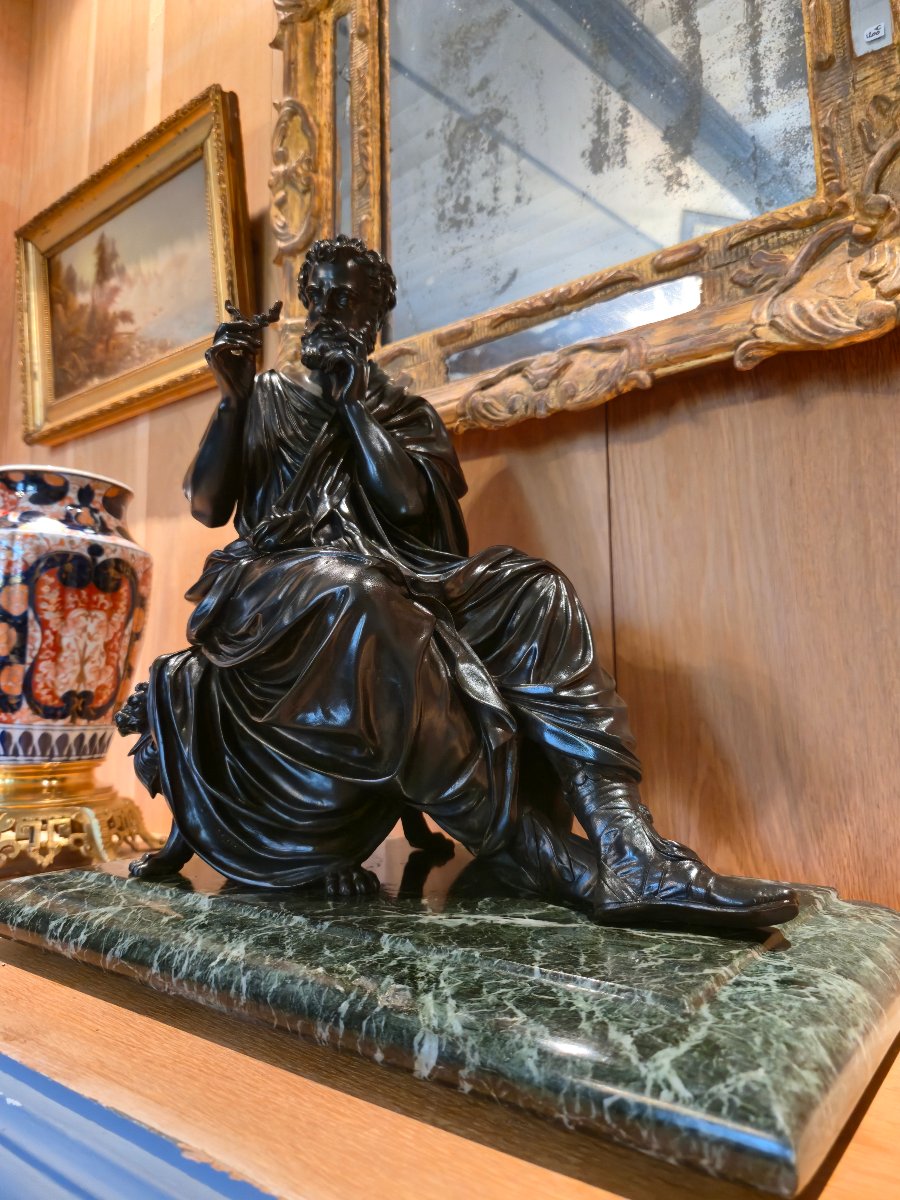
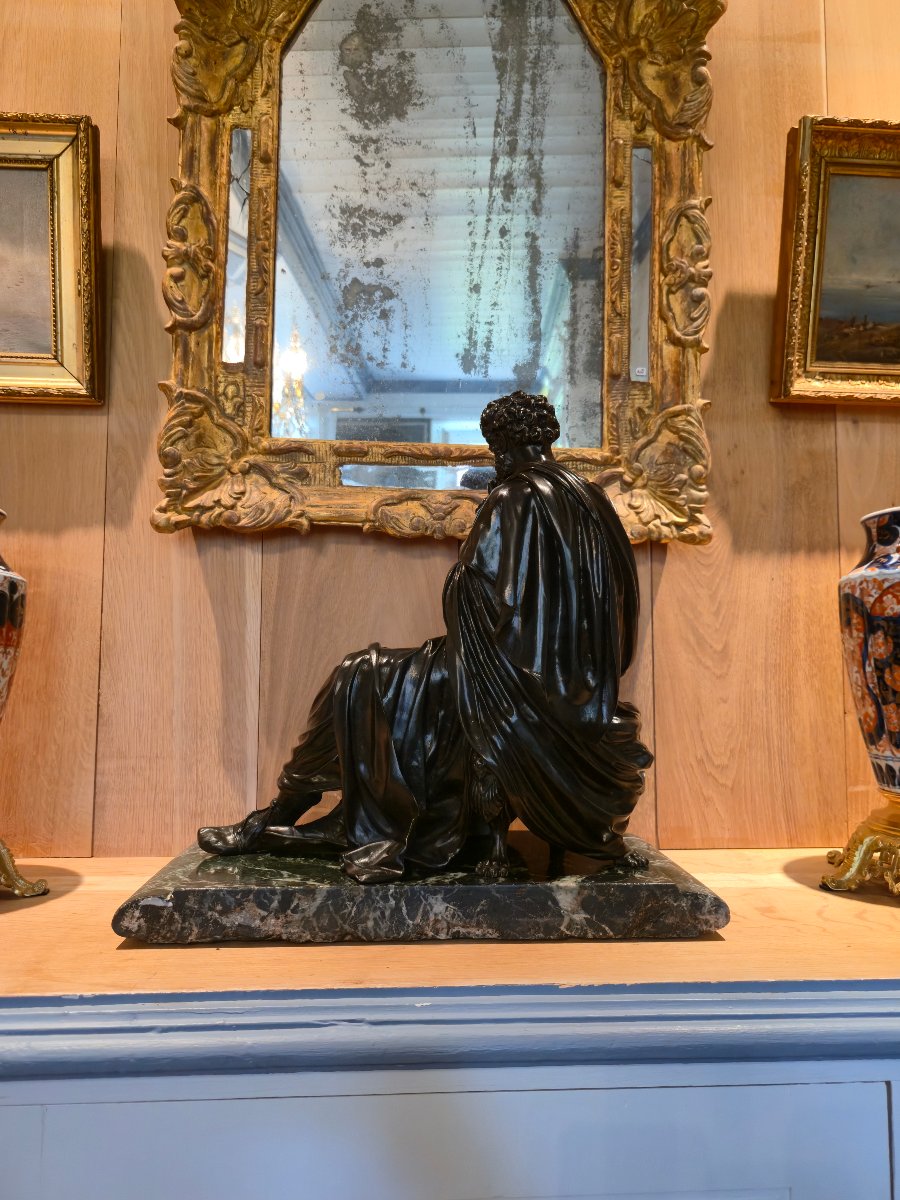
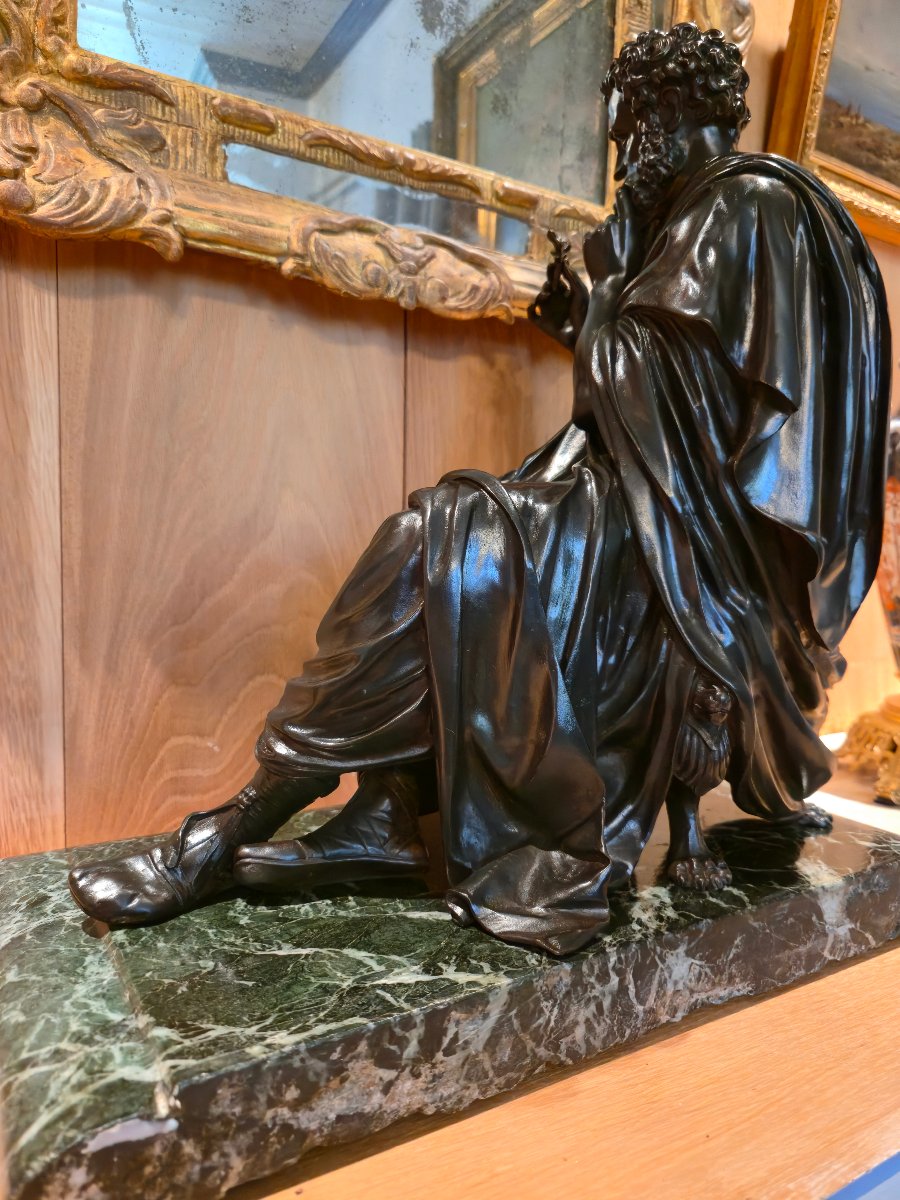

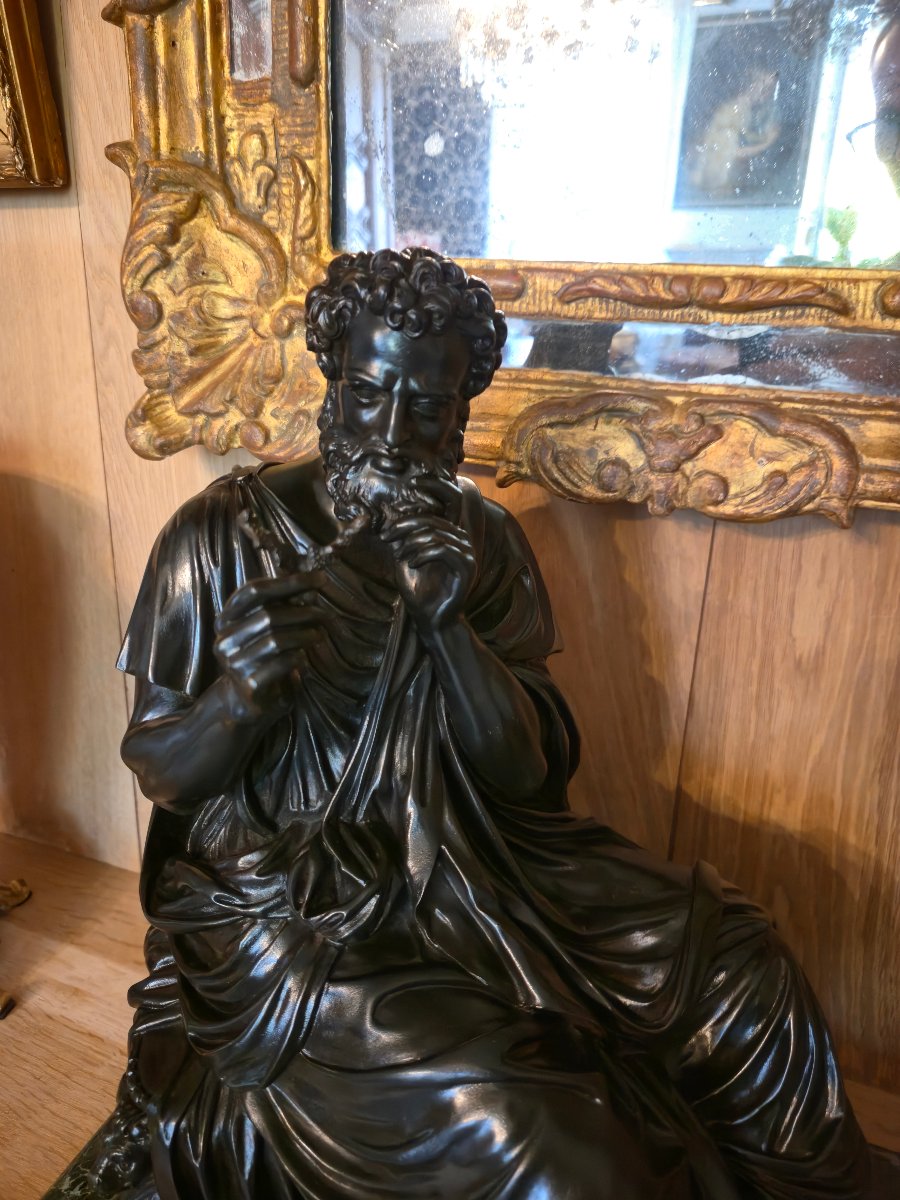
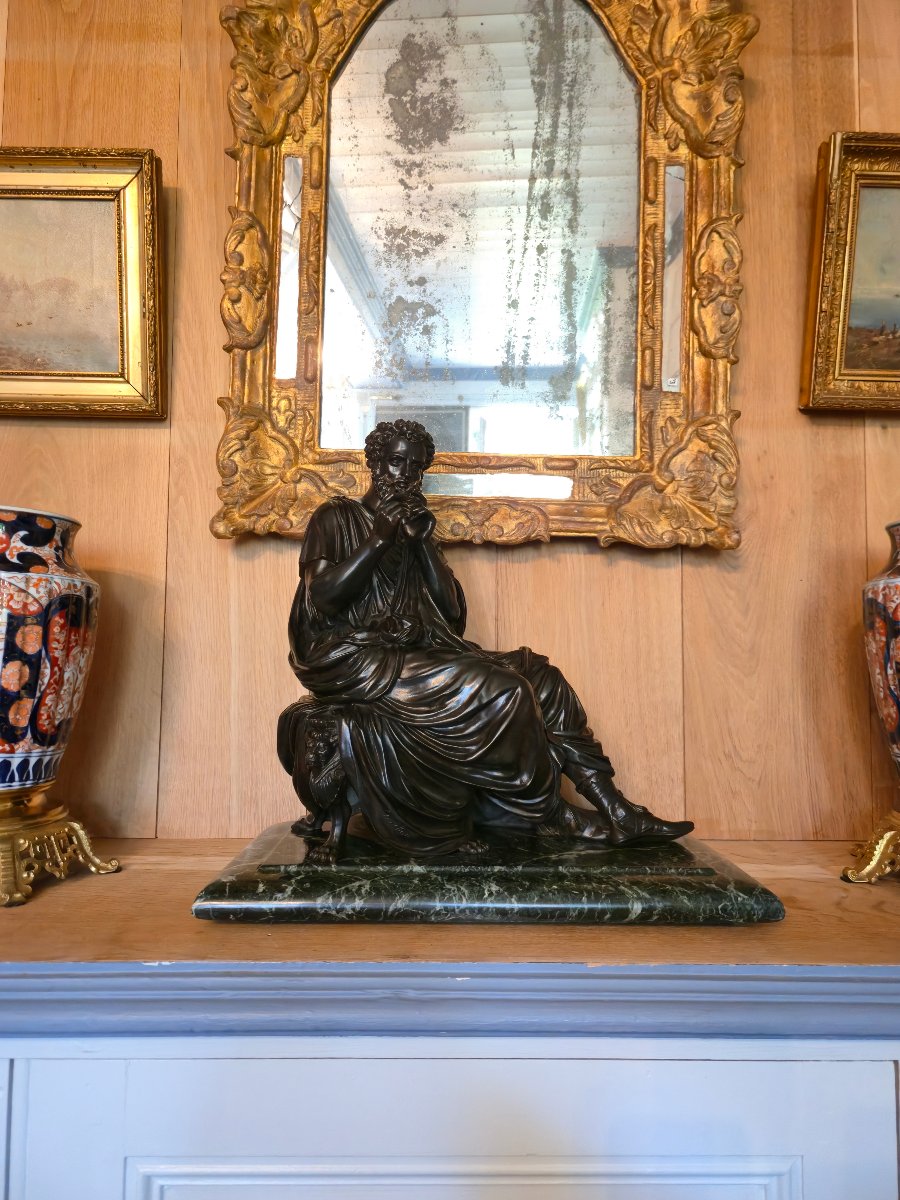


Pythagoras, bronze with a brown patina, signed by Jacques Antoine Théodore Coinchon (1814–1881).
Rare bronze with a brown patina depicting Pythagoras, signed by the French sculptor Jacques Antoine Théodore Coinchon (1814–1881).
A student of the great sculptor David d'Angers, Coinchon belonged to that generation of 19th-century academic artists deeply influenced by the study of antiquity. He exhibited regularly at the Salon and created numerous works inspired by history, mythology, and the great figures of ancient thought. His work demonstrates a perfect mastery of modeling and a pronounced taste for scholarly subjects, which were particularly appreciated by art lovers and collectors at the time.
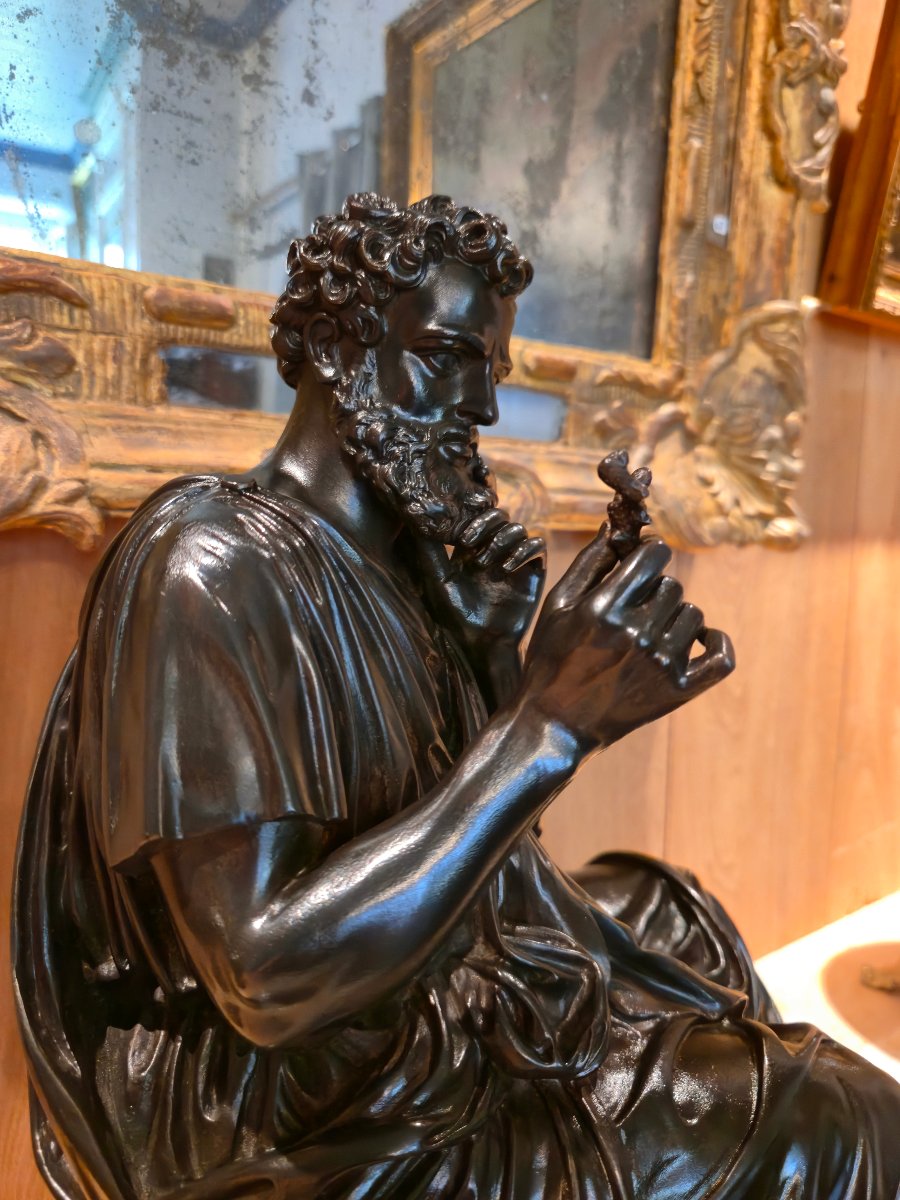
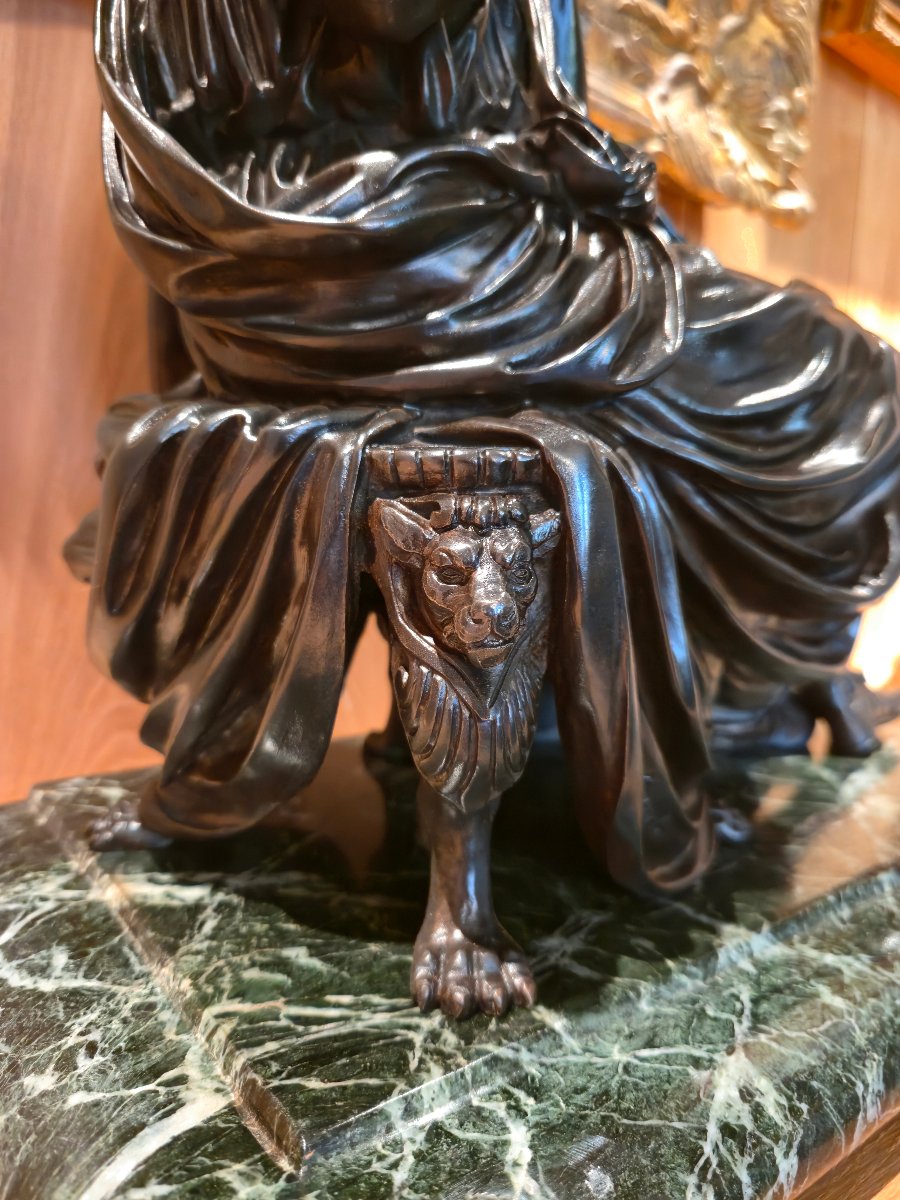
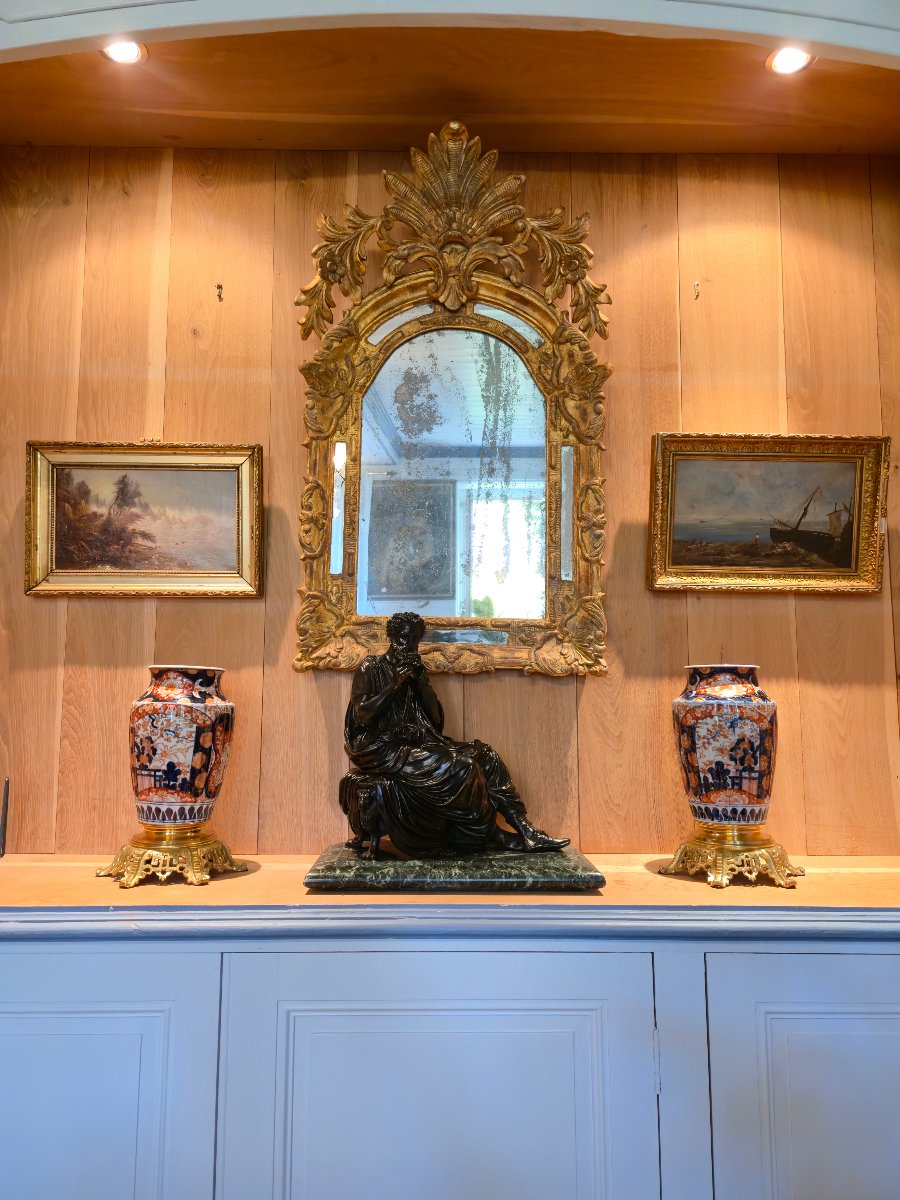
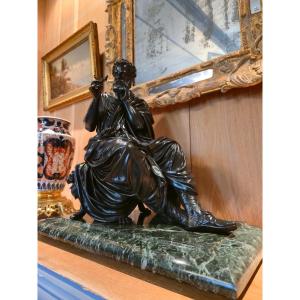
The sculpture here depicts Pythagoras, a Greek philosopher, mathematician, and scholar of the 6th century BCE, considered one of the founders of Western scientific thought. Seated on an ancient chair adorned with lion protomes, the philosopher is depicted in a pose of deep contemplation. With an absorbed gaze, he attentively contemplates a fragment of coral held in his right hand, while his left hand supports his chin.
Far from being merely anecdotal, this piece of coral is likely the key to understanding the work. In ancient culture, and later in the scholarly tradition of the 19th century, coral was a fascinating object, straddling the boundaries of the mineral, plant, and animal worlds. It is also associated with Greek mythology since, according to the account recounted by Ovid in *Metamorphoses*, it is said to have sprung from Medusa’s blood after her decapitation by Perseus. A symbol of the mysteries of nature and the transformations of the world, it naturally finds its place in the hands of a philosopher whose thought sought to understand the hidden order of the universe.
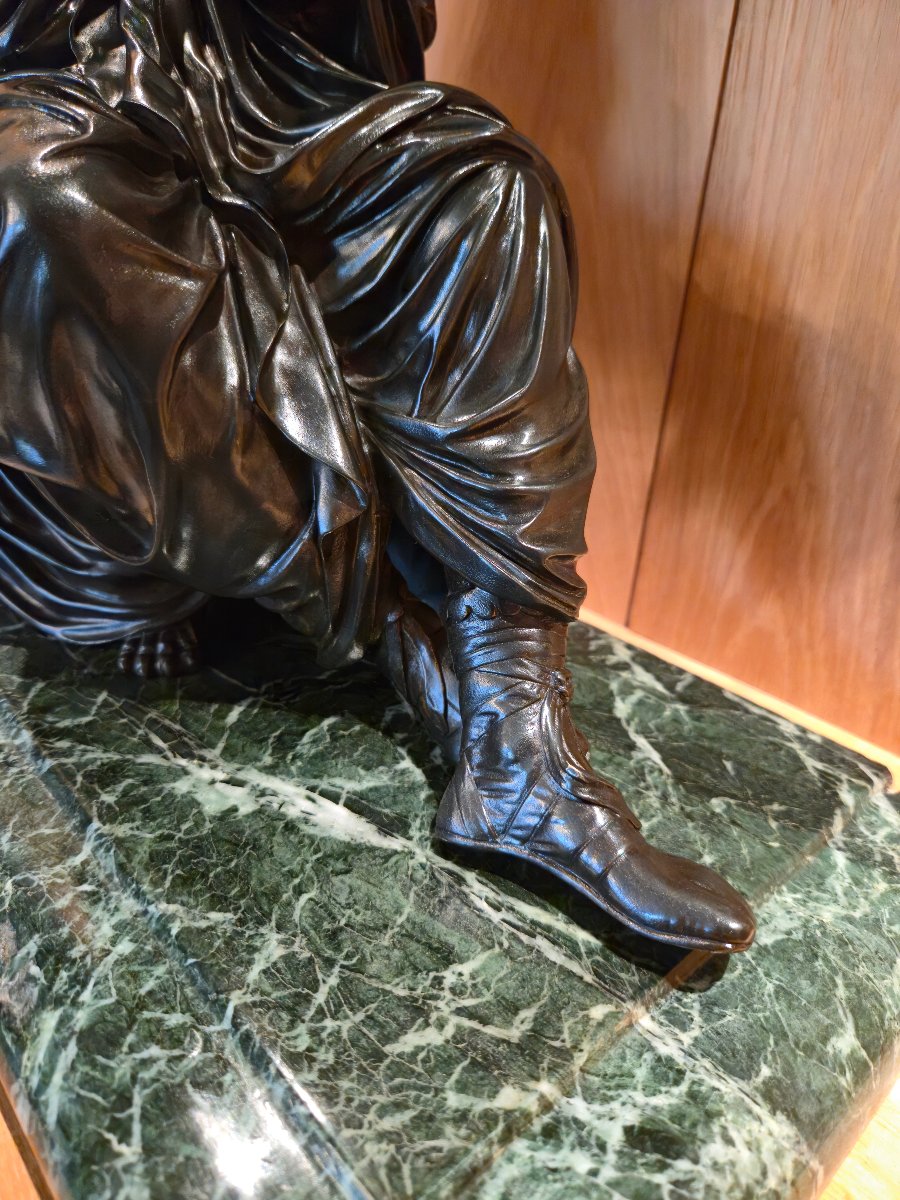
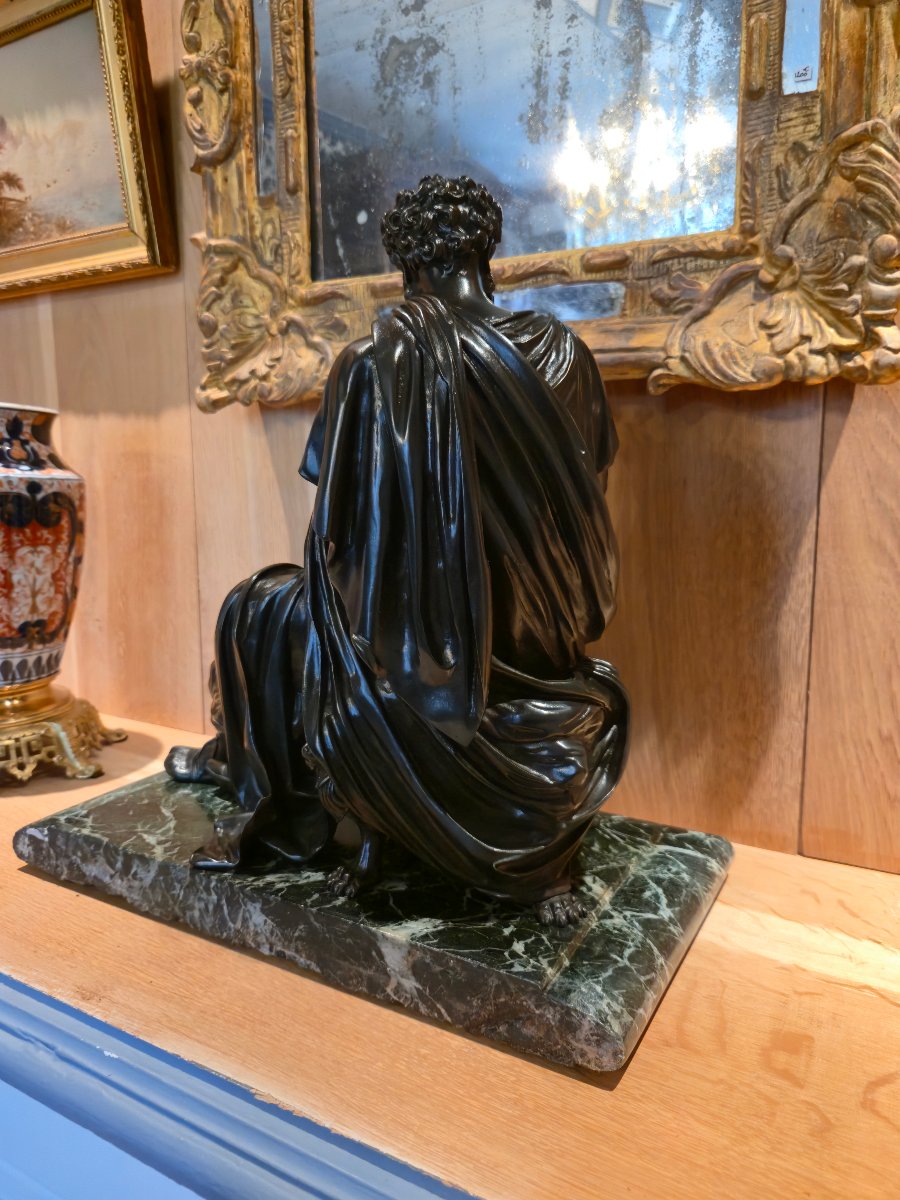
The rendering of the drapery is undoubtedly one of the most remarkable aspects of this composition. As a heir to the great academic tradition, Coinchon demonstrates here all his virtuosity in an exercise considered since antiquity as one of the noblest demonstrations of a sculptor’s talent. The fabrics are arranged in broad swaths animated by deep folds, sometimes supple, sometimes angular, which capture the light and create powerful contrasts of shadow. This exploration of drapery, directly inspired by Greek and Roman statuary, remained in the 19th century a rite of passage for any artist wishing to demonstrate their mastery of drawing, modeling, and movement.
The quality of the casting also deserves special mention. The meditative face, the full beard rendered with precision, the curls of the hair, the delicately modeled hands, and the sandals all attest to significant chiseling work after casting. The deep brown patina particularly highlights the richness of the modeling and contributes to the nobility of the piece as a whole.
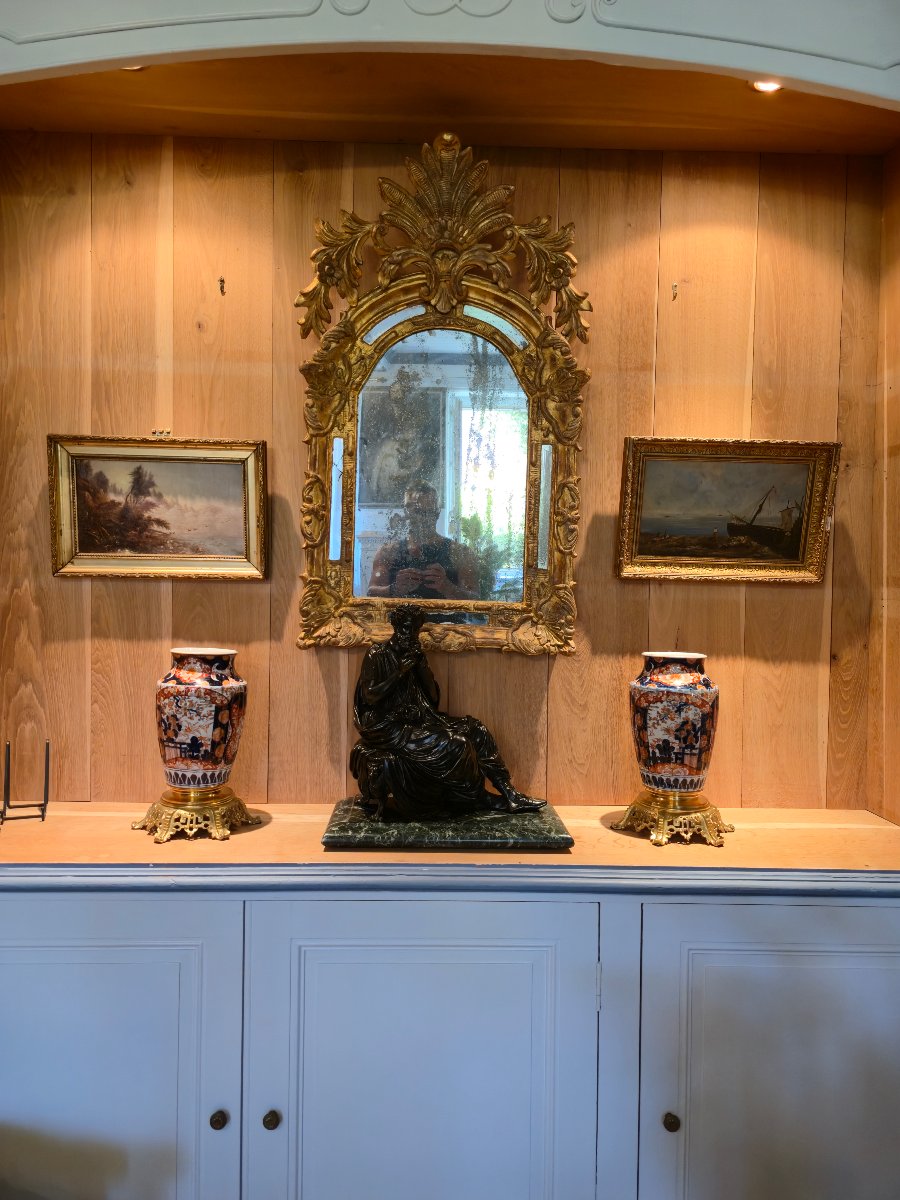
Given its dimensions, design, and primarily frontal presentation, this sculpture was likely intended to be placed atop a large, monumental clock or within a high-quality decorative ensemble. It is now displayed on a remarkable 19th-century rectangular base made of sea-green marble, which is separate from the sculpture. Five centimeters thick and molded with a wide corbel, this base offers a particularly elegant presentation while highlighting the decorative quality of the bronze.
A scholarly and decorative work combining the 19th-century taste for antiquity, philosophy, and sculptural virtuosity.
In very fine condition.
Dimensions:
- Total height: 45 cm
- Height of the bronze: 40 cm
- Width: 37.5 cm
- Depth: 19.5 cm
- Base: 45.5 x 24 cm
Rare bronze with a brown patina depicting Pythagoras, signed by the French sculptor Jacques Antoine Théodore Coinchon (1814–1881).
A student of the great sculptor David d'Angers, Coinchon belonged to that generation of 19th-century academic artists deeply influenced by the study of antiquity. He exhibited regularly at the Salon and created numerous works inspired by history, mythology, and the great figures of ancient thought. His work demonstrates a perfect mastery of modeling and a pronounced taste for scholarly subjects, which were particularly appreciated by art lovers and collectors at the time.
The sculpture here depicts Pythagoras, a Greek philosopher, mathematician, and scholar of the 6th century BCE, considered one of the founders of Western scientific thought. Seated on an ancient chair adorned with lion protomes, the philosopher is depicted in a pose of deep contemplation. With an absorbed gaze, he attentively contemplates a fragment of coral held in his right hand, while his left hand supports his chin.
Far from being merely anecdotal, this piece of coral is likely the key to understanding the work. In ancient culture, and later in the scholarly tradition of the 19th century, coral was a fascinating object, straddling the boundaries of the mineral, plant, and animal worlds. It is also associated with Greek mythology since, according to the account recounted by Ovid in *Metamorphoses*, it is said to have sprung from Medusa’s blood after her decapitation by Perseus. A symbol of the mysteries of nature and the transformations of the world, it naturally finds its place in the hands of a philosopher whose thought sought to understand the hidden order of the universe.
The rendering of the drapery is undoubtedly one of the most remarkable aspects of this composition. As a heir to the great academic tradition, Coinchon demonstrates here all his virtuosity in an exercise considered since antiquity as one of the noblest demonstrations of a sculptor’s talent. The fabrics are arranged in broad swaths animated by deep folds, sometimes supple, sometimes angular, which capture the light and create powerful contrasts of shadow. This exploration of drapery, directly inspired by Greek and Roman statuary, remained in the 19th century a rite of passage for any artist wishing to demonstrate their mastery of drawing, modeling, and movement.
The quality of the casting also deserves special mention. The meditative face, the full beard rendered with precision, the curls of the hair, the delicately modeled hands, and the sandals all attest to significant chiseling work after casting. The deep brown patina particularly highlights the richness of the modeling and contributes to the nobility of the piece as a whole.
Given its dimensions, design, and primarily frontal presentation, this sculpture was likely intended to be placed atop a large, monumental clock or within a high-quality decorative ensemble. It is now displayed on a remarkable 19th-century rectangular base made of sea-green marble, which is separate from the sculpture. Five centimeters thick and molded with a wide corbel, this base offers a particularly elegant presentation while highlighting the decorative quality of the bronze.
A scholarly and decorative work combining the 19th-century taste for antiquity, philosophy, and sculptural virtuosity.
In very fine condition.
Dimensions:
- Total height: 45 cm
- Height of the bronze: 40 cm
- Width: 37.5 cm
- Depth: 19.5 cm
- Base: 45.5 x 24 cm
Explore similar pieces and discover your ideal find:
bronze sculptures