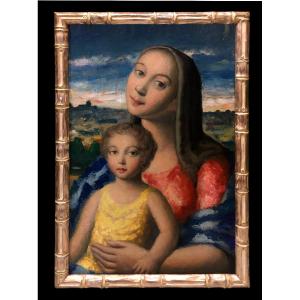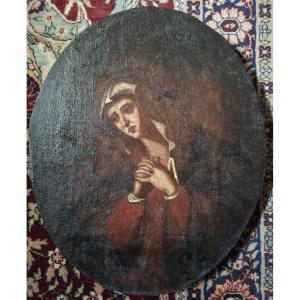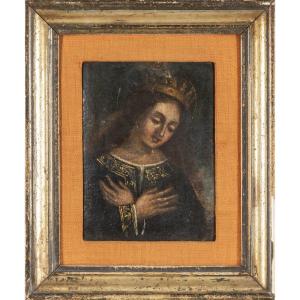
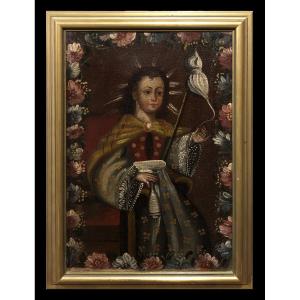


Peruvian School (19th Century) - The Young Virgin Mary Spinning Wool
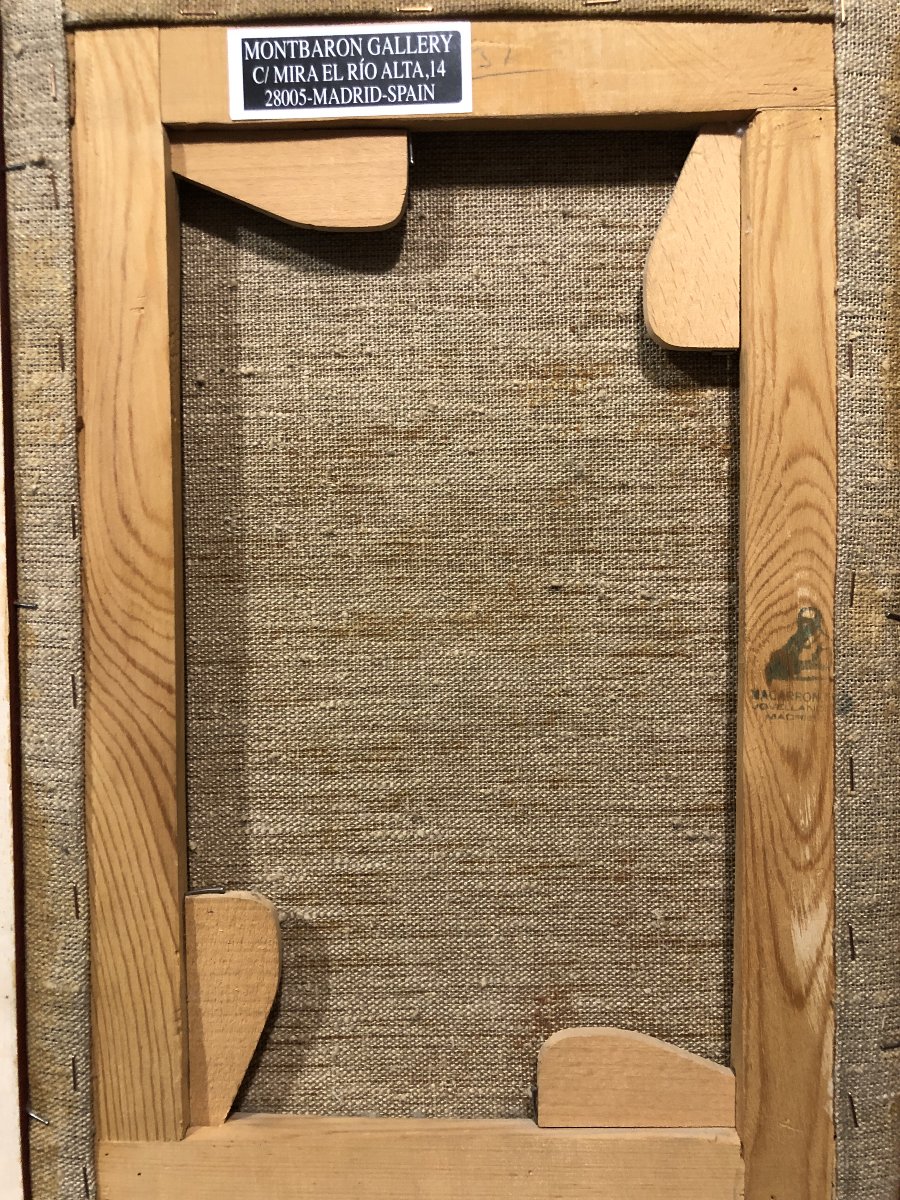
Oil and gold pigments on canvas. Mounted canvas.
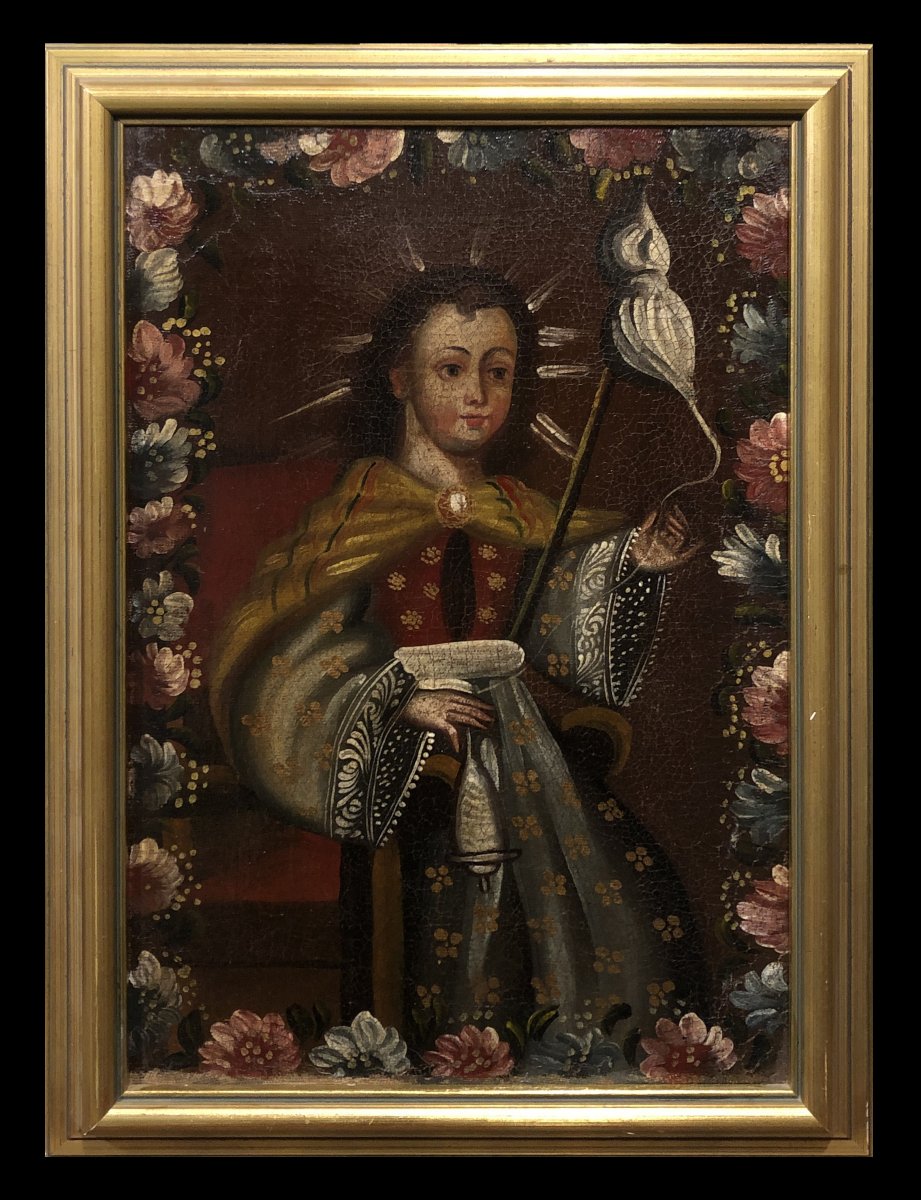
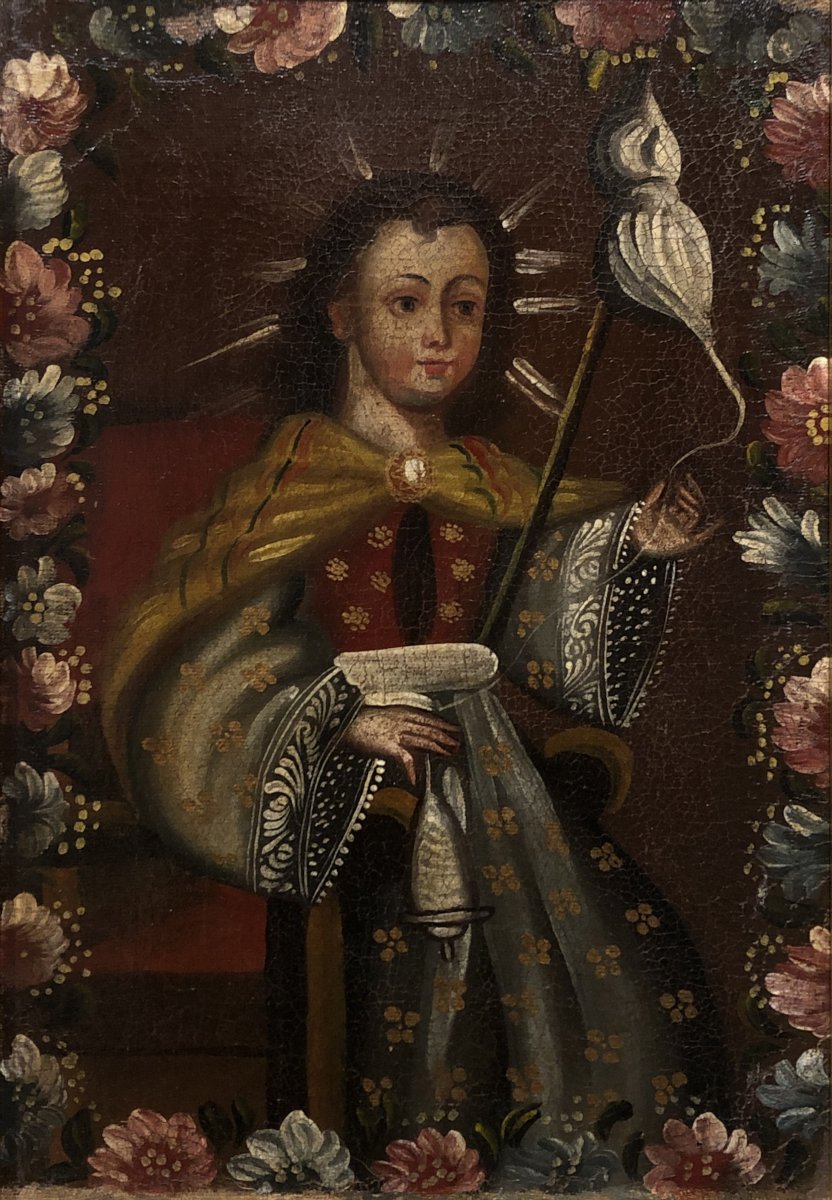
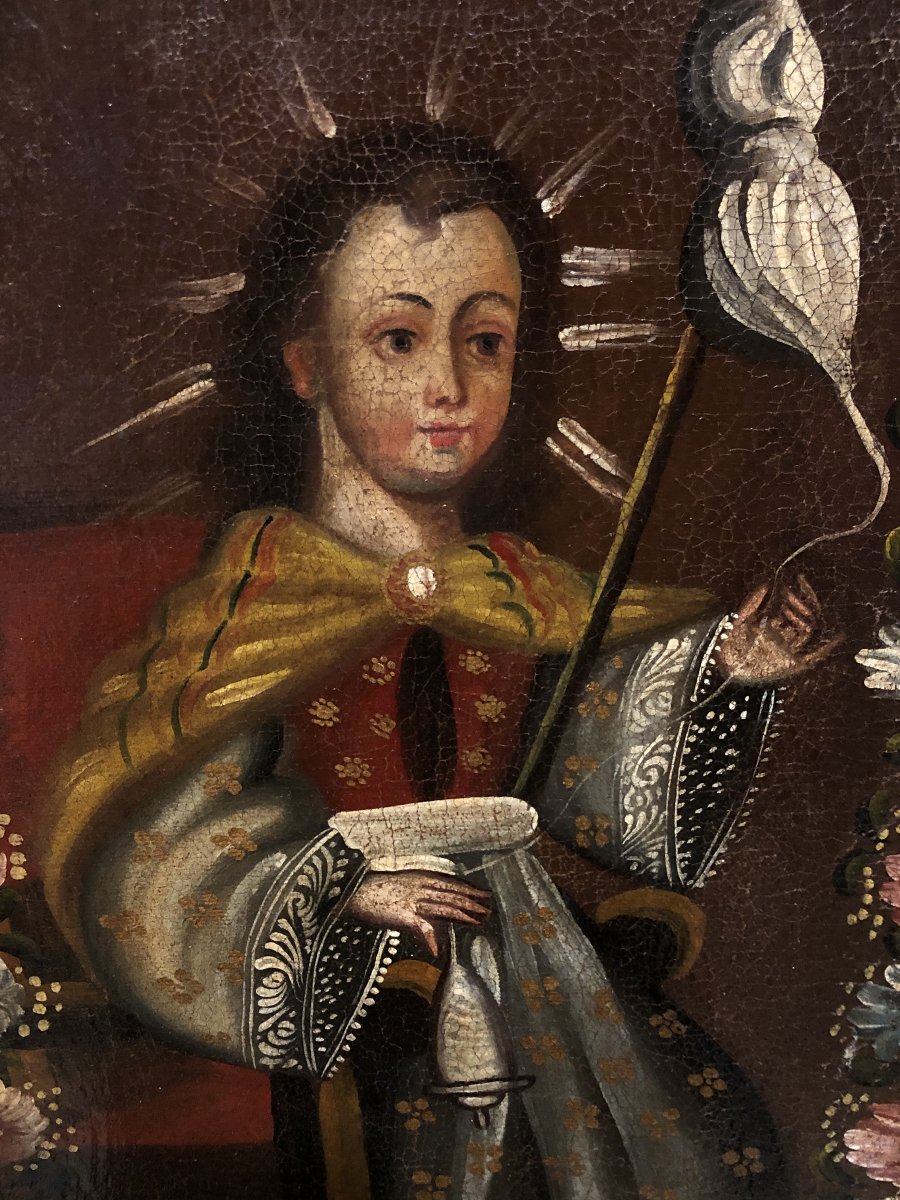
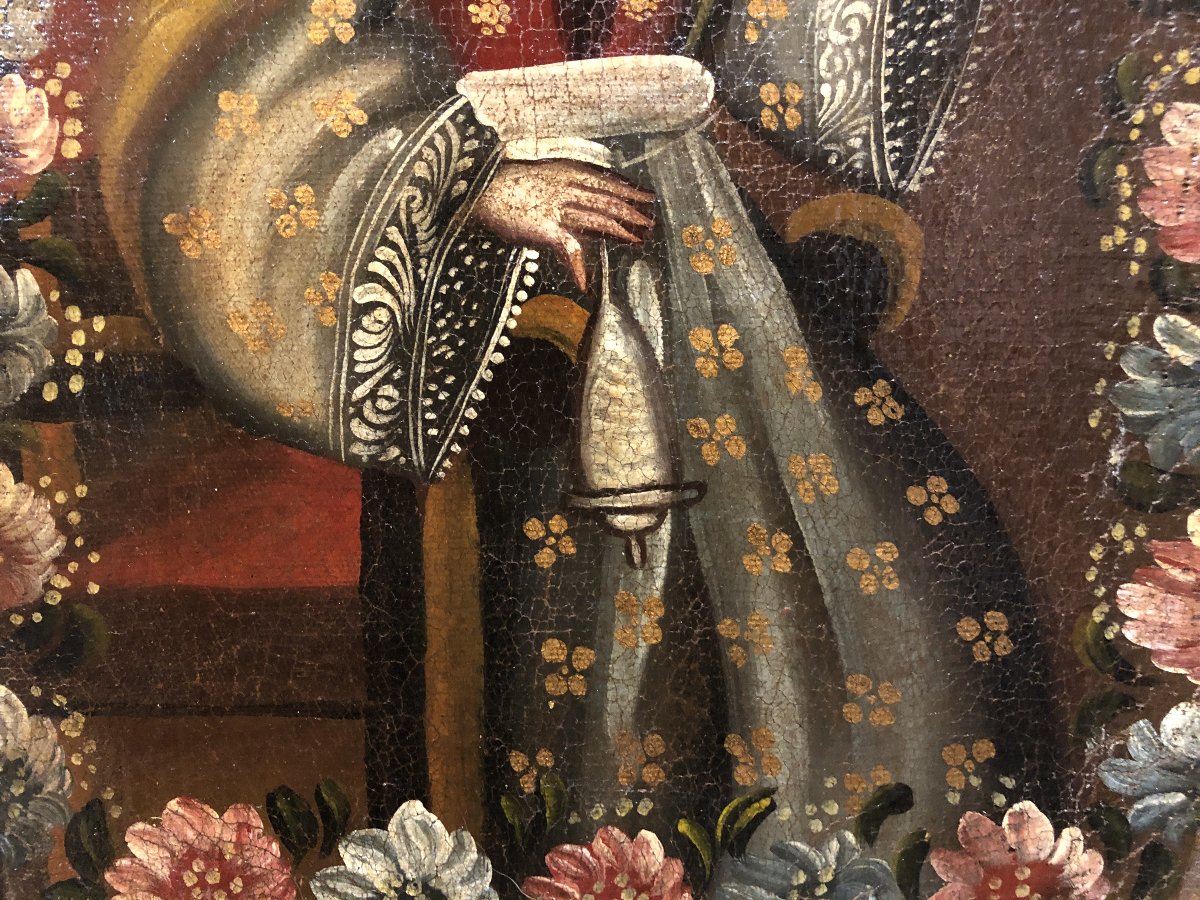
The pictorial theme of “The Virgin Mary Spinning Wool”—often associated with depictions of the Virgin of the Milk or the Holy Family in the workshop of Nazareth—possesses a profound theological and symbolic significance that transcends the apparent domestic banality. In Christian iconography, spinning wool or flax not only extols the virtues of labor, chastity, and humility associated with the Marian ideal of femininity, but also functions as a premonitory metaphor for the Incarnation and the Passion: the threads woven by Mary’s hands symbolize the human flesh with which she clothes the divine Word within her womb, while the spinning foreshadows Christ’s destiny, whose body will be betrayed and whose tunic, woven in a single piece, will be divided by lot on Calvary. The greatest masters of European art, from the Italian Renaissance to the Flemish Primitives, including the Baroque works of Francisco de Zurbarán, have immortalized this scene, imbuing it with an atmosphere of mystical contemplation where every everyday object—the spindle, the distaff, the scissors, or the sewing basket—holds a sacred meaning.
In the viceregal world of Spanish America, particularly in the workshops of the School of Cuzco and the Viceroyalty of New Spain, this iconography took on paramount importance and inspired extraordinary devotion. For the evangelizing religious orders, the image of the Virgin spinning became a fundamental pedagogical and moralizing tool, intended to shape the behavior of indigenous and Creole women in convents and homes according to the principles of contemplation and pious work. The viceregal painters adopted the European model but enriched it with their own sensibility, adorning the Virgin with rich gold brocades, local flowers, and a singular, tender melancholy. They thus transformed a complex theological dogma into an intimate and devotional image, making the Spinning Virgin a pillar of the religious imagination and visual identity of the American continent in the 17th and 18th centuries.
- Dimensions of the image without frame: 25.5 x 40.5 cm / 32 x 48 cm with an exclusive custom-made frame.
The pictorial theme of “The Virgin Mary Spinning Wool”—often associated with depictions of the Virgin of the Milk or the Holy Family in the workshop of Nazareth—possesses a profound theological and symbolic significance that transcends the apparent domestic banality. In Christian iconography, spinning wool or flax not only extols the virtues of labor, chastity, and humility associated with the Marian ideal of femininity, but also functions as a premonitory metaphor for the Incarnation and the Passion: the threads woven by Mary’s hands symbolize the human flesh with which she clothes the divine Word within her womb, while the spinning foreshadows Christ’s destiny, whose body will be betrayed and whose tunic, woven in a single piece, will be divided by lot on Calvary. The greatest masters of European art, from the Italian Renaissance to the Flemish Primitives, including the Baroque works of Francisco de Zurbarán, have immortalized this scene, imbuing it with an atmosphere of mystical contemplation where every everyday object—the spindle, the distaff, the scissors, or the sewing basket—holds a sacred meaning.
In the viceregal world of Spanish America, particularly in the workshops of the School of Cuzco and the Viceroyalty of New Spain, this iconography took on paramount importance and inspired extraordinary devotion. For the evangelizing religious orders, the image of the Virgin spinning became a fundamental pedagogical and moralizing tool, intended to shape the behavior of indigenous and Creole women in convents and homes according to the principles of contemplation and pious work. The viceregal painters adopted the European model but enriched it with their own sensibility, adorning the Virgin with rich gold brocades, local flowers, and a singular, tender melancholy. They thus transformed a complex theological dogma into an intimate and devotional image, making the Spinning Virgin a pillar of the religious imagination and visual identity of the American continent in the 17th and 18th centuries.
- Dimensions of the image without frame: 25.5 x 40.5 cm / 32 x 48 cm with an exclusive custom-made frame.
550 €
Period: 19th century
Style: Other Style
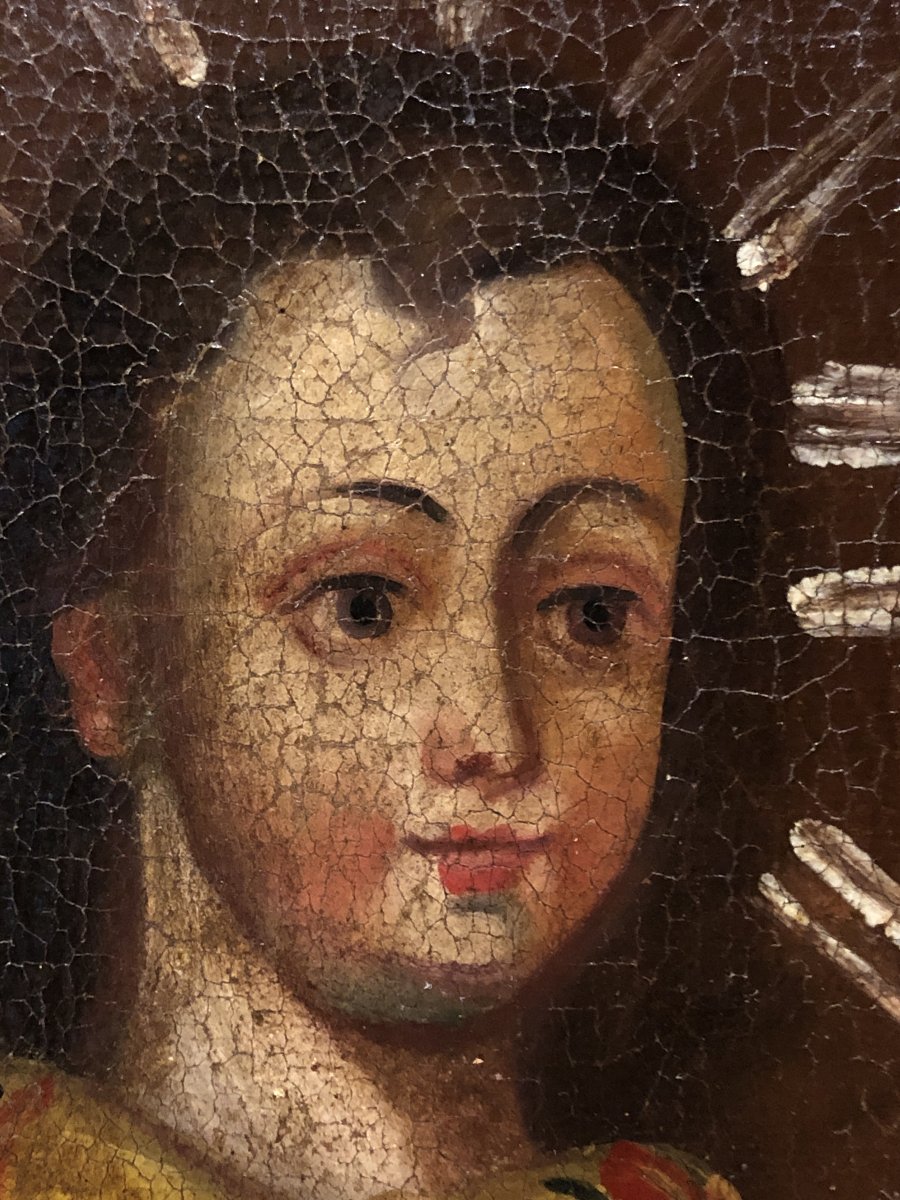
Condition: Excellent condition
Material: Oil painting
Reference (ID): 1776973
Availability: In stock
Print