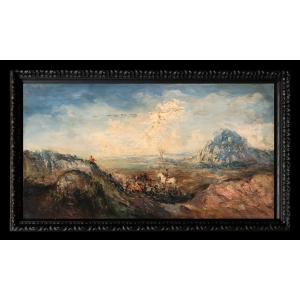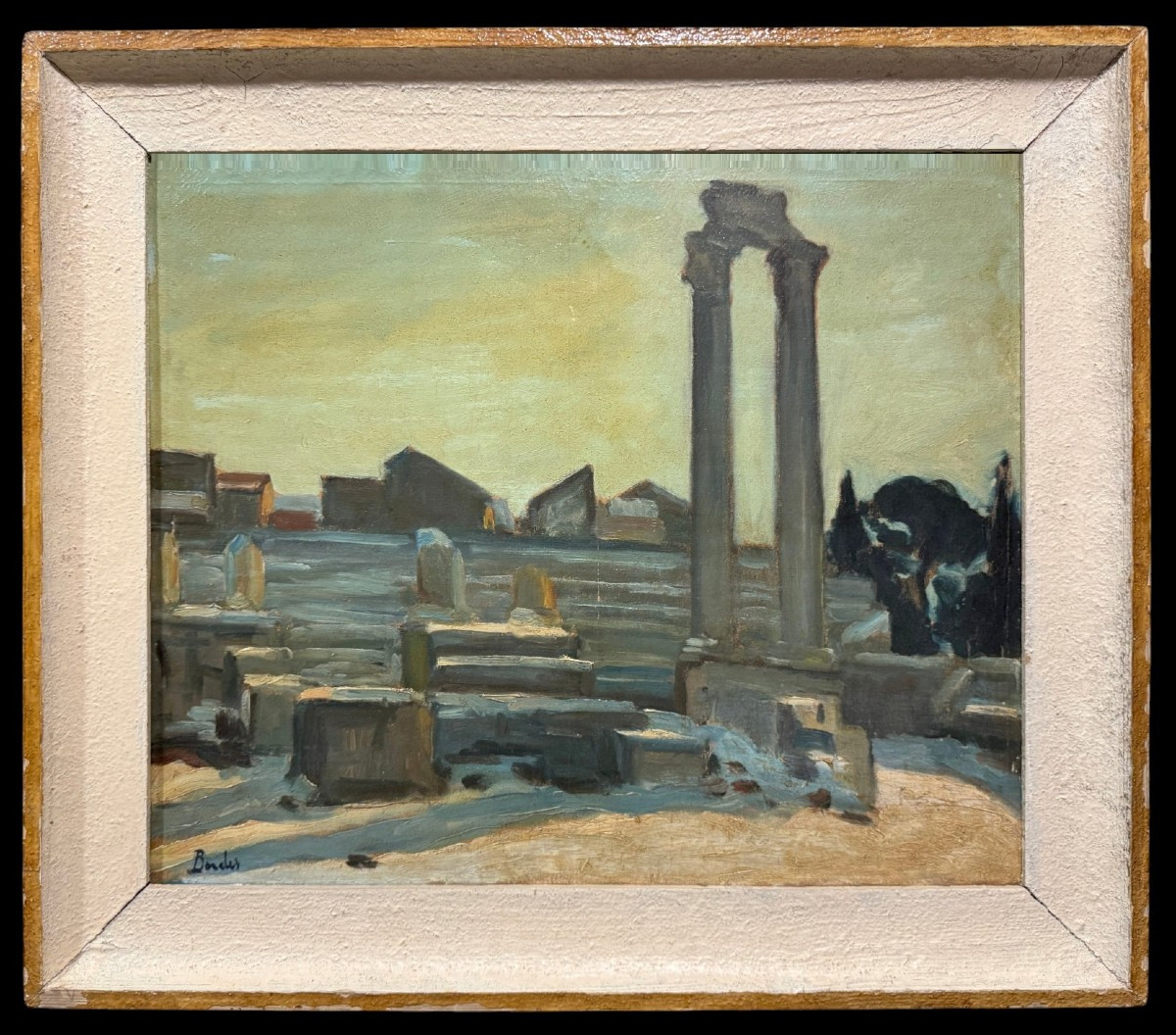
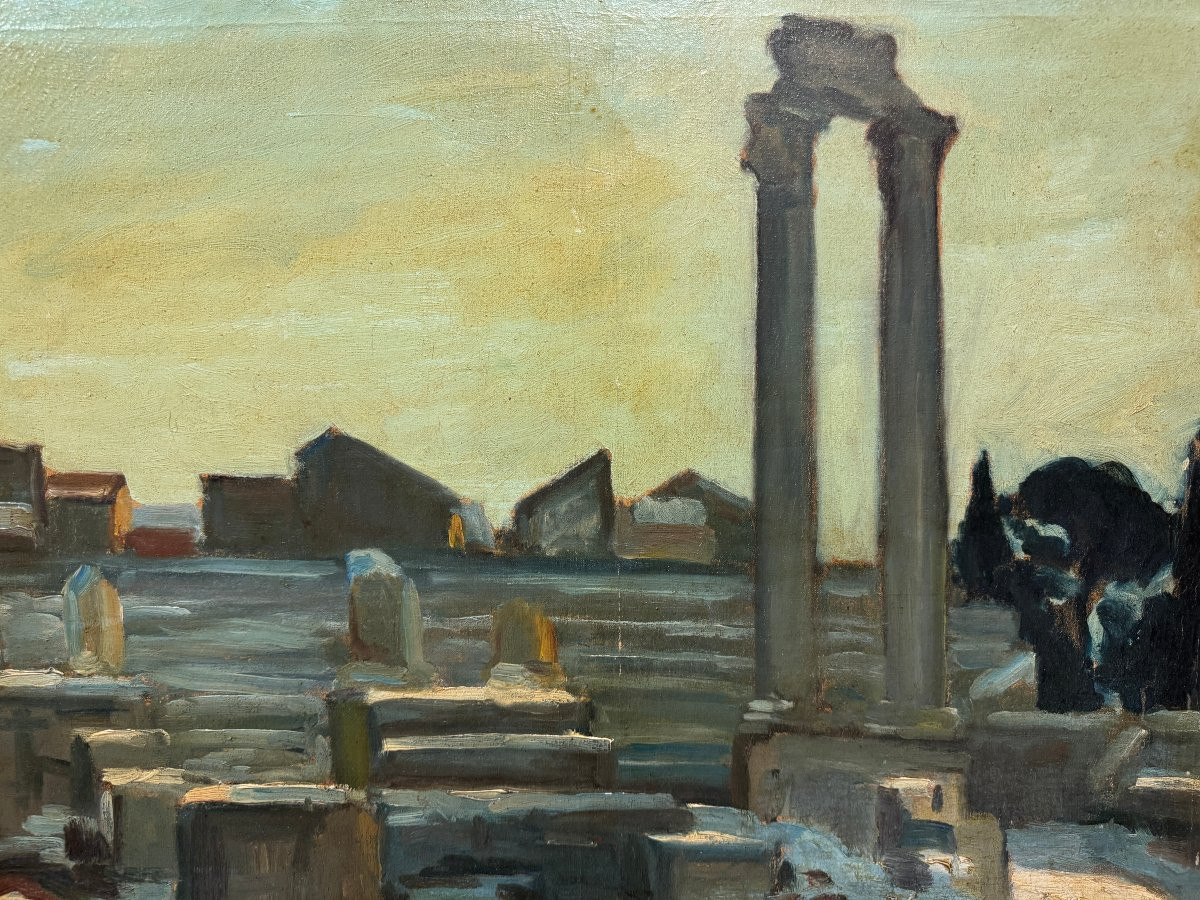
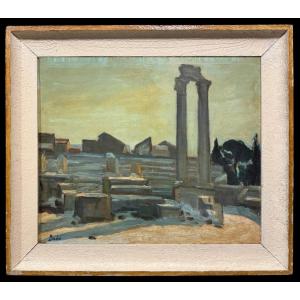


Léonard Bordes (1898-1969) - The Ruins Of The Ancient Theatre Of Arles
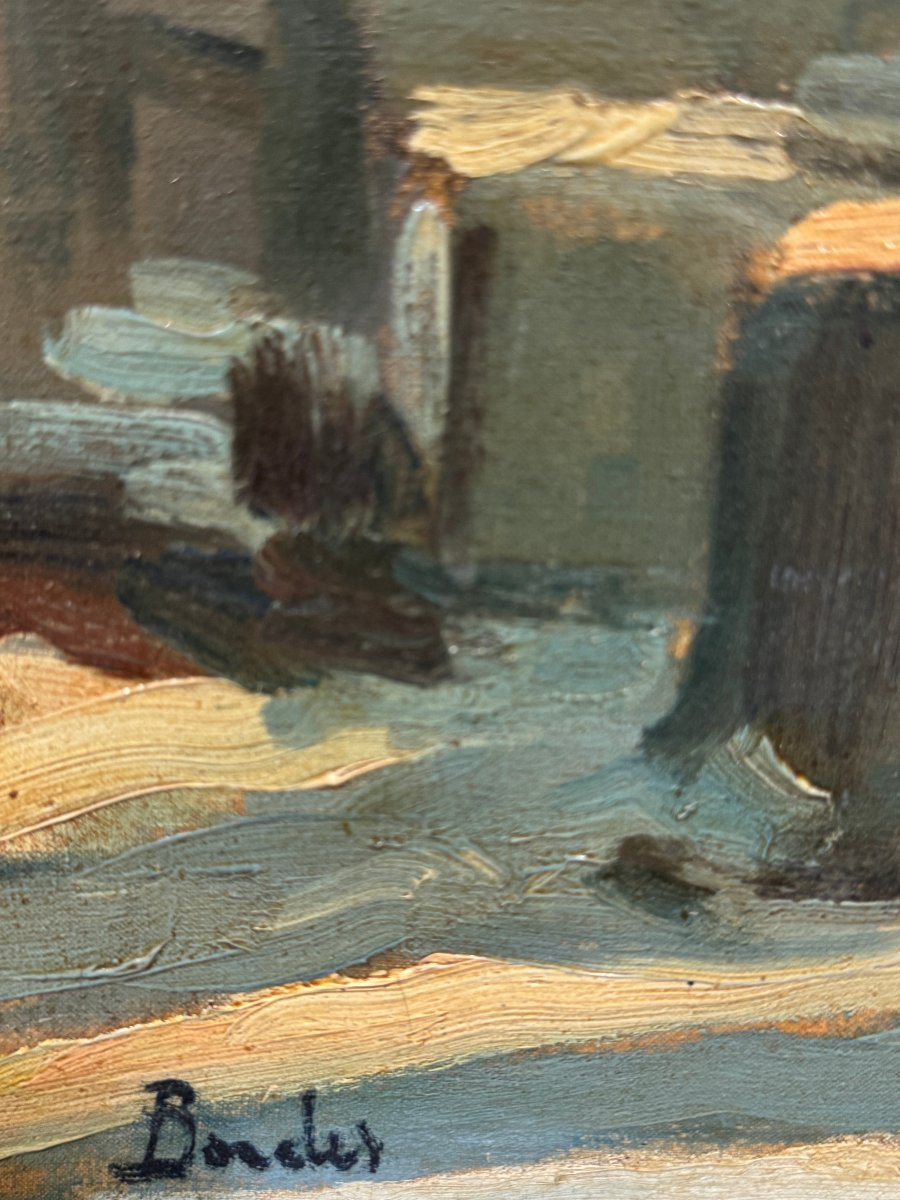
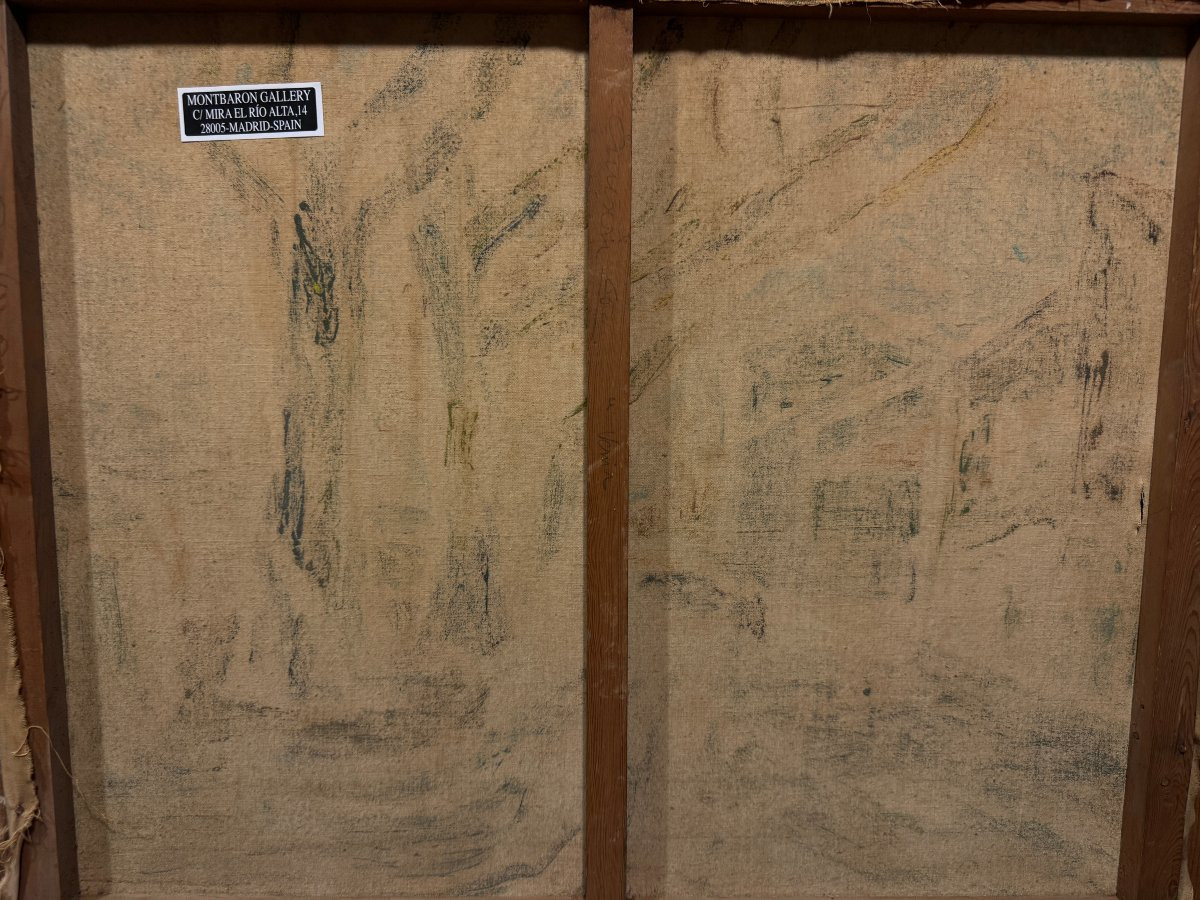
Oil on canvas. Original canvas. Hand-signed.
To contemplate the ruins of the Théâtre Antique d'Arles is to be gripped by a poignant nostalgia. We remember the immaculate marble and the echo of tragedies that once sustained the order of the world. Yet, within this time-worn skeleton of stone, a captivating new promise vibrates. The decline of civilization here is not an end, but an aesthetic liberation where the broken column and lichen-covered block of stone propose a more authentic beauty, stripped of the arrogance of empire. In this shipwreck architecture, nature and ruin unite to create a setting of infinite possibilities, suggesting that, on the rubble of our past glory, a twilight glow is germinating - a glow that is, in reality, the dawn of a deeper sensibility, where imperfection is the only language capable of shaping a future that no longer needs temples, but fragments of truth.
Léonard Bordes (1898-1969) was a prolific French painter and lithographer, a central figure of the Rouen School. His work is distinguished by an exclusively plein-air technique, rejecting studio work. Born into a musical family and trained at the École des Beaux-Arts in Rouen, he initially combined his artistic talent with a career as an orchestral musician, before devoting himself fully to art after the First World War. His social commitment came to the fore during the Second World War, when he was deeply affected by the devastation of the bombing raids and captured the misery and violence of Rouen's poorest districts. Influenced by Impressionism and masters such as Albert Lebourg, Bordes left a considerable body of work - estimated at over 10,000 pieces - in which his snowy landscapes and urban scenes are distinguished by an exceptional mastery of color and a deep empathy for degraded environments and everyday life.
- Image size unframed: 58 x 50 cm / 72 x 64 cm with exclusive custom frame.
To contemplate the ruins of the Théâtre Antique d'Arles is to be gripped by a poignant nostalgia. We remember the immaculate marble and the echo of tragedies that once sustained the order of the world. Yet, within this time-worn skeleton of stone, a captivating new promise vibrates. The decline of civilization here is not an end, but an aesthetic liberation where the broken column and lichen-covered block of stone propose a more authentic beauty, stripped of the arrogance of empire. In this shipwreck architecture, nature and ruin unite to create a setting of infinite possibilities, suggesting that, on the rubble of our past glory, a twilight glow is germinating - a glow that is, in reality, the dawn of a deeper sensibility, where imperfection is the only language capable of shaping a future that no longer needs temples, but fragments of truth.
Léonard Bordes (1898-1969) was a prolific French painter and lithographer, a central figure of the Rouen School. His work is distinguished by an exclusively plein-air technique, rejecting studio work. Born into a musical family and trained at the École des Beaux-Arts in Rouen, he initially combined his artistic talent with a career as an orchestral musician, before devoting himself fully to art after the First World War. His social commitment came to the fore during the Second World War, when he was deeply affected by the devastation of the bombing raids and captured the misery and violence of Rouen's poorest districts. Influenced by Impressionism and masters such as Albert Lebourg, Bordes left a considerable body of work - estimated at over 10,000 pieces - in which his snowy landscapes and urban scenes are distinguished by an exceptional mastery of color and a deep empathy for degraded environments and everyday life.
- Image size unframed: 58 x 50 cm / 72 x 64 cm with exclusive custom frame.
590 €
Period: 20th century
Style: Modern Art
Condition: Excellent condition
Material: Oil painting
Reference (ID): 1754145
Availability: In stock
Print