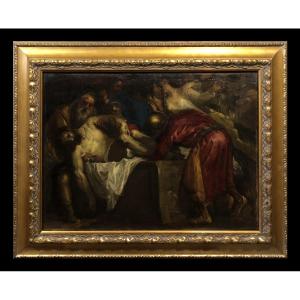


European School (xix) - The Burial Of Christ (after Tiziano Vecellio)
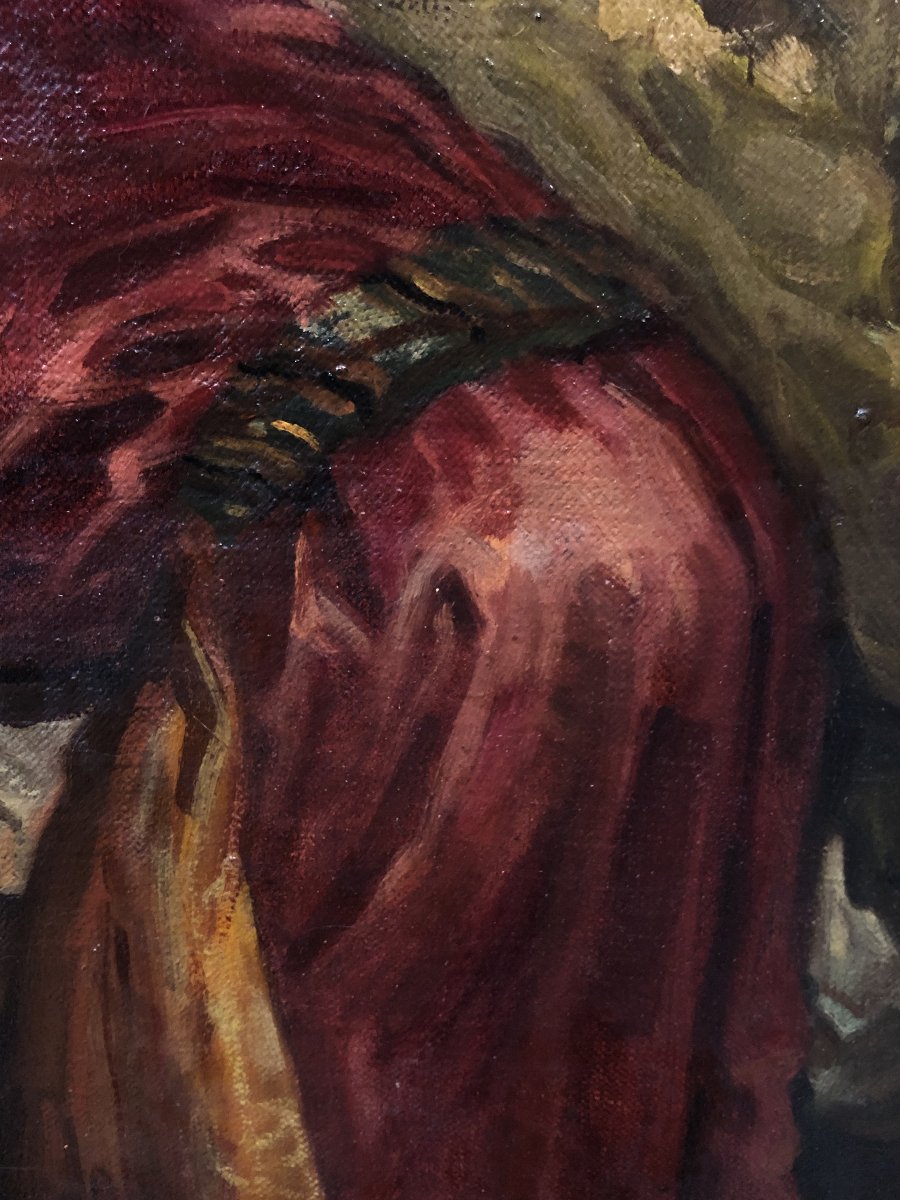
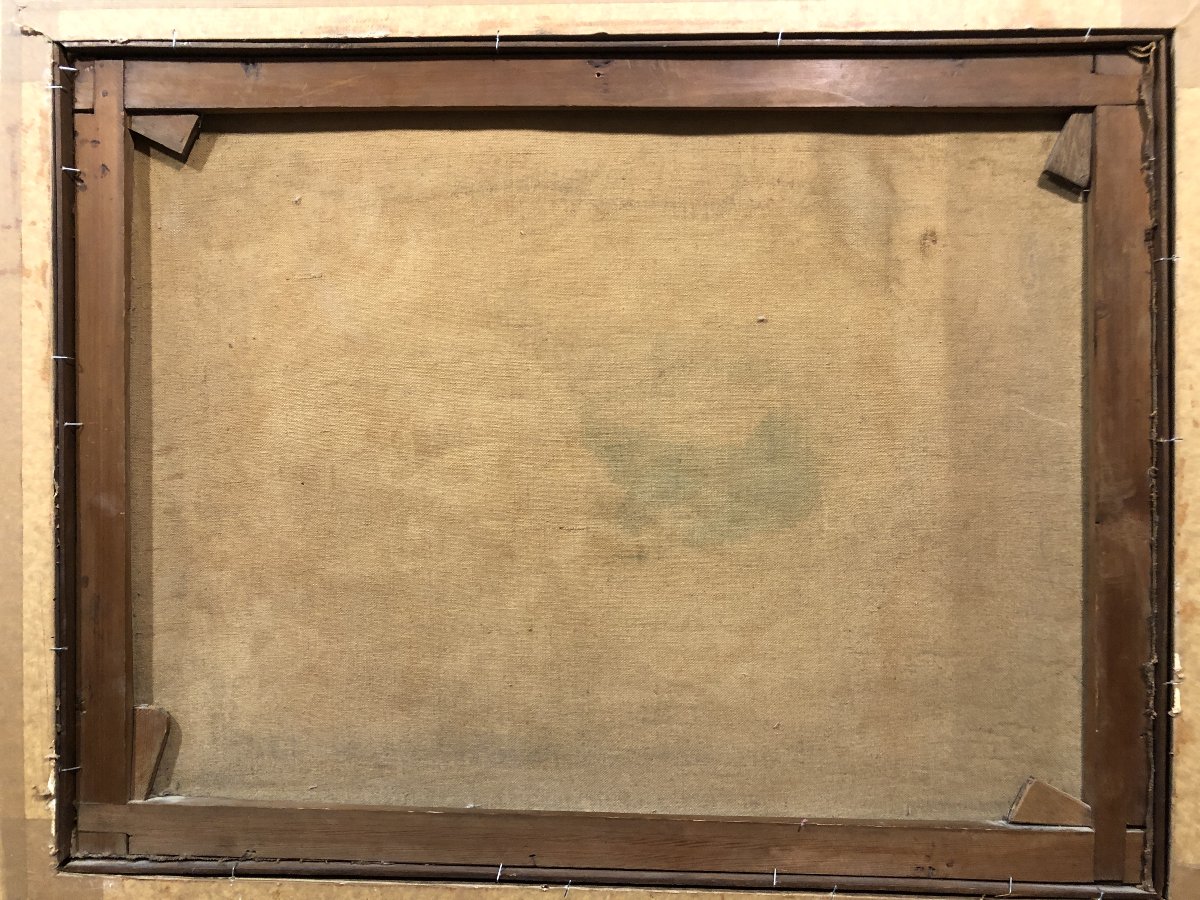
Oil on canvas. Original canvas.
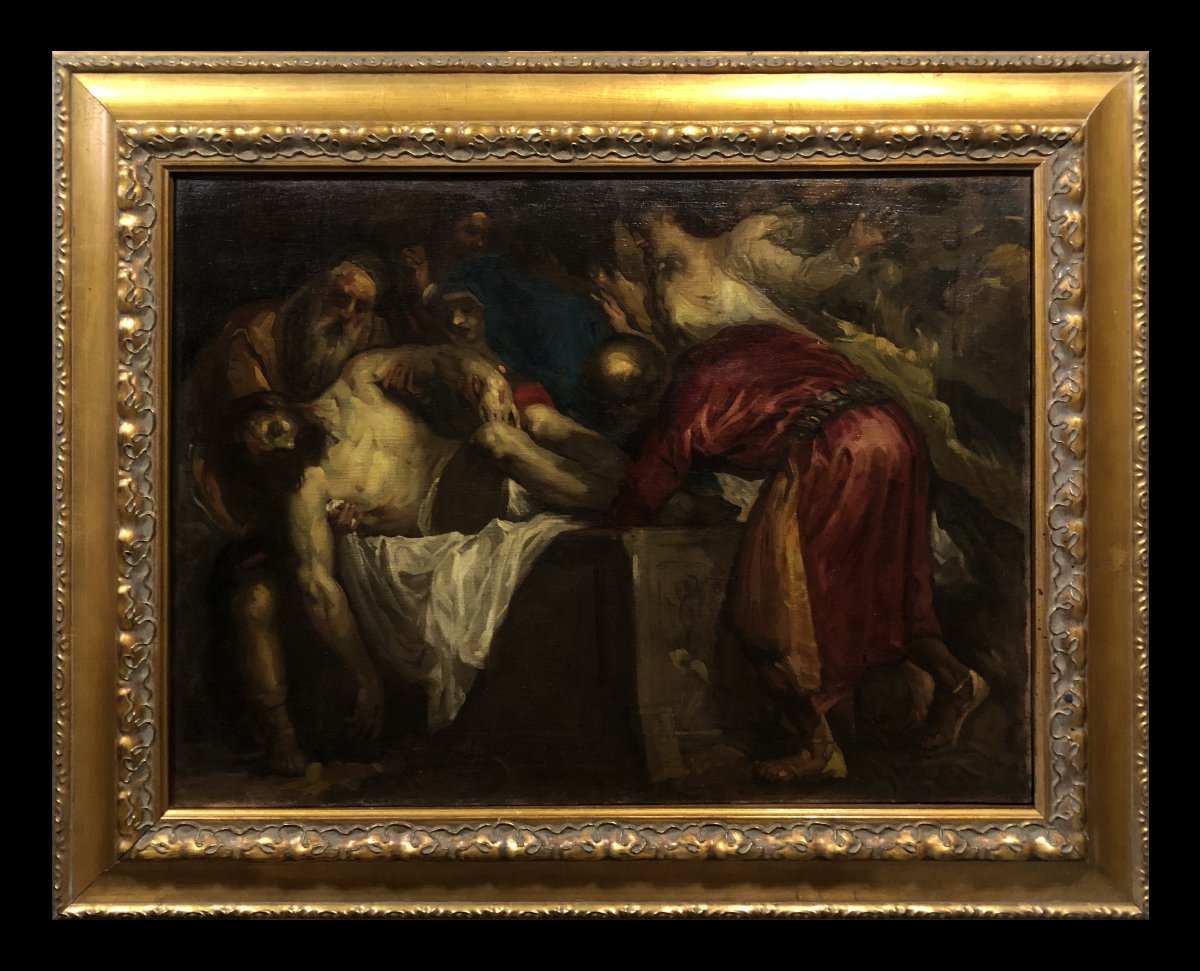
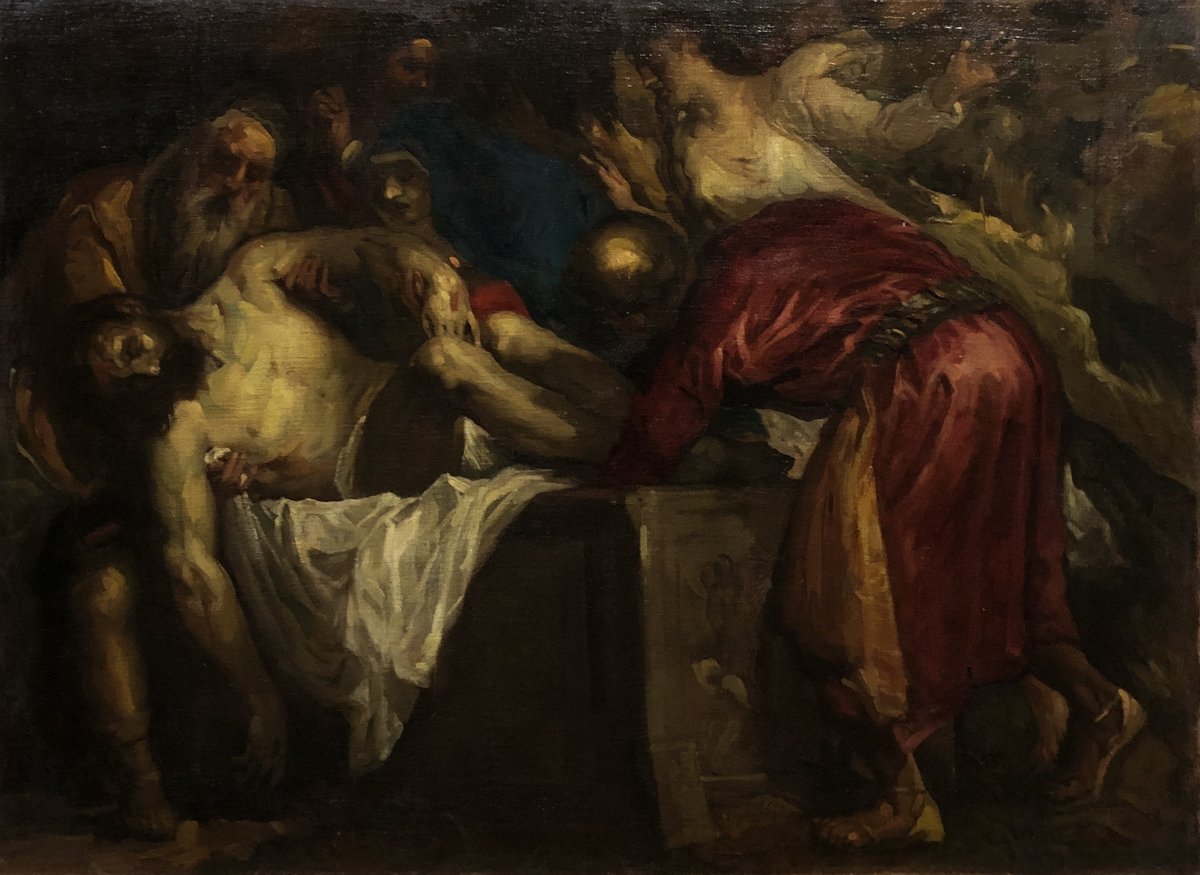
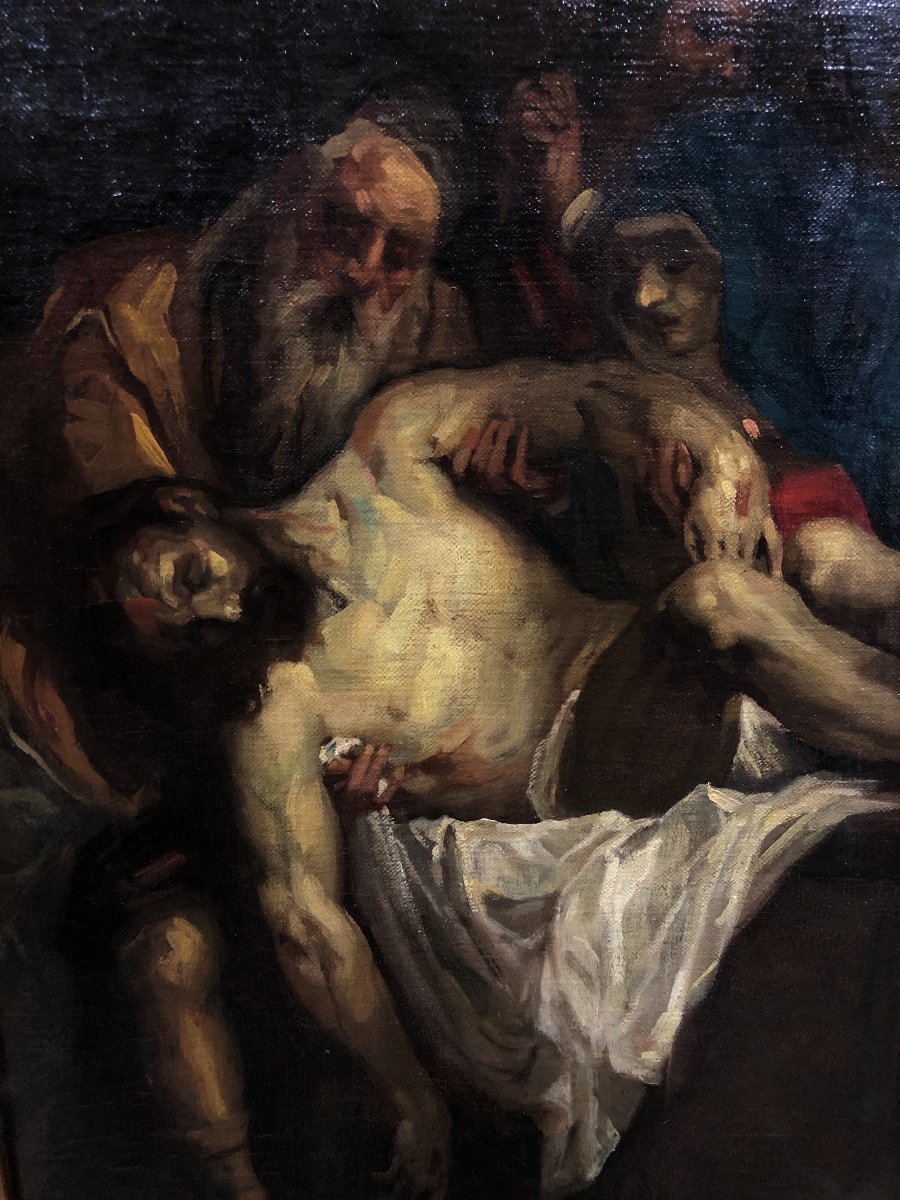
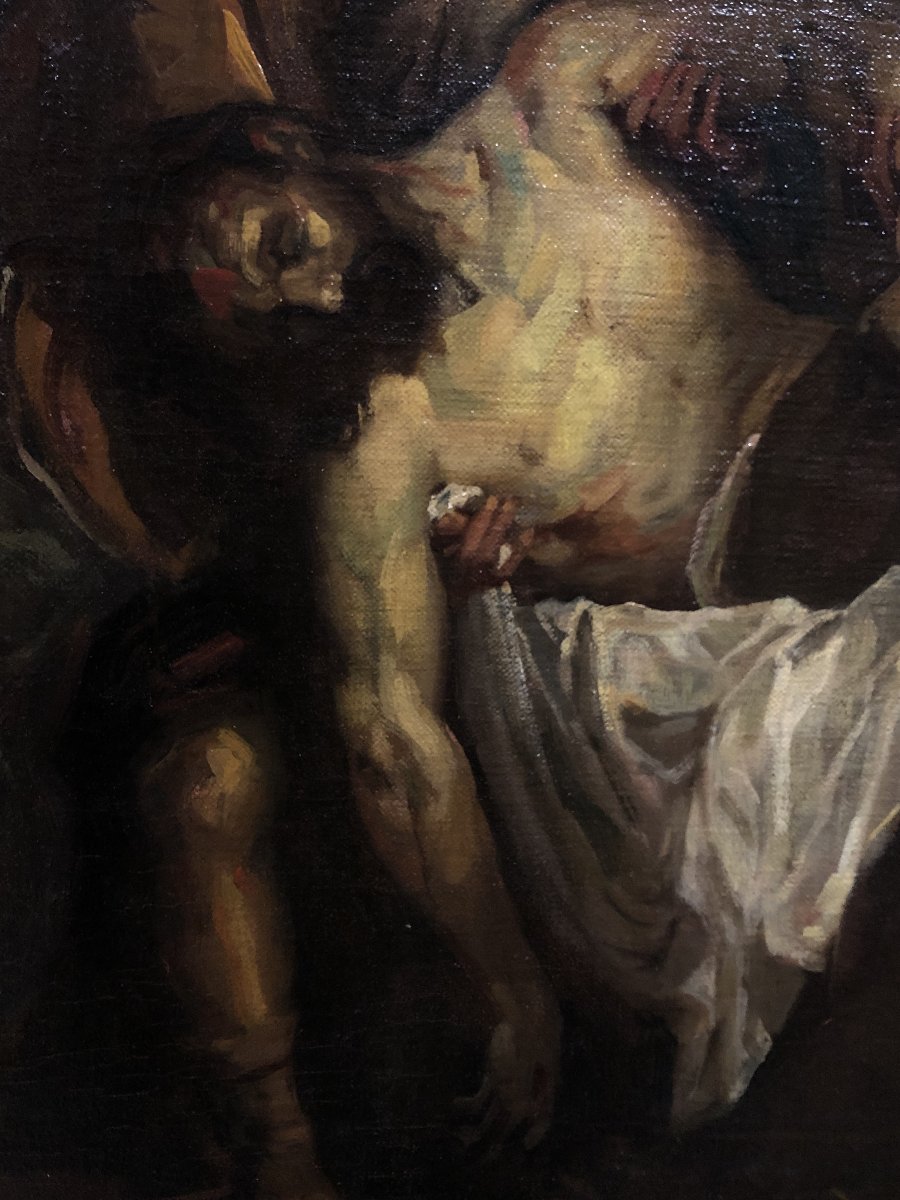
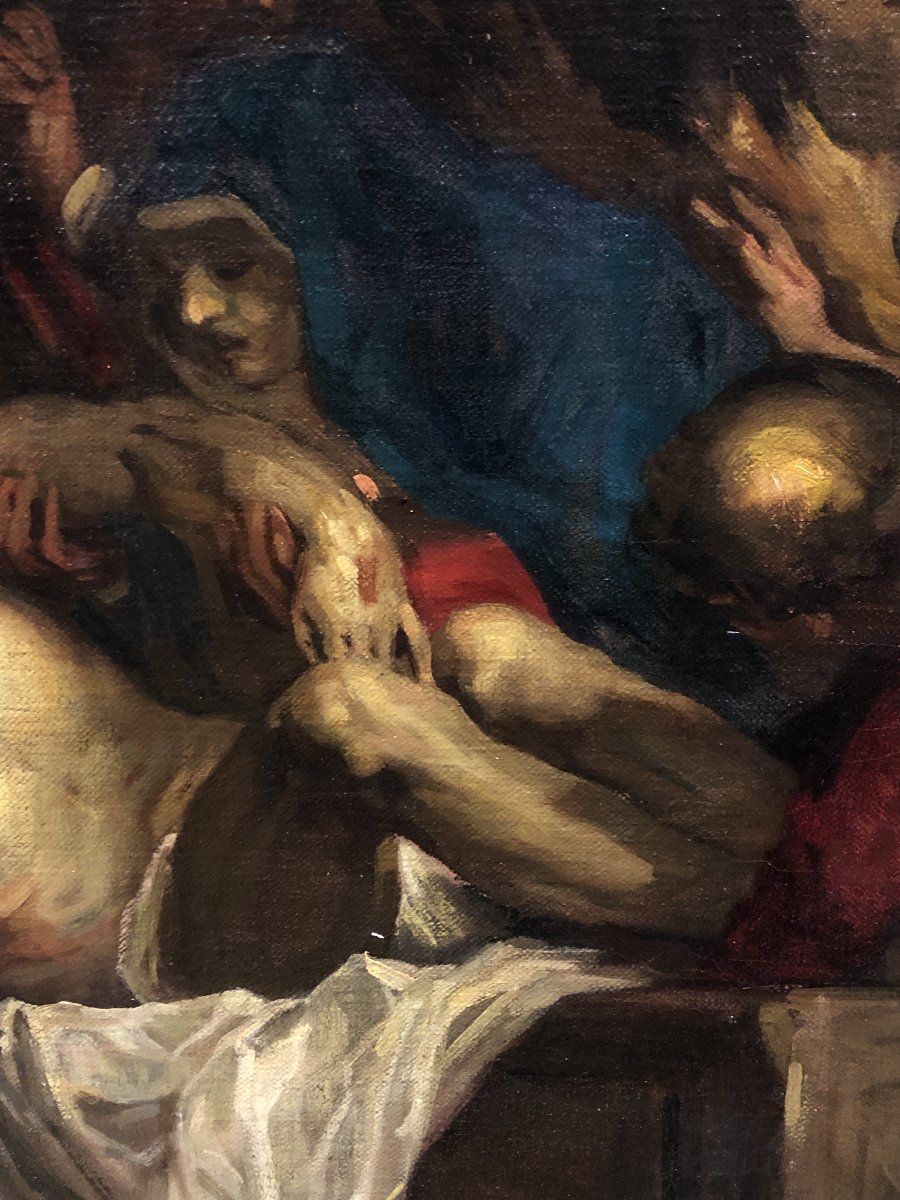
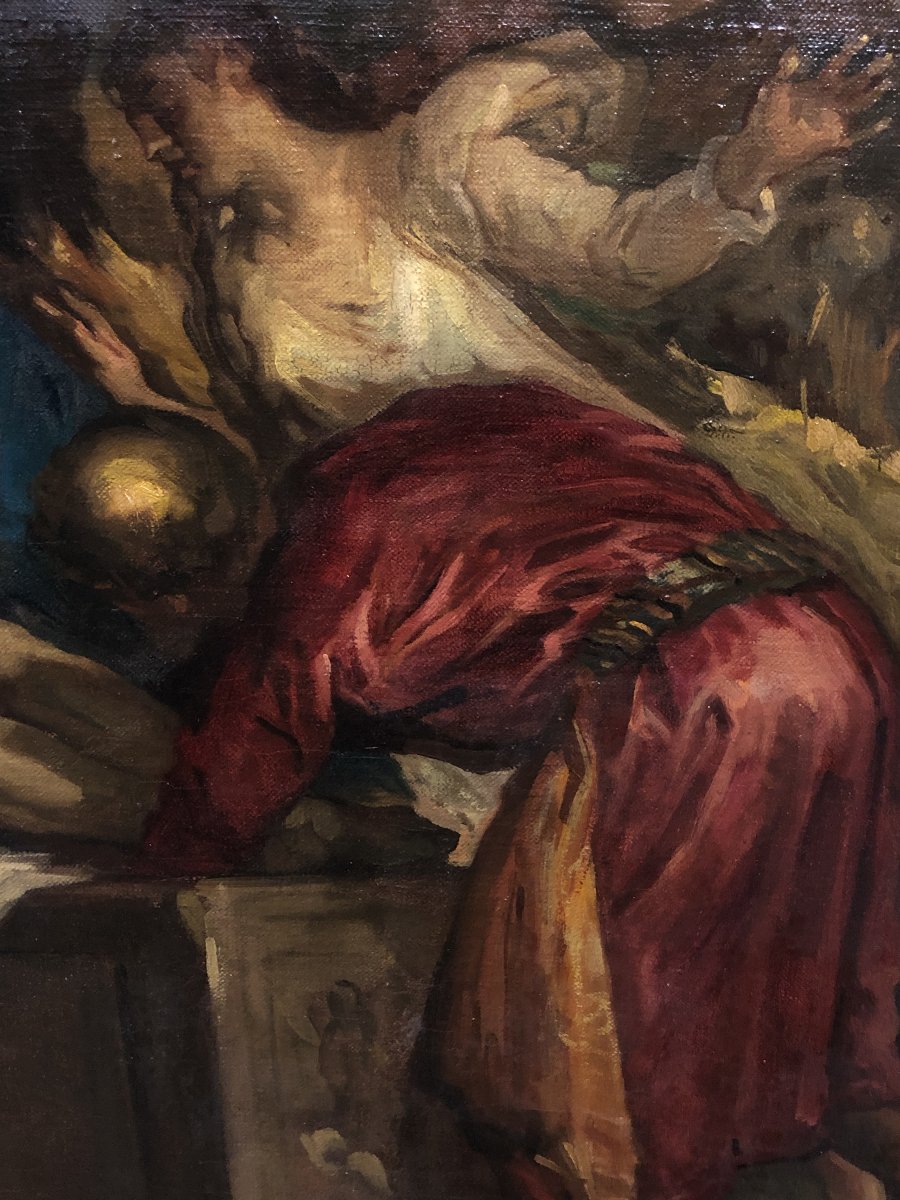
In The Entombment of Christ (1559), a masterpiece of the Venetian Renaissance preserved in the Prado Museum, Titian displays the full maturity of his technique and the profound mystical charge of his last period in a deeply moving "geometry of pain". The master organizes the scene with a powerful descending diagonal, where the exhausted bodies of Nicodemus, Joseph of Arimathea and St. John struggle to support the inert weight of Jesus. This physical dynamism, charged with poignant pathos, contrasts sharply with the austere horizontality of the tomb - a Roman sarcophagus adorned with classical reliefs - which anchors the tragedy to the earth. Breaking with the luminous clarity of the High Renaissance, Titian introduces a twilight, fragmented light. A tragic light glides over the pale, scarred body of Christ, fanning the tears of the Virgin Mary and Mary Magdalene, and tearing a stormy sky with flaming clouds - an obvious prefiguration of Baroque tenebrism.
This spellbinding atmosphere is orchestrated like a veritable Venetian symphony of color, true to the tradition that favors abundant color over rigidity of line. Titian plays with violent and symbolic chromatic contrasts, enveloping Christ's cadaverous whiteness between the fiery red of St. John's tunic and the deep blue of the Virgin's cloak, creating a visual harmony that intensifies the pain and majesty of the moment. In this canvas from his last period, the painter definitively abandons the smooth brushstrokes of his youth in favor of a free, textured and vibrant style, applied in places directly with his fingertips. In this way, the work transcends the simple narration of the sacred event to become an existential meditation on death and redemption, where the paint itself seems to spill out, scratch the canvas and come alive before the viewer's gaze.
- Image size unframed: 74 x 56 cm / 97 x 78 cm with custom frame.
In The Entombment of Christ (1559), a masterpiece of the Venetian Renaissance preserved in the Prado Museum, Titian displays the full maturity of his technique and the profound mystical charge of his last period in a deeply moving "geometry of pain". The master organizes the scene with a powerful descending diagonal, where the exhausted bodies of Nicodemus, Joseph of Arimathea and St. John struggle to support the inert weight of Jesus. This physical dynamism, charged with poignant pathos, contrasts sharply with the austere horizontality of the tomb - a Roman sarcophagus adorned with classical reliefs - which anchors the tragedy to the earth. Breaking with the luminous clarity of the High Renaissance, Titian introduces a twilight, fragmented light. A tragic light glides over the pale, scarred body of Christ, fanning the tears of the Virgin Mary and Mary Magdalene, and tearing a stormy sky with flaming clouds - an obvious prefiguration of Baroque tenebrism.
This spellbinding atmosphere is orchestrated like a veritable Venetian symphony of color, true to the tradition that favors abundant color over rigidity of line. Titian plays with violent and symbolic chromatic contrasts, enveloping Christ's cadaverous whiteness between the fiery red of St. John's tunic and the deep blue of the Virgin's cloak, creating a visual harmony that intensifies the pain and majesty of the moment. In this canvas from his last period, the painter definitively abandons the smooth brushstrokes of his youth in favor of a free, textured and vibrant style, applied in places directly with his fingertips. In this way, the work transcends the simple narration of the sacred event to become an existential meditation on death and redemption, where the paint itself seems to spill out, scratch the canvas and come alive before the viewer's gaze.
- Image size unframed: 74 x 56 cm / 97 x 78 cm with custom frame.
1 400 €
Period: 19th century
Style: Other Style
Condition: Excellent condition
Material: Oil painting
Reference (ID): 1775958
Availability: In stock
Print