THIS OBJECT WAS SOLD
Carved Wooden Medallion With Helmeted Male Profile, God Mars (?), Dlg Renaissance, 19th Century
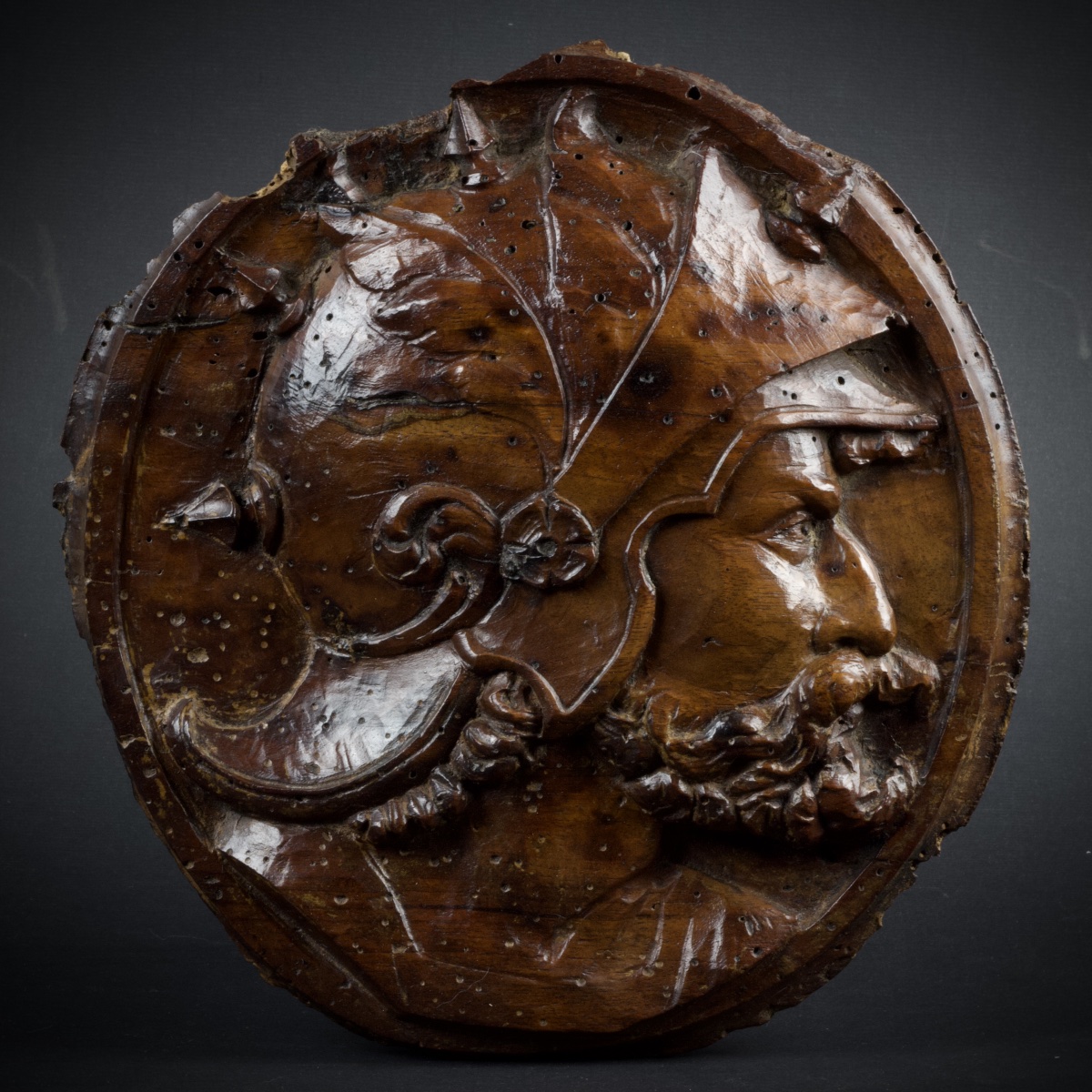
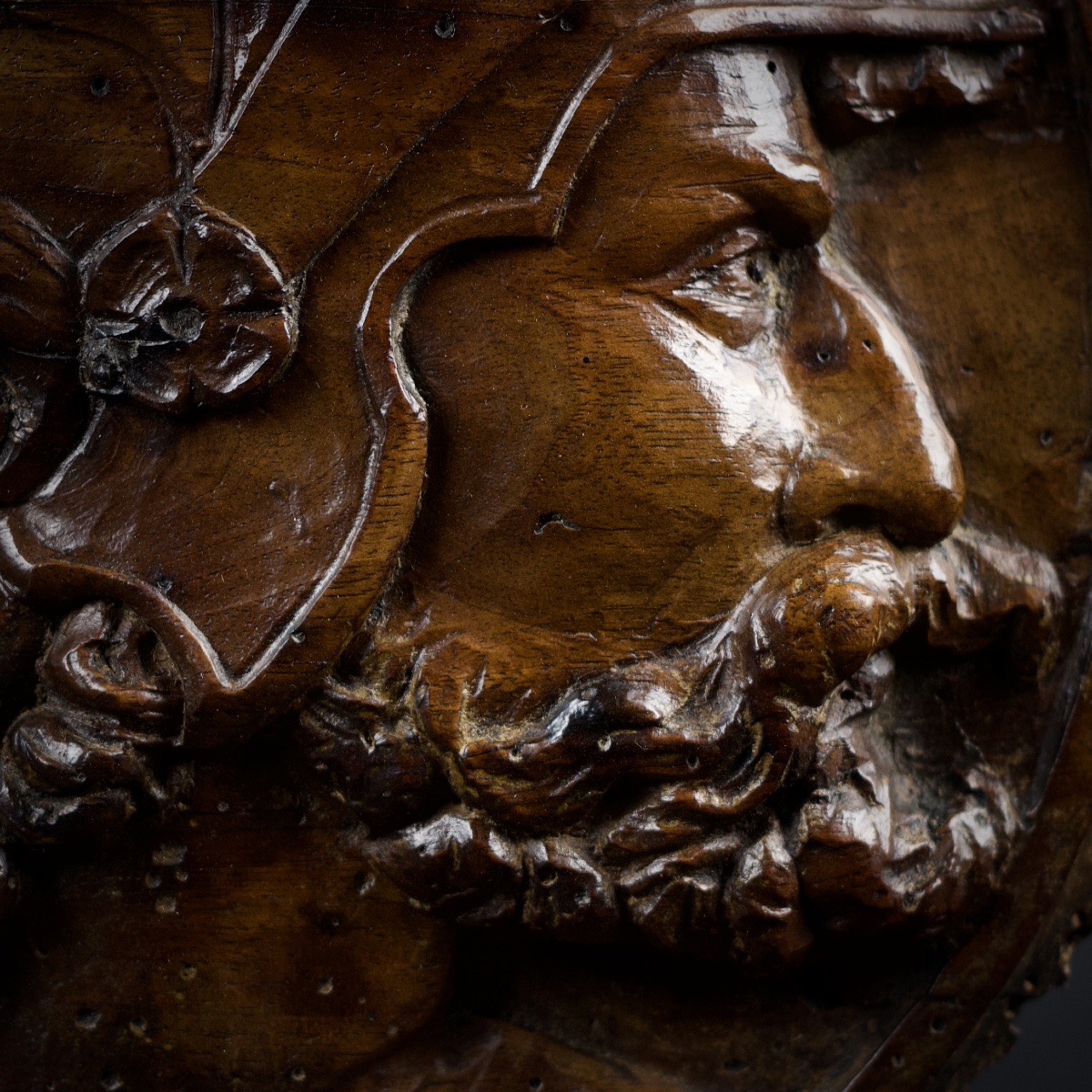
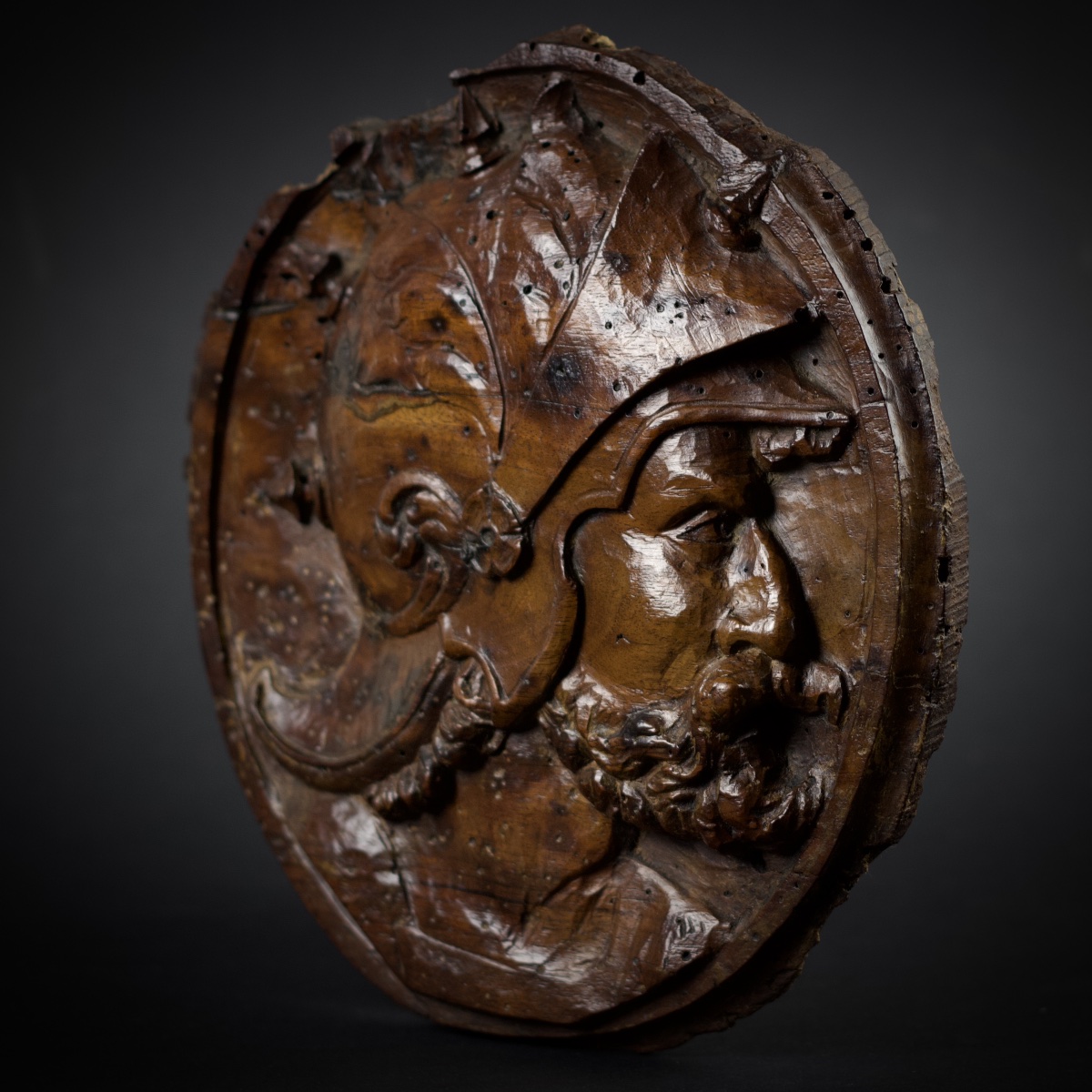

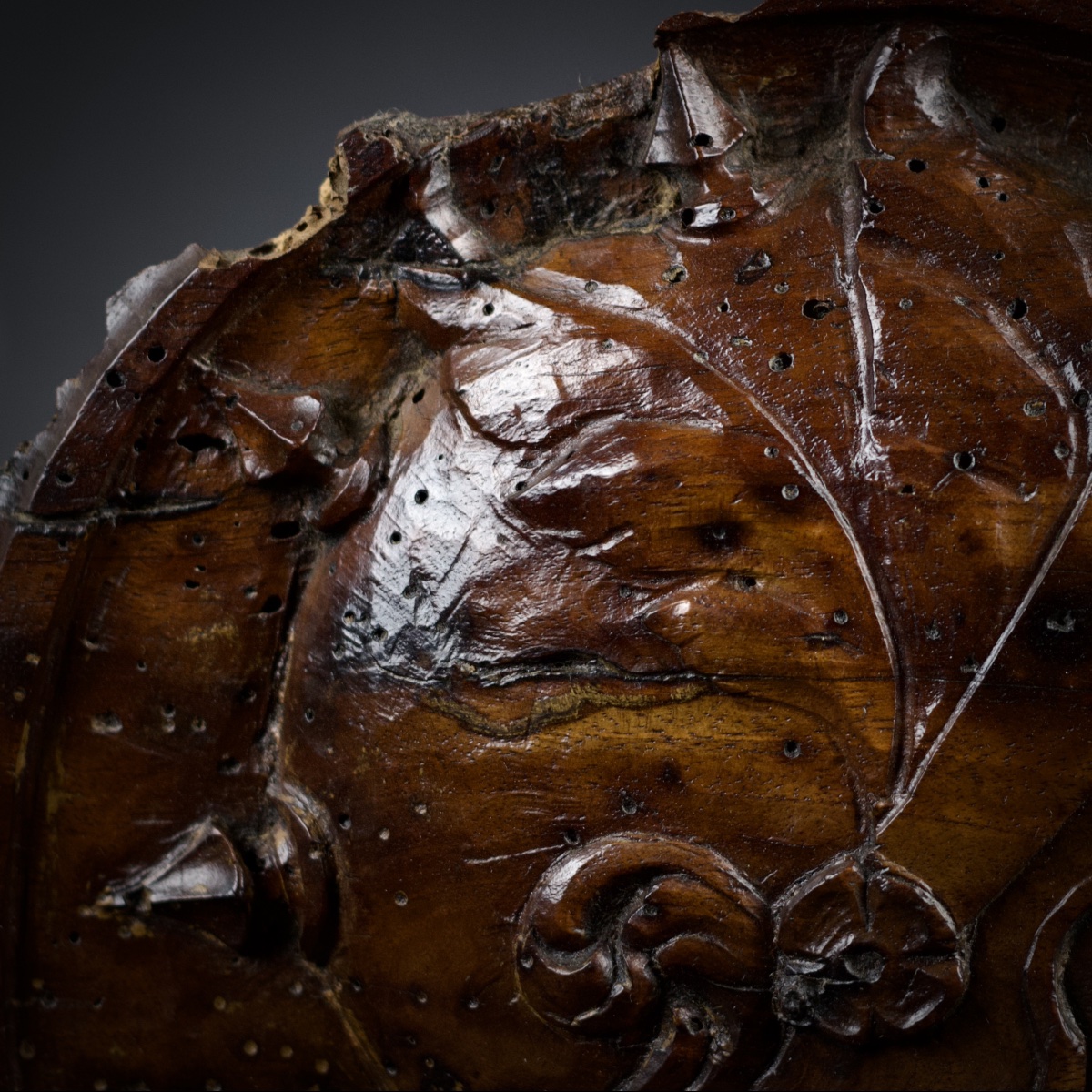
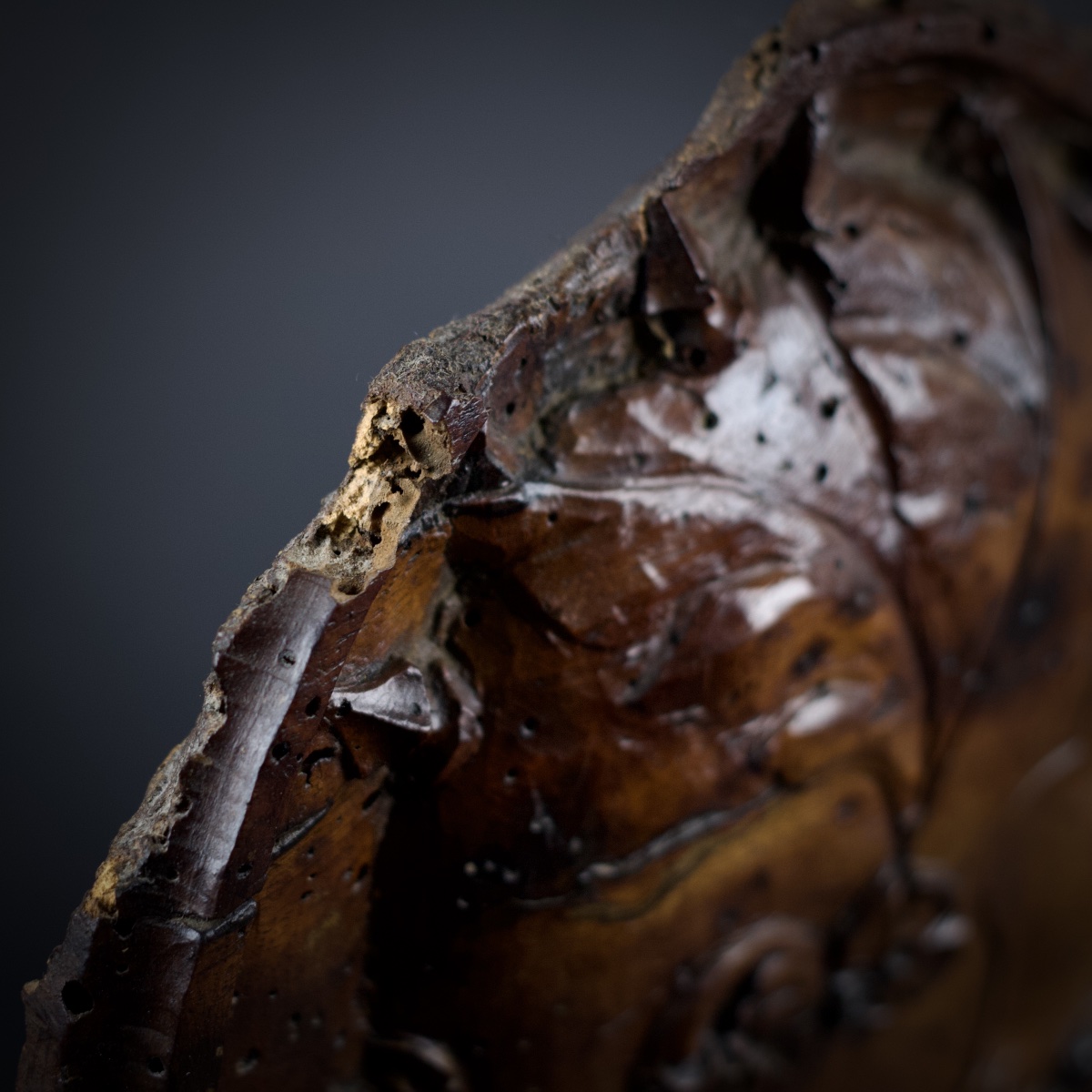
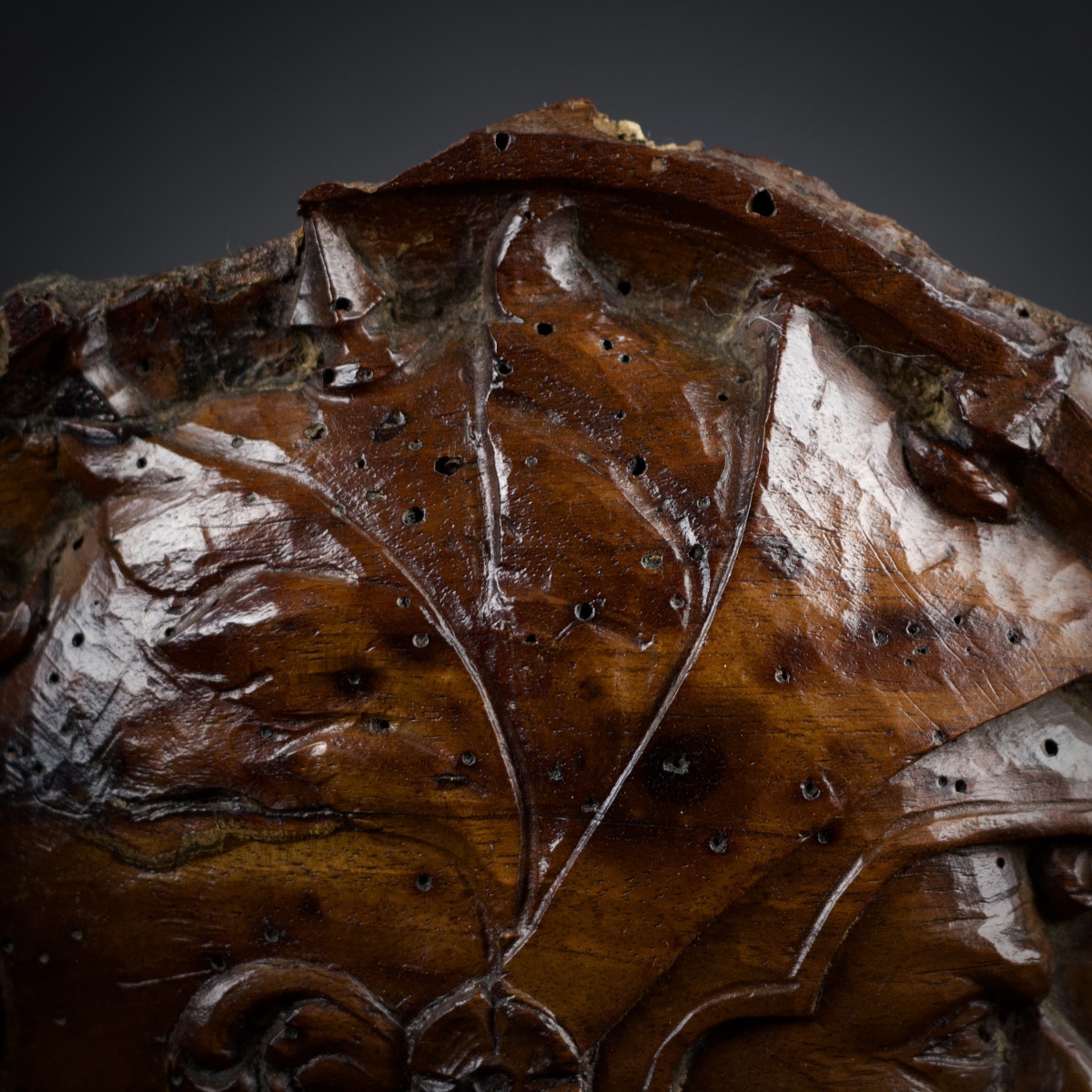
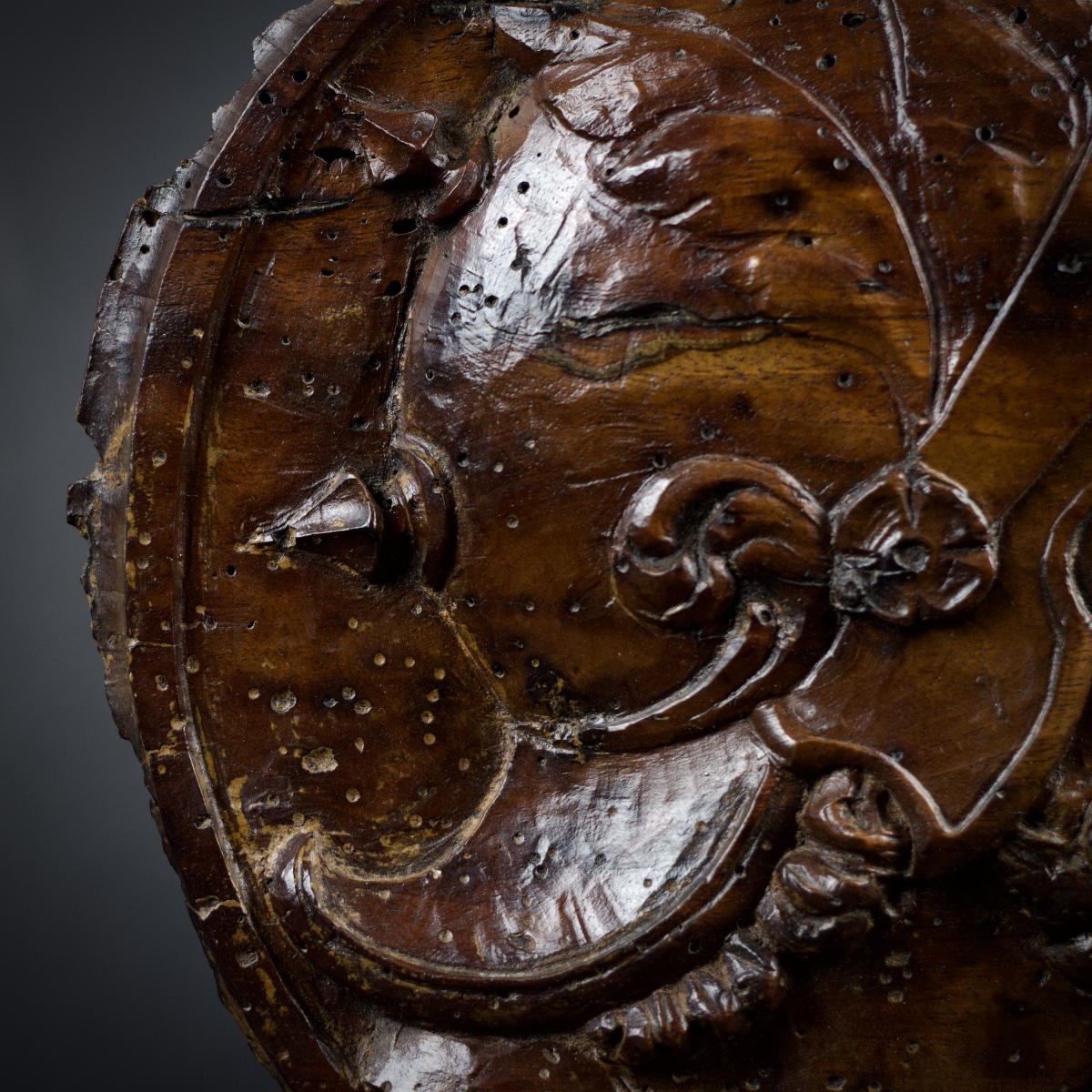
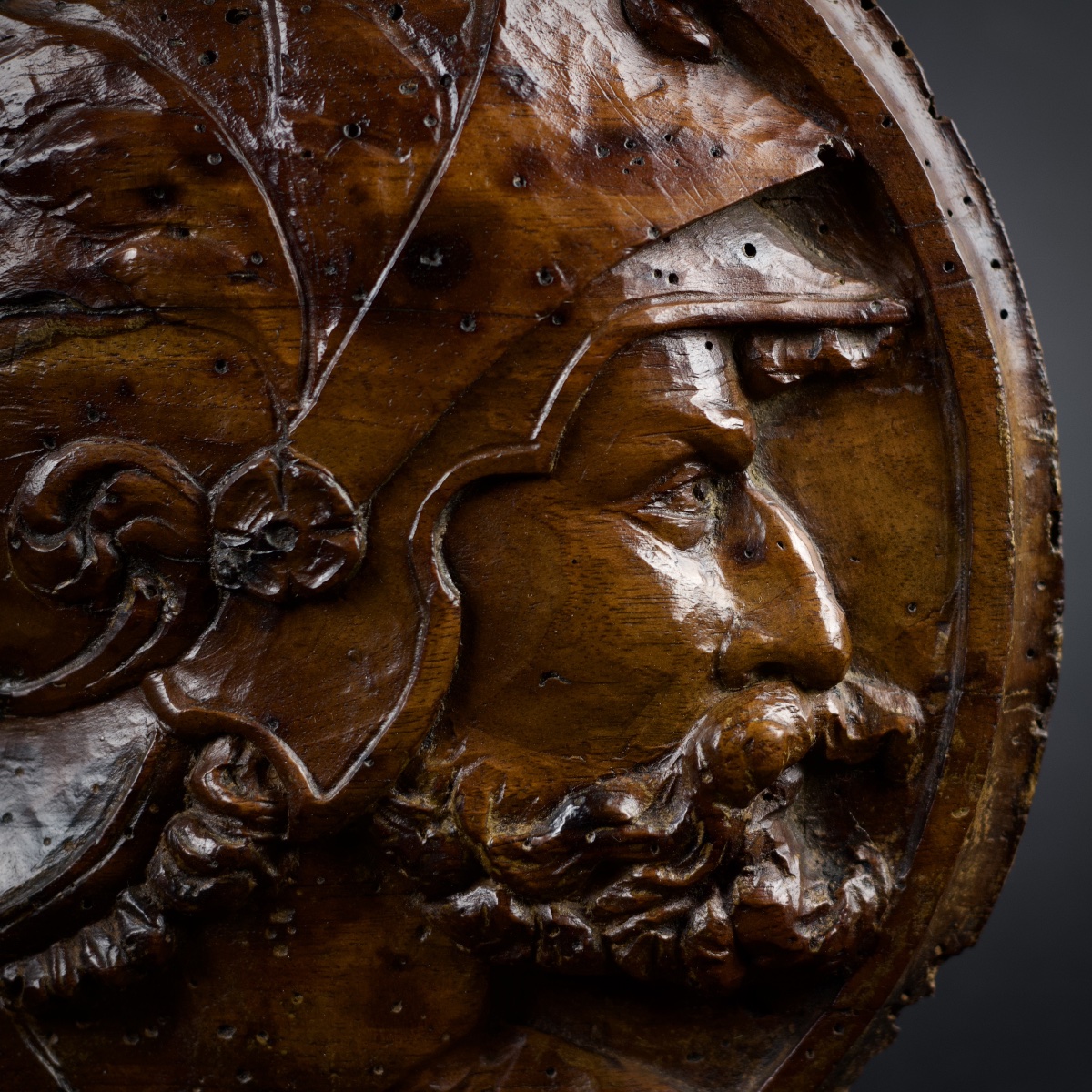
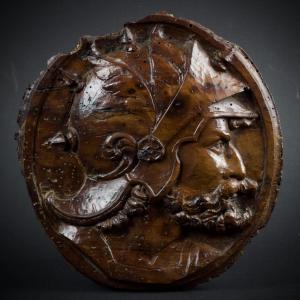


Carved wooden medallion with profile of a bearded man, possibly the god Mars, wearing a helmet topped with a crest of spikes and adorned with a palmette and acanthus scroll at the base of the visor, in the highly ornamental spirit of the XVIe century, as inherited from the Quattrocento and re-elaborated by the Mannerists who, following the example of Francesco Salviati (Study of helmet with crest, Musée du Louvre, Inv. 6126), deployed the ornamental skills they had acquired in Florentine goldsmiths' workshops, particularly in the case of this artist.
We also refer to drawings by Leonardo (Warrior with helmet, British Museum, Inv. 1895,0915.474), or Michelangelo (Warrior with feathered helmet, Boijmans Museum, Inv. I 185. PK) or even 16th century Germanic medalists such as Hans Daucher. The origin of these representations can be found precisely in numismatics, citing as a fairly likely source a coin from Etruria with a profile of Mars (British Museum, Inv. R. 7125)
A taste consequently quite reborn for this historicist piece made in the XIXe century.
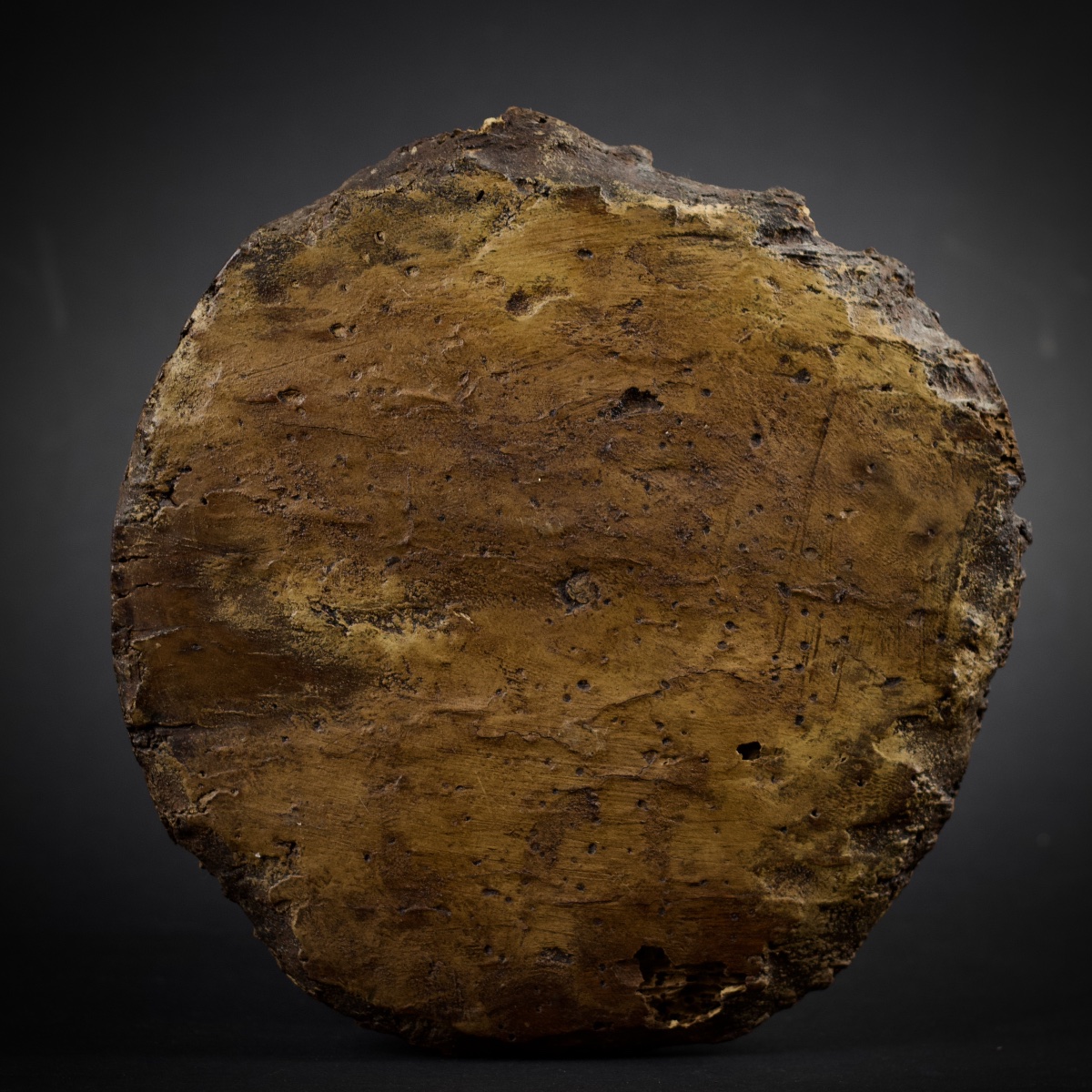
Missing and stigmata of woodborers, documented in the photographs.
Beautiful sculptural quality, with supple, convincing volumes. Nice patina.
An object that deserves to be plinth-mounted, for example, and displayed in a cabinet of curiosities for its almost "archaeological" appearance, further enhanced by the occasional wear and tear.
We also refer to drawings by Leonardo (Warrior with helmet, British Museum, Inv. 1895,0915.474), or Michelangelo (Warrior with feathered helmet, Boijmans Museum, Inv. I 185. PK) or even 16th century Germanic medalists such as Hans Daucher. The origin of these representations can be found precisely in numismatics, citing as a fairly likely source a coin from Etruria with a profile of Mars (British Museum, Inv. R. 7125)
A taste consequently quite reborn for this historicist piece made in the XIXe century.
Missing and stigmata of woodborers, documented in the photographs.
Beautiful sculptural quality, with supple, convincing volumes. Nice patina.
An object that deserves to be plinth-mounted, for example, and displayed in a cabinet of curiosities for its almost "archaeological" appearance, further enhanced by the occasional wear and tear.
Explore similar pieces and discover your ideal find:
Wood Sculptures