

Alcide Le Beau 1873/1943 Provencal Or Corsican Landscape
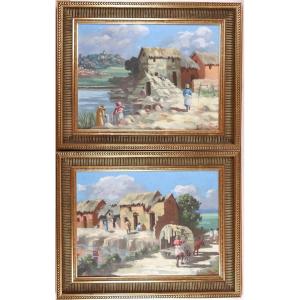
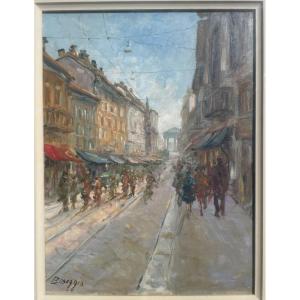
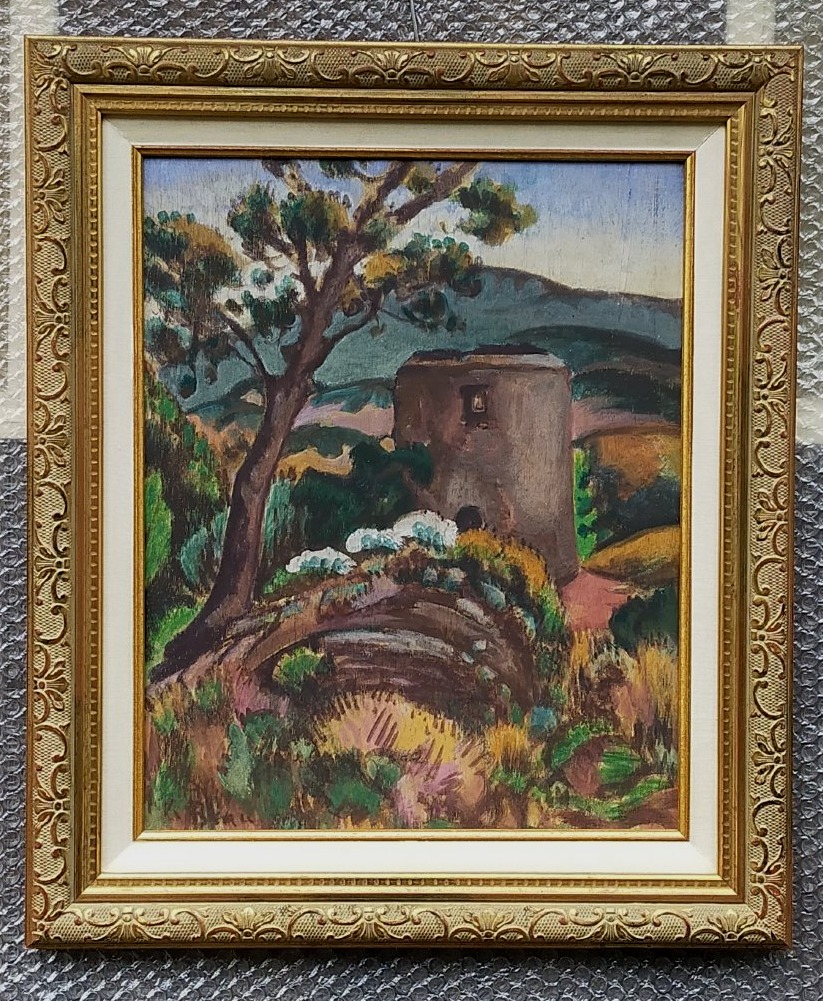
Charming and rare oil on canvas signed Alcide Le Beau, depicting a magnificent Provencal ,Mediterranean or Corsican landscape bathed in light.
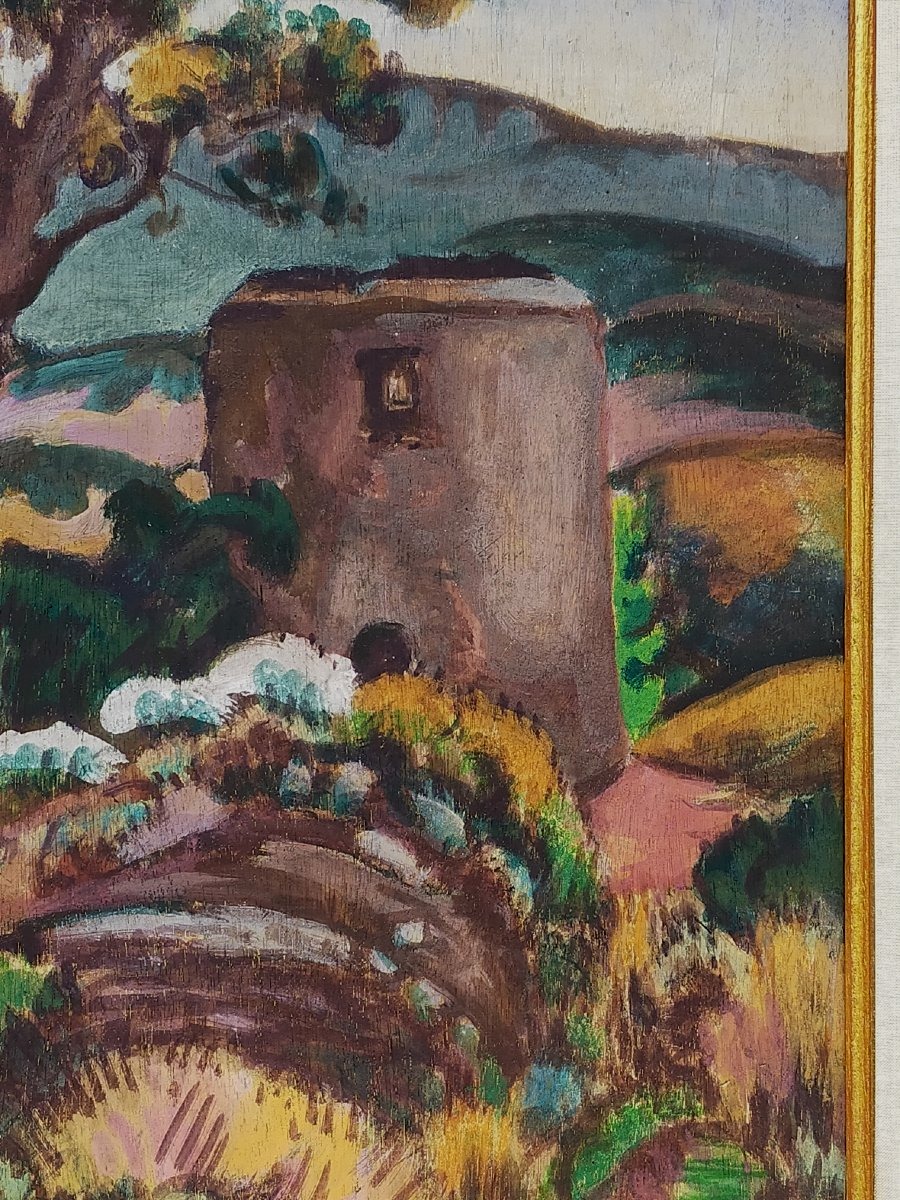
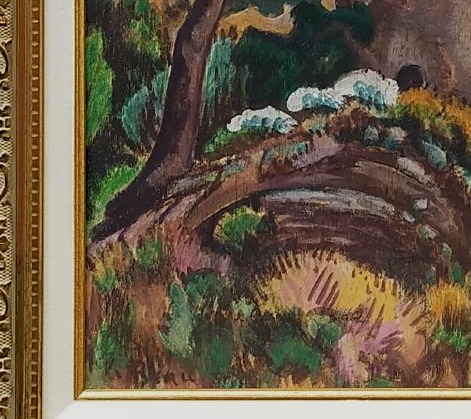
The composition reveals a typical Southern scene with a country lane, generous vegetation and an old mill or dovecote standing out against soft-toned hills. The painter's warm colors and lively touch offer an atmosphere full of poetry and serenity.
.In a post-impressionist spirit, the artist sensitively captures the light and landscapes of the Midi through a luminous palette and expressive subject matter. The work is presented in an elegant gilded frame.
Dimensions:
- Canvas: 41 x 33 cm
- With frame : 52 x 45 cm
- authentic work
Alcide Marie Le Beau was born on July 30, 1873 in Lorient. He died on August 12, 1943. He studied at the Jesuit College in Lorient. In 1890, he moved to Paris with his mother. He was the companion of painter Irène Reno (née Rena Hassenberg). In October 1912, he and his partner participated in the Section d'Or exhibition at Galerie La Boétie. A painter of the Pont-Aven school, he has exhibited at the Salon des Indépendants since 1902. A painter of landscapes and genre scenes, Alcide Le Beau was self-taught and mastered both oil and watercolor techniques. He is a rare artist whose rapid, tormented brushstrokes and vibrant forms convey a lyricism all his own. His intimacy with nature is expressed sometimes in thick, brightly-colored matter, sometimes in smooth, washed-out colors and synthesized forms. Alcide Le Beau is particularly sensitive to the intellectualized vision of the Pont Aven masters who influenced his youth. He was part of the avant-garde alongside some of the greatest names of the Fauvist movement. A brilliant artist, he was recognized by the most far-sighted critics and dealers. In 1902, he exhibited at the Indépendants, then with Berthe Weill from 1903. He was part of the Cage aux fauves at the 1905 Salon d'Automne, along with Albert Marquet, Henri Matisse, Maurice Vlaminck and André Derain. The artist also took part in group shows at the Berthe Weill gallery in Paris in 1903-1904, with Raoul Dufy and Henri Matisse, then at the Durand-Ruel gallery in 1911. His reputation grew considerably, and numerous exhibitions were held in France and St. Petersburg. In 1906, an exhibition at Vollard definitively revealed his talent, propelling him to the forefront of the art scene. In 1907, the Druel gallery organized a retrospective of his Fauve period, featuring some forty of his paintings. Alcide Le Beau succeeded in capturing atmospheres with a chromatic palette close to that of Gauguin and Van Gogh. For him, color merely serves as a support for a gradual, attenuated retranscription of the primary effect observed in Fauves. He sought a spiritual and expressive dimension in his works from 1906 to 1908, the peak of his art. It was during this period that he painted his Corsican landscapes, as well as his subjects taken from Wagner operas.
Bibliography: Robert Hellebranth, Anne Burdin, Alcide Le Beau 1873-1943, éditions
Matute, 1988, Paris; Alcide Le Beau, 1873- 1943, Musée de Pont-Aven, October 2, 1992- January 3, 1993; E. Bénézit, tome 8, pages 374-375.
Period: 20th century
Style: Other Style
Condition: Perfect condition
Material: Oil painting on wood
Reference (ID): 1769370
Availability: In stock