

Antique Painting From The 1600s, Flemish School
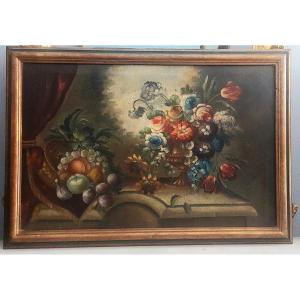
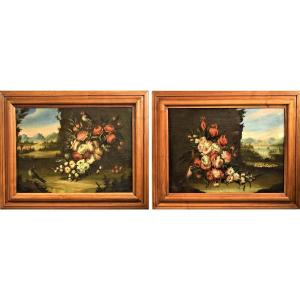
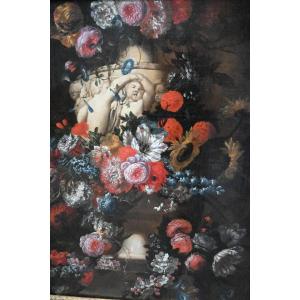
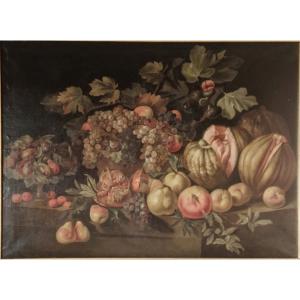
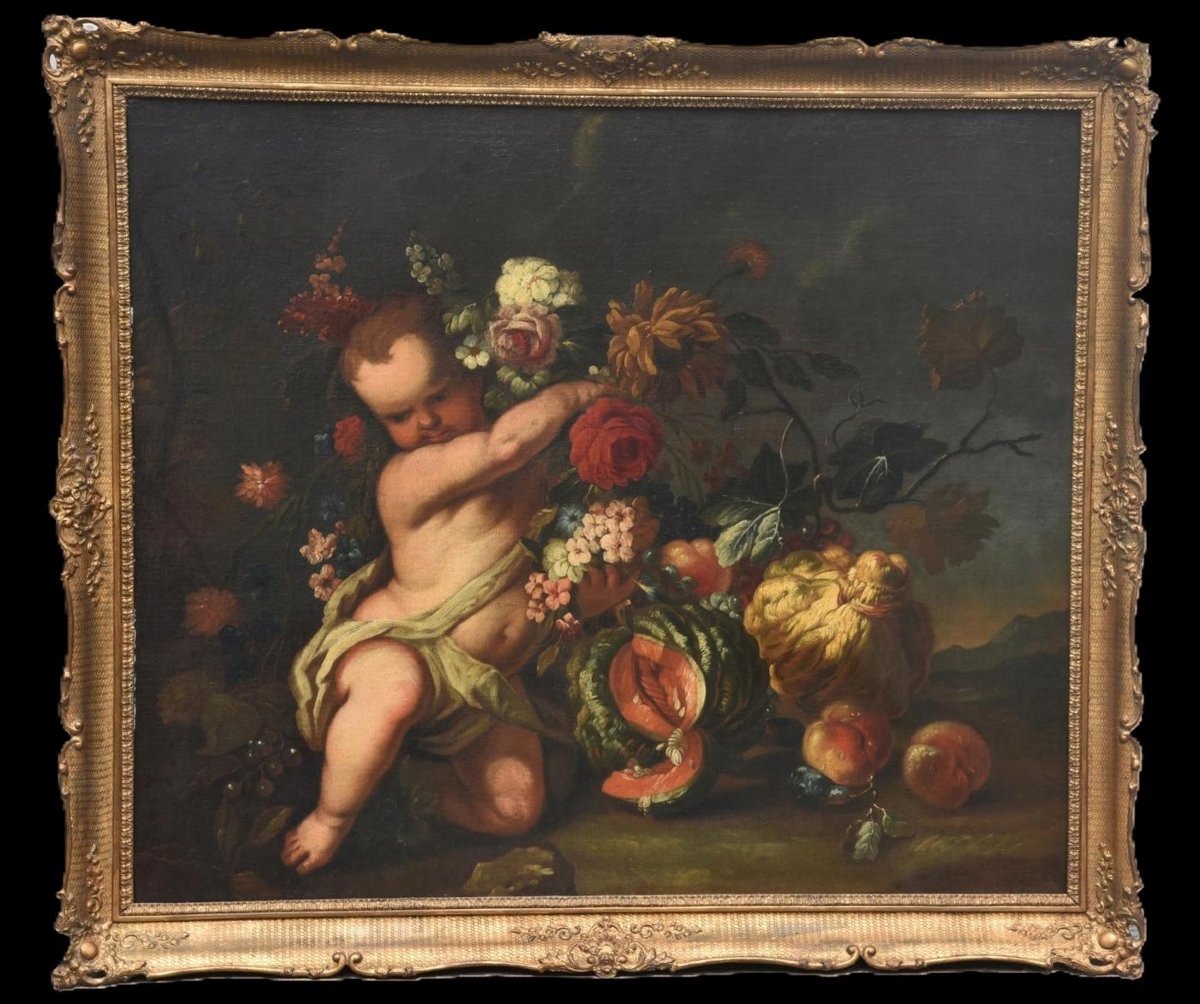
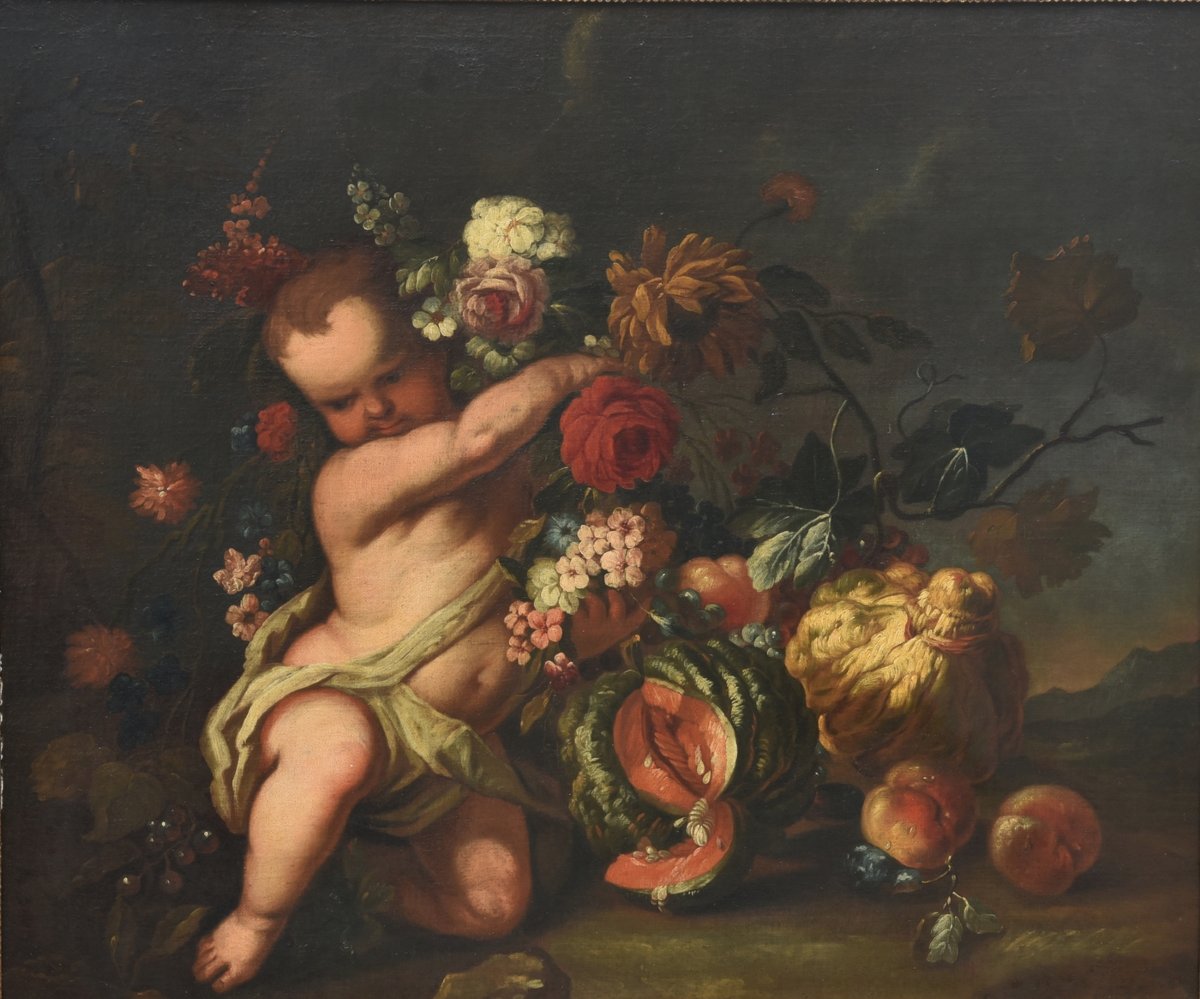
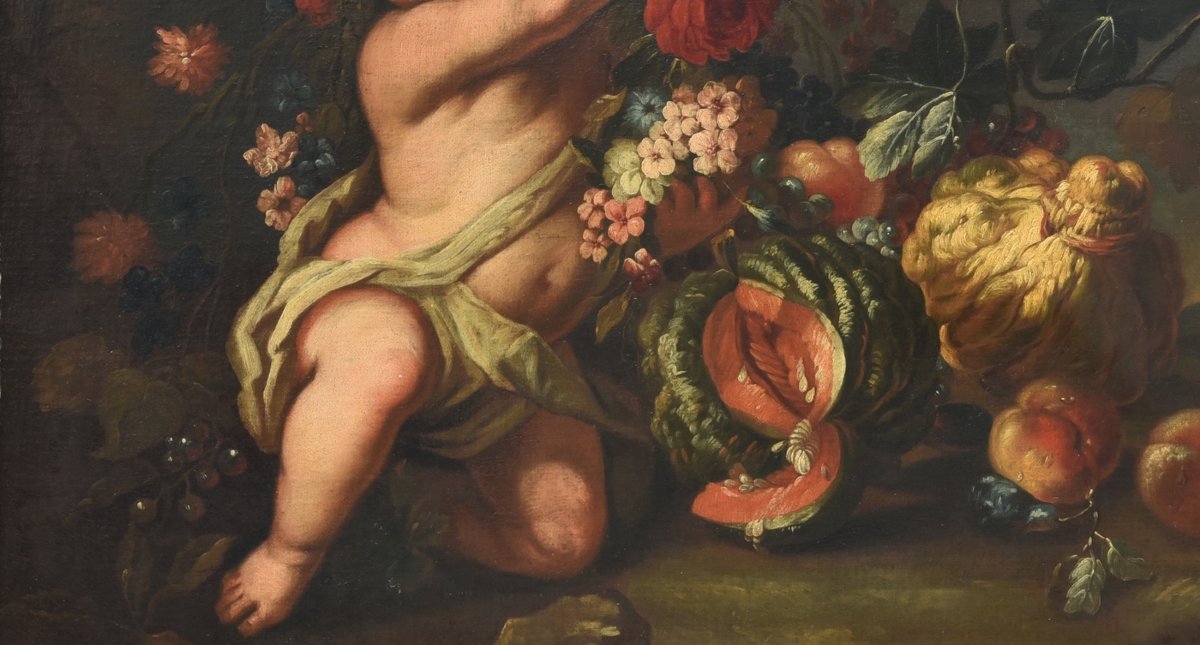
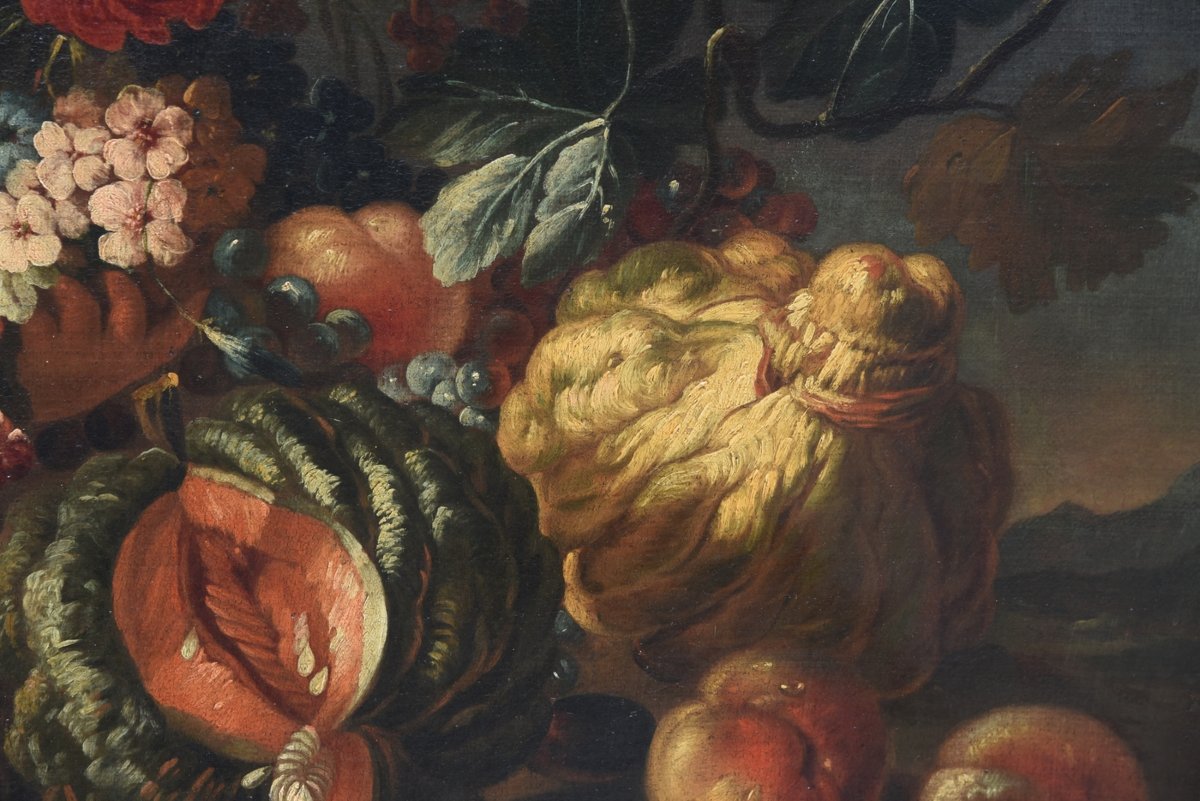
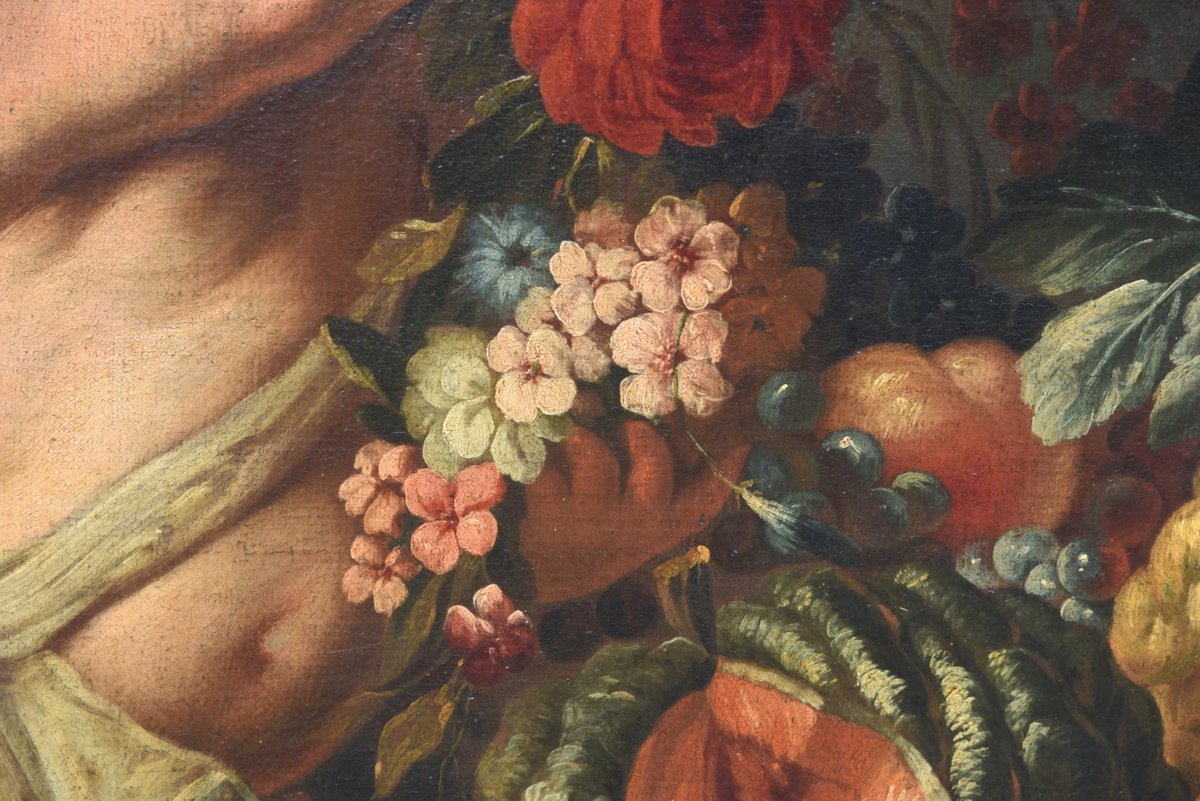
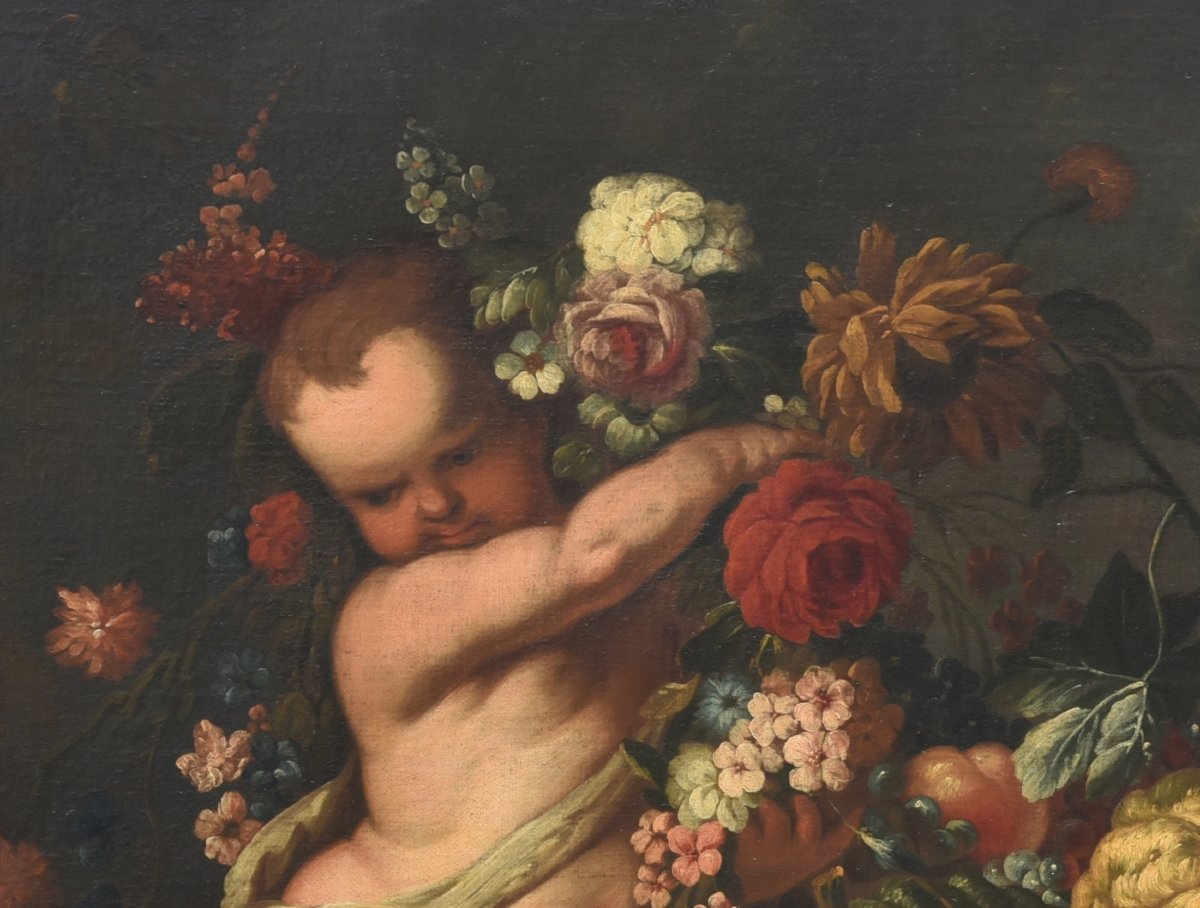
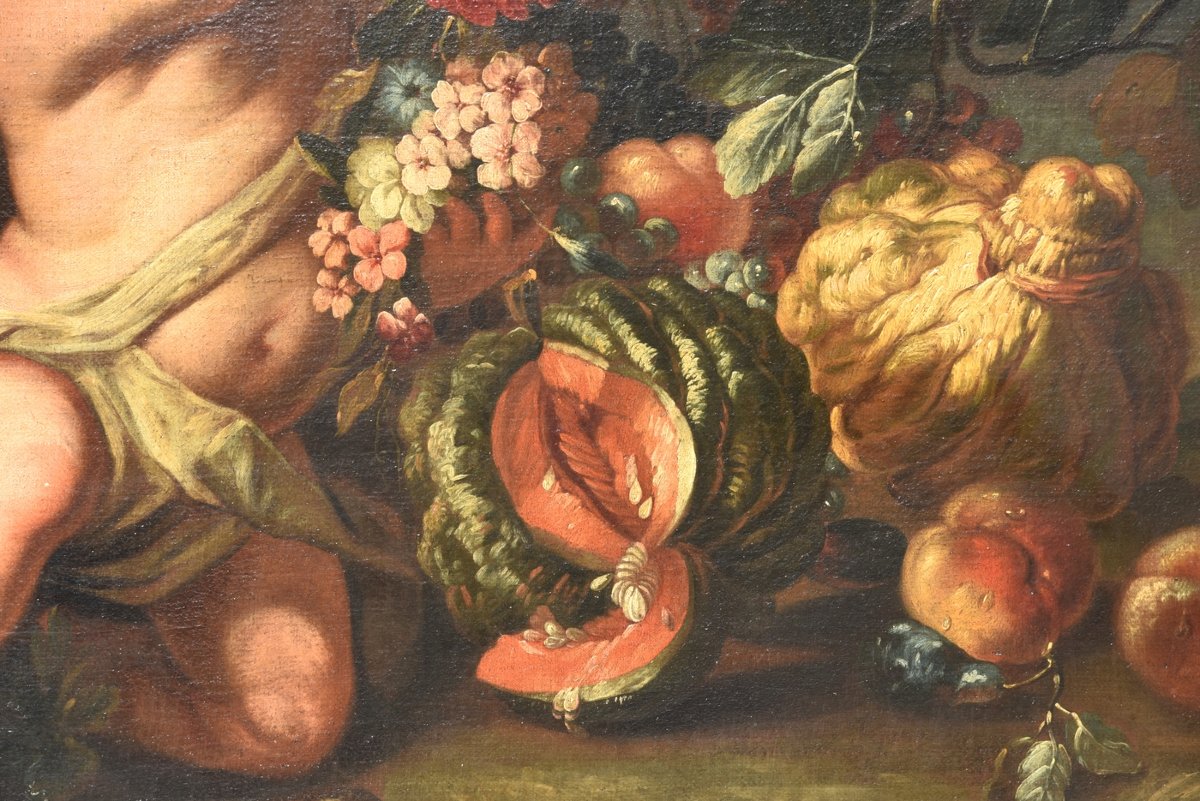
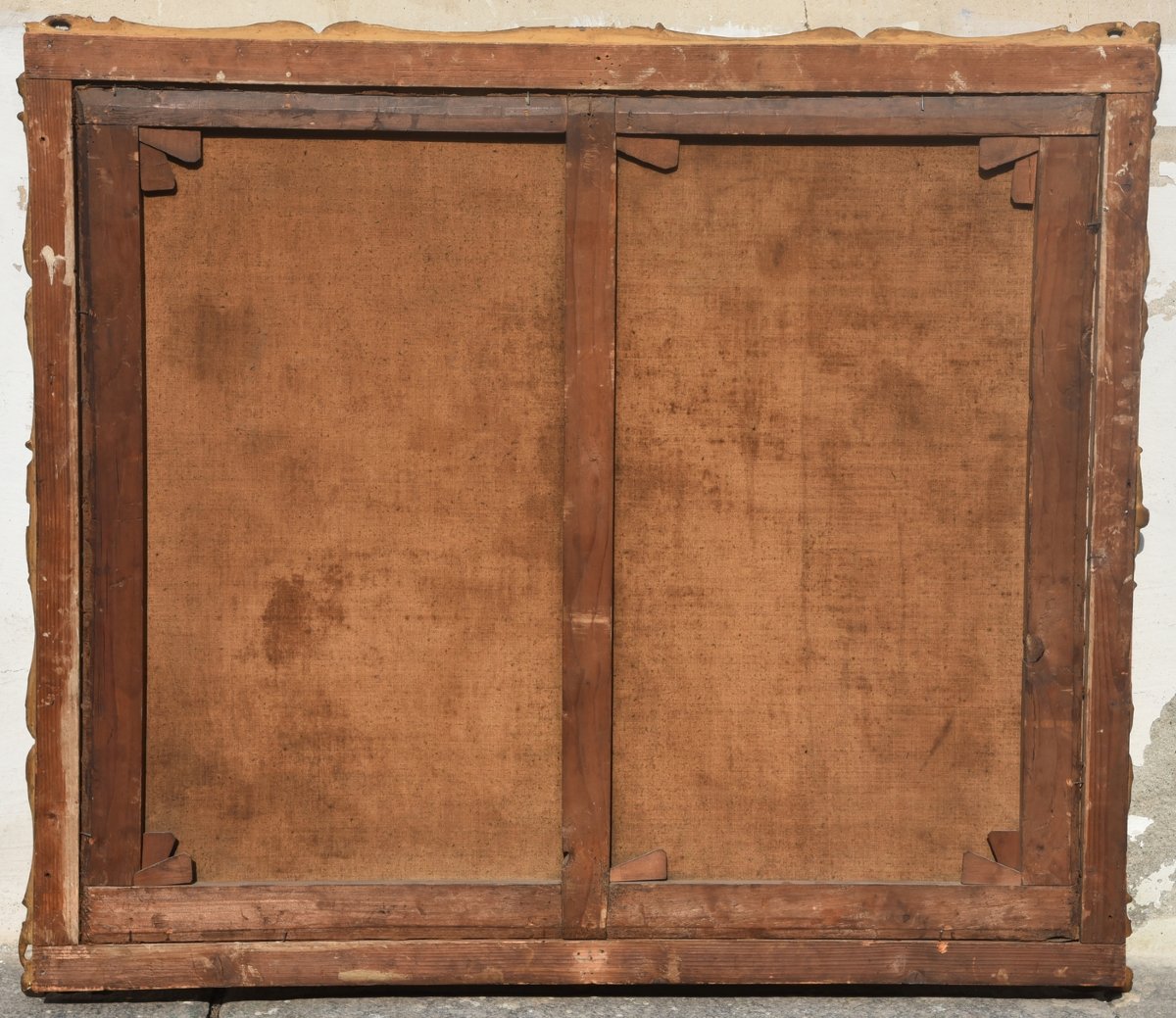
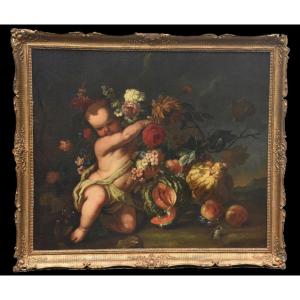
Oil on canvas, "Still Life with Flowers and Fruit Decorated with a Cherub." Attributed to Abraham Brueghel and Guillaume Courtois. Flemish School. Period: 17th century. Dimensions: +/- 87x103 cm.
Guillaume Courtois was born in Saint-Hippolyte (County of Burgundy), in present-day France, the son of the obscure painter Jean-Pierre Courtois. Very little is known about Guillaume’s youth, but it is presumed that he received his initial training from his father. His father and sons traveled to Italy around 1636 when Guillaume was still a child. They traveled to Milan, Bologna, Venice, Florence, and Siena.
The movements of the Courtois brothers are not very well documented, which has led to alternative theories. It is possible that Guillaume Courtois settled in Rome in 1638, where he entered the studio of Pietro da Cortona. Here he would have completed his training by drawing from life and copying works by Giovanni Lanfranco and Andrea Sacchi. He also studied the Bolognese painters and Guercino, and developed a classicizing style with very little overt mannerism, partly resembling that of Carlo Maratta. Another view of the brothers’ movements that has gained support among modern scholars is that Guillaume and Jacques remained together until the late 1640s and that Guillaume Courtois came under da Cortona’s influence only when he worked under him in 1656. Guillaume Courtois spent most of his working life in Rome, where he died of gout on June 14 or 15, 1679.
Guillaume Courtois was primarily a painter of Christian religious and mythological scenes. He was also in demand as a court painter. He is sometimes referred to as a battle painter due to his involvement in the decorative project in the chapel of the Jesuit Congregation, a small oratory housed in a hall of the Roman College adjacent to the Church of St. Ignatius in Rome. This was a collaborative effort by the brothers Guillaume and Jacques. It is now established that Jacques—who was a specialist in battle scenes—painted the battles on the backdrops. Guillaume painted the scenes depicting victories attributed to the intervention of the Virgin: Heraclius Defeating the Armies of Khosrow, Saint Pulcheria, The Triumph of Emperor Zimisches, The Battle of Louis IX of France, and Julian the Apostate Pierced by Saint Mercurius. Guillaume Courtois’s early drawings depict battle scenes and show that he was initially influenced by his brother. He also produced some portraits and collaborated with other artists on genre paintings.
In addition to his frequent collaborations with his brother Jacques, there are numerous collaborations between Guillaume Courtois and Abraham Brueghel, a Flemish still-life painter active in Rome. One example is the Still Life with Fruit, Flowers, and a Figure (sold by Sotheby’s on January 29, 2015, in New York, lot 302). The still life was painted by Brueghel, while Courtois painted the figure. The painting is a variant of Grapes and Pomegranate with a Vase of Flowers and a Female Figure (private collection), dated to the late 1660s. Courtois reworked the charming female figure in his Fruit Gatherer
Guillaume Courtois was born in Saint-Hippolyte (County of Burgundy), in present-day France, the son of the obscure painter Jean-Pierre Courtois. Very little is known about Guillaume’s youth, but it is presumed that he received his initial training from his father. His father and sons traveled to Italy around 1636 when Guillaume was still a child. They traveled to Milan, Bologna, Venice, Florence, and Siena.
The movements of the Courtois brothers are not very well documented, which has led to alternative theories. It is possible that Guillaume Courtois settled in Rome in 1638, where he entered the studio of Pietro da Cortona. Here he would have completed his training by drawing from life and copying works by Giovanni Lanfranco and Andrea Sacchi. He also studied the Bolognese painters and Guercino, and developed a classicizing style with very little overt mannerism, partly resembling that of Carlo Maratta. Another view of the brothers’ movements that has gained support among modern scholars is that Guillaume and Jacques remained together until the late 1640s and that Guillaume Courtois came under da Cortona’s influence only when he worked under him in 1656. Guillaume Courtois spent most of his working life in Rome, where he died of gout on June 14 or 15, 1679.
Guillaume Courtois was primarily a painter of Christian religious and mythological scenes. He was also in demand as a court painter. He is sometimes referred to as a battle painter due to his involvement in the decorative project in the chapel of the Jesuit Congregation, a small oratory housed in a hall of the Roman College adjacent to the Church of St. Ignatius in Rome. This was a collaborative effort by the brothers Guillaume and Jacques. It is now established that Jacques—who was a specialist in battle scenes—painted the battles on the backdrops. Guillaume painted the scenes depicting victories attributed to the intervention of the Virgin: Heraclius Defeating the Armies of Khosrow, Saint Pulcheria, The Triumph of Emperor Zimisches, The Battle of Louis IX of France, and Julian the Apostate Pierced by Saint Mercurius. Guillaume Courtois’s early drawings depict battle scenes and show that he was initially influenced by his brother. He also produced some portraits and collaborated with other artists on genre paintings.
In addition to his frequent collaborations with his brother Jacques, there are numerous collaborations between Guillaume Courtois and Abraham Brueghel, a Flemish still-life painter active in Rome. One example is the Still Life with Fruit, Flowers, and a Figure (sold by Sotheby’s on January 29, 2015, in New York, lot 302). The still life was painted by Brueghel, while Courtois painted the figure. The painting is a variant of Grapes and Pomegranate with a Vase of Flowers and a Female Figure (private collection), dated to the late 1660s. Courtois reworked the charming female figure in his Fruit Gatherer
4 200 €
Period: 17th century
Style: Louis 14th, Regency
Condition: Excellent condition
Material: Oil painting
Width: 103
Height: 87
Reference (ID): 1769106
Availability: In stock
Print