THIS OBJECT WAS SOLD
Portrait Of An Officer, Hyacinthe Rigaud & Studio, 18th French School
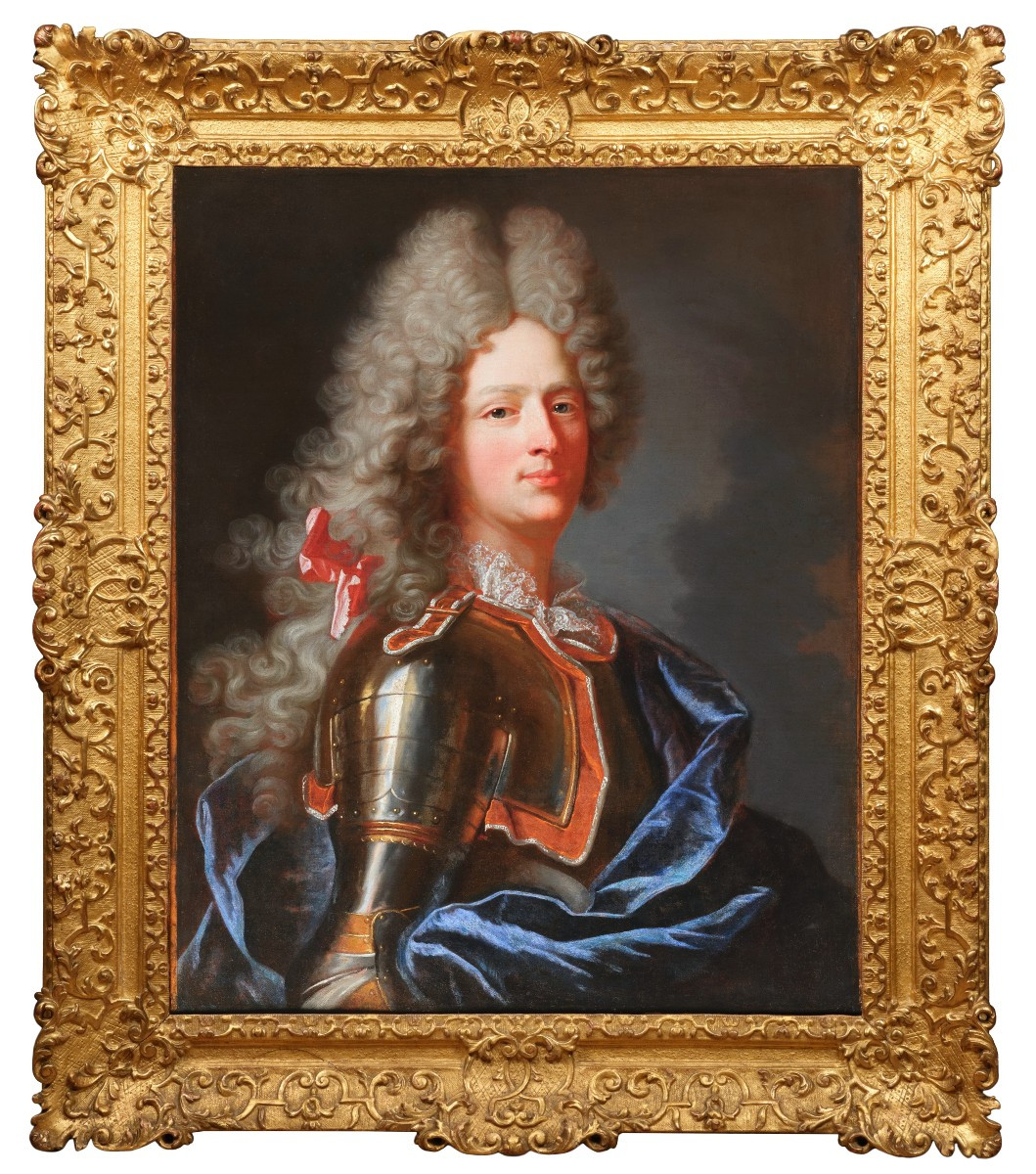
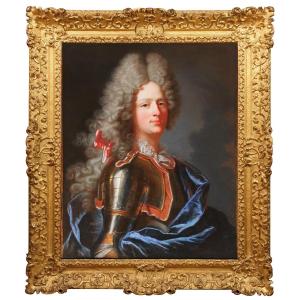


Portrait of a senior officer
Hyacinthe Rigaud (1659-1743) & studio
18th century French school, circa 1715
Oil on canvas.
Dimensions: h. 80 cm, w. 64 cm.
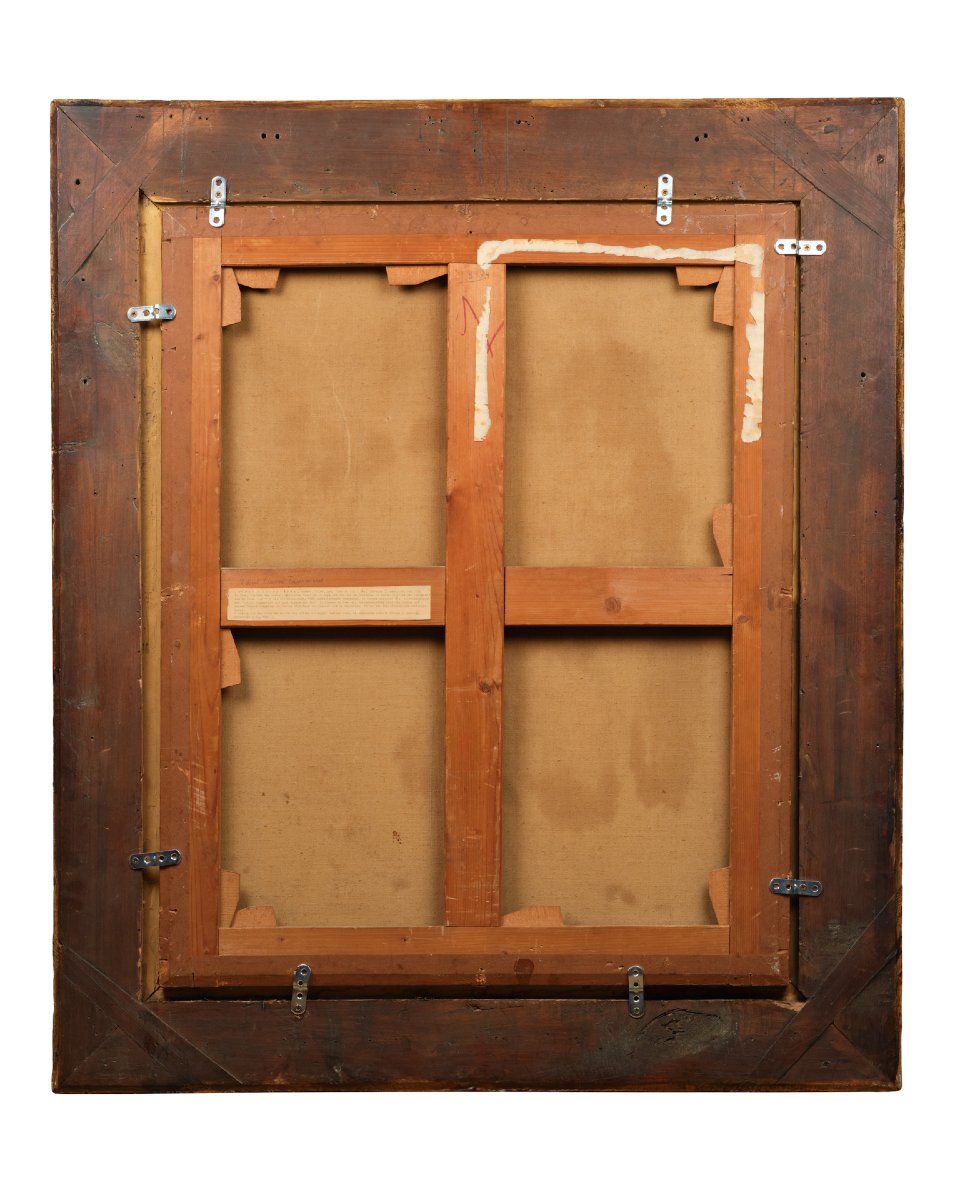
Important giltwood and richly carved Louis XIV period frame.
Framed dimensions: h. 105 cm, w. 89 cm.
We are grateful to Mr. Stéphan Perreau, specialist in Hyacinthe Rigaud and author of the artist's catalogue raisonné, for confirming the attribution of our painting to Hyacinthe Rigaud and his studio.
Click here to see the artwork on our website:
https://www.galerienicolaslente.com/en/portrait-of-an-officer-hyacinthe-rigaud-1659-1743-studio-18th-century-french-school.htm
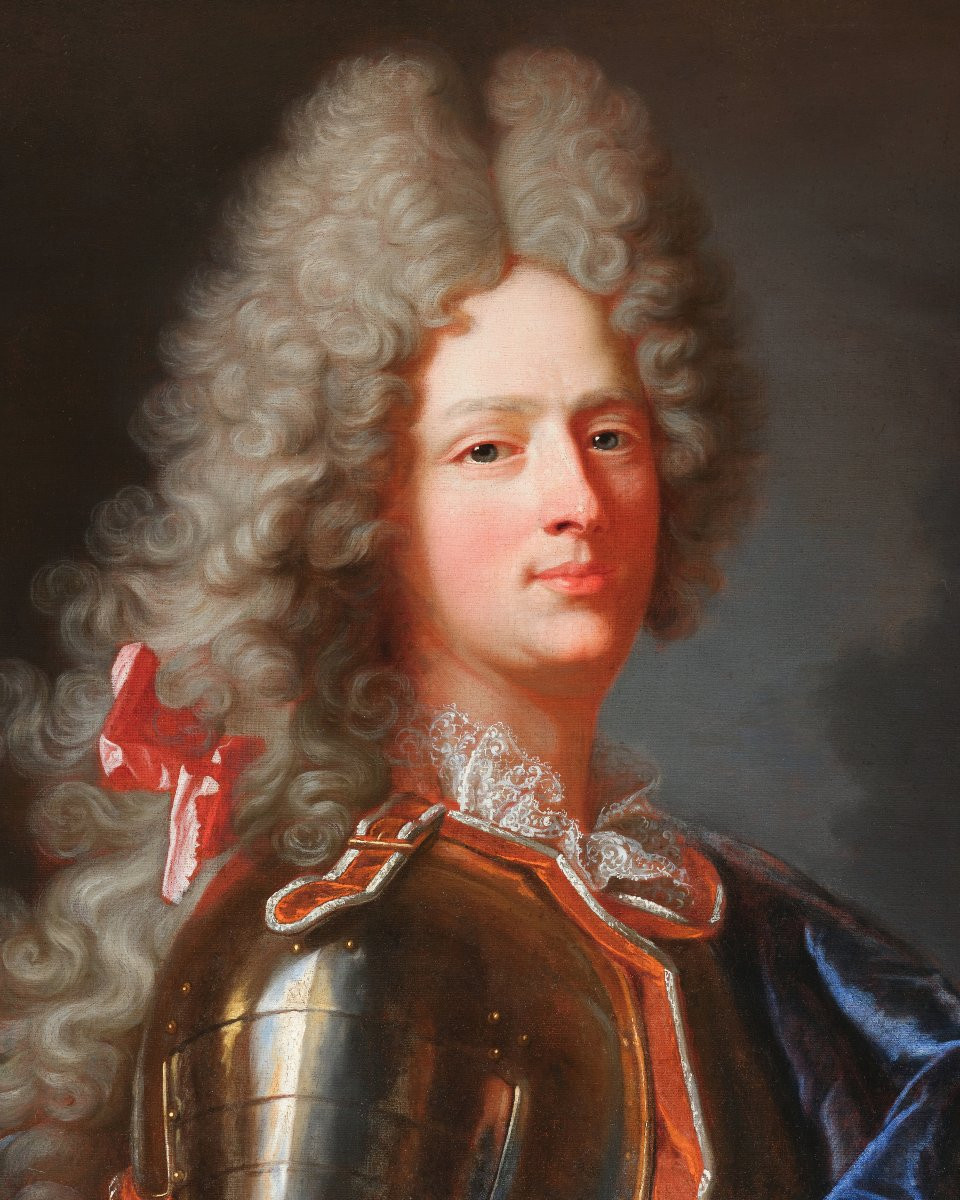
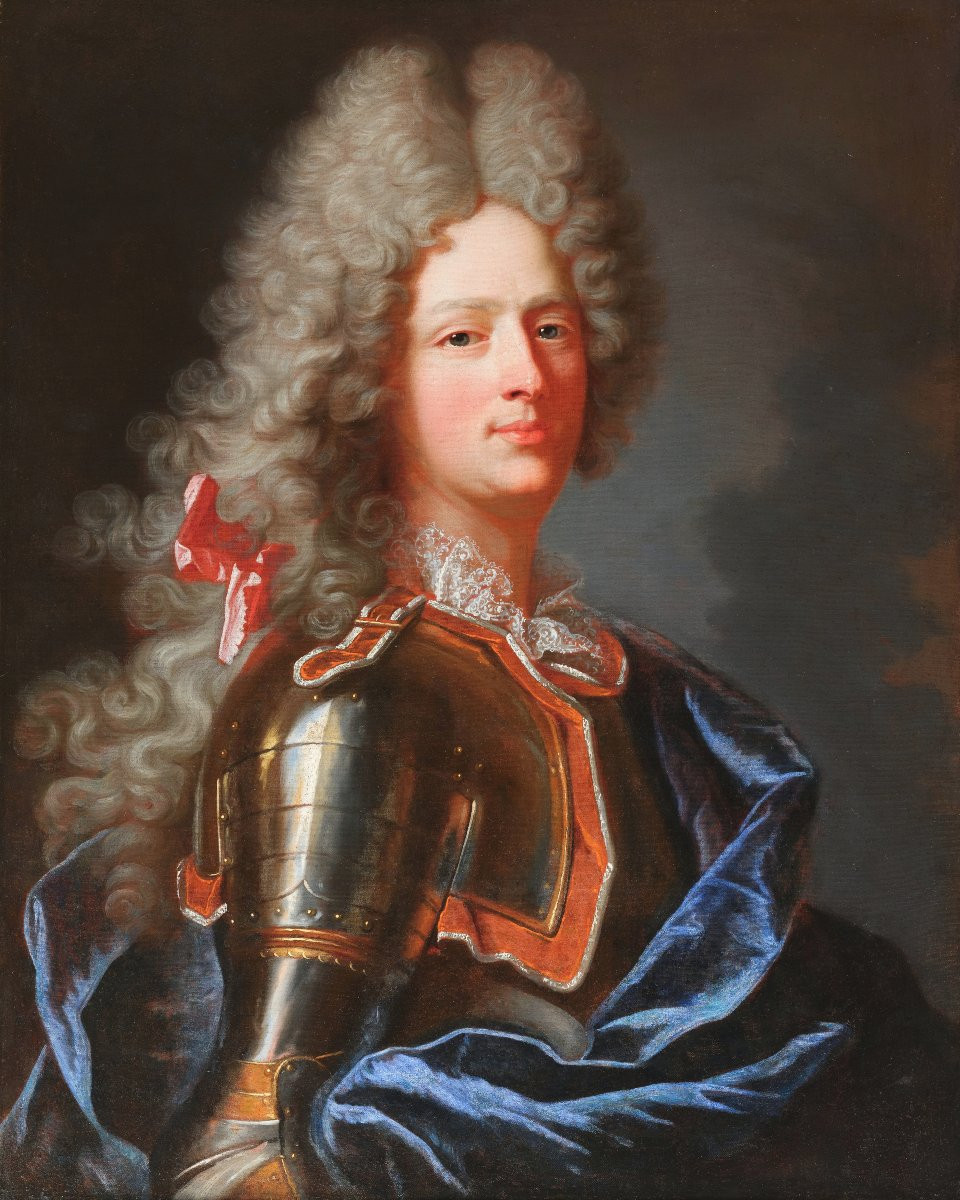
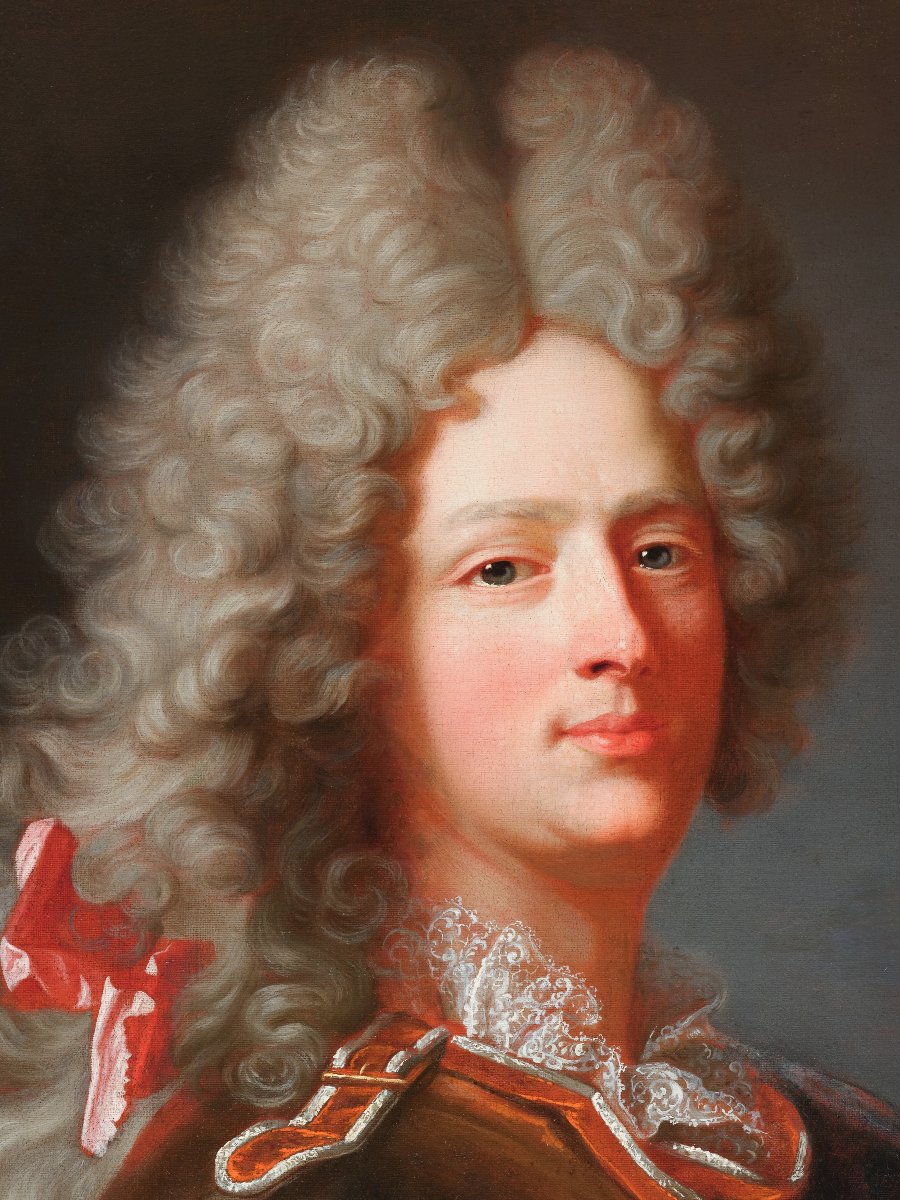
This elegant military portrait we are offering brilliantly illustrates Hyacinthe Rigaud's virtuosity in the design of formal portraits at the dawn of the Regency. Through this composition of great nobility, the master affirms his singular talent for uniting aristocratic majesty and martial ideals, giving the sitter a presence that is at once warlike, refined, and intensely lifelike.
Presented in a bust portrait, slightly turned three-quarters, the sitter commands attention with the proud bearing of his head and the confident gaze directed at the viewer. The pose, both noble and vibrant, lends the whole an immediate presence, tempered by an almost mischievous expression that delicately animates the facial features.
The quality of the flesh tones is one of the portrait's greatest strengths. The face is rendered with meticulous care in the interplay of light and shadow: the rosy cheeks, the modeling of the forehead, and the softness of the chin demonstrate a subtle art of blending, characteristic of Rigaud's technique. The halftones flow seamlessly, giving the flesh a luminous vibrancy and an almost lifelike presence. This mastery of chiaroscuro bestows upon the sitter a remarkable youthful freshness.
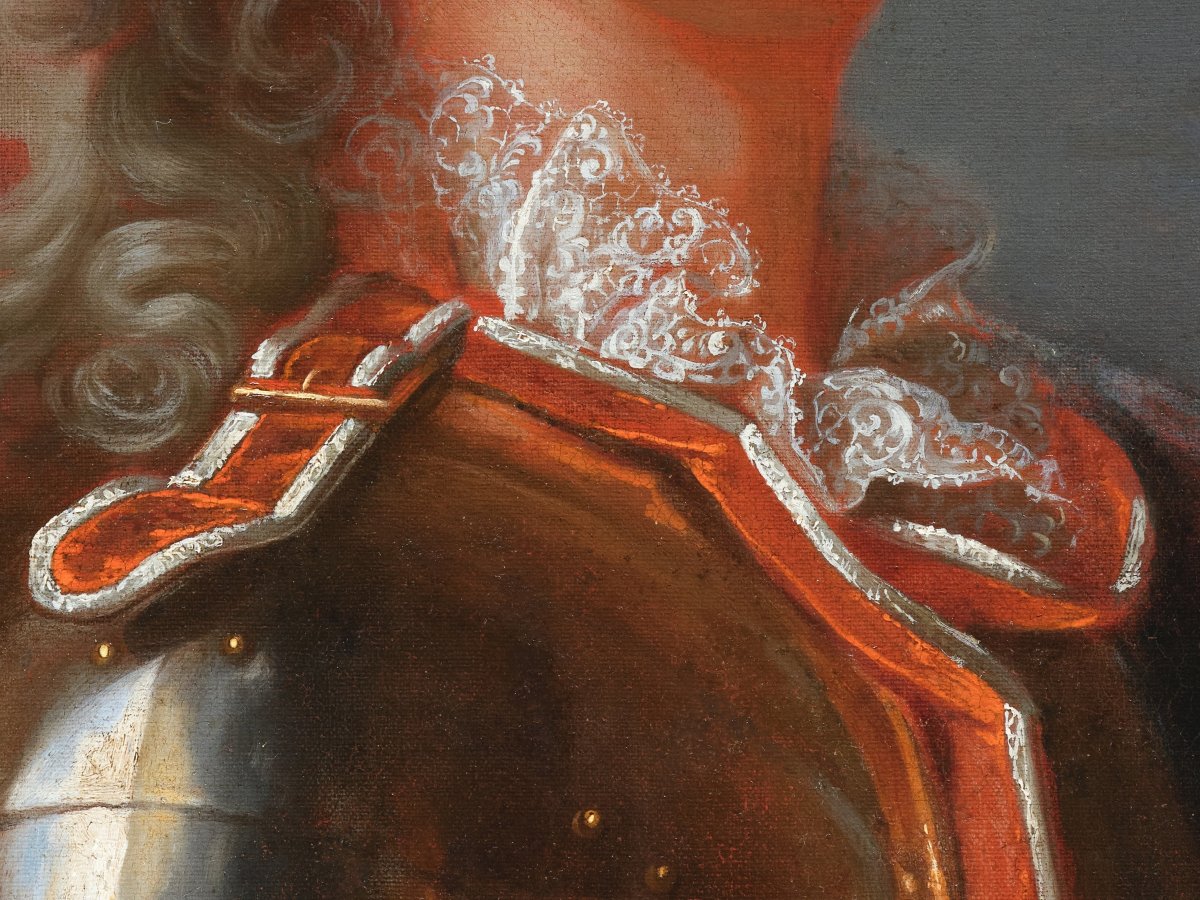
The drawing is distinguished by its great assurance, particularly evident in the composition of the bust and the virtuoso treatment of decorative details.
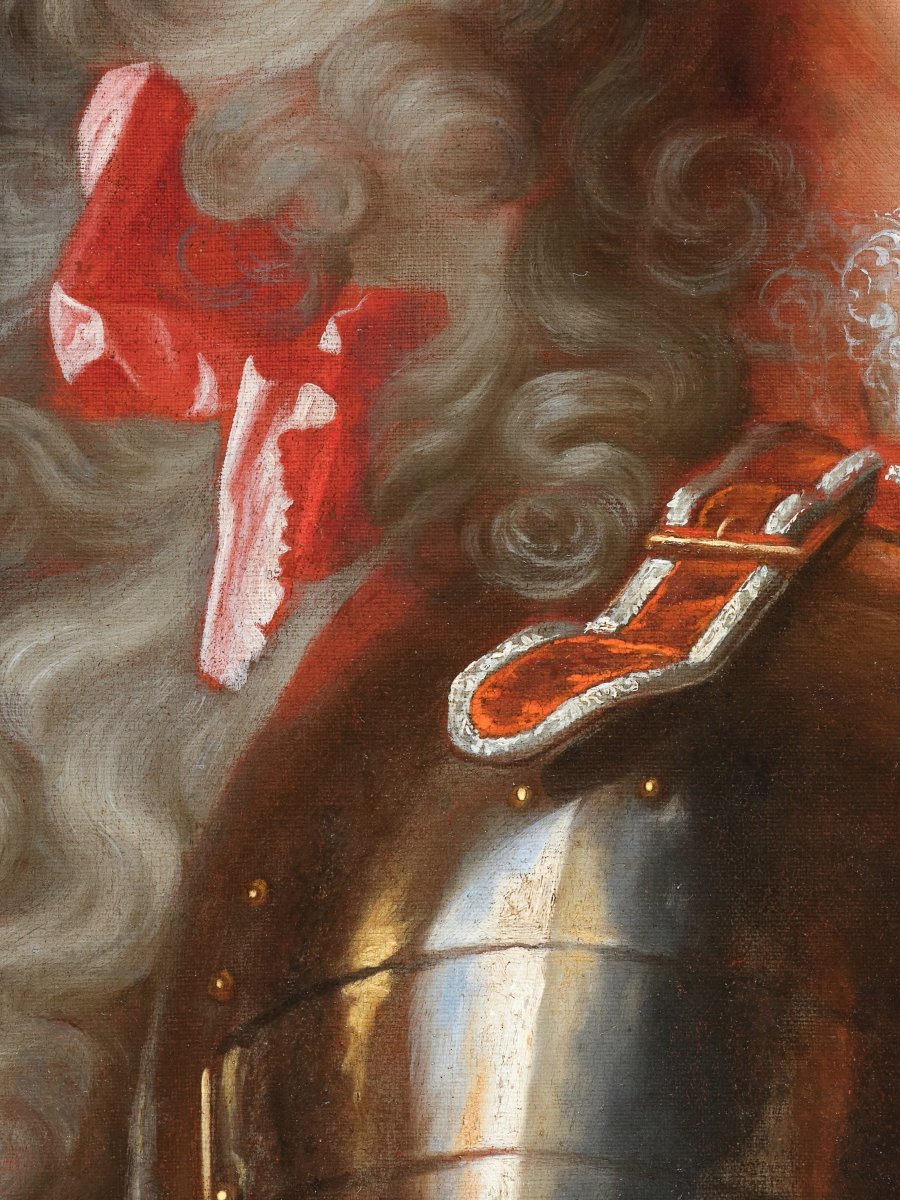
The long leonine wig, emblematic of the early decades of the 18th century, frames the face majestically. Her abundant curls are precisely drawn while retaining an airy lightness; each strand seems animated by a supple and natural movement. The delicate pink ribbon tied at the back adds a precious and gallant touch that softens the solemnity of the armor.
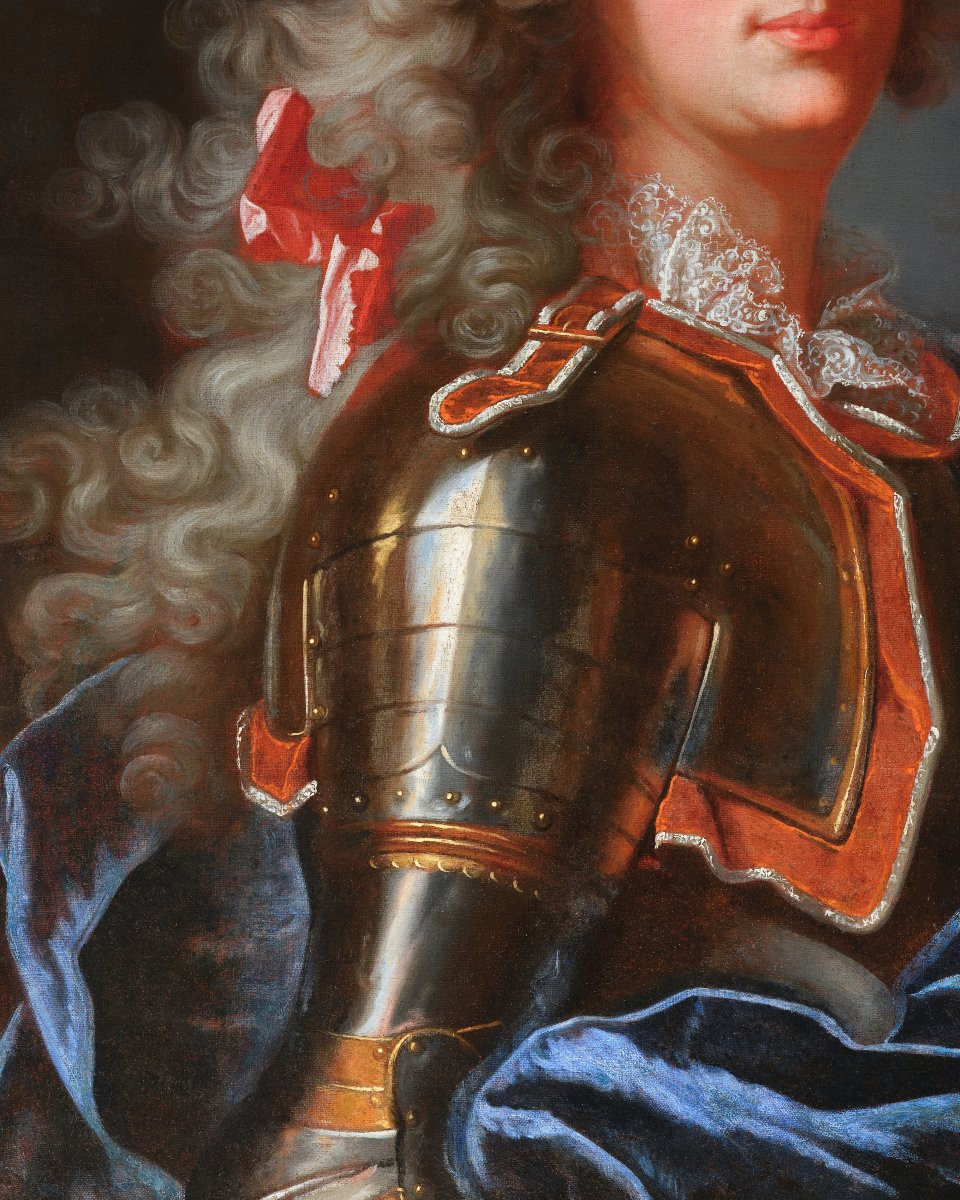
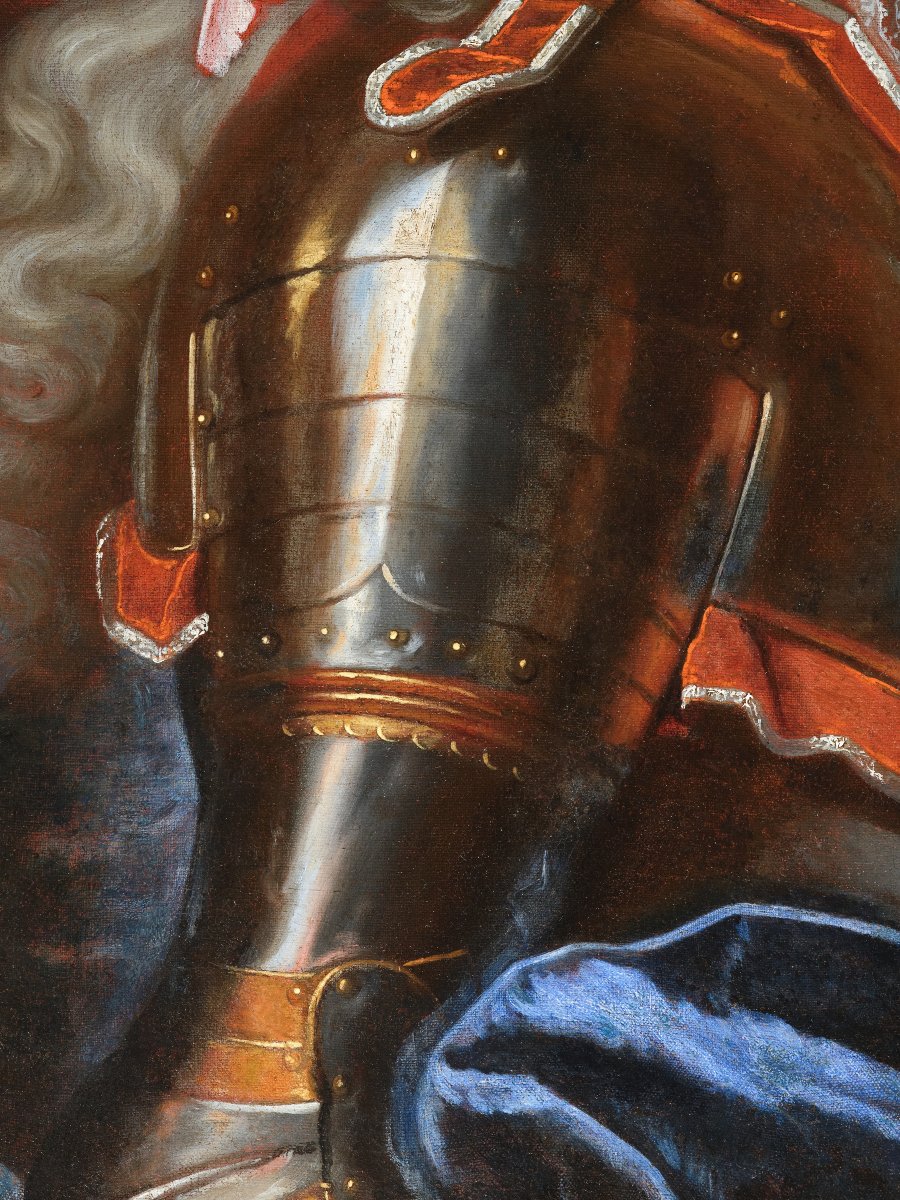
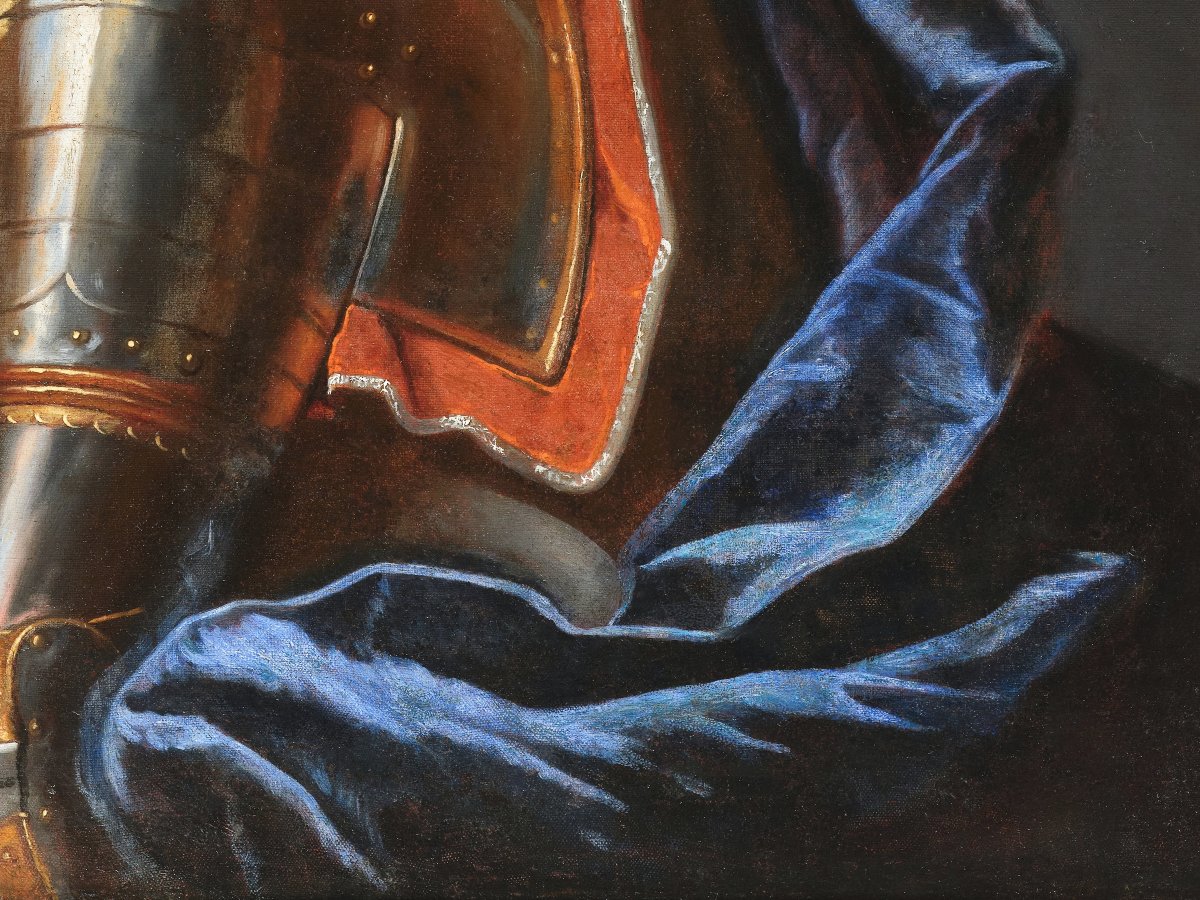
The realism of the materials is here taken to a very high degree of refinement. The vast blue velvet cloak, draped generously over the shoulder and around the right arm, displays a remarkable chromatic vibrancy. The deep folds catch the light with subtle satiny reflections from the crests, contrasting intense blues with almost silvery glints, giving the drape a sumptuous fluidity. This textile richness responds admirably to the metallic reflections of the armor, whose polished surfaces capture the surrounding light with great finesse. The interplay of reflections in the fabric and metal enhances the preciousness of the whole and testifies to an extremely attentive observation of materials.
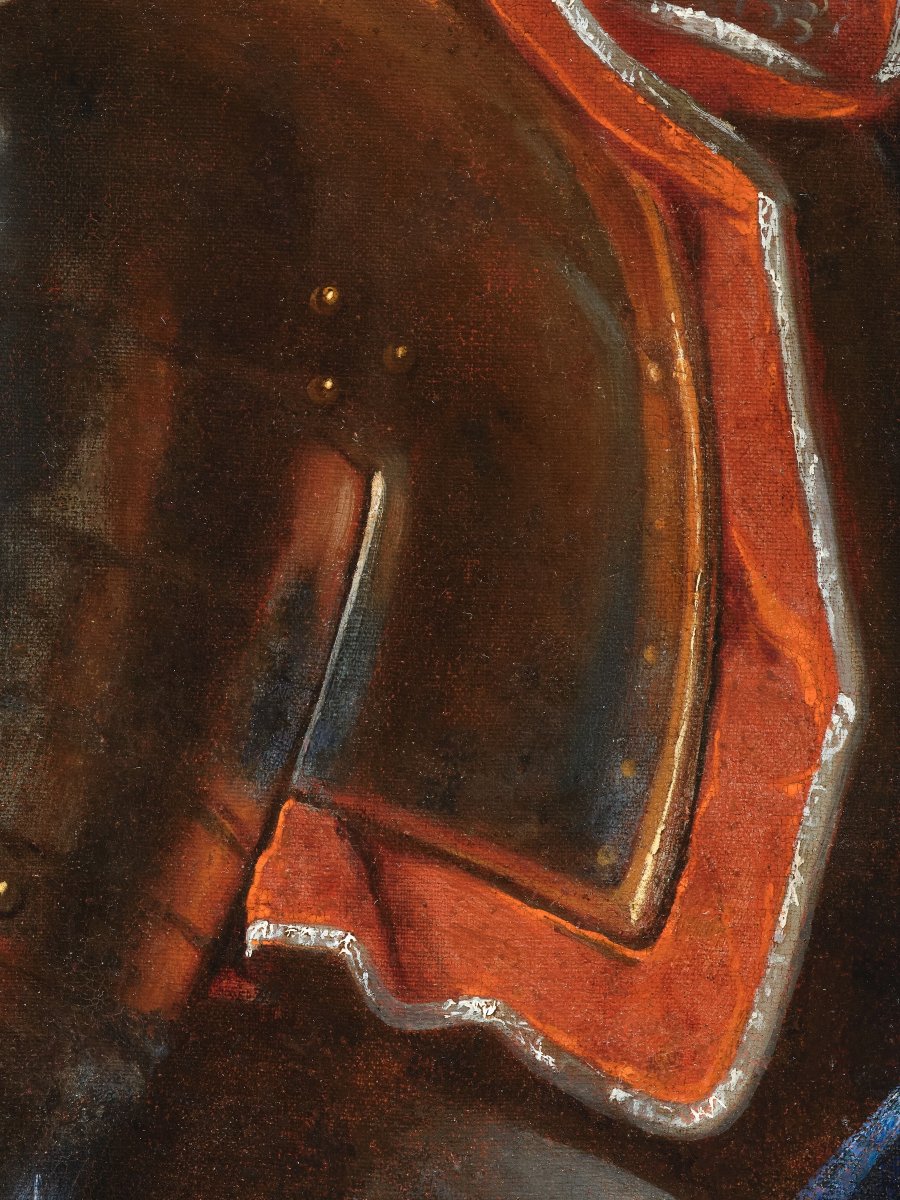
The armor itself, rendered in warm, golden tones, powerfully structures the composition. Its controlled sheen contrasts with the suppleness of the velvet and the delicate transparency of the white lace framing the neck.
The opposition between the metallic gleam of the armor, the luminous softness of the flesh, and the fluidity of the fabrics reveals the mastery of pictorial techniques honed by the brush of the artist and his studio assistants. This masterful command of materials and light effects lends the portrait all the magnificence and refinement sought in aristocratic portraits of the early 18th century.
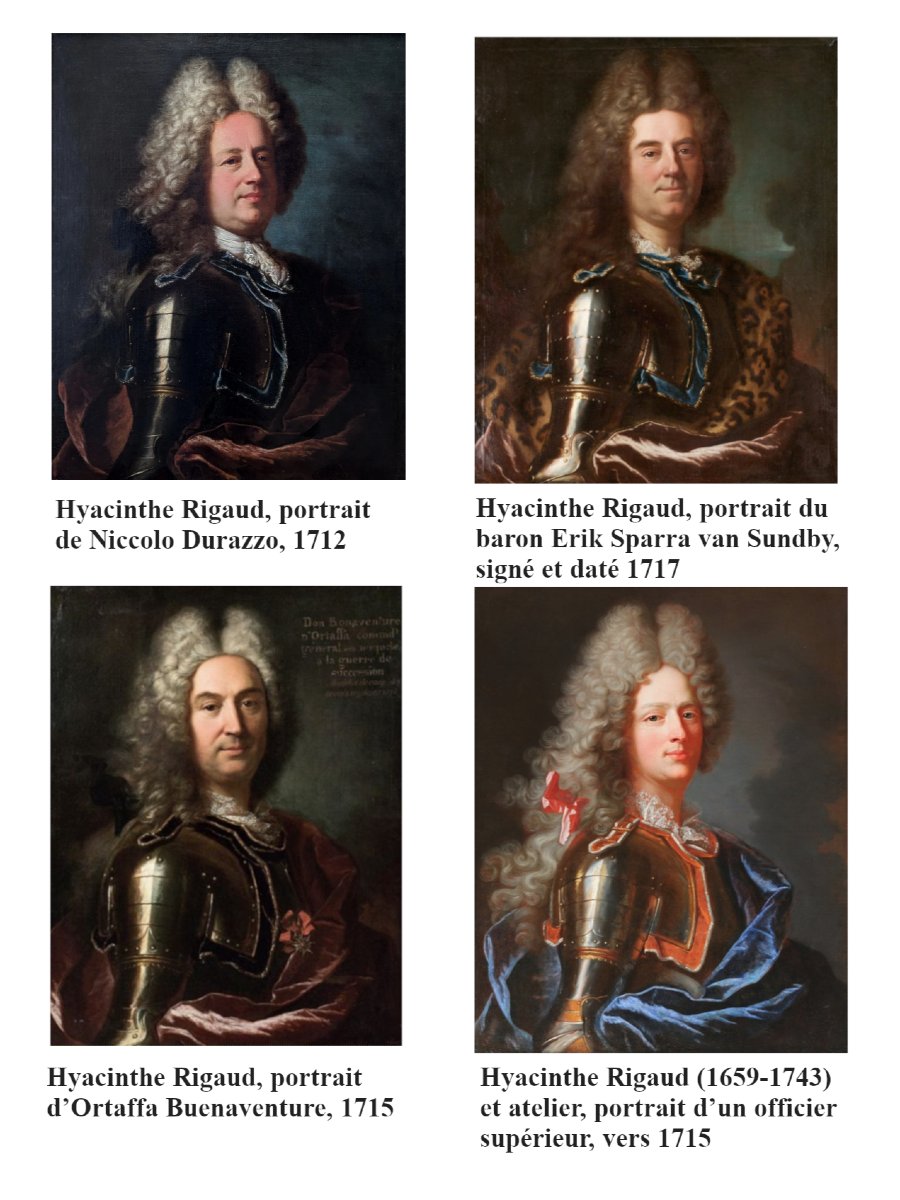
Our work can be compared to several military portraits executed by Hyacinthe Rigaud, notably the Portrait of Baron Erik Sparre van Sundby (1717), the portrait of Niccolo Durazzo (1712) or that of Ortaffa Buenaventure (1715), with which it shares the same compositional scheme: a bust represented in three-quarter view, the head proudly raised towards the viewer, wearing shining armor and wrapped in a wide velvet drape thrown over the left shoulder, revealing in the foreground the armored right arm.
According to Stéphan Perreau, it was during the 1710s and 1720s that Rigaud established this portrait formula, which he reused several times throughout his career. This composition was already considered at the time to be a "repeated pose," that is, the reuse of a prototype particularly appreciated by aristocratic and military clientele. Thus, the pose adopted here appears as early as the portrait of Niccolò Durazzo in 1712, itself derived from earlier schemes developed by the master in the early years of the 18th century. The very high head carriage, almost "perched" atop the three-quarter-turned torso, also belongs to the painter's formal vocabulary from around 1705, where it appears in several civilian portraits.
This way of giving the model an attitude that is both majestic and natural is fully part of Rigaud's art, which was able to impose an idealized image of power and social distinction throughout aristocratic Europe.
The face of our officer remains, until now, unseen in Hyacinthe Rigaud's known oeuvre, which constitutes the great interest and singularity of this work. While identifying the model remains difficult due to the artist's frequent practice of reusing poses and compositional formulas, this new physiognomy nevertheless enriches the repertoire of military portraits created by the master.
Bibliography:
Stéphan Perreau, Hyacinthe Rigaud : 1659-1743, catalogue concis de l'oeuvre, éditions Nouvelles Presses du Languedoc, 2013
Stéphan Perreau, Hyacinthe Rigaud, catalogue raisonné de l'oeuvre en ligne, www.hyacinthe-rigaud.com
Hyacinthe Rigaud (1659-1743) & studio
18th century French school, circa 1715
Oil on canvas.
Dimensions: h. 80 cm, w. 64 cm.
Important giltwood and richly carved Louis XIV period frame.
Framed dimensions: h. 105 cm, w. 89 cm.
We are grateful to Mr. Stéphan Perreau, specialist in Hyacinthe Rigaud and author of the artist's catalogue raisonné, for confirming the attribution of our painting to Hyacinthe Rigaud and his studio.
Click here to see the artwork on our website:
https://www.galerienicolaslente.com/en/portrait-of-an-officer-hyacinthe-rigaud-1659-1743-studio-18th-century-french-school.htm
This elegant military portrait we are offering brilliantly illustrates Hyacinthe Rigaud's virtuosity in the design of formal portraits at the dawn of the Regency. Through this composition of great nobility, the master affirms his singular talent for uniting aristocratic majesty and martial ideals, giving the sitter a presence that is at once warlike, refined, and intensely lifelike.
Presented in a bust portrait, slightly turned three-quarters, the sitter commands attention with the proud bearing of his head and the confident gaze directed at the viewer. The pose, both noble and vibrant, lends the whole an immediate presence, tempered by an almost mischievous expression that delicately animates the facial features.
The quality of the flesh tones is one of the portrait's greatest strengths. The face is rendered with meticulous care in the interplay of light and shadow: the rosy cheeks, the modeling of the forehead, and the softness of the chin demonstrate a subtle art of blending, characteristic of Rigaud's technique. The halftones flow seamlessly, giving the flesh a luminous vibrancy and an almost lifelike presence. This mastery of chiaroscuro bestows upon the sitter a remarkable youthful freshness.
The drawing is distinguished by its great assurance, particularly evident in the composition of the bust and the virtuoso treatment of decorative details.
The long leonine wig, emblematic of the early decades of the 18th century, frames the face majestically. Her abundant curls are precisely drawn while retaining an airy lightness; each strand seems animated by a supple and natural movement. The delicate pink ribbon tied at the back adds a precious and gallant touch that softens the solemnity of the armor.
The realism of the materials is here taken to a very high degree of refinement. The vast blue velvet cloak, draped generously over the shoulder and around the right arm, displays a remarkable chromatic vibrancy. The deep folds catch the light with subtle satiny reflections from the crests, contrasting intense blues with almost silvery glints, giving the drape a sumptuous fluidity. This textile richness responds admirably to the metallic reflections of the armor, whose polished surfaces capture the surrounding light with great finesse. The interplay of reflections in the fabric and metal enhances the preciousness of the whole and testifies to an extremely attentive observation of materials.
The armor itself, rendered in warm, golden tones, powerfully structures the composition. Its controlled sheen contrasts with the suppleness of the velvet and the delicate transparency of the white lace framing the neck.
The opposition between the metallic gleam of the armor, the luminous softness of the flesh, and the fluidity of the fabrics reveals the mastery of pictorial techniques honed by the brush of the artist and his studio assistants. This masterful command of materials and light effects lends the portrait all the magnificence and refinement sought in aristocratic portraits of the early 18th century.
Our work can be compared to several military portraits executed by Hyacinthe Rigaud, notably the Portrait of Baron Erik Sparre van Sundby (1717), the portrait of Niccolo Durazzo (1712) or that of Ortaffa Buenaventure (1715), with which it shares the same compositional scheme: a bust represented in three-quarter view, the head proudly raised towards the viewer, wearing shining armor and wrapped in a wide velvet drape thrown over the left shoulder, revealing in the foreground the armored right arm.
According to Stéphan Perreau, it was during the 1710s and 1720s that Rigaud established this portrait formula, which he reused several times throughout his career. This composition was already considered at the time to be a "repeated pose," that is, the reuse of a prototype particularly appreciated by aristocratic and military clientele. Thus, the pose adopted here appears as early as the portrait of Niccolò Durazzo in 1712, itself derived from earlier schemes developed by the master in the early years of the 18th century. The very high head carriage, almost "perched" atop the three-quarter-turned torso, also belongs to the painter's formal vocabulary from around 1705, where it appears in several civilian portraits.
This way of giving the model an attitude that is both majestic and natural is fully part of Rigaud's art, which was able to impose an idealized image of power and social distinction throughout aristocratic Europe.
The face of our officer remains, until now, unseen in Hyacinthe Rigaud's known oeuvre, which constitutes the great interest and singularity of this work. While identifying the model remains difficult due to the artist's frequent practice of reusing poses and compositional formulas, this new physiognomy nevertheless enriches the repertoire of military portraits created by the master.
Bibliography:
Stéphan Perreau, Hyacinthe Rigaud : 1659-1743, catalogue concis de l'oeuvre, éditions Nouvelles Presses du Languedoc, 2013
Stéphan Perreau, Hyacinthe Rigaud, catalogue raisonné de l'oeuvre en ligne, www.hyacinthe-rigaud.com
Explore similar pieces and discover your ideal find:
Portraits