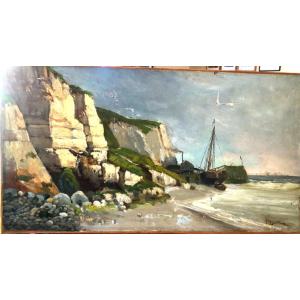


Côte d'Albâtre Etretat Circa 1870 By Jean Mazzella
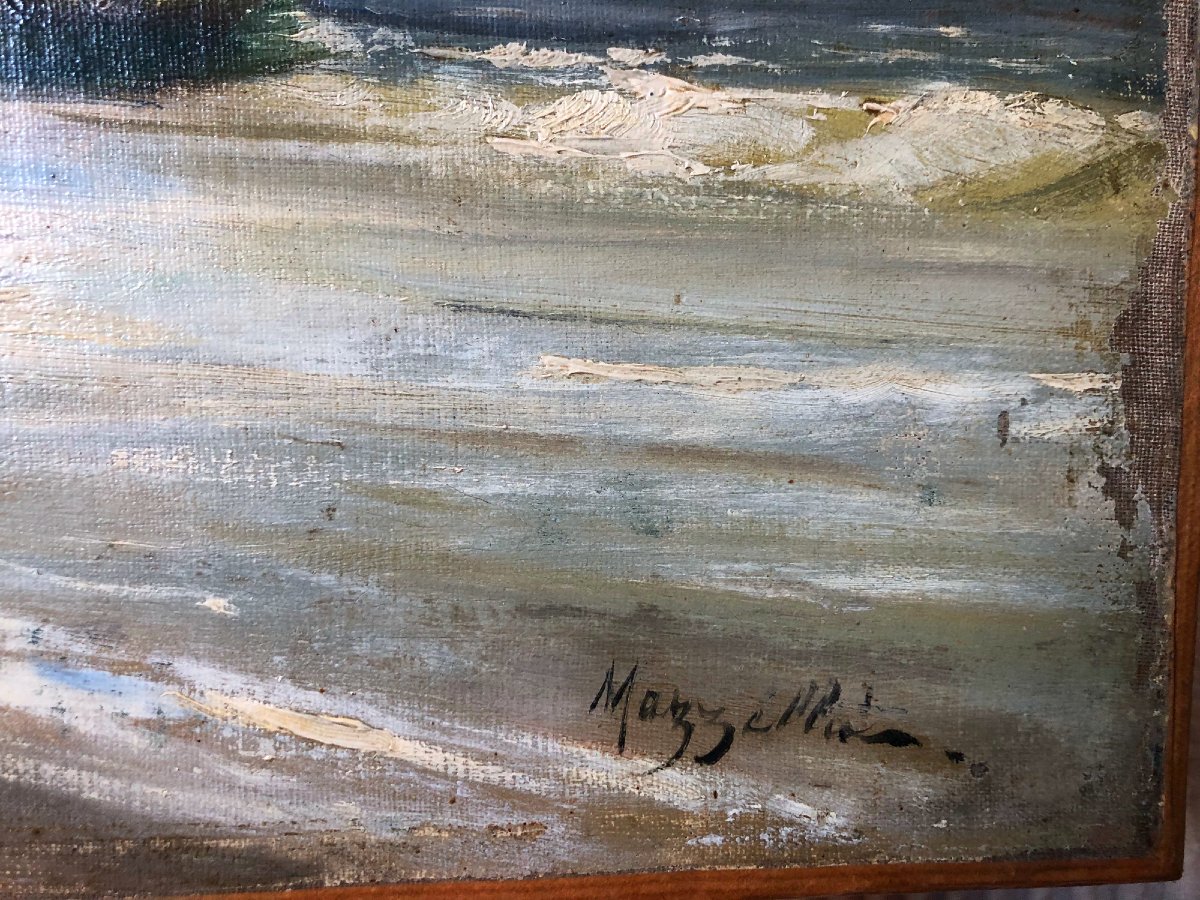
Artist: Jean Mazzella
Oil on canvas by Jean Mazzella, a 19th-century French marine and landscape artist of the late 1800's.
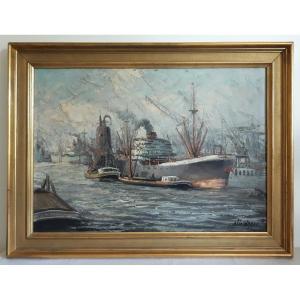
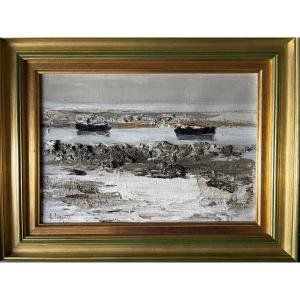
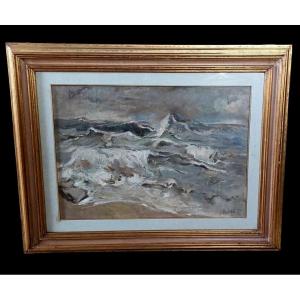
He was a pre-impressionist marine painter. He excelled at depicting fishing boats, sailing ships and early steamships sailing on calm or rough seas. He also painted the Normandy coastline extensively, including harbour scenes (such as the port of Fécamp or the harbor of Honfleur), boats beached at low tide and fishermen hauling in their nets.
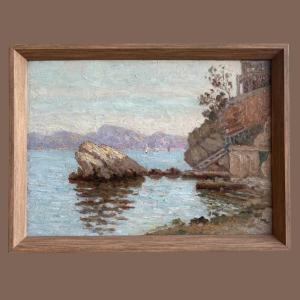
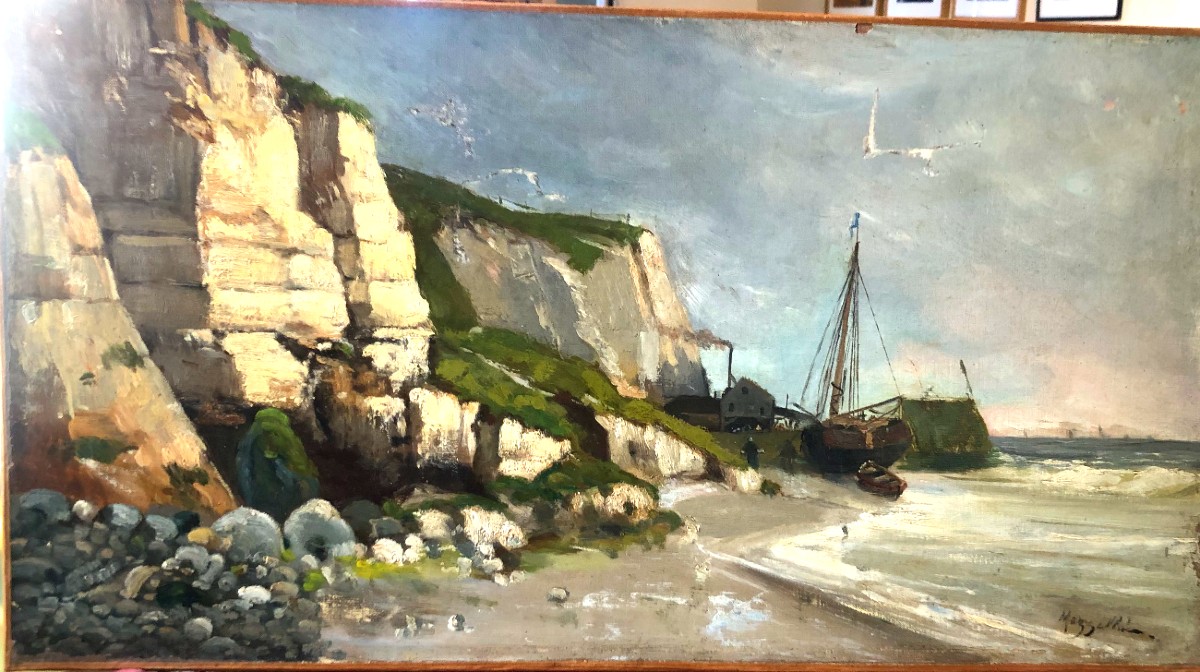
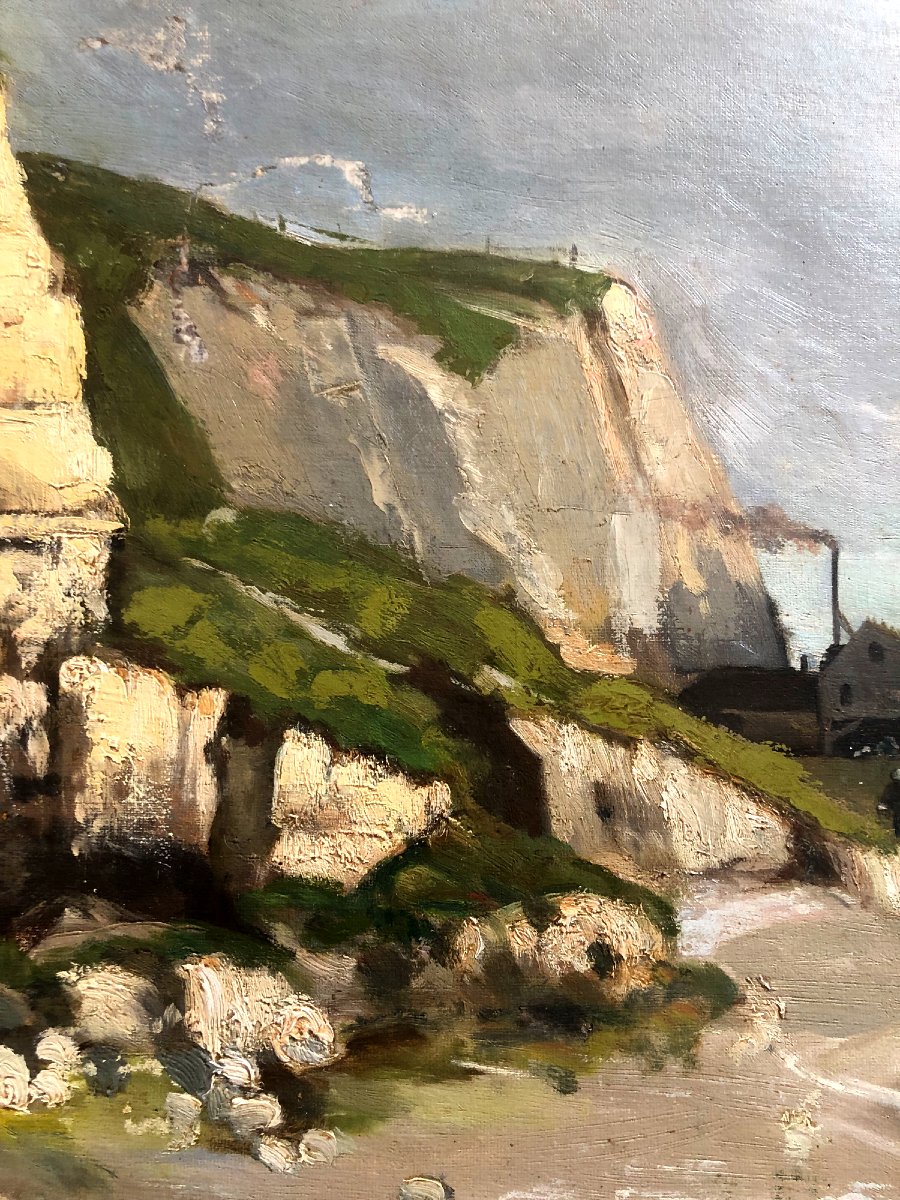
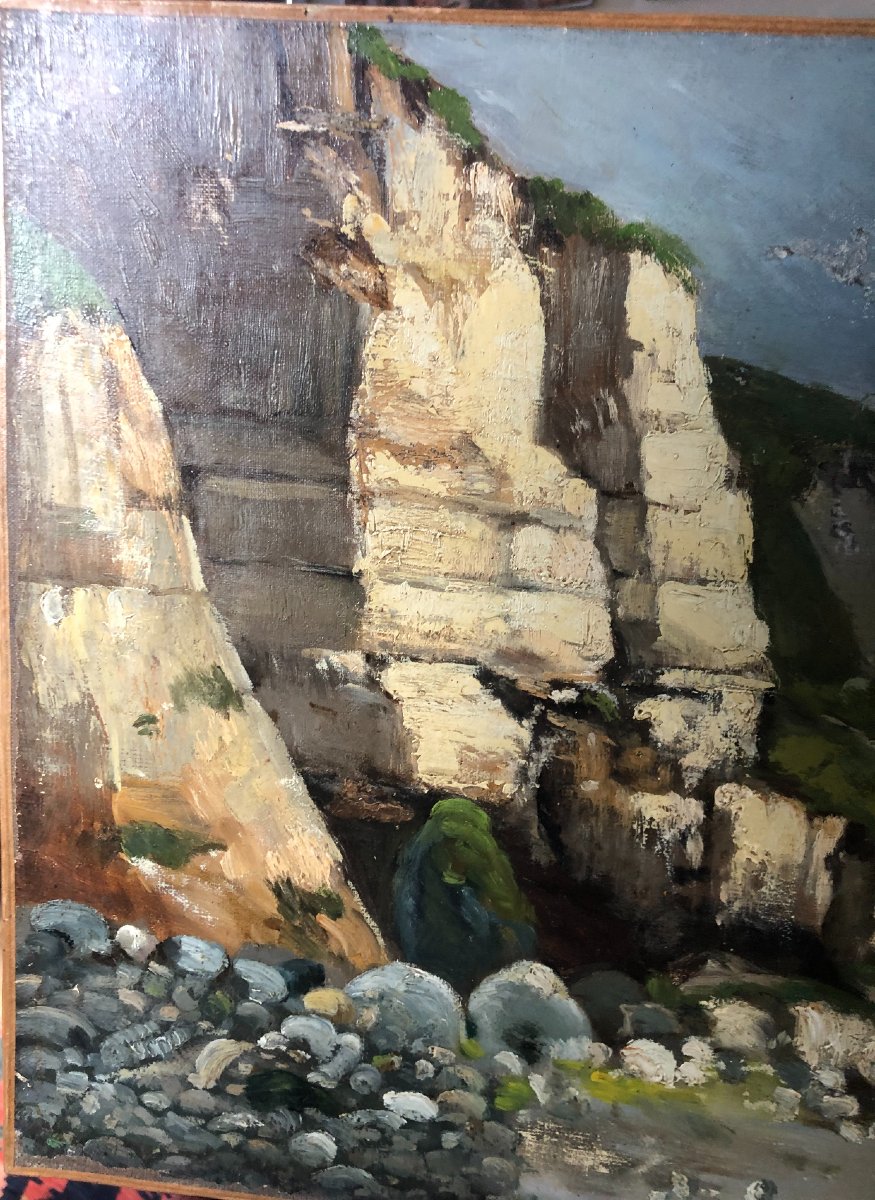
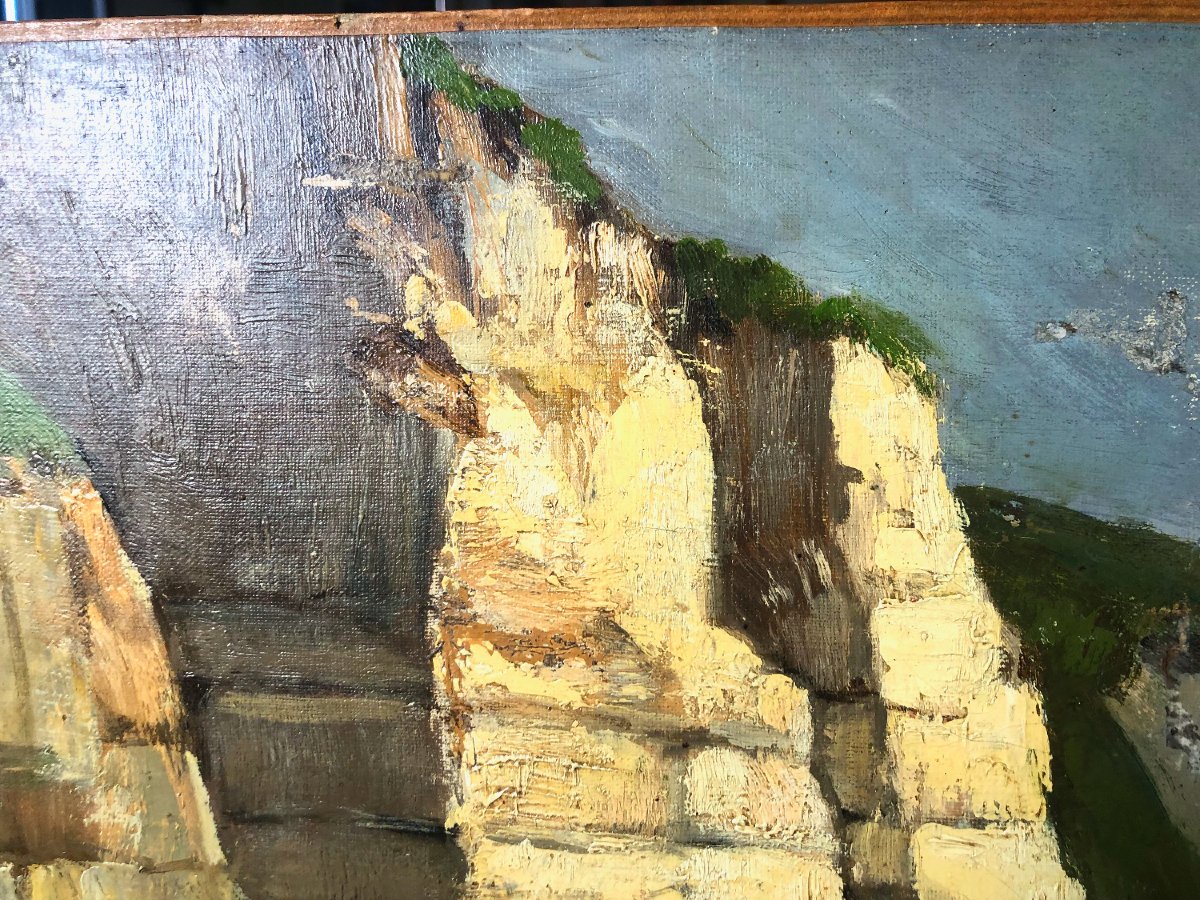
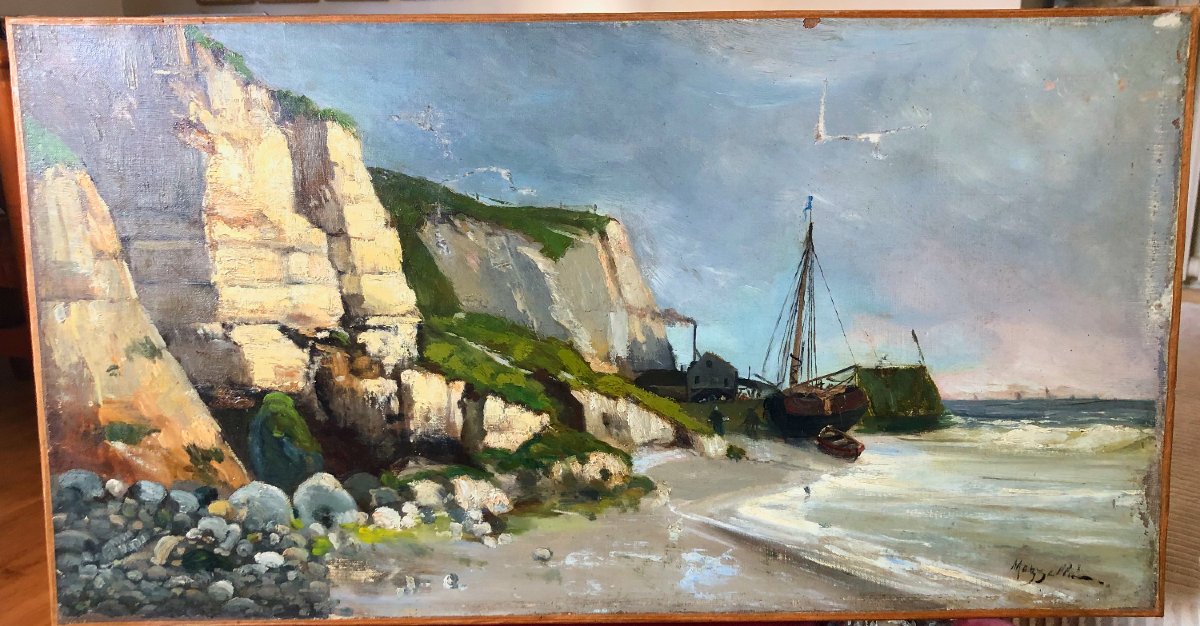
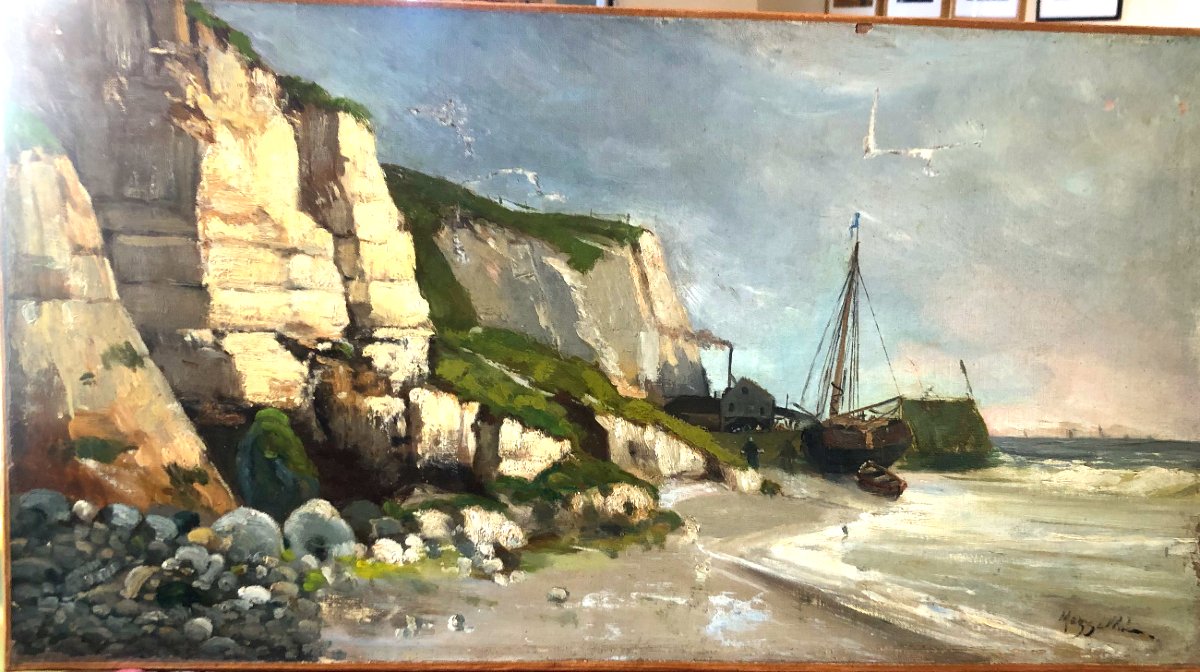
The painting is set along the Normandy coast probably near famous chalk cliffs such as Étretat, Fécamp or Dieppe.
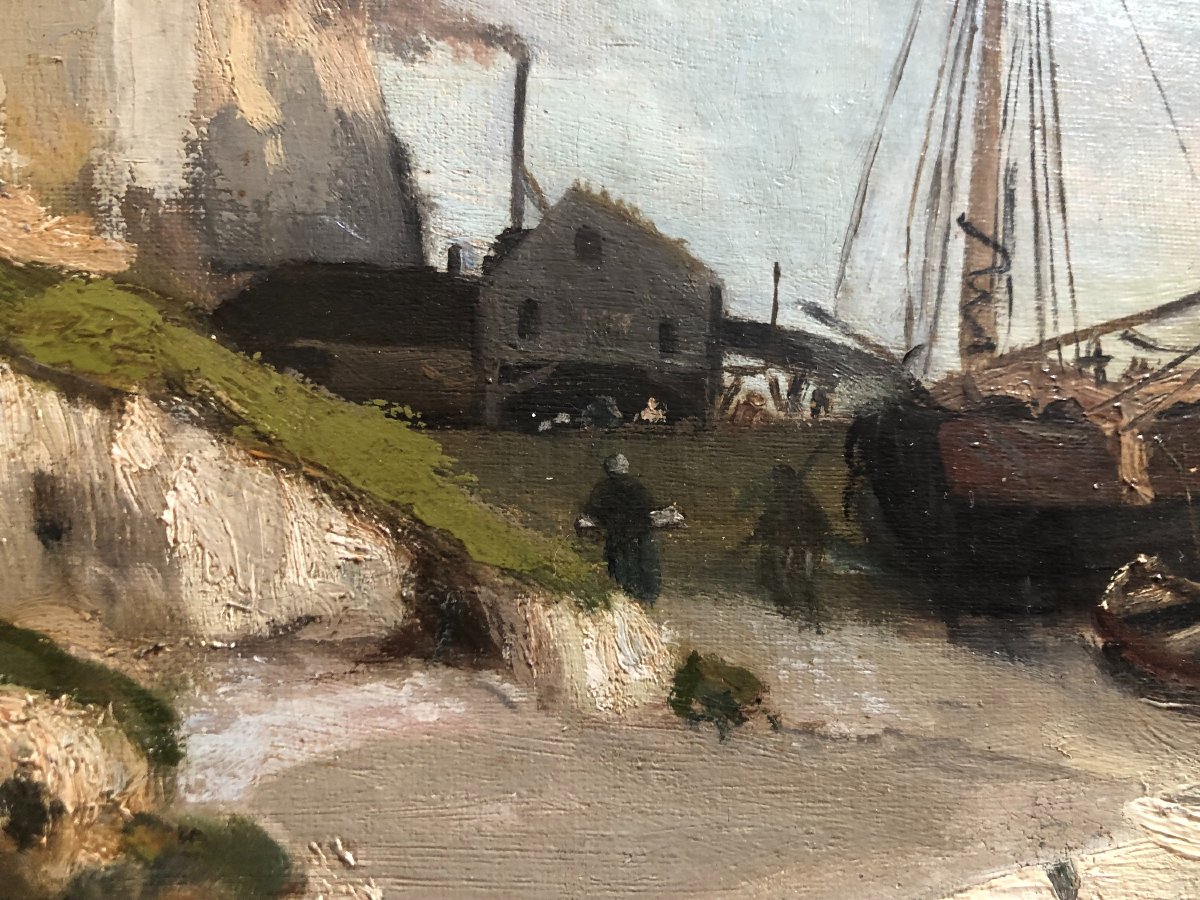
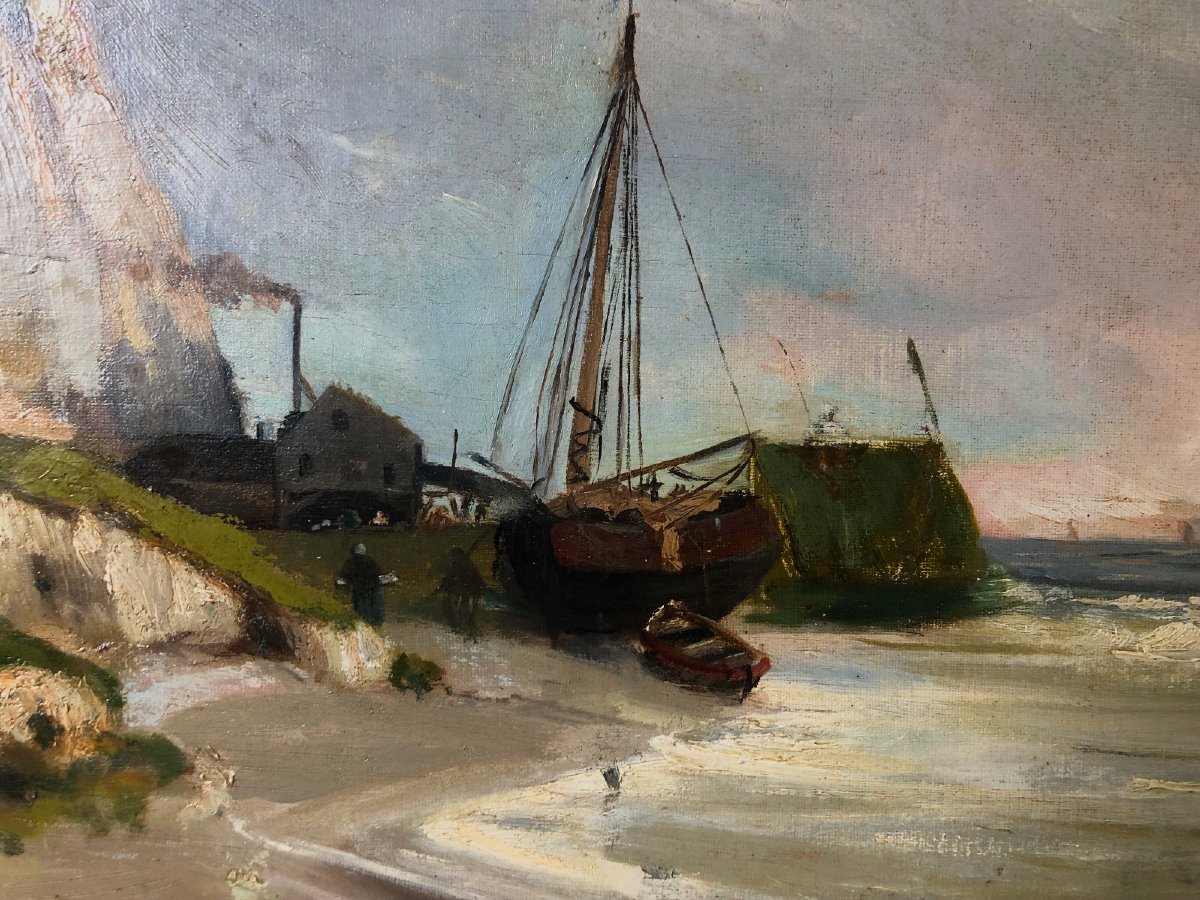
Mazzella has depicted a beach at low tide where a traditional fishing boat (caïque or flambart) rests on the shore of pebbles and sand alongside small boats.
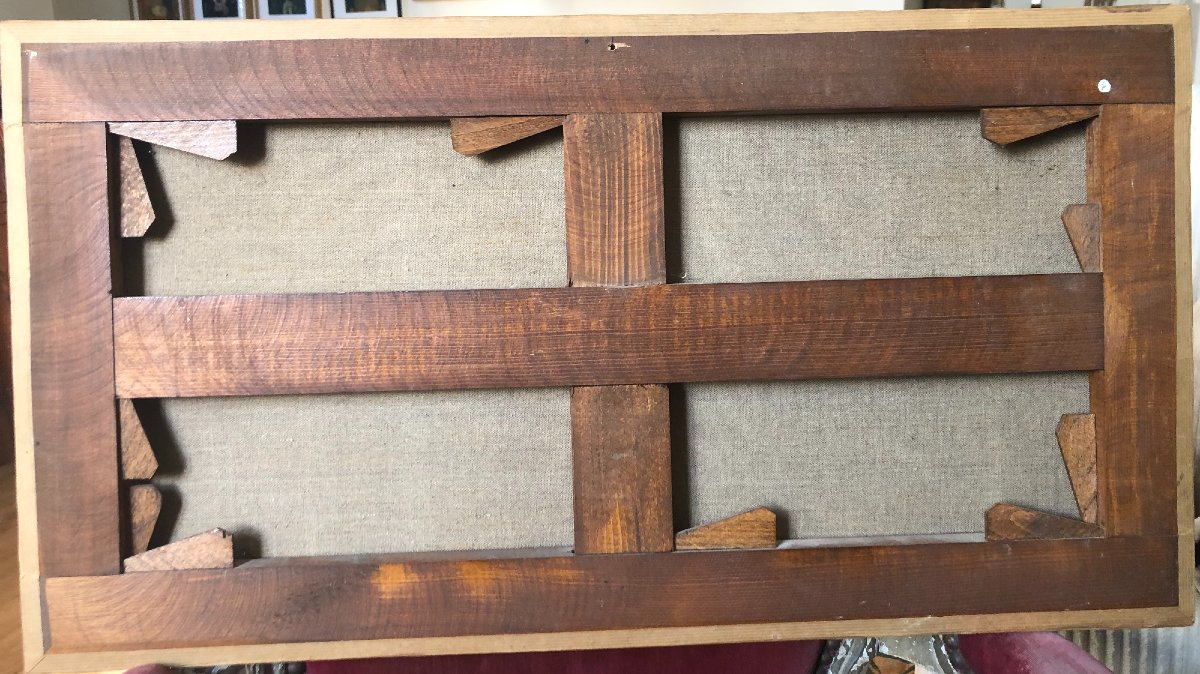
The building nestled against the cliff with a smoking chimney represents a coastal lime kiln. Seeing them on the beach was a highly strategic industrial choice in the 18th and 19th centuries. Lime kilns required huge quantities of limestone or chalk to create quicklime (used for mortar, agricultural fertilizer and lime). Building the kiln directly against the chalk cliffs of Normandy meant that workers had an immediate supply of raw materials. The painting has been previously restored
He was a pre-impressionist marine painter. He excelled at depicting fishing boats, sailing ships and early steamships sailing on calm or rough seas. He also painted the Normandy coastline extensively, including harbour scenes (such as the port of Fécamp or the harbor of Honfleur), boats beached at low tide and fishermen hauling in their nets.
The painting is set along the Normandy coast probably near famous chalk cliffs such as Étretat, Fécamp or Dieppe.
Mazzella has depicted a beach at low tide where a traditional fishing boat (caïque or flambart) rests on the shore of pebbles and sand alongside small boats.
The building nestled against the cliff with a smoking chimney represents a coastal lime kiln. Seeing them on the beach was a highly strategic industrial choice in the 18th and 19th centuries. Lime kilns required huge quantities of limestone or chalk to create quicklime (used for mortar, agricultural fertilizer and lime). Building the kiln directly against the chalk cliffs of Normandy meant that workers had an immediate supply of raw materials. The painting has been previously restored
450 €
Period: 19th century
Style: Modern Art
Condition: Some scratches and chips
Material: Oil painting
Length: 35 cm
Width: 65 cm
Reference (ID): 1762911
Availability: In stock
Print