

Chinese Shoushan Stone Dragon Scholar’s Object, Late 19th / Early 20th C.
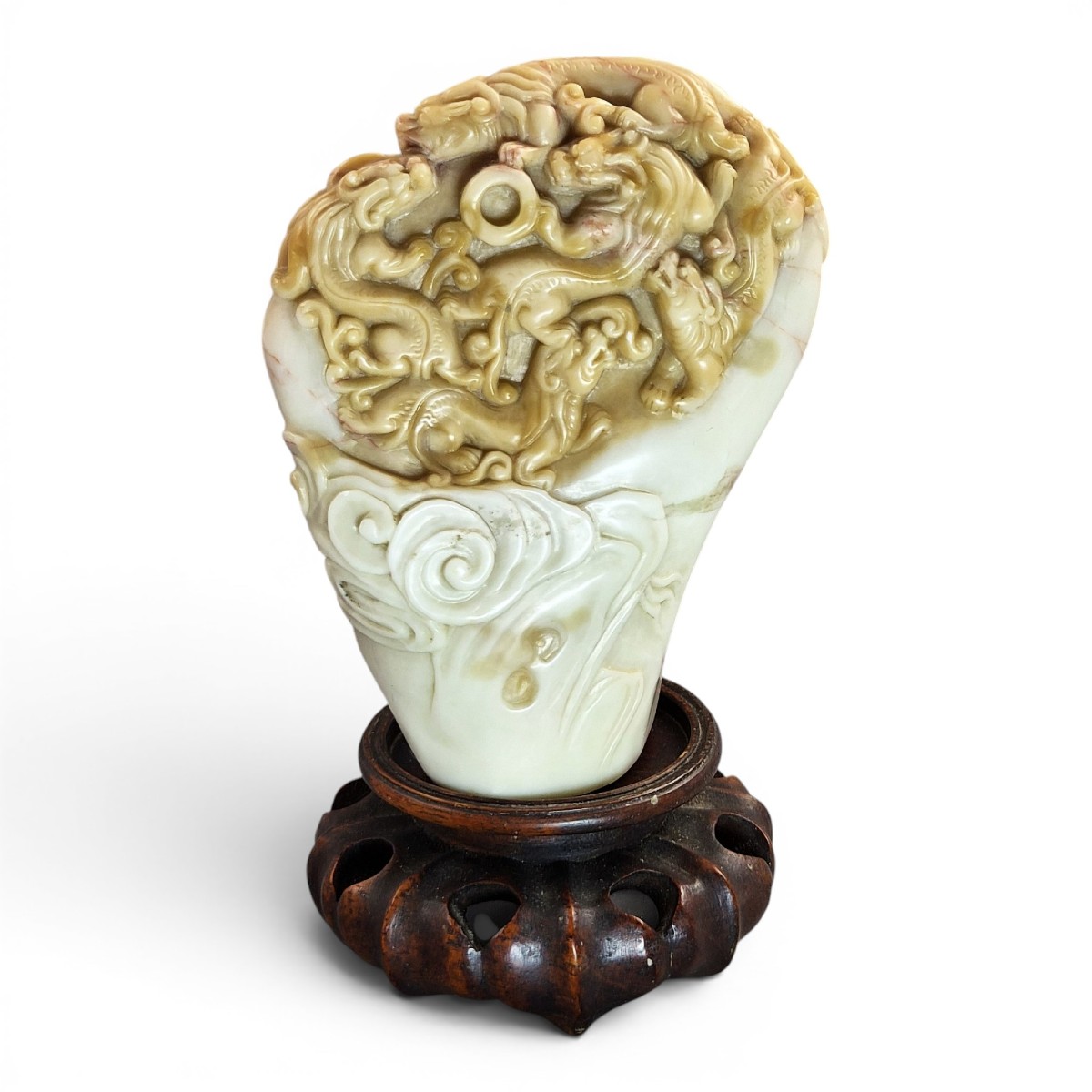
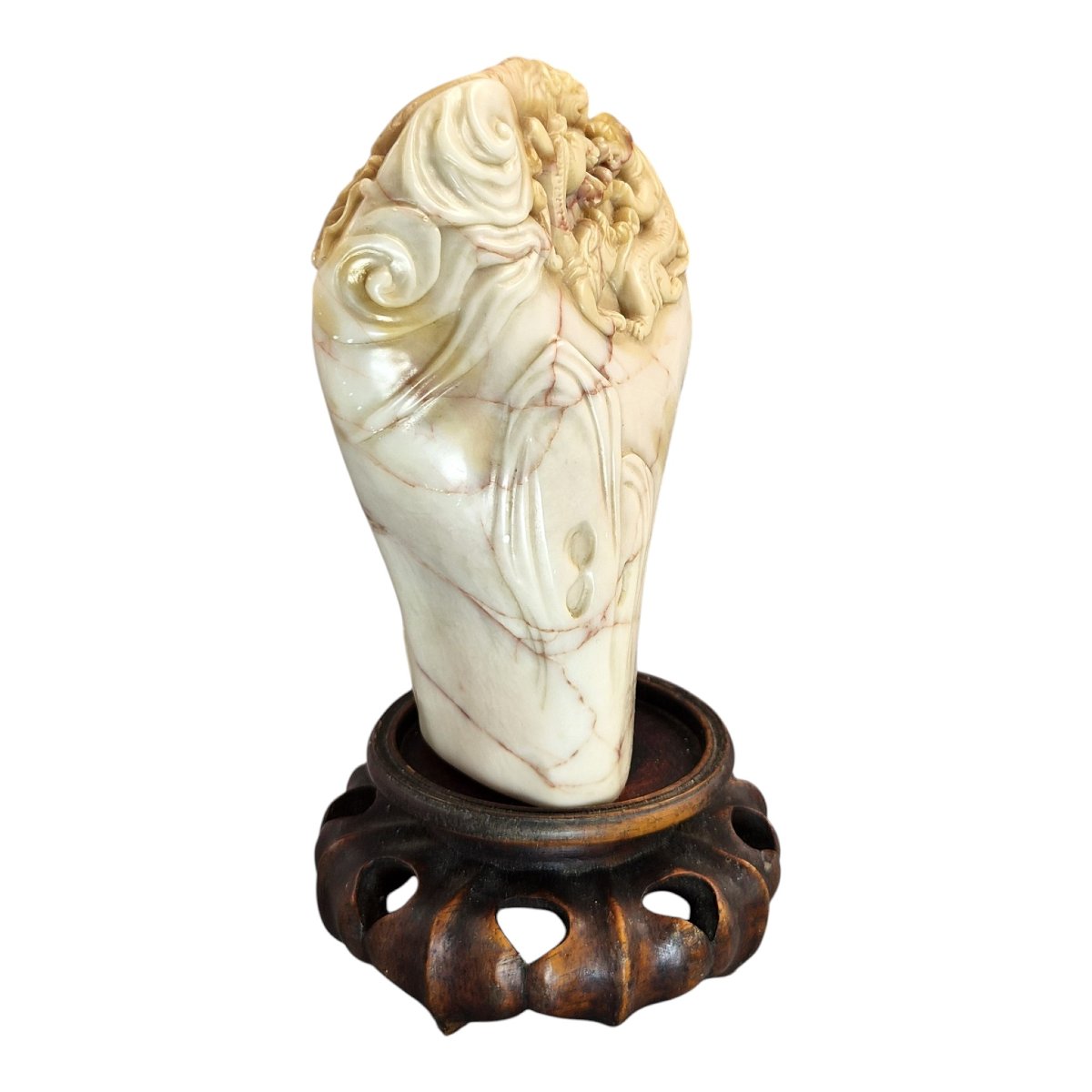
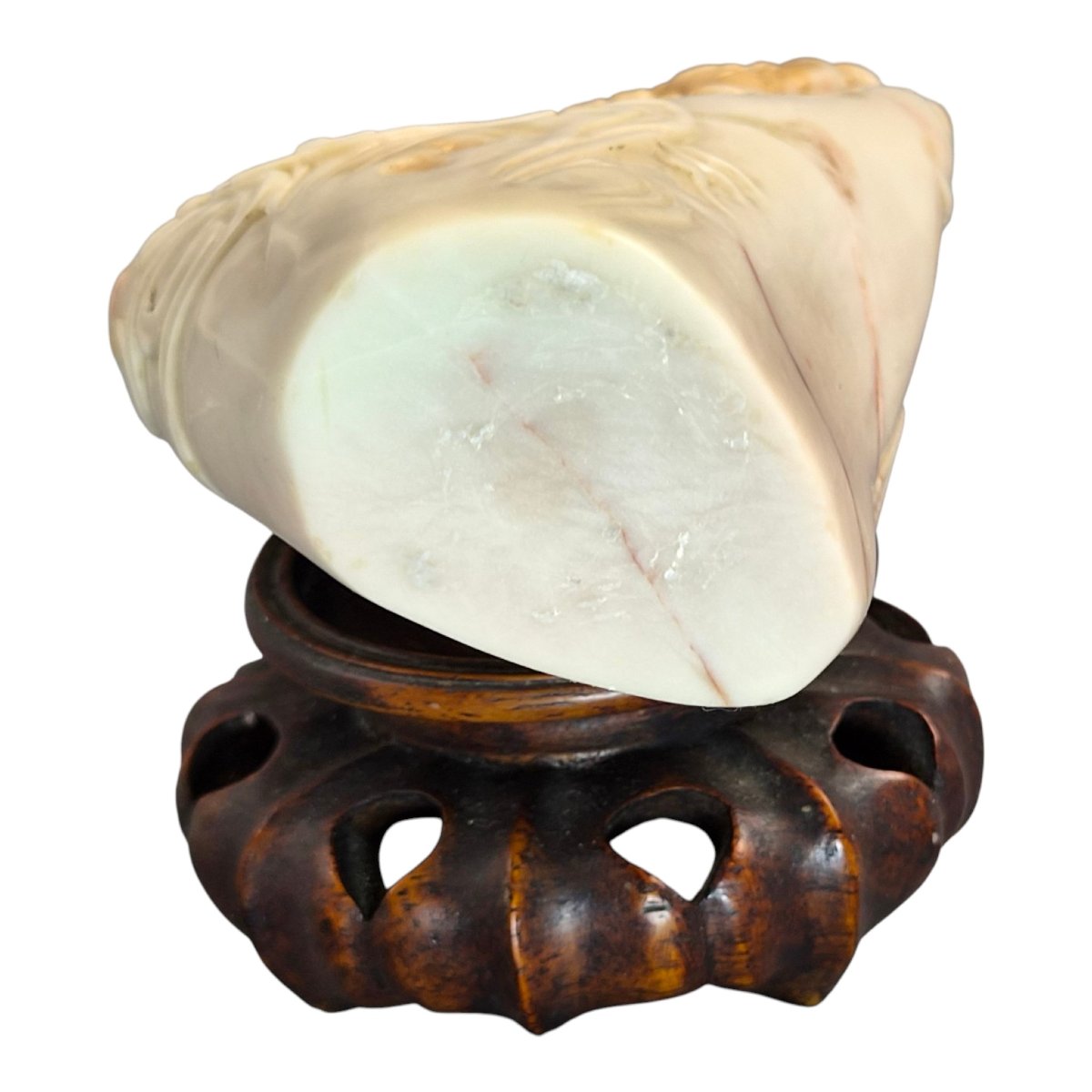
A finely carved Chinese scholar’s object in milky-white and cream Shoushan stone / cream soapstone, probably dating to the late 19th or early 20th century, with its original fitted wooden stand.
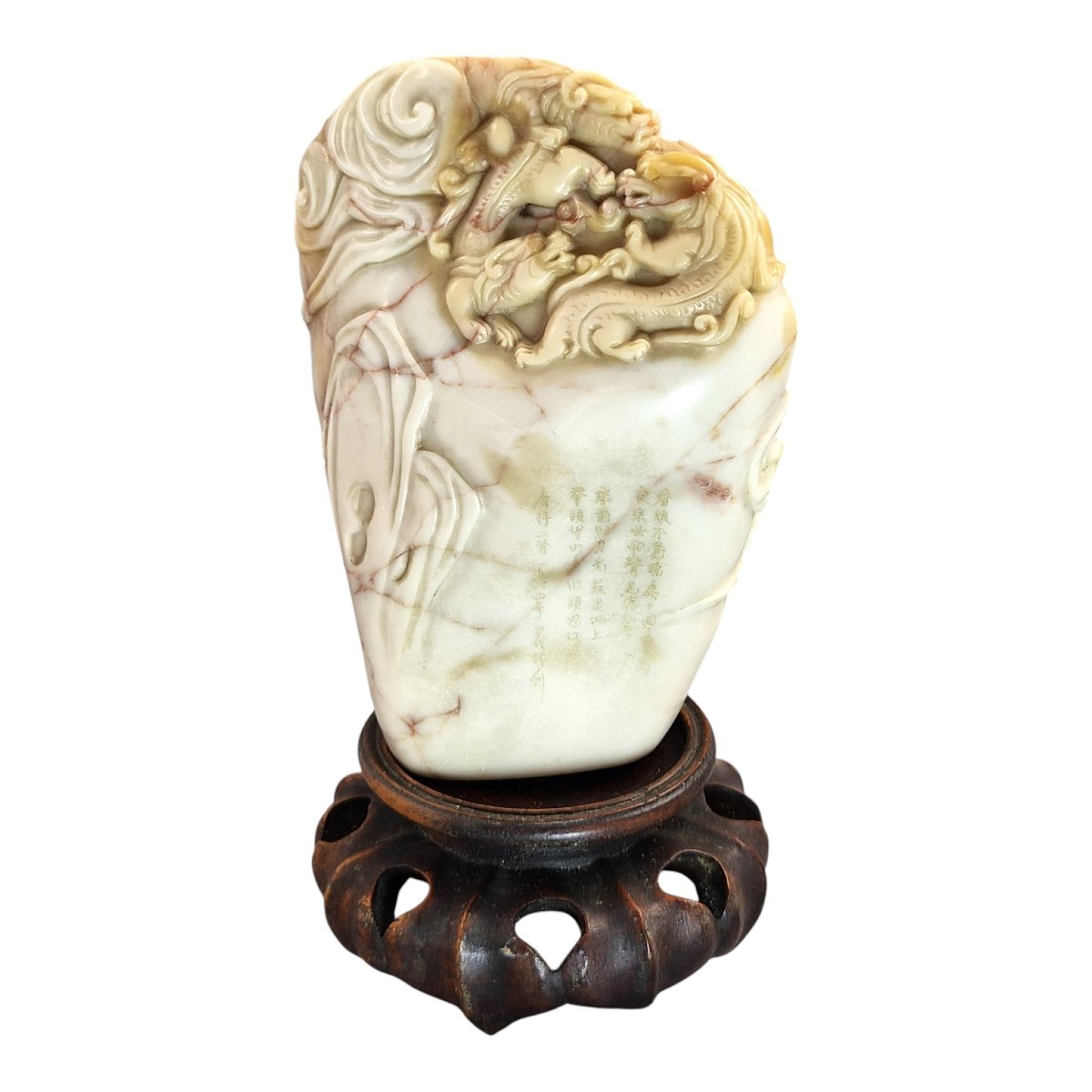
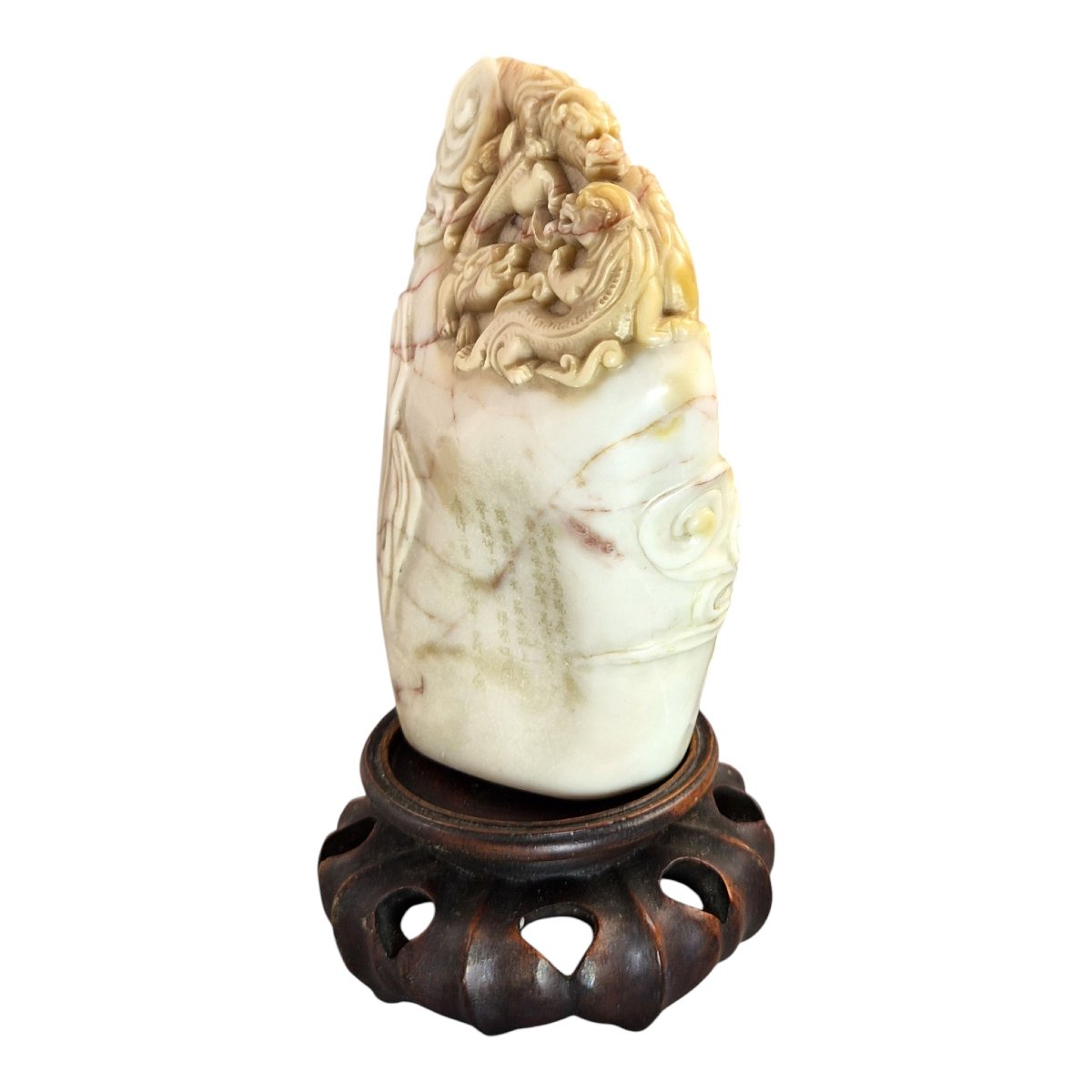
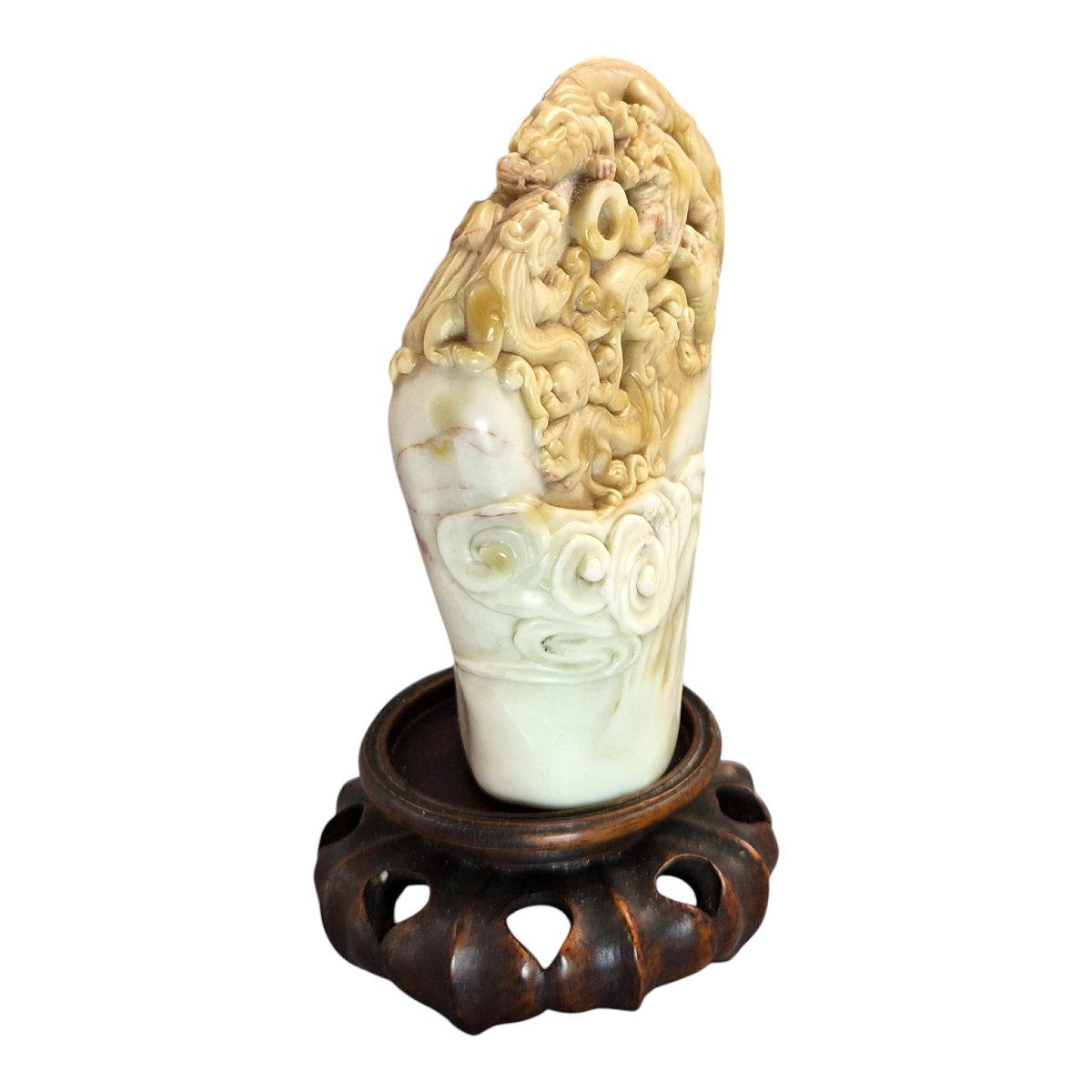
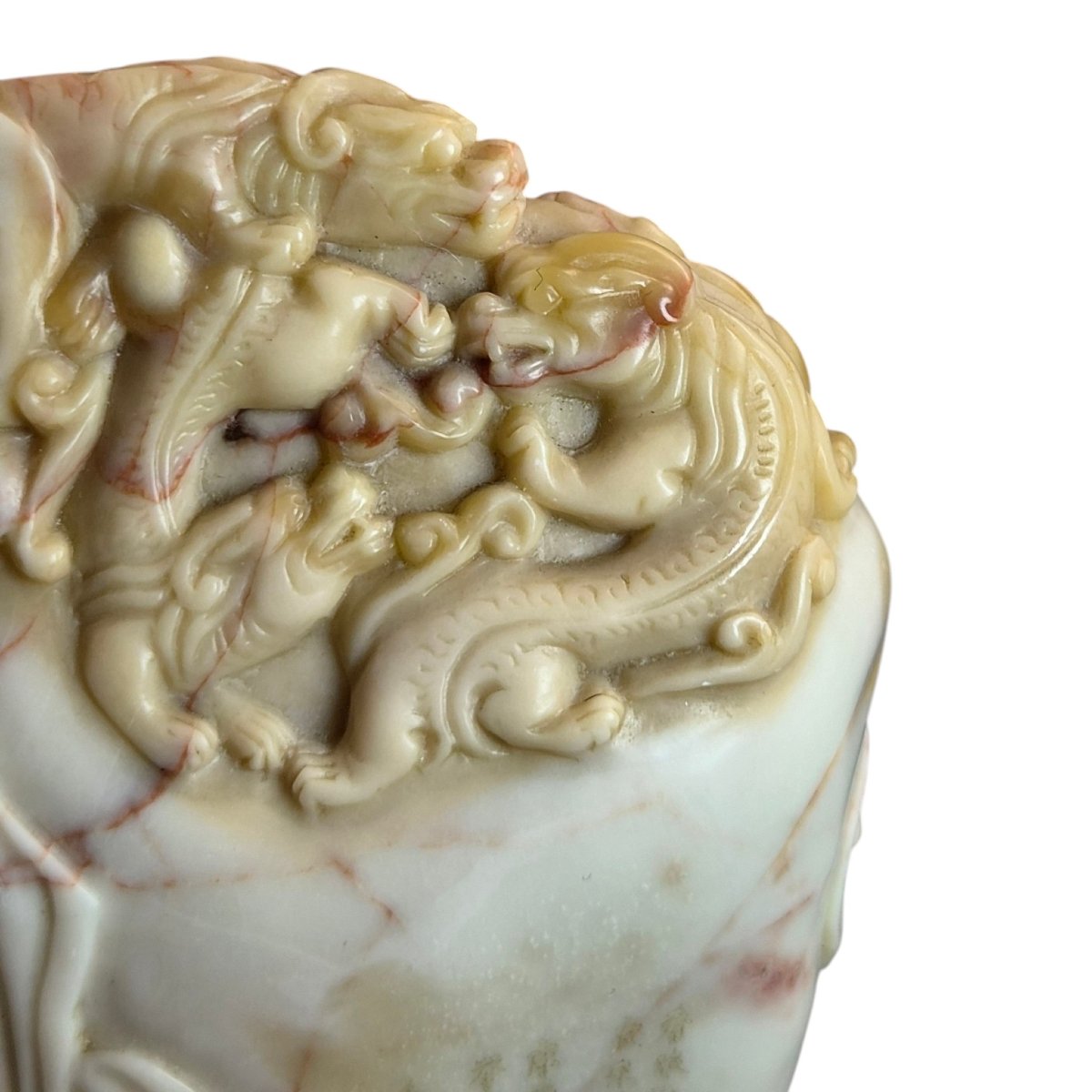
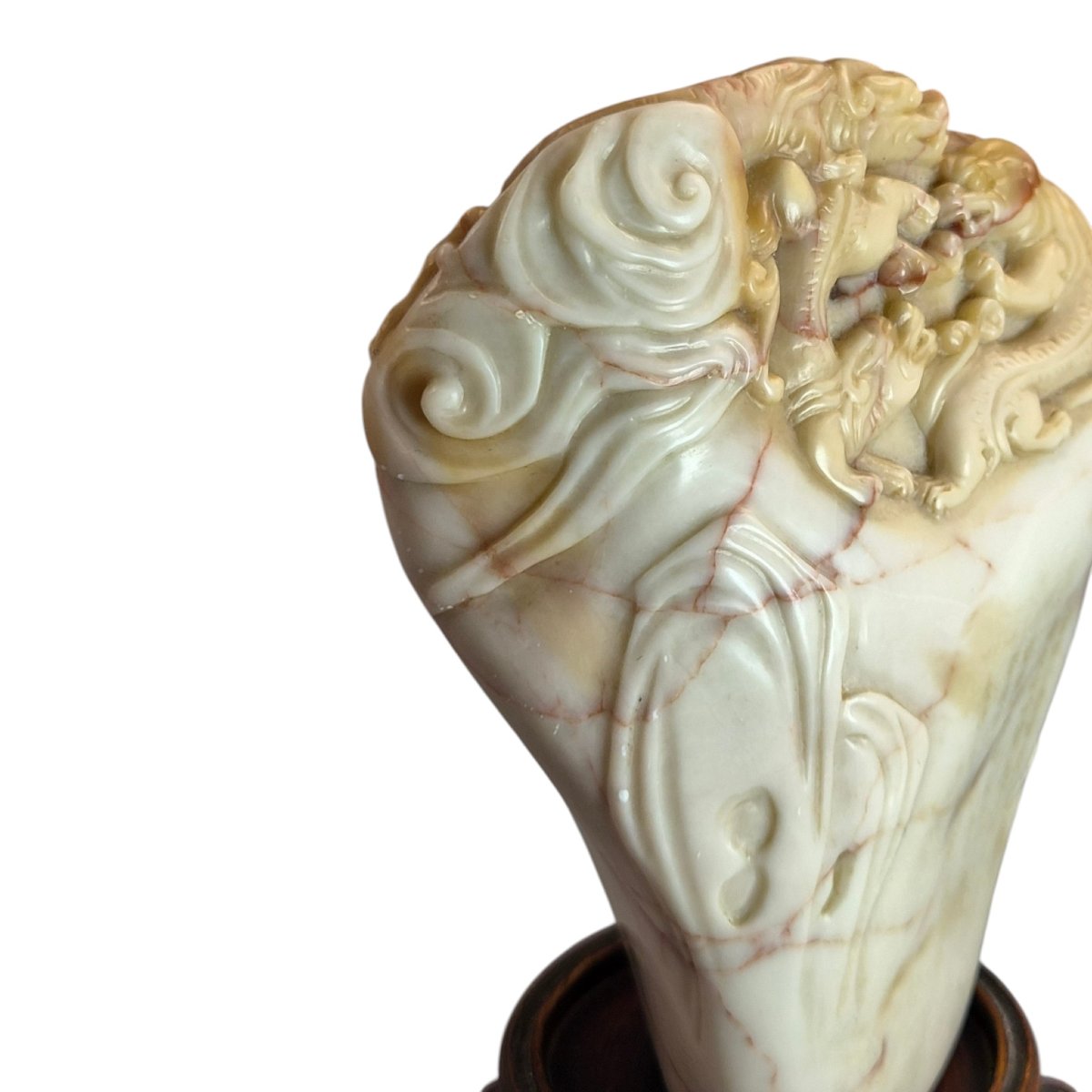
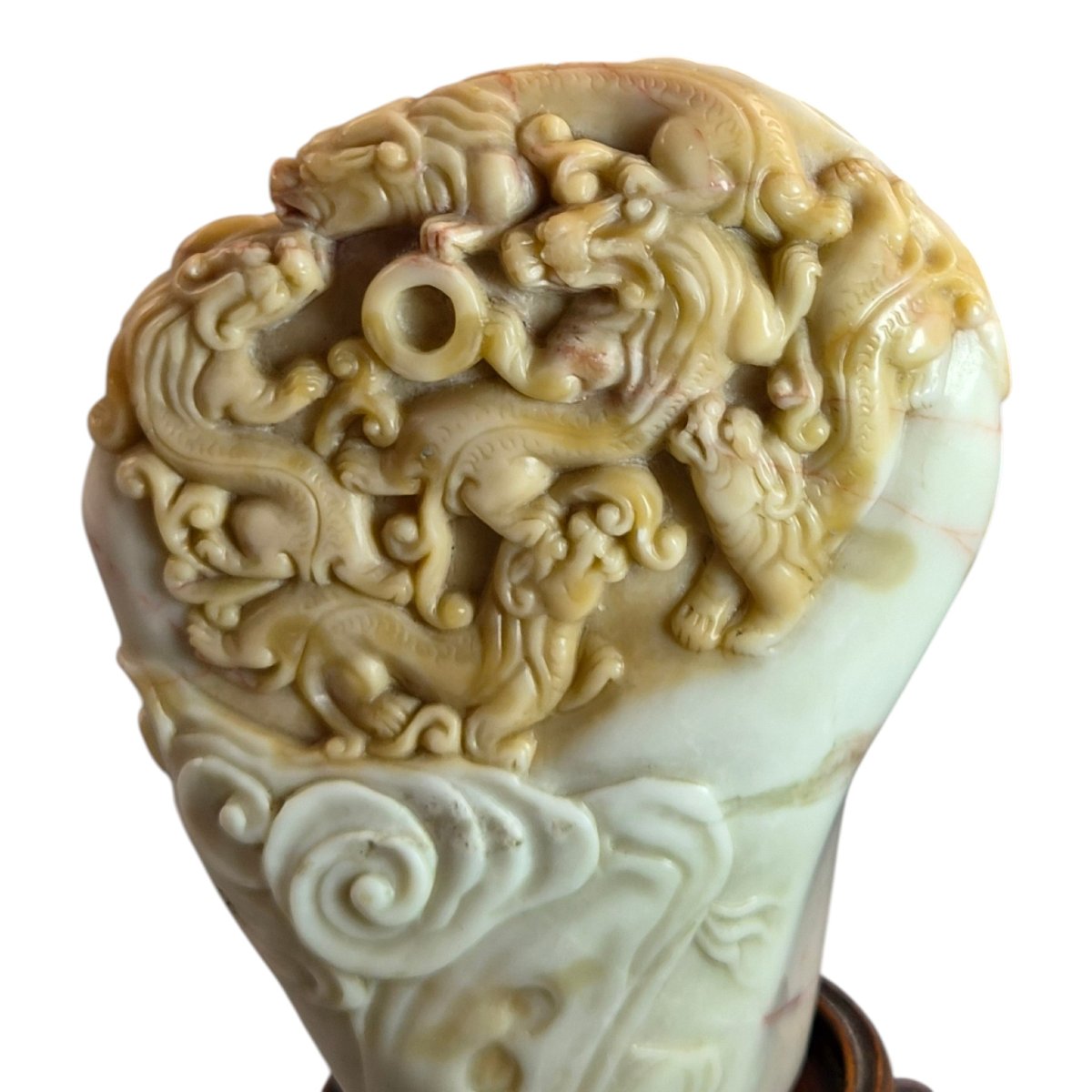
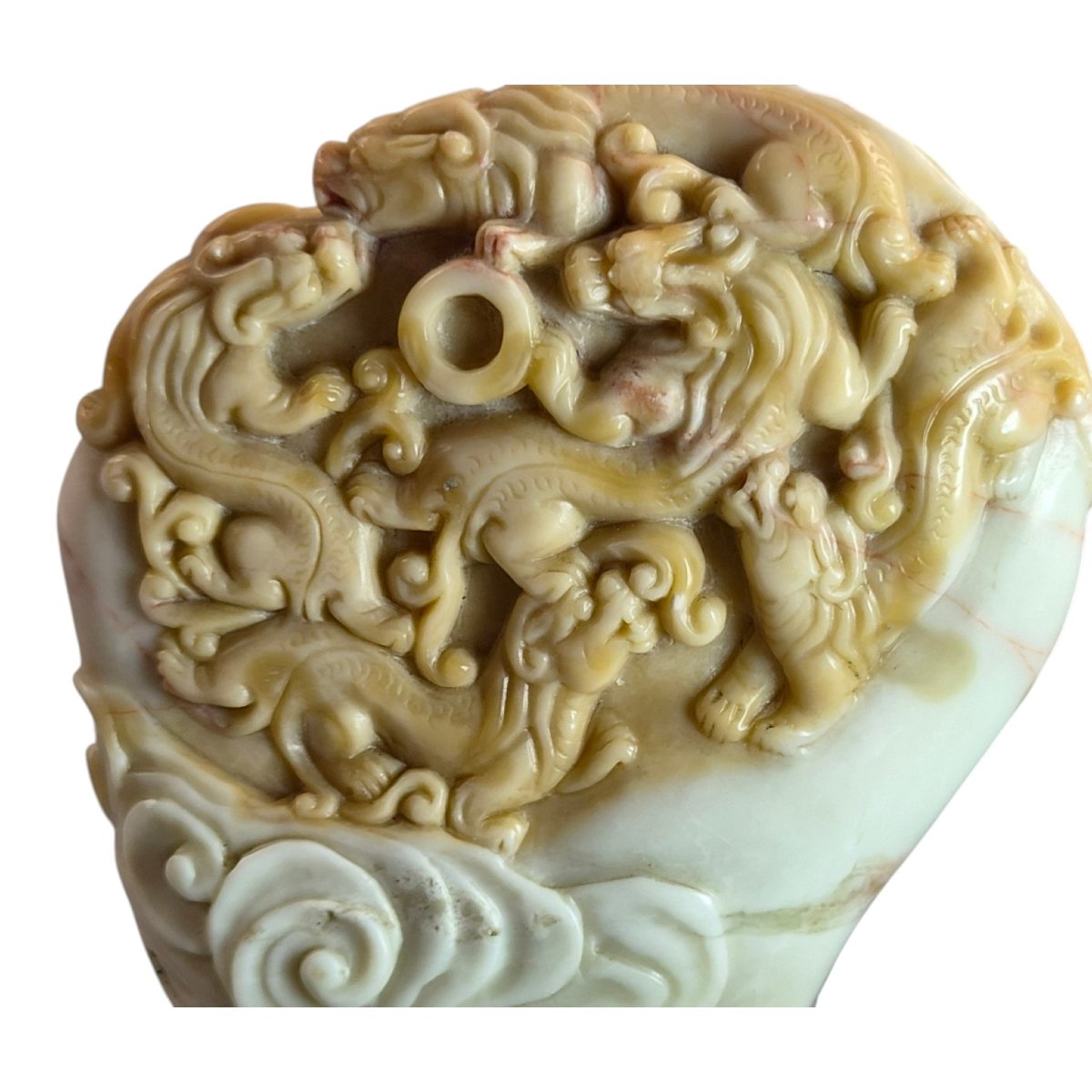
This compact but visually powerful object combines sculptural refinement with strong decorative presence. The upper section is carved in high relief with dragons pursuing the sacred pearl among clouds — one of the most enduring auspicious subjects in Chinese art. The dragons are energetic and fluid, with curling bodies, expressive heads, claws and cloud scrolls arranged around the central pearl.
The most striking feature of the piece is the intelligent use of the stone itself. The sculptor has allowed the cooler milky-white body to remain calm and architectural, while the warmer cream and honey-coloured areas are used for the dragons and upper relief. The result is highly decorative: the figures seem to grow naturally out of the material rather than sit upon it.
The reddish natural veins running through the stone add further movement and visual interest. They are beautifully absorbed into the composition and give the object an organic, lively quality.
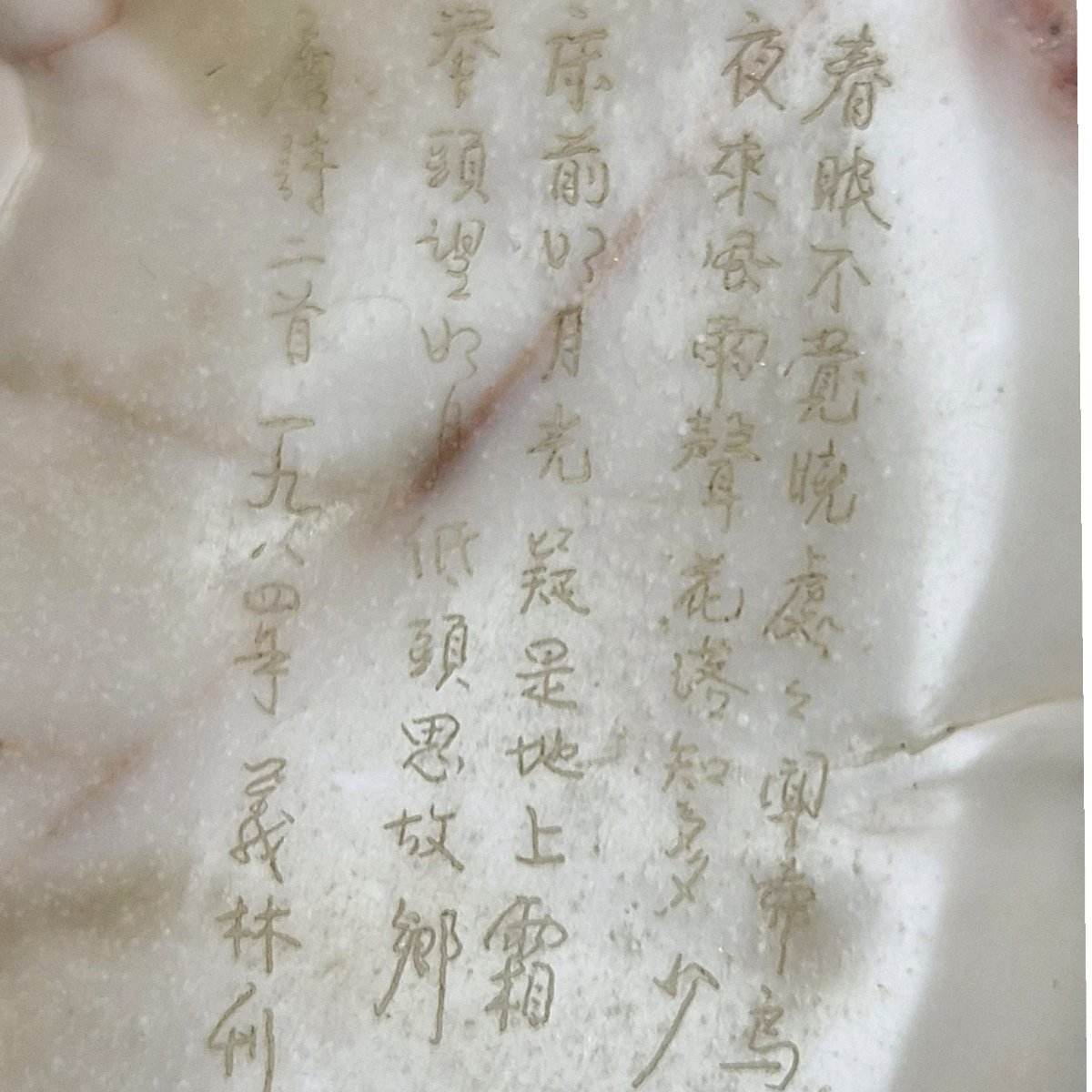
One side carries a finely incised vertical Chinese inscription. The cut characters were originally filled with gold or gold-coloured pigment, now mostly worn with age, leaving subtle traces in the engraved lines. The inscription appears to include two celebrated Tang poems: “Spring Dawn” by Meng Haoran and “Quiet Night Thoughts” by Li Bai, probably from the classical anthology Three Hundred Tang Poems. A partial signature of the carver or calligrapher is also visible, but it cannot be read securely.
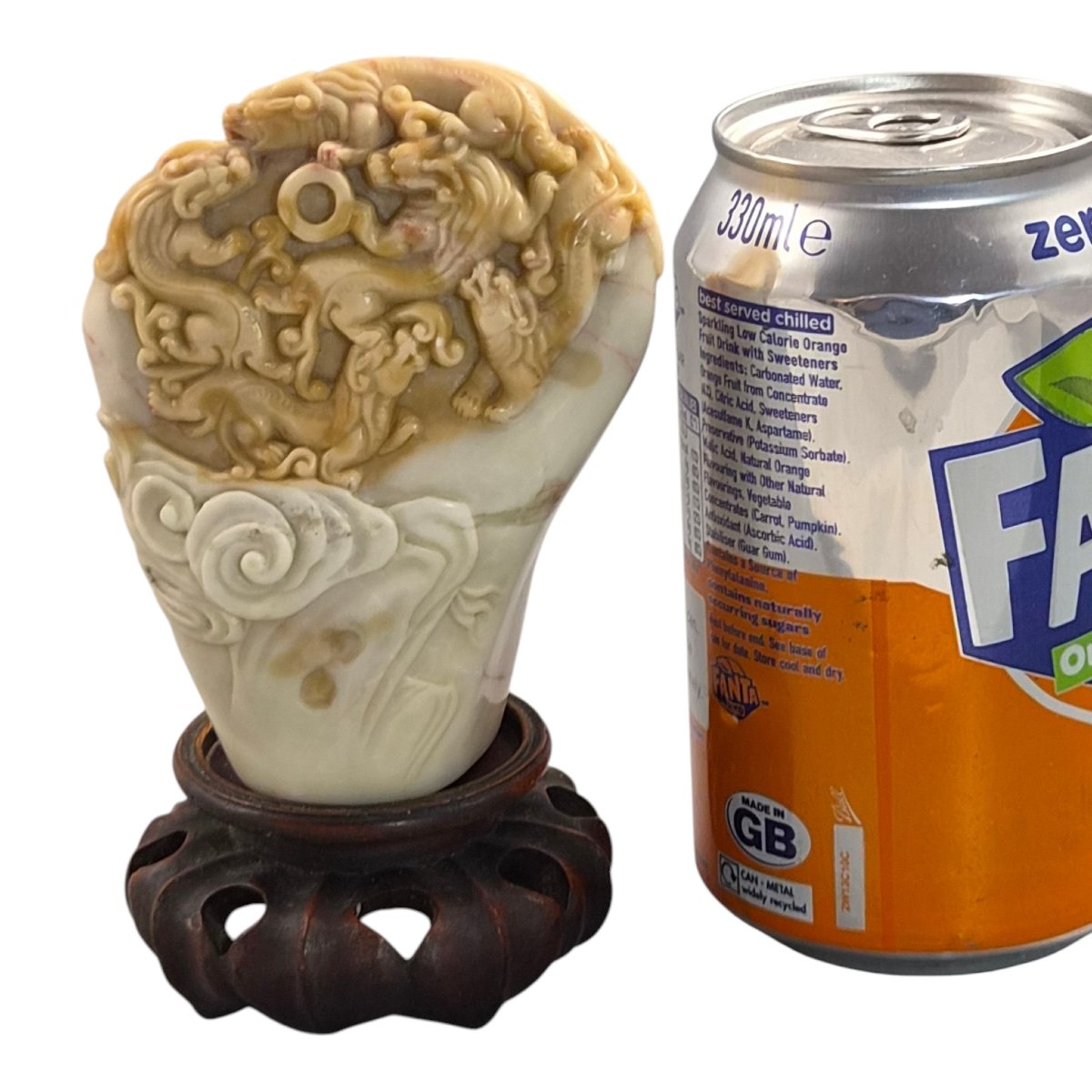
The carving sits on its original wooden stand, shaped specifically for this stone and included with the piece. The dark wood base gives a strong contrast to the pale stone and makes the object ready for display in a refined interior.
Condition:
Condition is good overall. The main carving is well preserved, the sculptural relief remains clear, and the inscription shows natural age-related wear. The wooden stand has expected signs of age and use.
Dimensions:
Height of stone without stand: 10.3 cm
Width: 8 cm
Depth: 4 cm
Weight of stone without stand: 369 g
Please study the accompanying photographs carefully as they form an integral part of this description. If you have any questions, we will be happy to answer them. The item will be shipped with full tracking and insurance.
Period: 19th century
Style: Asian art
Condition: Perfect condition
Material: Stone
Length: 8 cm
Width: 4 cm
Height: 10.3 cm
Reference (ID): 1762634
Availability: In stock