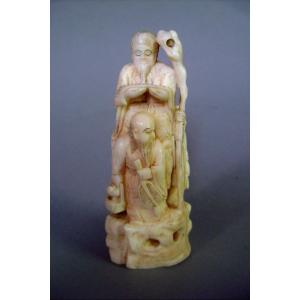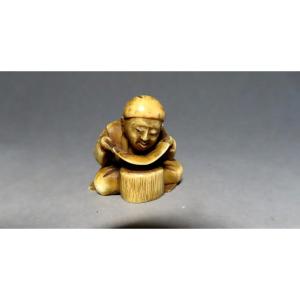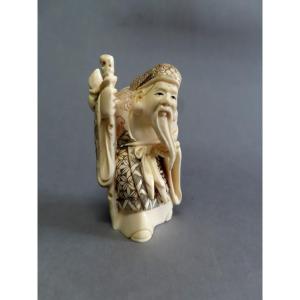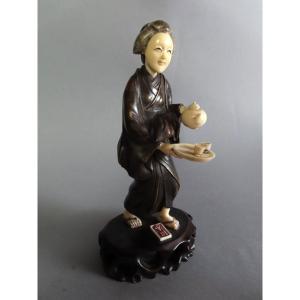


Inro And Netsuke. Japan Edo Period 1662-1868 )
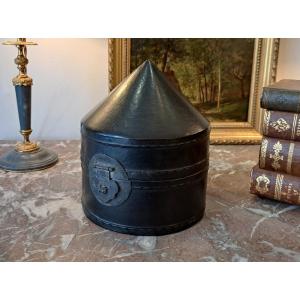
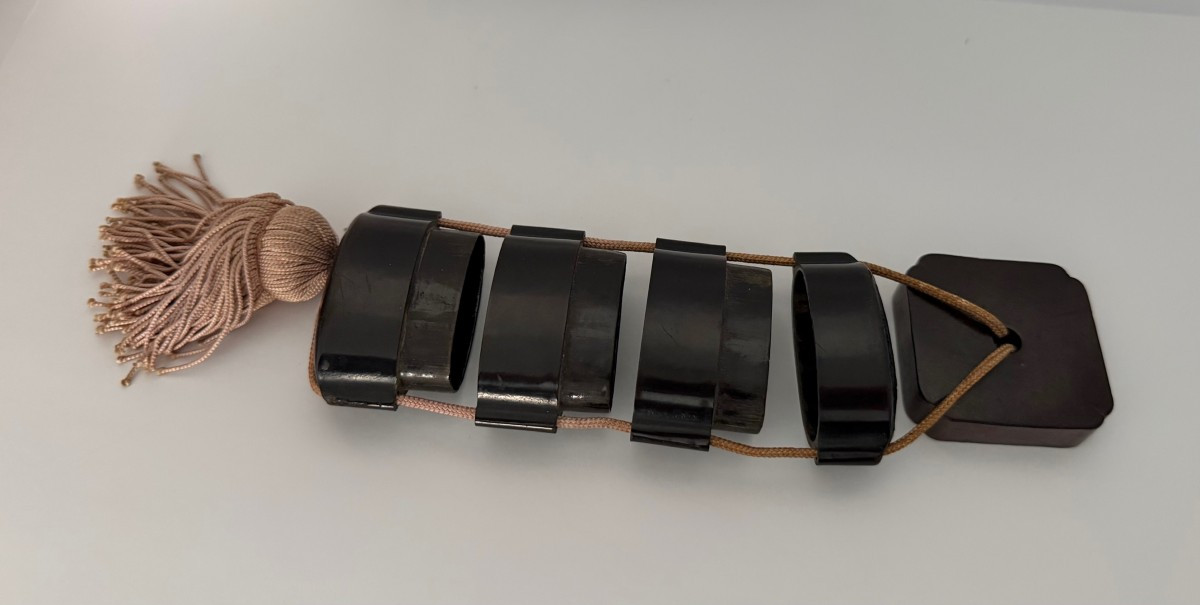
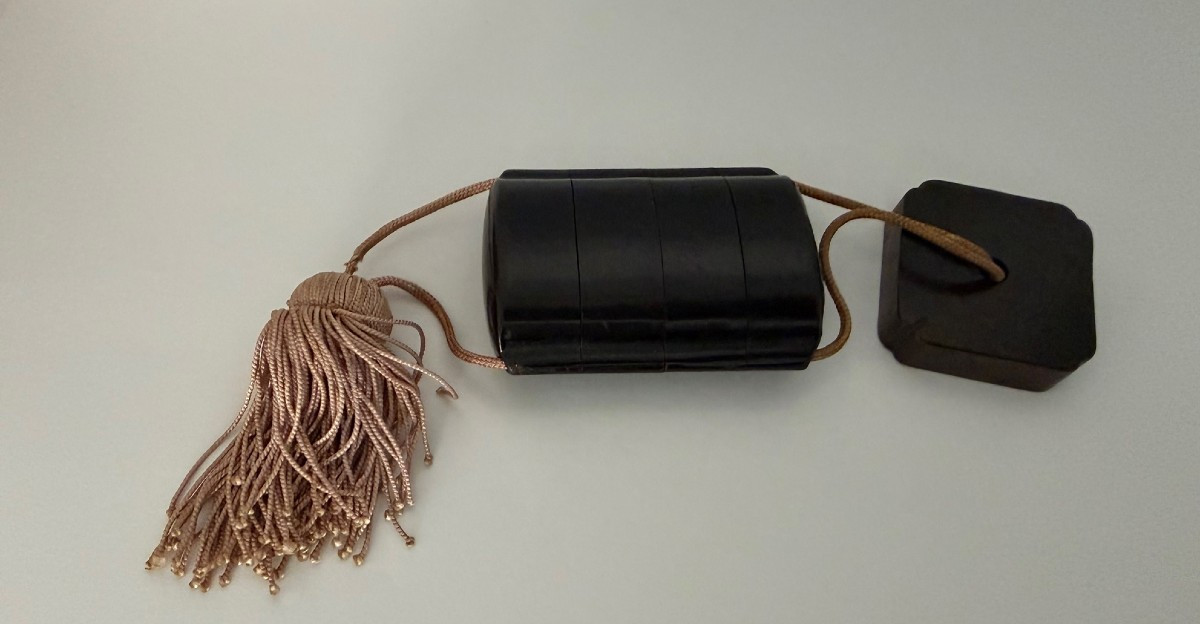
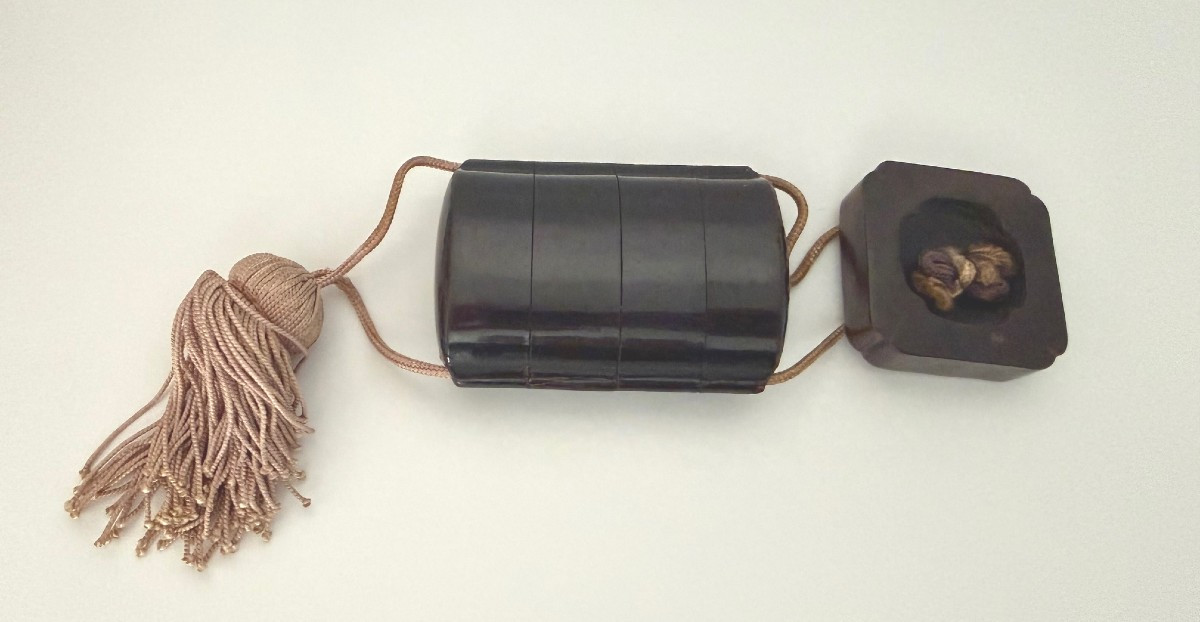
This object is a magnificent example of Japanese inrō (印籠). Although aesthetically sober, it is a fascinating piece that perfectly embodies the utilitarian art of the Edo period.
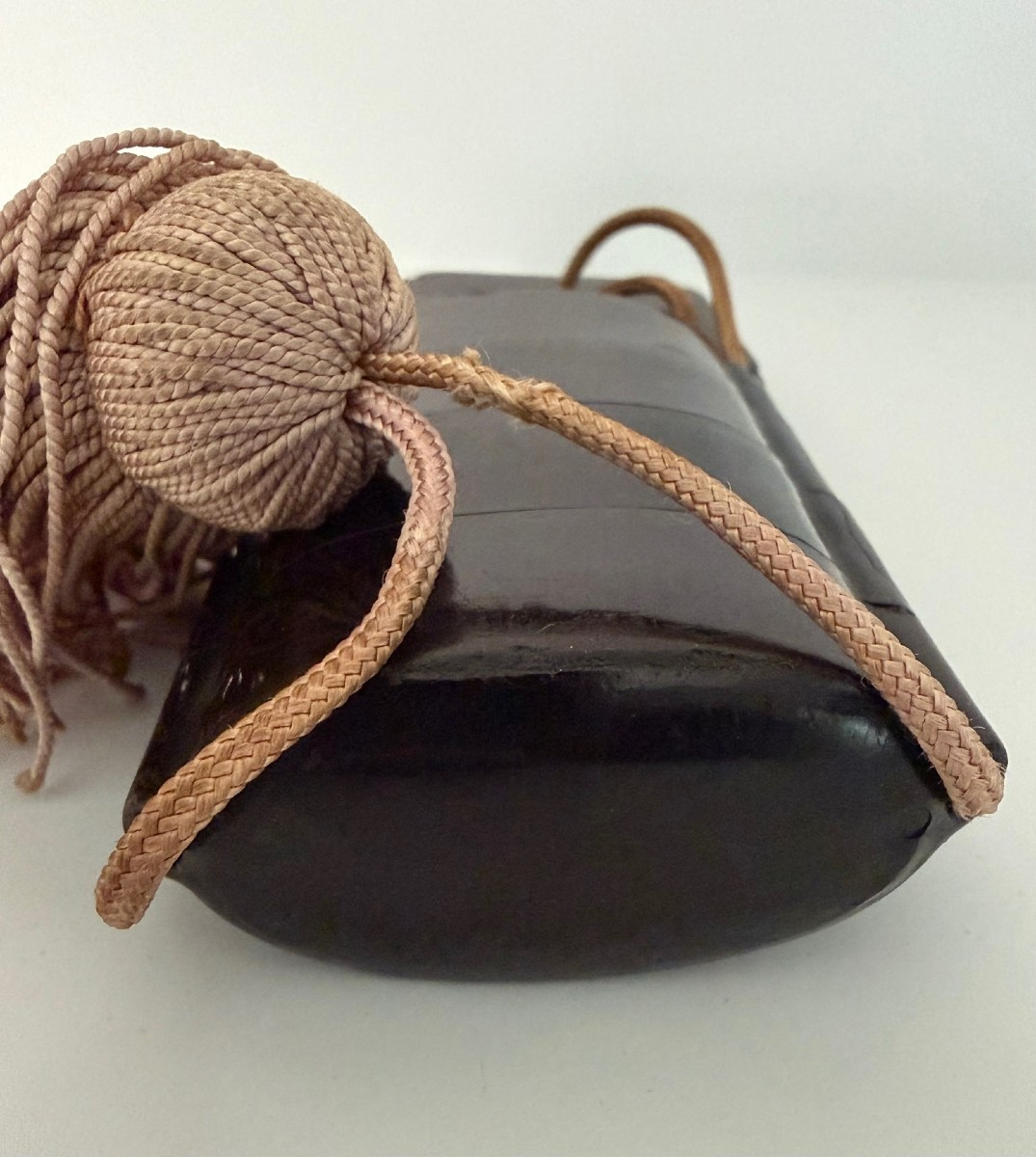
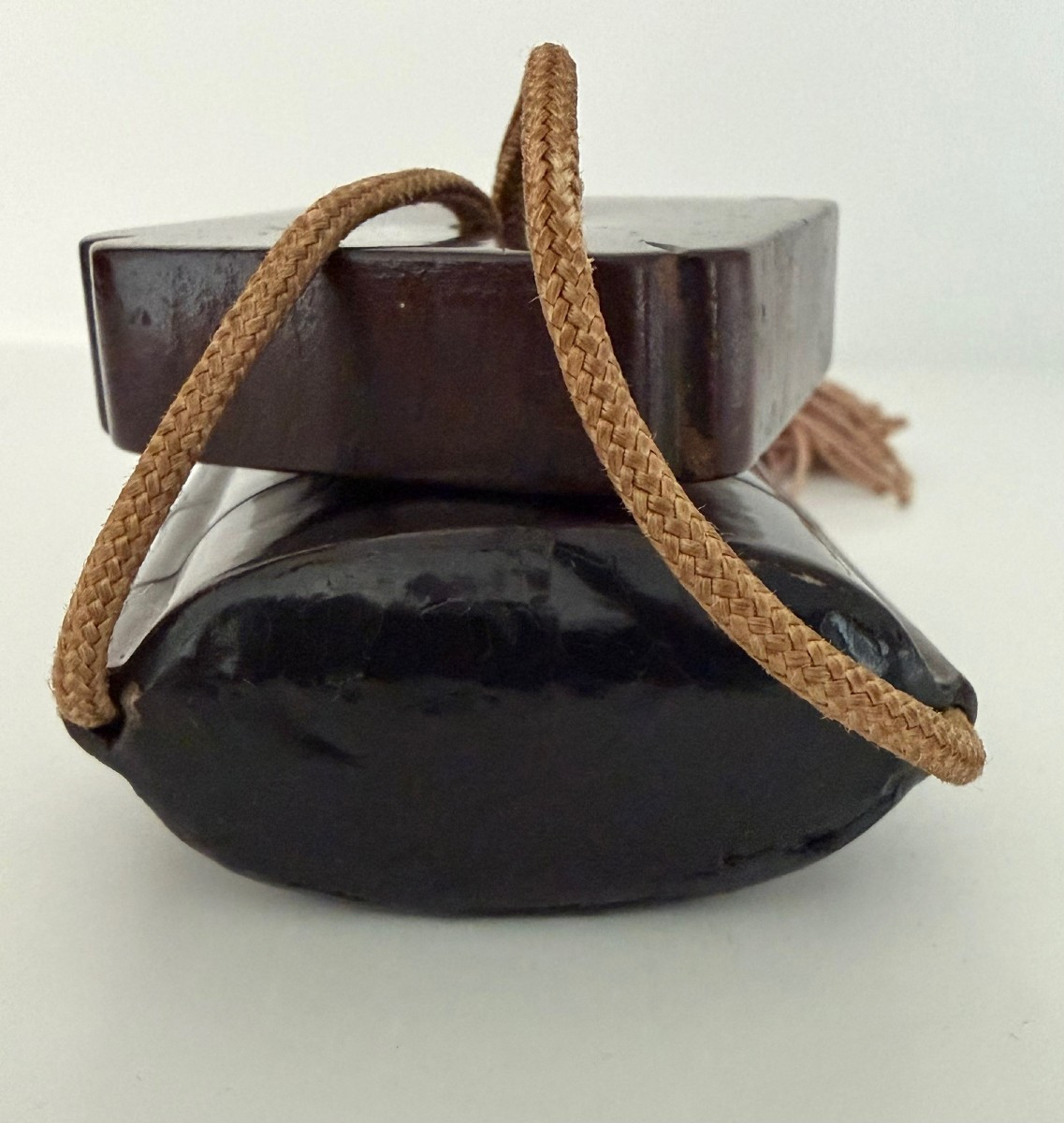
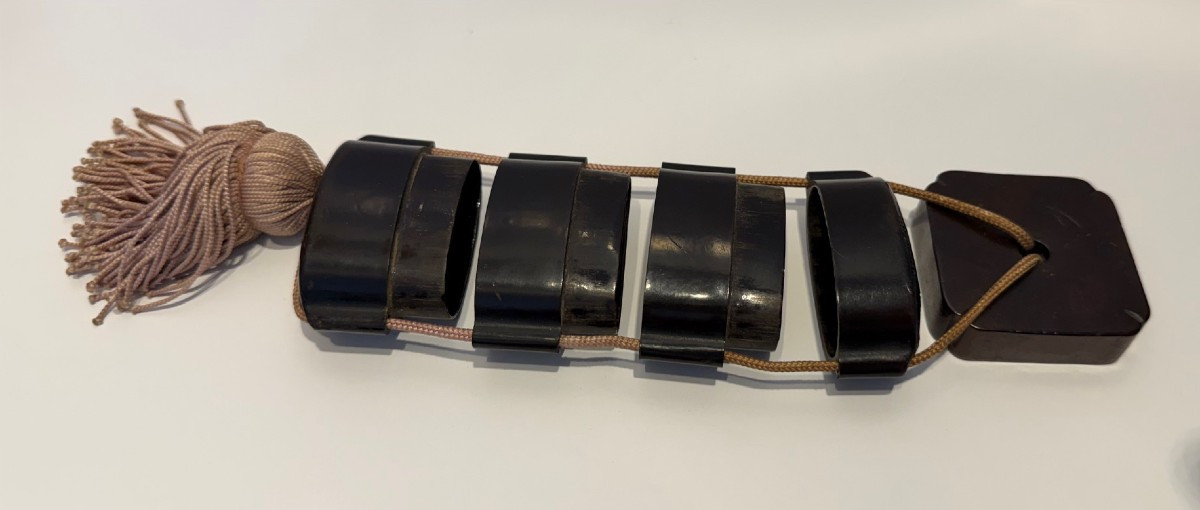
Inrō in plain lacquer (Ji-itame or Roiro), very dark brown (urushi lacquer).
Contrary to pieces richly adorned with gold powder (maki-e) or mother-of-pearl inlays intended for the upper bourgeoisie or samurai on special occasions, this pared-down style corresponds to the late Rimpa taste or the Wabi-sabi aesthetic (beauty in simplicity and pared-downness). It was an everyday object, elegant but discreet.
Estimated period: Late Edo period (18th - mid-19th century)
Smooth-edged, plain lacquer models of this type were very popular with the merchant class (chōnin) or the learned in the late Edo period, as the sumptuary laws of the time sometimes prohibited excessive ostentation of wealth.
The internal structure (the rims called risers) is sound.
The outer lacquer has a nice sheen with some light chips and wear on the edges (which is quite normal for its age).
The overall condition is very good for a utilitarian piece.
Period: 19th century
Style: Asian art
Condition: Excellent condition
Material: Solid wood
Reference (ID): 1762491
Availability: In stock