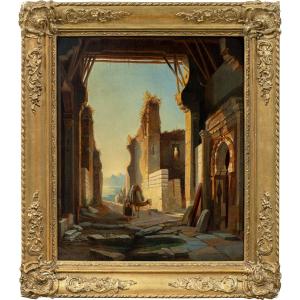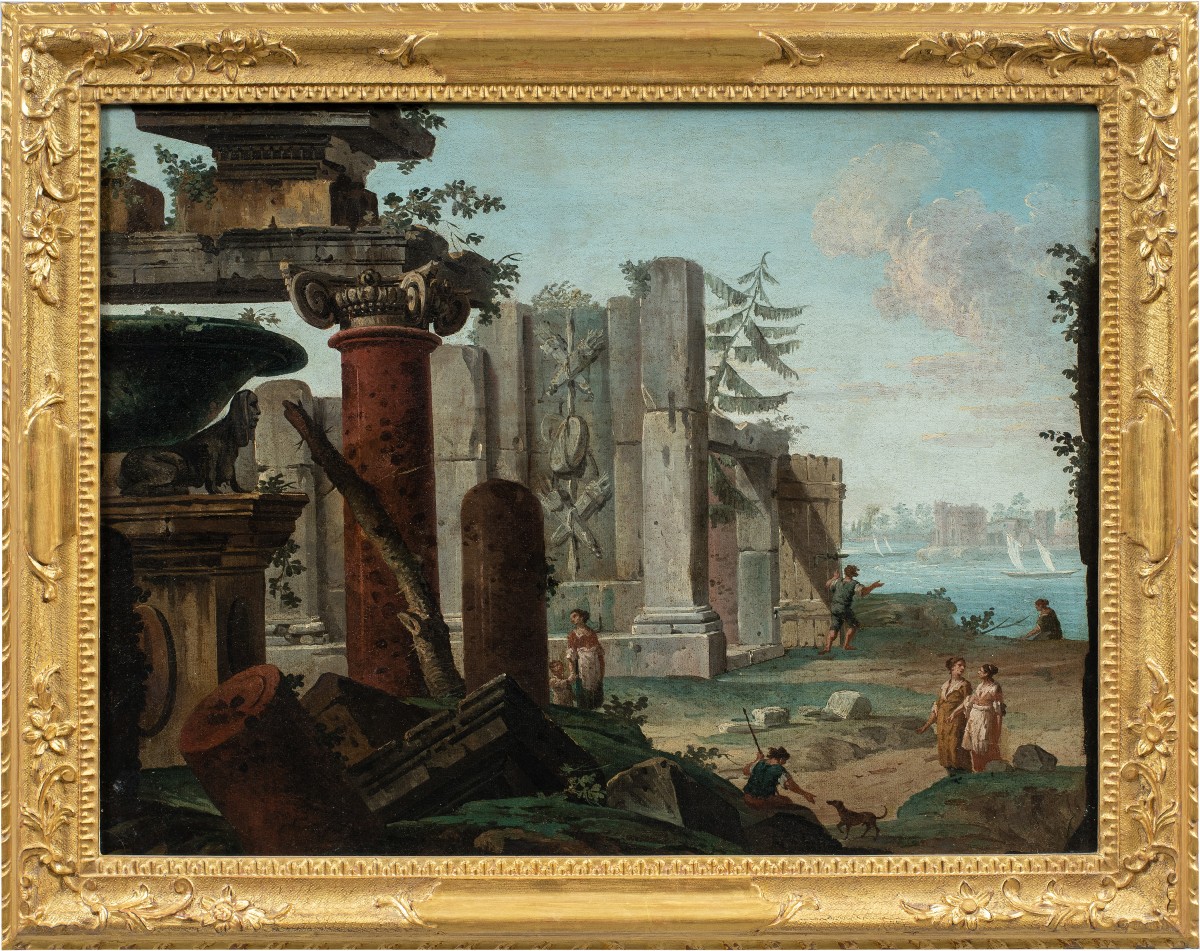


Antonio Joli (modena, 1700 – Naples, 1777) – Architectural Caprice With Ruins And Figures.
Antonio Joli (Modena 1700 - Naples 1777) - Architectural Capriccio with Ruins and Figures.
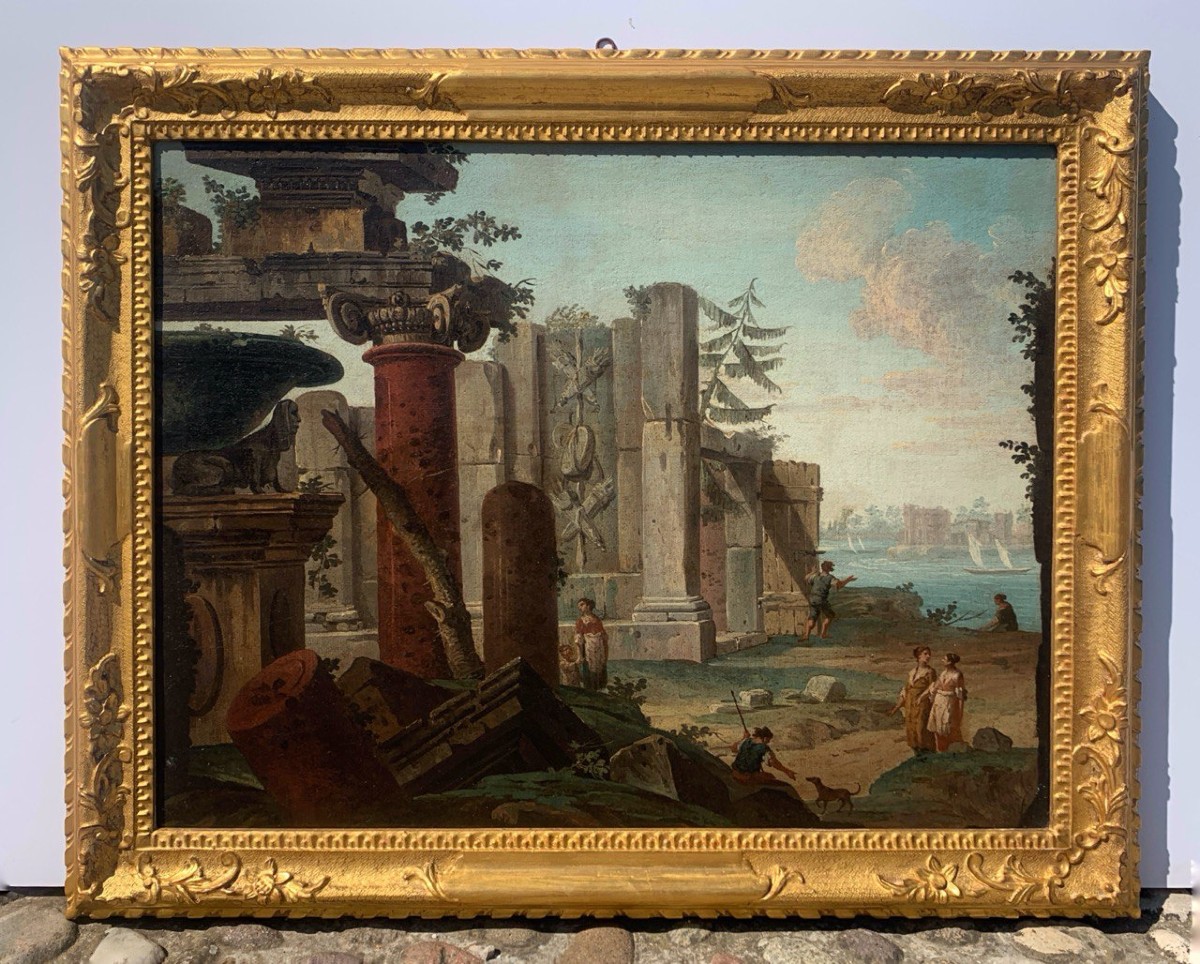
54 x 69 cm (without frame) - 74 x 89 cm (with frame).
Oil on canvas, in a carved and gilded wooden frame.
Expert opinion: Prof. Dario Succi, Gorizia (critical essay enclosed).
Antonio Joli, born in Modena around 1700, trained under the perspective painter Raffaello Rinaldi before moving to Rome, where he absorbed the influence of Pannini. Active in Venice from 1732, he worked as a stage designer for the city's principal theatres before pursuing a distinguished international career in London, at the Spanish court, and finally in Naples, where he was appointed chief set designer of the Real Teatro di San Carlo and established himself as a veduta painter for prestigious patrons.
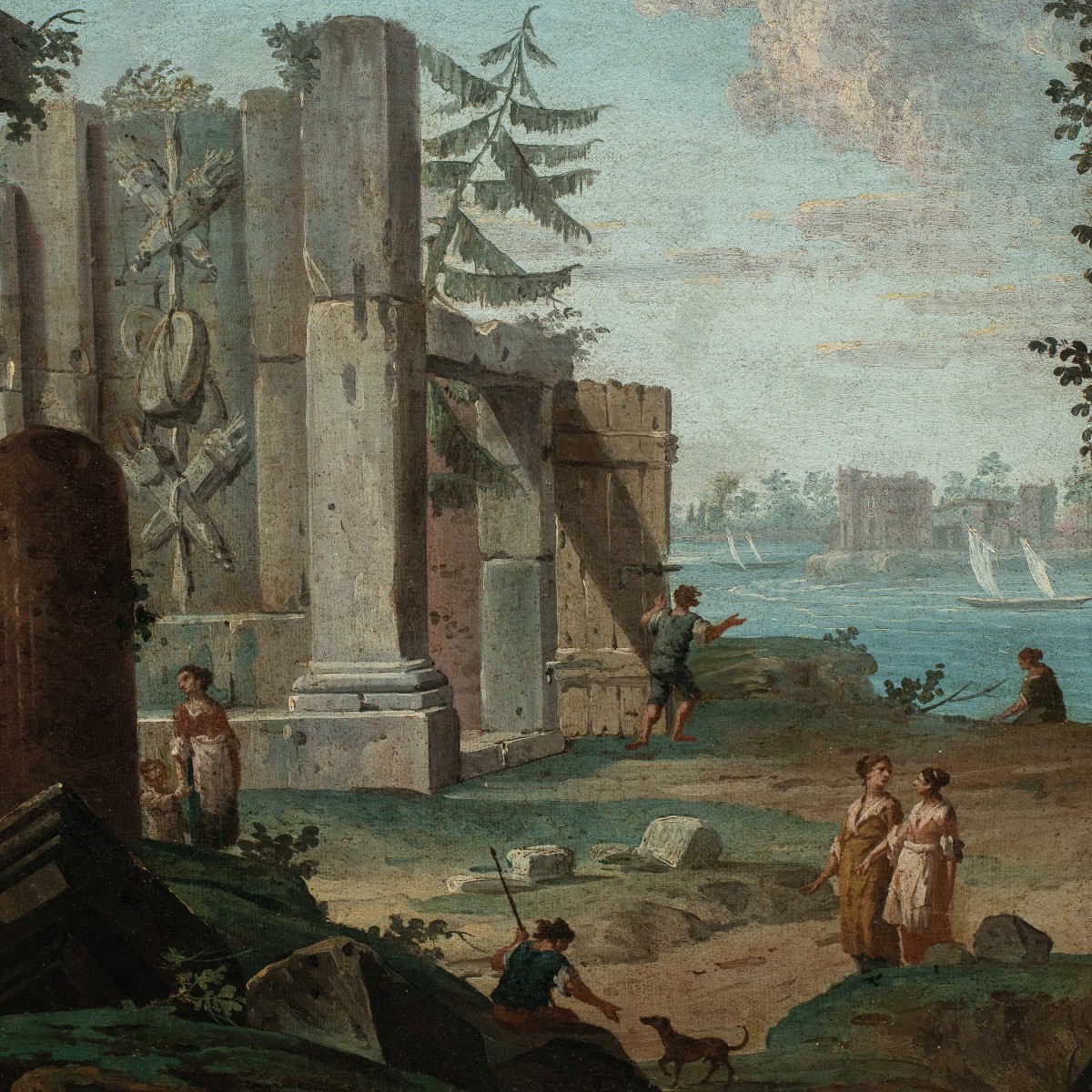
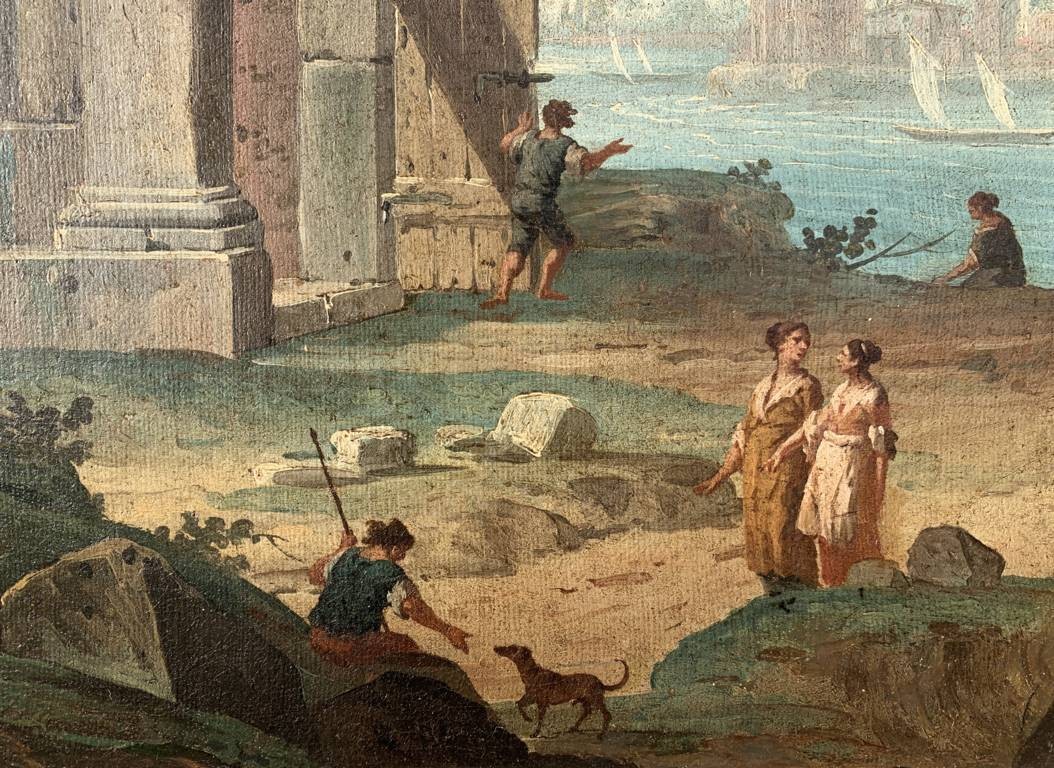
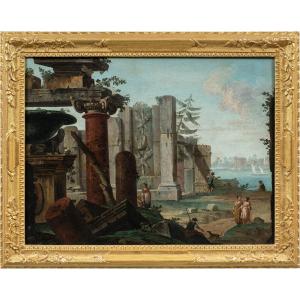
The painting depicts an architectural capriccio with figures set against an open coastal landscape. The foreground is dominated by monumental ruins, a large urn on a pilaster supported by sphinxes, broken columns, fallen entablatures, arranged as a theatrical backdrop in the tradition of Pannini. The composition opens diagonally toward the middle ground, where the remains of a marble palace emerge, dissolving into the bluish luminosity of the bay with its fortress and sailing vessels. The figures, noblewomen strolling, a traveller with a dog, a guardian opening a gate, are placed with Joli's characteristic narrative ease, binding the staffage to the architecture in a balance between reality and invention. The work belongs to the artist's final period, showing close affinities with the scenographic paintings in the royal collections of Naples and Caserta, datable to around 1776.
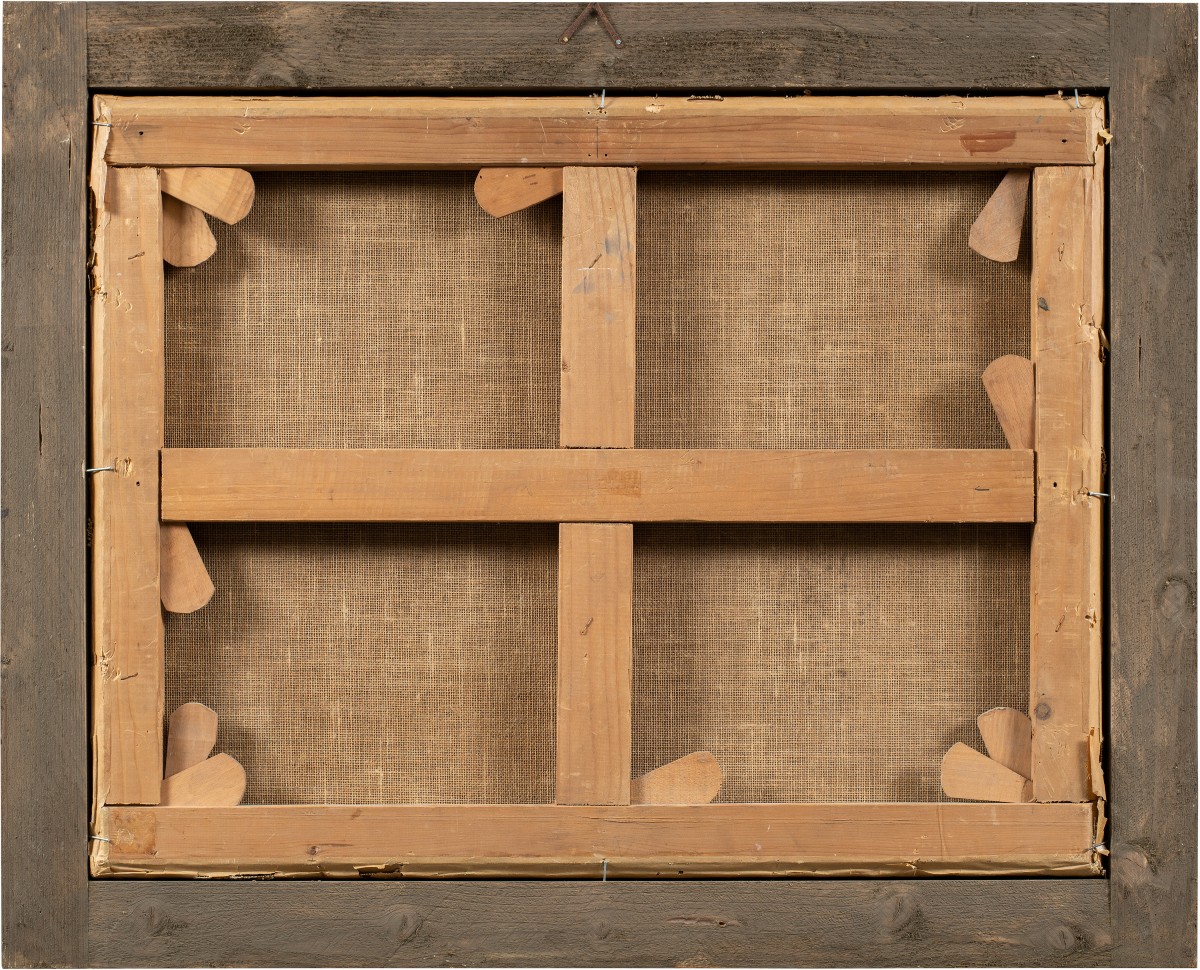
Condition report: Relined canvas. Good state of conservation of the painted surface.
- All shipments within the EU are free and professionally packaged.
- This item is sold with a legally valid certificate of authenticity.
- Further details regarding the condition report are available upon request.
- Viezzi Arte guarantees quality and professionalism at competitive prices; contact us at info@viezziarte.it or via WhatsApp at +39 3402841279.
Notice to non-Italian buyers: This work has not yet obtained the certificate of free export from Italy, issued by the Superintendence of Cultural Heritage, which certifies that the work does not belong to the Italian cultural heritage and may therefore be freely exported. Regulations effective from 2026 provide for reduced processing times for works with a declared value of less than €50,000, determined at the discretion of the expert commission: on average 2–3 weeks from submission of the request. All costs related to this procedure are included in the price.
Disclaimer Rendering: The setting images are generated using AI for illustrative purposes and may not reflect the actual proportions of the artwork.
Period: 18th century
Style: Louis 15th - Transition
Condition: Condition of use
Material: Oil painting
Length: 69
Height: 54
Reference (ID): 1762128
Availability: In stock