

Servais Joseph Detilleux (1874 - 1940) - ' Portrait Of A Young Girl In Green Dress'
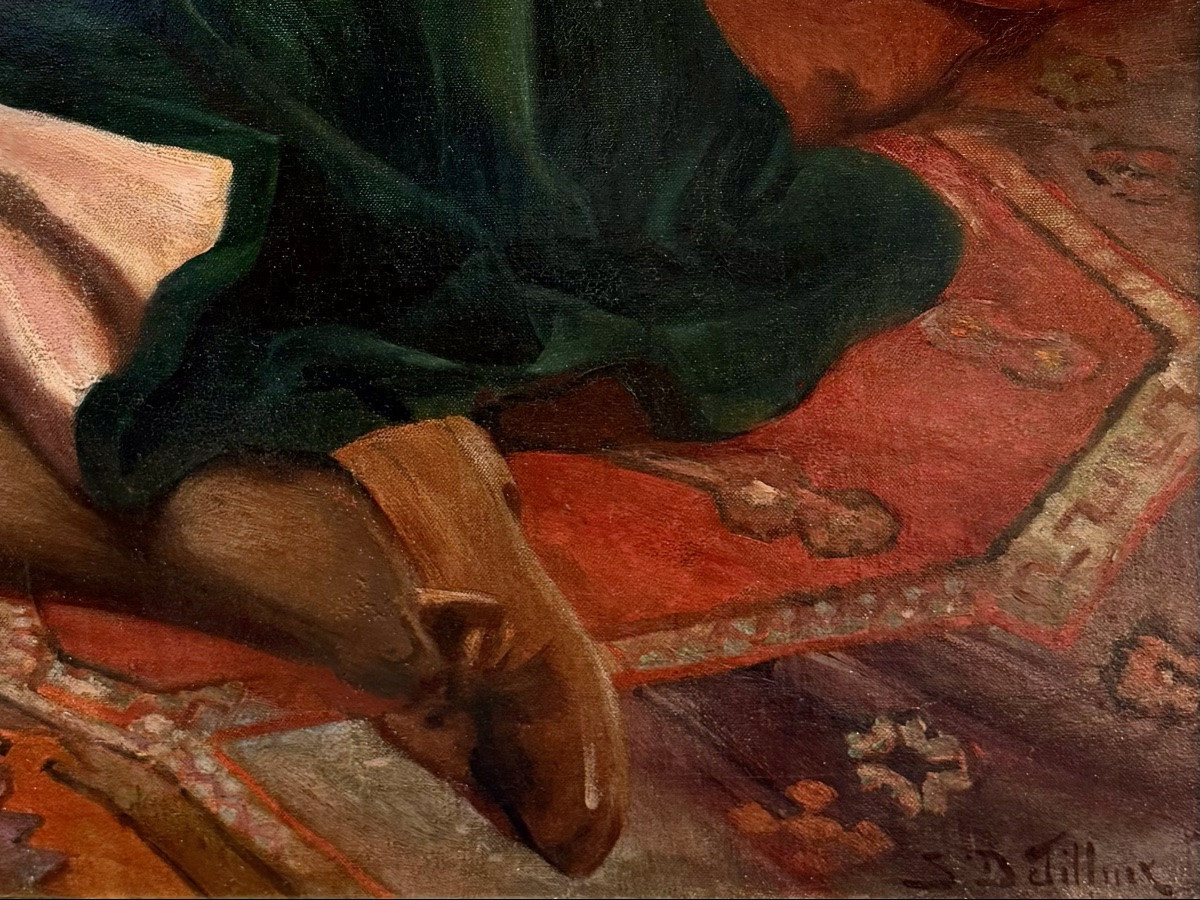
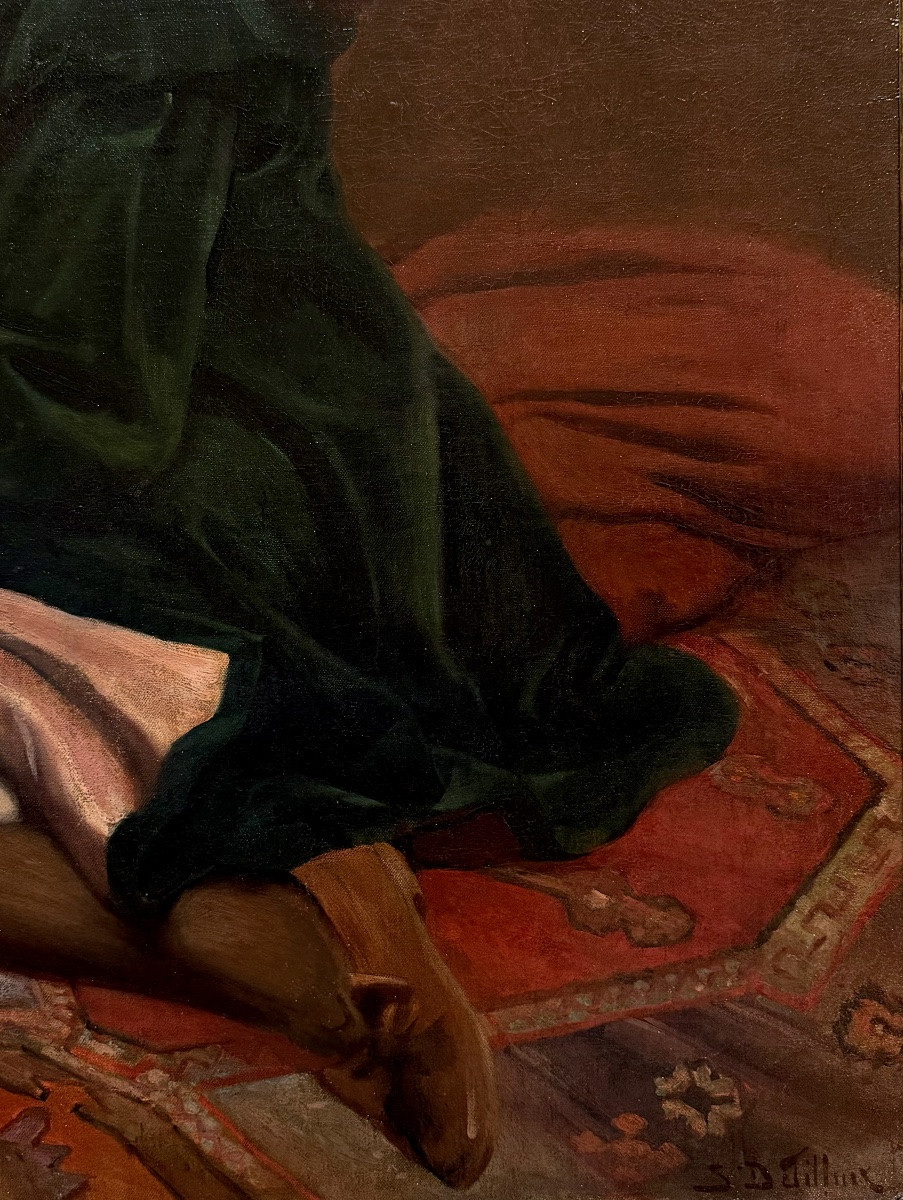
Artist: Servais Joseph Detilleux, Stembert-lez-verviers 1874 – Bruxelles 1940, Peintre Belge, Signature : Signé En Bas à Droite « S. Detillieux »
Servais Joseph Detilleux
Stembert-lez-Verviers 1874 – 1940 Brussels
Belgian Painter
'Portrait of a Young Girl in Green Dress'
Signature: signed lower right 'S. DeTillieux'
Medium: oil on canvas
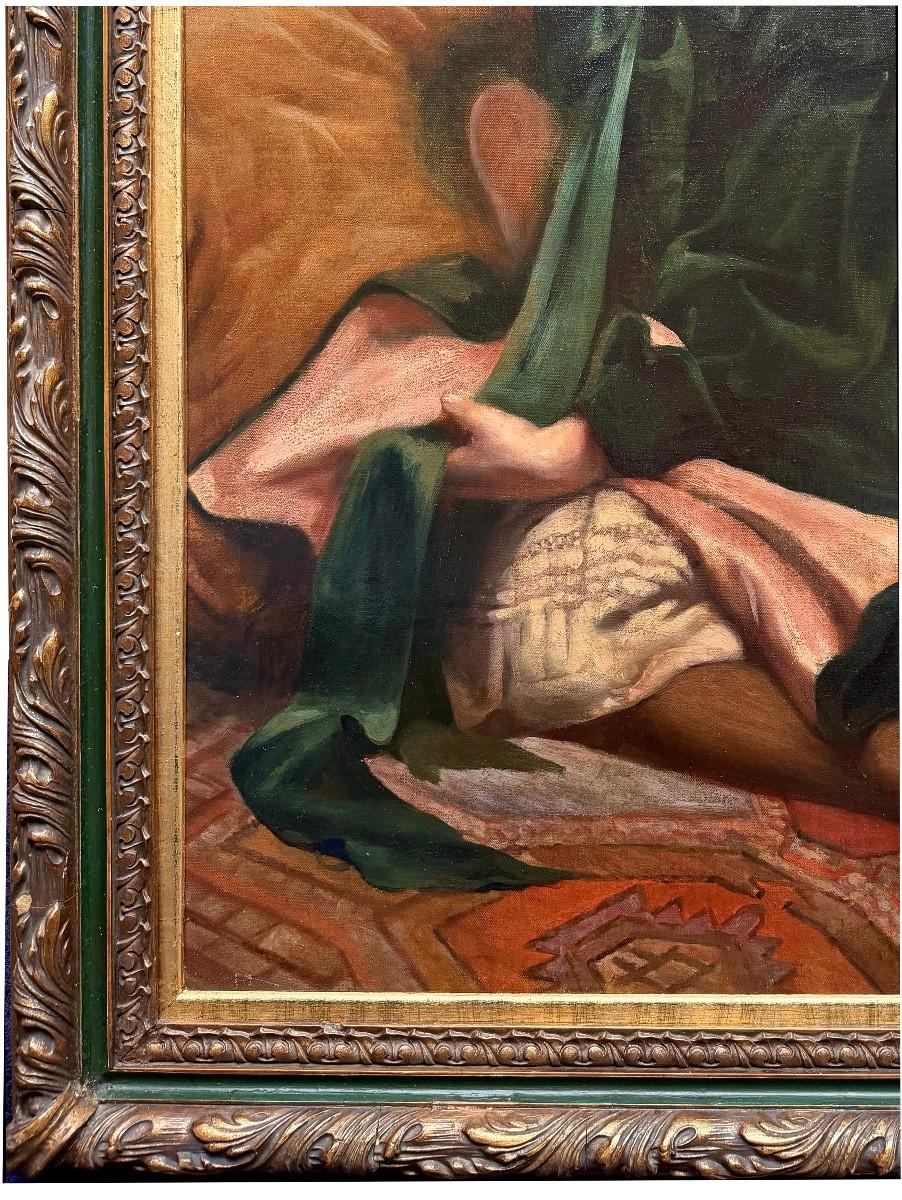
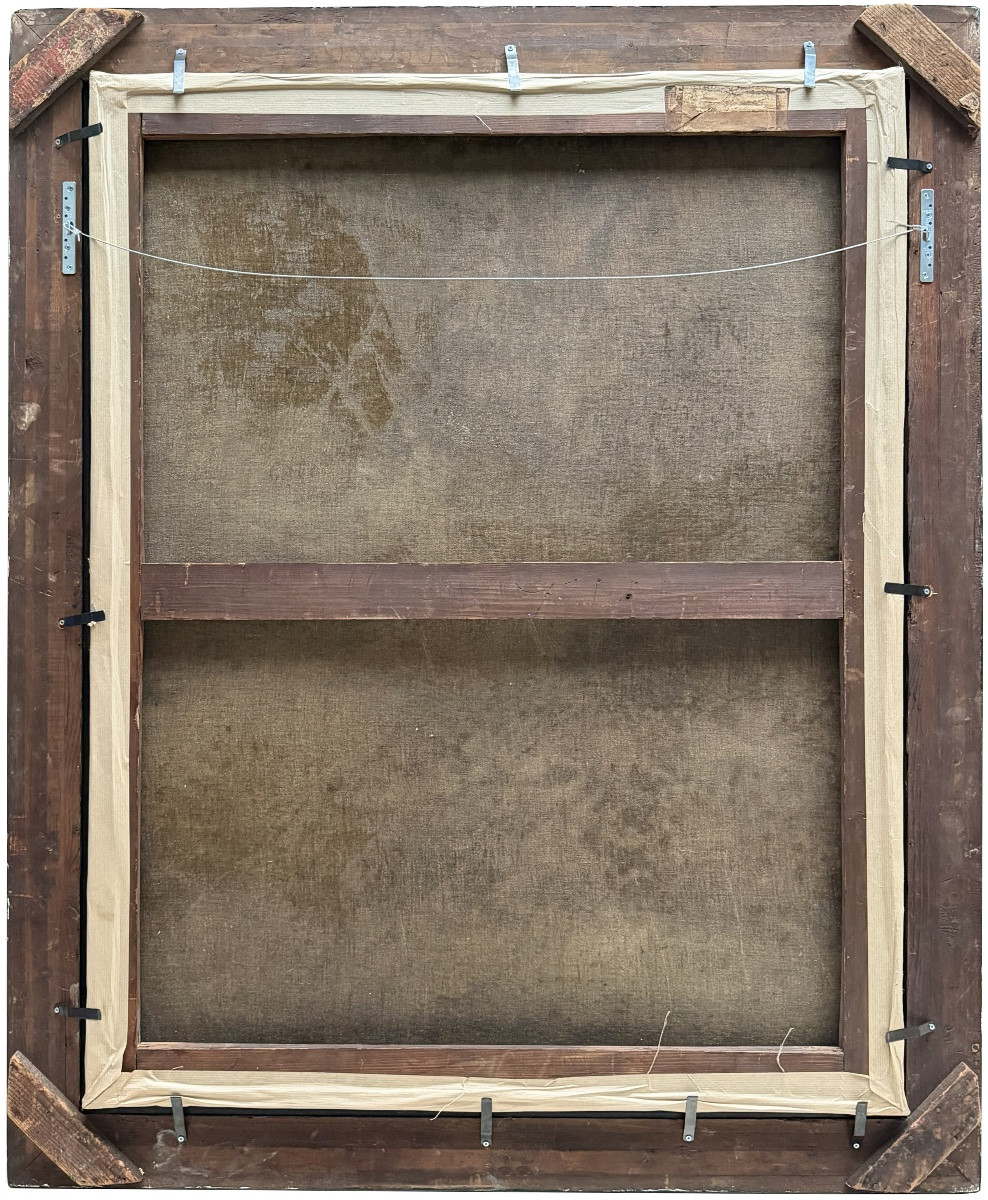
Dimensions: image size 99 x 78 cm; frame size 115 x 94 cm
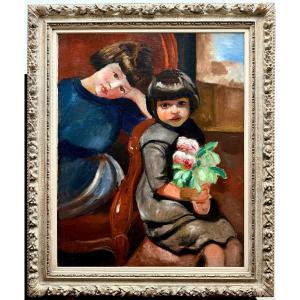
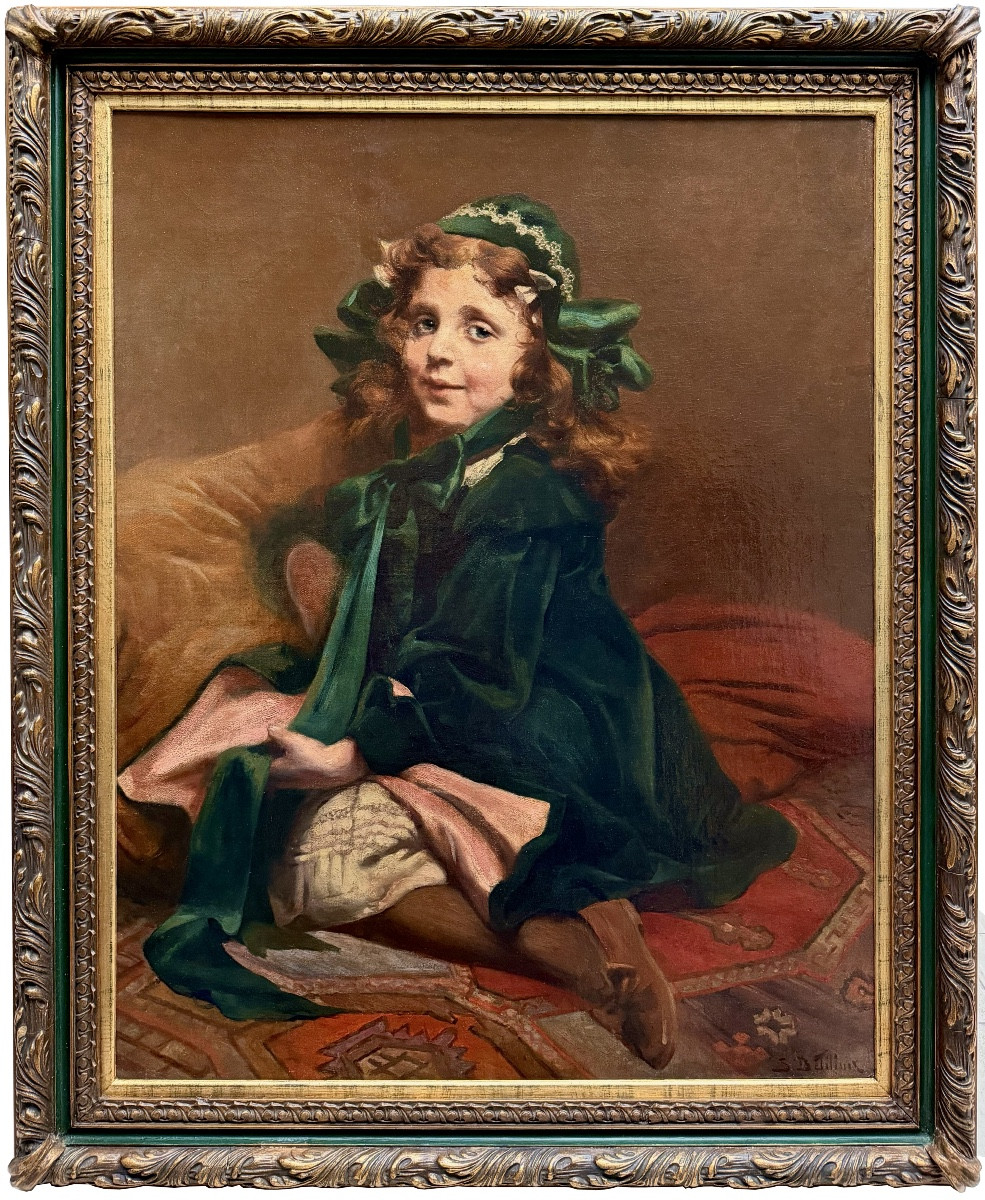
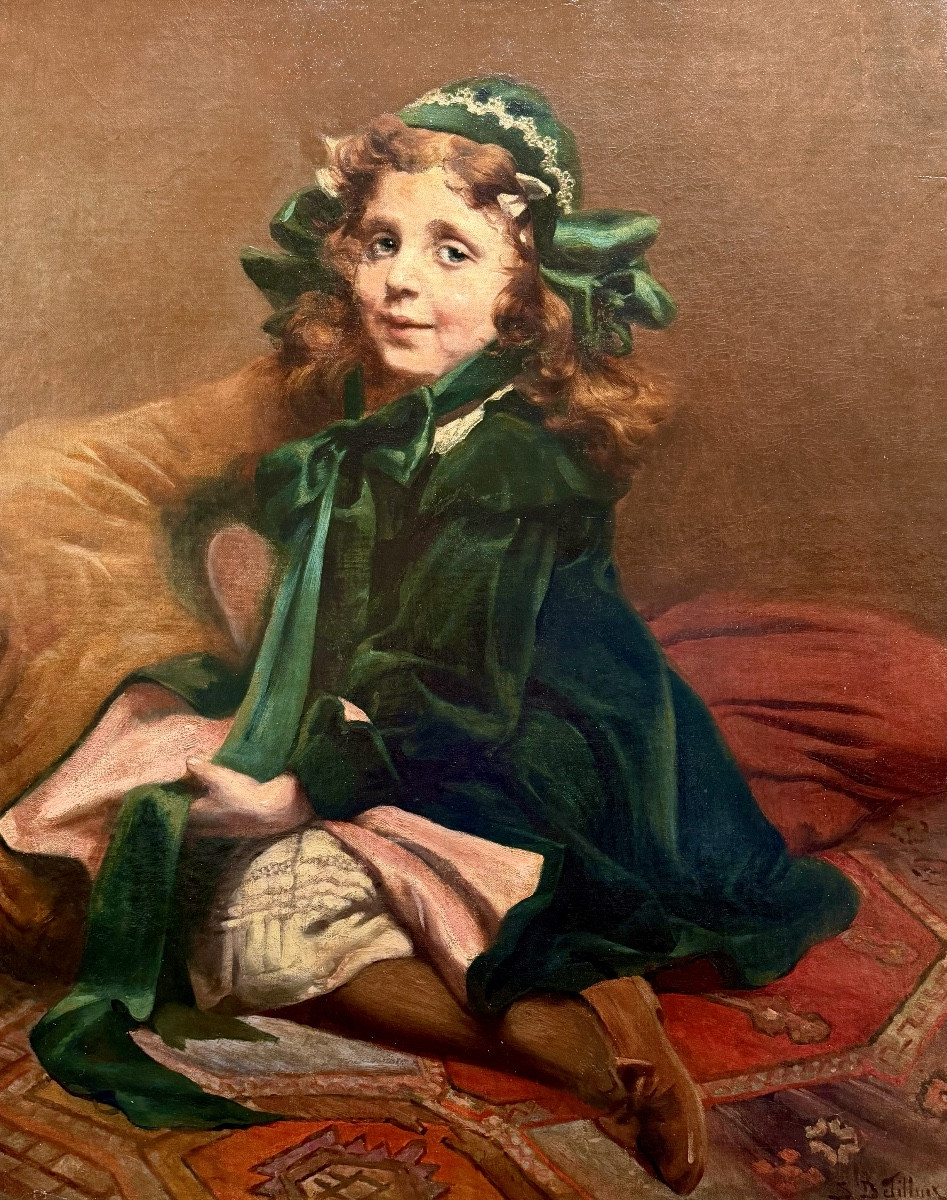
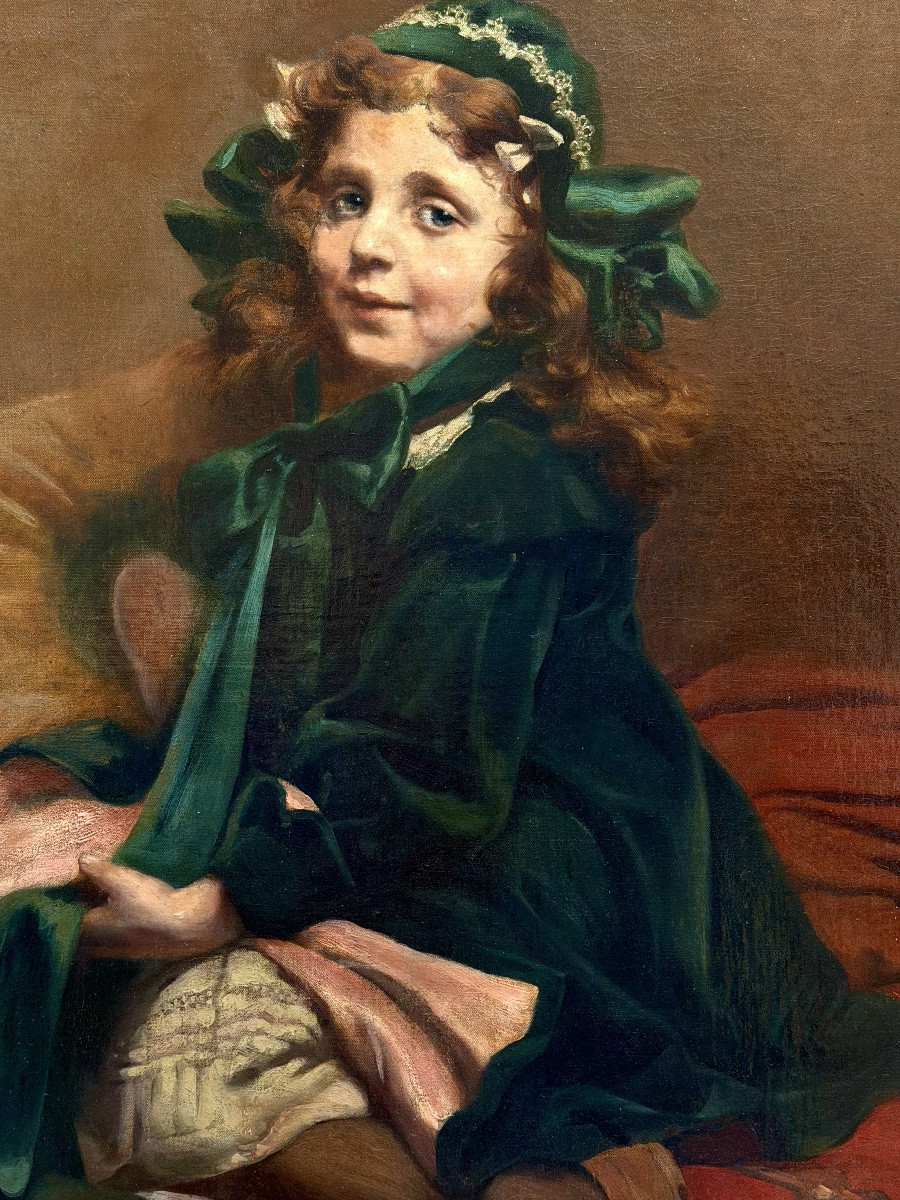
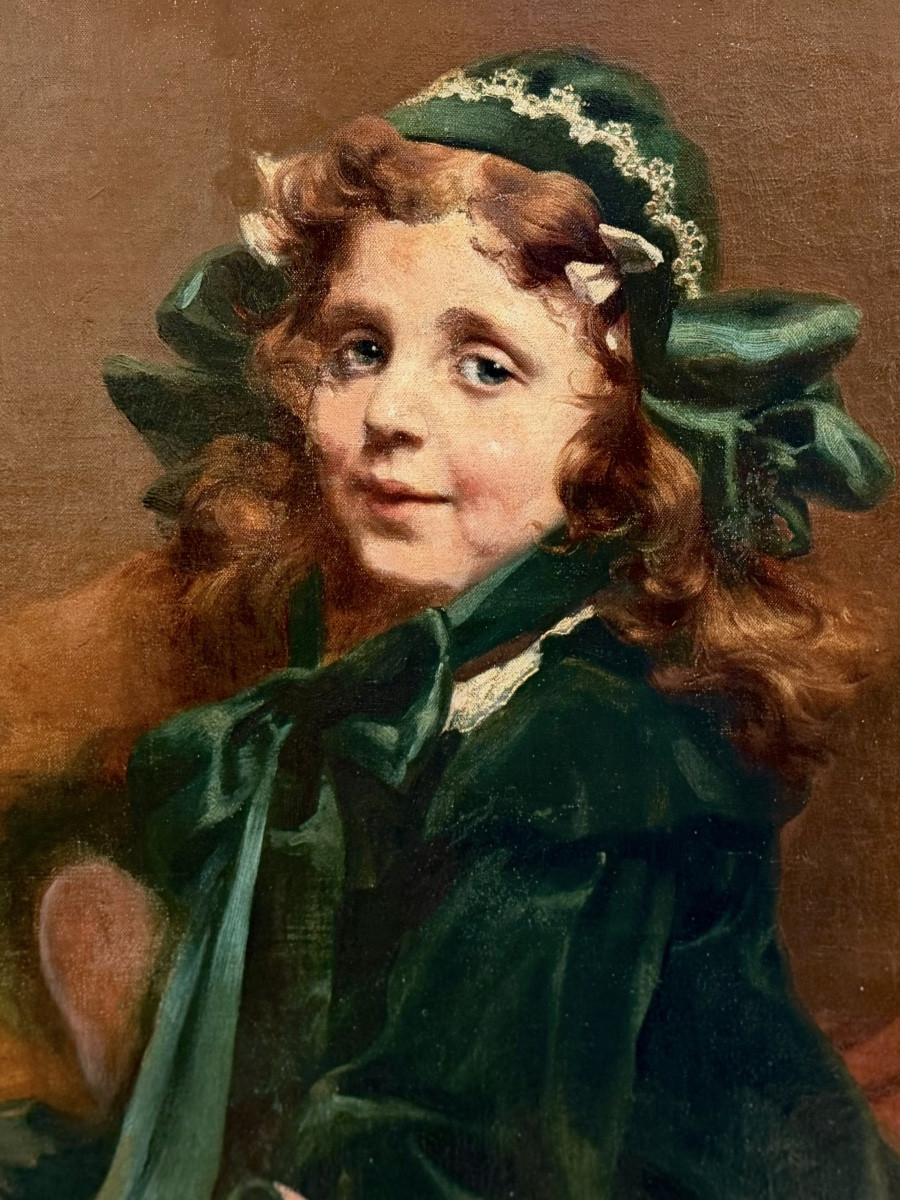
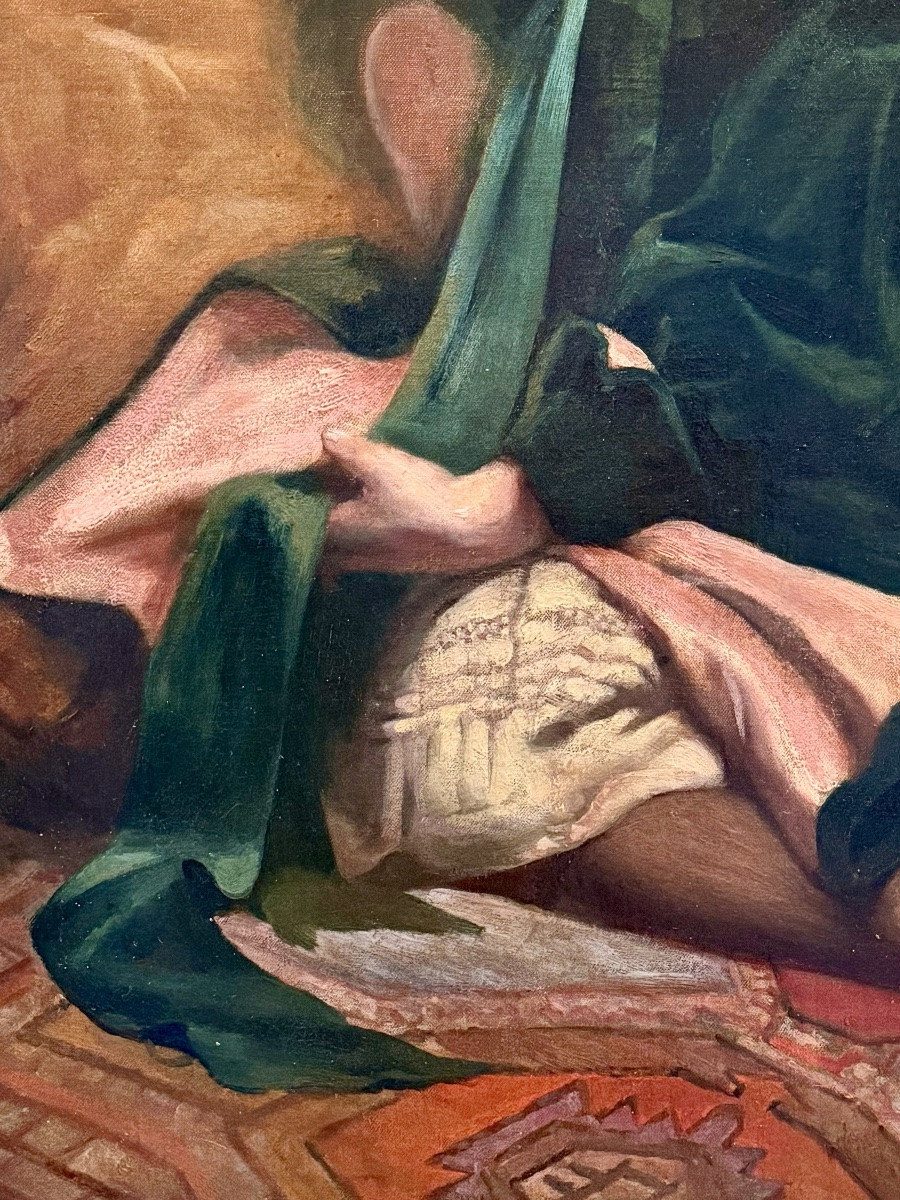
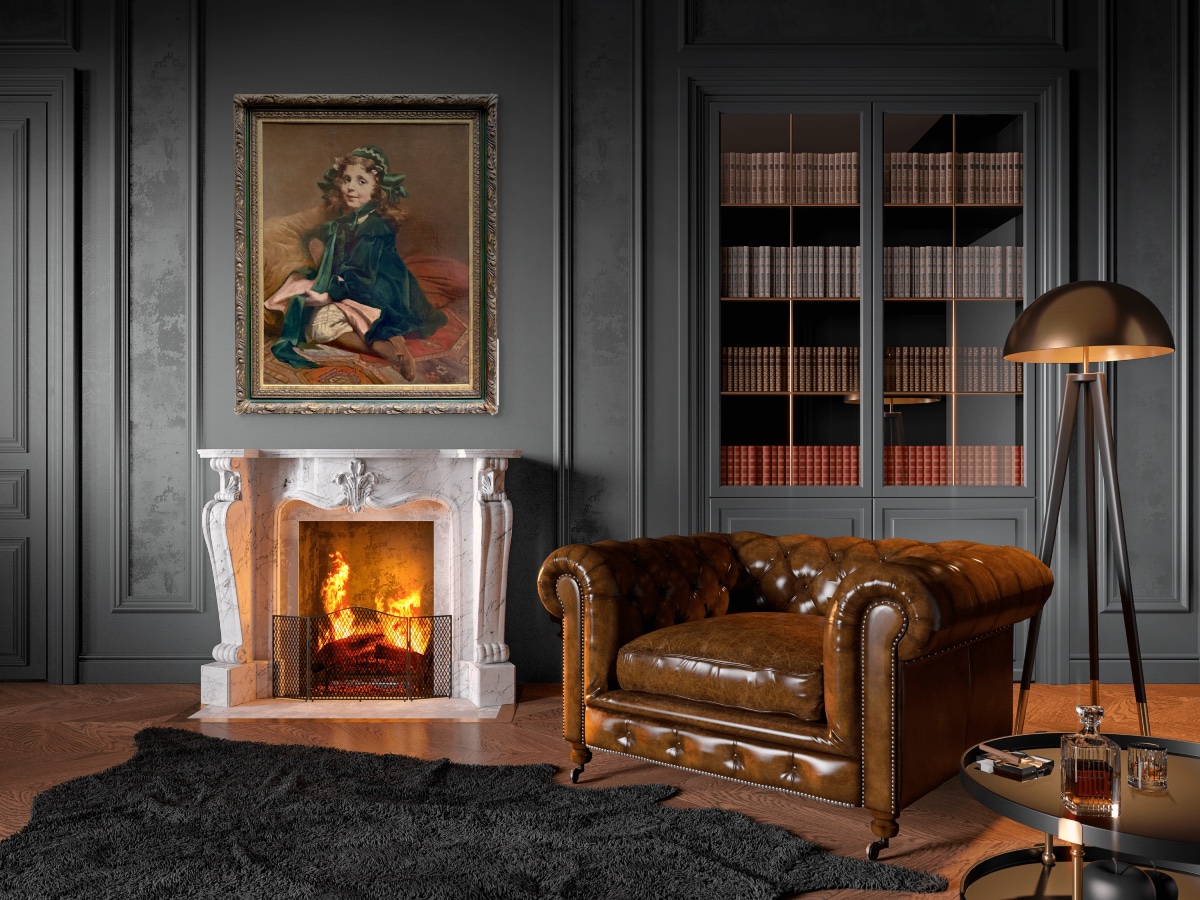
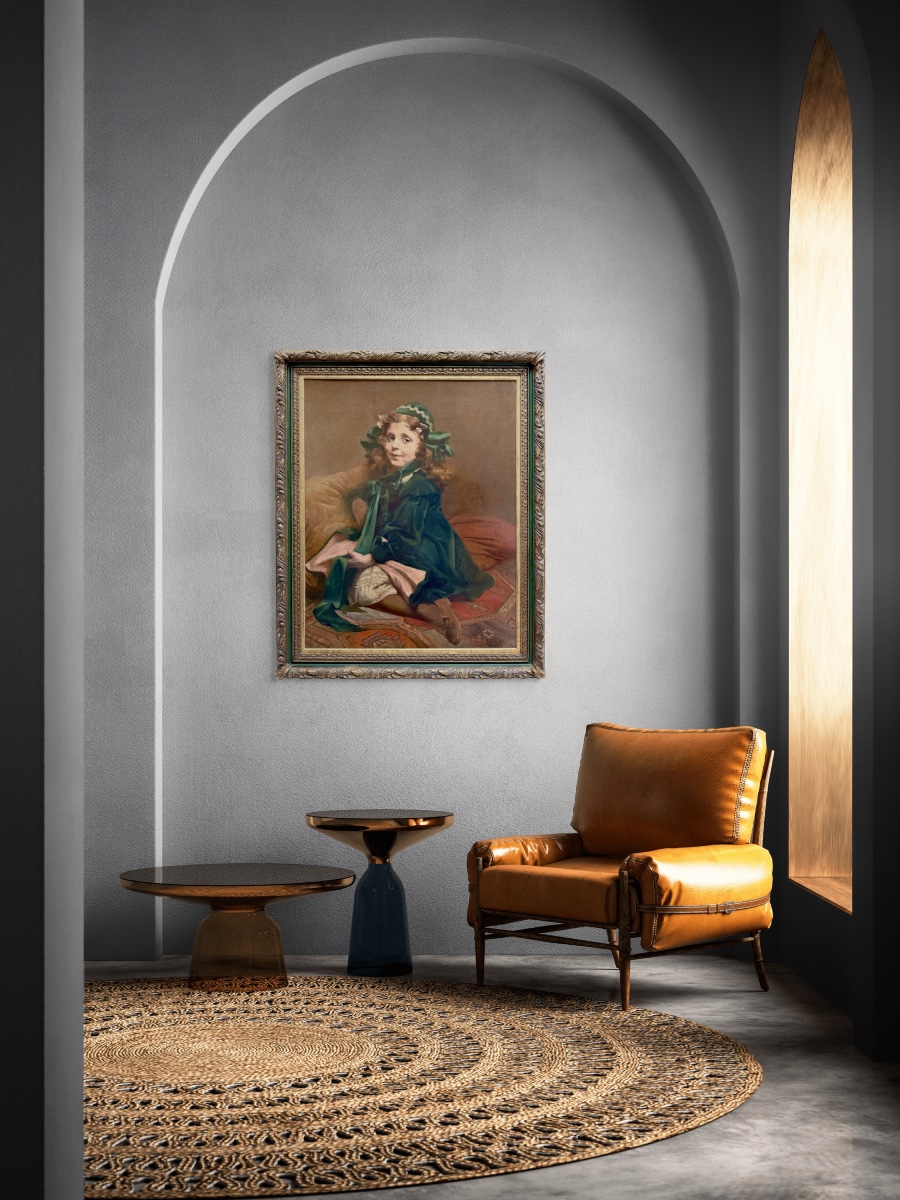
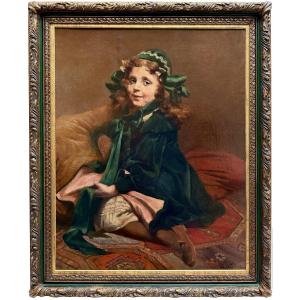
A captivating portrait from the Belle Époque, this charming depiction of a young girl embodies the elegance and refinement of bourgeois European society at the turn of the century. Seated gracefully upon a richly patterned Oriental carpet, the child gazes outward with a gentle expression, her emerald green velvet dress illuminated by the warm tones of the interior.
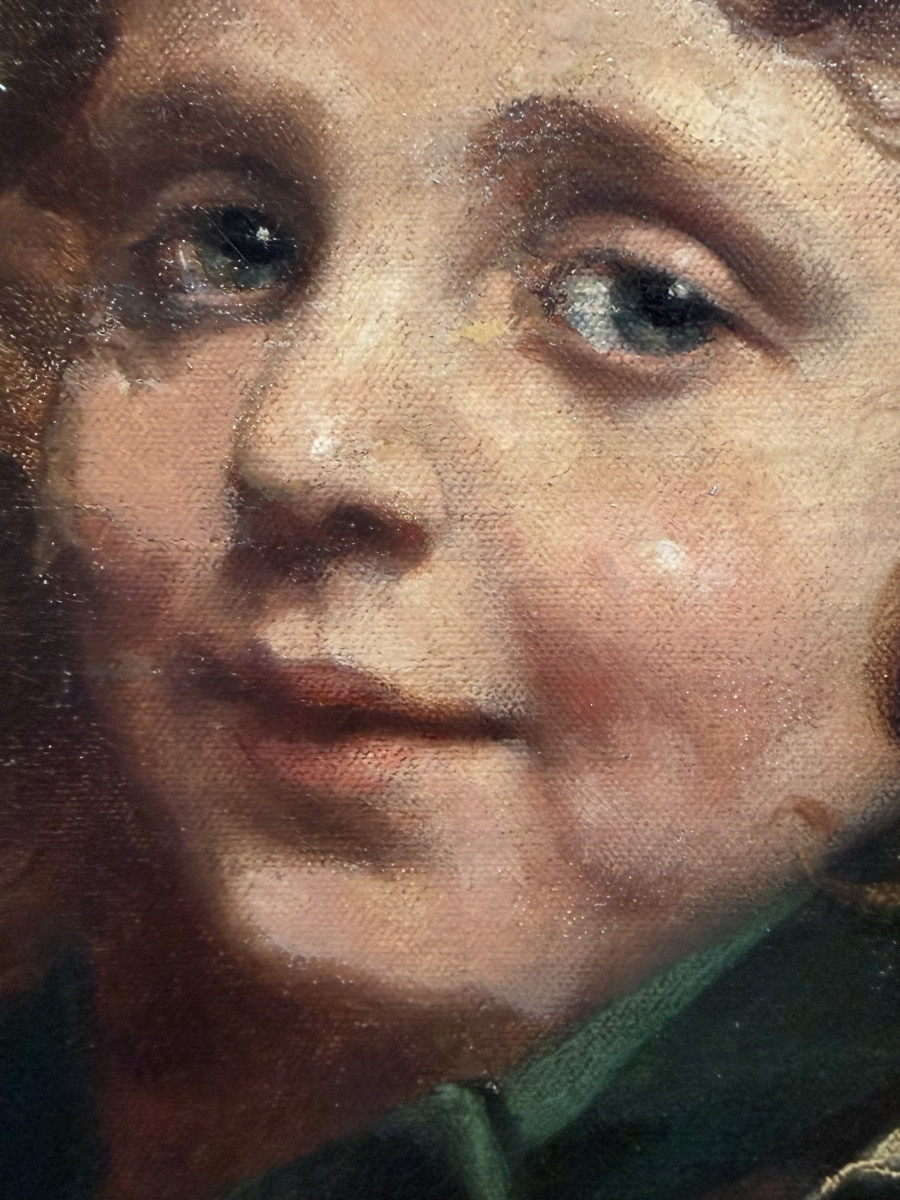
The artist, signed lower right S. DeTillieux, was the Belgian painter, engraver and sculptor Servais Detilleux (1874–1940), who studied at the Académie des Beaux-Arts of Liège and later at the Académie royale des Beaux-Arts in Brussels under Jean-François Portaels and Léon Brunin. Detilleux demonstrates here a sensitive academic hand in the delicate modelling of the face, the soft curls of auburn hair, and the luxurious rendering of velvet, ribbons, and textiles.
The carefully chosen palette, with deep greens contrasted against the vibrant reds and ochres of the carpet, creates a harmonious and highly decorative composition. The sitter’s attire reflects the fashionable children’s clothing of the late Victorian and Belle Époque era, when portraiture celebrated innocence, prosperity, and familial pride. Her elegant bows, lace-trimmed bonnet, and refined shoes suggest a child from a cultivated upper-middle-class environment, portrayed in her finest attire for a formal commission.
Particularly striking is the Oriental carpet beneath her feet, a fashionable symbol of taste and sophistication in European interiors around 1900. Such exotic textiles were often incorporated into portrait paintings to evoke warmth, luxury, and cosmopolitan refinement.
Best known as a portraitist, landscape painter, and painter of still lifes, Servais Detilleux regularly exhibited at the Salon des Artistes Français in Paris, where he received honourable mentions for both painting and engraving. His work belongs firmly within the refined Franco-Belgian academic tradition of the late nineteenth and early twentieth centuries.
An atmospheric and decorative portrait, the painting retains all the charm and elegance of the Belle Époque.
Biography: Servais Joseph Detilleux was a Belgian painter, engraver and sculptor, born in Stembert-lez-Verviers on 10 September 1874 and deceased in Brussels in January 1940. He belonged to the generation of Belgian artists working between academic realism, luminism and early post-impressionism.
Detilleux first studied at the Académie des Beaux-Arts de Liège before continuing his training at the Académie royale des Beaux-Arts de Bruxelles, where he became a pupil of the renowned painters Jean-François Portaels and Léon Brunin. His academic education gave him a strong technical foundation, visible in the refined execution of his portraits, landscapes and genre scenes.
After his studies, Detilleux initially worked as a journalist before devoting himself fully to an artistic career. He became a prolific and versatile artist, producing portraits, landscapes, city views, historical scenes, still lifes and sculptures. His style evolved throughout his career and reflects the richness of Belgian art around 1900: at times realist and naturalist, but also influenced by luminism and post-impressionism.
From 1914 onwards, Detilleux regularly exhibited at the prestigious Salon des Artistes Français in Paris, where he received an honourable mention in 1922. In the aftermath of the First World War, he founded the Salon du Prix de l’Yser, conceived as a tribute to Franco-Belgian brotherhood during the war. At the Salon of 1929 he exhibited works such as Silencieuse prière, Portrait de Mme Léon Brunin, and a plaster bust of pianist Jean Chastaing, receiving another honourable mention for engraving.
Detilleux was particularly appreciated as a portrait painter. He portrayed members of Belgian society, artists and politicians, including portraits connected to sculptor Godefroid Devreese and political figures such as Léopold II. Alongside portraiture, he painted atmospheric landscapes and city views, including moving depictions of war-damaged Belgian towns after the First World War, such as Ypres and Nieuwpoort in 1918.
As a sculptor, he also created commemorative works, among them the 1939 bas-relief dedicated to Charlier Jambe de Bois in Liège.
Today, works by Servais Detilleux are preserved in Belgian public collections and museums, notably in Brussels and Carcassonne. Although less widely known internationally than some of his contemporaries, he remains an interesting representative of Belgian academic and post-impressionist painting during the Belle Époque and interwar period.
Stembert-lez-Verviers 1874 – 1940 Brussels
Belgian Painter
'Portrait of a Young Girl in Green Dress'
Signature: signed lower right 'S. DeTillieux'
Medium: oil on canvas
Dimensions: image size 99 x 78 cm; frame size 115 x 94 cm
A captivating portrait from the Belle Époque, this charming depiction of a young girl embodies the elegance and refinement of bourgeois European society at the turn of the century. Seated gracefully upon a richly patterned Oriental carpet, the child gazes outward with a gentle expression, her emerald green velvet dress illuminated by the warm tones of the interior.
The artist, signed lower right S. DeTillieux, was the Belgian painter, engraver and sculptor Servais Detilleux (1874–1940), who studied at the Académie des Beaux-Arts of Liège and later at the Académie royale des Beaux-Arts in Brussels under Jean-François Portaels and Léon Brunin. Detilleux demonstrates here a sensitive academic hand in the delicate modelling of the face, the soft curls of auburn hair, and the luxurious rendering of velvet, ribbons, and textiles.
The carefully chosen palette, with deep greens contrasted against the vibrant reds and ochres of the carpet, creates a harmonious and highly decorative composition. The sitter’s attire reflects the fashionable children’s clothing of the late Victorian and Belle Époque era, when portraiture celebrated innocence, prosperity, and familial pride. Her elegant bows, lace-trimmed bonnet, and refined shoes suggest a child from a cultivated upper-middle-class environment, portrayed in her finest attire for a formal commission.
Particularly striking is the Oriental carpet beneath her feet, a fashionable symbol of taste and sophistication in European interiors around 1900. Such exotic textiles were often incorporated into portrait paintings to evoke warmth, luxury, and cosmopolitan refinement.
Best known as a portraitist, landscape painter, and painter of still lifes, Servais Detilleux regularly exhibited at the Salon des Artistes Français in Paris, where he received honourable mentions for both painting and engraving. His work belongs firmly within the refined Franco-Belgian academic tradition of the late nineteenth and early twentieth centuries.
An atmospheric and decorative portrait, the painting retains all the charm and elegance of the Belle Époque.
Biography: Servais Joseph Detilleux was a Belgian painter, engraver and sculptor, born in Stembert-lez-Verviers on 10 September 1874 and deceased in Brussels in January 1940. He belonged to the generation of Belgian artists working between academic realism, luminism and early post-impressionism.
Detilleux first studied at the Académie des Beaux-Arts de Liège before continuing his training at the Académie royale des Beaux-Arts de Bruxelles, where he became a pupil of the renowned painters Jean-François Portaels and Léon Brunin. His academic education gave him a strong technical foundation, visible in the refined execution of his portraits, landscapes and genre scenes.
After his studies, Detilleux initially worked as a journalist before devoting himself fully to an artistic career. He became a prolific and versatile artist, producing portraits, landscapes, city views, historical scenes, still lifes and sculptures. His style evolved throughout his career and reflects the richness of Belgian art around 1900: at times realist and naturalist, but also influenced by luminism and post-impressionism.
From 1914 onwards, Detilleux regularly exhibited at the prestigious Salon des Artistes Français in Paris, where he received an honourable mention in 1922. In the aftermath of the First World War, he founded the Salon du Prix de l’Yser, conceived as a tribute to Franco-Belgian brotherhood during the war. At the Salon of 1929 he exhibited works such as Silencieuse prière, Portrait de Mme Léon Brunin, and a plaster bust of pianist Jean Chastaing, receiving another honourable mention for engraving.
Detilleux was particularly appreciated as a portrait painter. He portrayed members of Belgian society, artists and politicians, including portraits connected to sculptor Godefroid Devreese and political figures such as Léopold II. Alongside portraiture, he painted atmospheric landscapes and city views, including moving depictions of war-damaged Belgian towns after the First World War, such as Ypres and Nieuwpoort in 1918.
As a sculptor, he also created commemorative works, among them the 1939 bas-relief dedicated to Charlier Jambe de Bois in Liège.
Today, works by Servais Detilleux are preserved in Belgian public collections and museums, notably in Brussels and Carcassonne. Although less widely known internationally than some of his contemporaries, he remains an interesting representative of Belgian academic and post-impressionist painting during the Belle Époque and interwar period.
4 800 €
Period: 20th century
Style: Other Style
Condition: Excellent condition
Material: Oil painting
Width: 94 cm
Height: 115 cm
Depth: 8 cm
Reference (ID): 1761577
Availability: In stock
Print