THIS OBJECT WAS SOLD
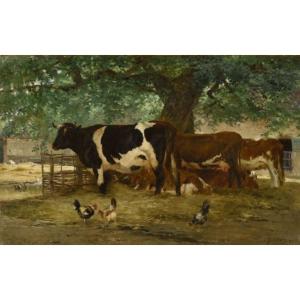
Paul Schouten (1860-1922) / Flamish Lockhouse With Chicken And Coq / Oil On Canvas
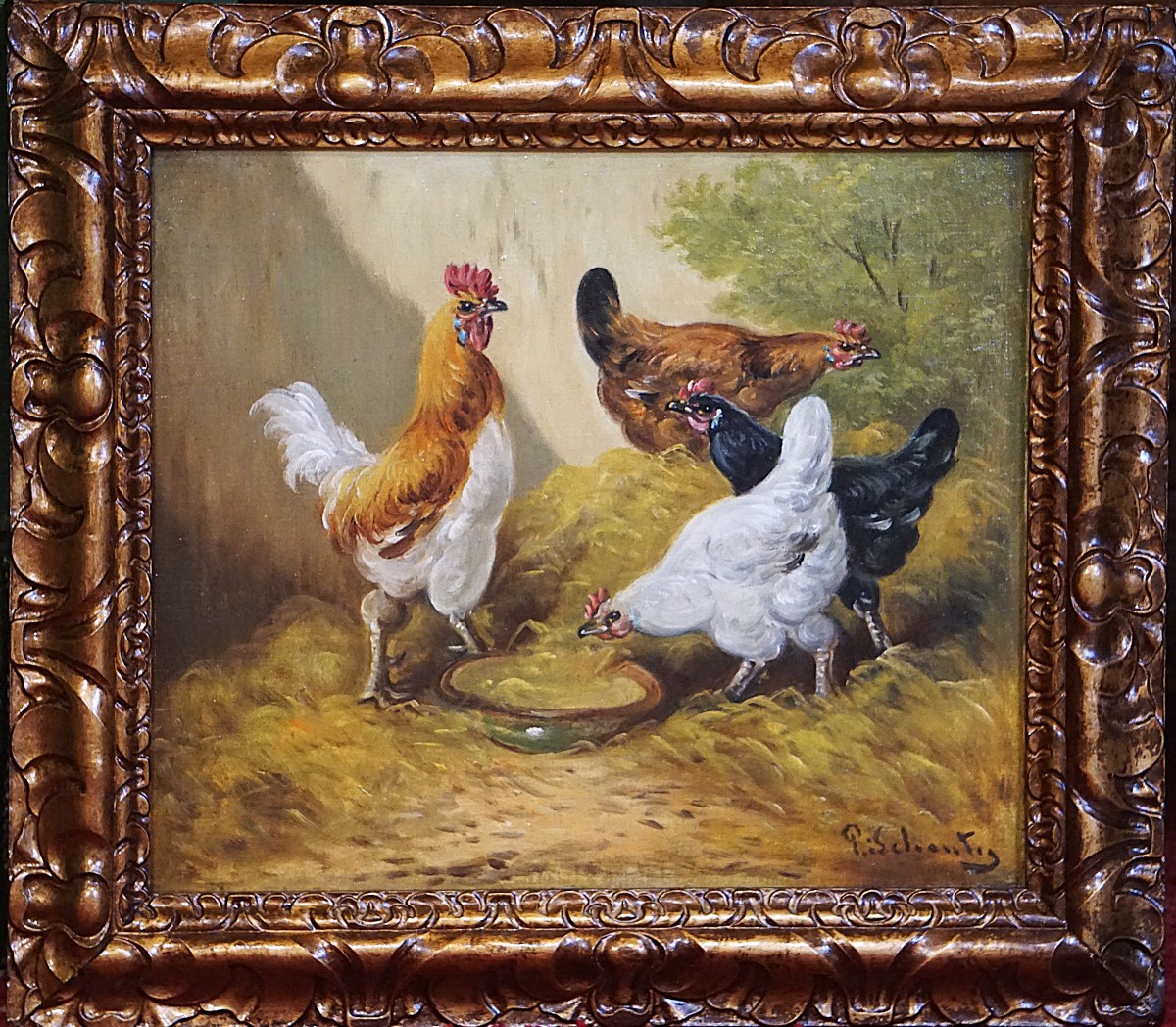
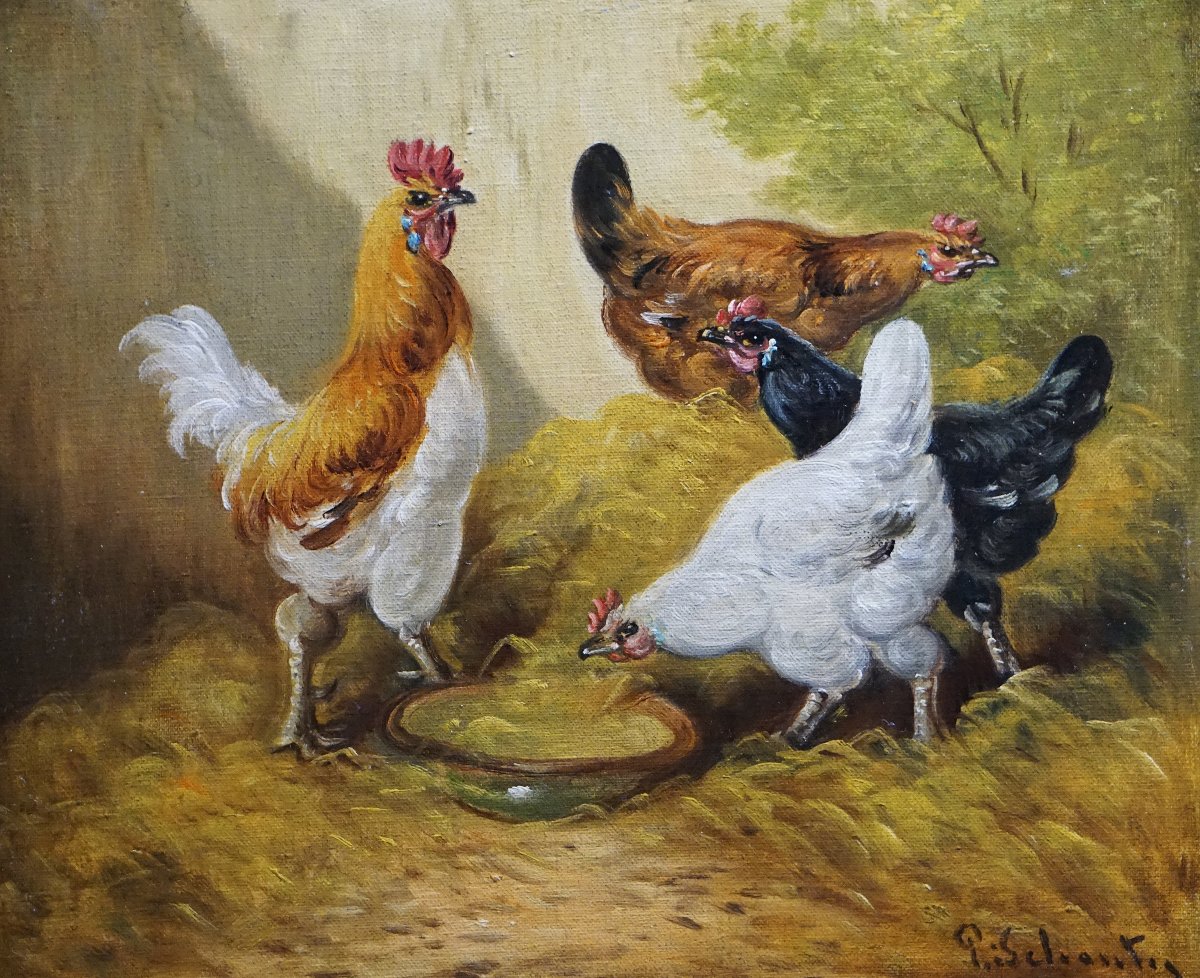
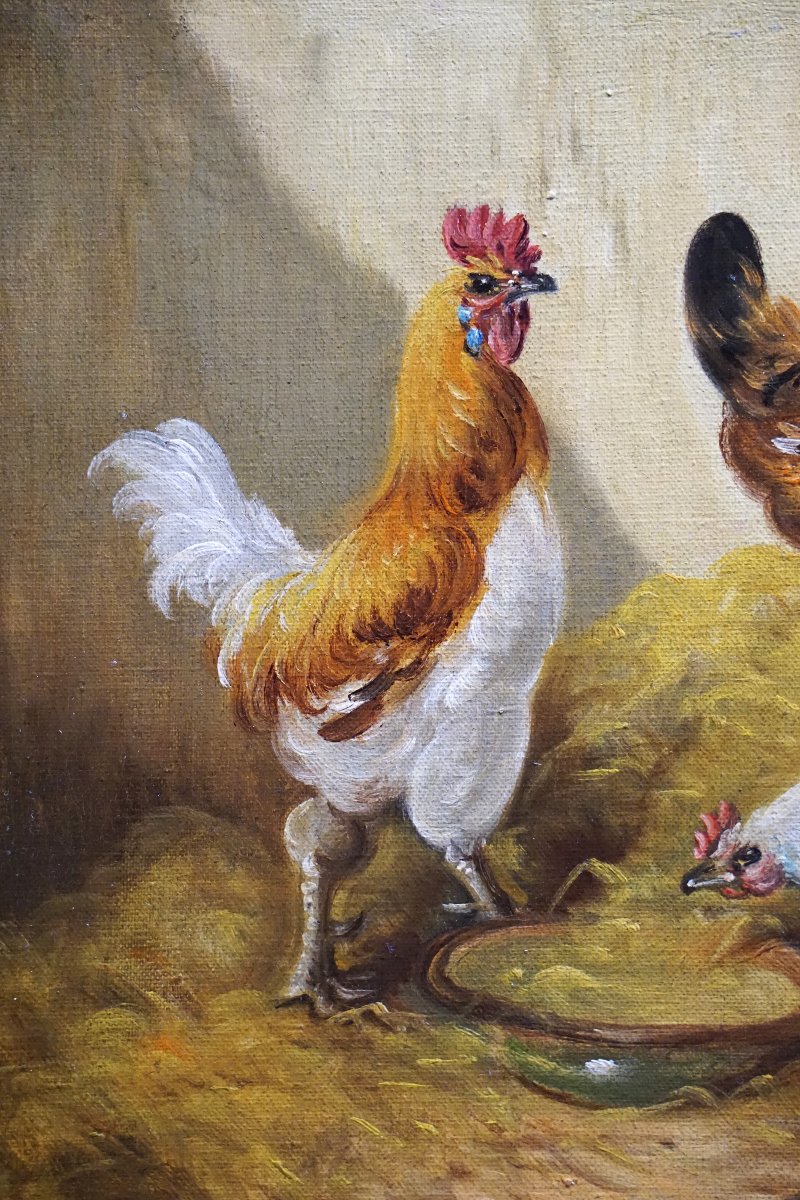
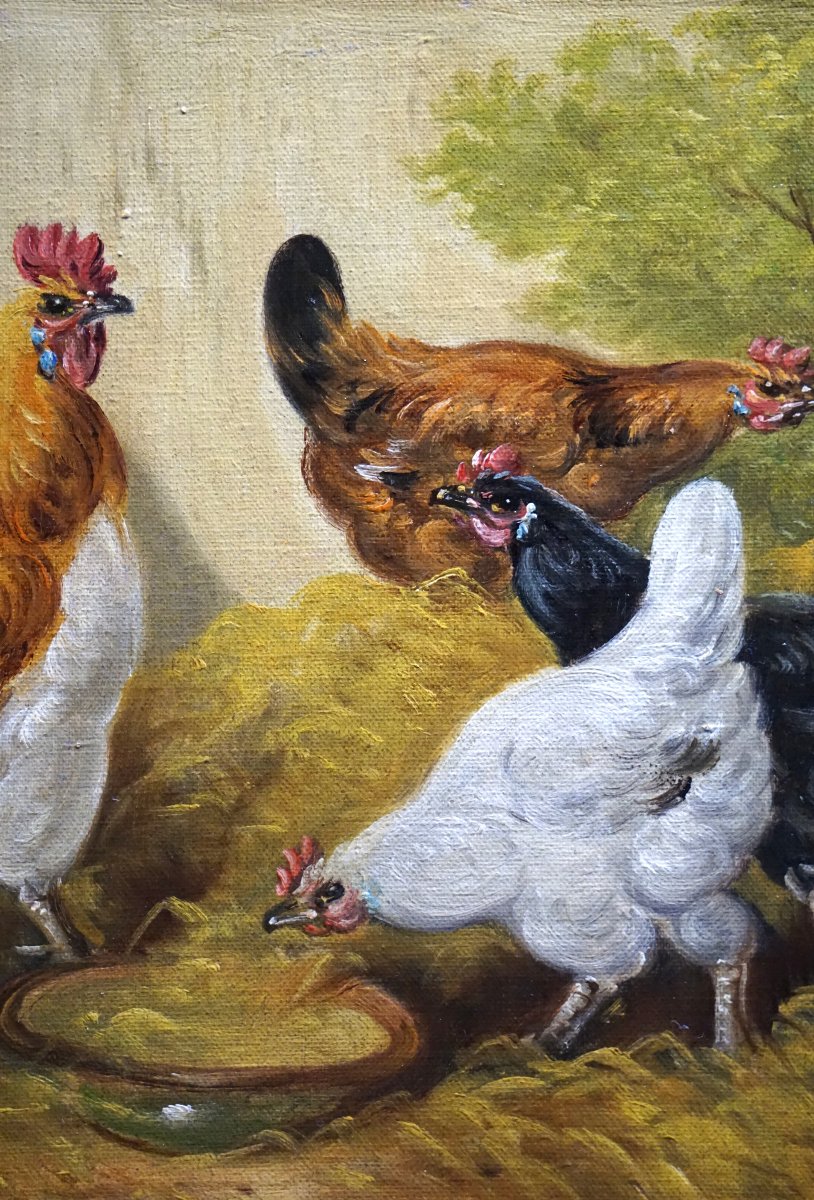
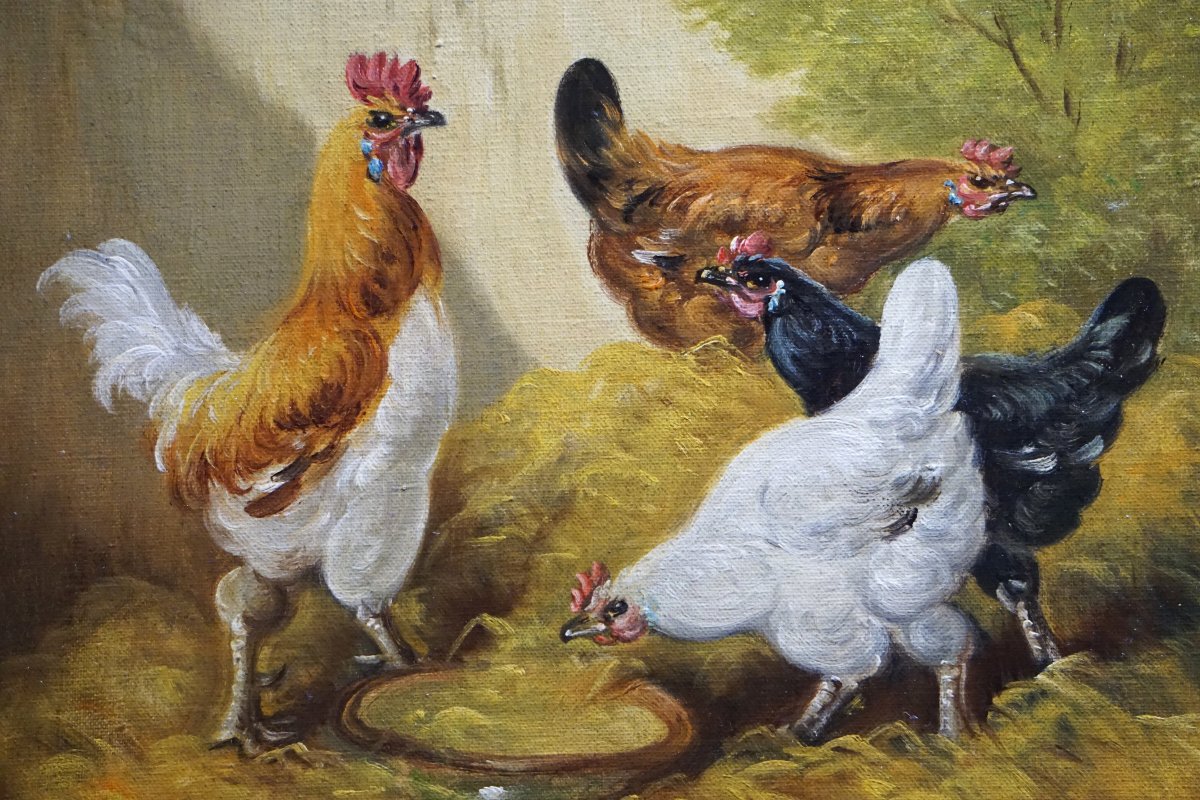
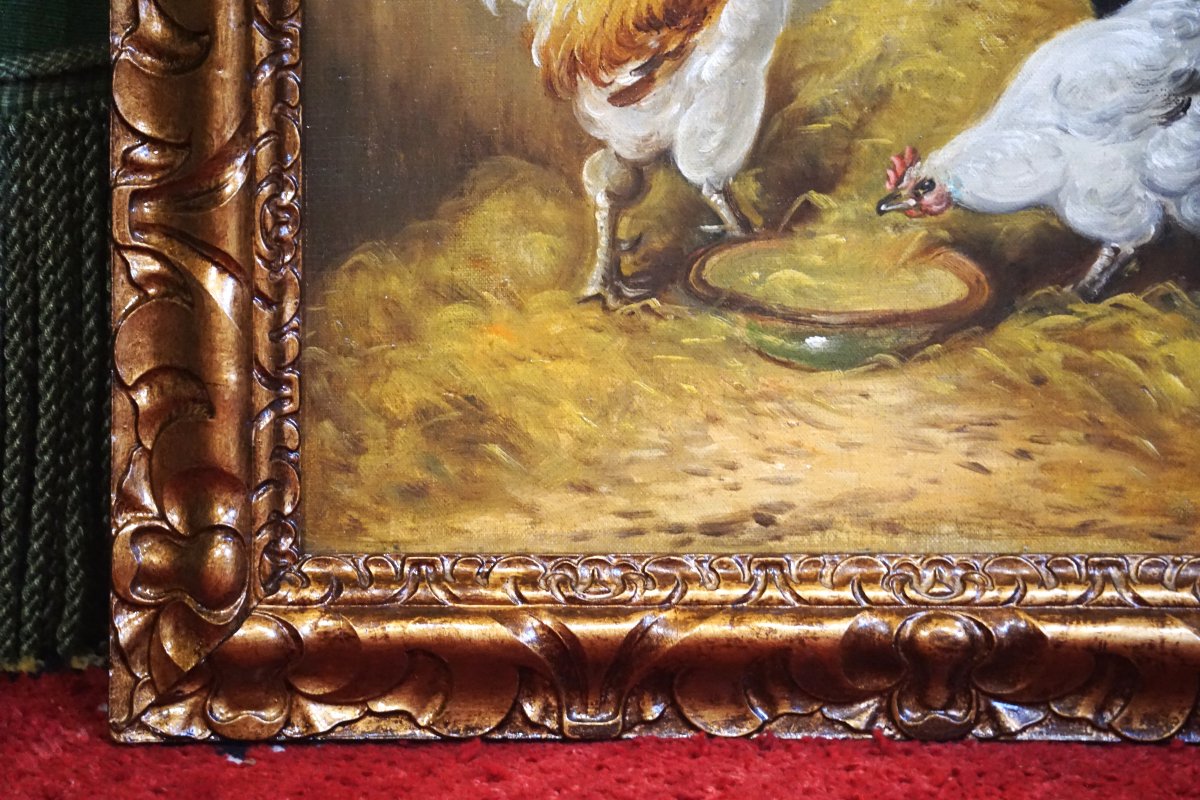
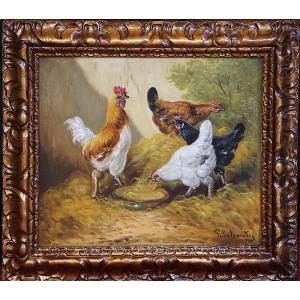


Very charming barnyard scene painted by Dutch animal painter Paul Schouten (1860-1922), an artist renowned for his vivid depictions of domestic animals and rural scenes imbued with truth and warmth.
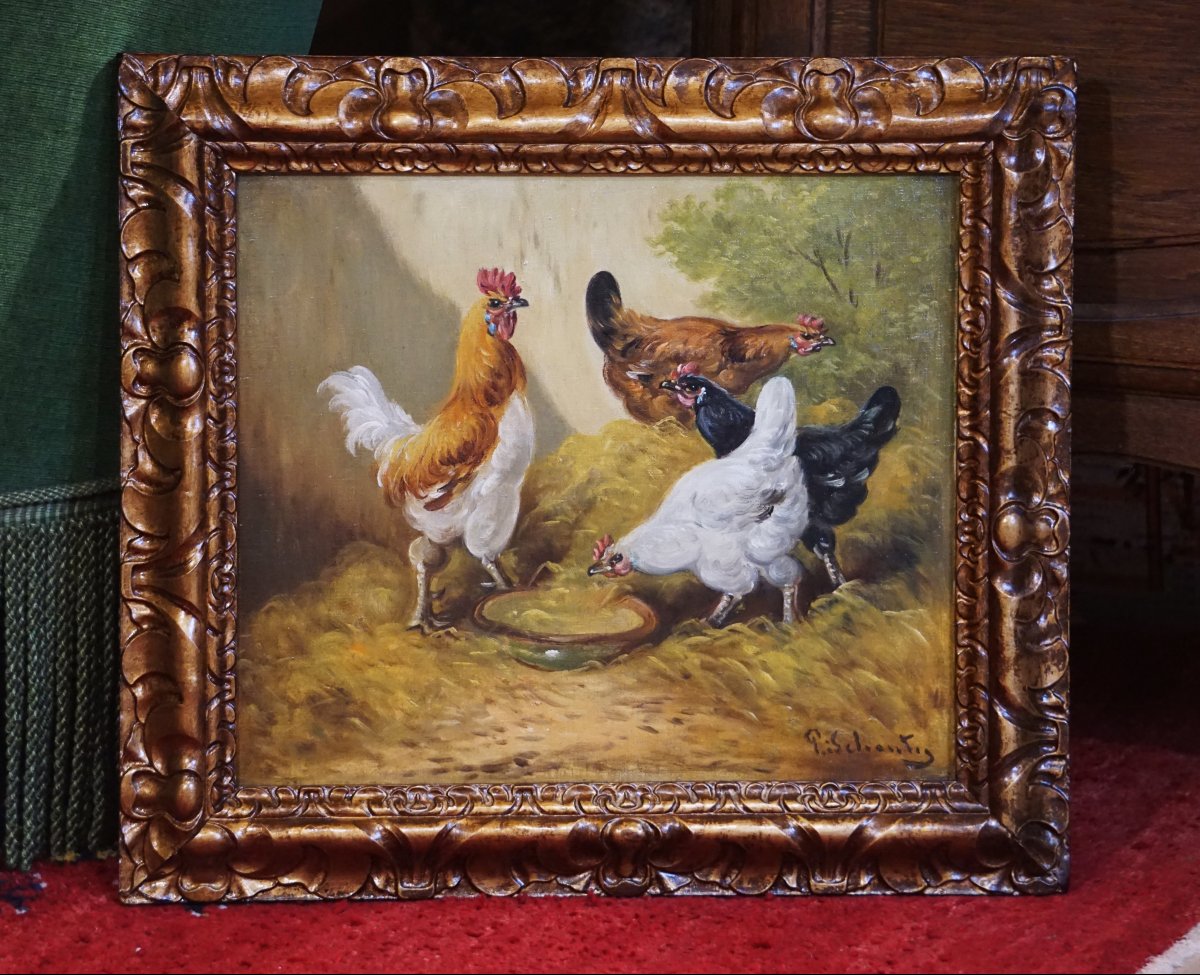
Here, the artist plunges us into the timeless world of the traditional farm, where a few hens and a proud rooster gather around their food in a peaceful, luminous atmosphere.
The subject of the farmyard occupies a very special place in the history of European painting. Since the XVIIᵉ century, particularly in the Flemish and Dutch schools,hens have symbolized abundance, domestic prosperity and the simple life attached to the rhythms of nature. In bourgeois homes and country houses alike, owning a painting of a farmyard was almost a tribute to family values: fertility, the nurturing hearth, the protection of the home and that reassuring idea of a stable, prosperous life.
As for the rooster, it's loaded with ancient, powerful symbolism. A symbol of vigilance, courage and renewal, it heralds the day and chases away the darkness.
Chickens, on the other hand, evoke the gentleness of the home, fertility and abundance.
In popular art as in bourgeois interiors of the XIXᵉ century, barnyard scenes brought a warm, lively, almost familiar presence. They recalled the rural roots of many European families and infused the home with a sense of calm, continuity and authenticity.
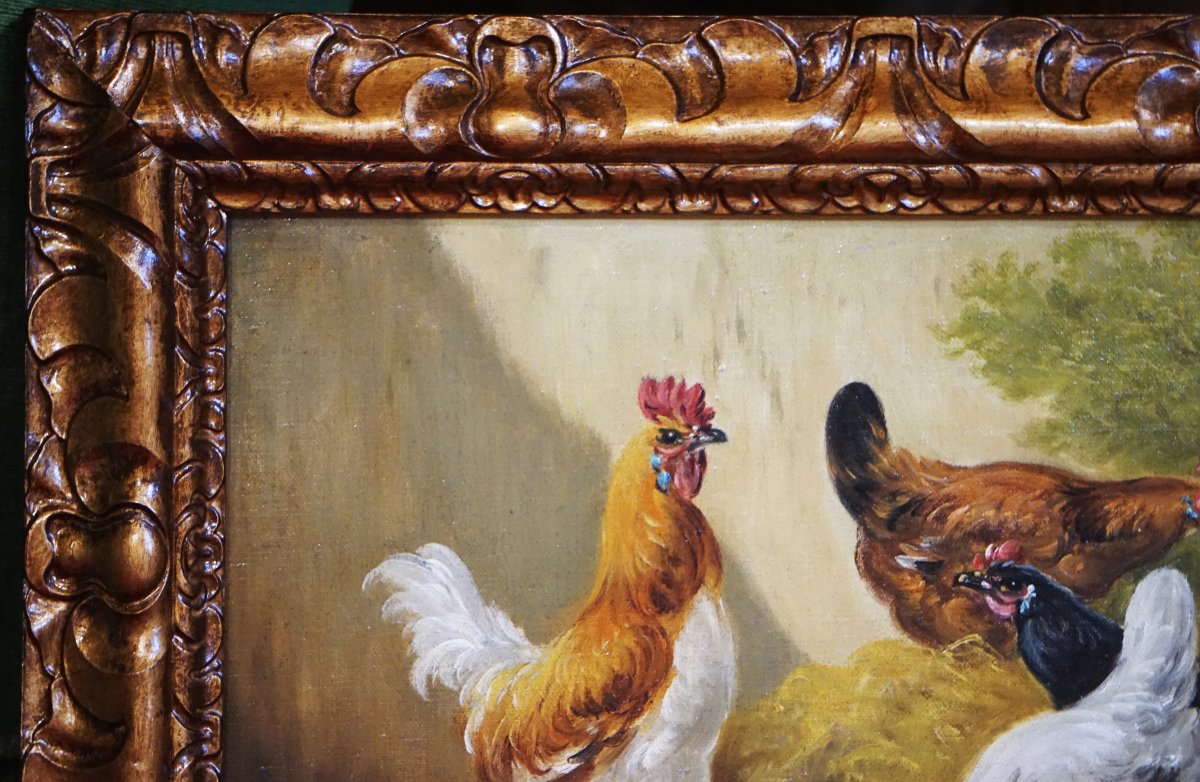
Paul Schouten excels here in rendering plumage, natural attitudes and the play of light. The contrast between the bright white of the poultry, the warm tones of the rooster and the golden ochres of the straw creates a particularly decorative composition.
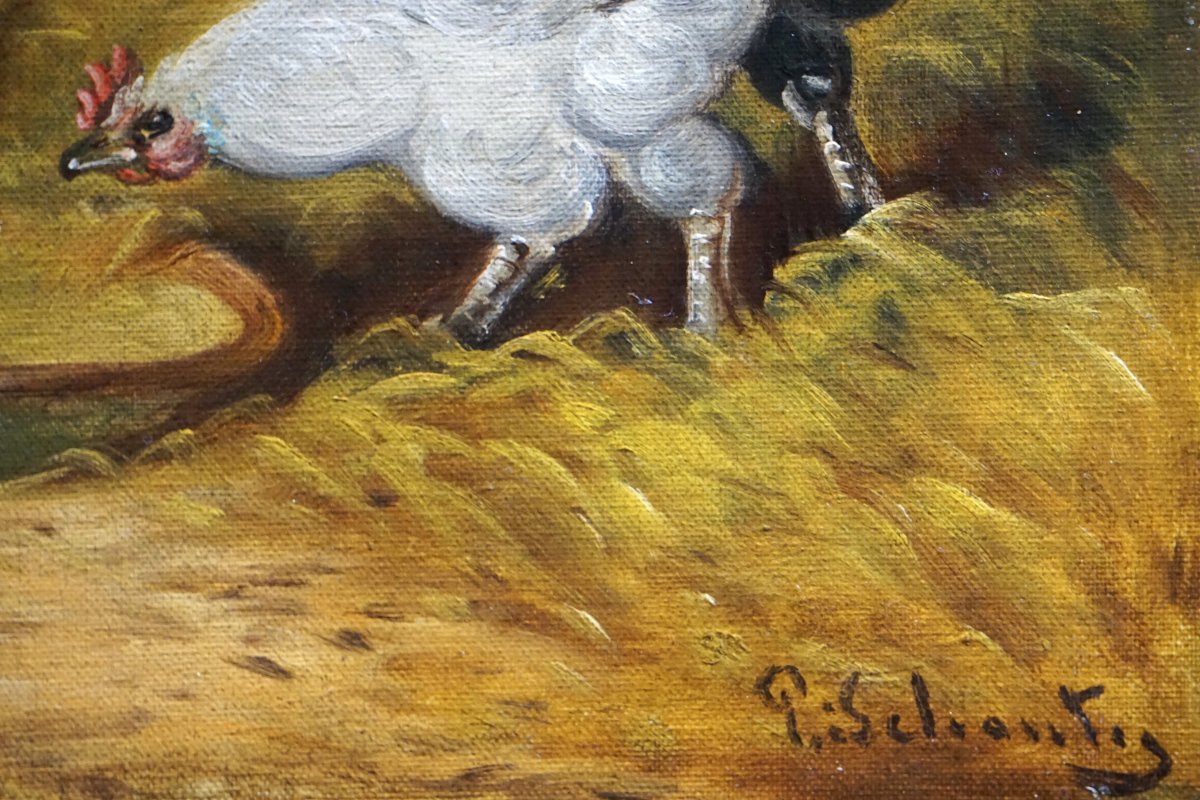
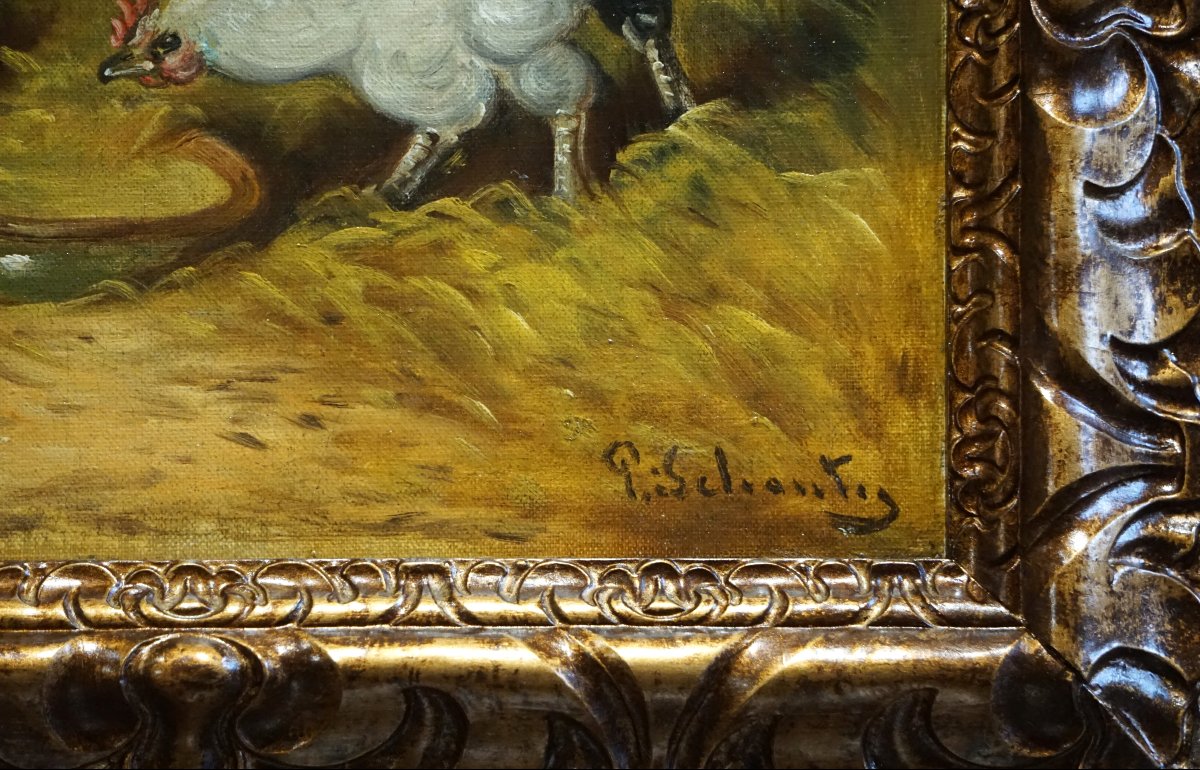
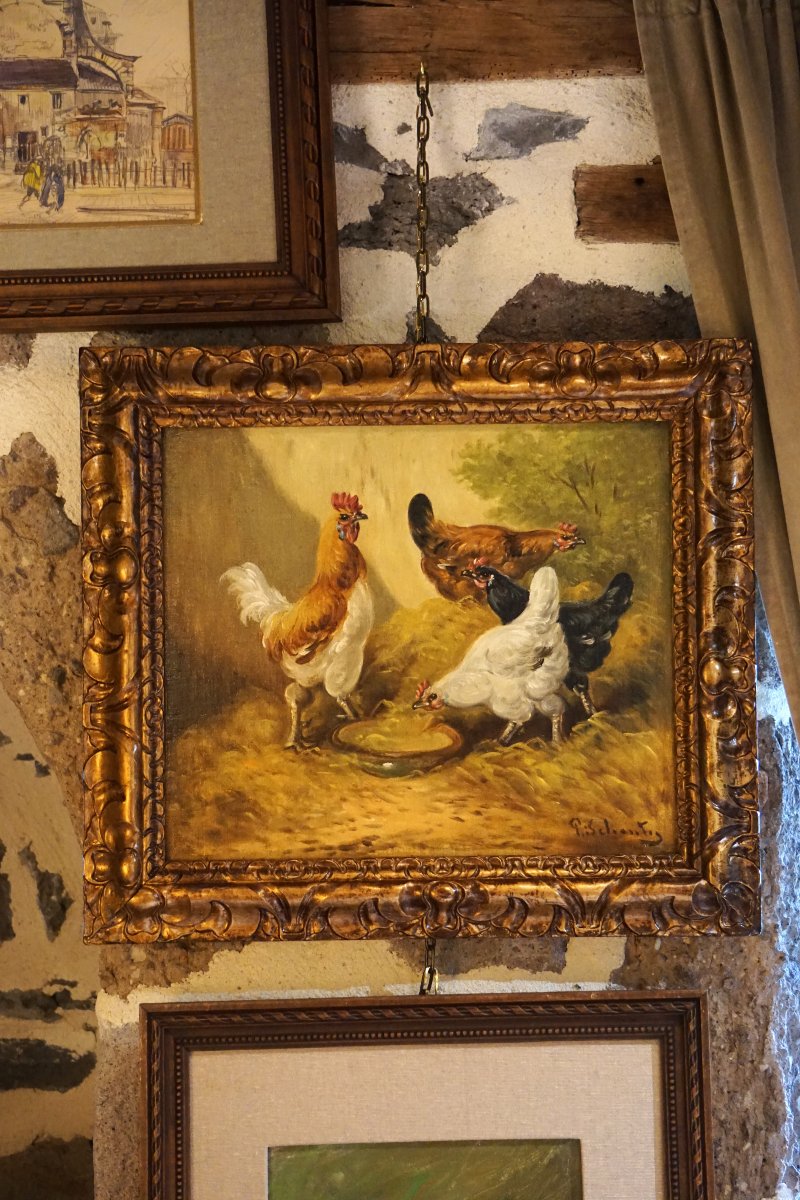
Very fine oil on canvas mounted on cardboard, signed lower right. Presented in an elegant carved frame that beautifully enhances the scene.
Dimensions:
32 x 38 cm unframed
44 x 50 cm framed
Paul Schouten was born in Paris in 1860 and died in Watermael-Boitsfort in 1922.
A Belgian painter of landscapes and animal scenes, he was part of the Flemish naturalist tradition of the late XIXᵉ century, celebrating rural life and farm animals with great realism and sensitivity.
Insettled in Belgium for much of his career, he specialized in country landscapes, pastoral scenes and, above all, barnyards, now particularly sought-after by collectors.
His work captivates with its warm lighting, balanced compositions and the truth of animal attitudes. Paul Schouten is the half-brother of animal painter Henry Schouten. The two artists sometimes collaborate on certain works: Henry creates the animals while Paul paints the figures or backgrounds. This proximity explains the frequent confusion between their paintings on the art market. Roosters and hens play an important role in his work. In the Flemish tradition, these subjects symbolize abundance, household prosperity and attachment to rural values. For this reason, farmyard scenes were long appreciated in bourgeois interiors and country homes.
Here, the artist plunges us into the timeless world of the traditional farm, where a few hens and a proud rooster gather around their food in a peaceful, luminous atmosphere.
The subject of the farmyard occupies a very special place in the history of European painting. Since the XVIIᵉ century, particularly in the Flemish and Dutch schools,hens have symbolized abundance, domestic prosperity and the simple life attached to the rhythms of nature. In bourgeois homes and country houses alike, owning a painting of a farmyard was almost a tribute to family values: fertility, the nurturing hearth, the protection of the home and that reassuring idea of a stable, prosperous life.
As for the rooster, it's loaded with ancient, powerful symbolism. A symbol of vigilance, courage and renewal, it heralds the day and chases away the darkness.
Chickens, on the other hand, evoke the gentleness of the home, fertility and abundance.
In popular art as in bourgeois interiors of the XIXᵉ century, barnyard scenes brought a warm, lively, almost familiar presence. They recalled the rural roots of many European families and infused the home with a sense of calm, continuity and authenticity.
Paul Schouten excels here in rendering plumage, natural attitudes and the play of light. The contrast between the bright white of the poultry, the warm tones of the rooster and the golden ochres of the straw creates a particularly decorative composition.
Very fine oil on canvas mounted on cardboard, signed lower right. Presented in an elegant carved frame that beautifully enhances the scene.
Dimensions:
32 x 38 cm unframed
44 x 50 cm framed
Paul Schouten was born in Paris in 1860 and died in Watermael-Boitsfort in 1922.
A Belgian painter of landscapes and animal scenes, he was part of the Flemish naturalist tradition of the late XIXᵉ century, celebrating rural life and farm animals with great realism and sensitivity.
Insettled in Belgium for much of his career, he specialized in country landscapes, pastoral scenes and, above all, barnyards, now particularly sought-after by collectors.
His work captivates with its warm lighting, balanced compositions and the truth of animal attitudes. Paul Schouten is the half-brother of animal painter Henry Schouten. The two artists sometimes collaborate on certain works: Henry creates the animals while Paul paints the figures or backgrounds. This proximity explains the frequent confusion between their paintings on the art market. Roosters and hens play an important role in his work. In the Flemish tradition, these subjects symbolize abundance, household prosperity and attachment to rural values. For this reason, farmyard scenes were long appreciated in bourgeois interiors and country homes.
Explore similar pieces and discover your ideal find:
Other Paintings