

Arts & Crafts Armchair / England Circa 1900
Artist: Arts & Crafts
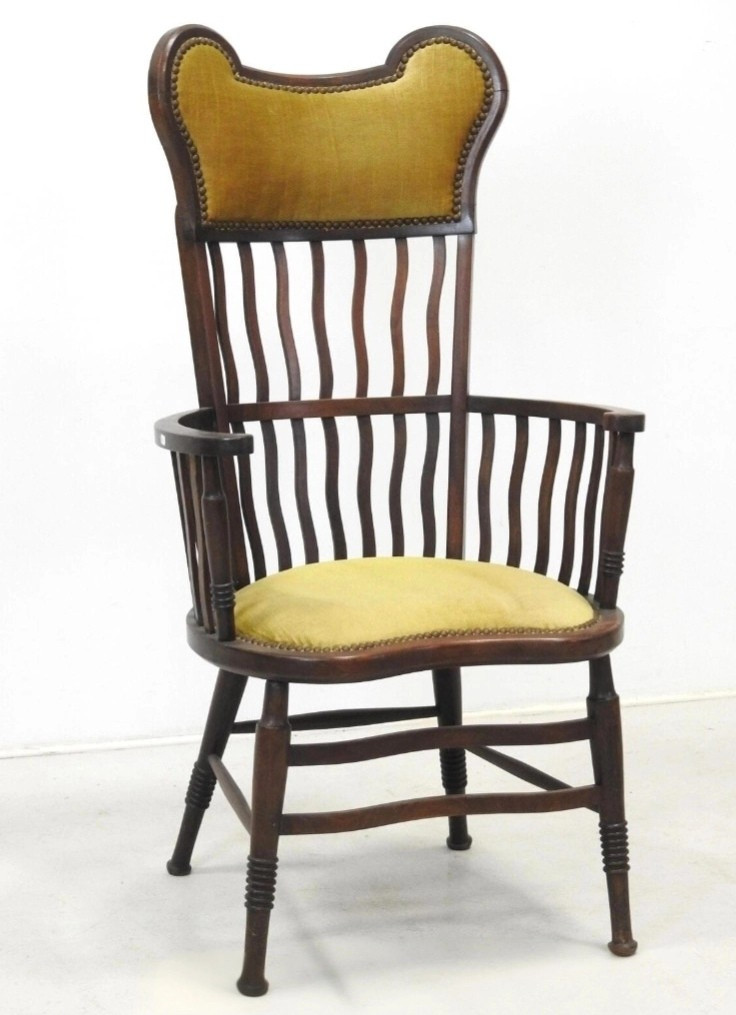
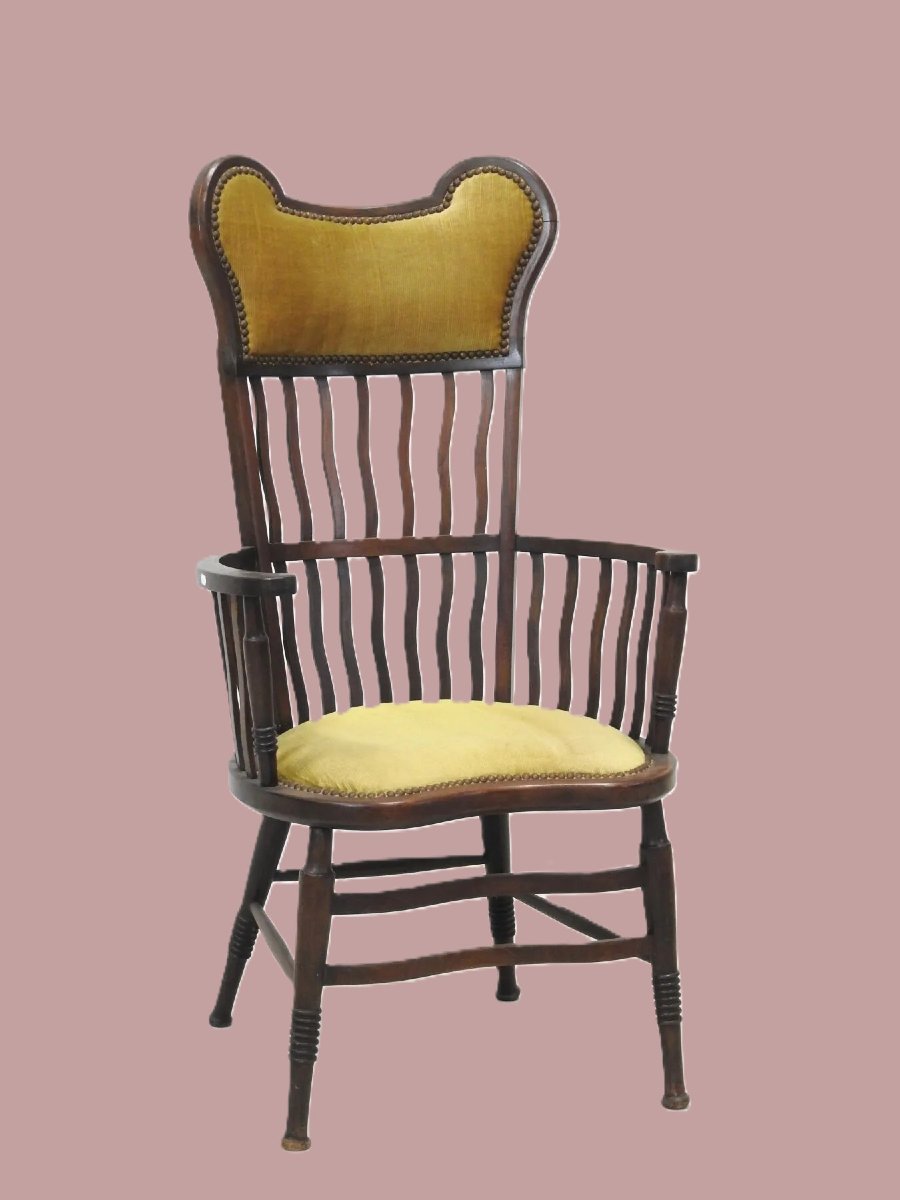
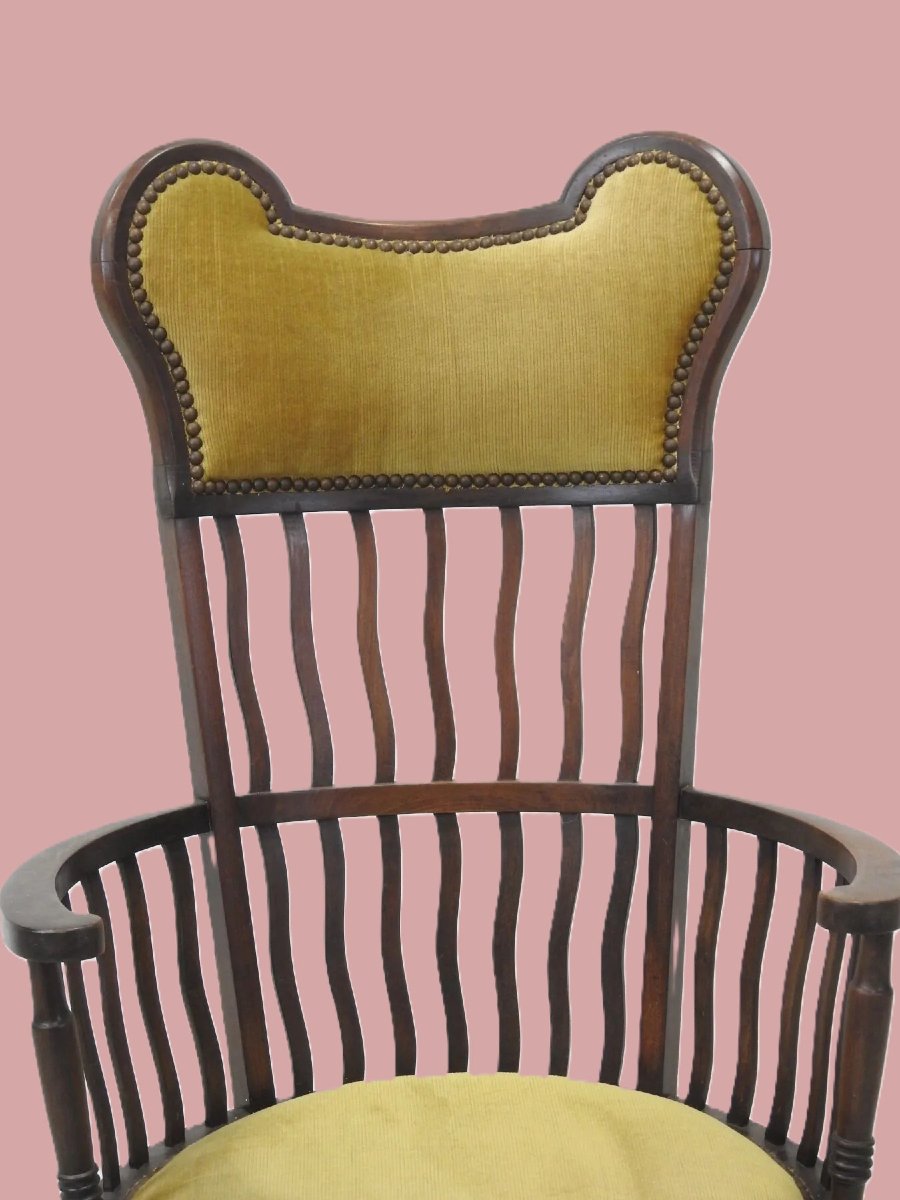
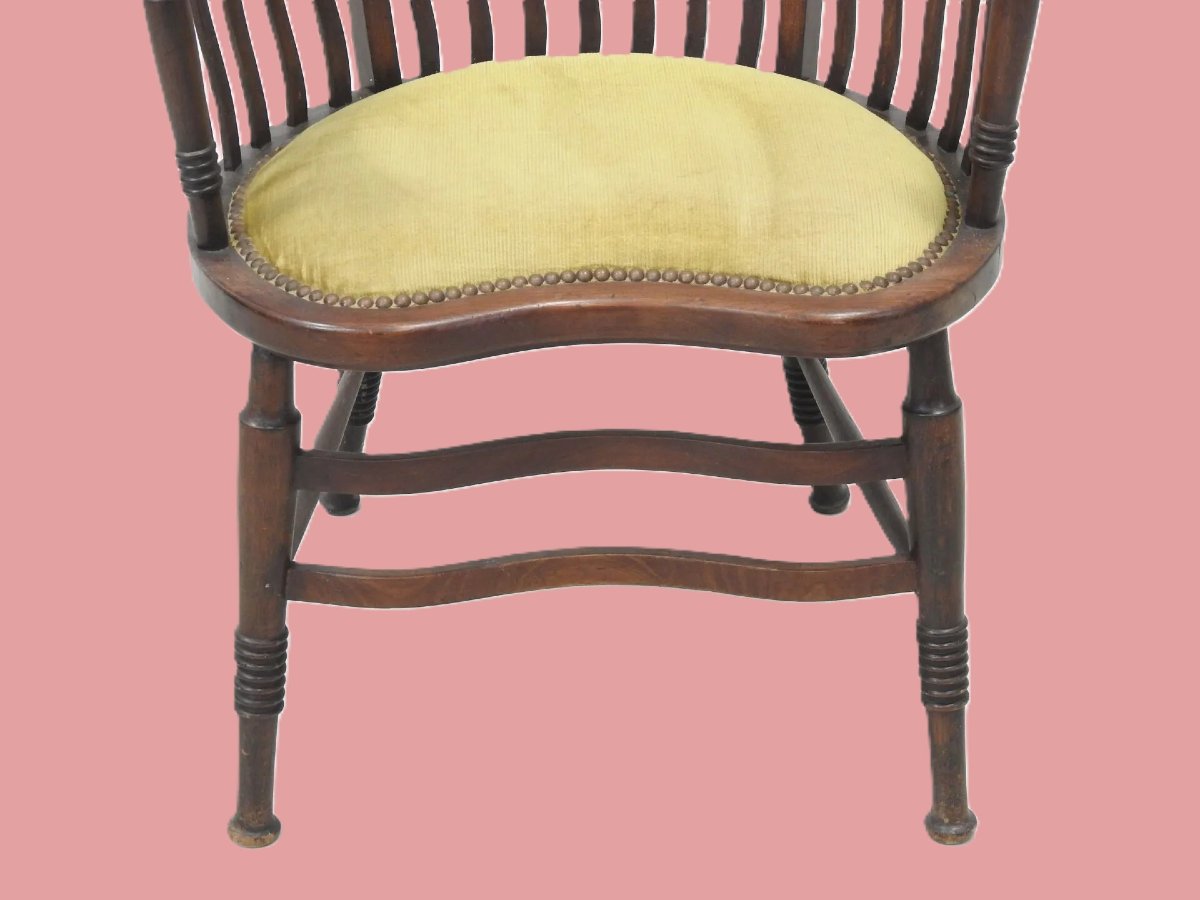
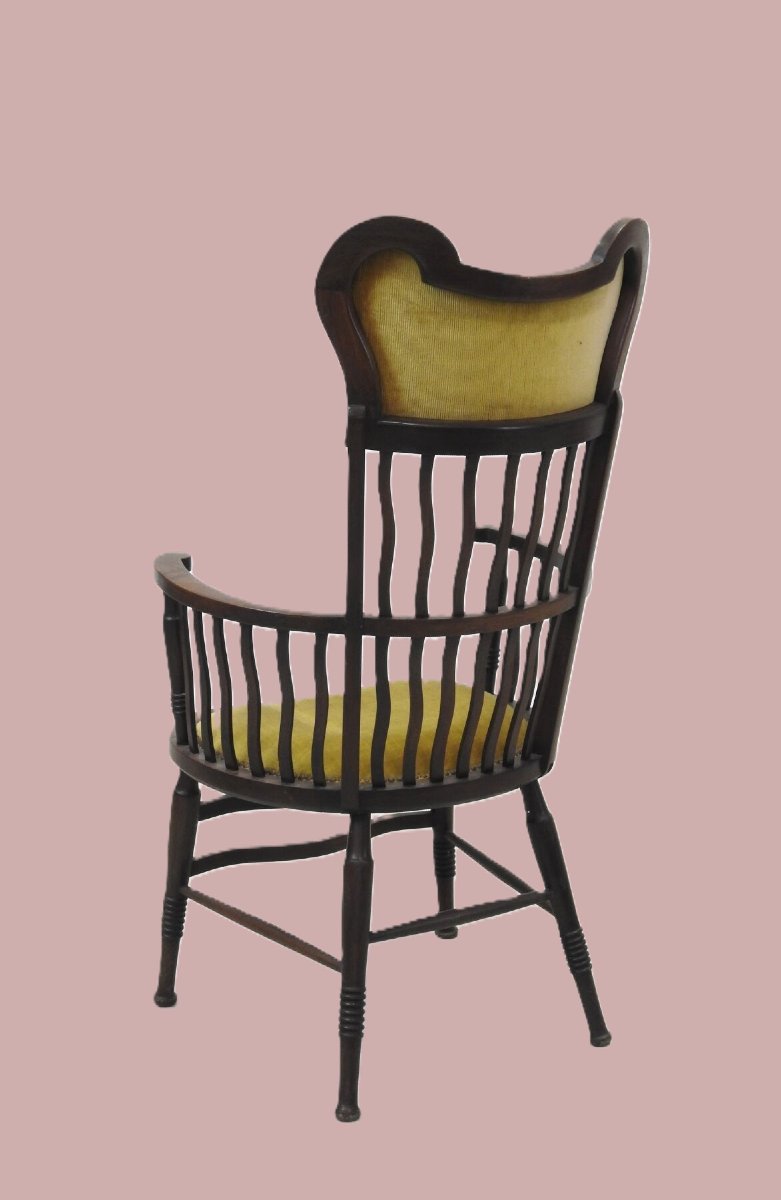
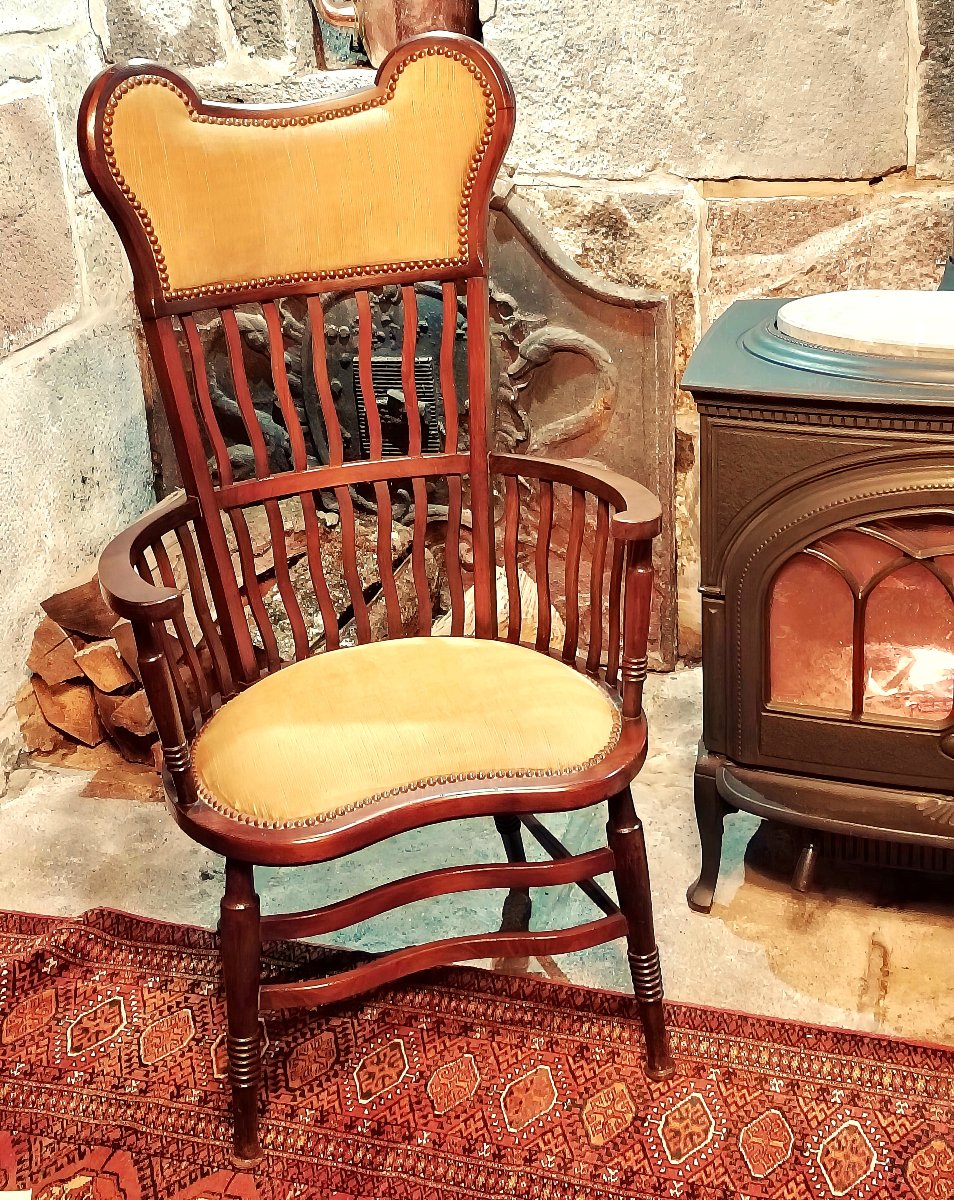
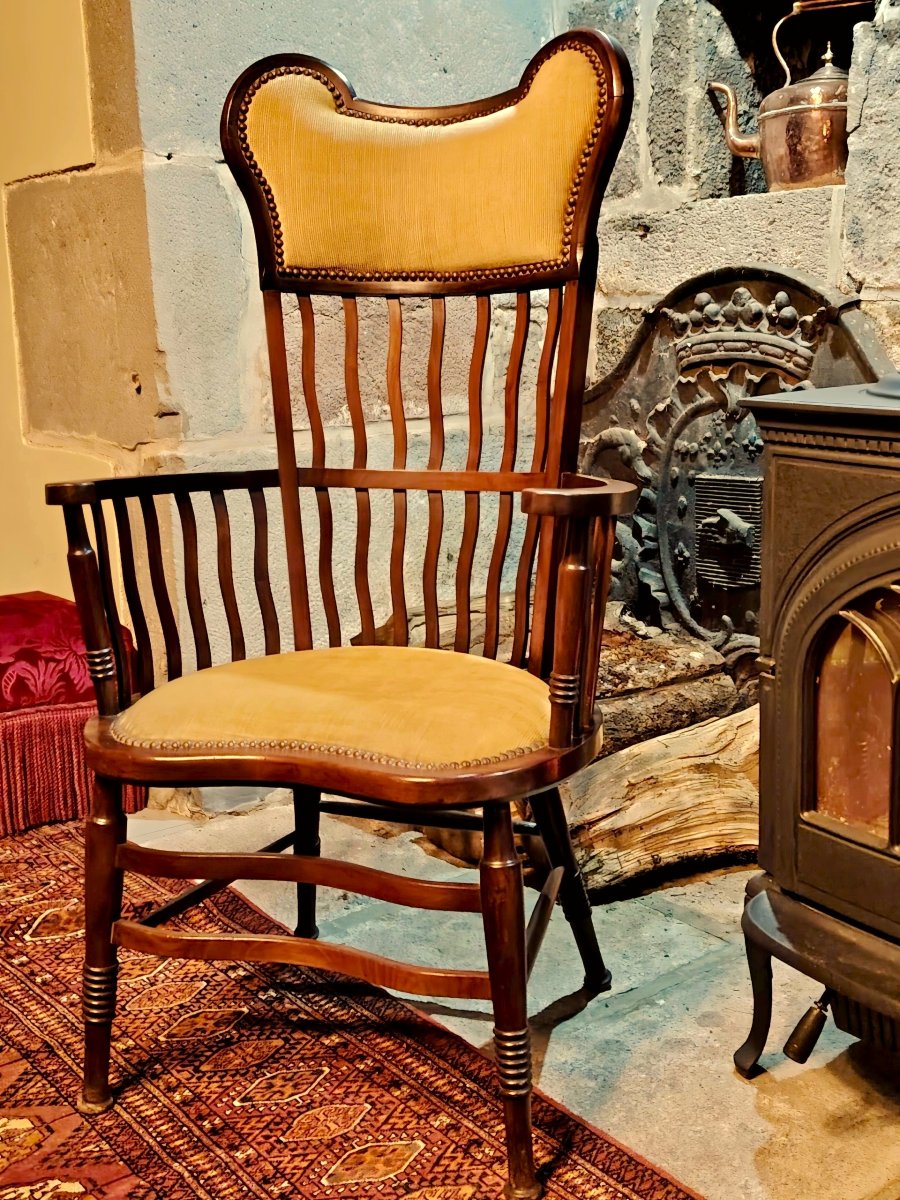
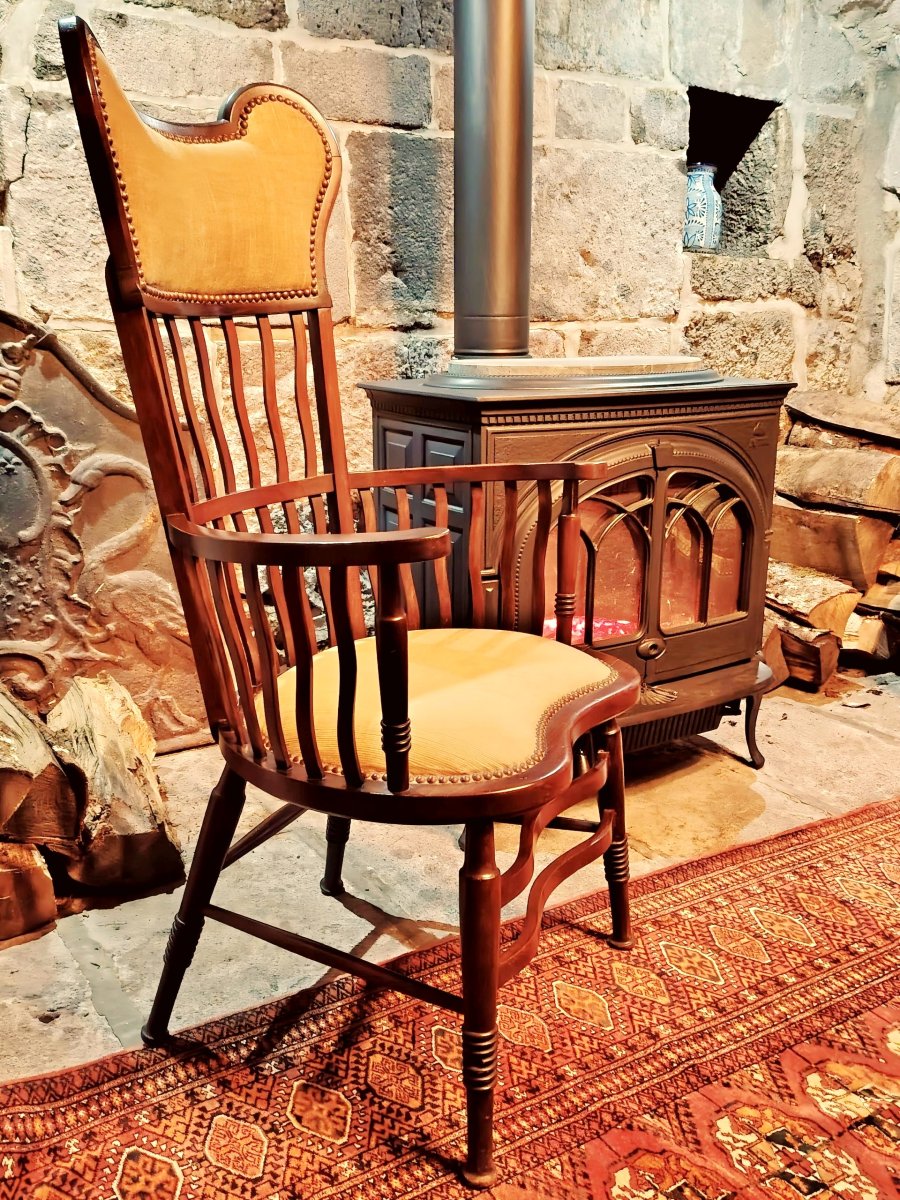
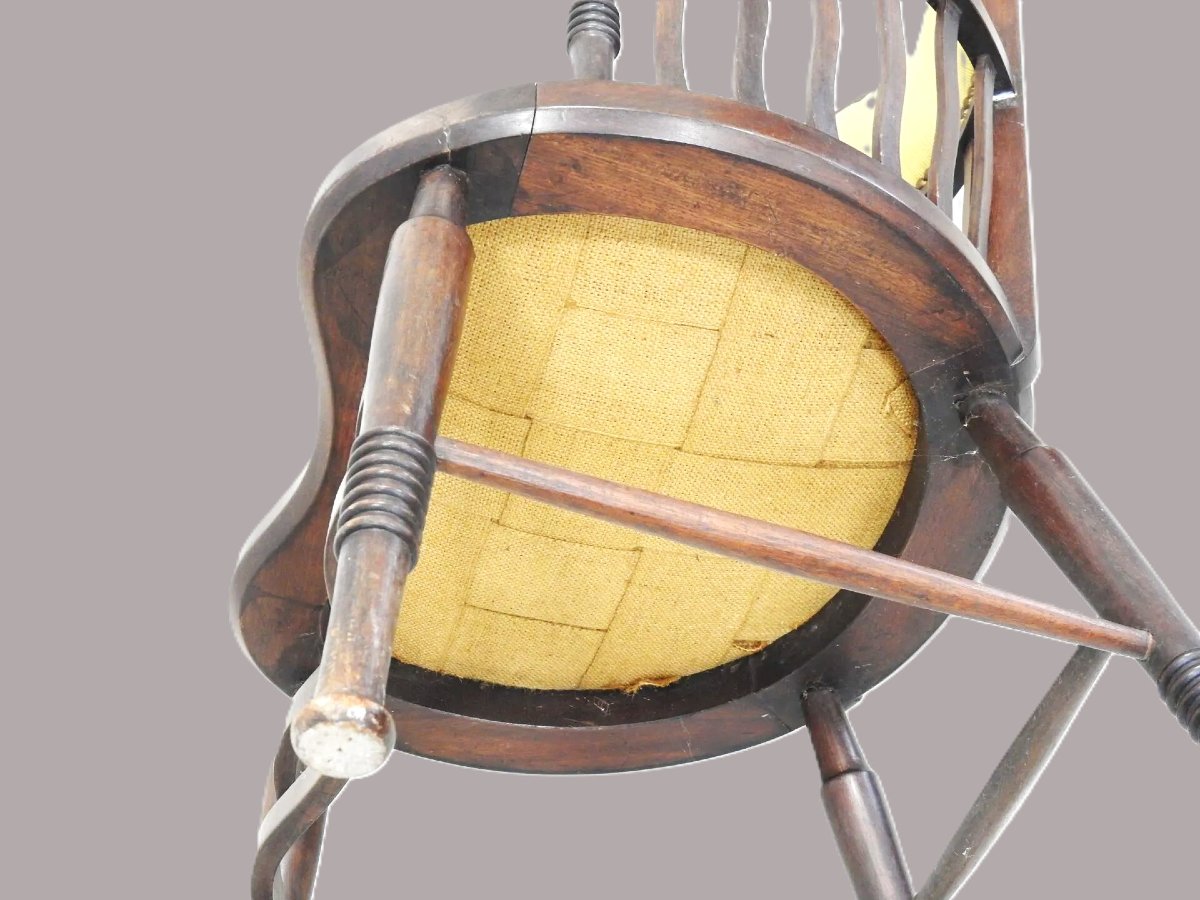
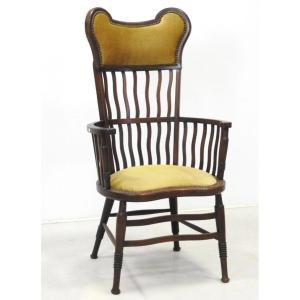
Arts & Crafts Wingback Chair, England, circa 1900. This high-backed chair exemplifies the aesthetics and philosophy of the English Arts & Crafts movement, which emerged in the second half of the 19th century as a reaction against industrialization and the perceived impoverishment of decorative forms. It perfectly illustrates the pursuit of furniture that is functional, honest in its construction, and deeply rooted in traditional craftsmanship. Dimensions: Height: 114 cm Width: 64 cm. These slender proportions accentuate the verticality of the back and reinforce the chair's architectural presence, while maintaining a restrained width, characteristic of Arts & Crafts seating designed for reading or conversation areas. The silhouette is dominated by a very high back with subtly curved side wings, giving the piece a strong architectural presence. This type of back is not merely decorative: it serves a specific function of protection and comfort, designed for British interiors. The proportions, emphasized by a height of 114 cm and a width of only 64 cm, reflect a rigorous design, where form is directly dictated by function. The solid wood structure, left unadorned and with minimal ornamentation, is central to the Arts & Crafts aesthetic. The slightly turned and regular vertical supports form a network of spindles on the back and sides, evoking both English vernacular designs and certain medieval influences favored by the movement's theorists. The joinery is visible and deliberate: nothing is concealed, everything contributes to the understanding of the construction. The simple yet solidly built legs are connected by functional stretchers that ensure stability and durability, essential values of Arts & Crafts furniture. The wingback is a particularly interesting stylistic element. Unlike the more massive armchairs of the 18th century, here the wings are integrated with restraint, in a fluid and organic form. They embody the Arts & Crafts ideal of ergonomics designed in harmony with form, without decorative excess. The seat and back are upholstered in antique olive-green velvet, a color deeply associated with the Arts & Crafts aesthetic, inspired by nature and plant tones. The visible, regular, and discreet nailhead trim subtly highlights the contours and contributes to the balance between structural rigor and visual comfort. This armchair is typical of furniture designed for the refined interiors of Edwardian England: libraries, private drawing rooms, smoking rooms, or reading rooms. It embodies the ideal of understated luxury, based on the quality of materials, the precision of proportions, and the enduring nature of the piece.
950 €
Period: 19th century
Style: English Style
Condition: Perfect condition
Material: Solid wood
Reference (ID): 1712015
Availability: In stock
Print