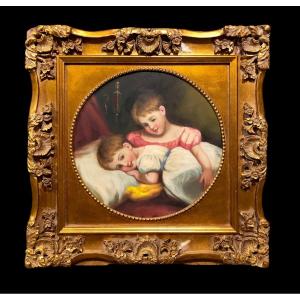


French Realist School (c. 1850) - The Sick Child
Oil on mahogany panel.
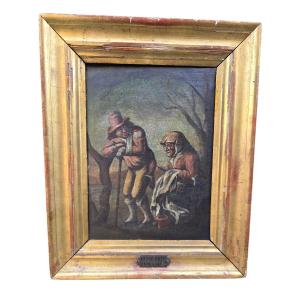
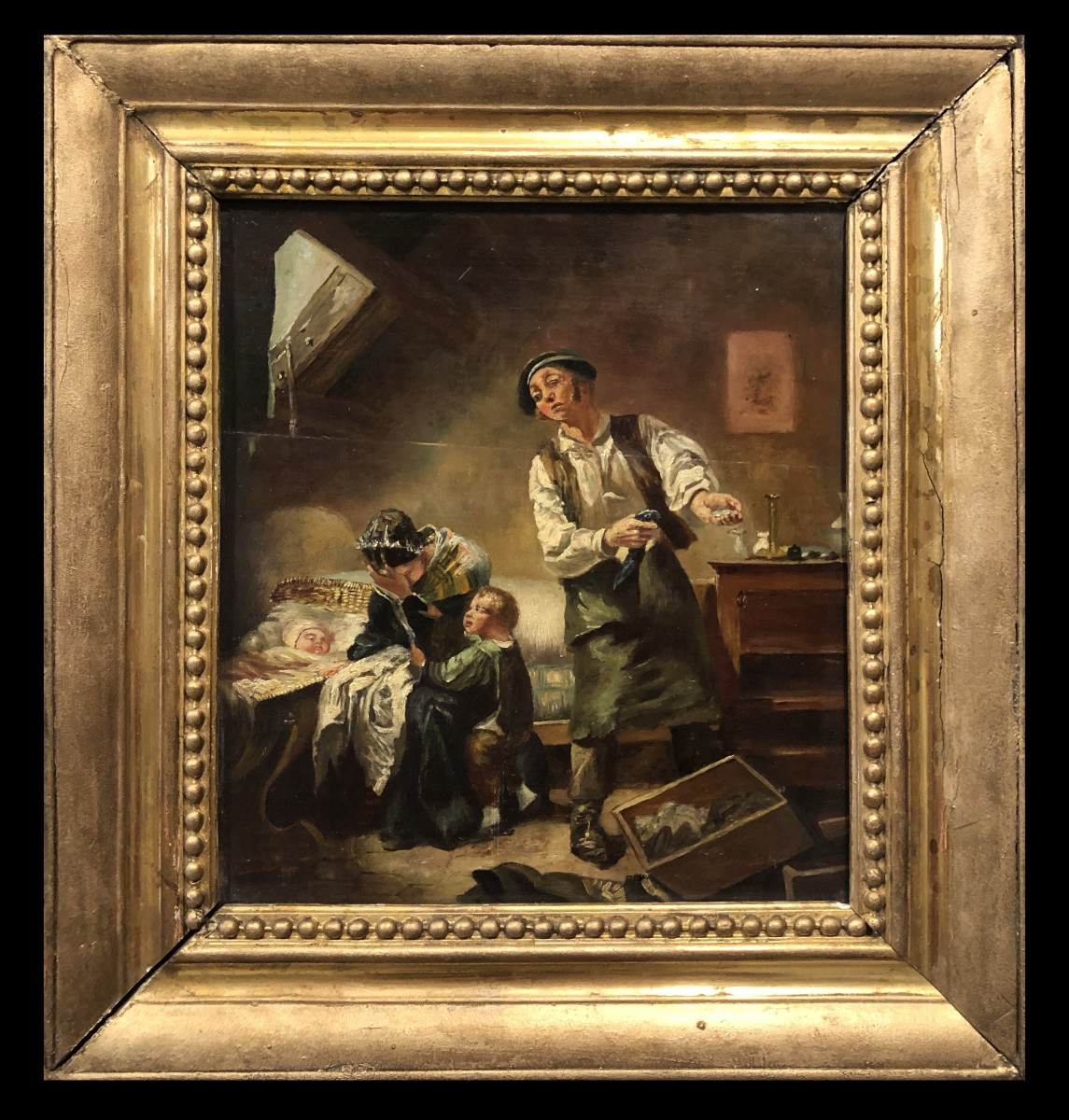
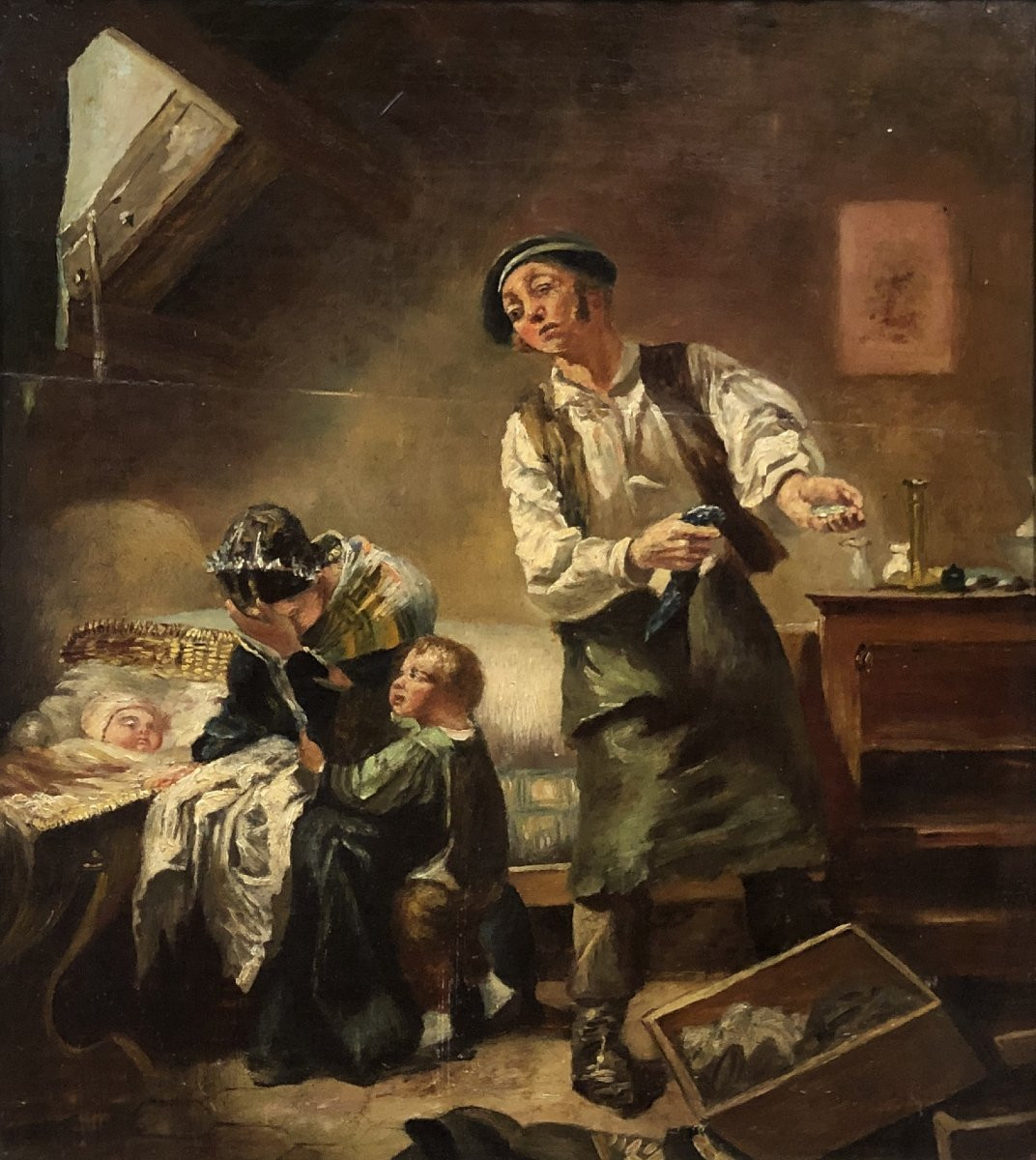
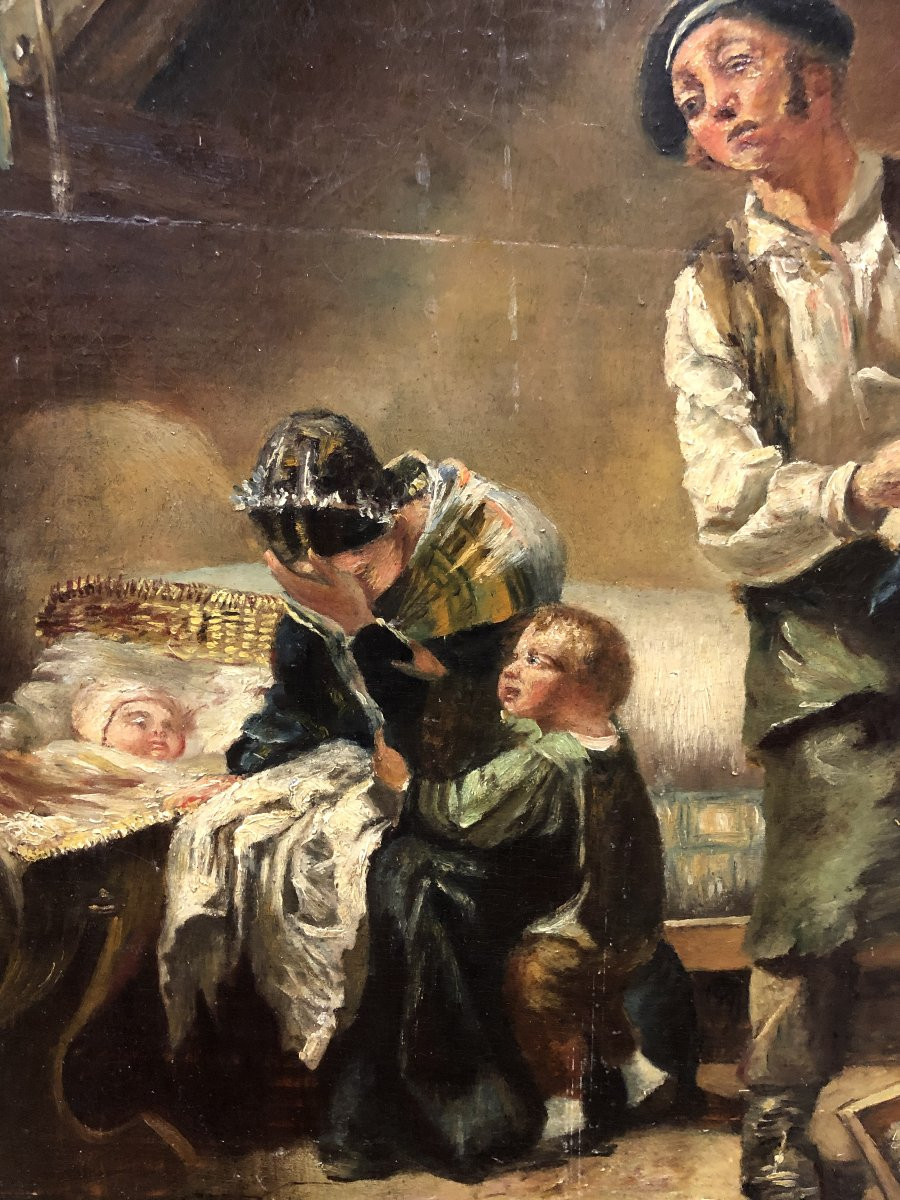
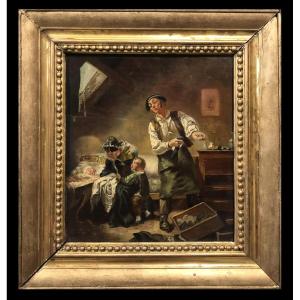
The social realism of the mid-19th century transformed painting into a relentless mirror of misery, where scenes such as this desperate father rummaging through empty drawers paint a picture of a devastated home. In this aesthetic of anguish, the home ceases to be a refuge and becomes the theater of a silent tragedy: the sick infant is not only a biological victim, but also the symbol of an economic structure that condemns the poor to a futile struggle against death. The lighting, often raw and concentrated on the man's feverish hands or the mother's tear-streaked face, underlines this tactile emotion of helplessness, where every everyday object - an open drawer, an empty jar - acquires a dramatic weight that denounces the social injustice concealed beneath the mask of an intimate drama.
This pictorial language finds its exact counterpart in the naturalist literature of authors like Zola or the Goncourt brothers, who dissected the social tragedies of the 19th century with surgical precision. In their texts, as in these paintings, the fate of the characters is governed not by divine will, but by the determinism of environment and heredity; poverty is a chronic evil that eats away at dignity until all that's left is the instinct for survival or emotional collapse. The mother, weeping inconsolably in the half-light of the room, symbolizes the powerlessness of an entire social class in the face of progress that ignores it, transforming suffering into an aesthetic truth that forced the bourgeoisie of the time to contemplate, for the first time, the deepest and darkest flaws of its own civilization.
- Image size unframed: 26 x 30 cm / 40 x 44.5 cm with exclusive custom-made frame.
The social realism of the mid-19th century transformed painting into a relentless mirror of misery, where scenes such as this desperate father rummaging through empty drawers paint a picture of a devastated home. In this aesthetic of anguish, the home ceases to be a refuge and becomes the theater of a silent tragedy: the sick infant is not only a biological victim, but also the symbol of an economic structure that condemns the poor to a futile struggle against death. The lighting, often raw and concentrated on the man's feverish hands or the mother's tear-streaked face, underlines this tactile emotion of helplessness, where every everyday object - an open drawer, an empty jar - acquires a dramatic weight that denounces the social injustice concealed beneath the mask of an intimate drama.
This pictorial language finds its exact counterpart in the naturalist literature of authors like Zola or the Goncourt brothers, who dissected the social tragedies of the 19th century with surgical precision. In their texts, as in these paintings, the fate of the characters is governed not by divine will, but by the determinism of environment and heredity; poverty is a chronic evil that eats away at dignity until all that's left is the instinct for survival or emotional collapse. The mother, weeping inconsolably in the half-light of the room, symbolizes the powerlessness of an entire social class in the face of progress that ignores it, transforming suffering into an aesthetic truth that forced the bourgeoisie of the time to contemplate, for the first time, the deepest and darkest flaws of its own civilization.
- Image size unframed: 26 x 30 cm / 40 x 44.5 cm with exclusive custom-made frame.
900 €
Period: 19th century
Style: Other Style
Condition: Excellent condition
Material: Oil painting on wood
Reference (ID): 1754312
Availability: In stock
Print