

Jean-georges Pasquet (1851-1936) The Ferry At Campniac - Périgueux Dordogne
Artist: Jean-georges Pasquet
Jean-Georges PASQUET
(Périgueux 1851 - 1936)
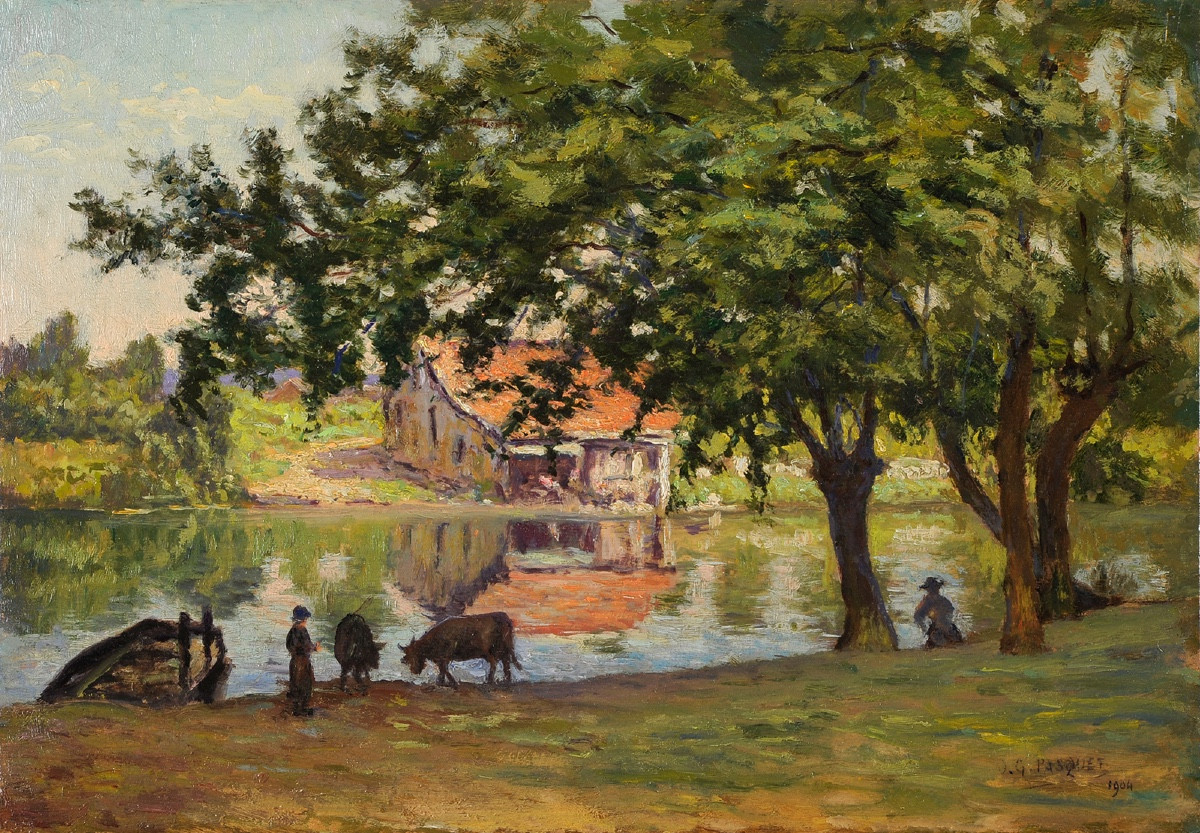
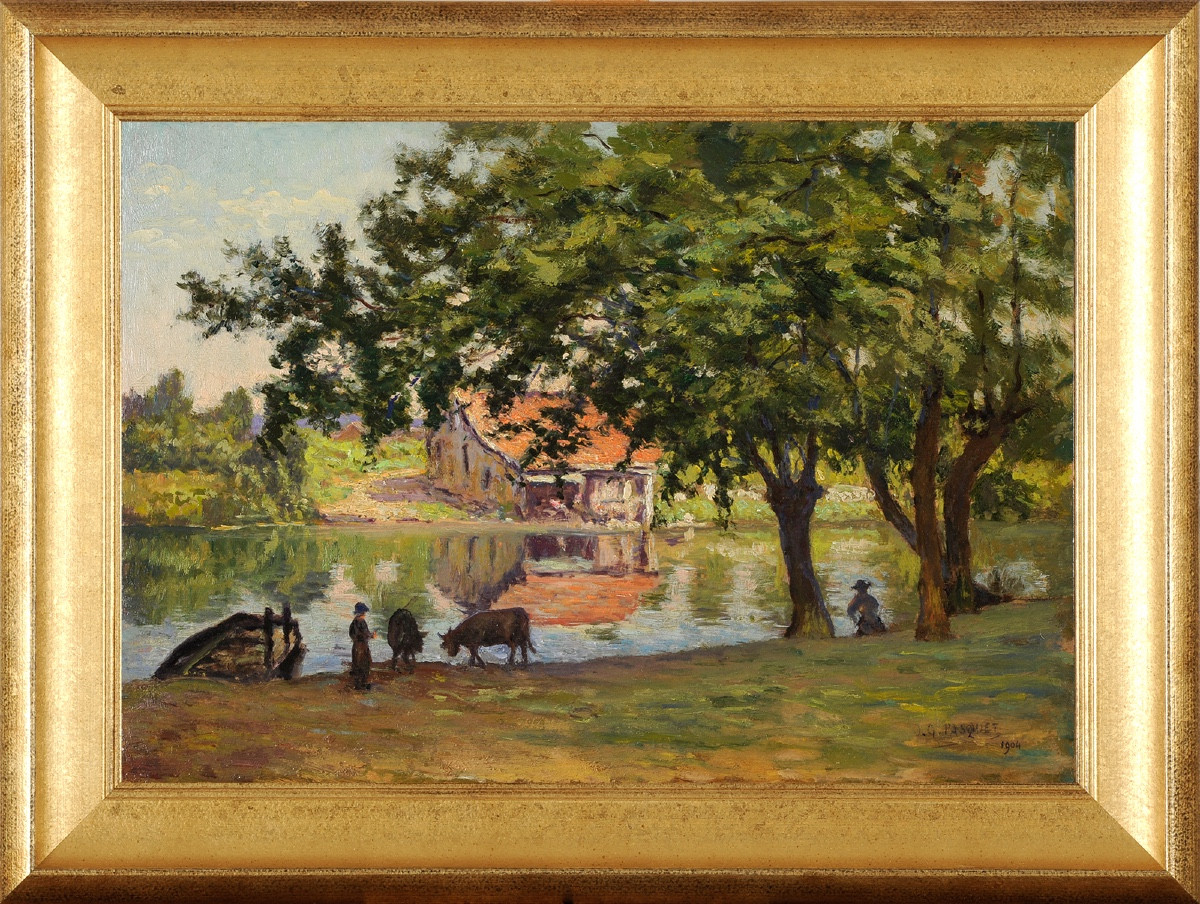
Le bac sur l'Isle à Campniac
Oil on panel
H. 28 cm; L. 40 cm
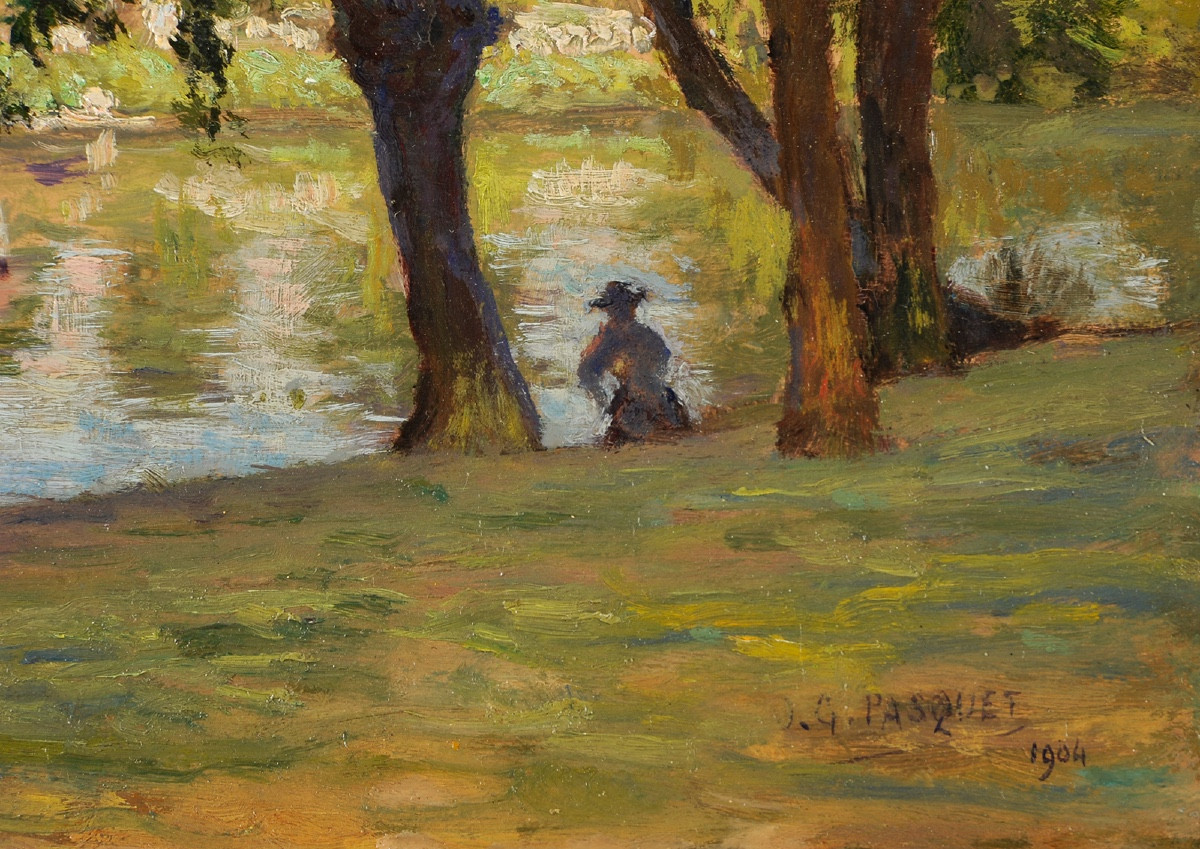
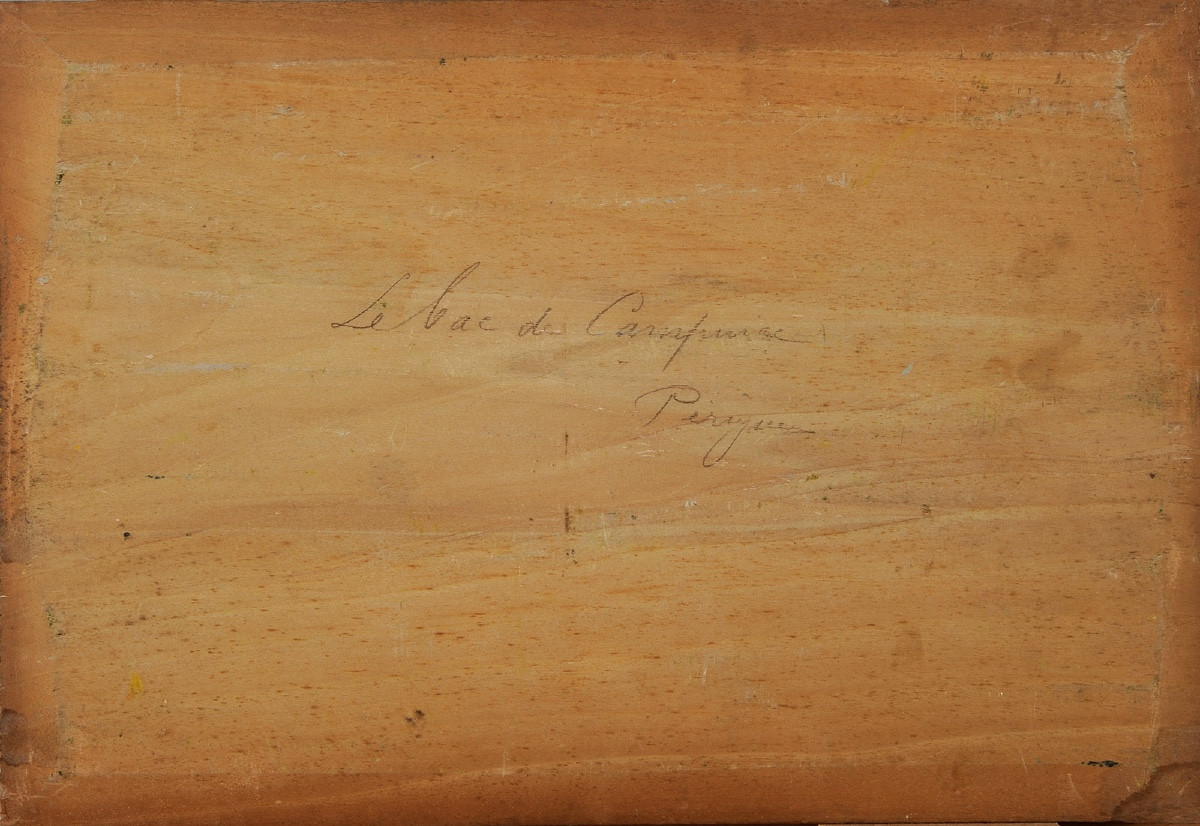
Signed and dated 1904 lower right. Located on the back.
Provenance : Private collection, Basse-Normandie
Jean-Georges Pasquet was born in Périgueux in 1851. After an undocumented childhood in the Périgord region, the young artist moved to Paris to attend the École des Beaux-Arts, graduating a few years later. He returned to his homeland in 1879 to take charge of the École municipale de dessin de Périgueux, and also became a drawing teacher at the Écoles normales de garçons et de filles.
A pupil of Gustave Boulanger, Jules Lefèvre and Jean-Joseph Benjamin-Constant, the painter set down his easel on the banks of the Dordogne or Isle to "tell a few memories" through realistic landscapes filled with gentleness. Through his style, the painter lets his compatriots know a great deal about his country and his origins. We find works stripped of artifice, depicting local inhabitants, working their land or simply strolling along paths. Pasquet's paintings and drawings depict life in Périgord at the dawn of the 20th century, always set in very specific locations.
He is one of the artists of the École de Périgueux. This school, somewhat forgotten in art history, emphasizes the heritage and identity of the Périgord region. Representatives include Jean-Louis Daniel, André Saigne, Georges Darnet, René Laforest, Roger Favard and André Prugent. The common denominator of this movement was a theme that broke away from the canons of the time: landscape.
"It was a school with no leader and no dominant style, but one that worked with extraordinary enthusiasm.
Jean-Michel Linfort
The artist painted not only the Dordogne, but also the Creuse and Saint Georges de Didonne. There he paints rivers, the sea, ports, bridges, dunes and forests. These are all motifs he knows how to transcribe, and to which he gives life thanks to the vivid hues and movement given to his brush, to give relief to the landscapes.
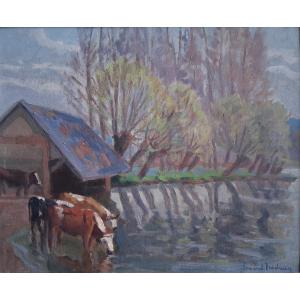
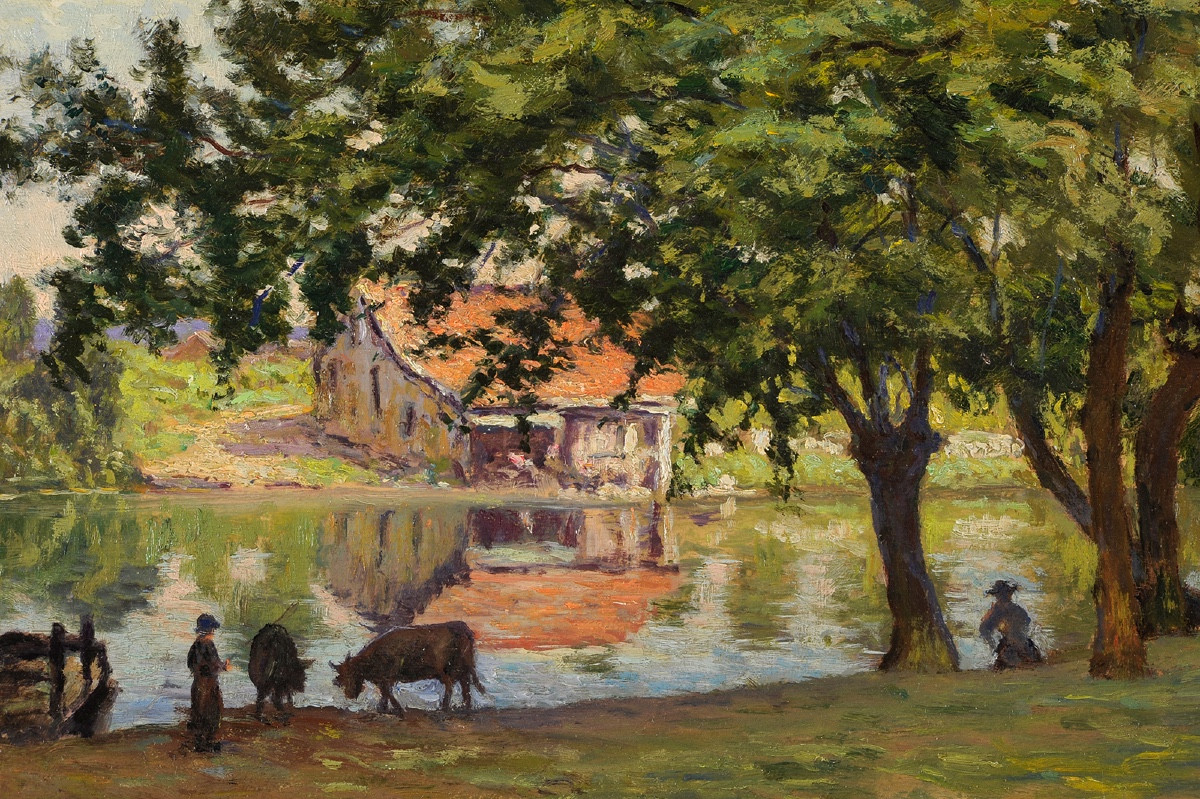
The outskirts of Périgueux are common in the painter's work. From Chancelade to Trélissac, he criss-crossed the banks of the Isle to produce contrasting images, often animated by a few characters idle in their occupations. Here, the image is even more interesting, as it is historical. It shows the Campniac ferry, south of the town and north-east of Coulouniers. We can see the ferry hanging on, and on the opposite bank the house with its feet in the water, which is the arrival point.
(Périgueux 1851 - 1936)
Le bac sur l'Isle à Campniac
Oil on panel
H. 28 cm; L. 40 cm
Signed and dated 1904 lower right. Located on the back.
Provenance : Private collection, Basse-Normandie
Jean-Georges Pasquet was born in Périgueux in 1851. After an undocumented childhood in the Périgord region, the young artist moved to Paris to attend the École des Beaux-Arts, graduating a few years later. He returned to his homeland in 1879 to take charge of the École municipale de dessin de Périgueux, and also became a drawing teacher at the Écoles normales de garçons et de filles.
A pupil of Gustave Boulanger, Jules Lefèvre and Jean-Joseph Benjamin-Constant, the painter set down his easel on the banks of the Dordogne or Isle to "tell a few memories" through realistic landscapes filled with gentleness. Through his style, the painter lets his compatriots know a great deal about his country and his origins. We find works stripped of artifice, depicting local inhabitants, working their land or simply strolling along paths. Pasquet's paintings and drawings depict life in Périgord at the dawn of the 20th century, always set in very specific locations.
He is one of the artists of the École de Périgueux. This school, somewhat forgotten in art history, emphasizes the heritage and identity of the Périgord region. Representatives include Jean-Louis Daniel, André Saigne, Georges Darnet, René Laforest, Roger Favard and André Prugent. The common denominator of this movement was a theme that broke away from the canons of the time: landscape.
"It was a school with no leader and no dominant style, but one that worked with extraordinary enthusiasm.
Jean-Michel Linfort
The artist painted not only the Dordogne, but also the Creuse and Saint Georges de Didonne. There he paints rivers, the sea, ports, bridges, dunes and forests. These are all motifs he knows how to transcribe, and to which he gives life thanks to the vivid hues and movement given to his brush, to give relief to the landscapes.
The outskirts of Périgueux are common in the painter's work. From Chancelade to Trélissac, he criss-crossed the banks of the Isle to produce contrasting images, often animated by a few characters idle in their occupations. Here, the image is even more interesting, as it is historical. It shows the Campniac ferry, south of the town and north-east of Coulouniers. We can see the ferry hanging on, and on the opposite bank the house with its feet in the water, which is the arrival point.
650 €
Period: 20th century
Style: Modern Art
Condition: Perfect condition
Material: Oil painting on wood
Length: 28 cm hors cadre
Width: 40 cm hors cadre
Reference (ID): 1740849
Availability: In stock
Print