THIS OBJECT WAS SOLD
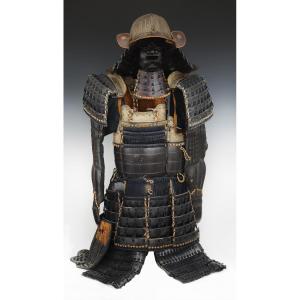
Samurai Armor Hon Kozaane Do Maru Gusoku, Juyo
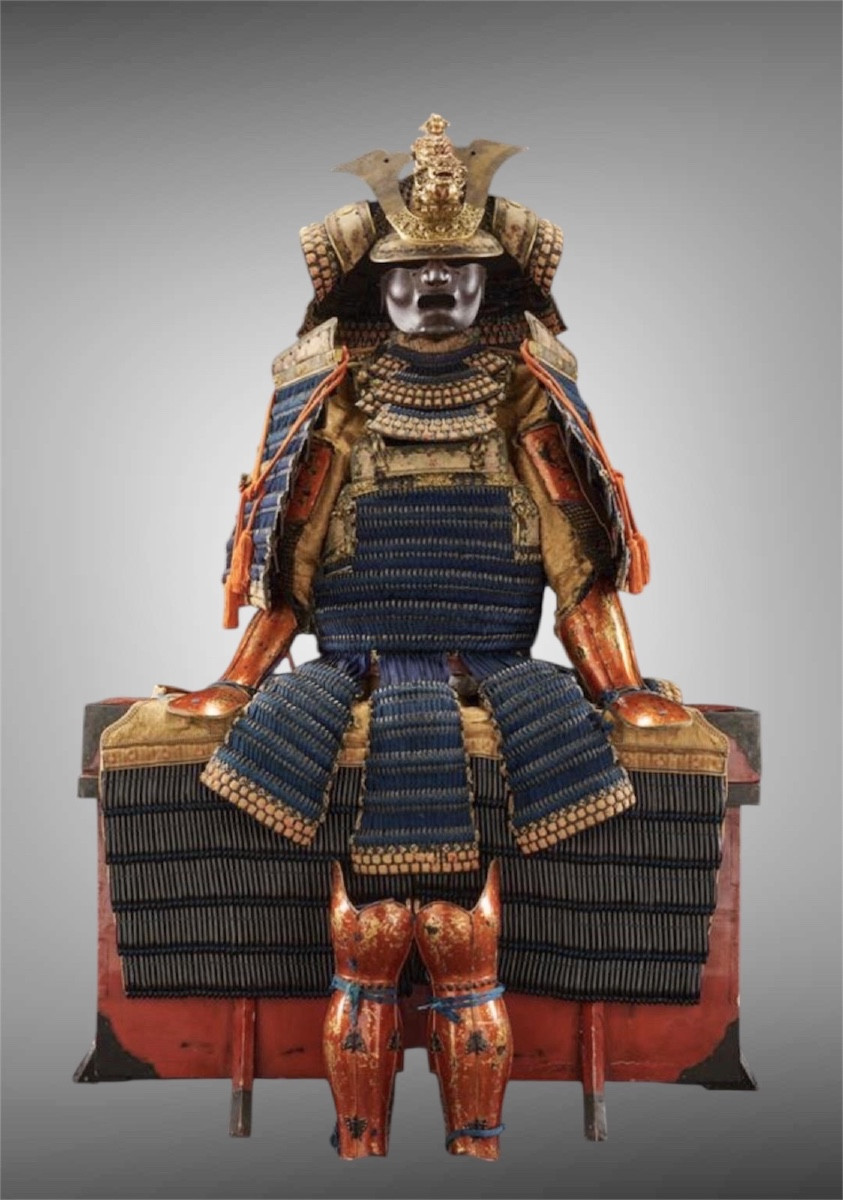
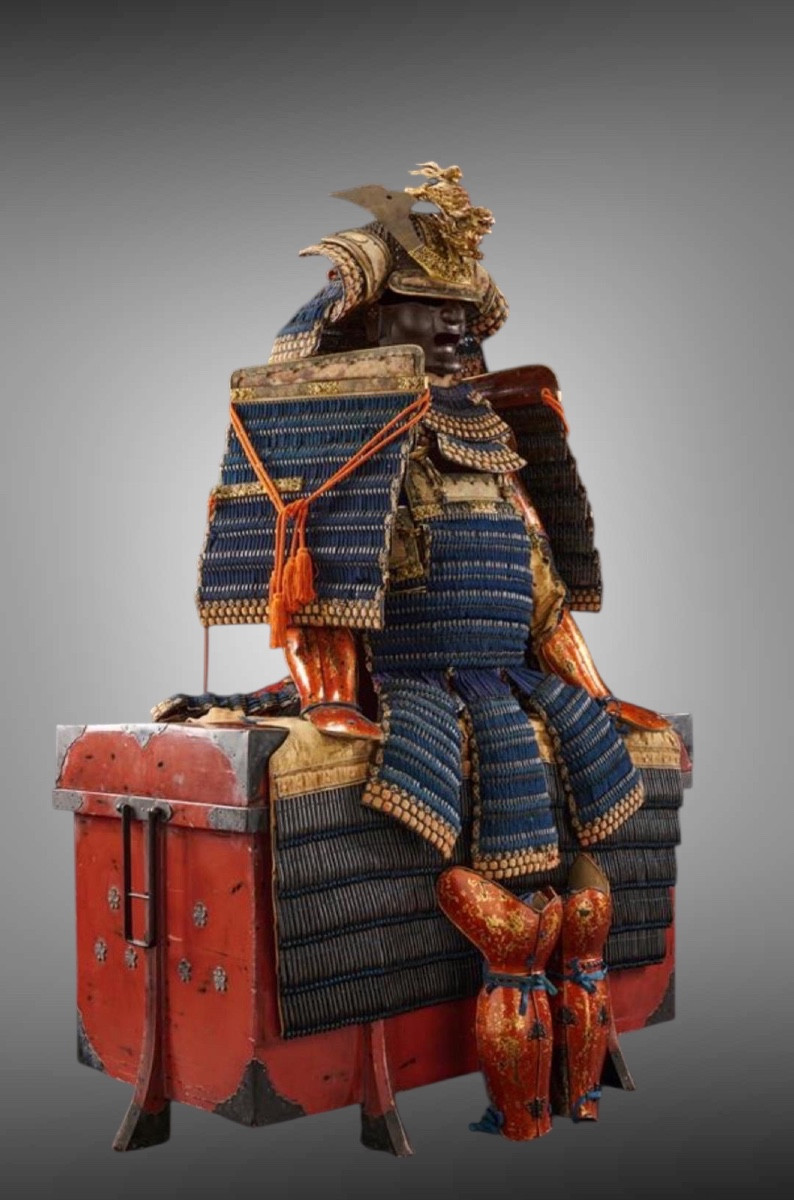
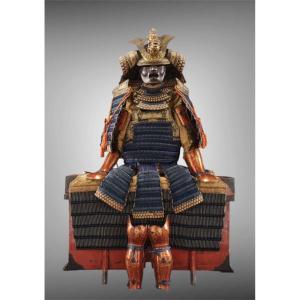


Ahonkozane do-maru gusoku [armour with wrapped cuirass]
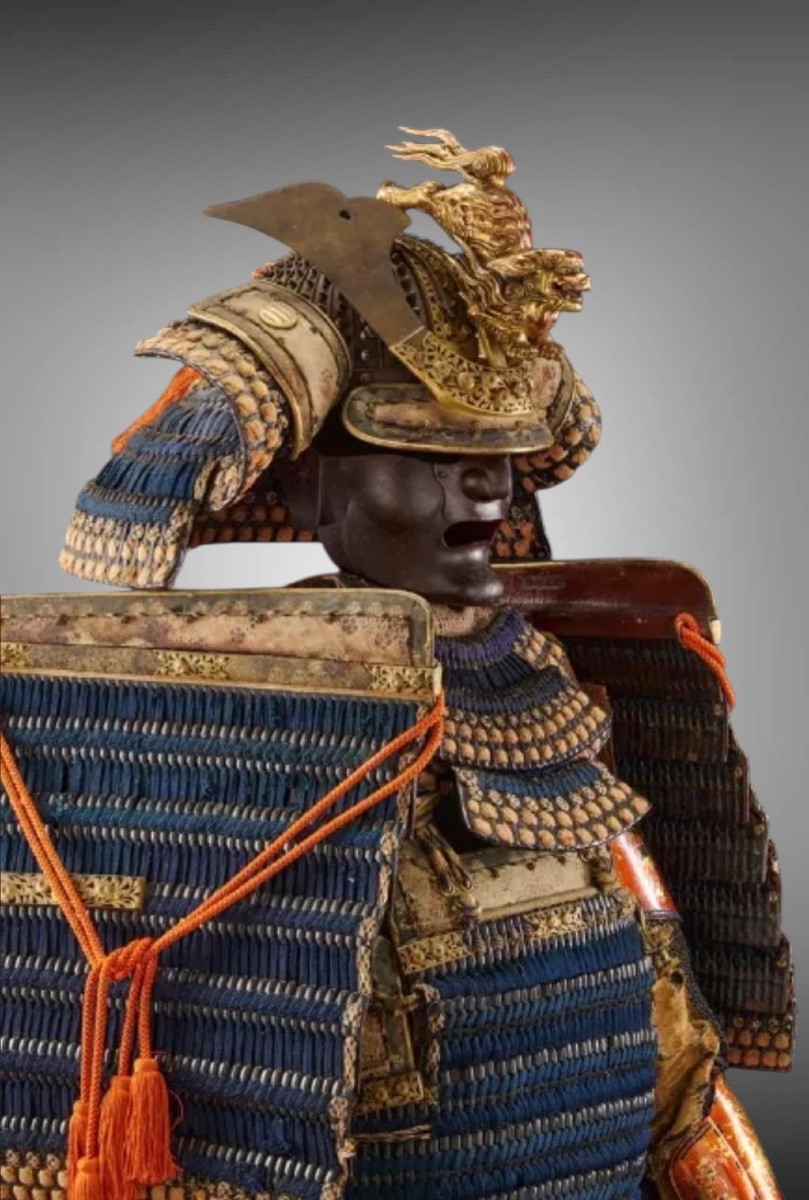
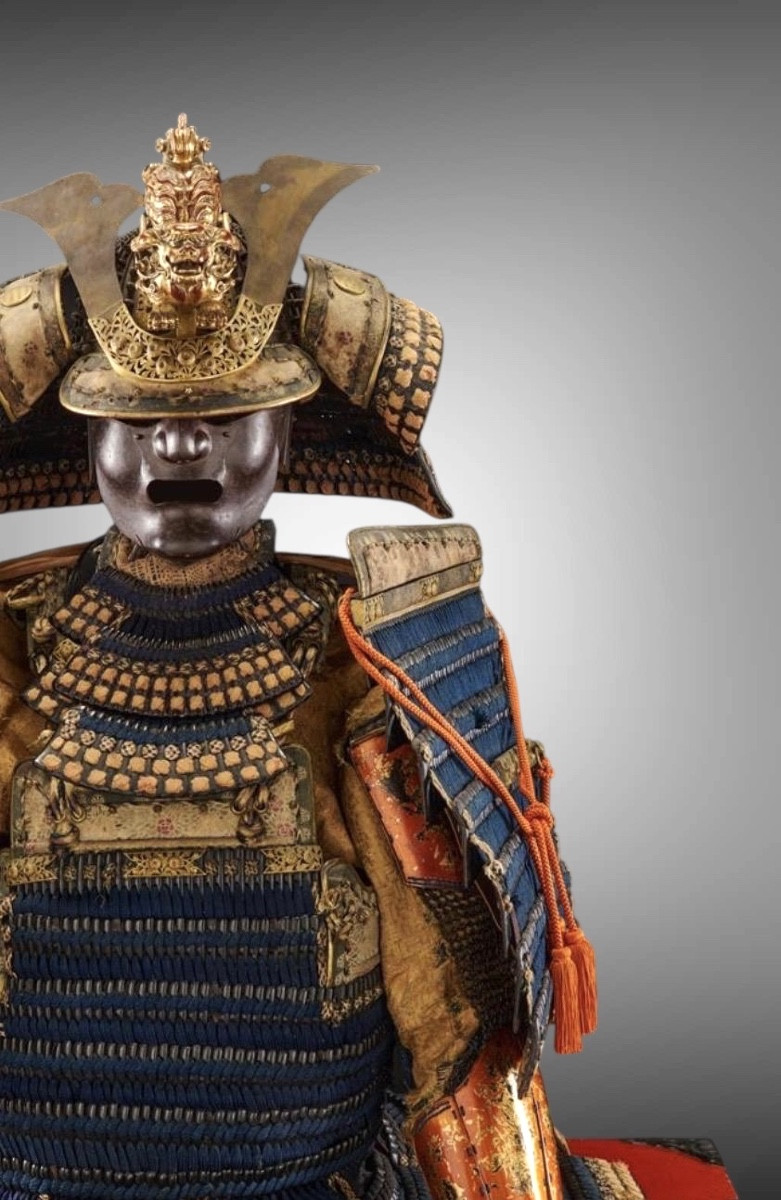
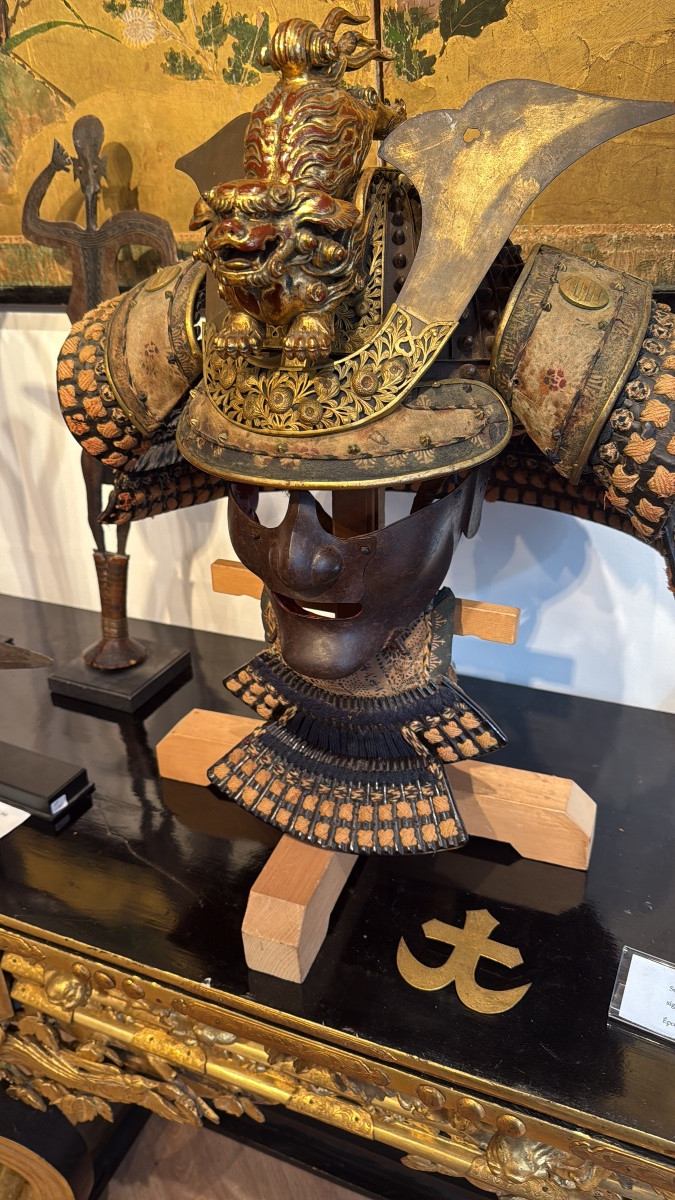
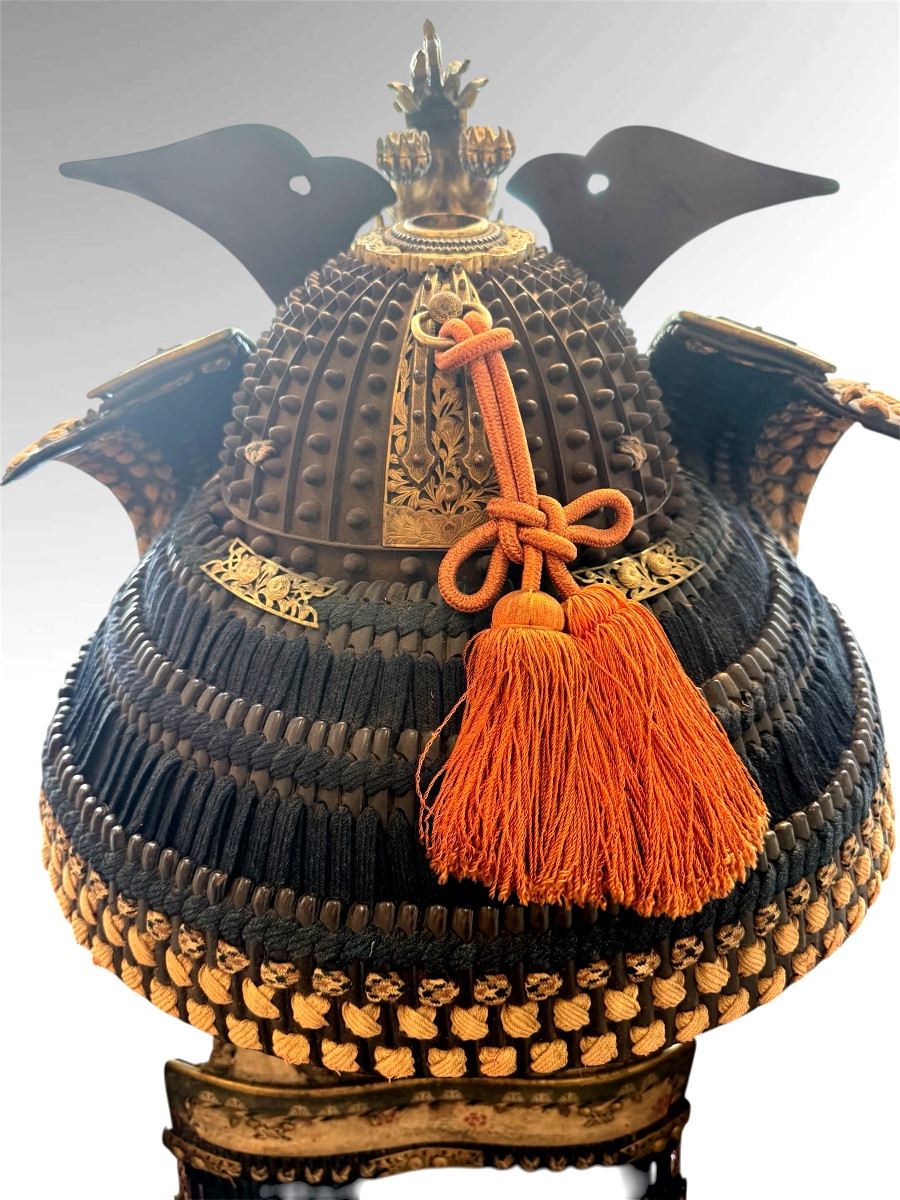
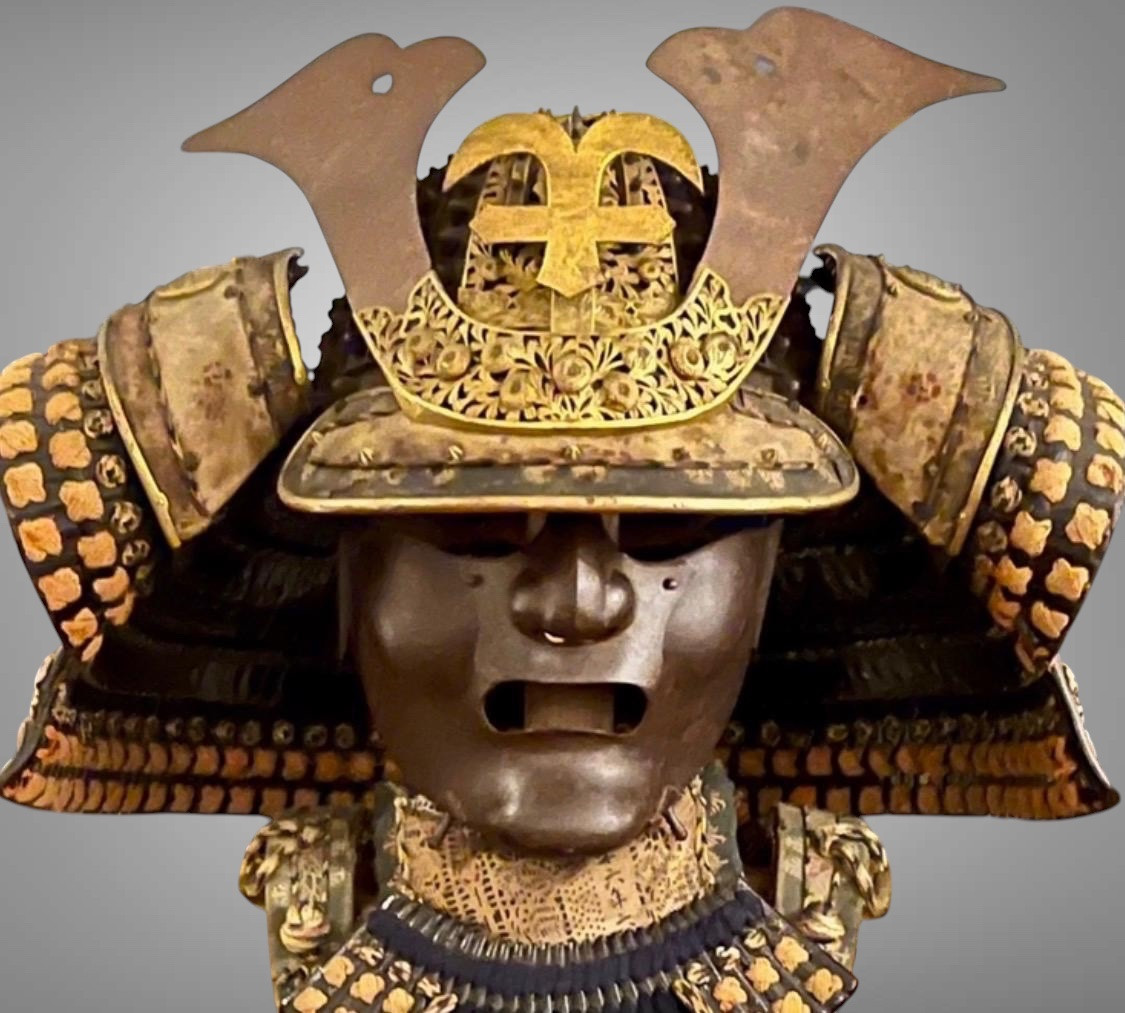
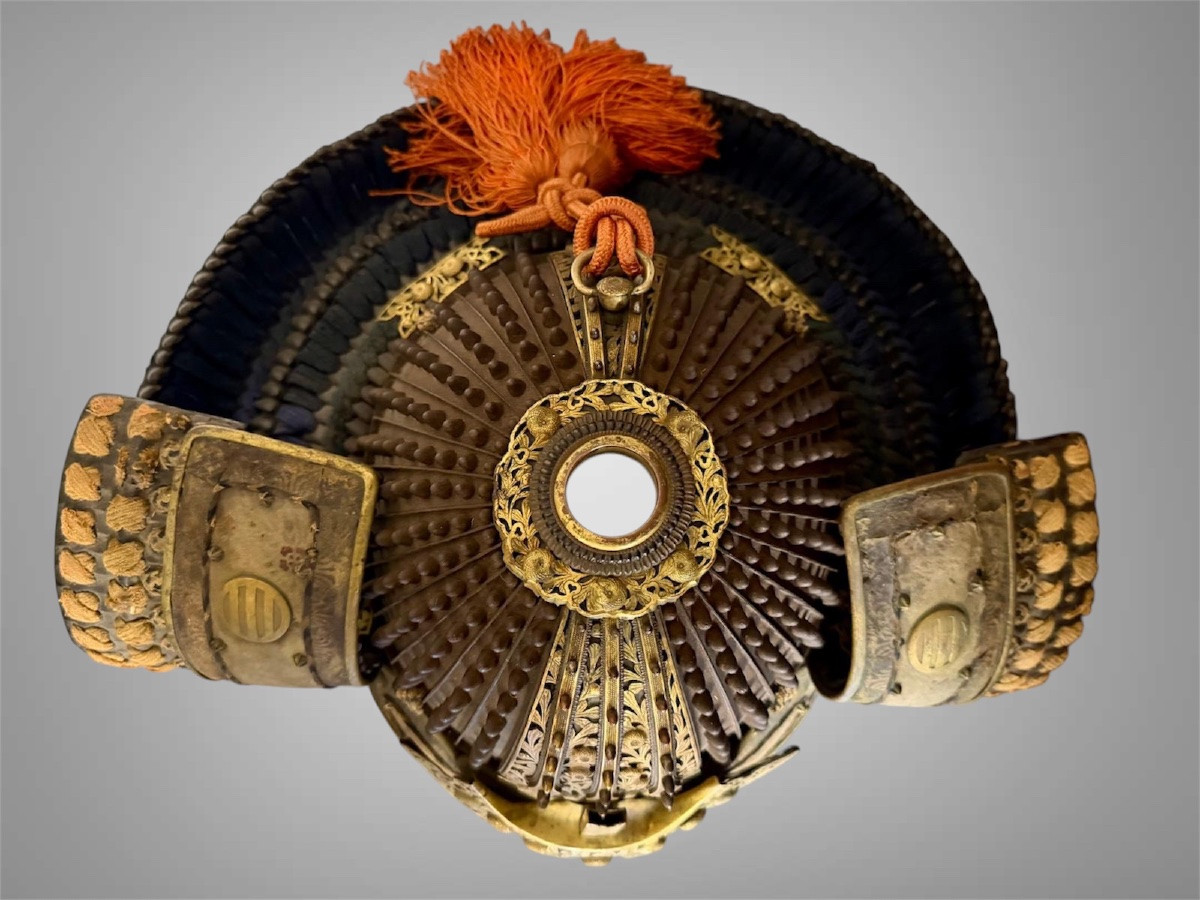
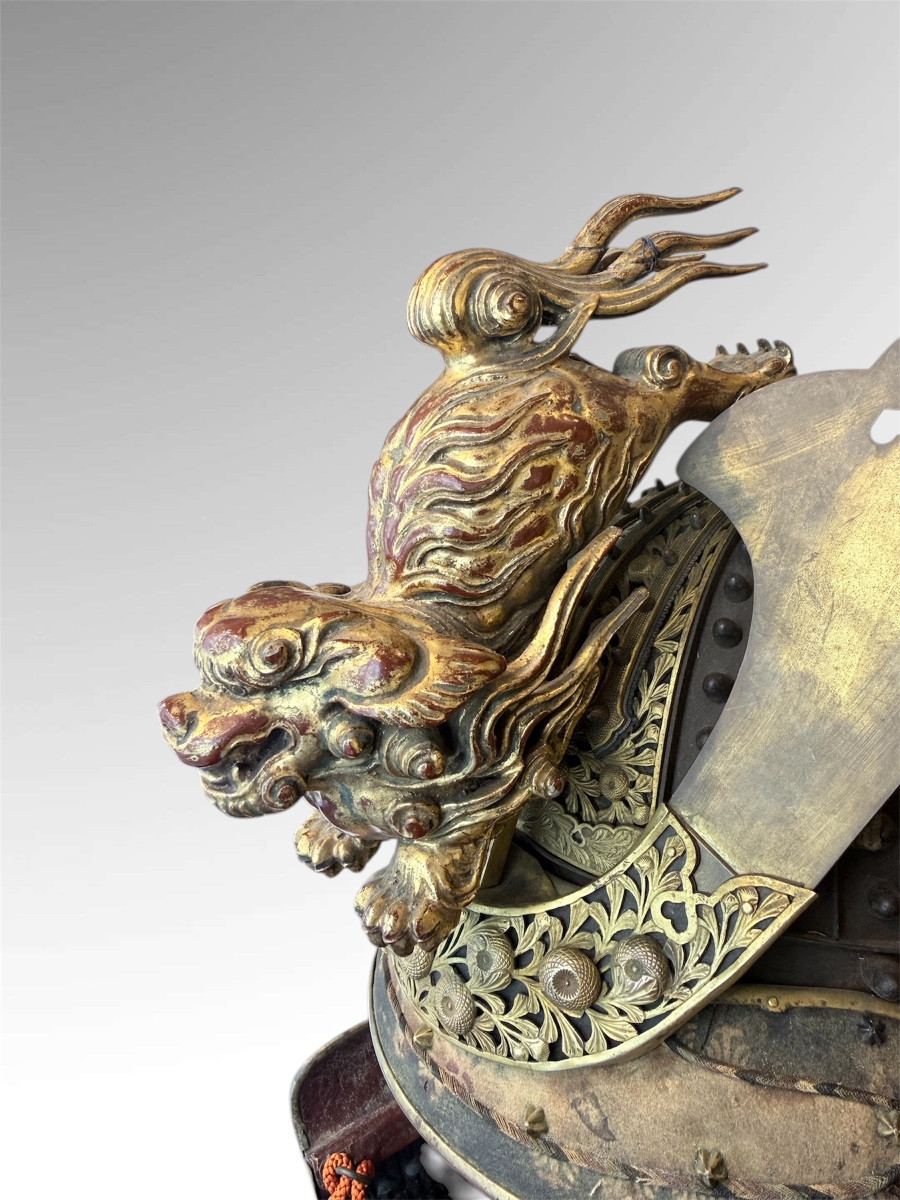
kabutoThe helmet signed Myochin ki Munetane saku (made by Myochin Munetane)Edo period, the helmet dated Tenpogonen sangatsu kichijitsu (an auspicious day in the 3rd month of 1834) Kabuto [helmet]:the fine sixty-two plate russet iron bowl with standingrivets, the large turn-backs and peak applied in stenciled Dutch leather, threetiered manju-jikoro [rounded neck guard] with close-spaced lacing in bluebraid, the gold lacquer maedate [ornamental crest] in the form of a karashishisurmounted on a kuwagata-dai pierced with chrysanthemums and foliate scrolls
Mempo [face mask]:the russet iron ryubu men forged with noble expression andwrinkleless face, detachable nose plate, standing flanges (yadome), red lacquerinterior, two-tiered yodarekake [throat protector] laced in matching braid,stencilled Dutch leather edging
two-tiered nodowa [throat guard],
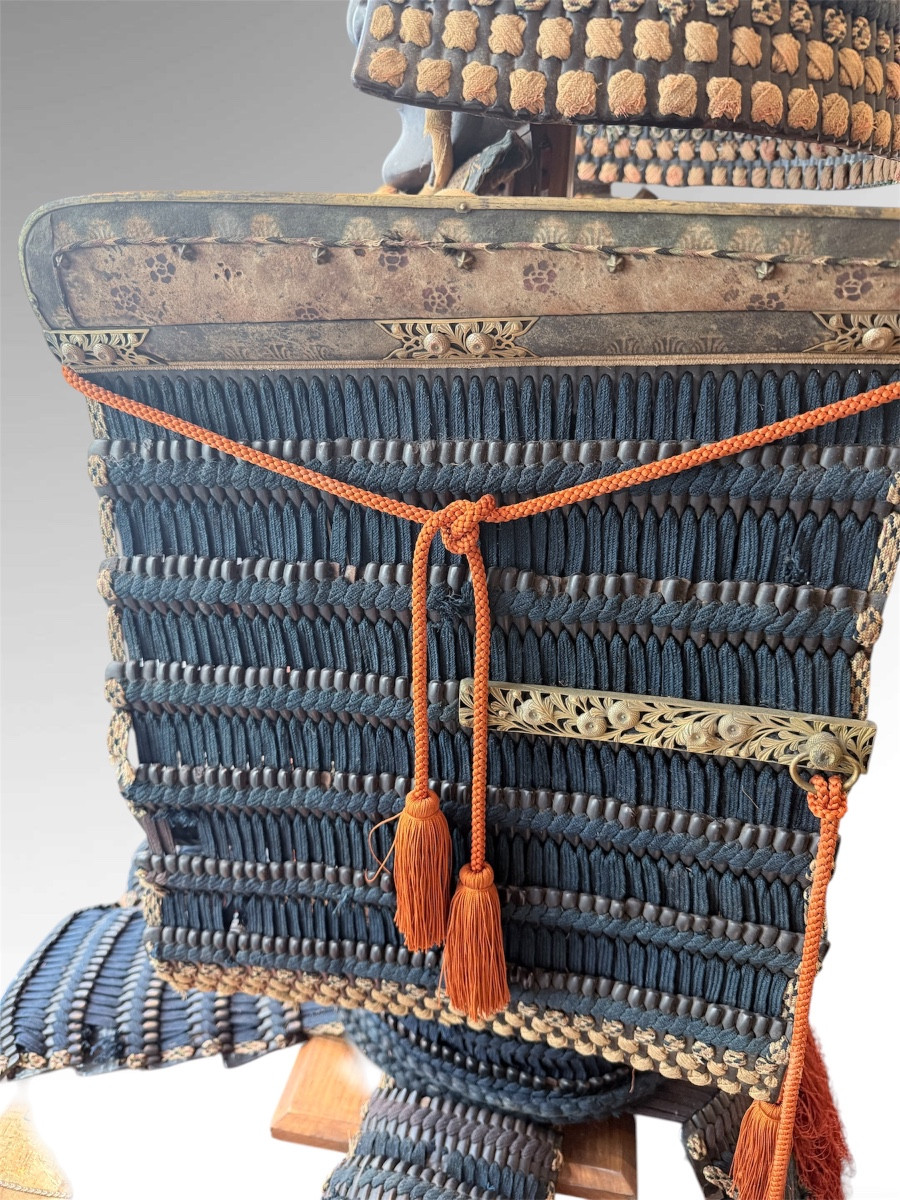
Do [cuirass]:the wrapped cuirass in honkozane[true lamellae], signed to the reverse ingold lacquer Myochin Munetane, seven tassets of five-tiered kusazuri [skirt]
Sode, kote [shoulder guards and sleeves]: six-tiered osode, the leatherinterior lining signed Myochin Munetane, chainmail
fine gold and redlacquer kawari-nuri tekko [gauntlets], silk brocade lining embroidered withgold thread
Haidate, sune-ate [thigh protectors and shin guards]: blacklacquered haidate with silk brocade edging, the shin guards (shino suneate)matching the tekko
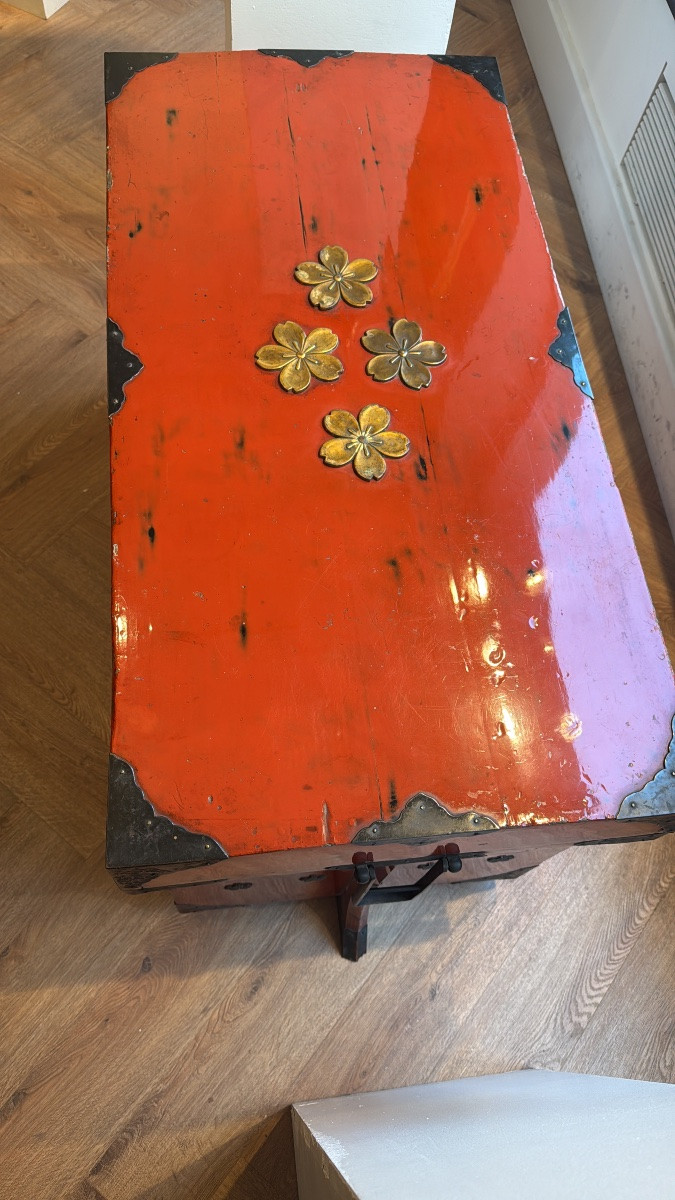
Accessories: accompanied with a red lacquered wood armourstorage box (karabitsu) inlaid in silvered and gilt-copper with cherryblossoms, silvered fittings
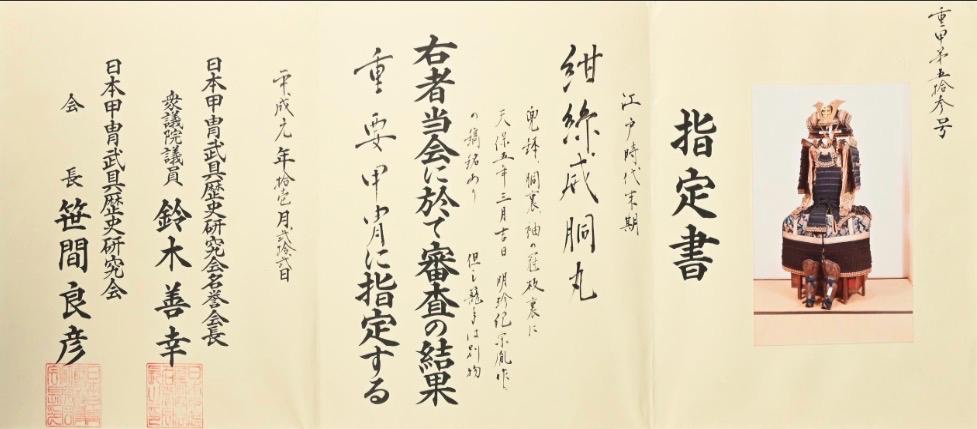
Accompanied by a certificate of registration as Juyo Katchu [Important Cultural Material],no. 53, issued by
the Nihon Katchu Bugu Rekishi Kenkyu Kai [Research Society for the History of Japanese Armour],
The certificate: "Nomai do gusoku type armor (two-part cuirass laced with dark blue cords) Japanese Society for Research on the History of Armor and Weapons Signatories: President Sasama Yoshihiko, Member of the Examining Committee: Suzuki Yoshiyuki Conclusion: This document officially certifies that the armor shown in the photo on the right was examined and recognized as a historically important piece by a specialized organization on a day in November of Hesei 9 (1997)".
Sasama Yoshihiko was known for his abundant production of specialized works on Japanese armor. His most famous work was the Nihon no katchu bugu Jiten (Dictionary of Japanese Armor and Weapons),
Katchu bugu no kenkyu (Study of Japanese Military Armor and Equipment),
Samourai bugu jiten (Encyclopedia of Samurai Equipment), and
Zukai Nihon no katchu bugu (Illustrated Guide to Samurai Equipment). Japanese armor.
Myochin Munetane (1799-1850) also called Munekane was thetwenty-eighth head of the renowned Myochin family of armour makers. associated with high level armour .;We can find one exemple in the leyden Museum offered b the last shogun in 1855 to the netherland king William III who had offered a ship.At the time everybody wanted to seduce japan who was very interested in naval techniques .
Overall, the armour is good condition with some wear consistent with age and use, the helmet with some old wear to the silk braid on the large turnbacks, including some soiling and fading to the silk, the maedate with some slight old damage to the tail of the karashishi, as is typical the mempo with some slight surface rust,
the cuirass with some chips to the lacquer lamellae,the skirt with some wear to the silk braid, the shoulder guards overall in good condition with some slight wear to the silk, slight chips to the lacquerlamellae, the silk lining of the sleeves worn but could be restored, the uppersilk lining of the haidate with some wear, the karabitsu with slight cracks tothe cover consistent with the use of the box, some dents, chips and rubbing tothe red lacquer, a few cracks and lacquer losses.
kabutoThe helmet signed Myochin ki Munetane saku (made by Myochin Munetane)Edo period, the helmet dated Tenpogonen sangatsu kichijitsu (an auspicious day in the 3rd month of 1834) Kabuto [helmet]:the fine sixty-two plate russet iron bowl with standingrivets, the large turn-backs and peak applied in stenciled Dutch leather, threetiered manju-jikoro [rounded neck guard] with close-spaced lacing in bluebraid, the gold lacquer maedate [ornamental crest] in the form of a karashishisurmounted on a kuwagata-dai pierced with chrysanthemums and foliate scrolls
Mempo [face mask]:the russet iron ryubu men forged with noble expression andwrinkleless face, detachable nose plate, standing flanges (yadome), red lacquerinterior, two-tiered yodarekake [throat protector] laced in matching braid,stencilled Dutch leather edging
two-tiered nodowa [throat guard],
Do [cuirass]:the wrapped cuirass in honkozane[true lamellae], signed to the reverse ingold lacquer Myochin Munetane, seven tassets of five-tiered kusazuri [skirt]
Sode, kote [shoulder guards and sleeves]: six-tiered osode, the leatherinterior lining signed Myochin Munetane, chainmail
fine gold and redlacquer kawari-nuri tekko [gauntlets], silk brocade lining embroidered withgold thread
Haidate, sune-ate [thigh protectors and shin guards]: blacklacquered haidate with silk brocade edging, the shin guards (shino suneate)matching the tekko
Accessories: accompanied with a red lacquered wood armourstorage box (karabitsu) inlaid in silvered and gilt-copper with cherryblossoms, silvered fittings
Accompanied by a certificate of registration as Juyo Katchu [Important Cultural Material],no. 53, issued by
the Nihon Katchu Bugu Rekishi Kenkyu Kai [Research Society for the History of Japanese Armour],
The certificate: "Nomai do gusoku type armor (two-part cuirass laced with dark blue cords) Japanese Society for Research on the History of Armor and Weapons Signatories: President Sasama Yoshihiko, Member of the Examining Committee: Suzuki Yoshiyuki Conclusion: This document officially certifies that the armor shown in the photo on the right was examined and recognized as a historically important piece by a specialized organization on a day in November of Hesei 9 (1997)".
Sasama Yoshihiko was known for his abundant production of specialized works on Japanese armor. His most famous work was the Nihon no katchu bugu Jiten (Dictionary of Japanese Armor and Weapons),
Katchu bugu no kenkyu (Study of Japanese Military Armor and Equipment),
Samourai bugu jiten (Encyclopedia of Samurai Equipment), and
Zukai Nihon no katchu bugu (Illustrated Guide to Samurai Equipment). Japanese armor.
Myochin Munetane (1799-1850) also called Munekane was thetwenty-eighth head of the renowned Myochin family of armour makers. associated with high level armour .;We can find one exemple in the leyden Museum offered b the last shogun in 1855 to the netherland king William III who had offered a ship.At the time everybody wanted to seduce japan who was very interested in naval techniques .
Overall, the armour is good condition with some wear consistent with age and use, the helmet with some old wear to the silk braid on the large turnbacks, including some soiling and fading to the silk, the maedate with some slight old damage to the tail of the karashishi, as is typical the mempo with some slight surface rust,
the cuirass with some chips to the lacquer lamellae,the skirt with some wear to the silk braid, the shoulder guards overall in good condition with some slight wear to the silk, slight chips to the lacquerlamellae, the silk lining of the sleeves worn but could be restored, the uppersilk lining of the haidate with some wear, the karabitsu with slight cracks tothe cover consistent with the use of the box, some dents, chips and rubbing tothe red lacquer, a few cracks and lacquer losses.
Explore similar pieces and discover your ideal find:
Uniforms, Armors