THIS OBJECT WAS SOLD
Nara School Katana Tsuba - Hoiteibara Type - Edo Period - Mumei
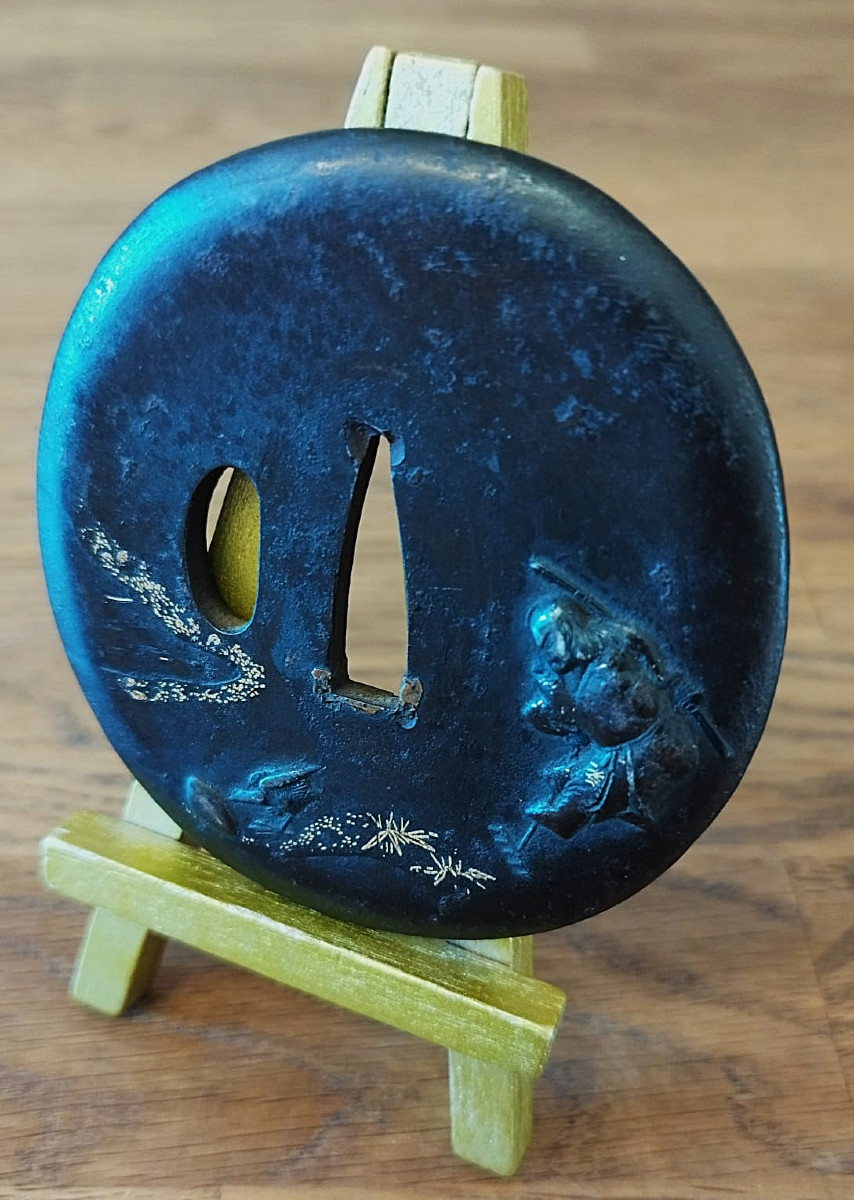
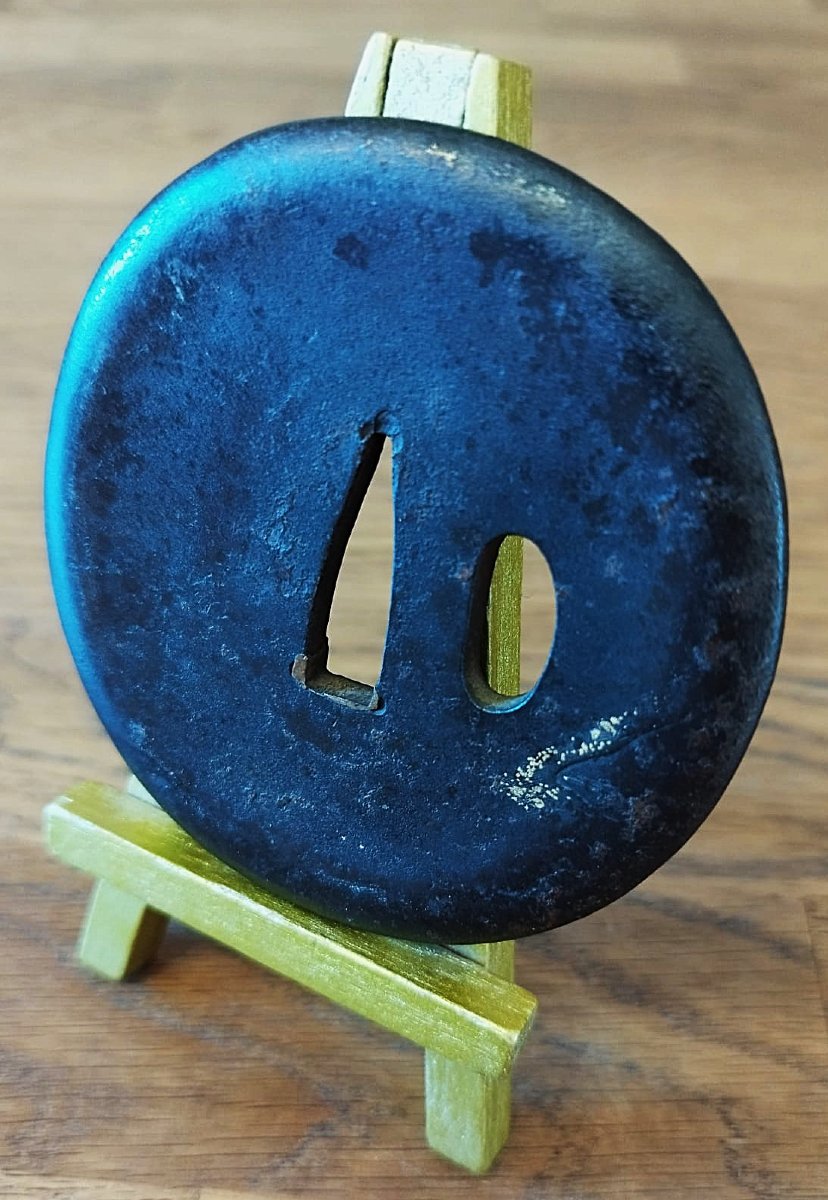
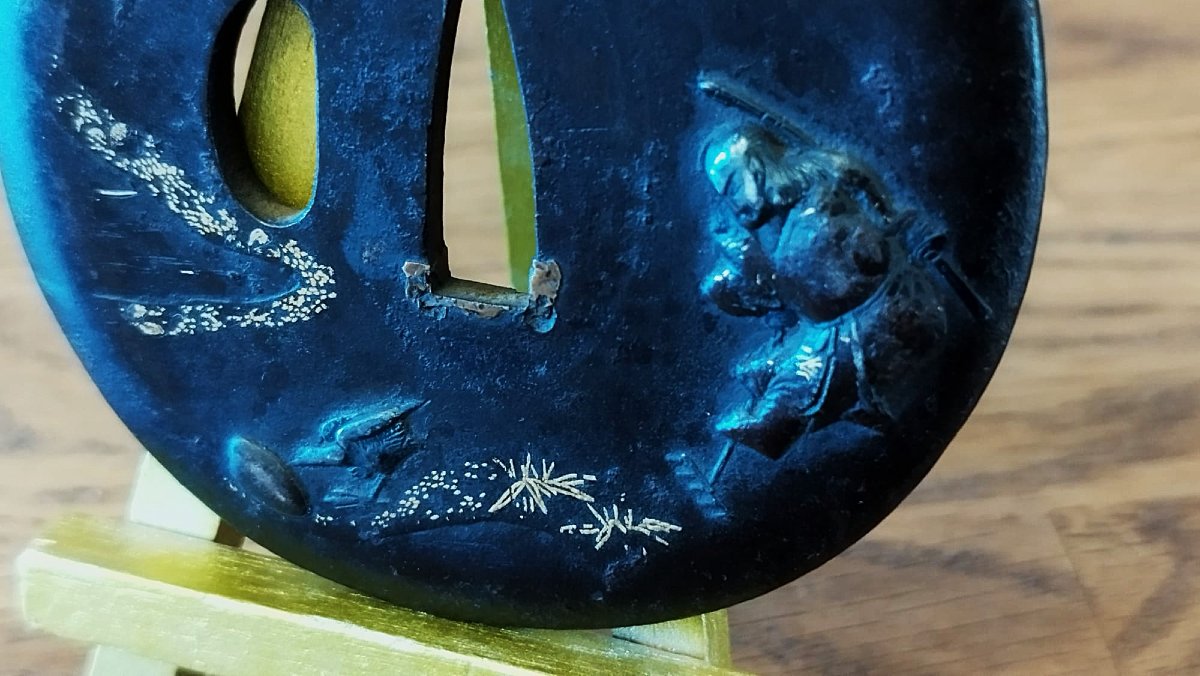
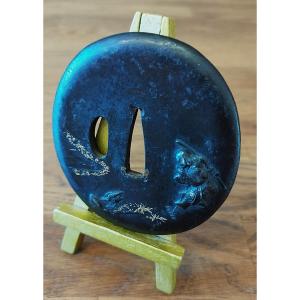


This exceptional Tsuba is a "world-object". The bowl-shapedbowl-shaped (Hoiteibara) acts like a theater frame for the stage in relief.
Sold excluding shipping costs
Contrary to the mass productions of the late 19th century, this piecethe density of the iron and the subtlety of the decoration.
The choice of the rake is a message of serenity (thewarrior at rest, turned towards nature).
This highly crafted piece is distinguished by an ironof rare quality, with a deep, jet-black patina and a perfectly smoothperfectly smooth. This finish, characteristic of prestige pieces,seeks to match the nobility of Shakudo.
The Hoiteibara structure is a forgingfeat of forging, offering an elegant curvature that protects the central decoration.
CHARACTERISTICS
Ironworking (Ji-Tetsu)The iron used is of a rare quality, presentinga jet-black patina, deep and perfectly smooth.
The Hoiteibara structureoffers an elegant curvature.
Iconography (Decor)
The scene illustrates with great finesse the theme oflongevity and peace:
Character : A Samurai or sage (representation of Jo) in Shakudo (copper-gold alloy) chased in high relief (Takabori).
He holds a scabbarded sword and a rake, symbolizing the harvest of happiness and good fortune. Silverware The wild grass and the and the stream are inlaid with fine gold of surgical precision. surgical precision. The contrast between shiny gold and matt black iron iron creates a striking visual depth.
L'Oiseau : A small sparrow or plover (Chidori) flies over the scene, adding a touch of life and movement on the concave edge of the guard.
Montage (Nakago-ana)
Sekigane : Presence of malleable copper at the top and bottom of the central hole.
This proves that the Tsuba has been carefully adjusted for a specific blade, guaranteeing a perfect fit perfect fit.
CONDITION
Patina:Excellent, unaltered. Inlays 100 % of the original gold is present.
Sold excluding shipping costs
Contrary to the mass productions of the late 19th century, this piecethe density of the iron and the subtlety of the decoration.
The choice of the rake is a message of serenity (thewarrior at rest, turned towards nature).
This highly crafted piece is distinguished by an ironof rare quality, with a deep, jet-black patina and a perfectly smoothperfectly smooth. This finish, characteristic of prestige pieces,seeks to match the nobility of Shakudo.
The Hoiteibara structure is a forgingfeat of forging, offering an elegant curvature that protects the central decoration.
CHARACTERISTICS
- Type: Katana tsuba
Form: Maru-Gata (Circular)
Profile:Hoiteibara (Concave "saucer-shaped" section, thickening from center to edges)
Material : High-density wrought iron deep black polish
Style / School: Nara (Nara-Sansaku)
Period:Late Edo period (19th century)
Dimensions : 81mm x 84mm Weight : 205 grs
Ironworking (Ji-Tetsu)The iron used is of a rare quality, presentinga jet-black patina, deep and perfectly smooth.
The Hoiteibara structureoffers an elegant curvature.
Iconography (Decor)
The scene illustrates with great finesse the theme oflongevity and peace:
Character : A Samurai or sage (representation of Jo) in Shakudo (copper-gold alloy) chased in high relief (Takabori).
He holds a scabbarded sword and a rake, symbolizing the harvest of happiness and good fortune. Silverware The wild grass and the and the stream are inlaid with fine gold of surgical precision. surgical precision. The contrast between shiny gold and matt black iron iron creates a striking visual depth.
L'Oiseau : A small sparrow or plover (Chidori) flies over the scene, adding a touch of life and movement on the concave edge of the guard.
Montage (Nakago-ana)
Sekigane : Presence of malleable copper at the top and bottom of the central hole.
This proves that the Tsuba has been carefully adjusted for a specific blade, guaranteeing a perfect fit perfect fit.
CONDITION
Patina:Excellent, unaltered. Inlays 100 % of the original gold is present.
Explore similar pieces and discover your ideal find:
Edged Weapons