


Pair Of 18th-century Marble Garden Figures, After Models By Giambologna (1529-1608)
Height: 116 cm high x 45 cm wide x 31 cm deep;
Height: 115 cm high x 44 cm wide x 35 cm deep.
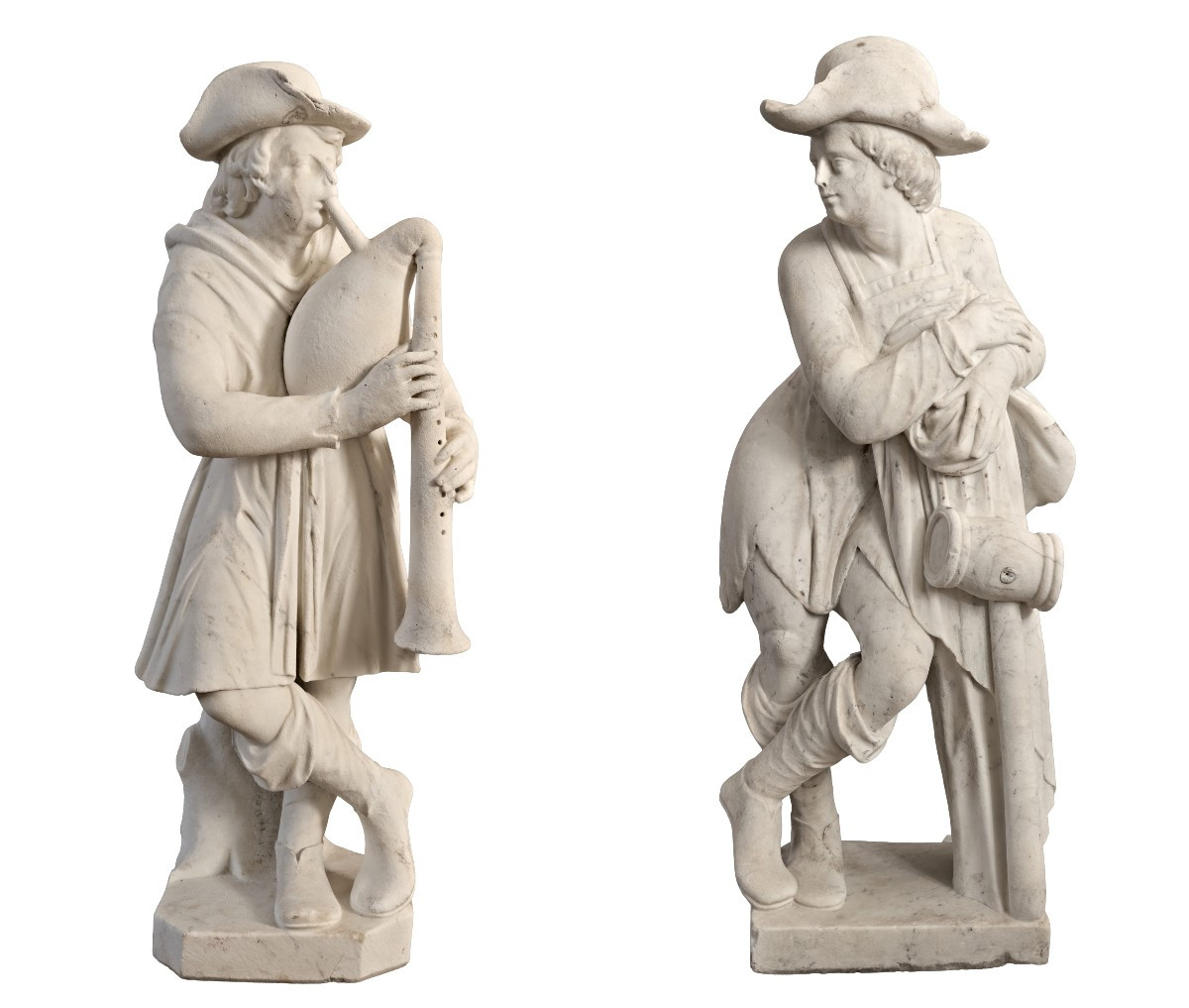
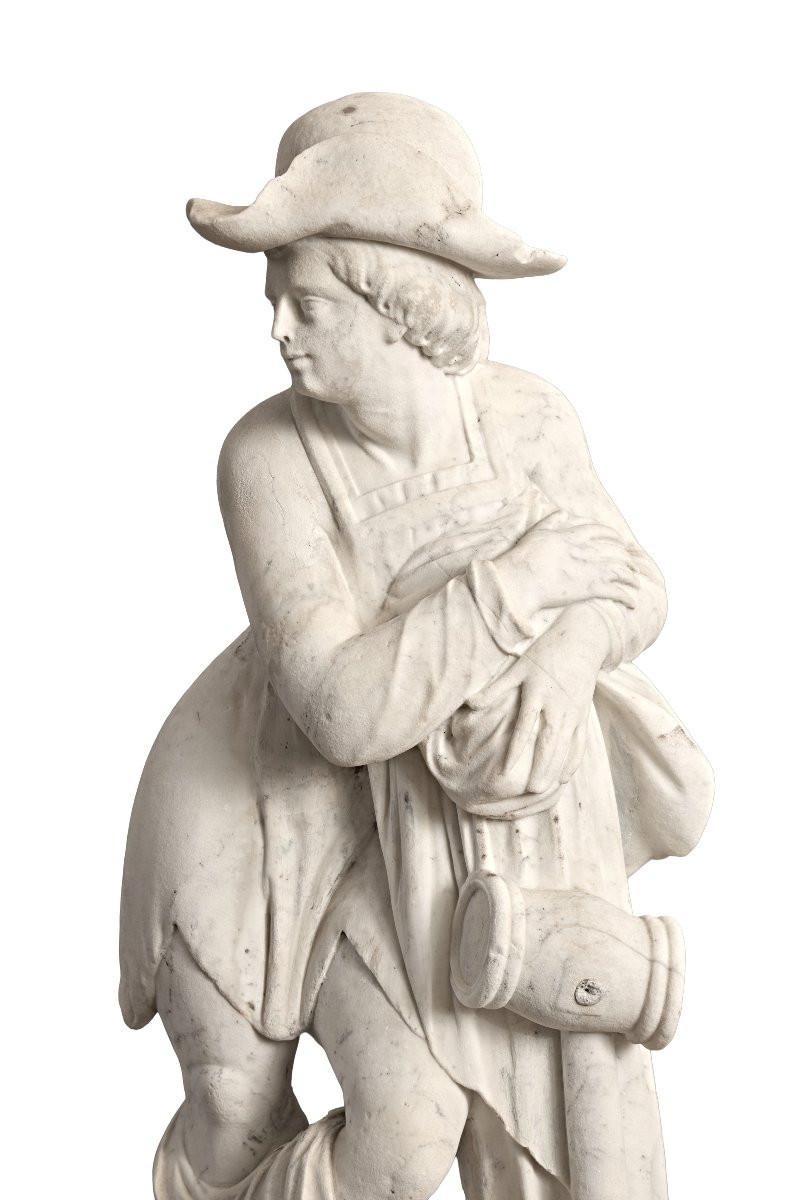
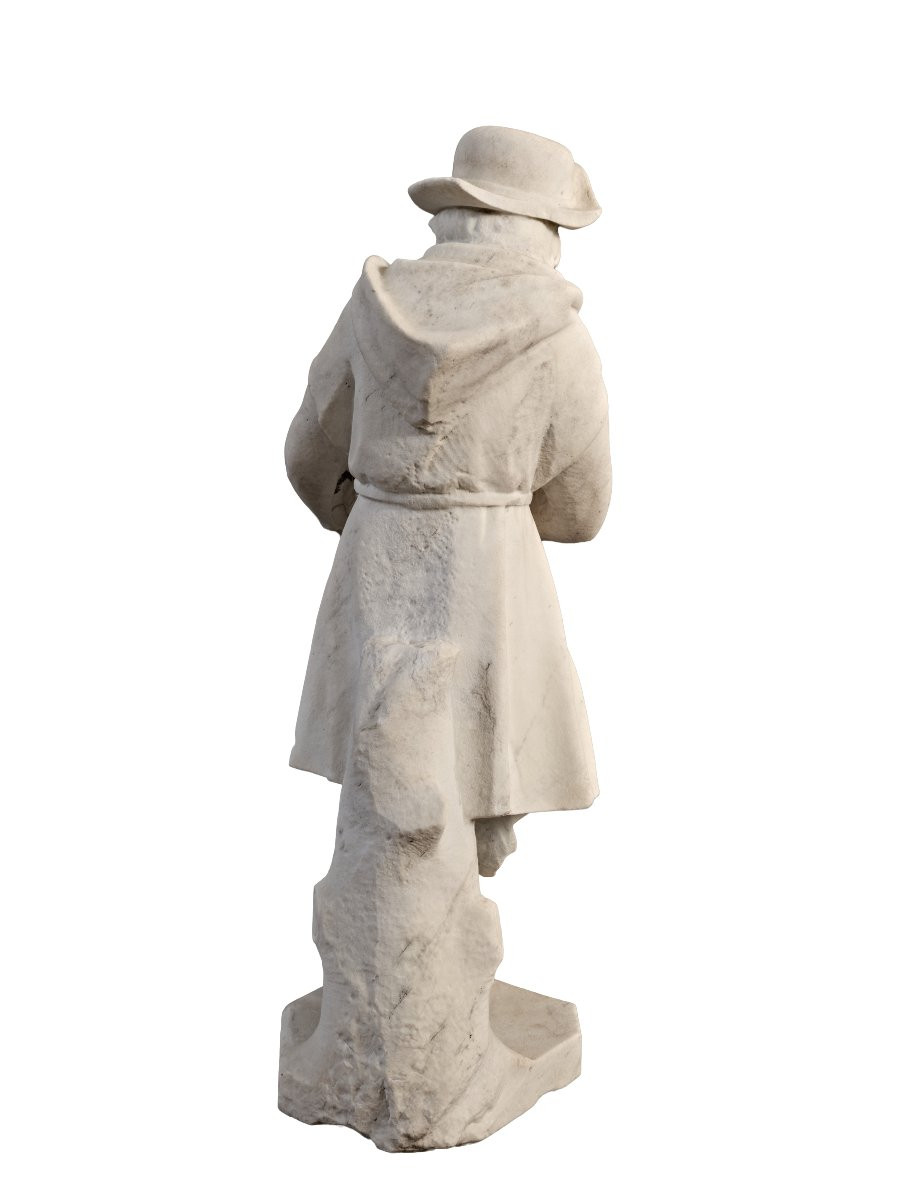
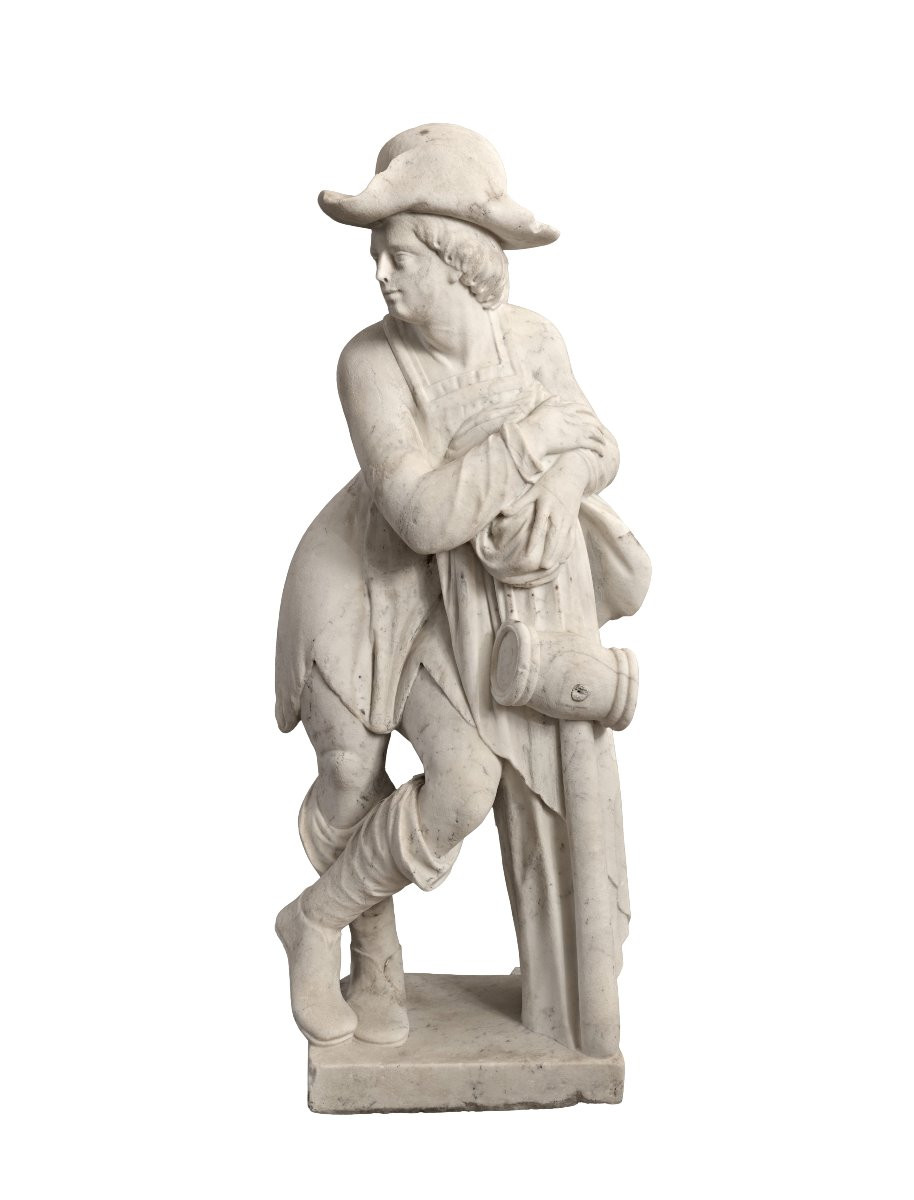
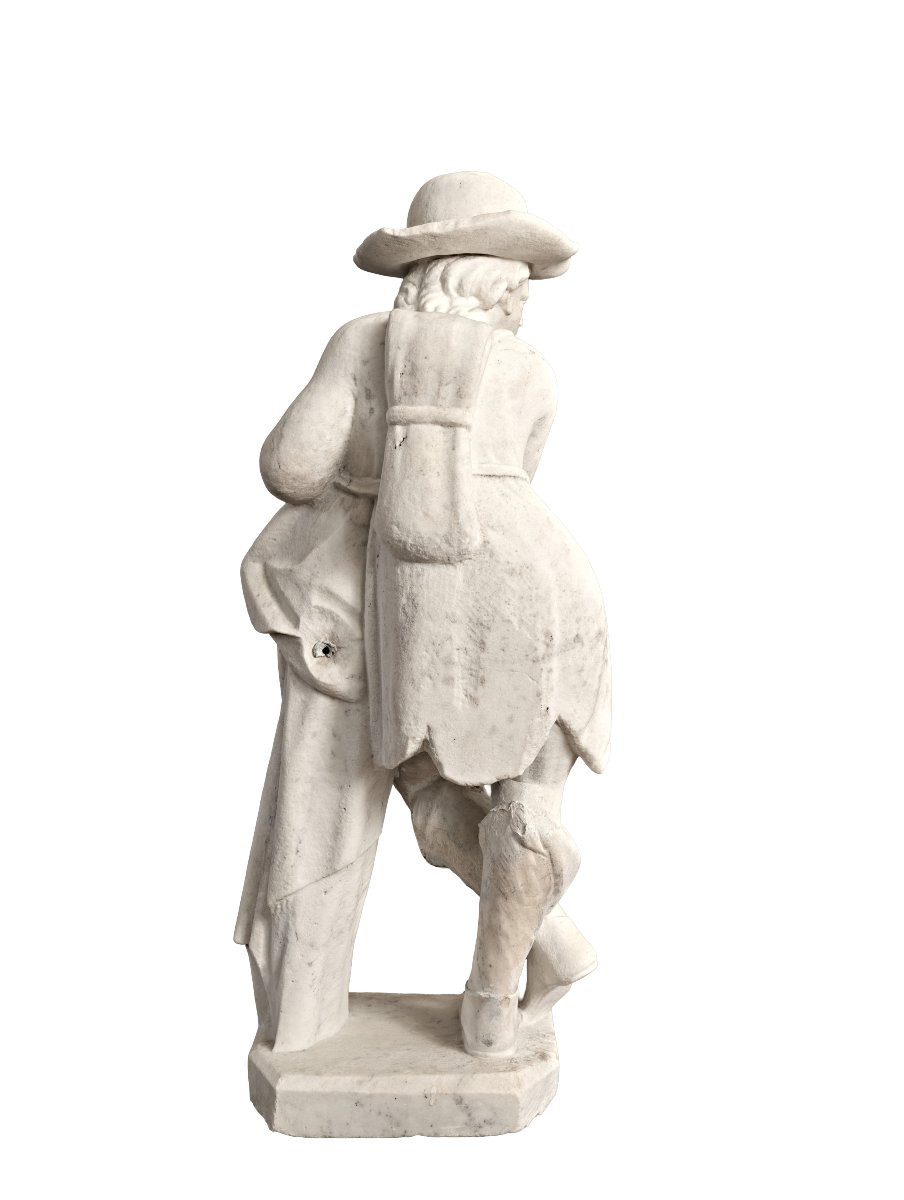
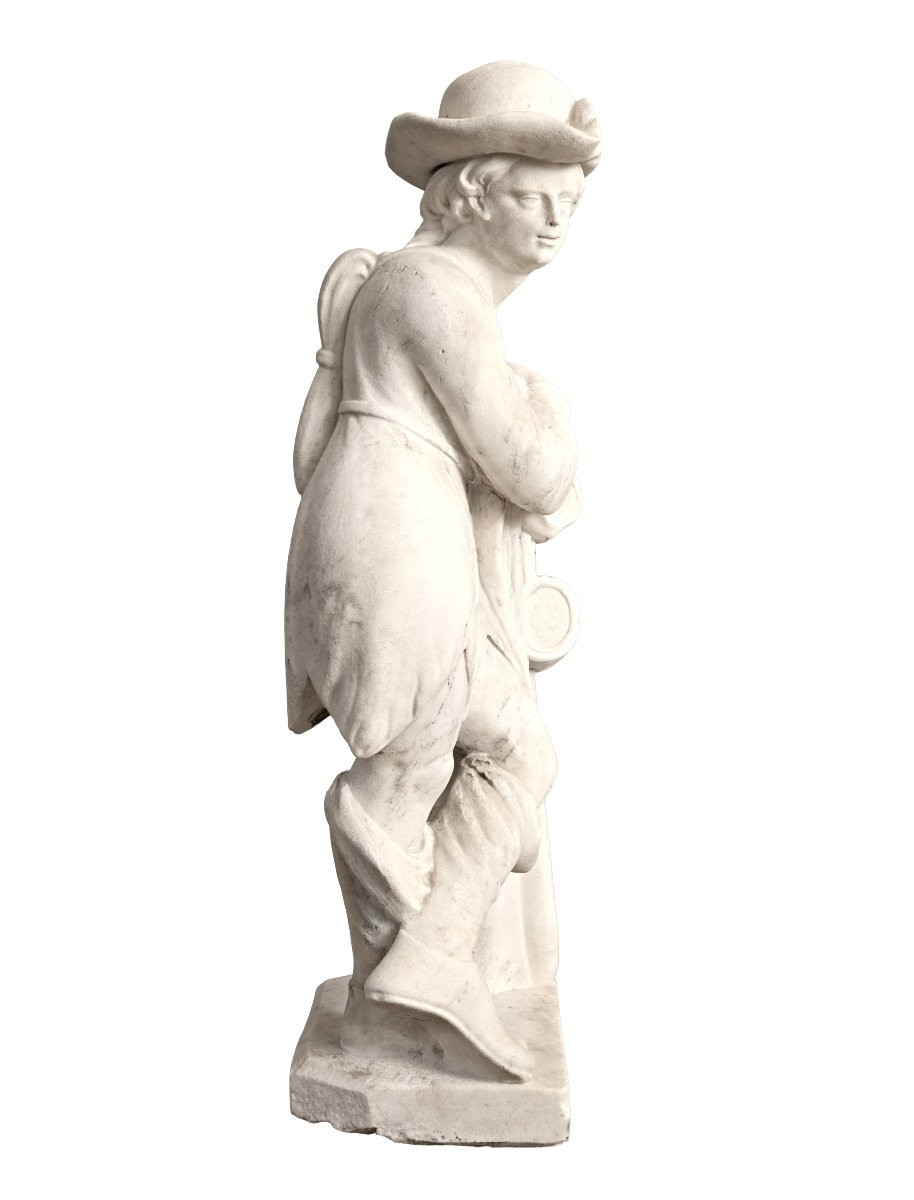
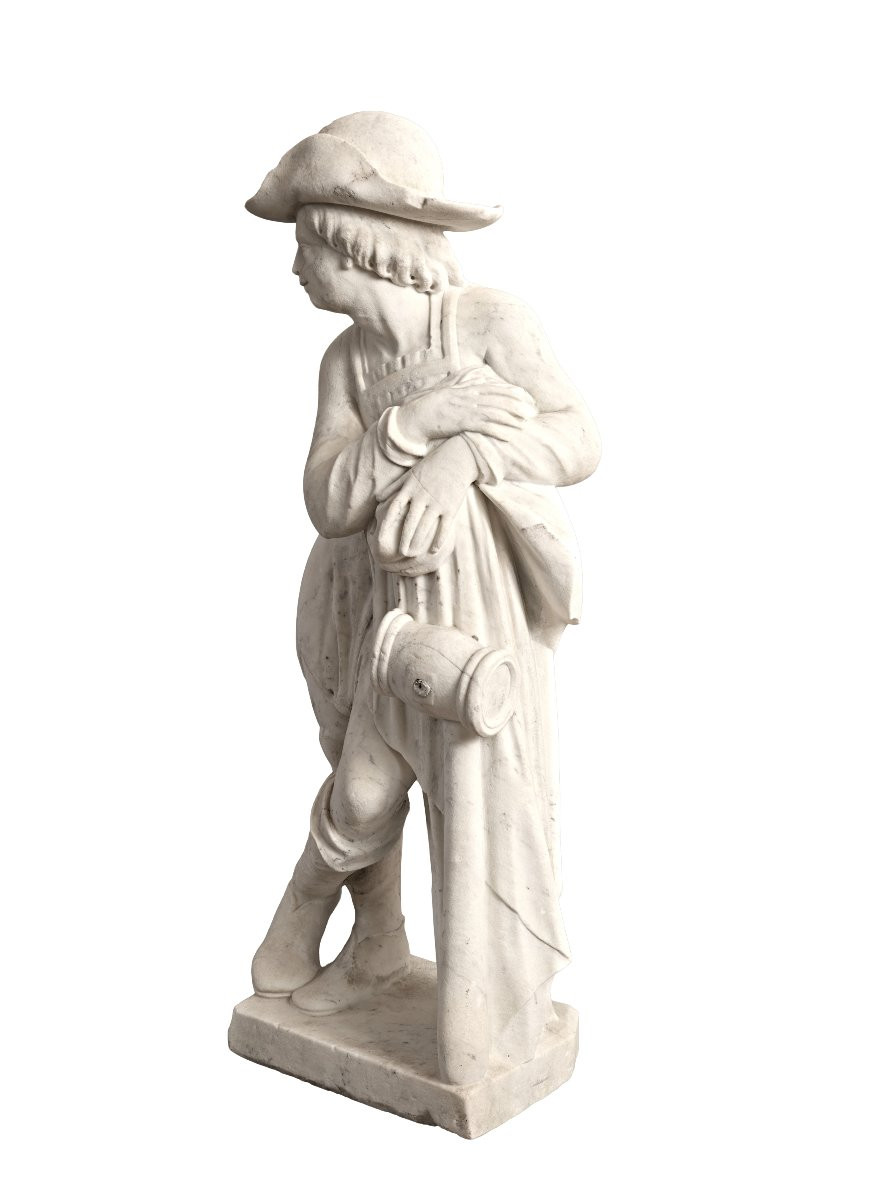
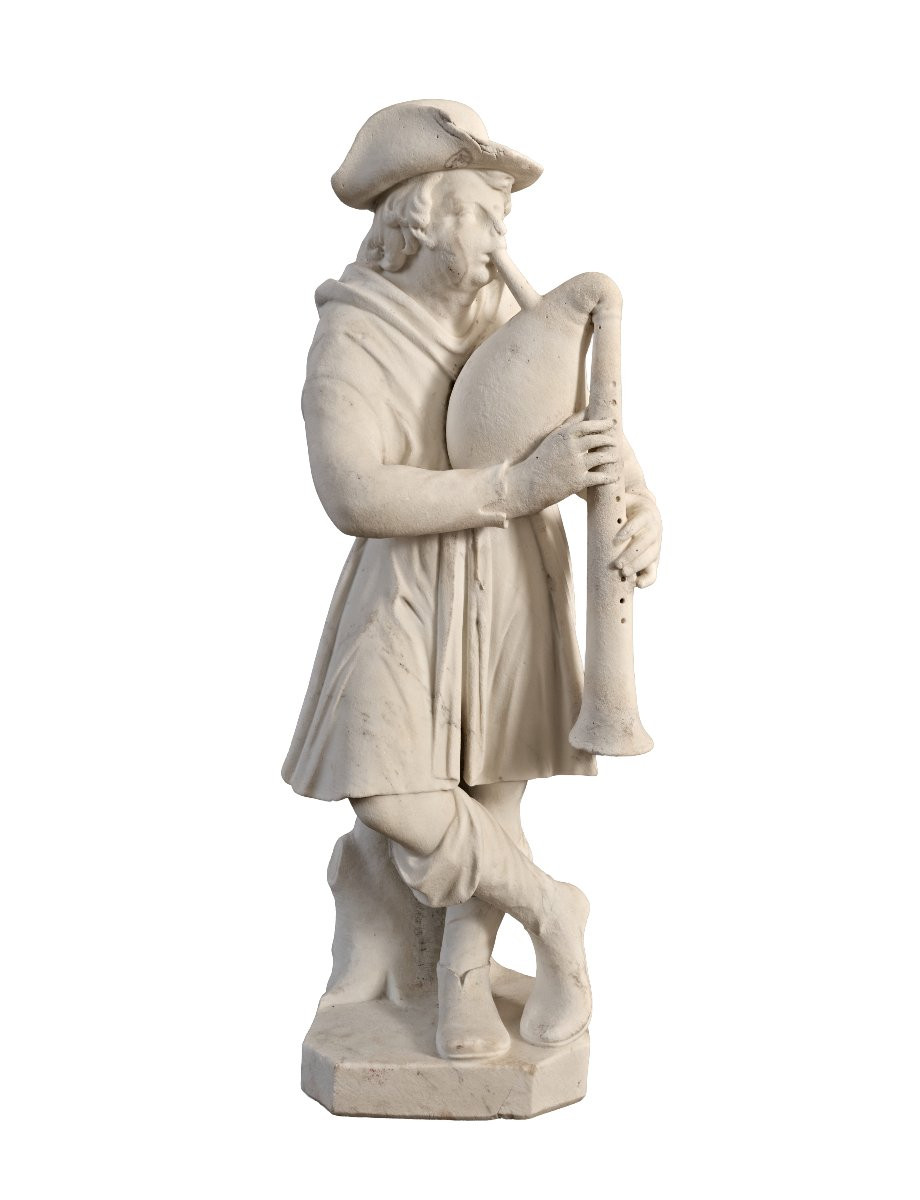
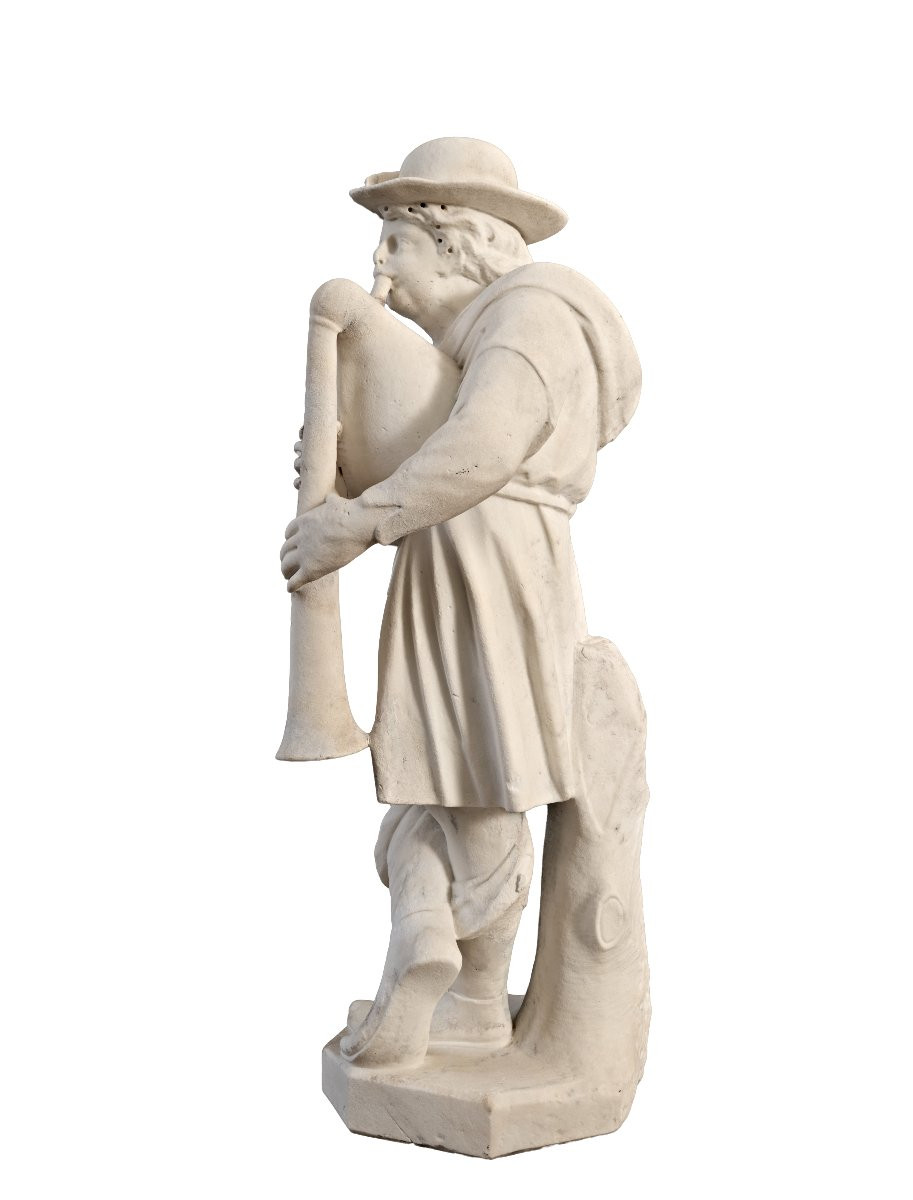
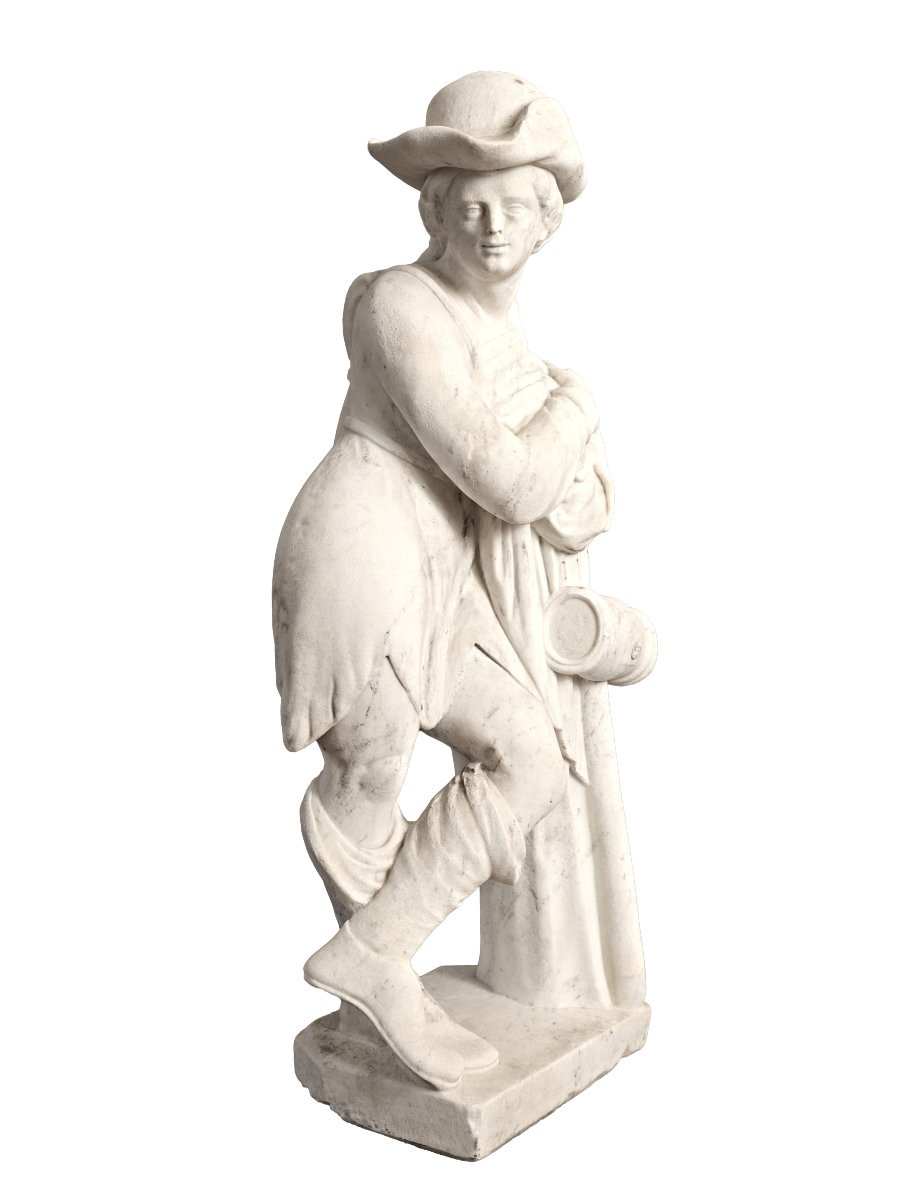
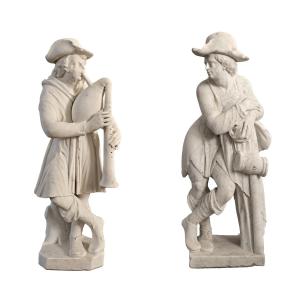
This pair of marble garden sculptures represents two figures of the rustic genre: a piper and a peasant leaning on his stick. Treated on a monumental scale, they are part of the great European tradition of 17th and 18th century garden statuary, intended to adorn aristocratic parks and gardens.
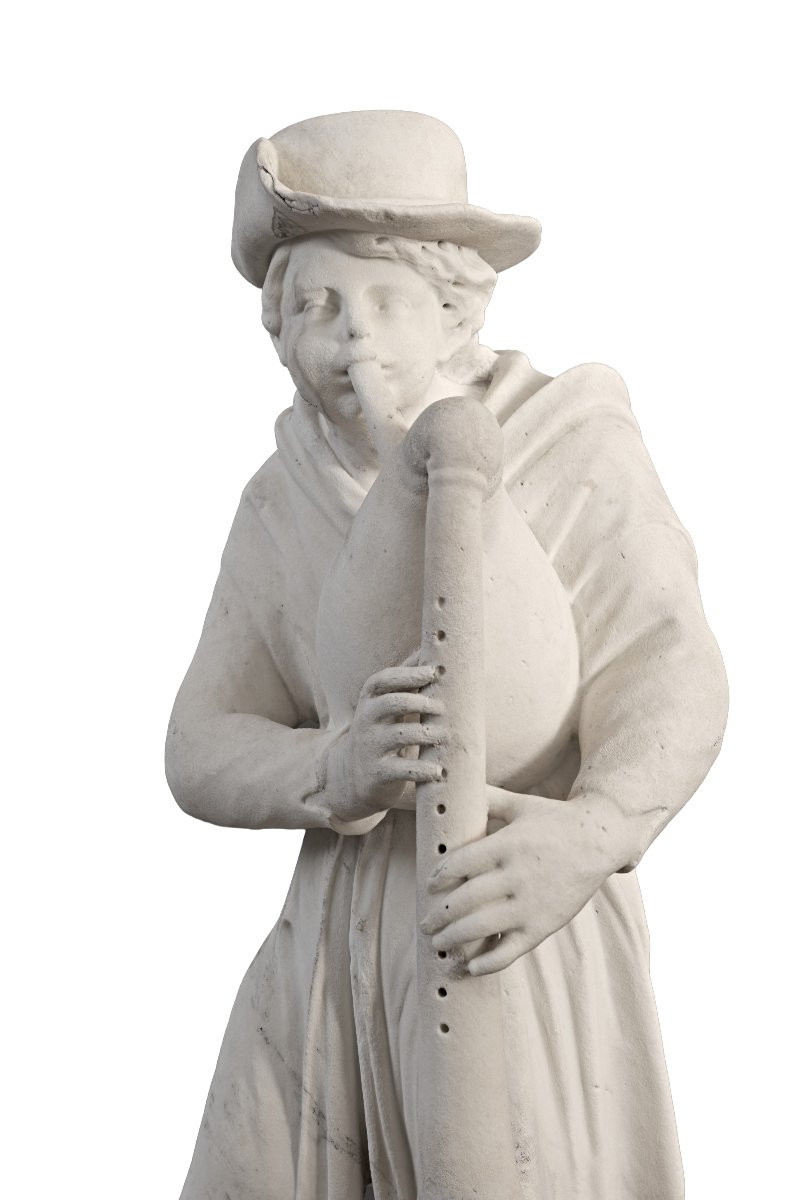
The piper is depicted in an animated attitude, his leg bent, his body slightly pivoted, holding his instrument against him. The peasant, meanwhile, adopts a resting posture, in marked contrapposto, leaning on a rustic stick. The figures are dressed in simple costumes, animated by loose, supple drapery with wide, natural folds, suitable for outdoor reading.
The treatment of the faces, with their full, expressive features, evokes a Nordic vocabulary, while the construction of the bodies and the overall balance of the compositions reveal a formal culture inherited from Italian Mannerism. The octagonal bases, integrated into the sculpture, confirm their purpose as autonomous garden sculptures, designed to be viewed from several angles.
Figures of peasants and musicians figure prominently in the work of Giambologna, a Flemish sculptor active in Florence in the service of the Medici.
From the end of the 16th century, Giambologna developed a repertoire of small bronzes representing idealized rustic figures, intended for princely cabinets and gardens. These models enjoyed an exceptional diffusion throughout Europe, thanks in particular to the numerous fonts produced after his compositions.
Among the prototypes closest to our sculptures are the bronze models of a Peasant leaning on his stick and a Piper, widely distributed and copied.
These compositions were quickly adapted to monumental formats in stone or marble for garden ornamentation, as Georg Weihrauch has pointed out in his study of European garden sculpture.
The adaptation of these models to large scale is also illustrated by the monumental figure of the Villano sculpted for a fountain in Livorno by Romolo Ferrucci between 1605 and 1628. This work marks an essential step in the transposition of Mannerist rustic figures to monumental garden sculpture.
During the 17th and 18th centuries, the Giambolonesque repertoire enjoyed widespread success in Northern Europe, particularly in the Netherlands and England, where garden sculptures depicting peasants and musicians became prized decorative elements.
A significant comparison can be made with the garden sculpture of a seated Piper made around 1680-1690 by Caius Gabriel Cibber, now in the Victoria and Albert Museum in London (inv. A.3-1930).
This work testifies to the persistence and adaptation of Giambologna's model in Northern European garden sculpture, both in the choice of subject and in monumentality and decorative function.
Netherlands or Italy, 18th century
Sculpted marble
Resting on octagonal bases
Provenance:
- Former English private collection.
- Former François Antonovich collection, France.
-French private collection
Height: 115 cm high x 44 cm wide x 35 cm deep.
This pair of marble garden sculptures represents two figures of the rustic genre: a piper and a peasant leaning on his stick. Treated on a monumental scale, they are part of the great European tradition of 17th and 18th century garden statuary, intended to adorn aristocratic parks and gardens.
The piper is depicted in an animated attitude, his leg bent, his body slightly pivoted, holding his instrument against him. The peasant, meanwhile, adopts a resting posture, in marked contrapposto, leaning on a rustic stick. The figures are dressed in simple costumes, animated by loose, supple drapery with wide, natural folds, suitable for outdoor reading.
The treatment of the faces, with their full, expressive features, evokes a Nordic vocabulary, while the construction of the bodies and the overall balance of the compositions reveal a formal culture inherited from Italian Mannerism. The octagonal bases, integrated into the sculpture, confirm their purpose as autonomous garden sculptures, designed to be viewed from several angles.
Figures of peasants and musicians figure prominently in the work of Giambologna, a Flemish sculptor active in Florence in the service of the Medici.
From the end of the 16th century, Giambologna developed a repertoire of small bronzes representing idealized rustic figures, intended for princely cabinets and gardens. These models enjoyed an exceptional diffusion throughout Europe, thanks in particular to the numerous fonts produced after his compositions.
Among the prototypes closest to our sculptures are the bronze models of a Peasant leaning on his stick and a Piper, widely distributed and copied.
These compositions were quickly adapted to monumental formats in stone or marble for garden ornamentation, as Georg Weihrauch has pointed out in his study of European garden sculpture.
The adaptation of these models to large scale is also illustrated by the monumental figure of the Villano sculpted for a fountain in Livorno by Romolo Ferrucci between 1605 and 1628. This work marks an essential step in the transposition of Mannerist rustic figures to monumental garden sculpture.
During the 17th and 18th centuries, the Giambolonesque repertoire enjoyed widespread success in Northern Europe, particularly in the Netherlands and England, where garden sculptures depicting peasants and musicians became prized decorative elements.
A significant comparison can be made with the garden sculpture of a seated Piper made around 1680-1690 by Caius Gabriel Cibber, now in the Victoria and Albert Museum in London (inv. A.3-1930).
This work testifies to the persistence and adaptation of Giambologna's model in Northern European garden sculpture, both in the choice of subject and in monumentality and decorative function.
Netherlands or Italy, 18th century
Sculpted marble
Resting on octagonal bases
Provenance:
- Former English private collection.
- Former François Antonovich collection, France.
-French private collection
38 000 €
Period: 18th century
Style: Renaissance, Louis 13th
Condition: Excellent condition
Material: Marble
Length: 45
Height: 116
Depth: 35
Reference (ID): 1736587
Availability: In stock
Print