


Kristians Tonny (1907- 1977) Surrealist Composition
Artist: Kristians Tonny (1907- 1977)
Oil on cardboard
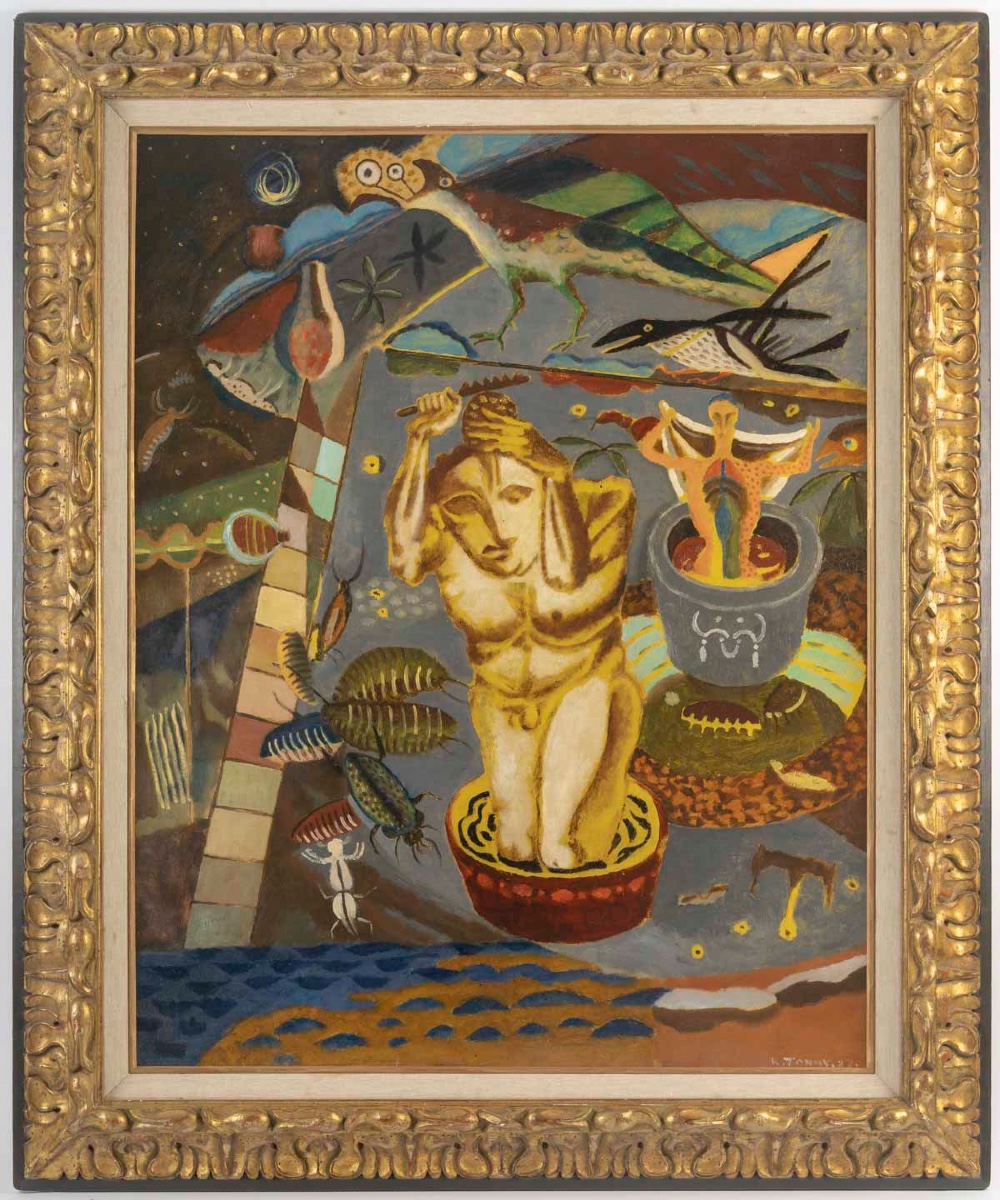
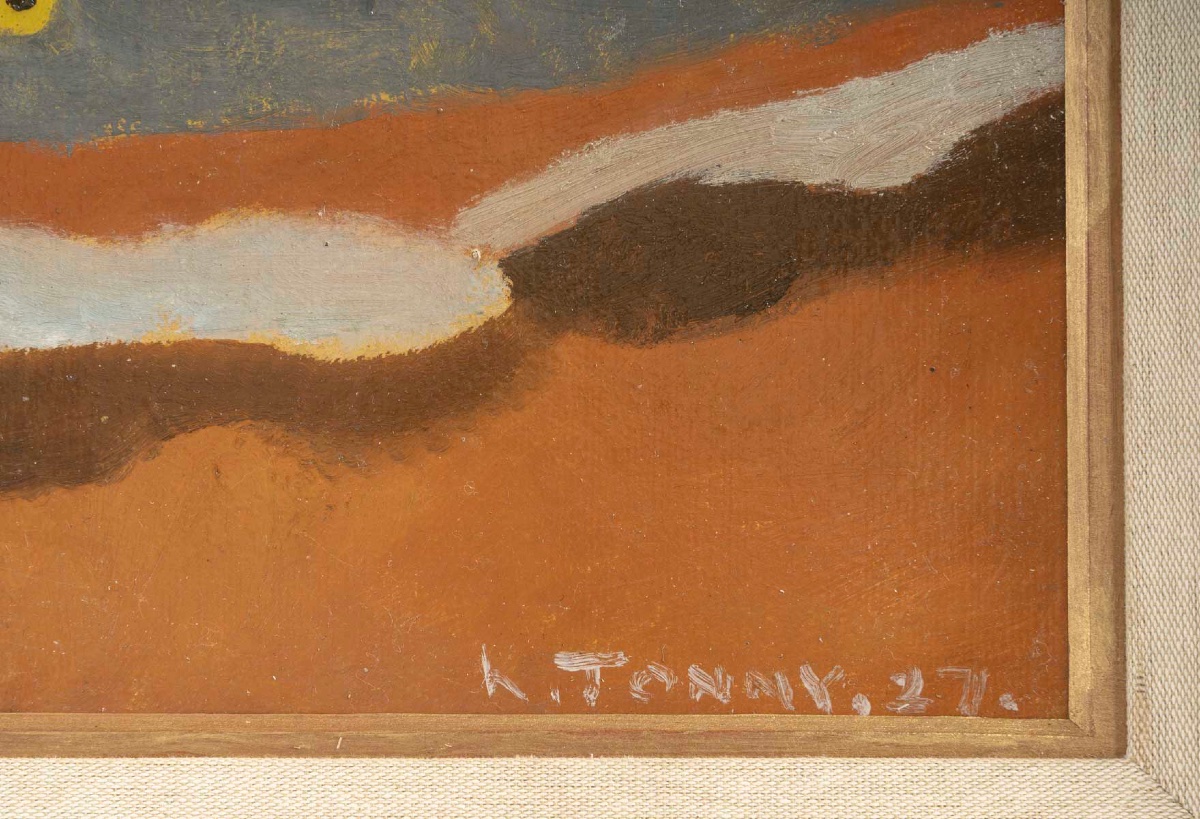
Signed and dated 1927 lower right
Dimensions: 90 x 71 cm
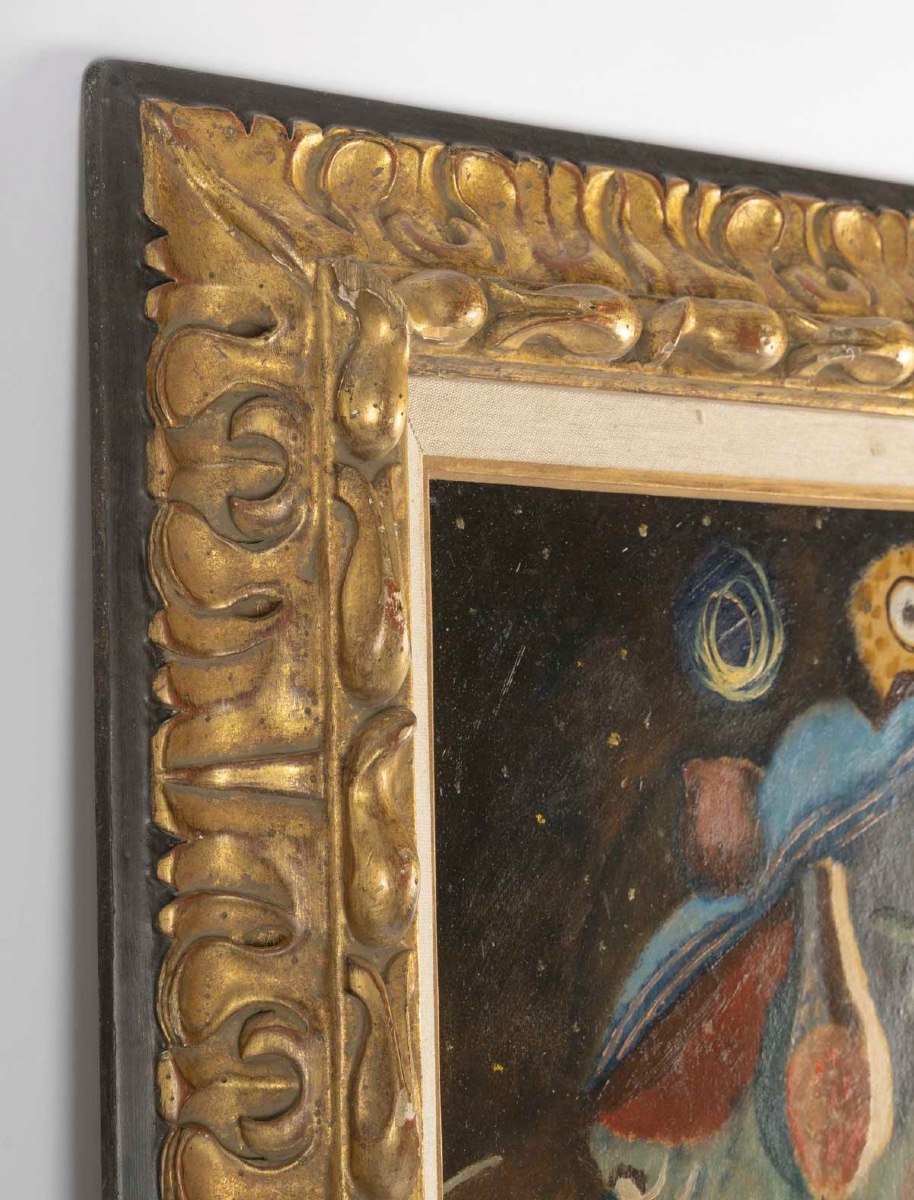
Framed: 112.5 x 93.5 cm
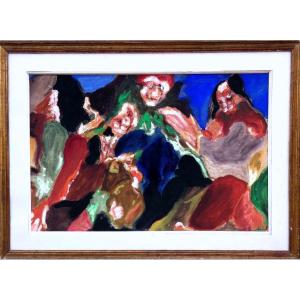
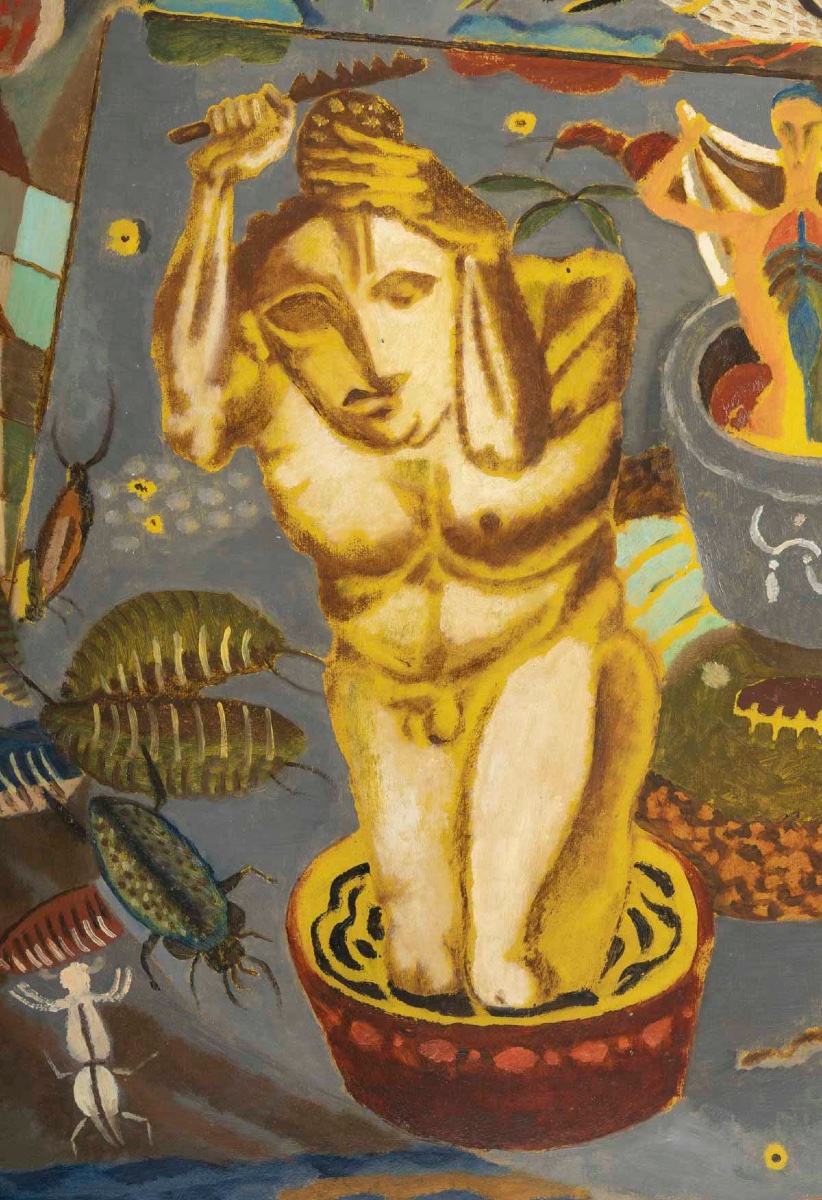
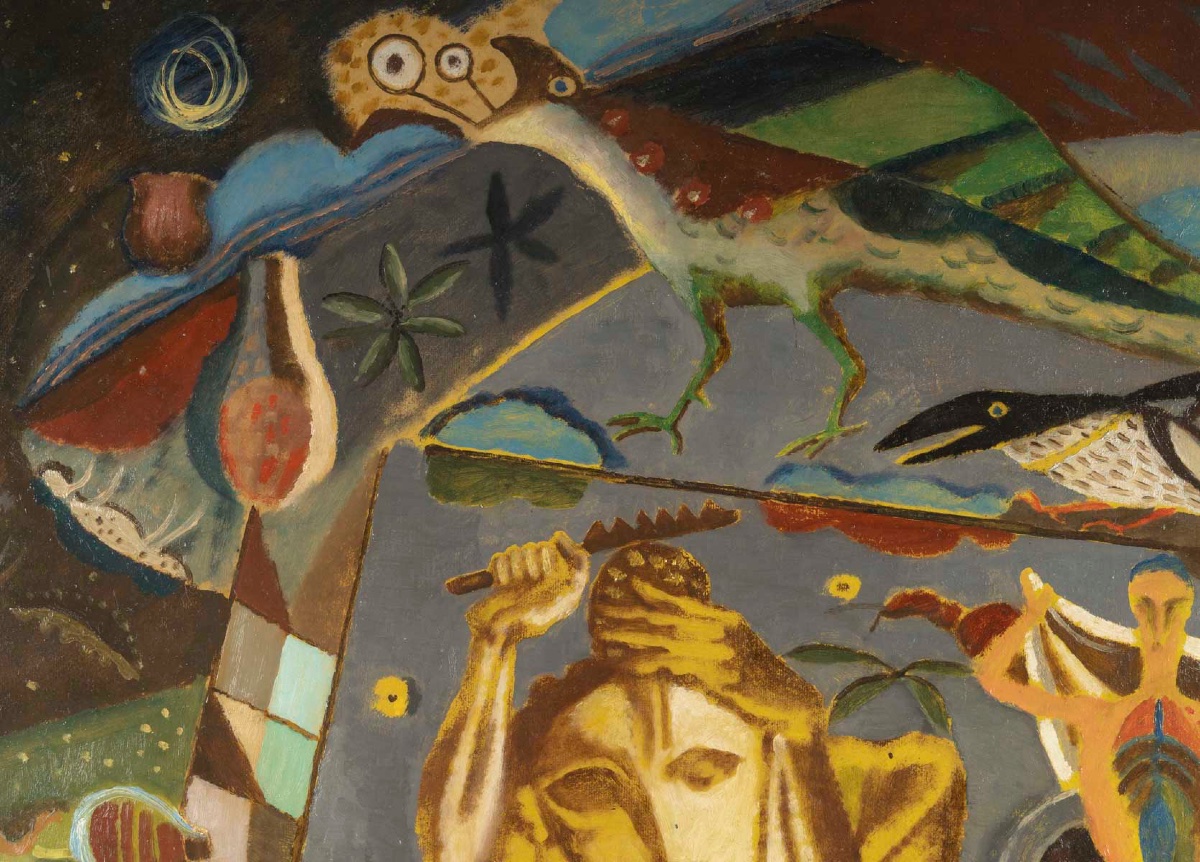
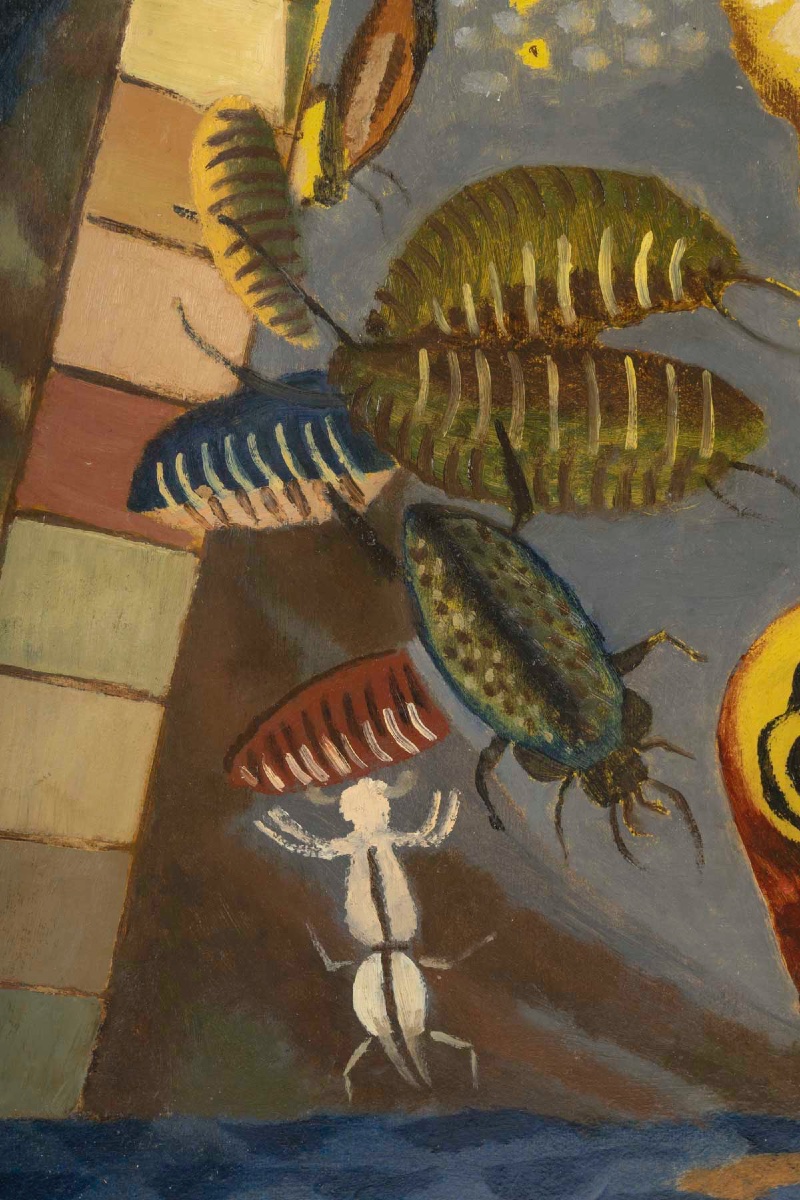
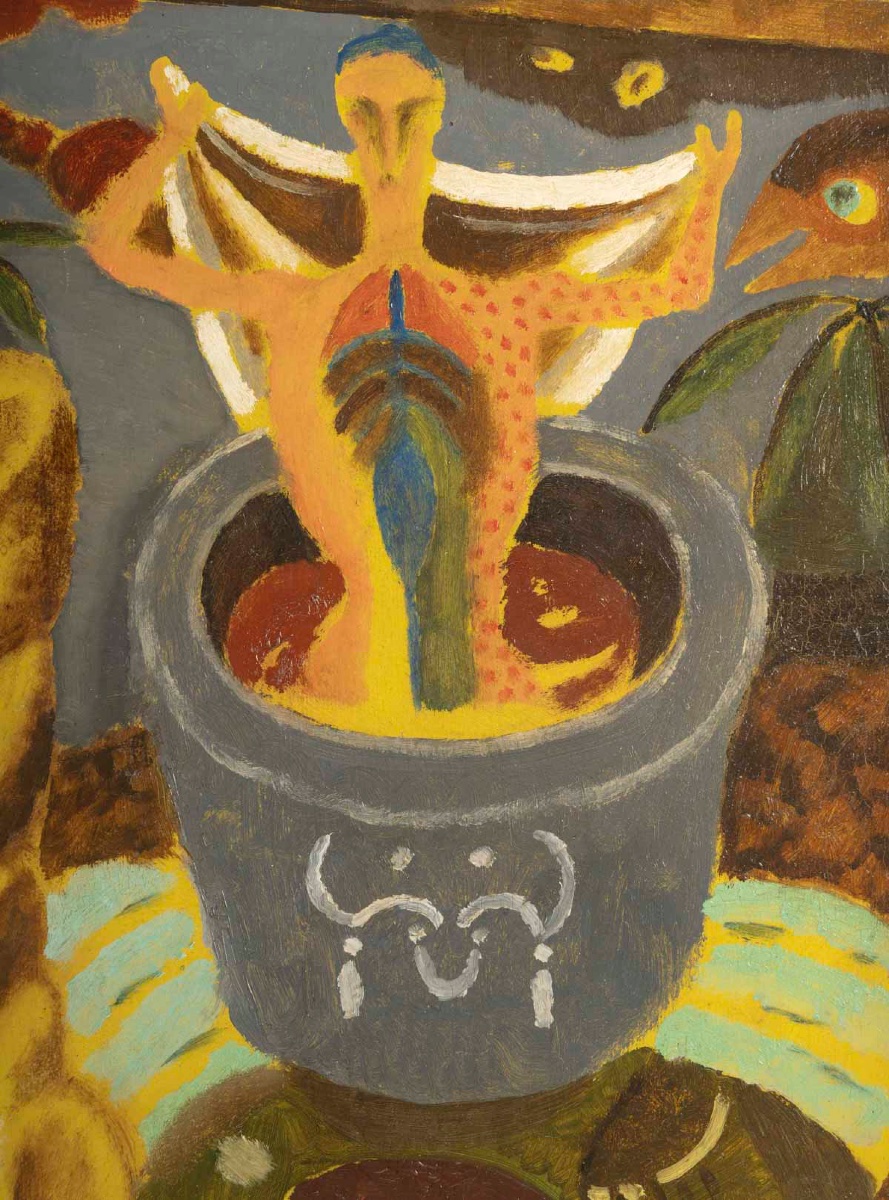
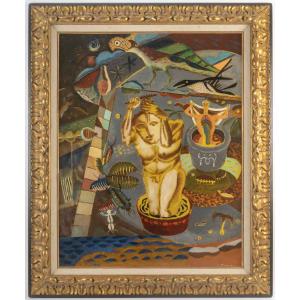
A surrealist work by the Dutch painter Kristians Tonny, created in 1927. A highly fantastical composition featuring human figures, birds, and oversized insects.
Surrealism in Painting: A "Pure Psychic Automatism"
Surrealist painters express the unconscious and dreams through their art, often using strange and fantastical imagery.
Surrealism is associated with the technique of automatism. This involves painting or drawing without conscious thought, allowing the unconscious to take over and reveal hidden images. André Breton laid its foundations in 1924 with the publication of his Manifesto of Surrealism, drawing inspiration from Sigmund Freud's theories on the unconscious. He defined it as "Pure Psychic Automatism," with automatic writing as its creative principle. Key artists associated with this movement include Salvador Dalí, René Magritte, and Max Ernst.
Kristians Tonny, a Talented Young Surrealist Painter
Kristians Tonny, a young, prodigious painter of 20, painted this canvas two years after his Participation in the first exhibition of Surrealist paintings at the Galerie Pierre in Paris in 1925.
He quickly became recognized as an established artist, acclaimed by critics, and his works were acquired by discerning collectors. He formed a close friendship with Gertrude Stein, the American poet, writer, and collector of modern art, whose portrait he painted in 1930, becoming only the second artist after Pablo Picasso to do so.
Biography
Tonny Kristians was a Surrealist painter and draughtsman whose career spanned the 1920s to the 1970s. Born in Amsterdam, he moved to Paris with his parents in 1913. Encouraged by his father, he began painting and drawing at a very young age, which allowed him to exhibit in a Parisian gallery at the age of twelve and establish himself as an avant-garde artist by 1929.
Early Years
His talent was recognized and encouraged early on by his father, A. Kristians, who helped him in the studio and also accompanied his parents on all their travels. His immersion in Parisian life, cabarets, and cinema largely inspired his early works.
Considered a child prodigy, he quickly gained recognition.
He exhibited for the first time in 1920 at the Parisian gallery Mouninou, and then, in 1924, in the Netherlands, at the Amsterdam artists' society De Kring.
Around the age of fifteen, he regularly attended the studio of the painter Jules Pascin. He learned a great deal from him. In particular, he contributed to the development of the transfer technique, a blind drawing technique conceived by Pascin as an experiment in free expression. Kristians Tonny perfected this technique and fully embraced it.
Life and Career until 1939
In 1925, he participated in the first major Surrealist exhibition at the Galerie Pierre in Paris. He quickly became recognized as an established artist, acclaimed by critics, and his works were acquired by discerning collectors. He had become friends with Gertrude Stein, who encouraged him to rent a studio. A private argument led to a definitive break between them. He decided to leave for Tangier, Morocco. After about a year, he returned to Europe, staying in France and the Netherlands before settling permanently in Paris.
In early 1937, he embarked with his first wife, Marie Claire Ivanoff, whom he had just married, as well as with Paul Bowles and his future wife, the writer Jane Auer, on a trip that took them first to the United States, then to Mexico and Guatemala. In the United States, his work was featured in various exhibitions. He sold paintings to collectors and museums. He was commissioned to paint a series of frescoes in a theater in Hartford, Connecticut.
His trip to Mexico fulfilled a long-held dream, and from then on, the Mexican landscape became a recurring theme in his work. It was a turning point in his artistic development.
In the late 1930s, Surrealist exhibitions were held in several major European cities, and Kristians Tonny participated in organizing the first international Surrealist exhibition in the Netherlands, in Amsterdam, alongside André Breton, Max Ernst, Paul Éluard, E.L.T. Mesens, and others.
Life and Career After 1939
During World War II, K. Tonny resided primarily in the south of France. He and his wife attempted to emigrate to the United States, but despite completing all the necessary formalities, the trip did not take place for both financial and political reasons. During the war, he nevertheless managed to participate in exhibitions in Monte Carlo, where he he even organized his own exhibition in 1942
In 1944, he returned to Paris, where he resumed his pre-war life. He sold his artwork, illustrated books, and painted frescoes in the newly built casino in Saint-Malo.
He faced difficulties, particularly because the pre-war Parisian art scene had disappeared. Furthermore, personal problems plunged him into a deep depression.
In 1949, after more than thirty years abroad, he settled in Amsterdam, where he remarried. He led a reclusive life in the Netherlands and was unable to fully integrate into the Dutch art scene of the time, partly due to the lack of interest in Surrealism at that time. Despite this, he remained very productive until several years before his death.
In 1977, he died in Paris from pneumonia.
Since his death, Tonny has remained an artist known only to a limited audience. Her original works are rarely exhibited, whether at auction or in exhibitions.
Bibliography
• Frida de Jong, Laurens Vancrevel (1978). Kristians Tonny: Meulenhoff
https://shs.cairn.info/article/ARCO_CASEL_2023_01_0374
Signed and dated 1927 lower right
Dimensions: 90 x 71 cm
Framed: 112.5 x 93.5 cm
A surrealist work by the Dutch painter Kristians Tonny, created in 1927. A highly fantastical composition featuring human figures, birds, and oversized insects.
Surrealism in Painting: A "Pure Psychic Automatism"
Surrealist painters express the unconscious and dreams through their art, often using strange and fantastical imagery.
Surrealism is associated with the technique of automatism. This involves painting or drawing without conscious thought, allowing the unconscious to take over and reveal hidden images. André Breton laid its foundations in 1924 with the publication of his Manifesto of Surrealism, drawing inspiration from Sigmund Freud's theories on the unconscious. He defined it as "Pure Psychic Automatism," with automatic writing as its creative principle. Key artists associated with this movement include Salvador Dalí, René Magritte, and Max Ernst.
Kristians Tonny, a Talented Young Surrealist Painter
Kristians Tonny, a young, prodigious painter of 20, painted this canvas two years after his Participation in the first exhibition of Surrealist paintings at the Galerie Pierre in Paris in 1925.
He quickly became recognized as an established artist, acclaimed by critics, and his works were acquired by discerning collectors. He formed a close friendship with Gertrude Stein, the American poet, writer, and collector of modern art, whose portrait he painted in 1930, becoming only the second artist after Pablo Picasso to do so.
Biography
Tonny Kristians was a Surrealist painter and draughtsman whose career spanned the 1920s to the 1970s. Born in Amsterdam, he moved to Paris with his parents in 1913. Encouraged by his father, he began painting and drawing at a very young age, which allowed him to exhibit in a Parisian gallery at the age of twelve and establish himself as an avant-garde artist by 1929.
Early Years
His talent was recognized and encouraged early on by his father, A. Kristians, who helped him in the studio and also accompanied his parents on all their travels. His immersion in Parisian life, cabarets, and cinema largely inspired his early works.
Considered a child prodigy, he quickly gained recognition.
He exhibited for the first time in 1920 at the Parisian gallery Mouninou, and then, in 1924, in the Netherlands, at the Amsterdam artists' society De Kring.
Around the age of fifteen, he regularly attended the studio of the painter Jules Pascin. He learned a great deal from him. In particular, he contributed to the development of the transfer technique, a blind drawing technique conceived by Pascin as an experiment in free expression. Kristians Tonny perfected this technique and fully embraced it.
Life and Career until 1939
In 1925, he participated in the first major Surrealist exhibition at the Galerie Pierre in Paris. He quickly became recognized as an established artist, acclaimed by critics, and his works were acquired by discerning collectors. He had become friends with Gertrude Stein, who encouraged him to rent a studio. A private argument led to a definitive break between them. He decided to leave for Tangier, Morocco. After about a year, he returned to Europe, staying in France and the Netherlands before settling permanently in Paris.
In early 1937, he embarked with his first wife, Marie Claire Ivanoff, whom he had just married, as well as with Paul Bowles and his future wife, the writer Jane Auer, on a trip that took them first to the United States, then to Mexico and Guatemala. In the United States, his work was featured in various exhibitions. He sold paintings to collectors and museums. He was commissioned to paint a series of frescoes in a theater in Hartford, Connecticut.
His trip to Mexico fulfilled a long-held dream, and from then on, the Mexican landscape became a recurring theme in his work. It was a turning point in his artistic development.
In the late 1930s, Surrealist exhibitions were held in several major European cities, and Kristians Tonny participated in organizing the first international Surrealist exhibition in the Netherlands, in Amsterdam, alongside André Breton, Max Ernst, Paul Éluard, E.L.T. Mesens, and others.
Life and Career After 1939
During World War II, K. Tonny resided primarily in the south of France. He and his wife attempted to emigrate to the United States, but despite completing all the necessary formalities, the trip did not take place for both financial and political reasons. During the war, he nevertheless managed to participate in exhibitions in Monte Carlo, where he he even organized his own exhibition in 1942
In 1944, he returned to Paris, where he resumed his pre-war life. He sold his artwork, illustrated books, and painted frescoes in the newly built casino in Saint-Malo.
He faced difficulties, particularly because the pre-war Parisian art scene had disappeared. Furthermore, personal problems plunged him into a deep depression.
In 1949, after more than thirty years abroad, he settled in Amsterdam, where he remarried. He led a reclusive life in the Netherlands and was unable to fully integrate into the Dutch art scene of the time, partly due to the lack of interest in Surrealism at that time. Despite this, he remained very productive until several years before his death.
In 1977, he died in Paris from pneumonia.
Since his death, Tonny has remained an artist known only to a limited audience. Her original works are rarely exhibited, whether at auction or in exhibitions.
Bibliography
• Frida de Jong, Laurens Vancrevel (1978). Kristians Tonny: Meulenhoff
https://shs.cairn.info/article/ARCO_CASEL_2023_01_0374
5 500 €
Period: 20th century
Style: Other Style
Condition: Excellent condition
Material: Oil painting on cardboard
Width: 71 cm
Height: 90 cm
Reference (ID): 1733294
Availability: In stock
Print