

Toyohara Chikanobu (1838-1912) “chiyoda No ōoku: Chanoyu Mawaribana” 3 Meiji Period Prints
Artist: Toyohara Chikanobu (1838-1912)
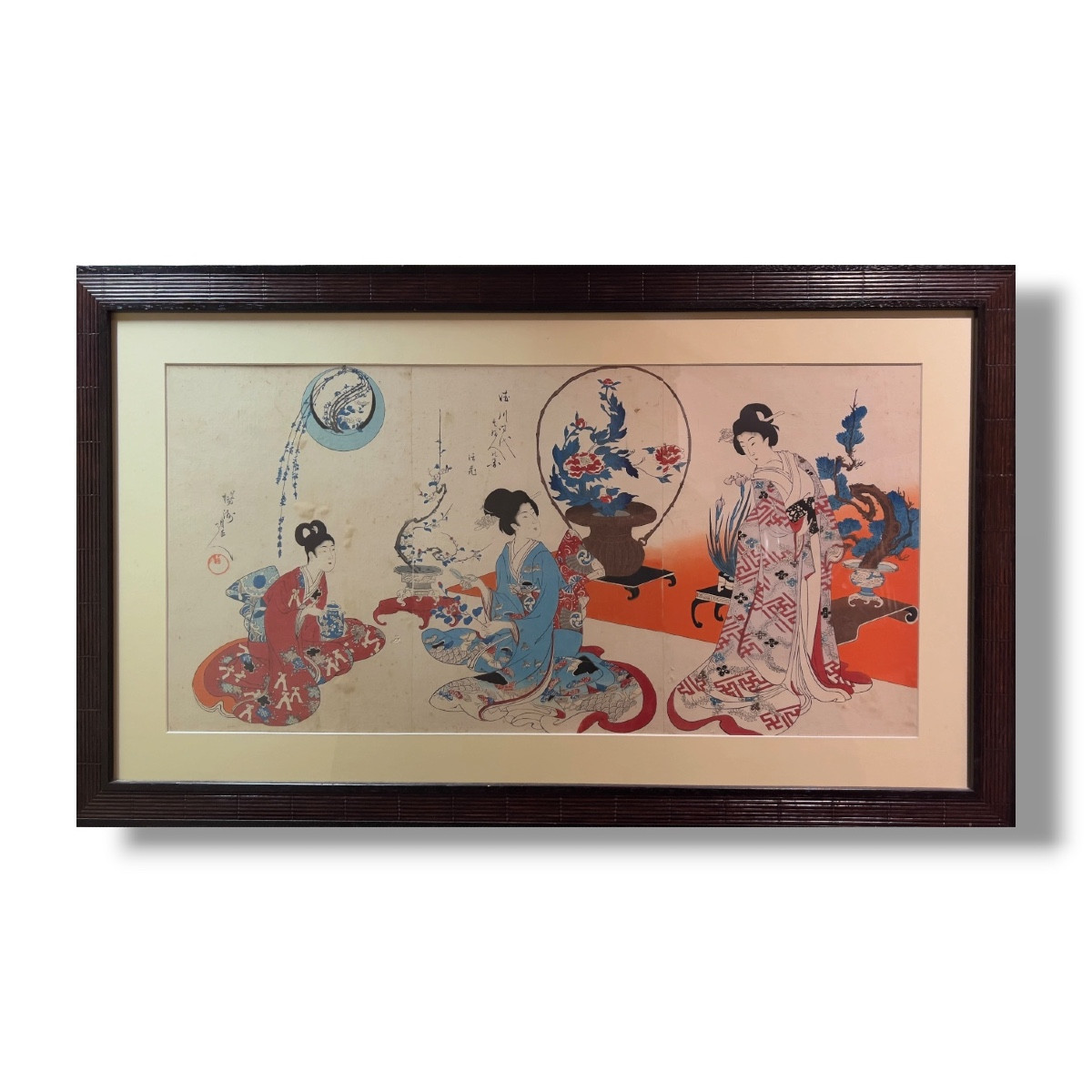
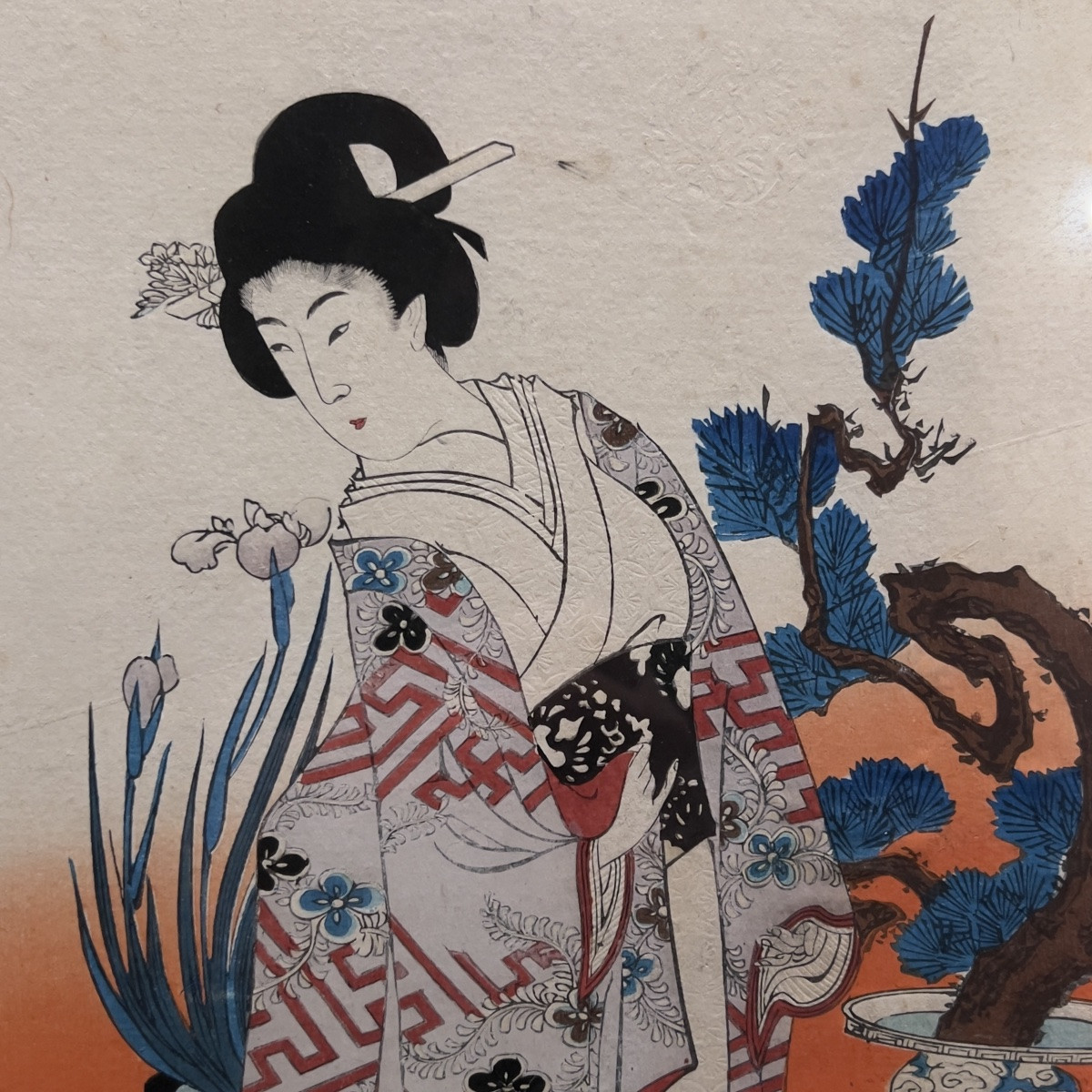
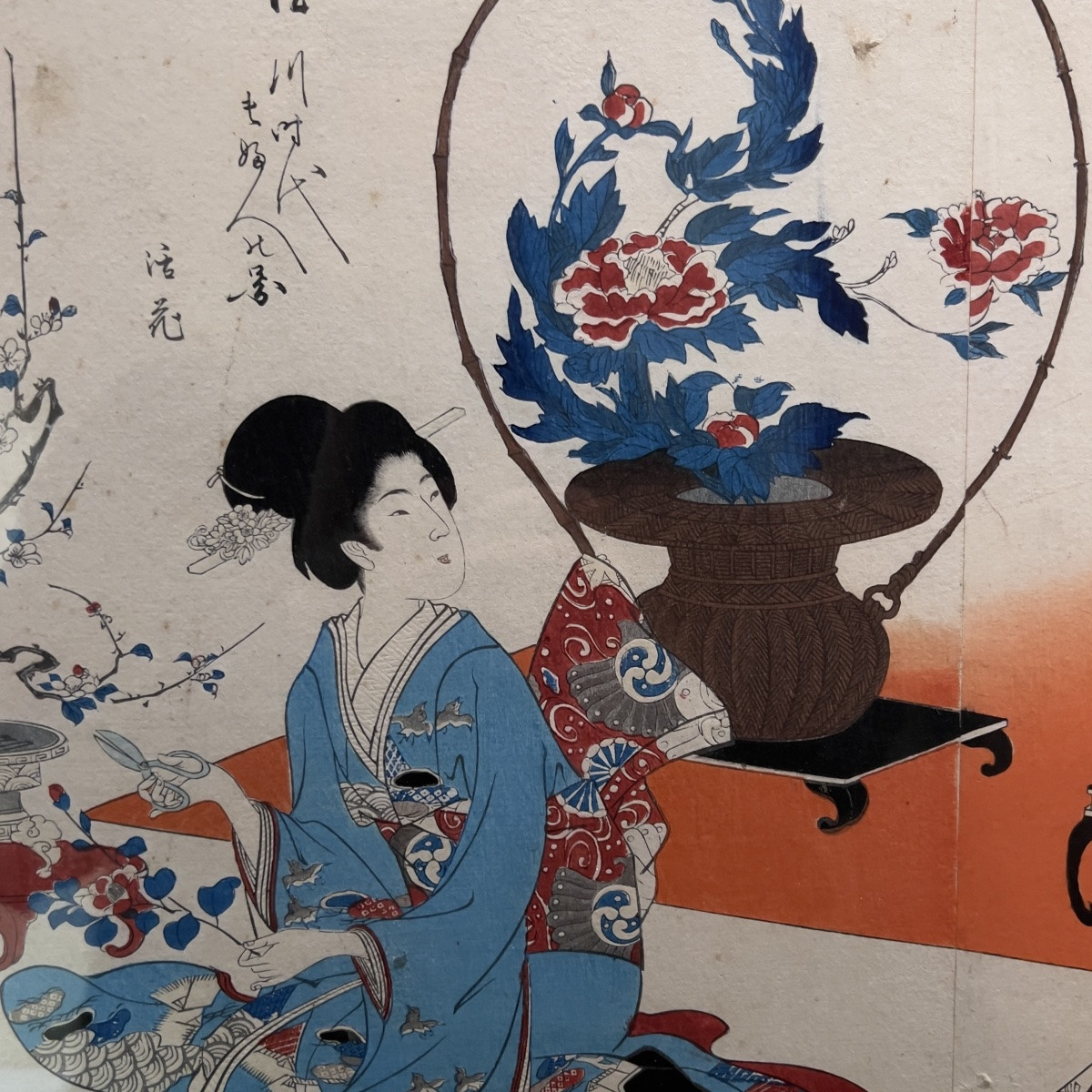
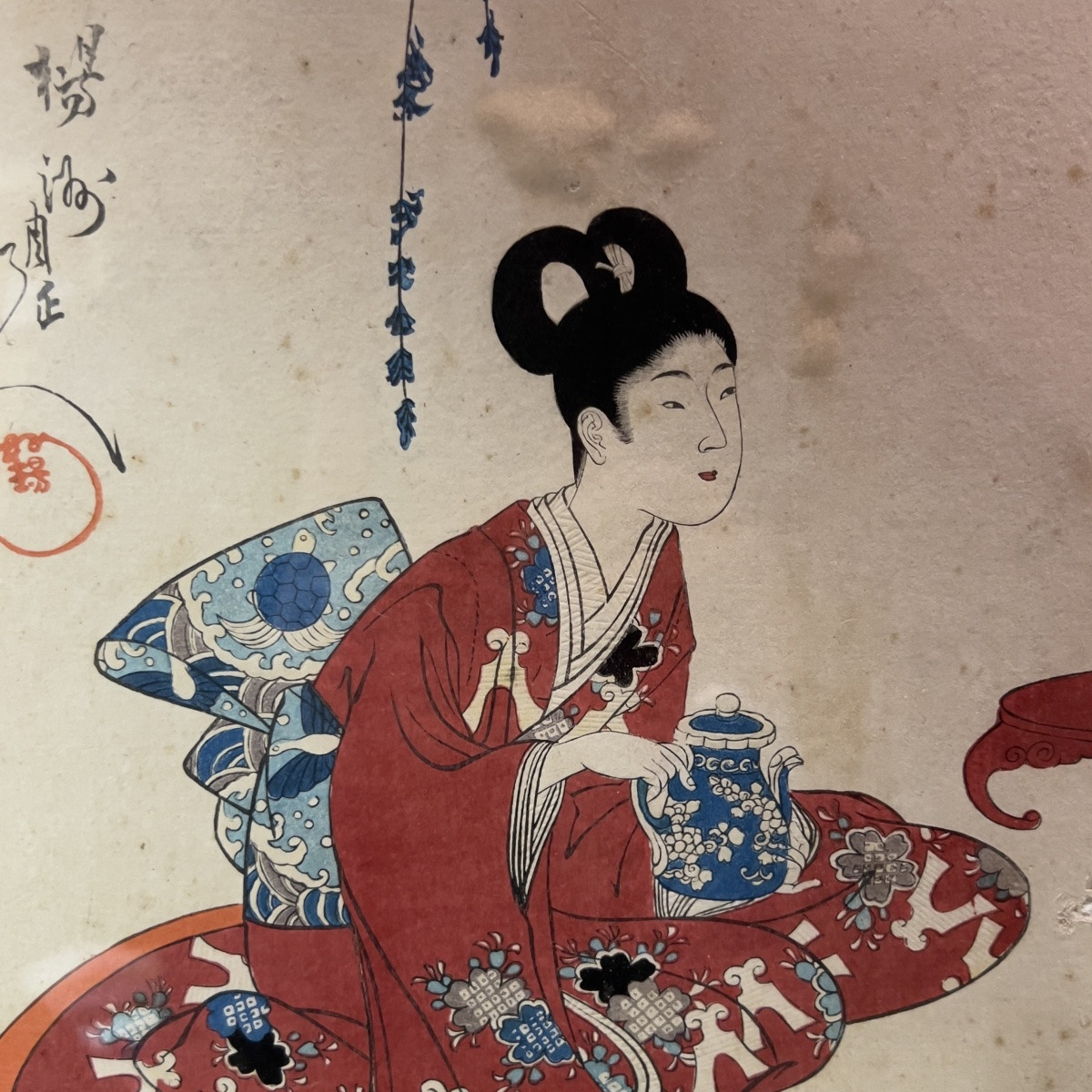
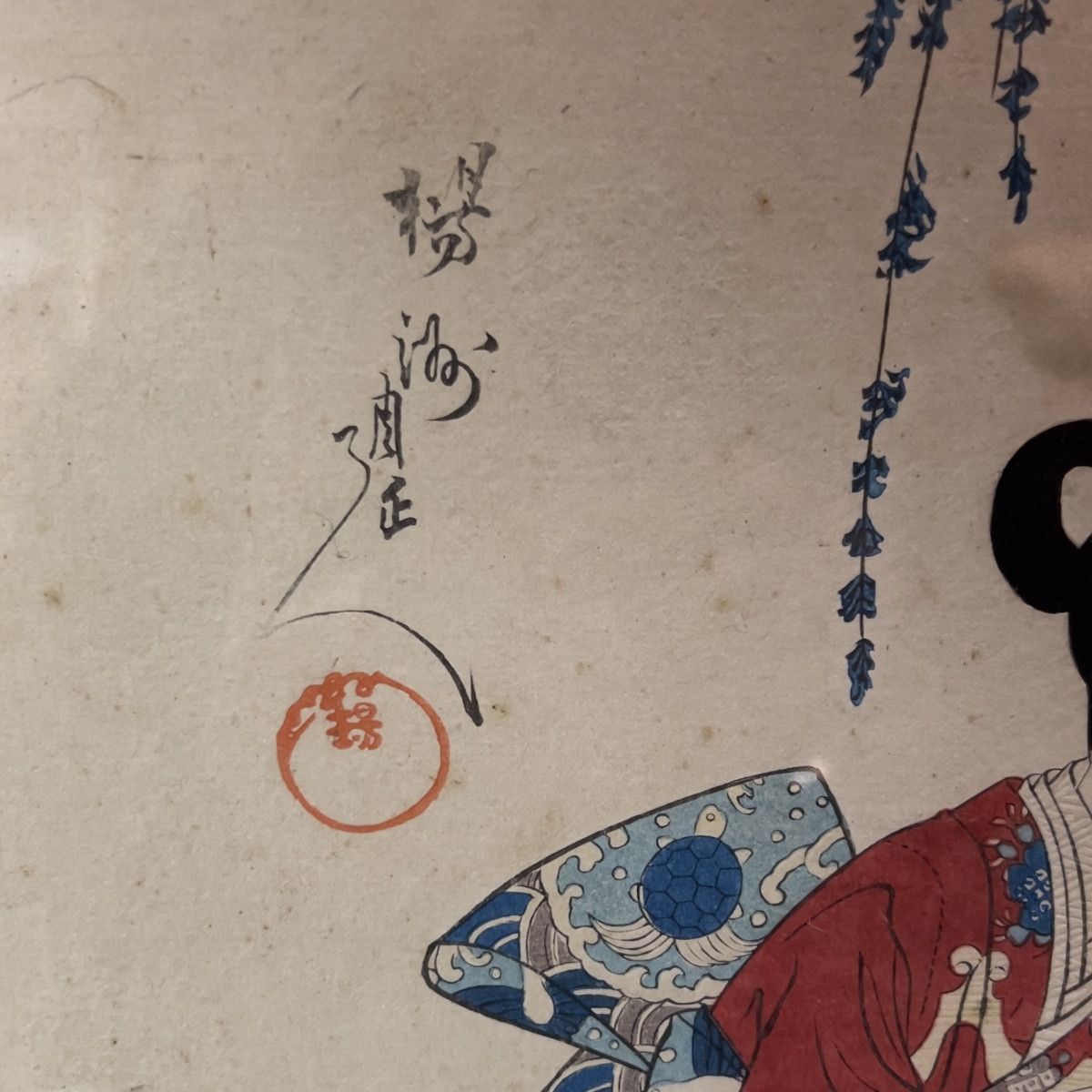
Toyohara Chikanobu (1838-1912) “Chiyoda no Ōoku: Chanoyu mawaribana” Triptych of polychrome woodblock prints, August 1895, Meiji period. This triptych by Toyohara Chikanobu belongs to the famous Chiyoda no Ōoku series and corresponds to the subject titled “Flower Arranging in Turn,” also given as “Tea Ceremony with Flower Arranging in Turn,” dated August 1895, in the collections of the Metropolitan Museum and the RISD Museum. It is a triptych of polychrome woodblock prints depicting women of the inner palace engaged in a refined practice combining flower arranging and tea ceremony. The title of the series is essential. Chiyoda refers to Edo Castle, and Ōoku designates the inner apartments reserved for the wives of the Tokugawa shogun. This part of the palace formed a closed world, governed by a strict hierarchy, refined customs, and complex ceremonial. The subject is therefore not simply a scene of elegant women, but an evocation of the codified daily life of the ladies of the shogunal palace. The Metropolitan Museum emphasizes that the series precisely recreates this feminine world, which disappeared after the fall of the shogunate. This historical precision is important because this is not the imperial court of Kyoto, but rather the inner shogunal palace in Edo. Chikanobu produced this series during the Meiji era, after this world had vanished. The imagery thus stems from a retrospective reconstruction, imbued with nostalgia and cultural memory, rather than a direct testimony. This is one of the series' great strengths: it transforms the Tokugawa past into a subject of visual elegance for the late 19th-century public. The subtitle, Chanoyu mawaribana (The Eternal Palace), also deserves attention. Institutions most often translate it as "Flower Arranging in Turn" or "Tea Ceremony with Flower Arranging in Turn." It is therefore not simply ikebana in the generic sense, but a more specific practice, likely linked to an exercise or a rotation in flower arranging, within a context of cultivated sociability associated with tea. The subject highlights not only decorative taste, but also the learning of the art of decoration within an aristocratic female milieu. The composition is particularly successful. The three women are clearly positioned in the space, around an imposing central floral arrangement placed in a circular stand. The decorative objects and low pedestals structure the interior with restraint. The gestures are measured, the postures elegant, and the whole rests on a very controlled balance between restraint and chromatic intensity. The vast expanse of reddish-orange on the floor enhances the triptych's decorative presence and contrasts with the deep blues, rich blacks, and intricate patterns of the kimonos. It is not merely a scene of beautiful women, but an image of etiquette, culture, and social representation. Toyohara Chikanobu, born in 1838 and died in 1912, is one of the great masters of Meiji-era prints. A former samurai, he lived through the historical transition from feudal to modern Japan. His work is particularly important for its depictions of women, historical scenes, and images of reimagined aristocratic and palatial life. In the Chiyoda no Ōoku series, he displays a sophisticated art of staging, where costume, ritual, and social memory are inextricably linked. This triptych should therefore be understood as a work that is both captivating and historically significant. It depicts not only three elegant women in a refined interior, but also a vanished, idealized feminine world of the Meiji era, where the activities of the inner palace contributed to a social, aesthetic, and political order that is now obsolete. The frame is modern. Good condition, with some minor blistering or stains. Visible dimensions of the triptych: 35 × 70 cm. Overall dimensions with frame: 52.6 × 88.7 cm.
650 €
Period: 19th century
Style: Asian art
Condition: Good condition
Material: Paper
Width: 88,7
Height: 52,6
Reference (ID): 1732989
Availability: In stock
Print