


Sovereign Pair Of Meiji Period Seto Porcelain Vases By Kato Sanhei On Original Matching Porce
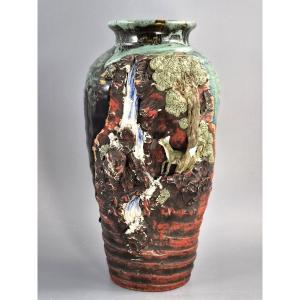
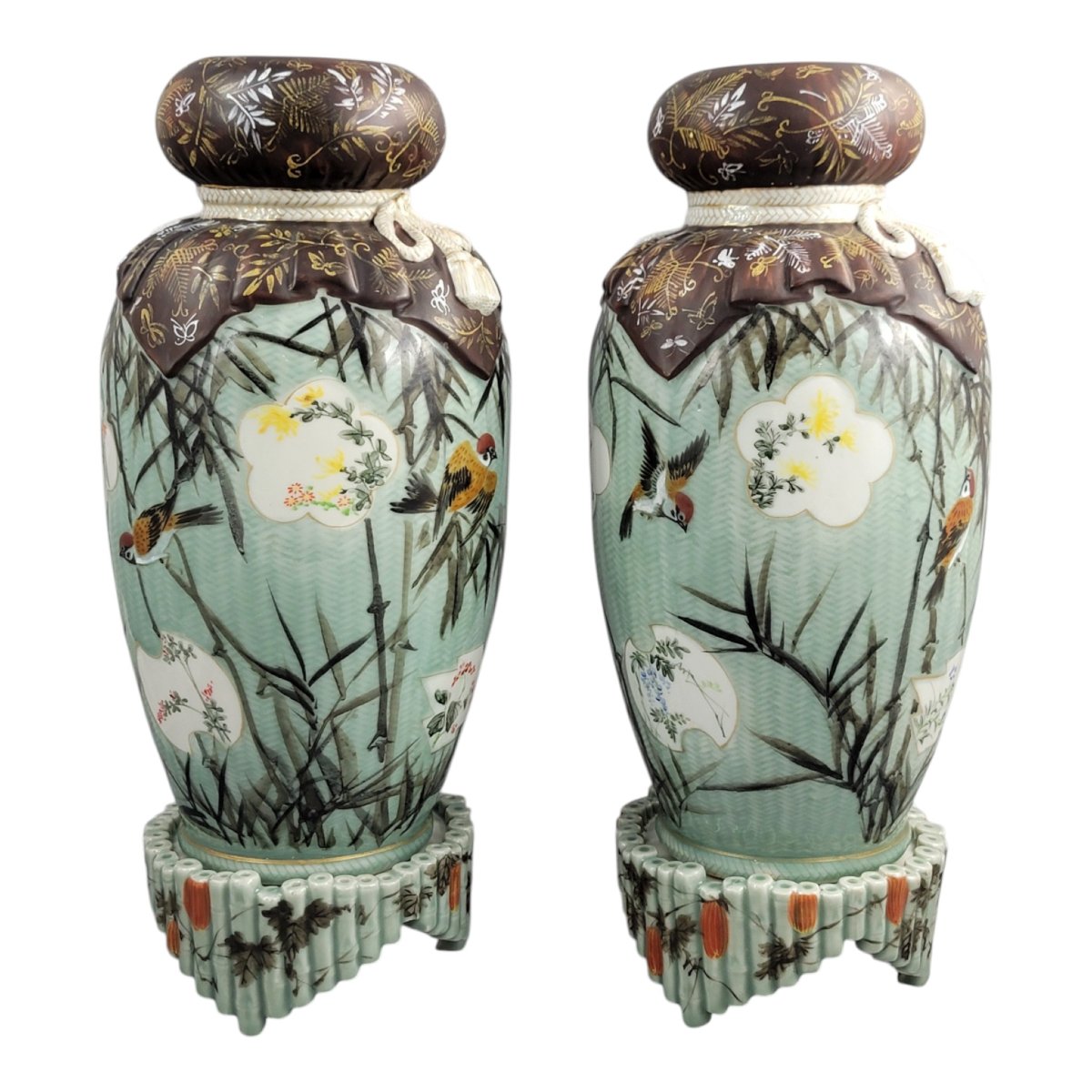
This extraordinary pair of vases represents a pinnacle of Japanese ceramic engineering from the Golden Age of the Meiji period 1868–1912. Executed by the legendary Seto master Kato Sanhei, these works are not merely decorative objects but significant sculptural achievements that demonstrate the technical virtuosity required for the great International Exhibitions of the 19th century. Kato Sanhei was a titan of the Seto ceramic guild, a visionary artist whose work was frequently chosen to represent the Japanese Empire’s aesthetic sophistication on the global stage, including the landmark expositions in Philadelphia and Paris.
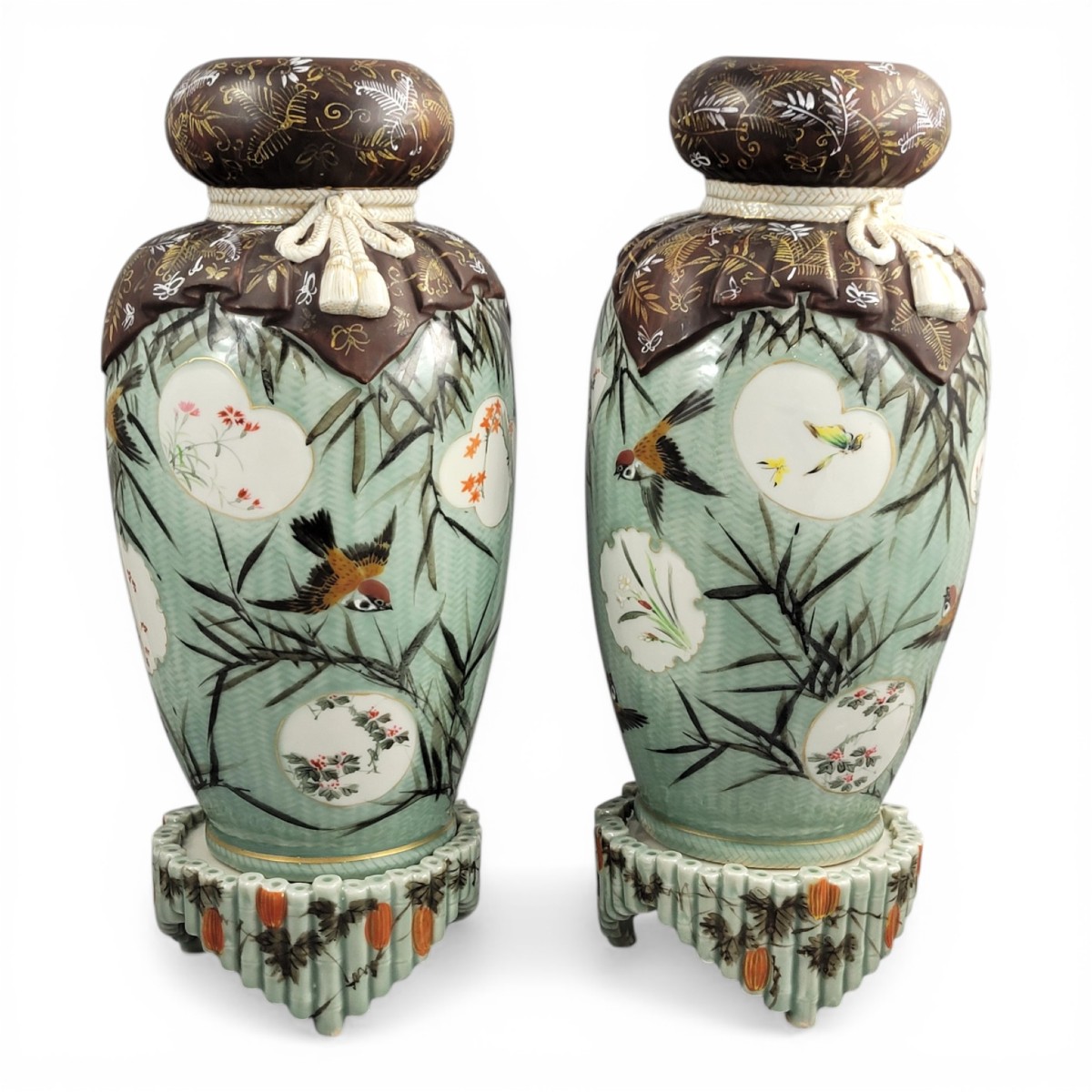
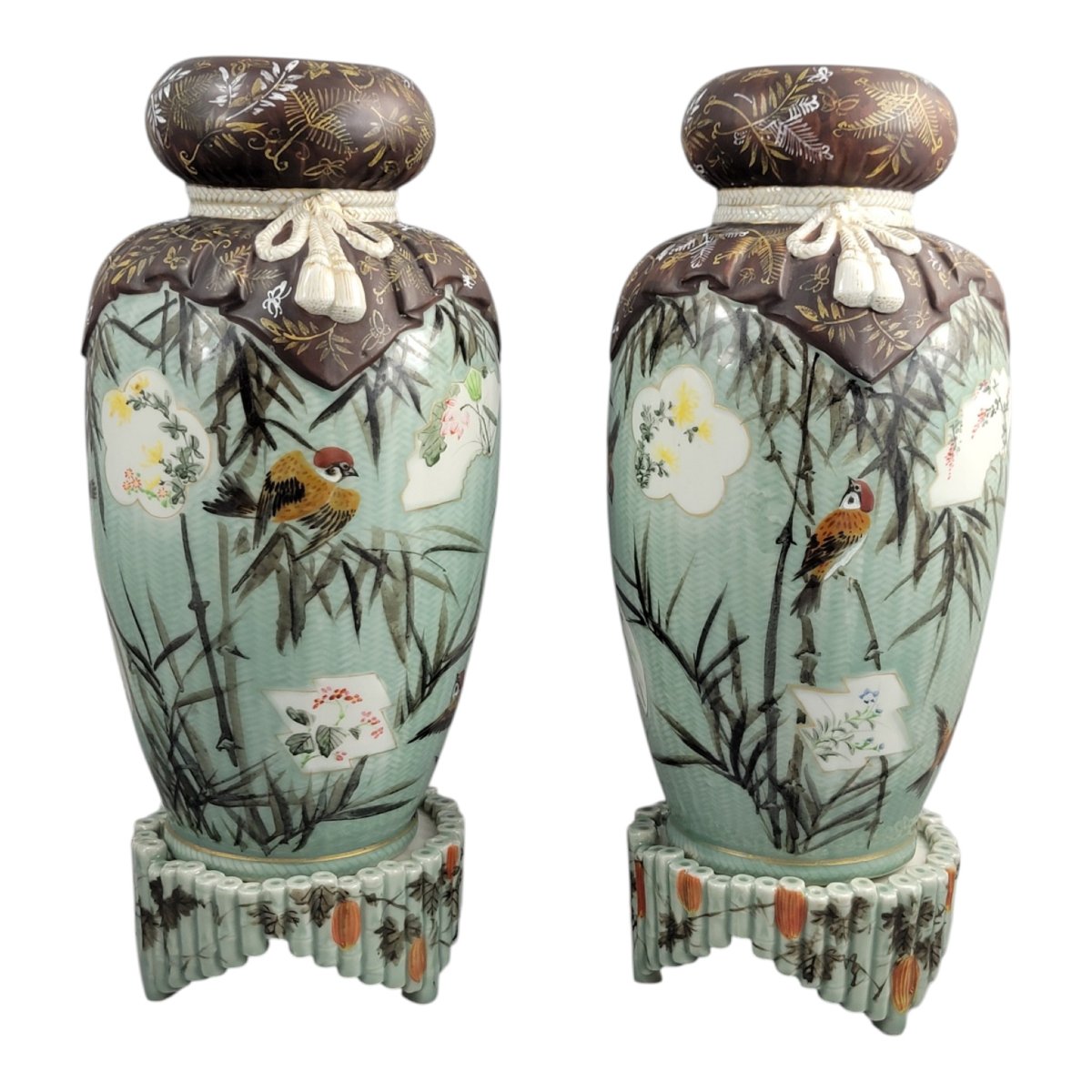
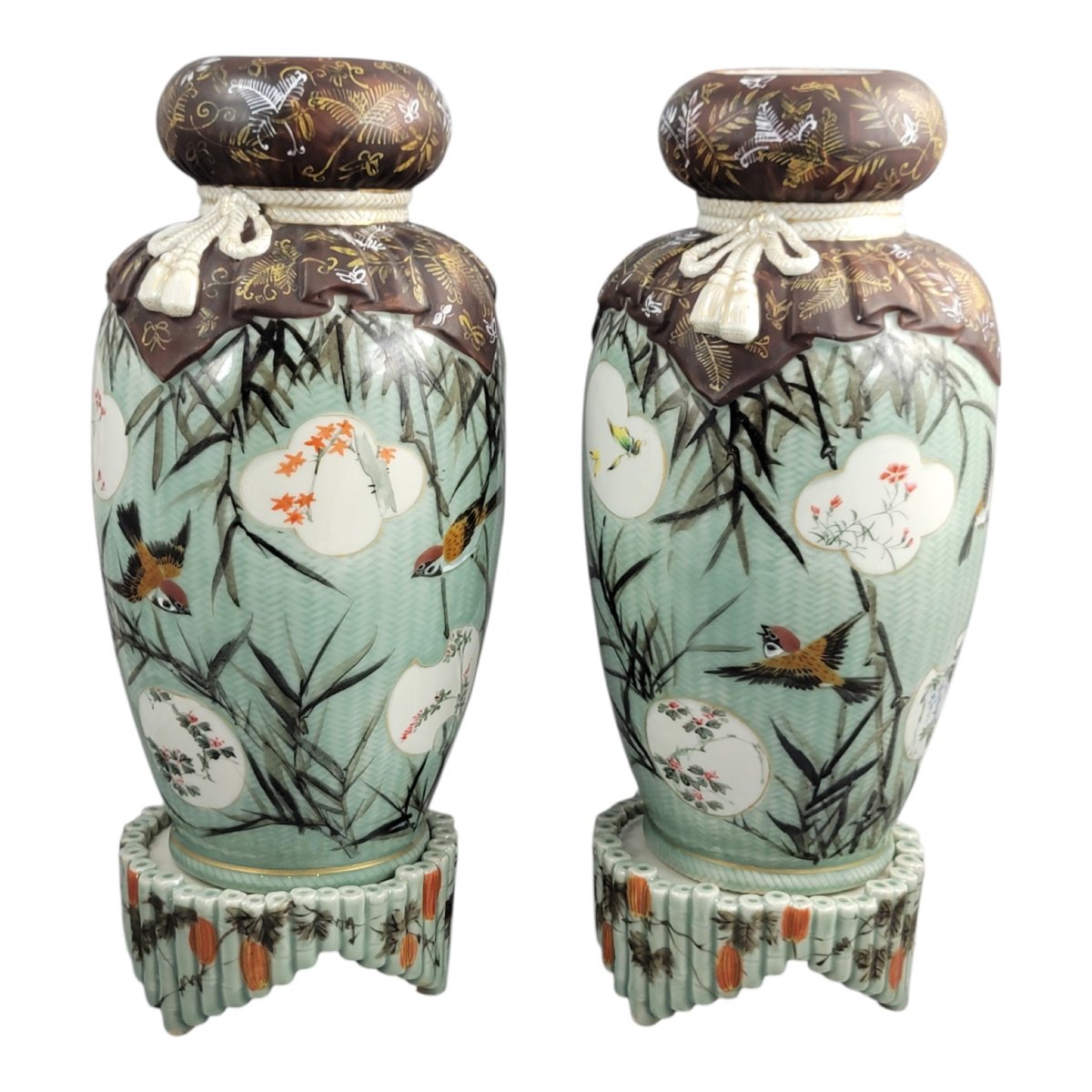
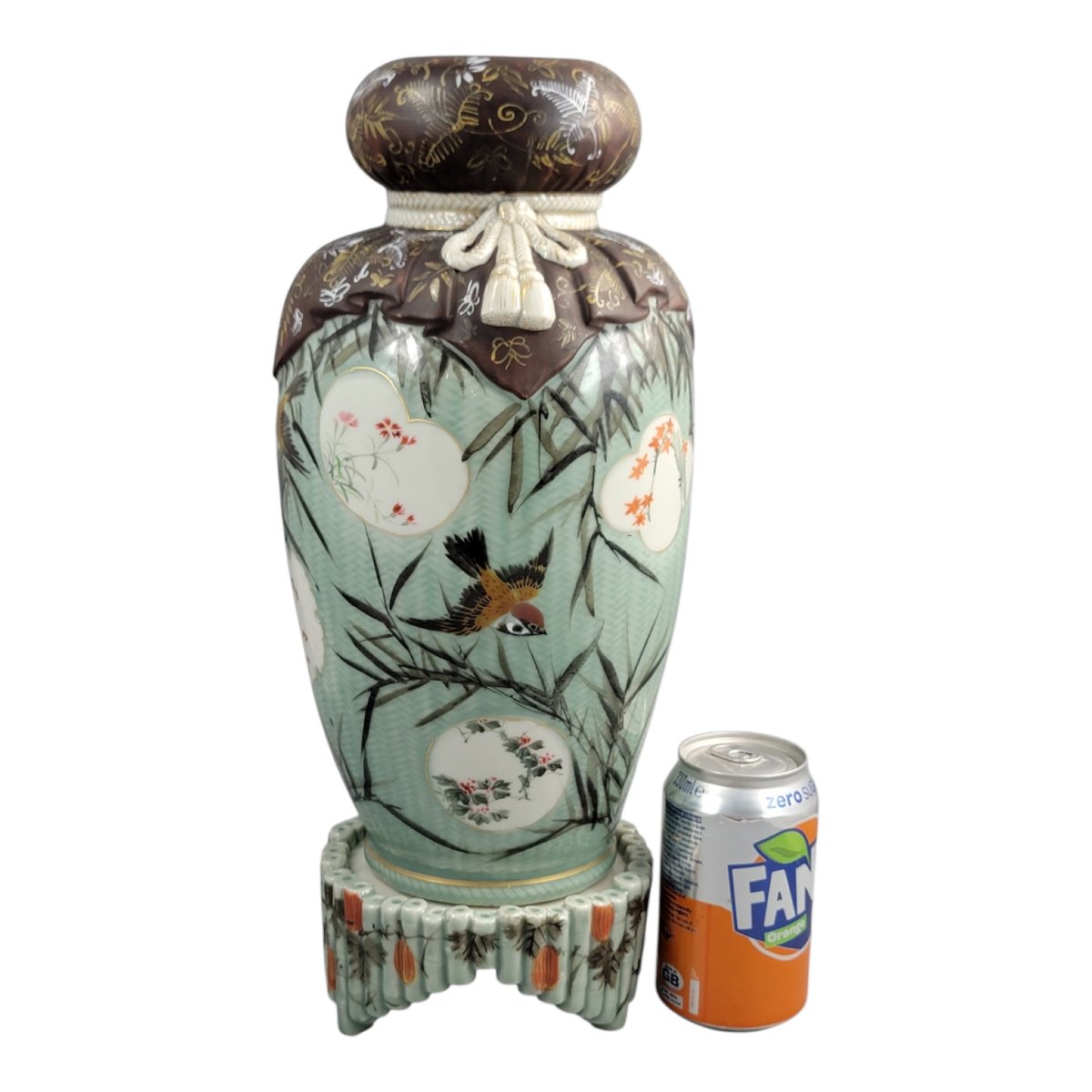
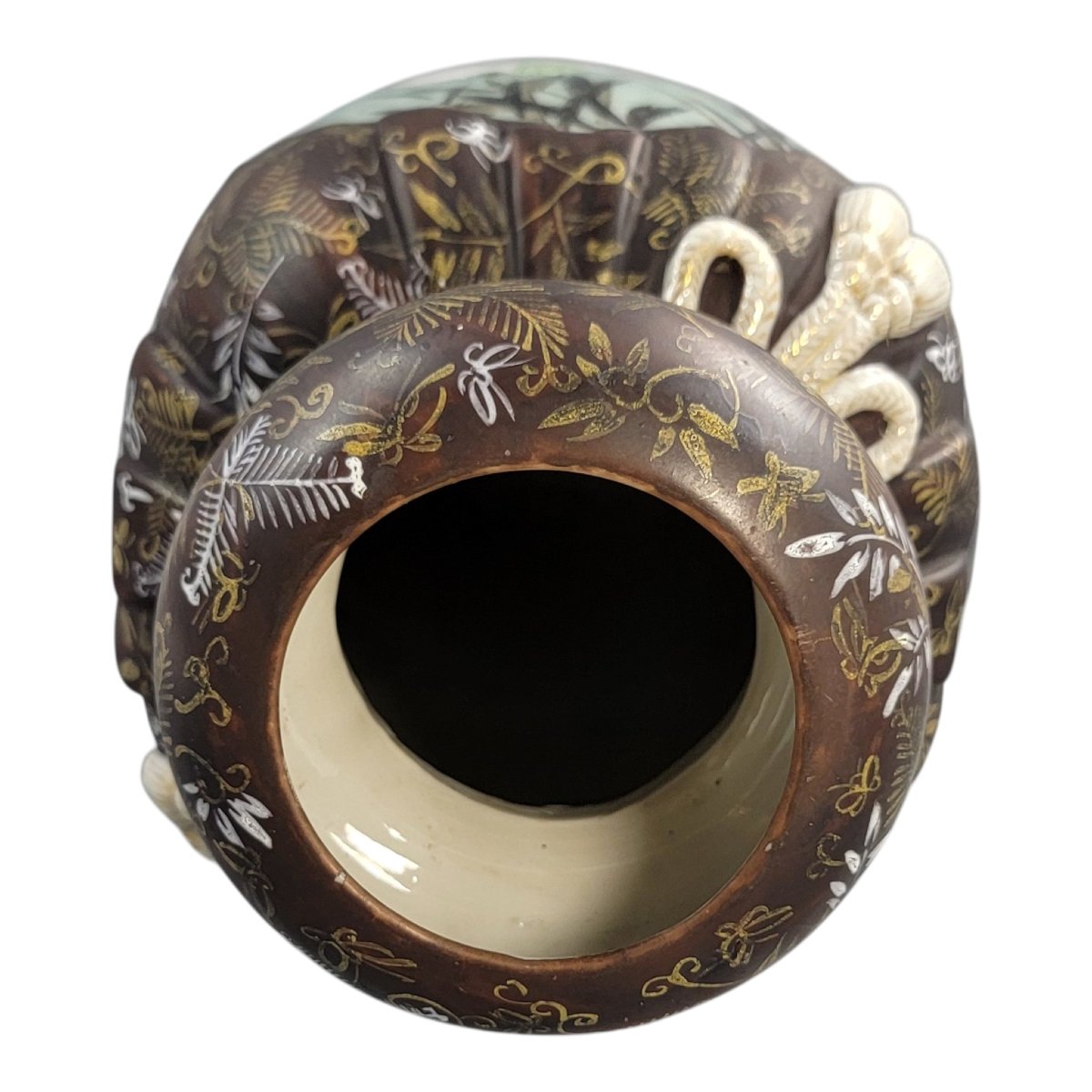
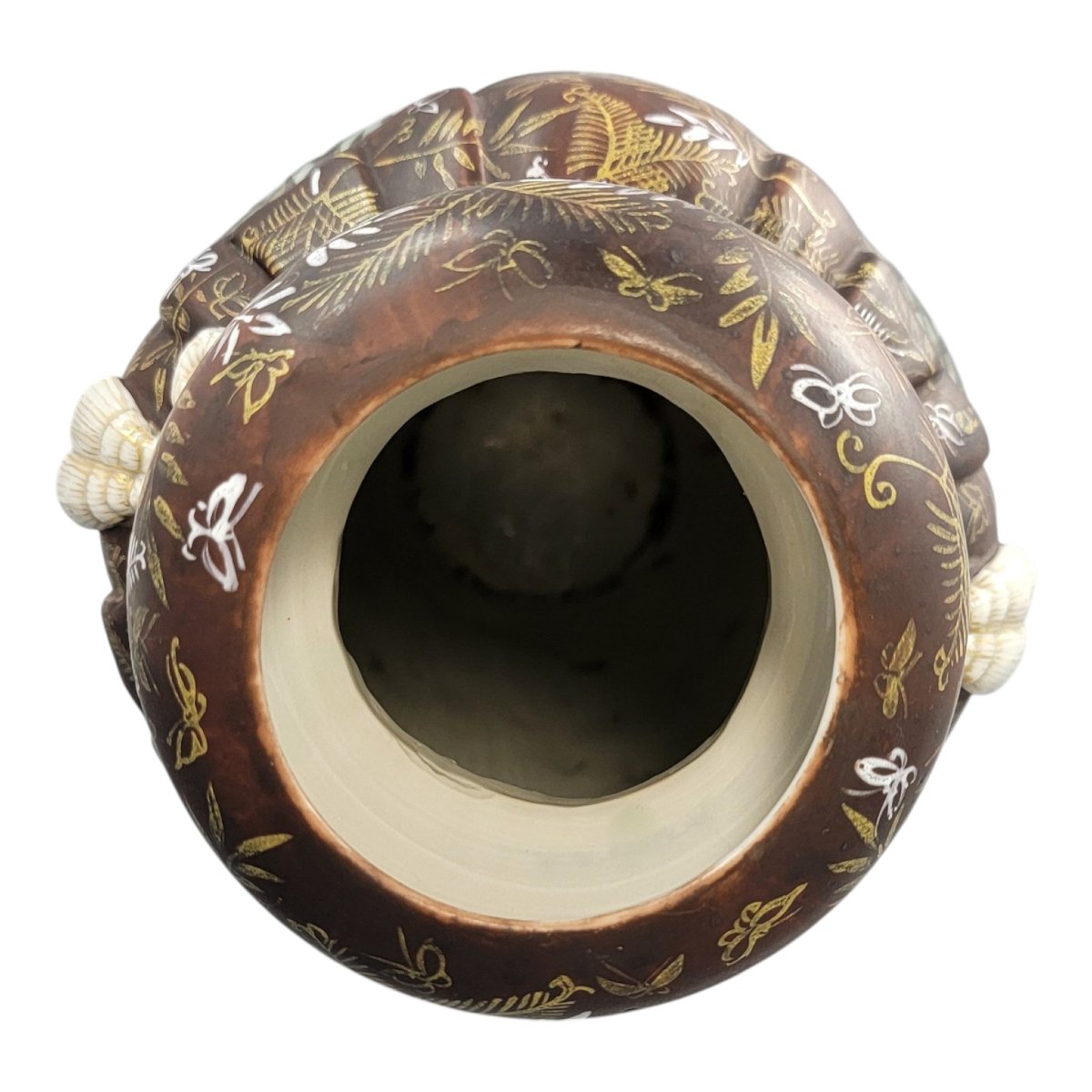
The vases are conceived in a remarkably rare and complex form, modeled as traditional tied auspicious sacks. In Japanese culture, this fukuro shape is deeply symbolic, representing Hotei’s bag of treasures and serving as a profound emblem of abundance, wealth, and overflowing prosperity. To achieve such a convoluted, organic form in high-fired porcelain is a feat of immense difficulty, as the risk of warping or collapsing in the kiln is extreme.
The entire body of each vase is meticulously hand-textured with a Seigaiha blue sea wave pattern. This motif is not merely painted but physically carved into the clay, creating a tactile, rhythmic surface that catches the light through a translucent celadon-tinted glaze. Over this sophisticated ground, the master has applied delicate polychrome enamels depicting sparrows in flight and resting amidst bamboo and seasonal flora. In Japanese art, the sparrow signifies loyalty and the spirit of the common people, adding a layer of poetic narrative to the physical beauty of the pieces.
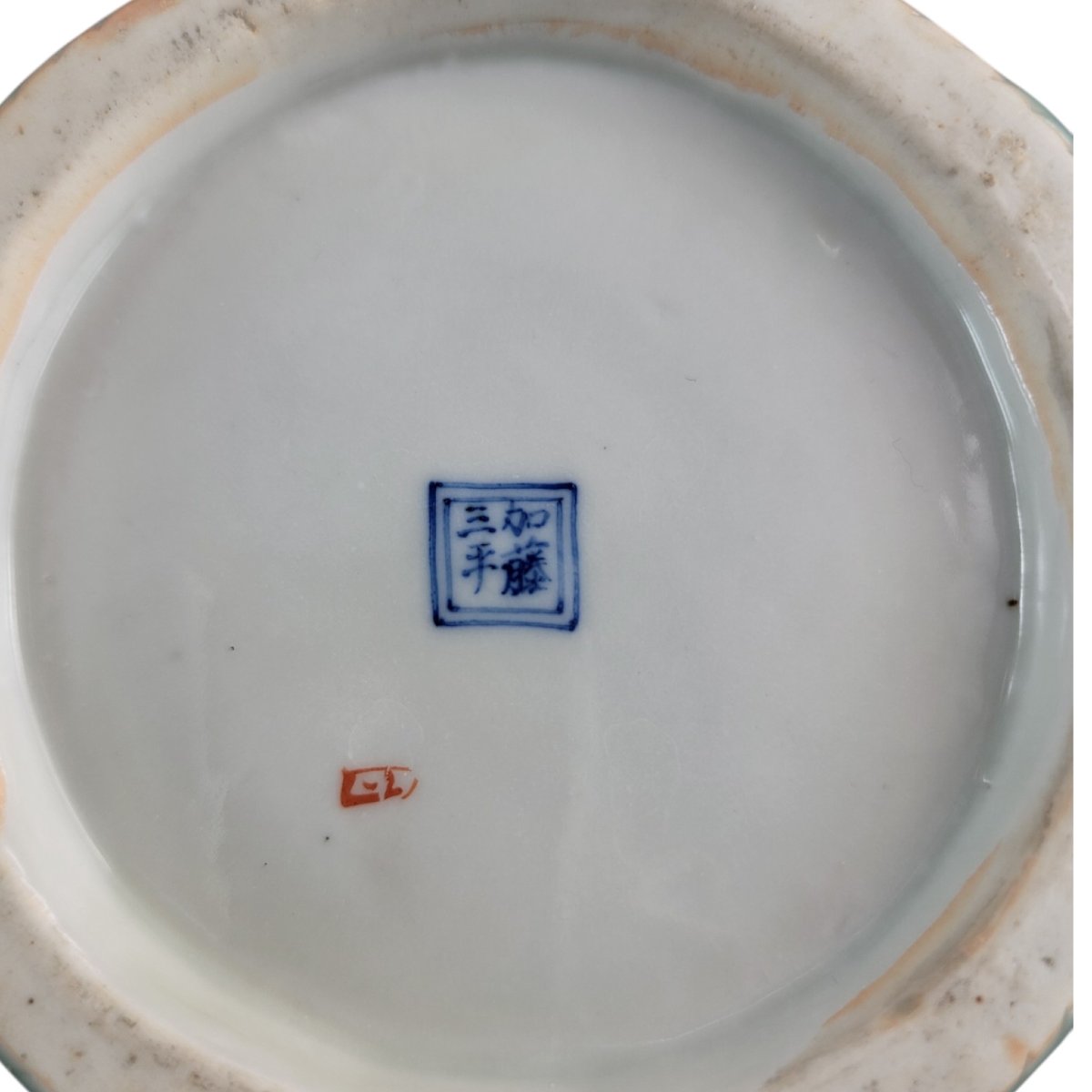
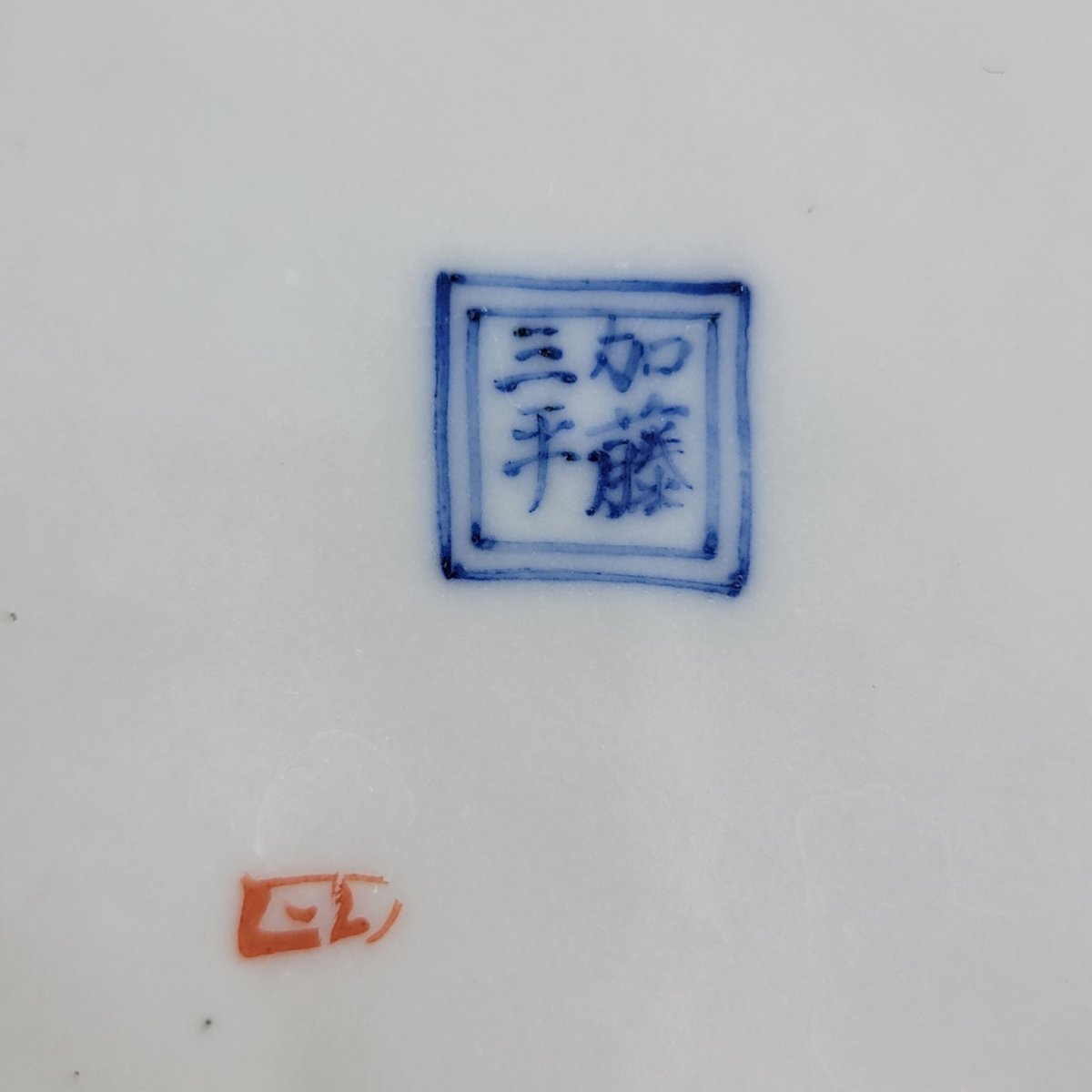
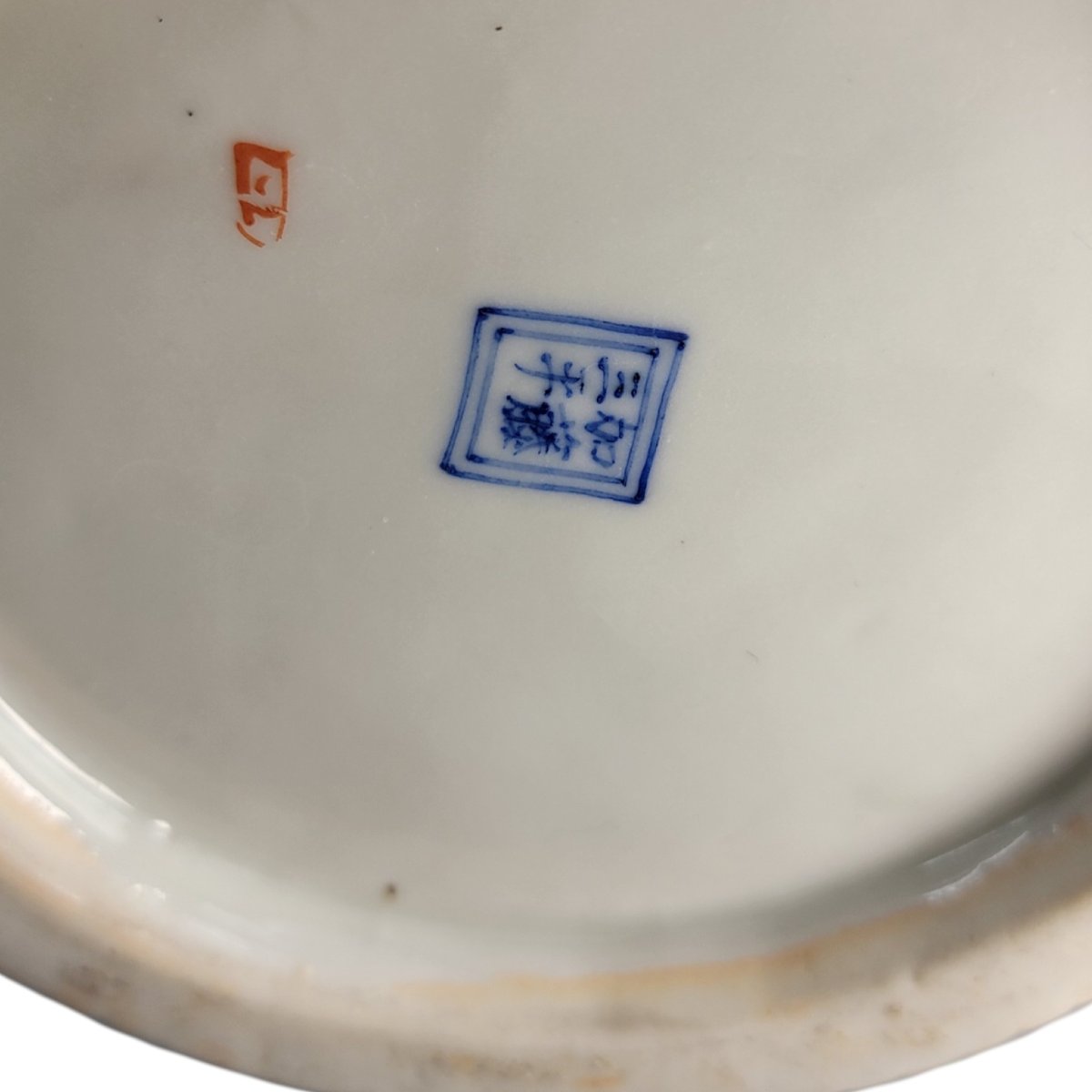
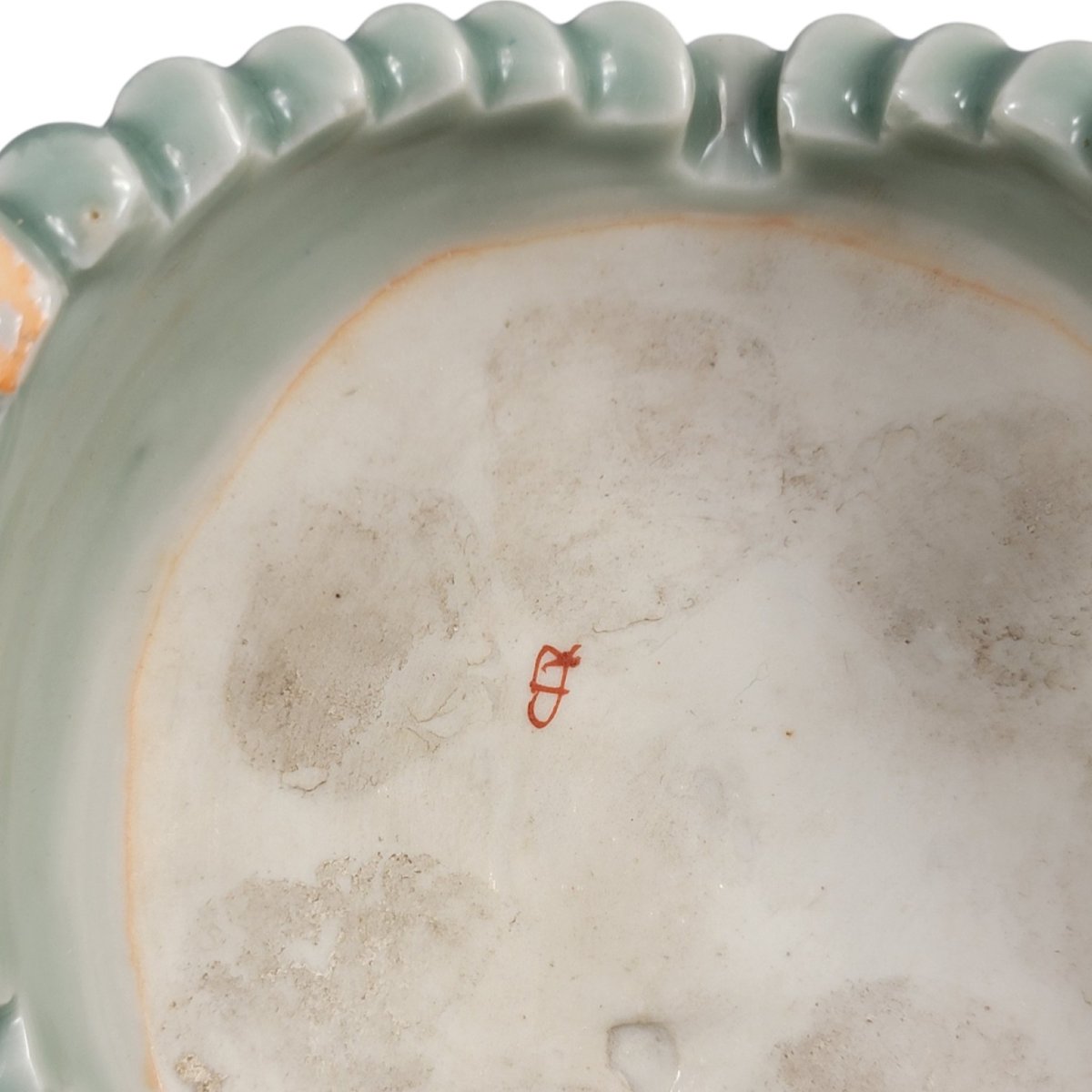
What elevates this pair to a status of absolute museum-level rarity is the presence of their original, matching porcelain stands. It is crucial to note that these are not the common wooden bases often found with export wares, but integral ceramic components created specifically for these vases in the same kiln firing. The stands mirror the Seigaiha wave texture and the enamel palette of the main vessels, and they bear the same authoritative signature of Kato Sanhei. To find a complete, matched set of four porcelain elements that have remained together and undamaged for over a century is an occurrence of exceptional rarity.
The level of craftsmanship displayed here is so high that analogues are difficult to find even in major museum collections. Most surviving works by Sanhei are single vases of standard form; this sack configuration on matching porcelain bases represents a special commission of the highest order.
Master: Kato Sanhei
Period: Meiji
Technique: High-fired Seto porcelain, hand-carved Seigaiha ground, celadon glaze, polychrome overglaze enamels
Dimensions
Total height on stands 39.5 cm
Vase height 33.5 cm
Vase diameter 18 cm
Stand height 7 cm
Stand diameter 16.5 cm
Total combined weight 6.32 kg
Condition
Excellent antique condition. Thorough UV inspection confirms no restorations, no cracks, and no hairlines to either the vases or the stands. There is only minor, age-appropriate wear to the gold and enamel accents.
Shipping & Packaging
Fully tracked and insured delivery.
Shipping cost includes professional packaging, careful handling, and secure postage.
Carefully packed using recycled materials where possible.
Please review all photographs carefully, as they form part of the description, and feel free to ask any questions.
Period: 19th century
Style: Asian art
Condition: Perfect condition
Material: Ceramic
Diameter: 18 cm
Height: 39.5
Reference (ID): 1729569
Availability: In stock