THIS OBJECT WAS SOLD
Sculpture - Harlequin , Emile Louis Picault (1833-1915) - Bronze
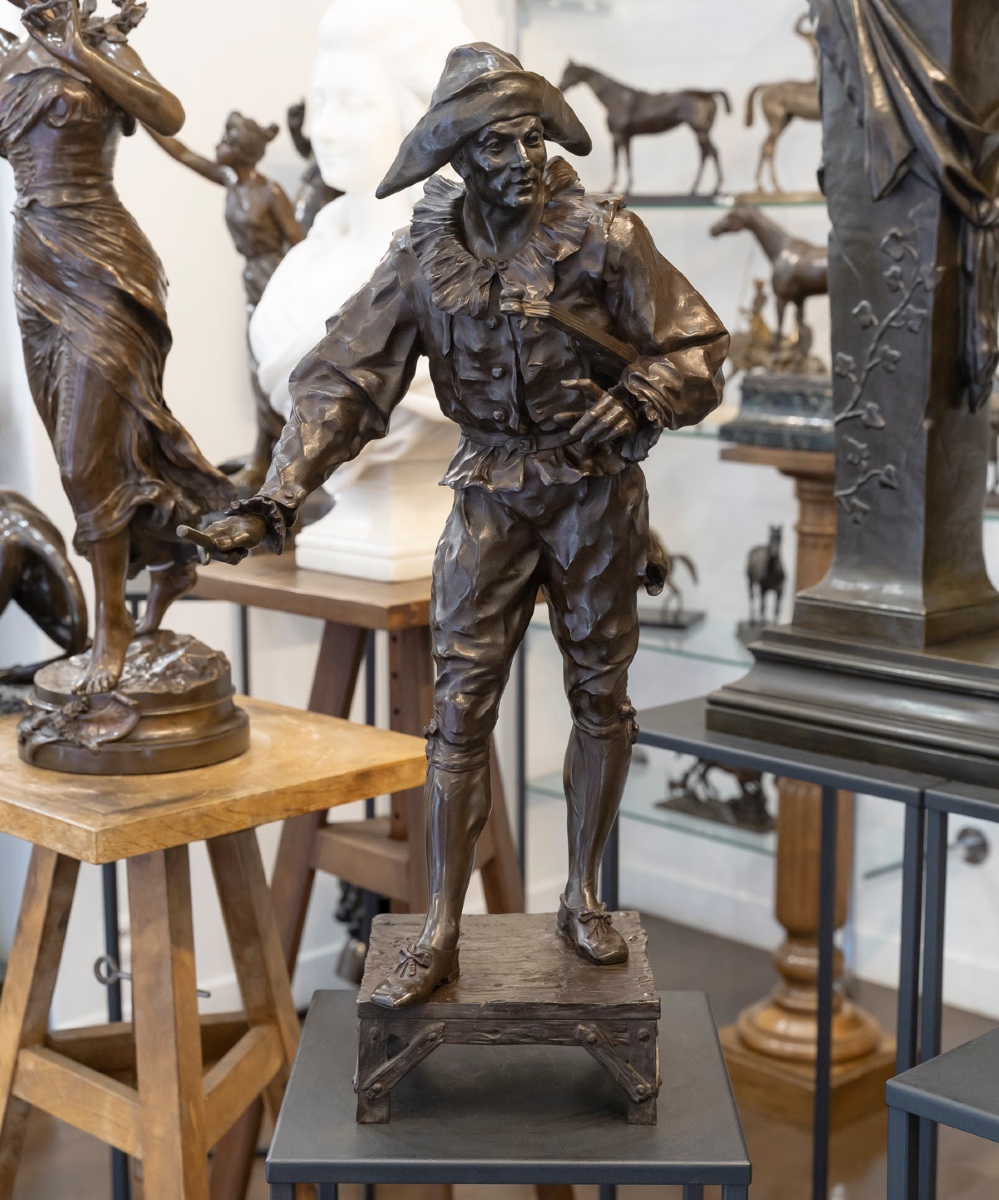
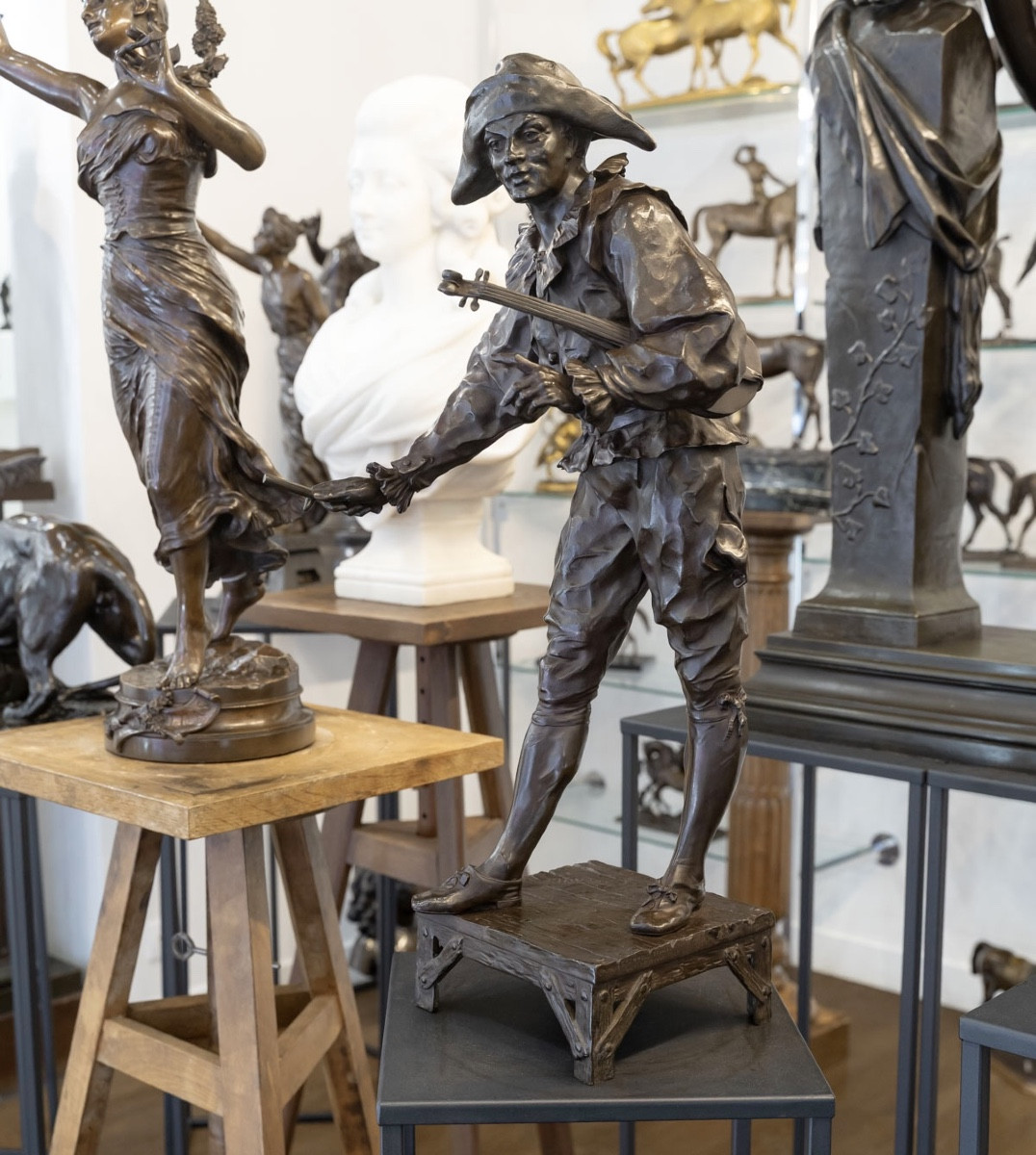
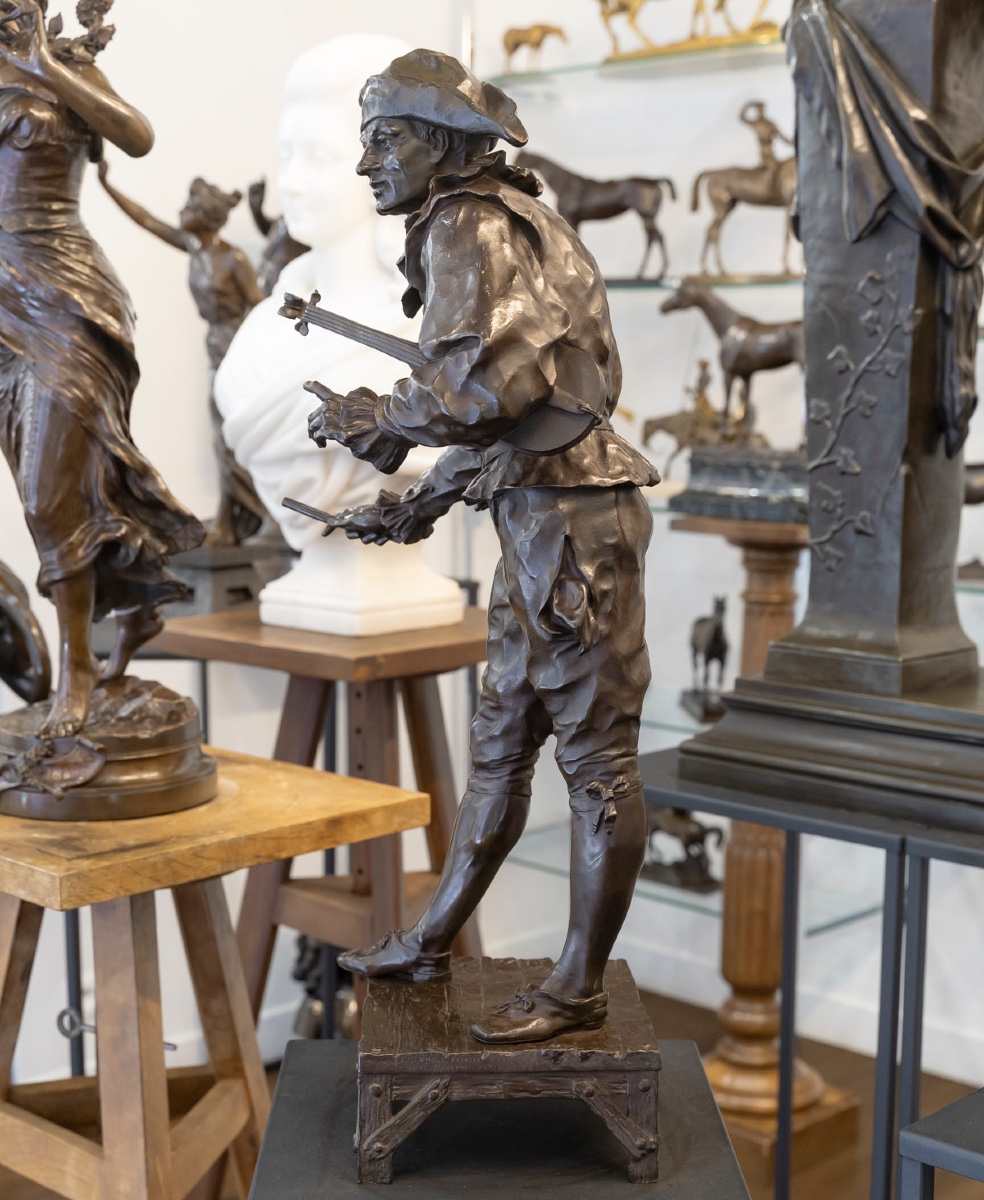
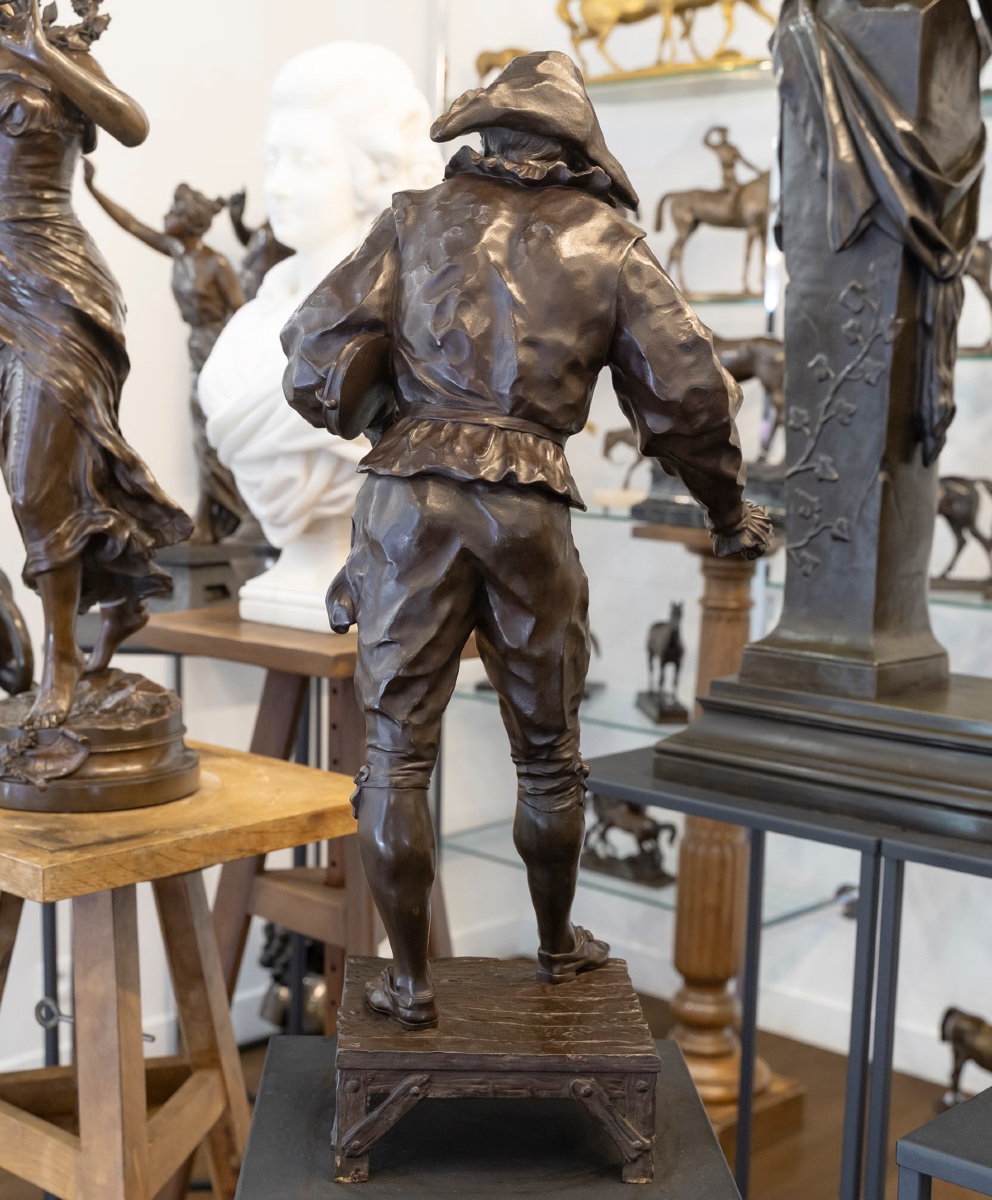
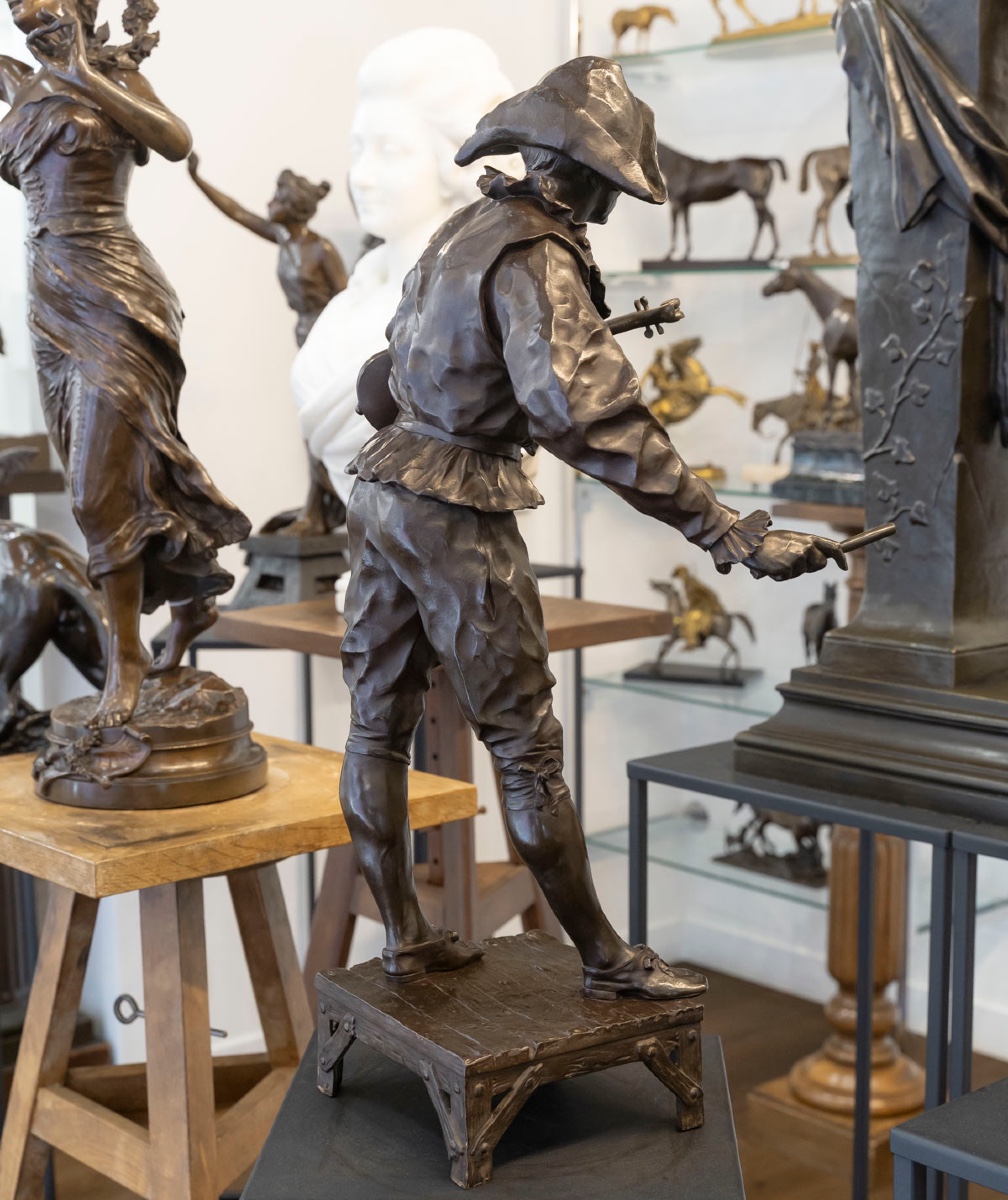
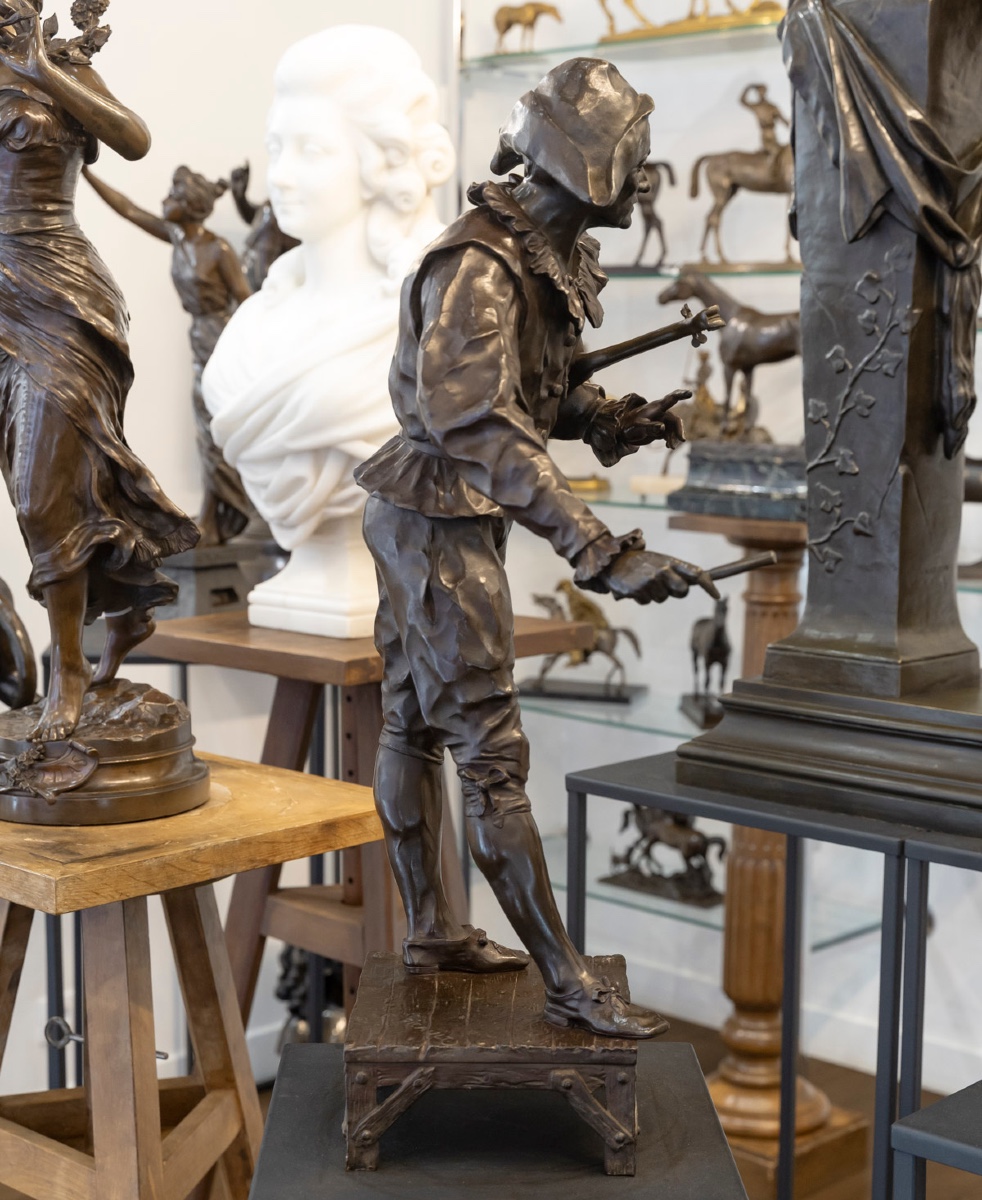
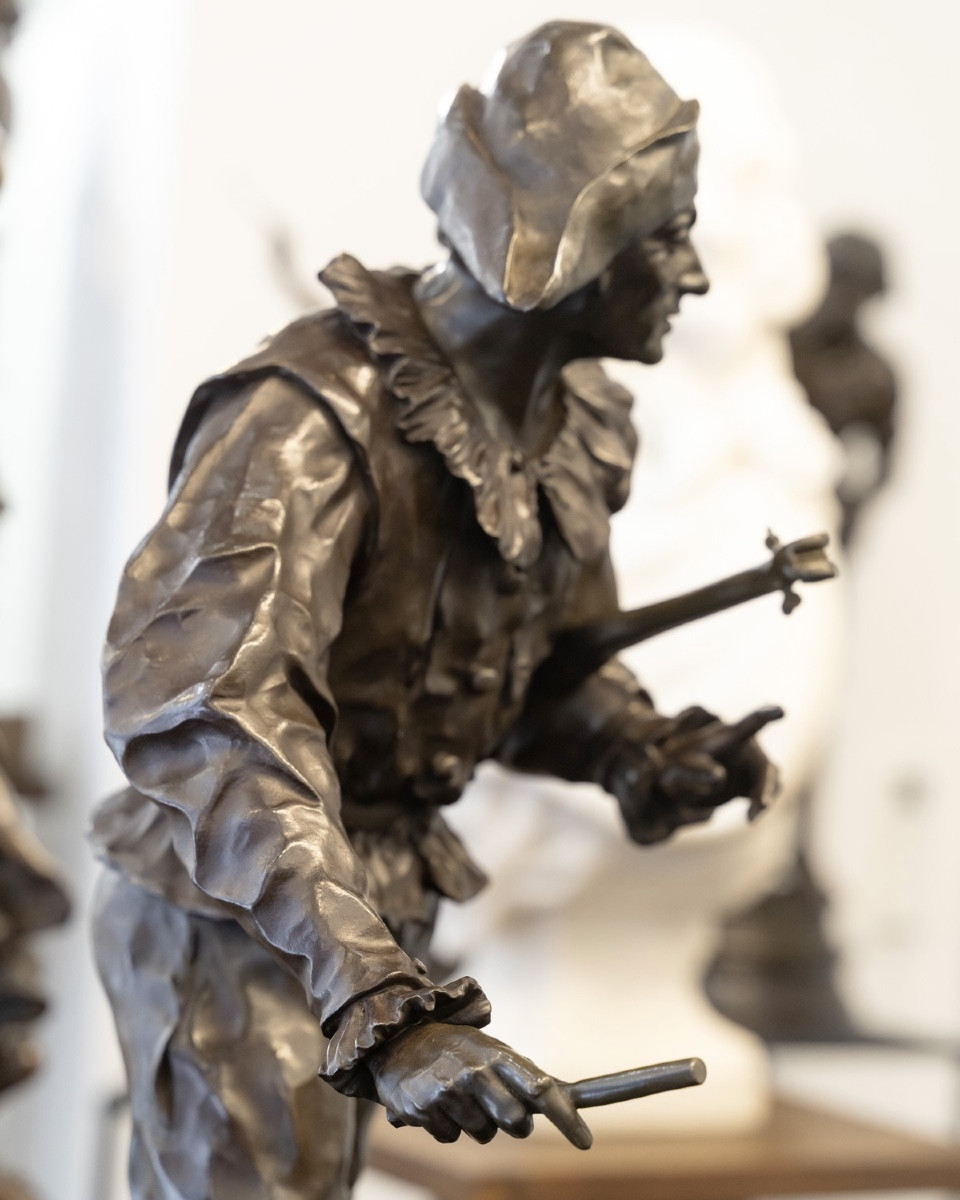
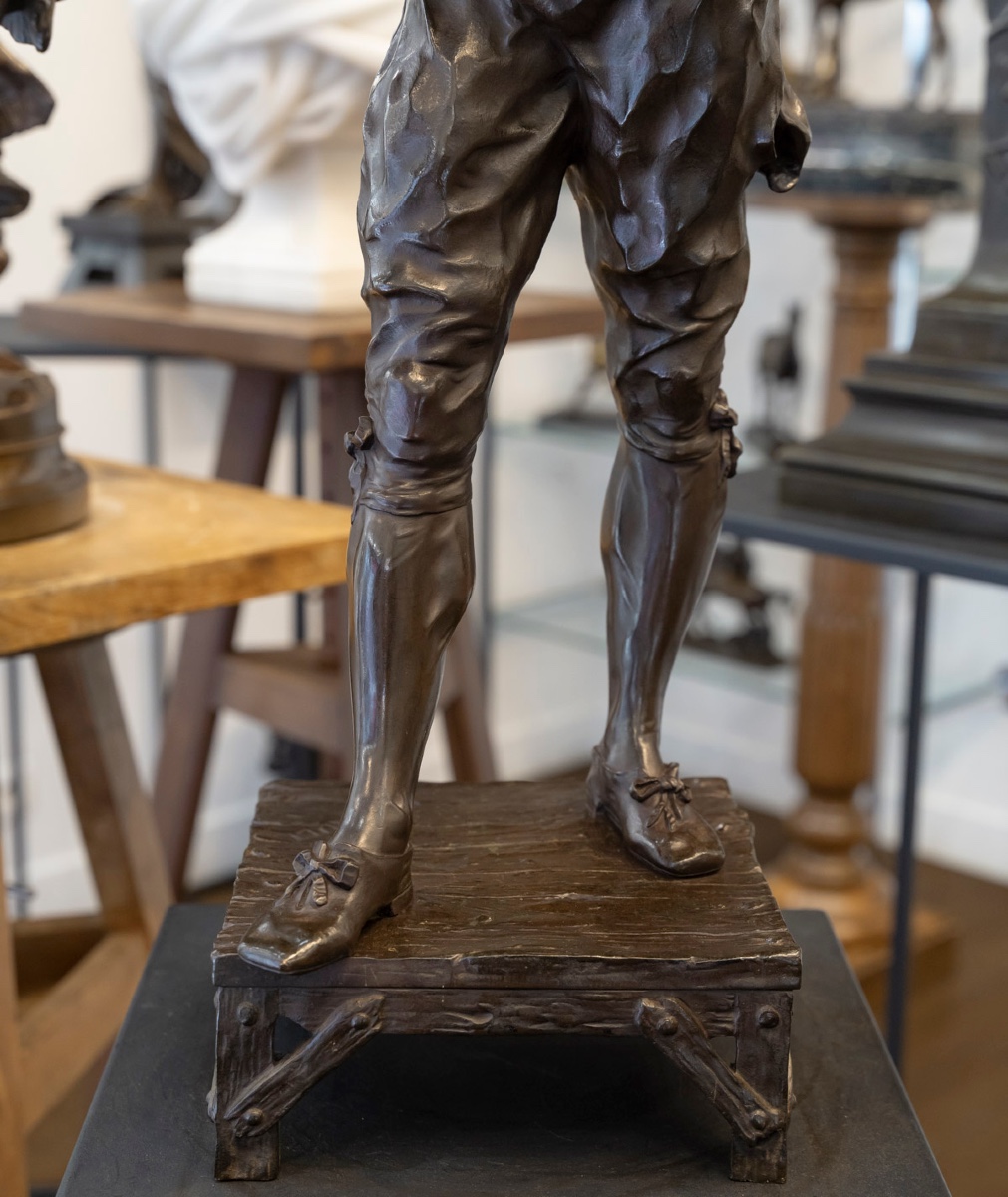



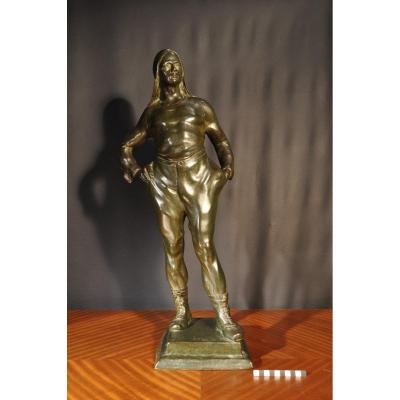
A bronze sculpture with a brown patina , depicting the famous Commedia dell'Arte character , "Harlequin" by the French sculptor Emile Louis Picault (1833-1915) .
An iconic work that embodies both the sculptor's artistic genius and the richness of theatrical tradition .
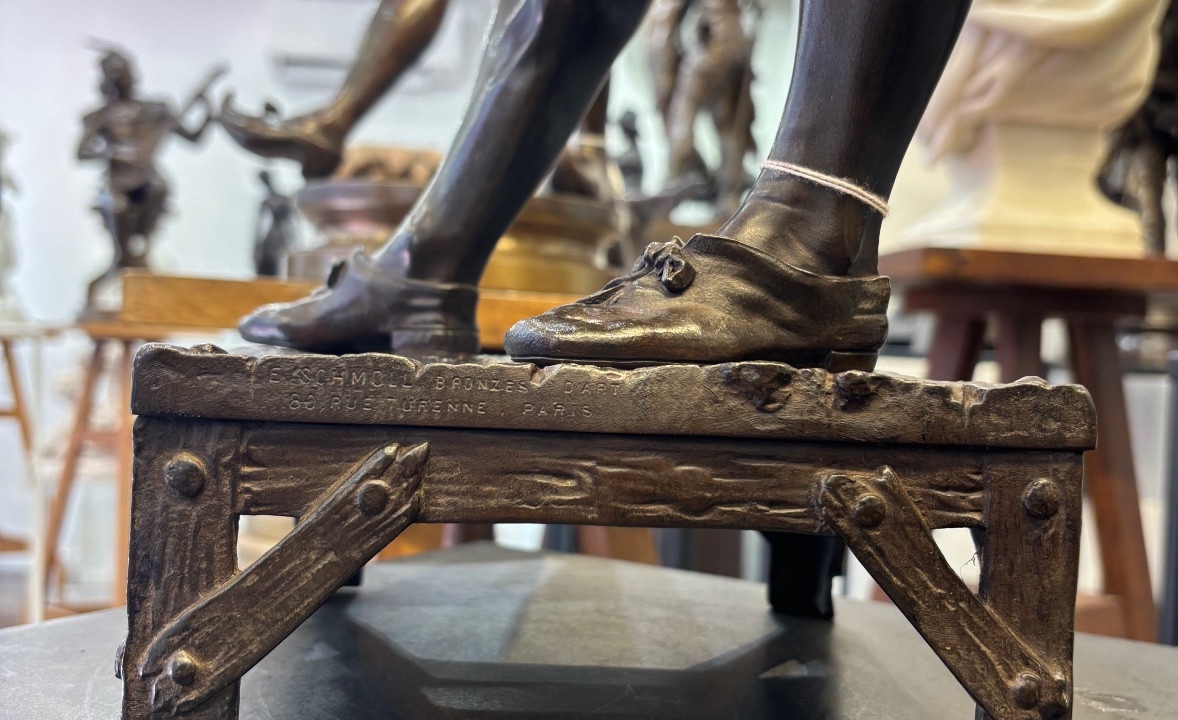
The sculpture bears the sculptor's signature "E. PICAULT" in relief on the base .
The foundry mark reads "E. SCHMOLL BRONZES D'ART 80 , RUE TURENNE , PARIS" .
An antique bronze , dating from the late 19th century .
In perfect condition .
Dimensions : 69 cm x 19.5 cm x 18.5 cm
Harlequin , standing in his traditional costume , stands on a wooden platform depicting a scene , evoking the world of the theater .
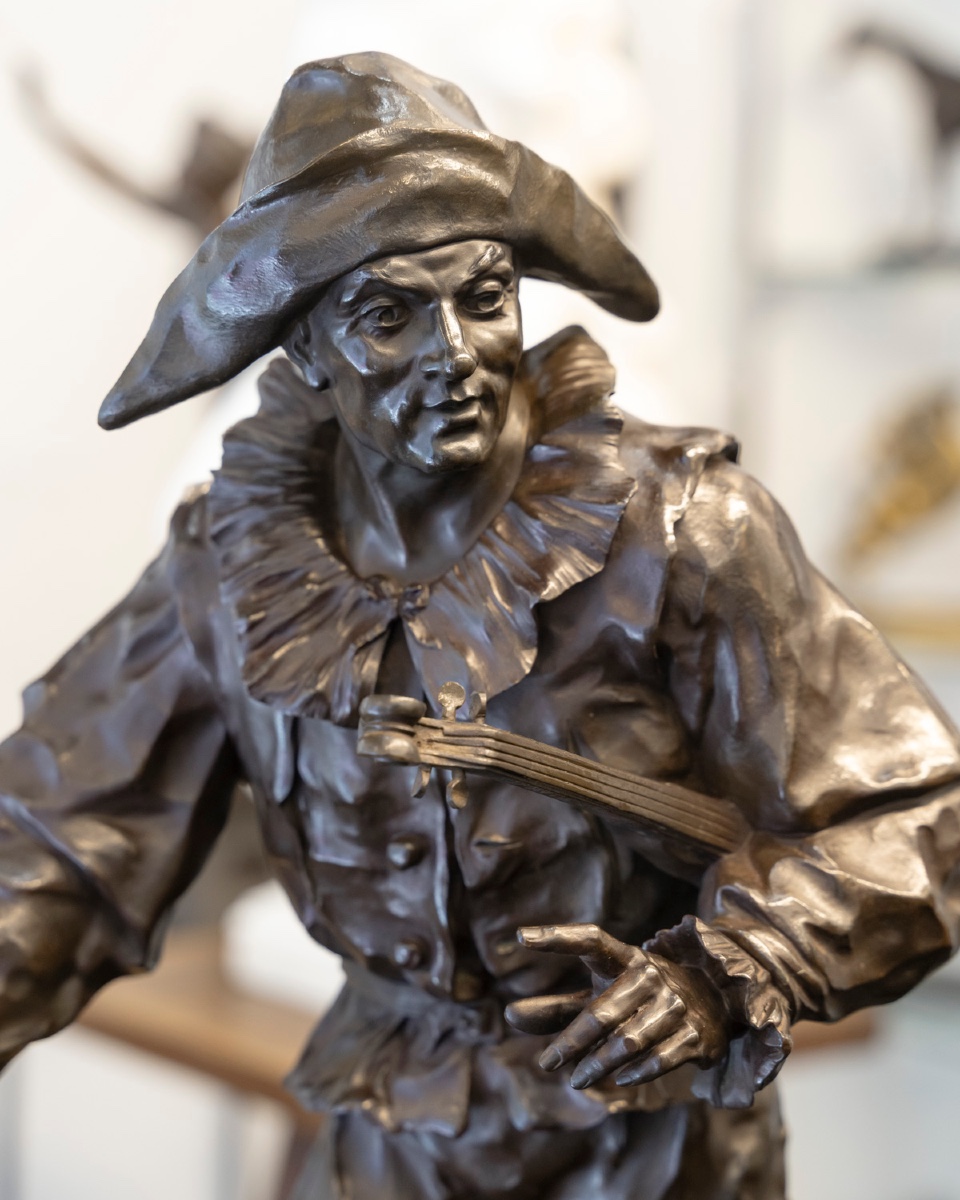
The meticulous details of the costume , textures , and shadows reflect exceptional craftsmanship , characteristic of Emile Louis Picault's sculptures .
Harlequin's slender posture evokes a certain lightness , while his facial expression , both amused and mischievous , captures the very essence of the playful character he embodies .
Harlequin , a symbol of cunning and mischief , is often depicted as a sly , intelligent servant , capable of clever schemes to achieve his goals . This makes him a symbol of popular resourcefulness and the ability to defy the upper classes .
Through his status as a servant , Harlequin navigates between different social classes , embodying a form of protest against social norms and inequalities .
His presence on stage allows for the playful exploration of power and hierarchy .
Harlequin's comic nature and often burlesque interactions bring an element of lightness and entertainment .
In a theatrical context often marked by serious themes , his character helps to defuse tense situations and introduce satirical humor .
Harlequin is a culturally and historically rich character who transcends centuries , adapting to and reflecting the social concerns of his time .
His contribution to theater and art makes him an essential figure in European culture .
Thus , Emile Louis Picault's "Harlequin" is not merely a figure of entertainment , it also symbolizes the vibrancy of theatrical culture , while illustrating the undeniable talent of its creator .
Emile-Louis Picault (1833-1915)
Emile Louis Picault , was a renowned French sculptor and medalist , born on August 24 , 1833 , in Paris .
He is particularly known for his bronze sculptures depicting mythological or allegorical subjects .
A student of the painter Henri Paul Royer , he exhibited regularly at the Paris Salon between 1863 and 1914 , where he received an honorable mention in 1883 .
E.Picault often chose warriors and heroes, praising patriotic virtues through inscriptions in Latin or French .
Historical and literary figures also feature among his subjects .
A gifted Orientalist , he also created works representing Egyptian figures .
He is the creator of the Monument to "Joseph Lakanal" , erected in Foix in 1882 .
An iconic work that embodies both the sculptor's artistic genius and the richness of theatrical tradition .
The sculpture bears the sculptor's signature "E. PICAULT" in relief on the base .
The foundry mark reads "E. SCHMOLL BRONZES D'ART 80 , RUE TURENNE , PARIS" .
An antique bronze , dating from the late 19th century .
In perfect condition .
Dimensions : 69 cm x 19.5 cm x 18.5 cm
Harlequin , standing in his traditional costume , stands on a wooden platform depicting a scene , evoking the world of the theater .
The meticulous details of the costume , textures , and shadows reflect exceptional craftsmanship , characteristic of Emile Louis Picault's sculptures .
Harlequin's slender posture evokes a certain lightness , while his facial expression , both amused and mischievous , captures the very essence of the playful character he embodies .
Harlequin , a symbol of cunning and mischief , is often depicted as a sly , intelligent servant , capable of clever schemes to achieve his goals . This makes him a symbol of popular resourcefulness and the ability to defy the upper classes .
Through his status as a servant , Harlequin navigates between different social classes , embodying a form of protest against social norms and inequalities .
His presence on stage allows for the playful exploration of power and hierarchy .
Harlequin's comic nature and often burlesque interactions bring an element of lightness and entertainment .
In a theatrical context often marked by serious themes , his character helps to defuse tense situations and introduce satirical humor .
Harlequin is a culturally and historically rich character who transcends centuries , adapting to and reflecting the social concerns of his time .
His contribution to theater and art makes him an essential figure in European culture .
Thus , Emile Louis Picault's "Harlequin" is not merely a figure of entertainment , it also symbolizes the vibrancy of theatrical culture , while illustrating the undeniable talent of its creator .
Emile-Louis Picault (1833-1915)
Emile Louis Picault , was a renowned French sculptor and medalist , born on August 24 , 1833 , in Paris .
He is particularly known for his bronze sculptures depicting mythological or allegorical subjects .
A student of the painter Henri Paul Royer , he exhibited regularly at the Paris Salon between 1863 and 1914 , where he received an honorable mention in 1883 .
E.Picault often chose warriors and heroes, praising patriotic virtues through inscriptions in Latin or French .
Historical and literary figures also feature among his subjects .
A gifted Orientalist , he also created works representing Egyptian figures .
He is the creator of the Monument to "Joseph Lakanal" , erected in Foix in 1882 .
Explore similar pieces and discover your ideal find:
bronze sculptures