THIS OBJECT WAS SOLD
17th-century Jewelry Box, Decorated With Bronze Terms Evoking The Indian Trade.
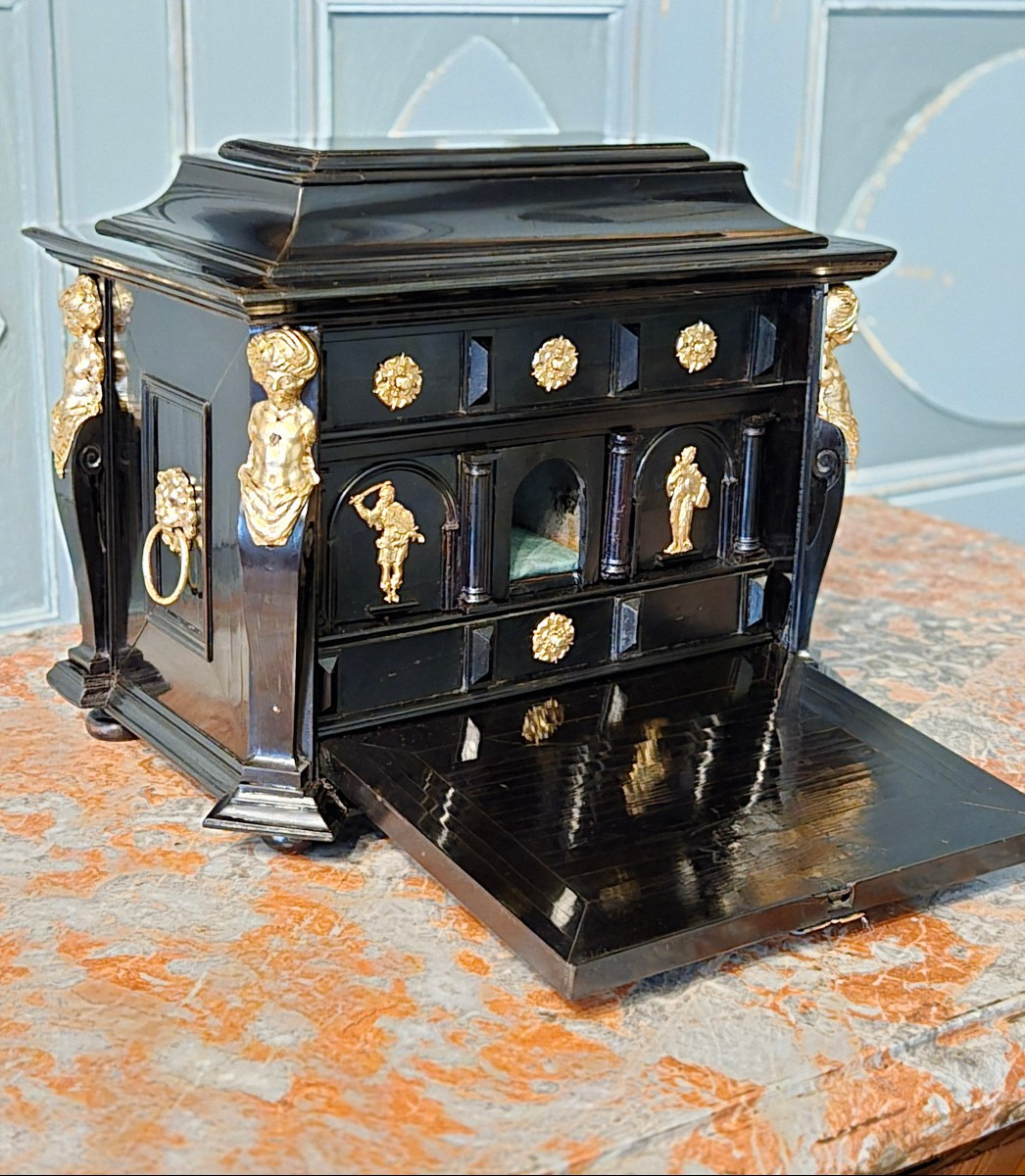

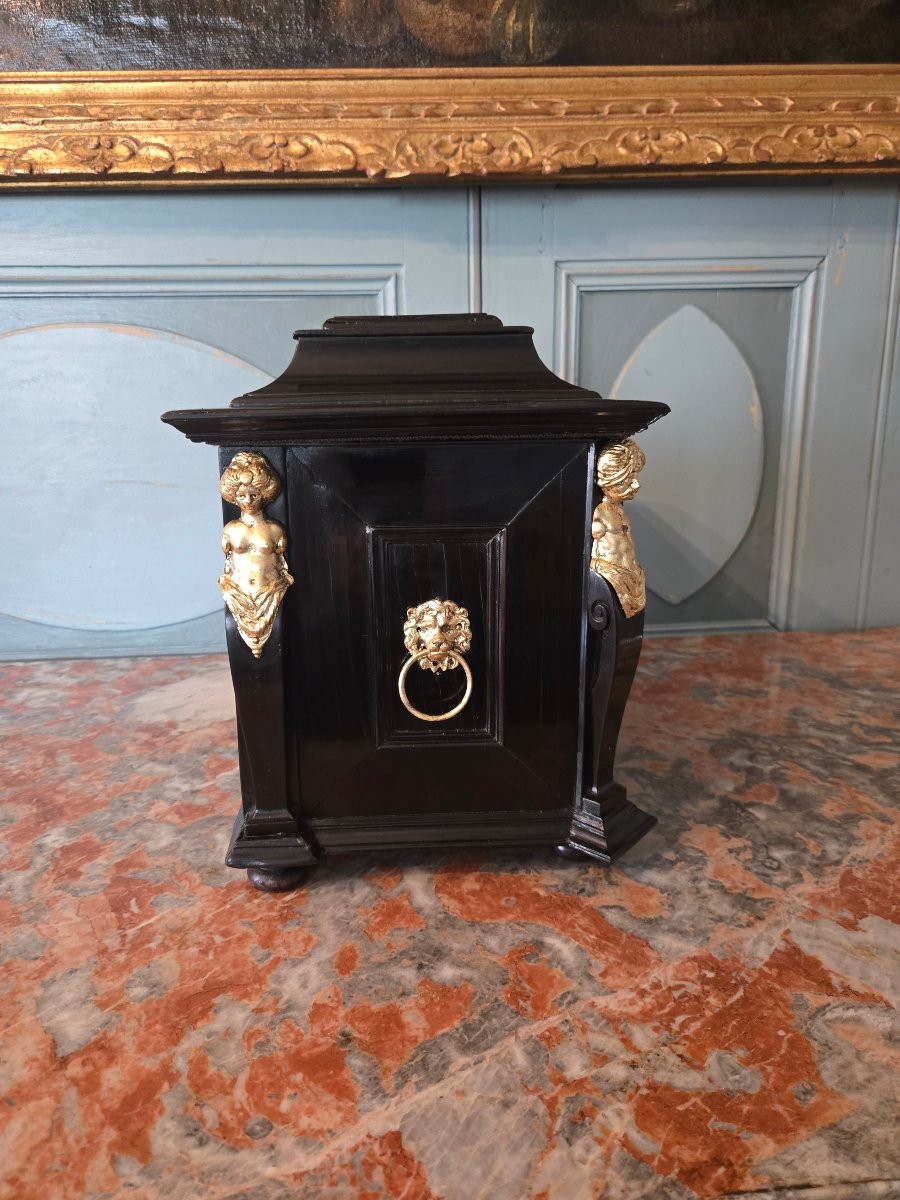


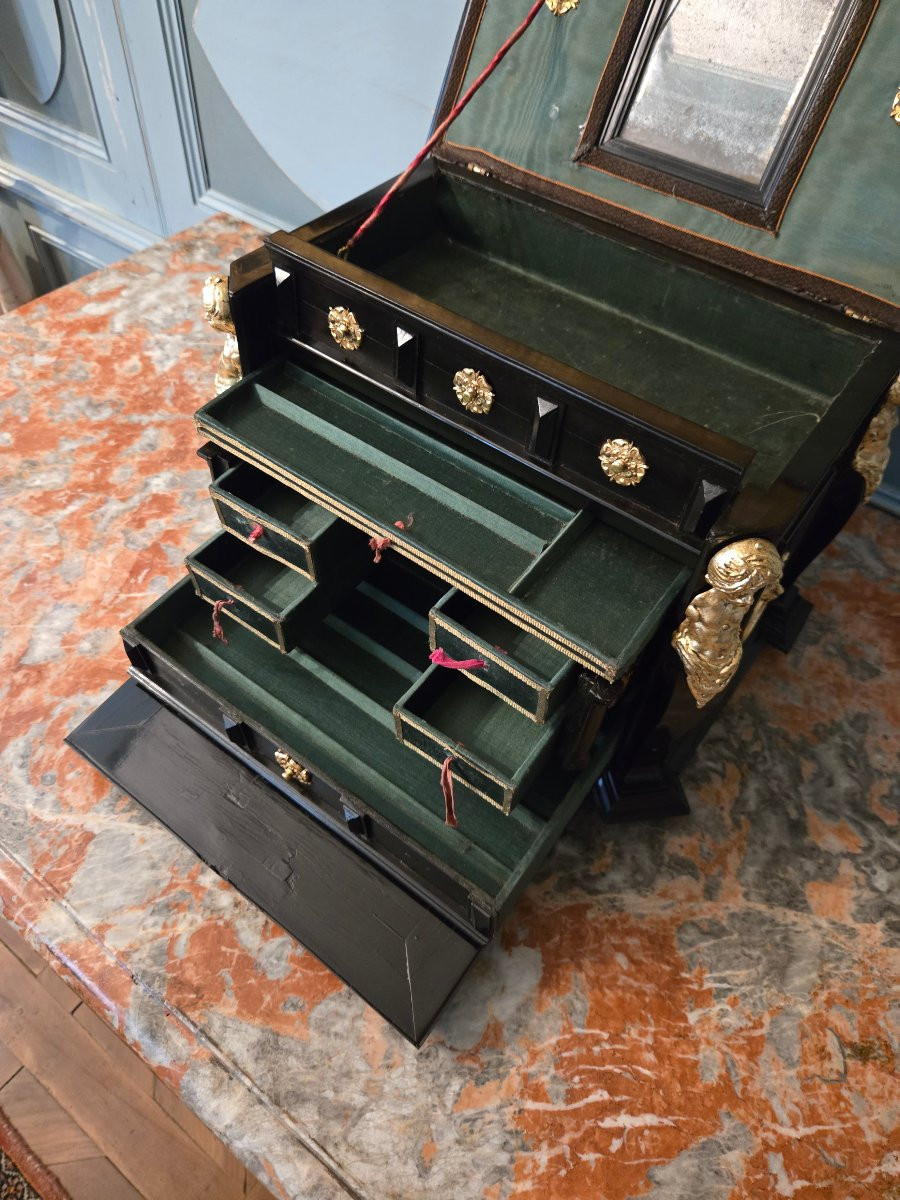
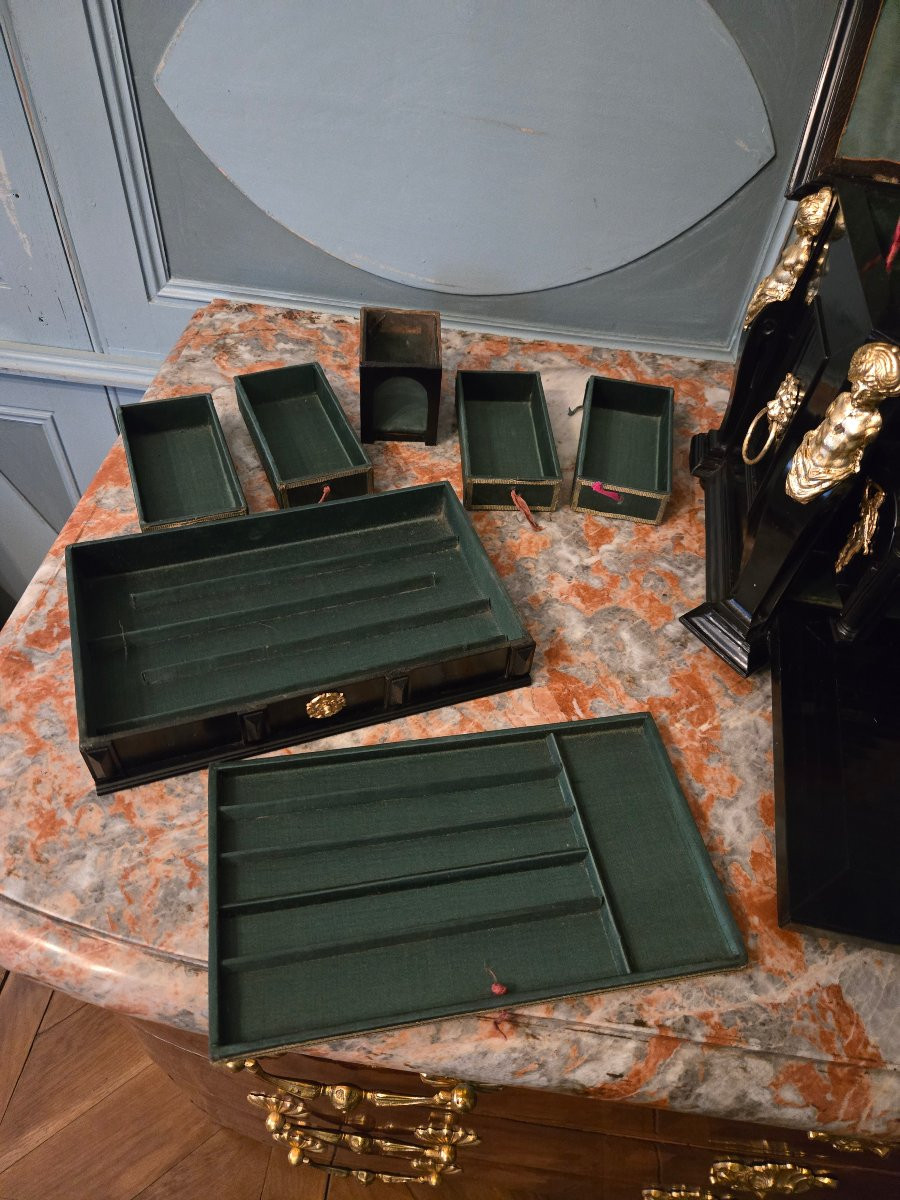
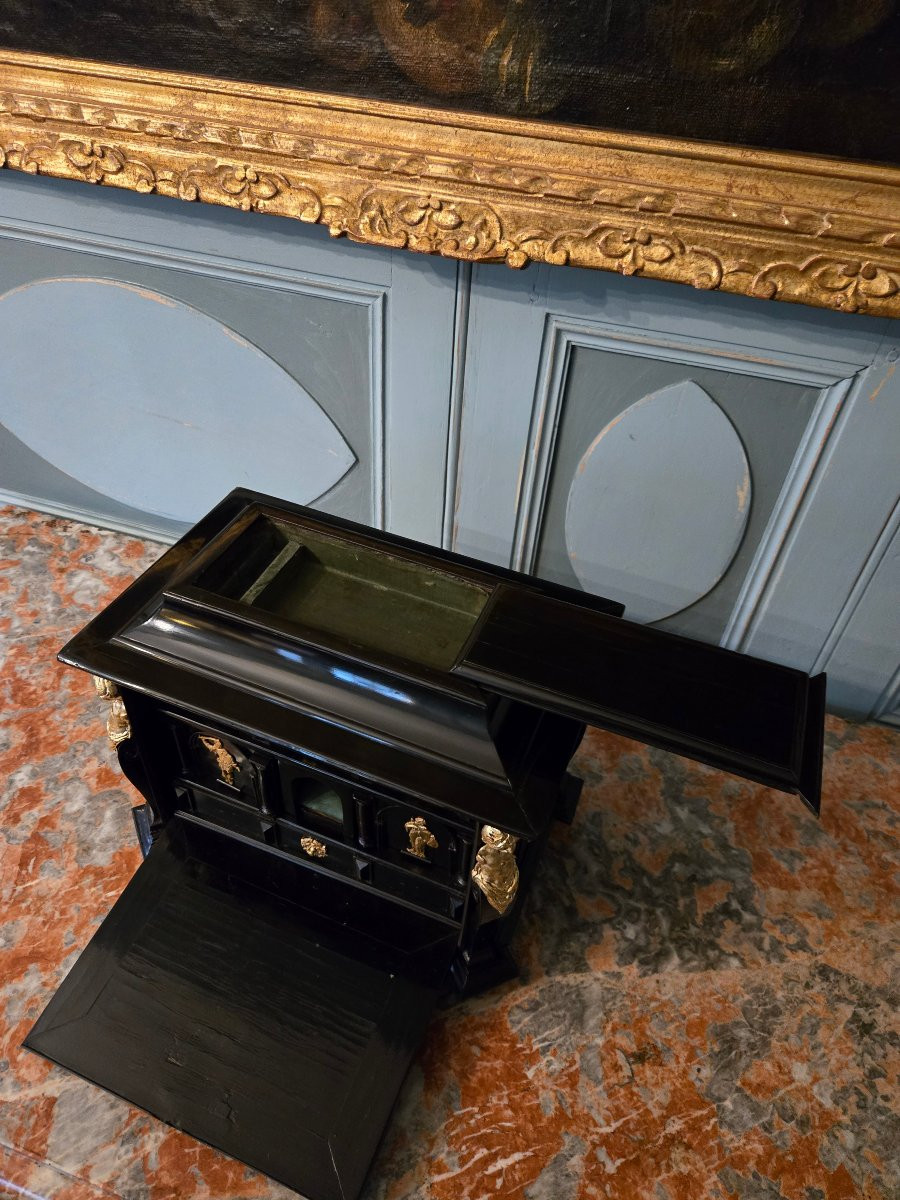
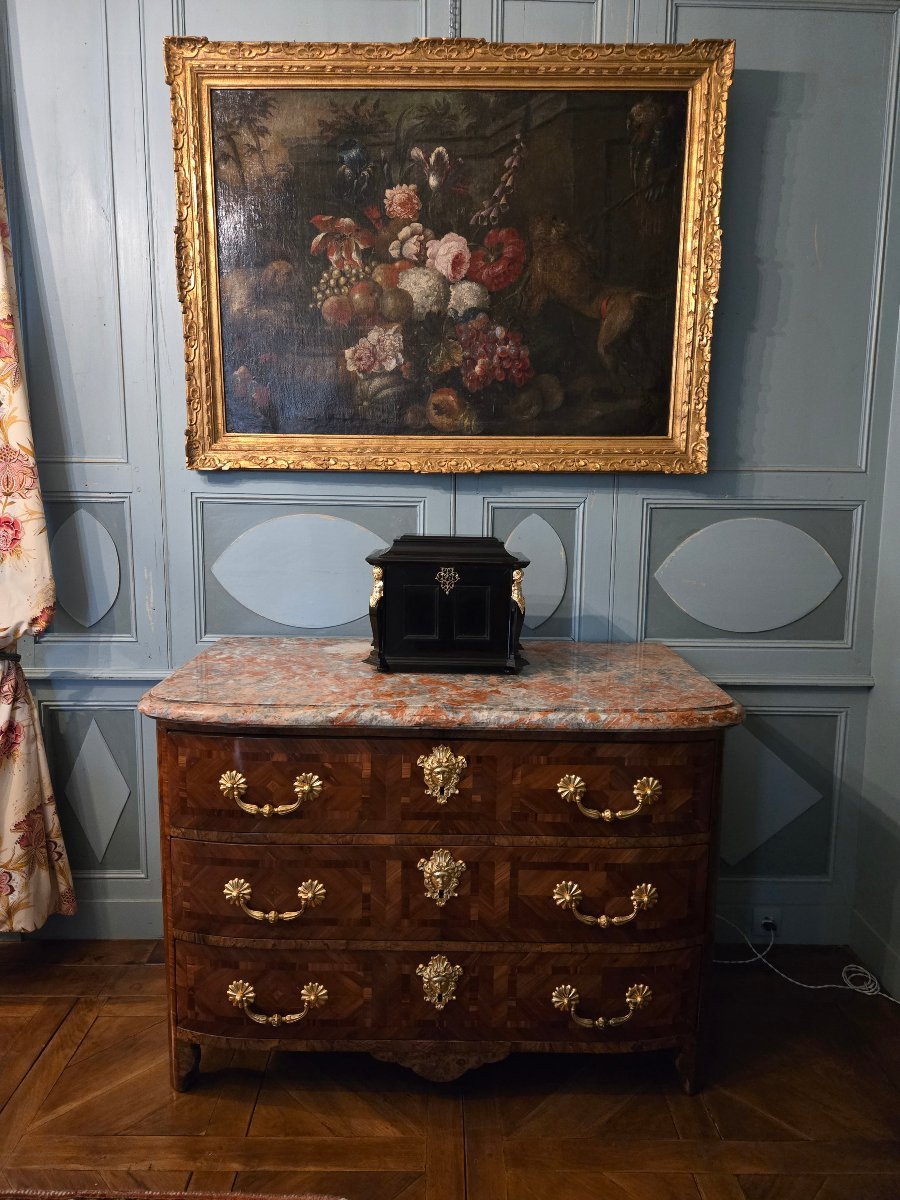


An exceptional jewelry box in the form of a miniature cabinet, an Antwerp work from the 17th century, testifying to the refinement of precious objects produced in the major artistic centers of the Southern Netherlands, then at the heart of European trade. Entirely constructed of quarter-sawn oak with a fine and regular grain, this box is completely veneered in deep, dense ebony, the quality and thickness of which reflect particularly meticulous craftsmanship. Certain moldings, made of solid ebony, elegantly accentuate the overall structure, giving the object a presence that is both understated and precious, characteristic of high-quality 17th-century production. Resting on small, flattened ball feet, this jewelry box adopts an architectural composition directly inspired by grand state cabinets, transposed here to an intimate scale. The front opens with a drop-front revealing a veritable interior theater, designed as a miniature cabinet of secrets. The internal layout reveals great sophistication: drawers, hidden compartments, niches, and ingenious mechanisms are arranged around a central niche, its mirrored back accentuating the depth and showcasing the precious objects it could contain. A sliding interior facade conceals a secret compartment, while small side doors, designed like miniature shrines, conceal additional drawers. The lid itself features a sliding tray and a secret compartment accessible by an ingenious system, reflecting the 17th-century taste for puzzles and mechanisms. The gilt-bronze ornamentation is one of the most remarkable elements of this piece. The sides are fitted with drop-ring handles held by finely chiseled lion heads, evoking a casket intended to accompany its owner, embodying the spirit of travel and mobility characteristic of precious objects of this era. The corners are adorned with gilt-bronze figures representing male and female figures wearing turbans and with deliberately stylized features. This rare and particularly evocative iconography reflects the context of the 17th century, marked by the rise of international maritime trade. It directly echoes the exchanges with India and the trade routes that contributed to the wealth of the Netherlands, notably through the Dutch East India Company. These figures thus convey, in the decorative language of the period, a fascination with distant lands and cultures, integrated into the European artistic vocabulary. Inside, the decoration becomes more classical: the bronze figures of musicians evoke the arts and harmony, underscoring the cultivated and refined nature of this type of object, intended for an enlightened clientele. With its high-quality oak construction, rich ebony veneer, delicate gilt bronze mounts, and intricate interior, this jewelry cabinet perfectly embodies the tradition of 17th-century cabinet objects and art rooms, at the crossroads of cabinetmaking, luxury, and the history of commerce. The piece is presented in excellent condition, with minor restorations consistent with age, without compromising its structure or authenticity. This box comes from a fine collection of early period furniture and objects housed in a château in Champagne. A rare and captivating piece, simultaneously functional, collectible, and decorative, it testifies to the 17th-century taste for refinement, curiosity, and openness to the world. Dimensions: Height: 30 cm Width: 37.5 cm Depth: 23.5 cm
Explore similar pieces and discover your ideal find:
Boxes, Cases