

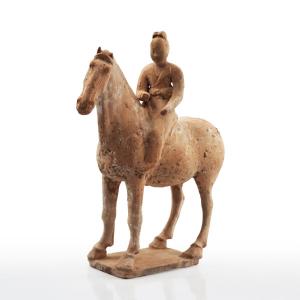


A Terracotta Horseman, China, Tang Dynasty, 618–907 A.c.
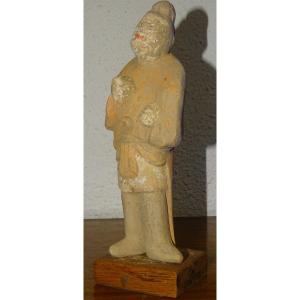
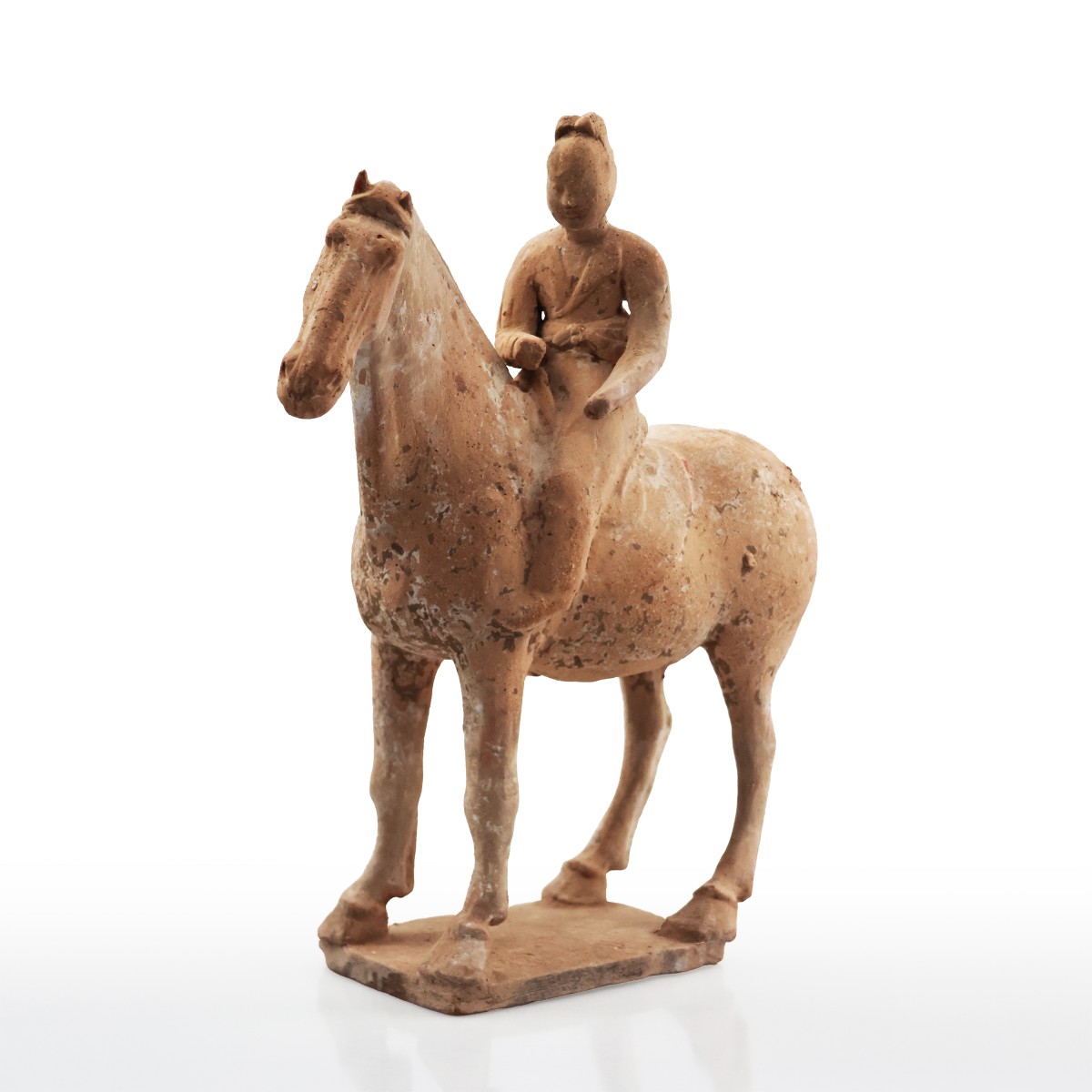
A terracotta Ehorseman, datable to the Tang Dynasty (618–907 AD), this work is a representative example of Chinese funerary sculpture characterized by a high level of technical skill and symbolic meaning.
The figure depicts a rider seated upright on a sturdy, well-proportioned horse, conveying a composed and confident demeanor. The rider wears a simple yet structured tunic, belted at the waist with wide sleeves; the details are restrained but effective. The hair is gathered in a high coiffure, typical of the Tang period, suggesting status and discipline, possibly military or courtly. The face appears calm, with rounded, idealized features that are more symbolic than portrait-like.
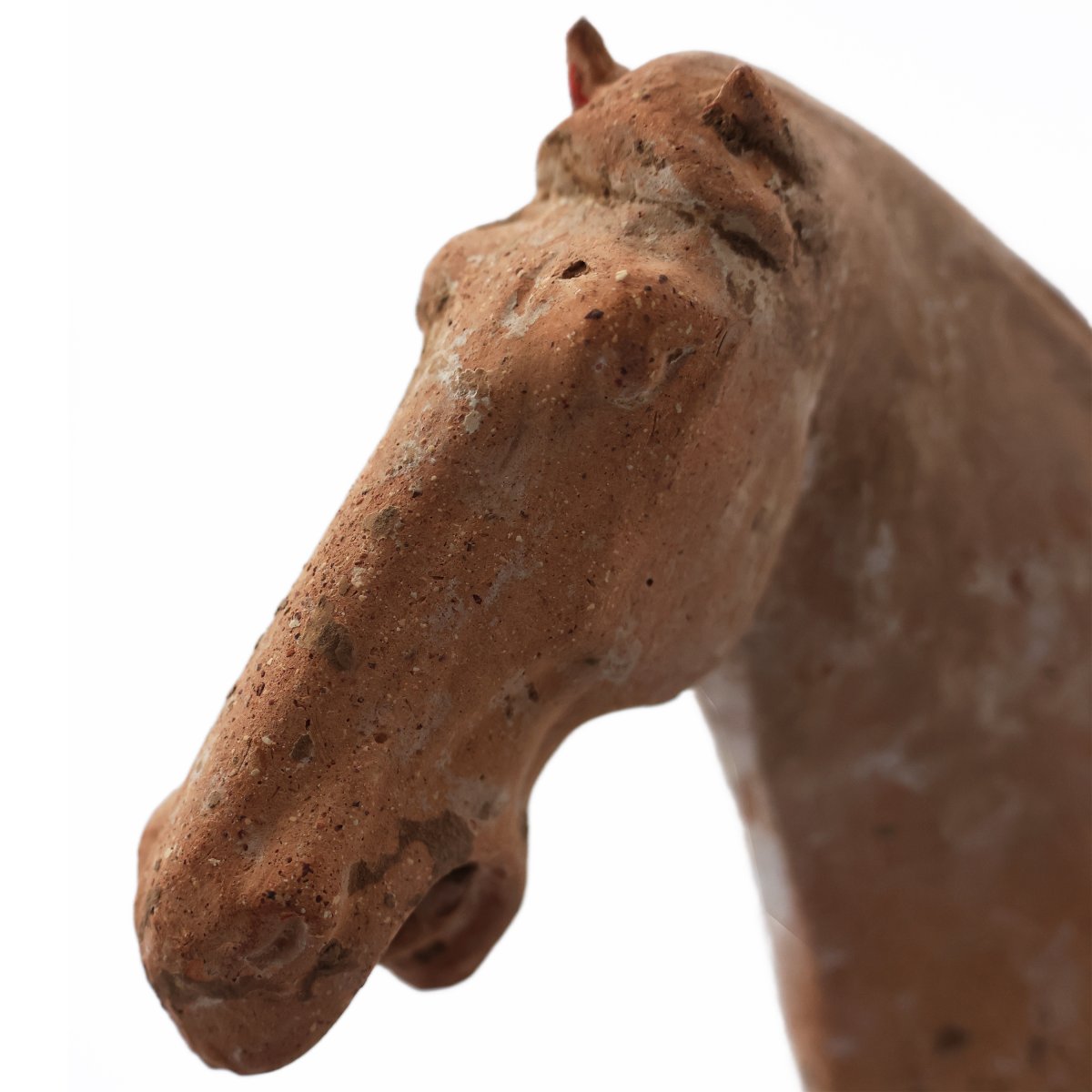
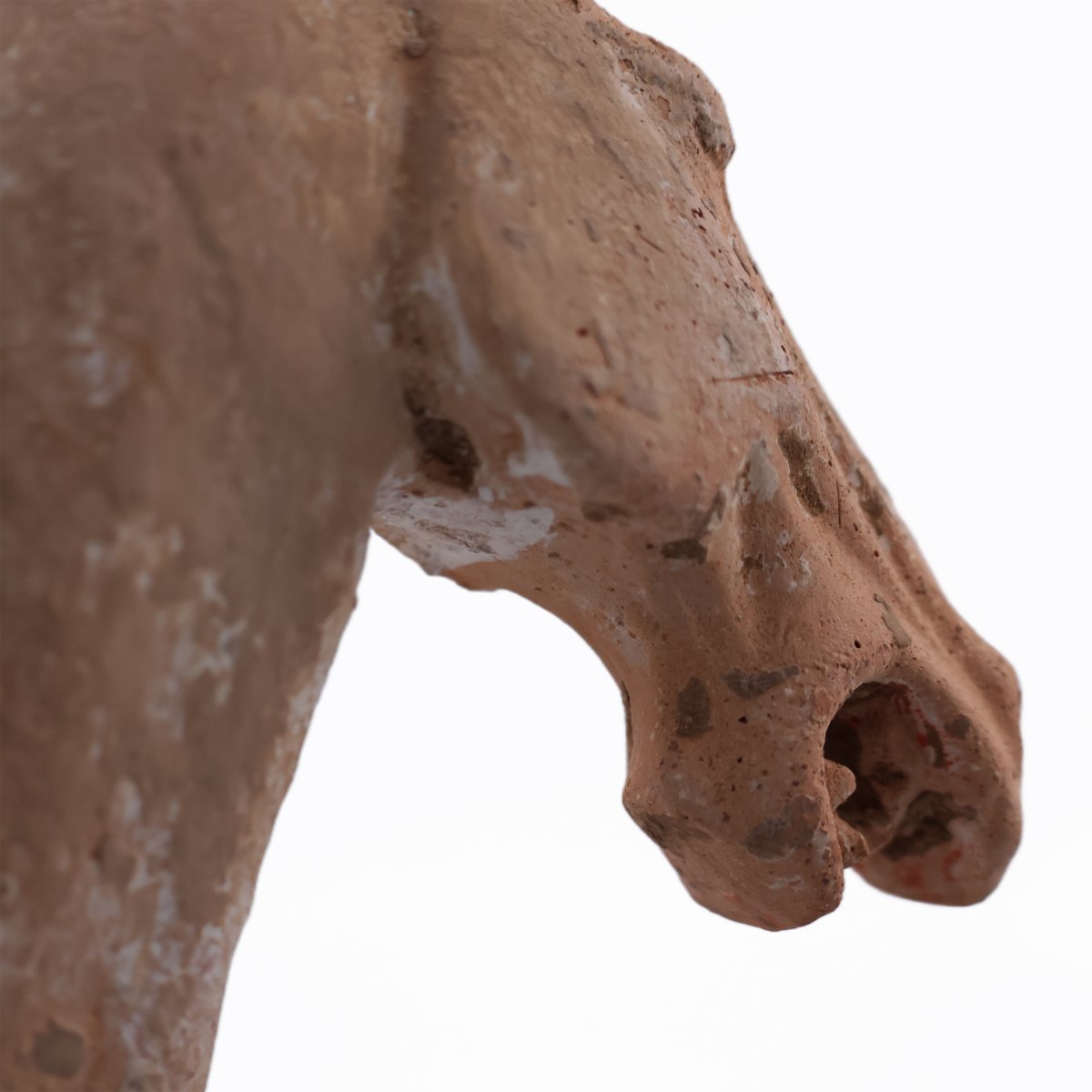
The horse, the central element of the composition, is modeled with great volumetric care: a robust body, broad chest, solid legs, and a stable stance. This treatment emphasizes the strength and significance of the horse in Tang China, a period when horse breeding and cavalry were essential to both military power and social prestige. The horse’s head is slightly inclined, lending a sense of naturalism and vitality to the sculpture.
The surface retains an earthy patina with traces of wear and irregularities, characteristic of ancient terracotta, attesting to the object’s funerary function. Works such as this were placed in the tombs of high-ranking individuals as symbolic companions in the afterlife, serving both protective and status-representative purposes.
The lot is accompanied by a thermoluminescence test certificate issued by CSG Palladio, identified by reference number 25-007413-B.
DimensionsHxLxD 12in x 13,39in x 2,95in
Provenance
Private collection
Conditions
Signs of wear from age. Defects. Losses.
Period: Before 16th century
Style: Asian art
Condition: Good condition
Material: Terracotta
Width: 34
Height: 30,5
Depth: 7,5
Reference (ID): 1724681
Availability: In stock