


Fyodor Petrovich Tolstoy (1783–1873)
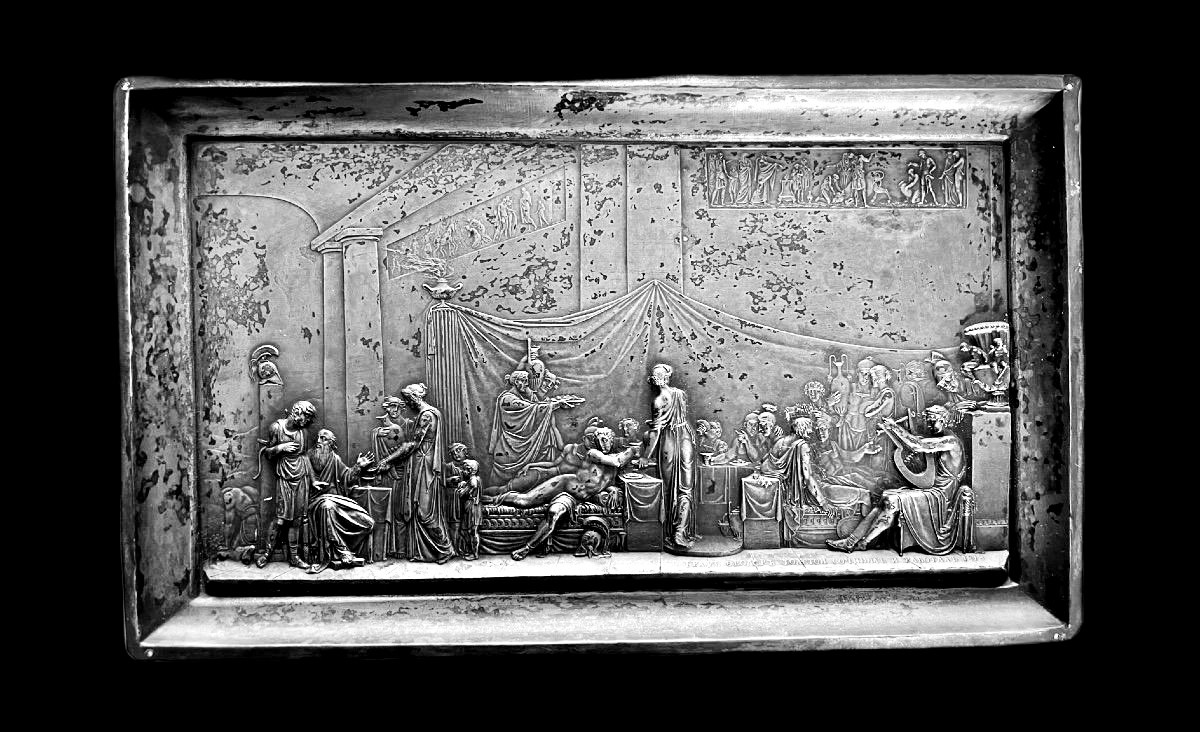
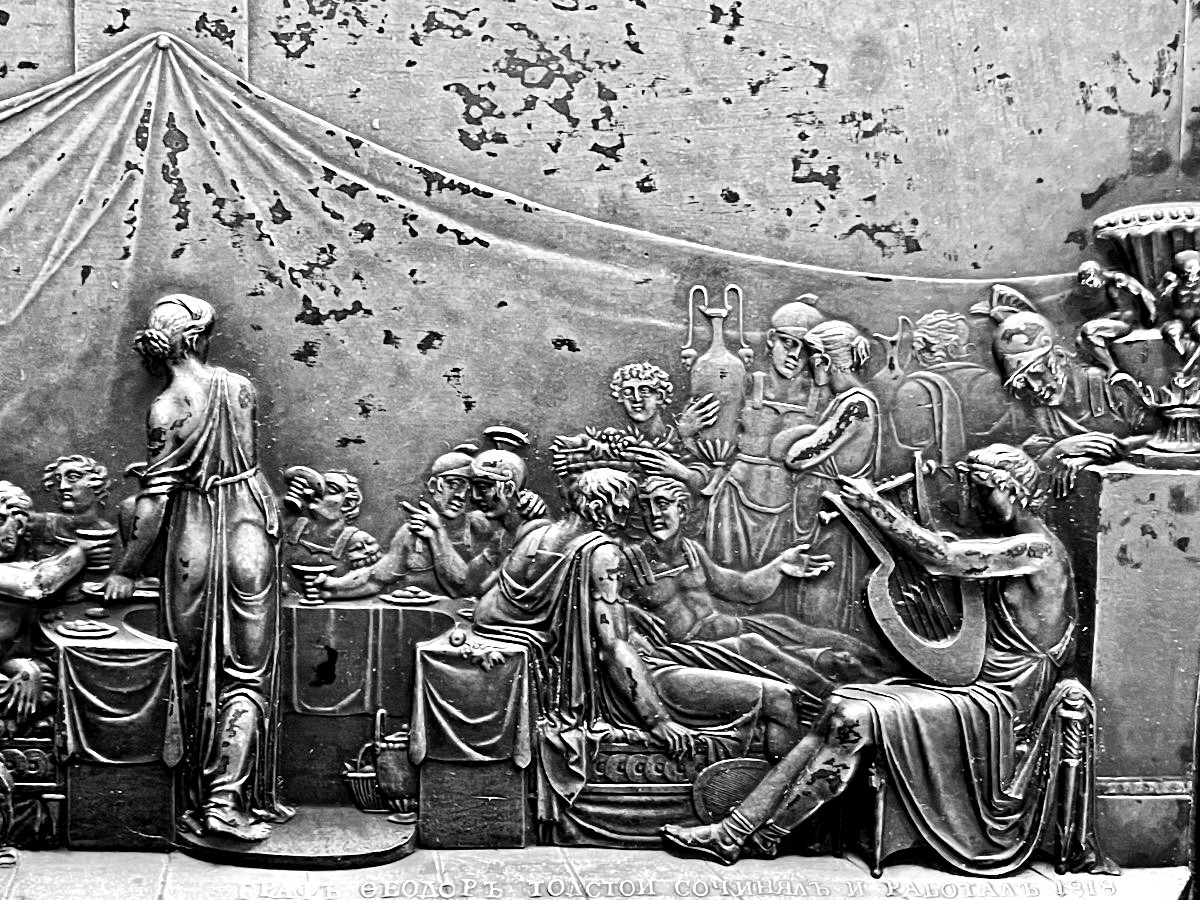
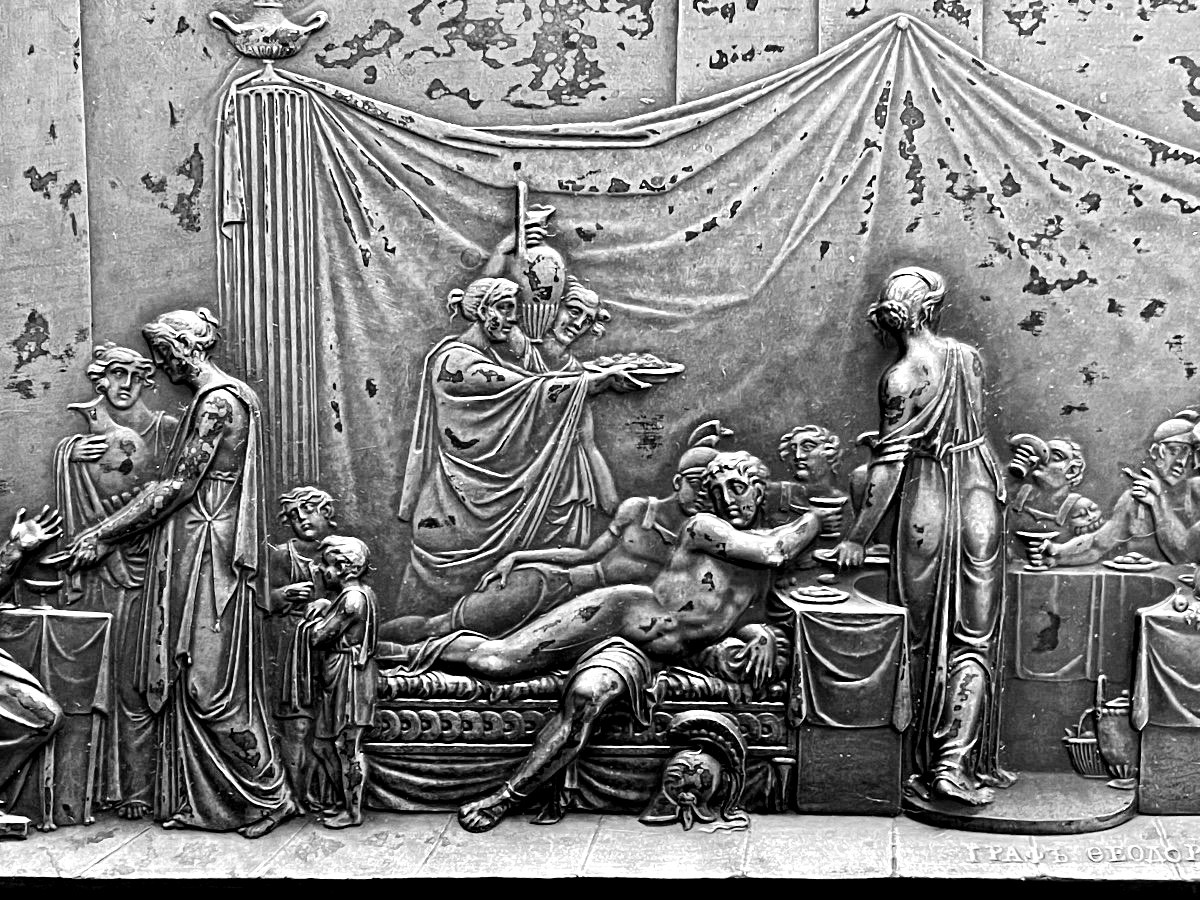
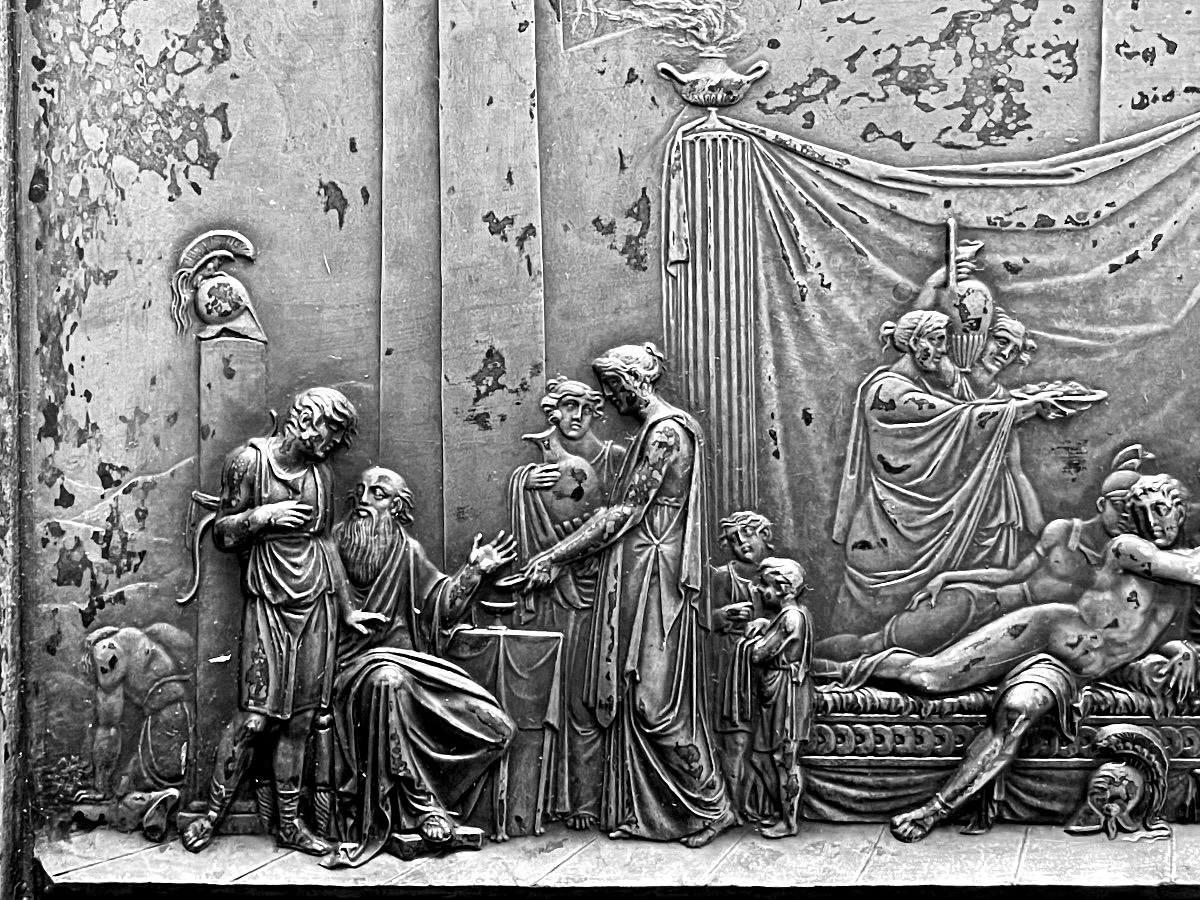
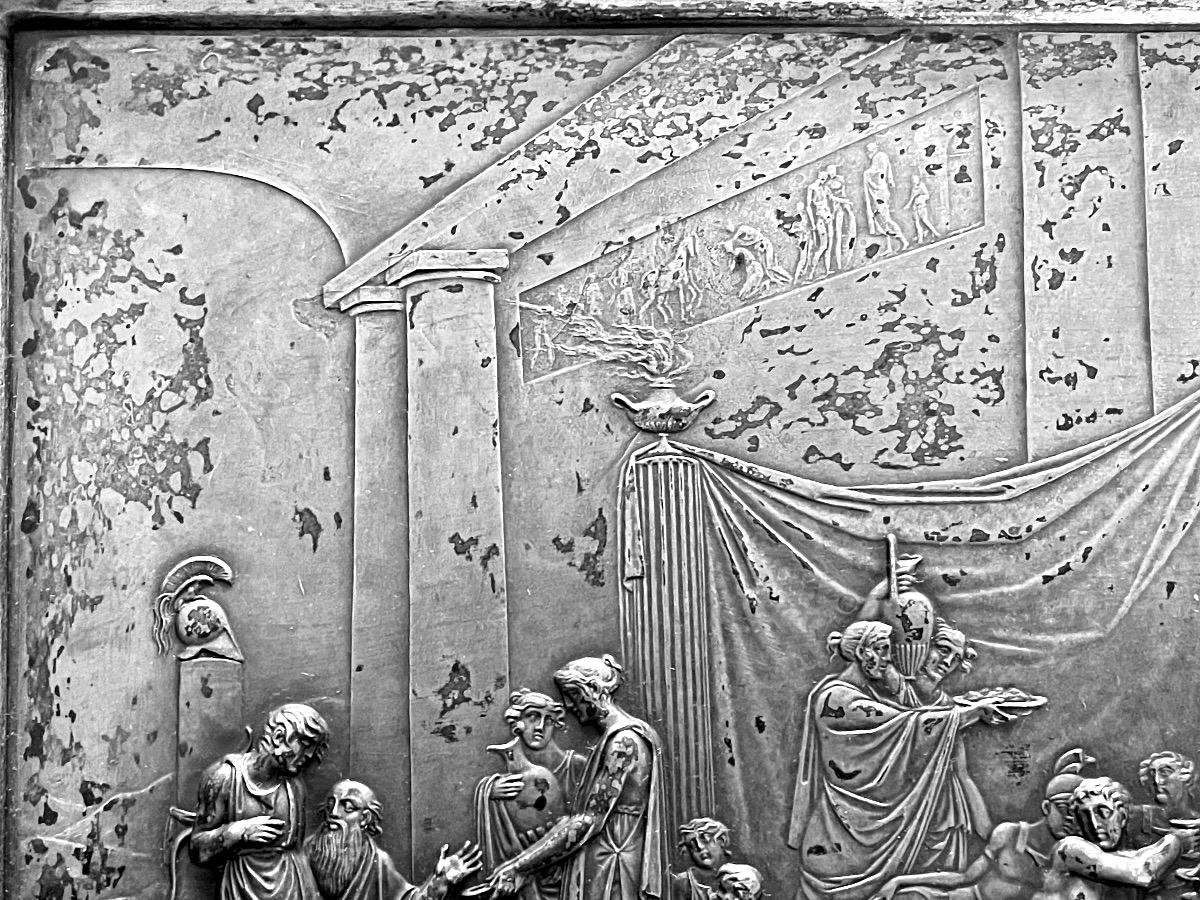
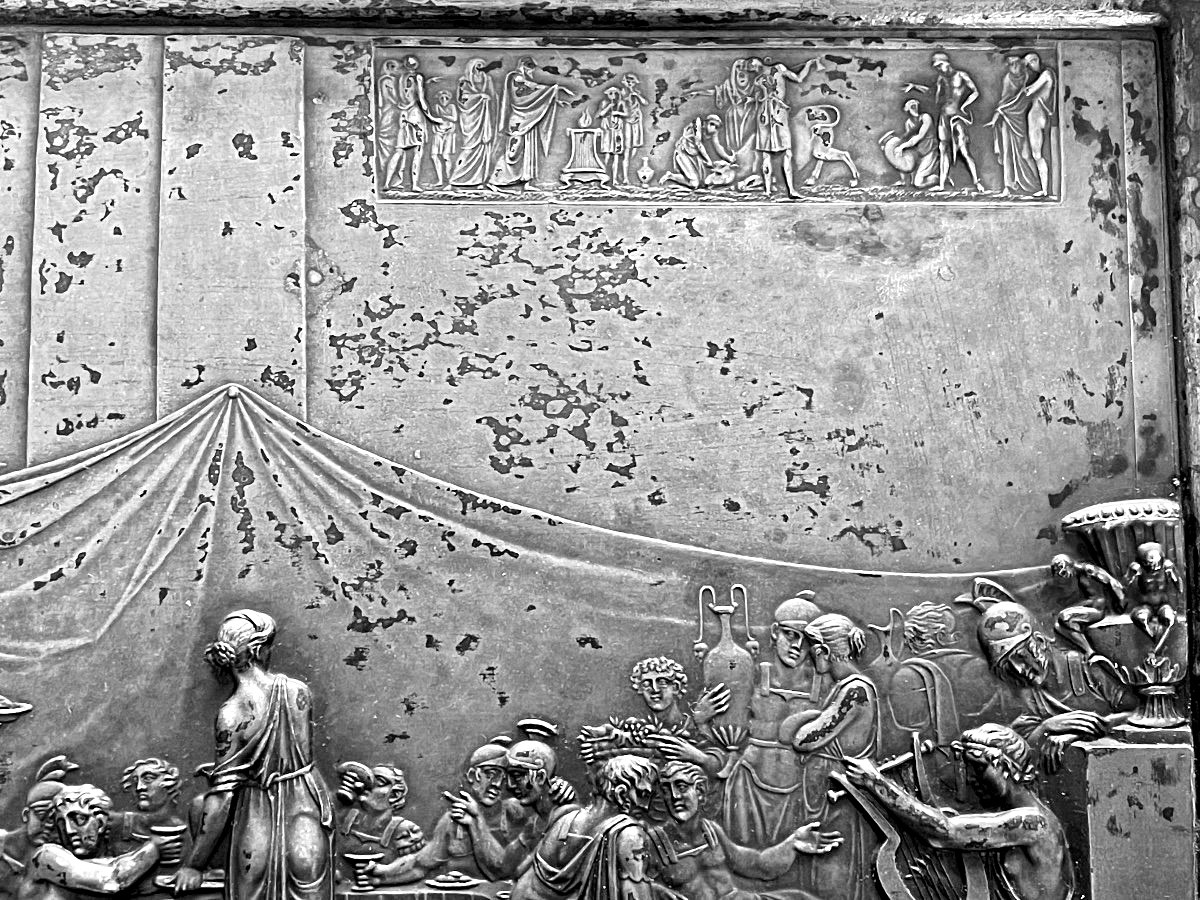
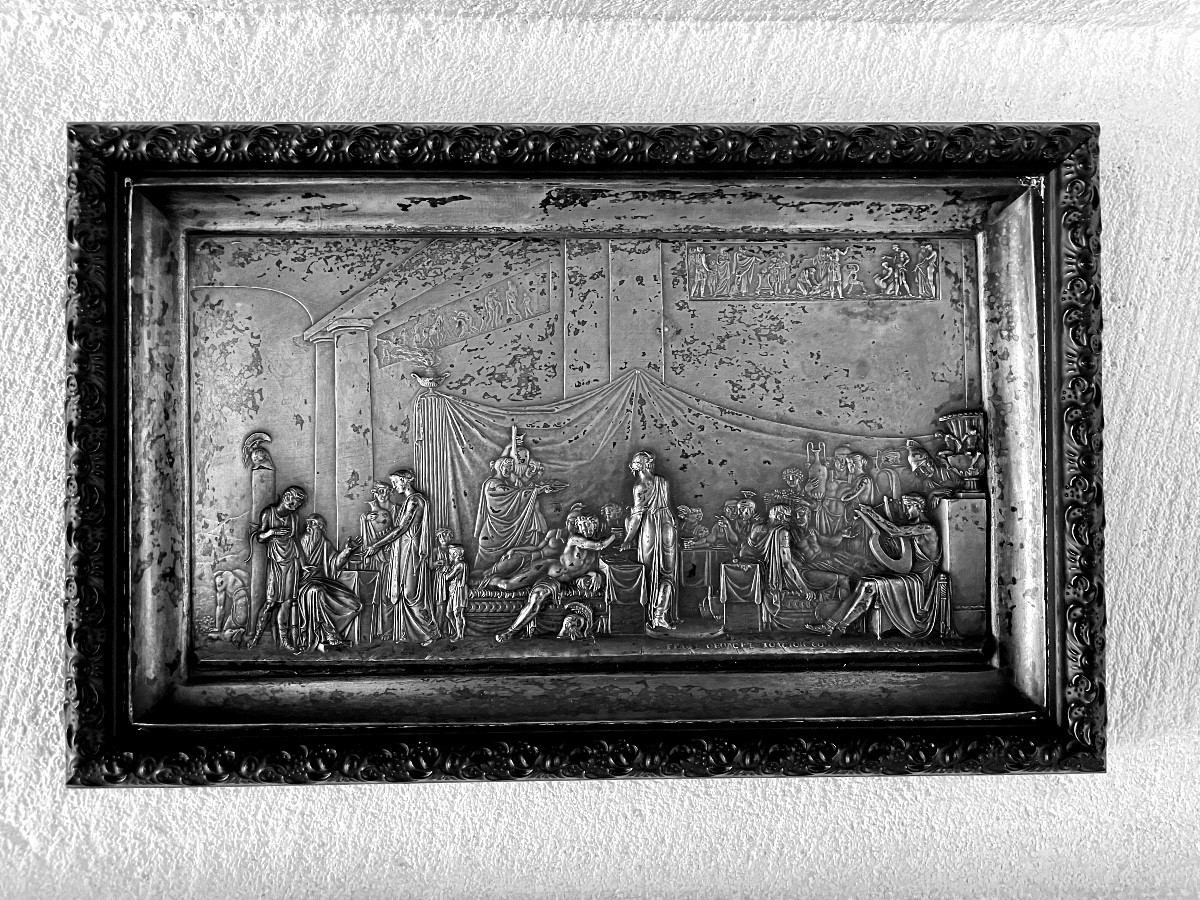
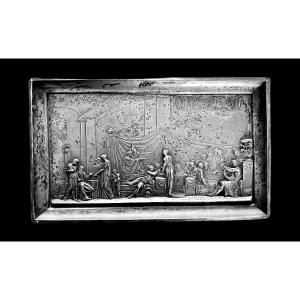
The Feast in Odysseus's House Neoclassical bas-relief after Homer's Odyssey – Russia, circa 1818-1822 Important rectangular silvered bronze bas-relief depicting "The Feast in Odysseus's House," the work of the renowned Russian sculptor and medalist Fyodor Petrovich Tolstoy, a major figure of Russian Imperial Neoclassicism. This refined composition belongs to the series of works that the artist dedicated to episodes from Homer's Odyssey, one of the great foundational texts of ancient civilization. Tolstoy, deeply inspired by Greek and Roman art, develops here a narrative scene of remarkable iconographic richness. The scene represents an ancient banquet enlivened by numerous figures arranged in a skillfully balanced composition. In the center, the guests are reclining on banquet couches according to ancient tradition, while servants present dishes and amphorae. On the right, a musician plays the lyre, lending a musical and festive dimension to the scene. Around them, a lively gathering of figures converses, drinks, or attends the banquet. The whole scene unfolds in an interior inspired by ancient architecture, punctuated by a column and a large, suspended drapery that structures the composition. A sculpted frieze in the upper architectural section directly evokes the bas-reliefs of classical Greece, reinforcing the archaeological and scholarly character of the work. The relief is distinguished by its extraordinary finesse of execution. Each figure is precisely individualized: facial expressions, folds of drapery, banquet accessories, and musical instruments are rendered with great technical mastery. At the bottom of the composition is the inscription in Russian: "ГРАФЪ ФЕОДОРЪ ТОЛСТОЙ СОЧИНЯЛЪ И РАБОТАЛЪ 1818" Translation: "Count Fyodor Tolstoy conceived and executed it in 1818." Fyodor Tolstoy's bas-reliefs are preserved in several major museum collections, notably the Russian Museum and the Hermitage Museum in Saint Petersburg, and are considered outstanding examples of the Neoclassical taste in early 19th-century Russian art. Dimensions (excluding frame): 26 × 15.5 cm Condition: Antique patina with partially worn silvering, unrestored.
3 450 €
Period: 19th century
Style: Other Style
Condition: En l'etat
Reference (ID): 1724541
Availability: In stock
Print