





Salvador Dalí (1904-1989) Sculpture Portfolio "ten Recipes For Immortality"
Artist: Salvador Dali (1904-1989)
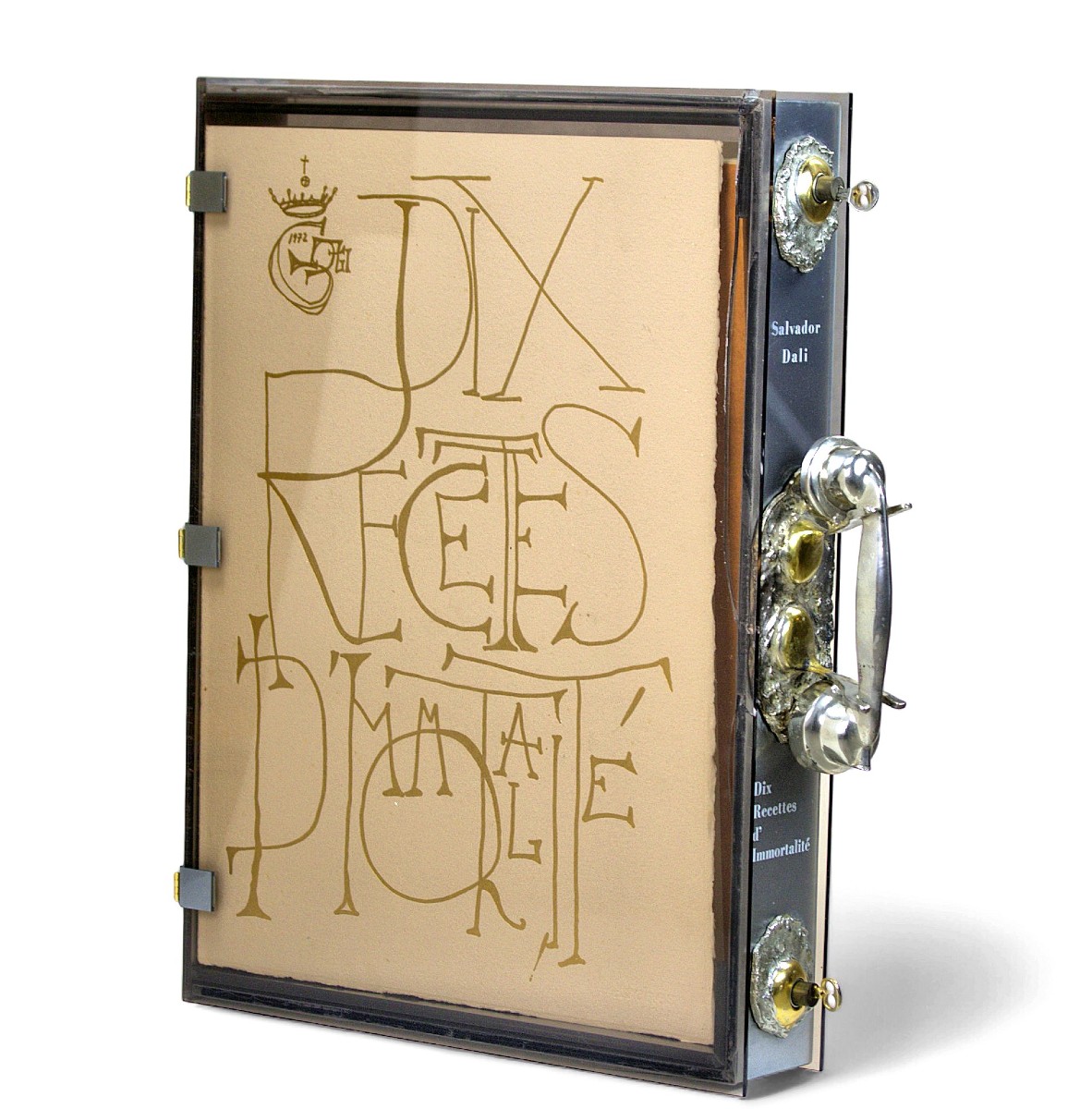
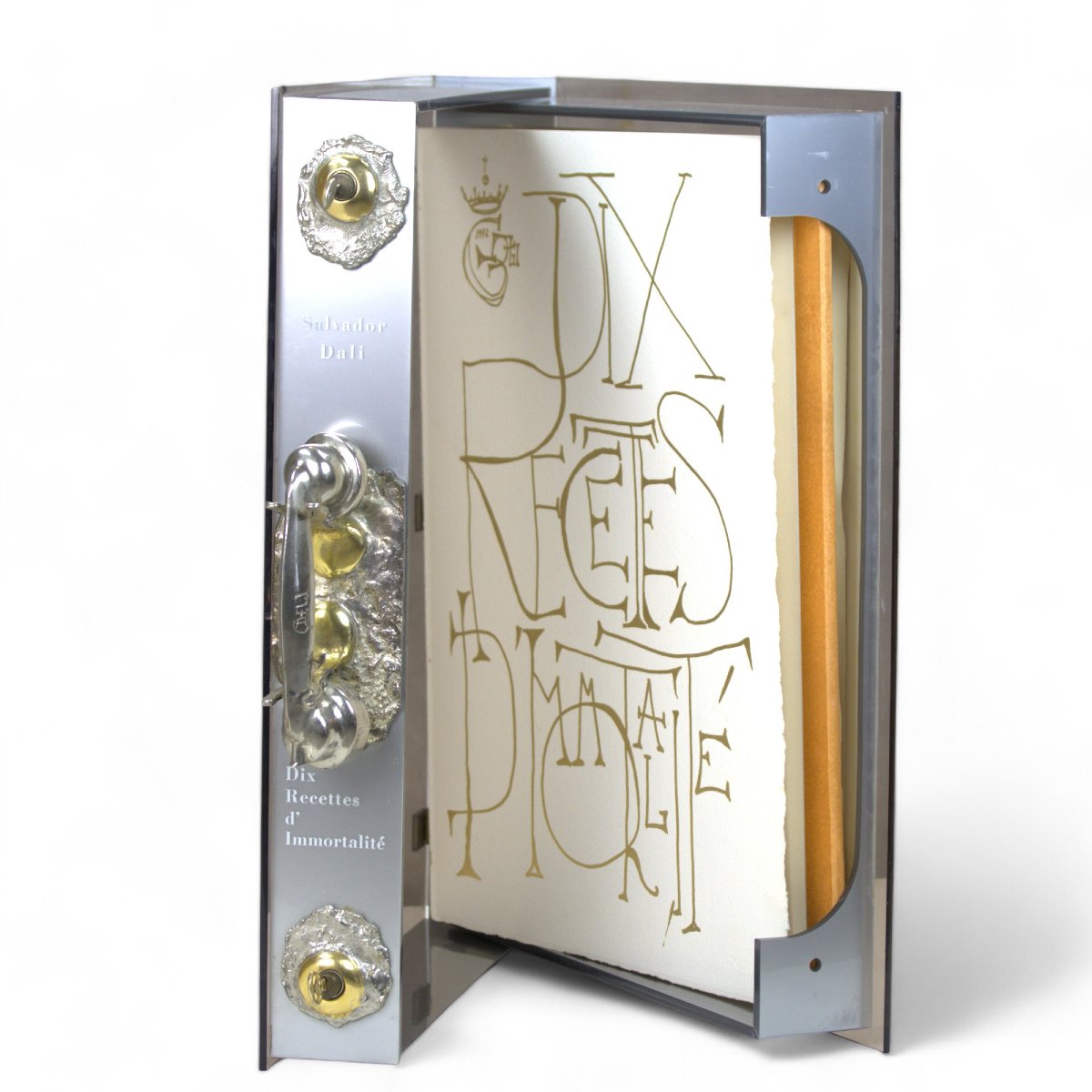
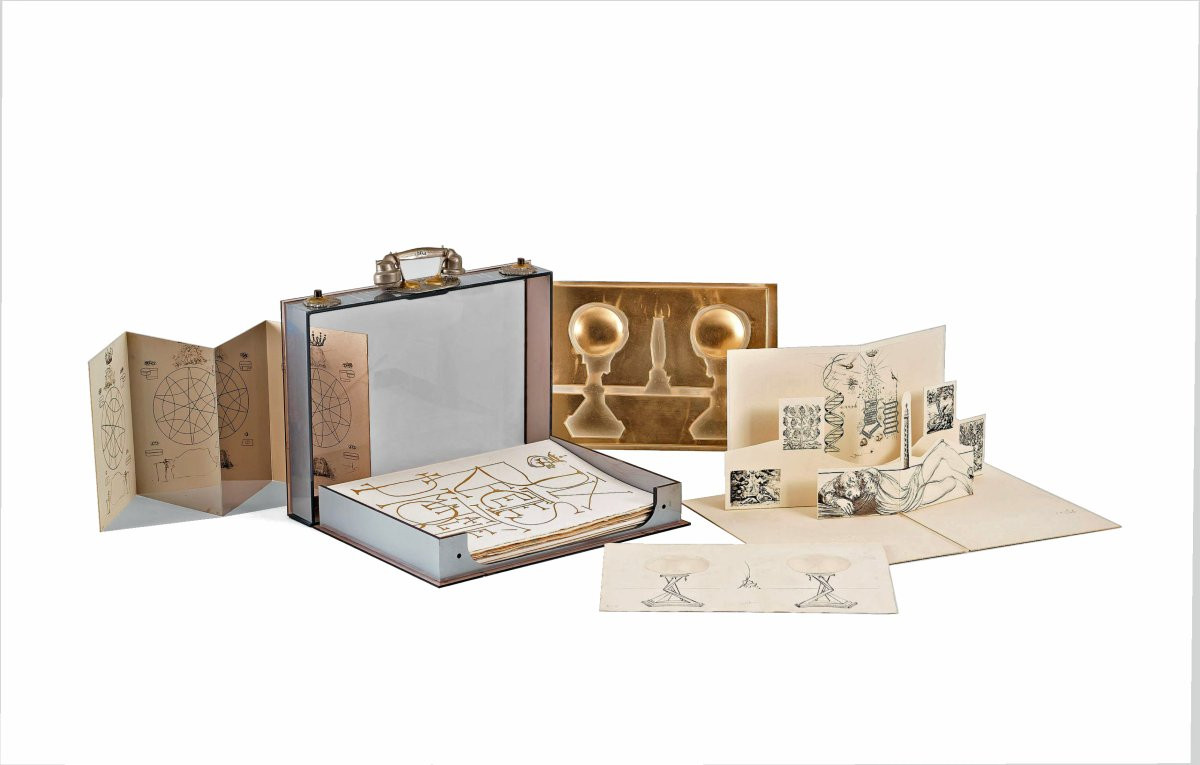
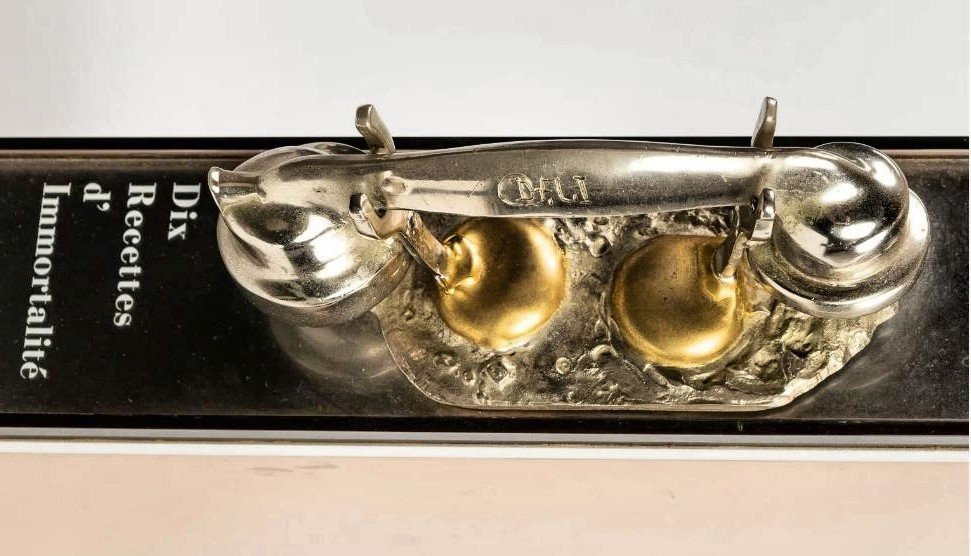
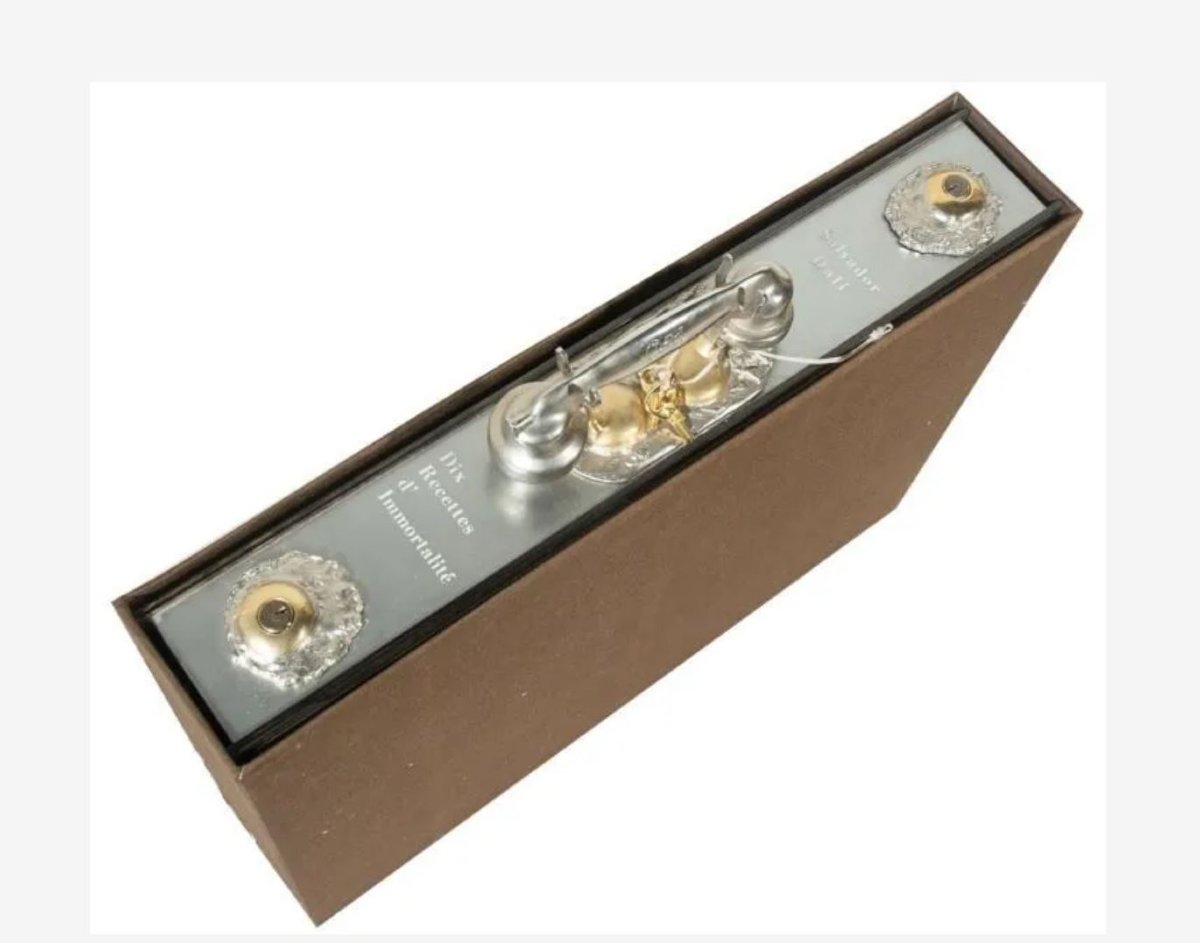
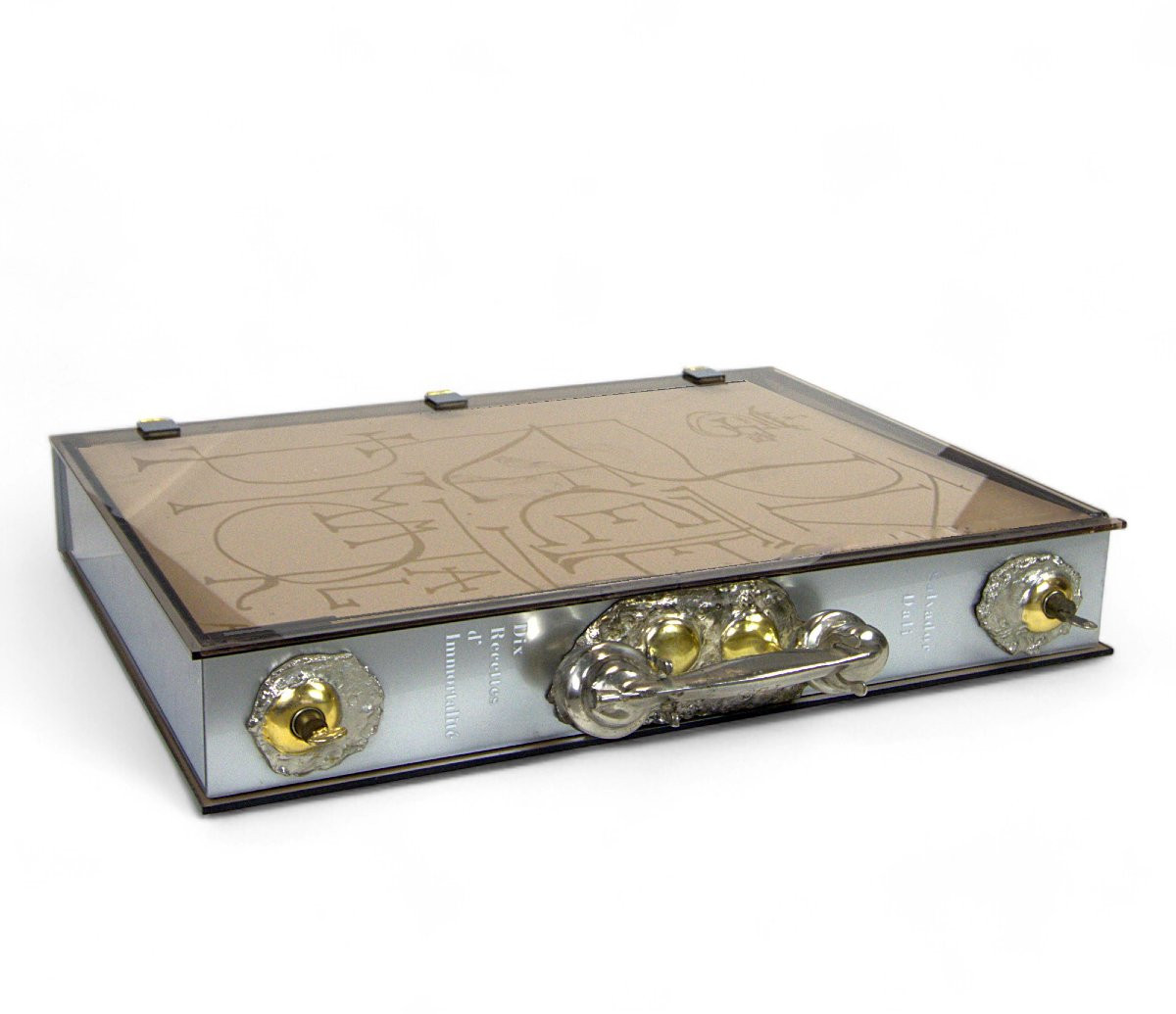
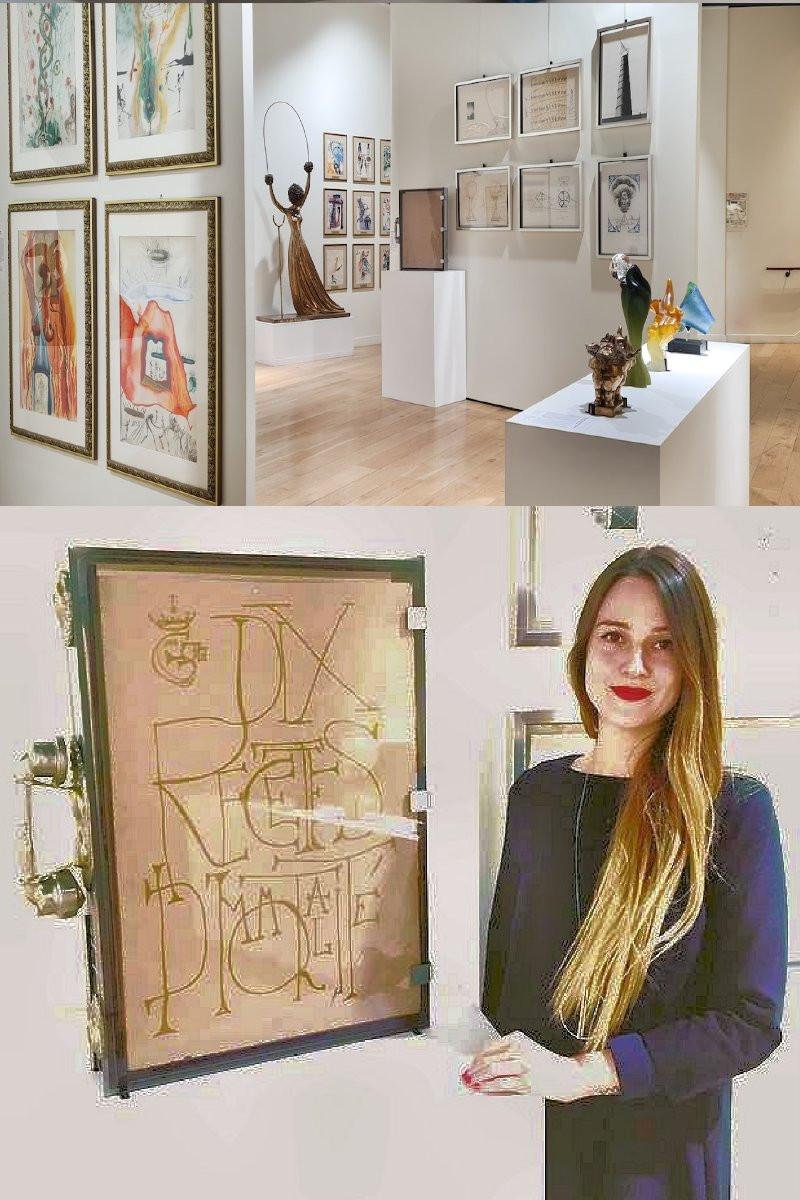
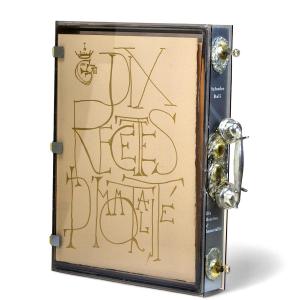
A rare, large-format book-object by Salvador Dalí (1904-1989) titled "Ten Recipes for Immortality," Paris, 1973. This interesting copy, numbered 04/210 (a superior print run up to the tenth copy), is watermarked with a spiral of immortality designed by Dalí and contains 11 original heliogravure engravings, all signed by Dalí in pencil and each bearing a notary's stamp. This rare and interesting portfolio work is presented in a slipcase shaped like a sculpted suitcase in methacrylic with transparent sides. The upper section is adorned with three bronze sculptures: a telephone handset forming the handle with Dalí's engraved signature, and two cylinder locks in the shape of fried eggs (complete with their keys). A pinnacle in Salvador Dali's graphic work at the height of his glory, the artist unfolds before our eyes all the spells of his genius launched in the conquest of Immortality, entirely conceived, written and produced by DALI, this book is a whole Dalinian universe where the sum of his philosophical, poetic, aesthetic and scientific thought is concentrated. The cover, with its gold-stamped title, is a folio volume containing 11 drypoint etchings signed by the artist and all numbered 04/210, three of which are "large object-engravings." Among other works, it includes the first stereoscopic print in art history, a four-part folding book mounted on cardboard, composed of two mirrors and two engravings (drypoint and heliogravure) in black and brown, one bearing the copy number, the other the artist's signature in pencil. These unfold like a pop-up book to form objects, and there is also a sculpted plastic object. "The Tetrahedral Immortality of the Cube" is one of the eleven graphic works accompanying the book, entirely written by the artist. It constitutes the graphic representation of an esoteric language through which Dalí sought to offer his audience the "remedies" for immortality. The book is printed on specially made, handmade Auvergne paper by Richard-de-Bas, with a watermark of a spiral of Immortality designed by Dalí. The Bodoni typeface is illuminated by colored initials calligraphed by Dalí, as is the cover title embossed in fine gold. Of all the books he created, Dalí stated that Ten Recipes for Immortality was his favorite, the most admirable, the one that best reflected him. It is in very fine condition and complete with its publisher's fabric slipcase. Dimensions: 65 cm x 49 cm.
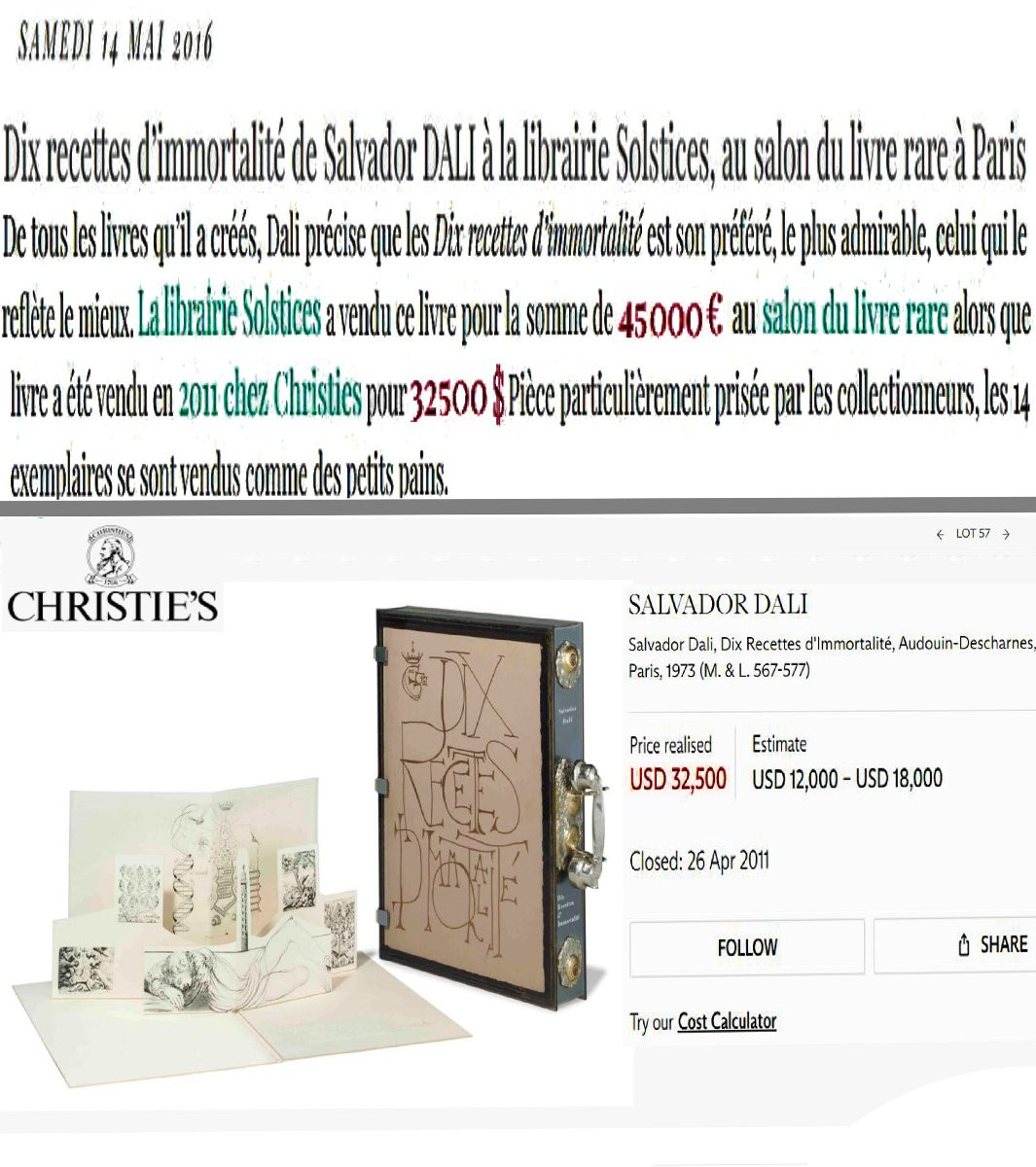
It is worth noting that Librairie Solstices sold a copy for €45,000 at the Rare Book Fair, and another copy was sold at Christie's in 2011 for $32,500. This item is particularly prized by collectors. It should be noted that a copy is exhibited in the permanent collection of the Dali Museum in Paris 11 rue Poulbot 18th BIBLIOGRAPHY L. Löpsinger, R. Michler, Salvador Dali, catalogue raisonné de l'oeuvre gravé, 1956 à 1980, vol. II, Munich, Prestel, 1995, p. 567-577 A. Field, The Official Catalogue of The Graphic Work of Salvador Dali, Astoria, Salvador Dali Archives, 1996, n° 73-20 Salvador Dali was born into a bourgeois family in Figueras in 1904, Salvador Dali showed early aptitude for the visual arts and literature. Introduced to painting by a local artist in his childhood, and drawn early on to the great examples of the Renaissance, the Spanish Golden Age (17th century), and Impressionism, he began his studies at the prestigious San Fernando Royal Academy of Fine Arts in Madrid in 1922. This period also saw his encounters with Federico García Lorca and Luis Buñuel, who would become prominent figures in 20th-century Spanish artistic and intellectual life. Dalí made his first trip to Paris in 1926, where he was introduced to Picasso, and soon after, during Miró's second visit in 1929. Miró introduced him to the Surrealists, with whom Dalí quickly integrated, becoming one of the group's leading figures. 1929 was also the year he met Gala, who became his muse and lifelong companion. Dalí's association with the Surrealists and his adoption of their ideas marked a turning point in his career.
It is worth noting that Librairie Solstices sold a copy for €45,000 at the Rare Book Fair, and another copy was sold at Christie's in 2011 for $32,500. This item is particularly prized by collectors. It should be noted that a copy is exhibited in the permanent collection of the Dali Museum in Paris 11 rue Poulbot 18th BIBLIOGRAPHY L. Löpsinger, R. Michler, Salvador Dali, catalogue raisonné de l'oeuvre gravé, 1956 à 1980, vol. II, Munich, Prestel, 1995, p. 567-577 A. Field, The Official Catalogue of The Graphic Work of Salvador Dali, Astoria, Salvador Dali Archives, 1996, n° 73-20 Salvador Dali was born into a bourgeois family in Figueras in 1904, Salvador Dali showed early aptitude for the visual arts and literature. Introduced to painting by a local artist in his childhood, and drawn early on to the great examples of the Renaissance, the Spanish Golden Age (17th century), and Impressionism, he began his studies at the prestigious San Fernando Royal Academy of Fine Arts in Madrid in 1922. This period also saw his encounters with Federico García Lorca and Luis Buñuel, who would become prominent figures in 20th-century Spanish artistic and intellectual life. Dalí made his first trip to Paris in 1926, where he was introduced to Picasso, and soon after, during Miró's second visit in 1929. Miró introduced him to the Surrealists, with whom Dalí quickly integrated, becoming one of the group's leading figures. 1929 was also the year he met Gala, who became his muse and lifelong companion. Dalí's association with the Surrealists and his adoption of their ideas marked a turning point in his career.
12 000 €
Period: 20th century
Style: Design 50's and 60's
Condition: Good condition
Length: 65 cm
Width: 50 cm
Reference (ID): 1721327
Availability: In stock
Print