

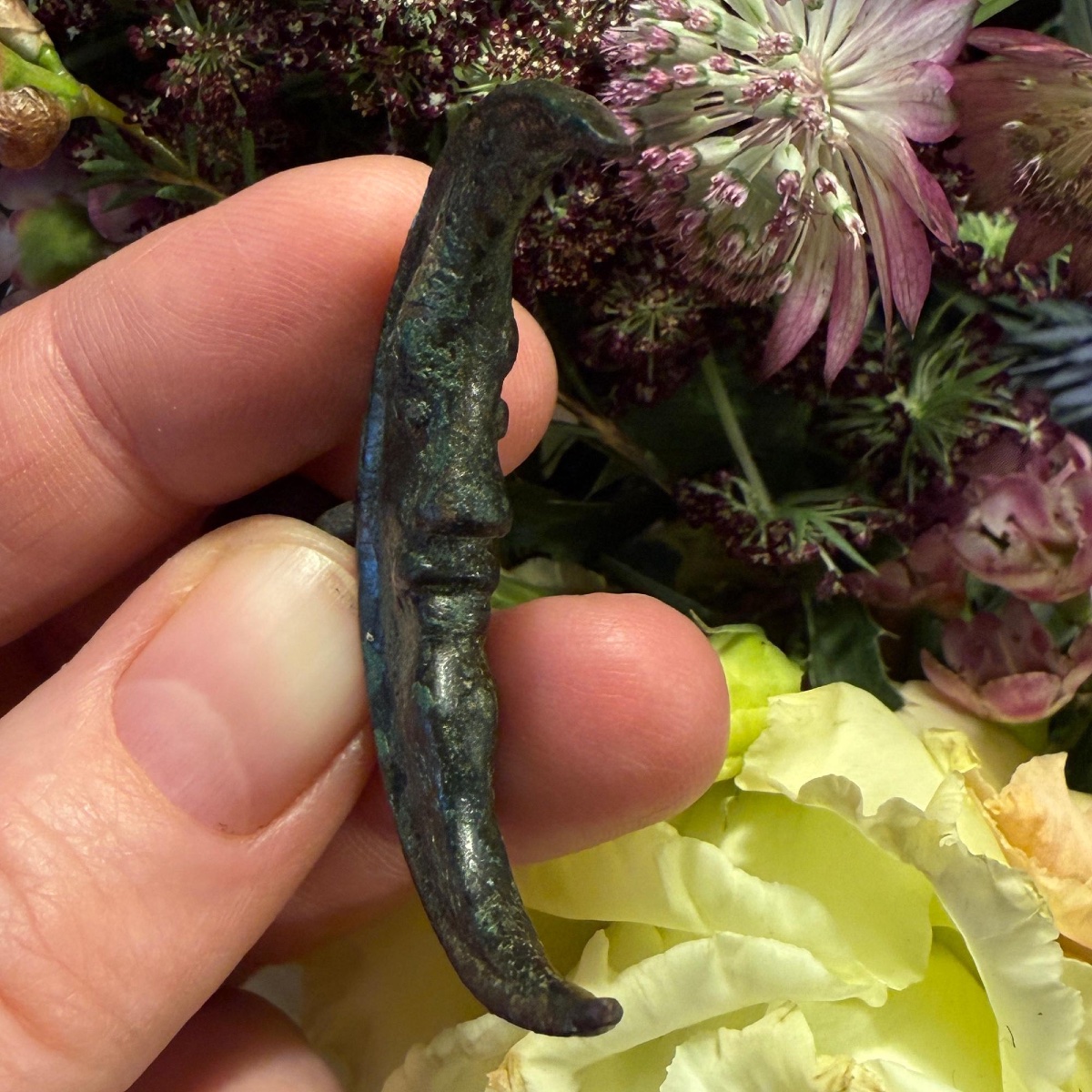

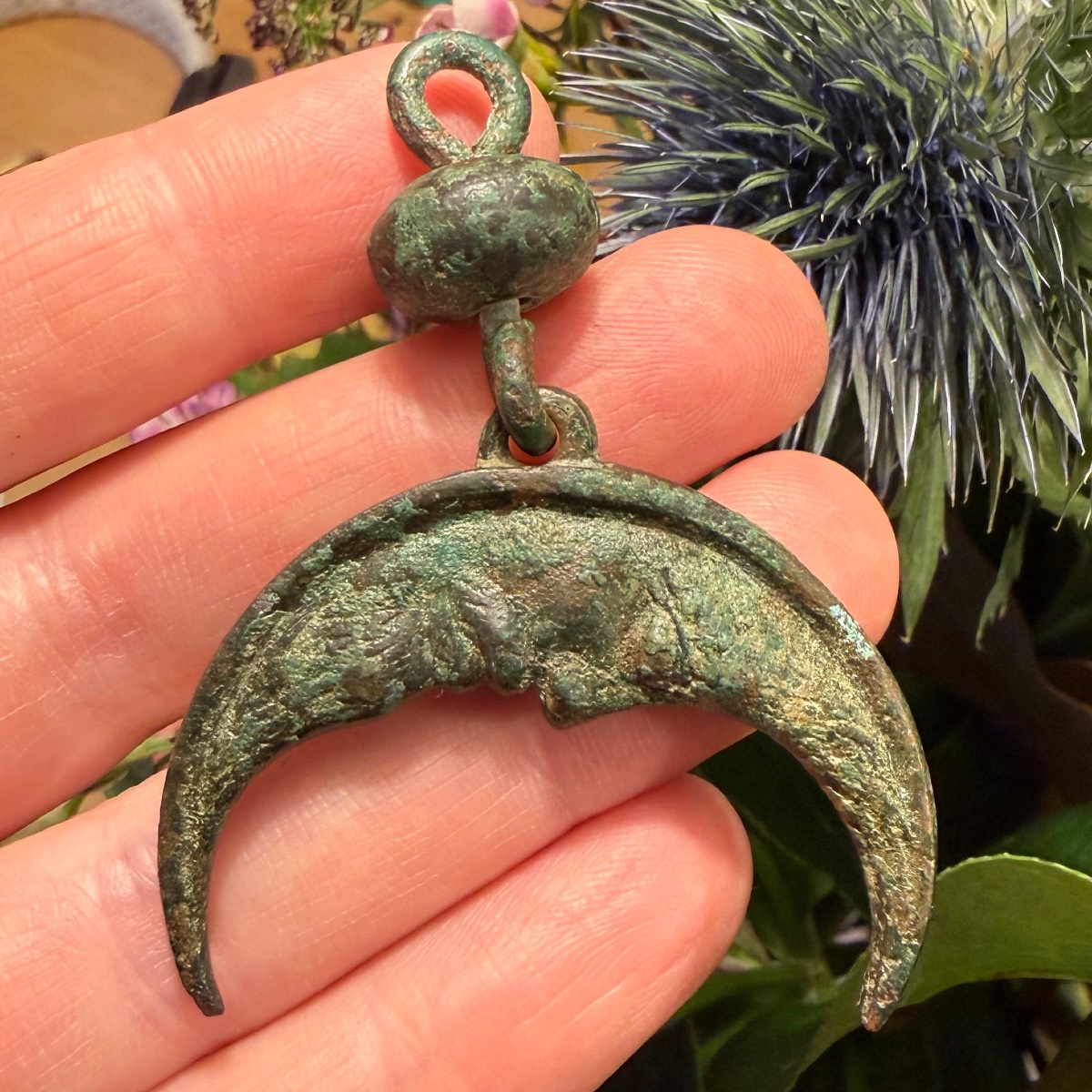
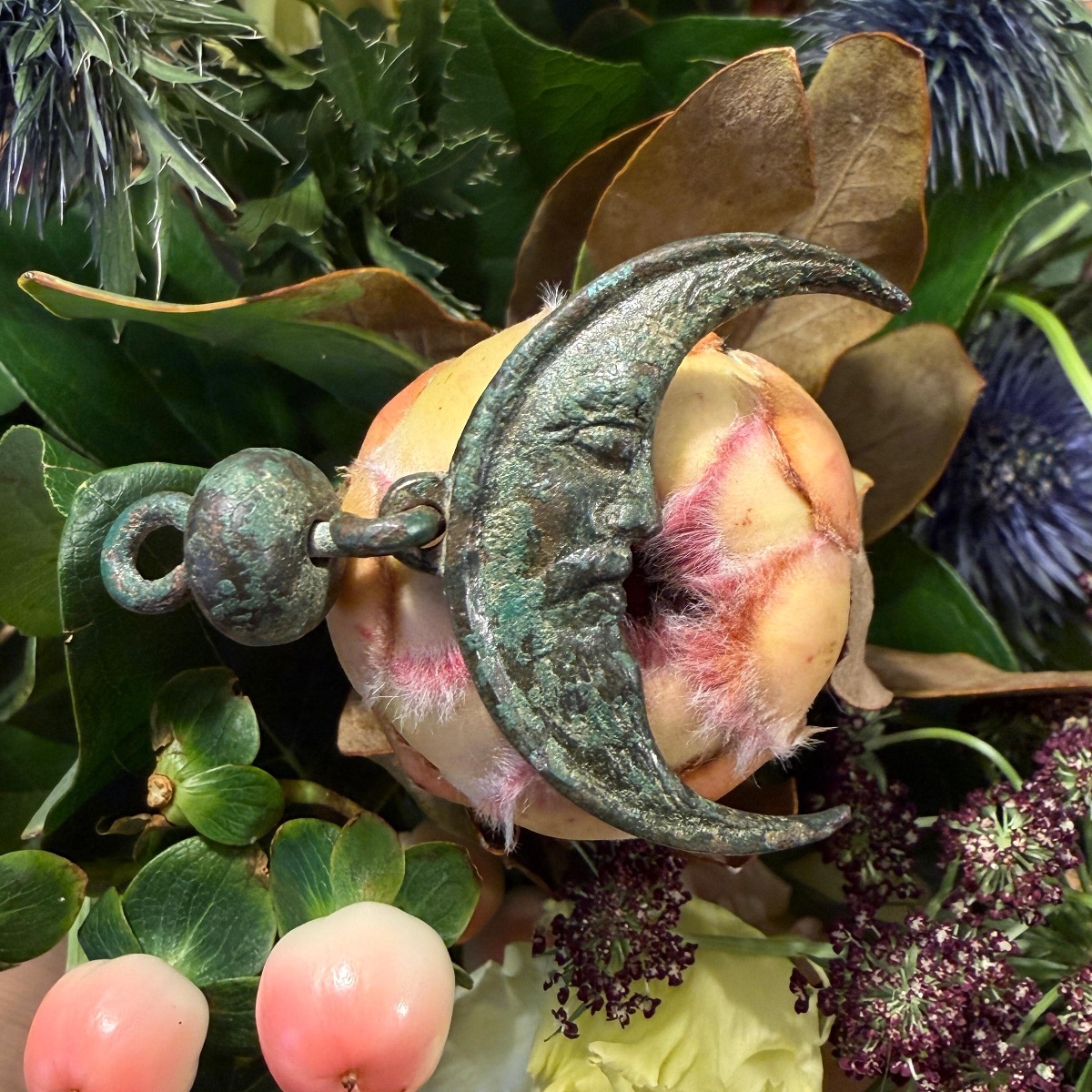
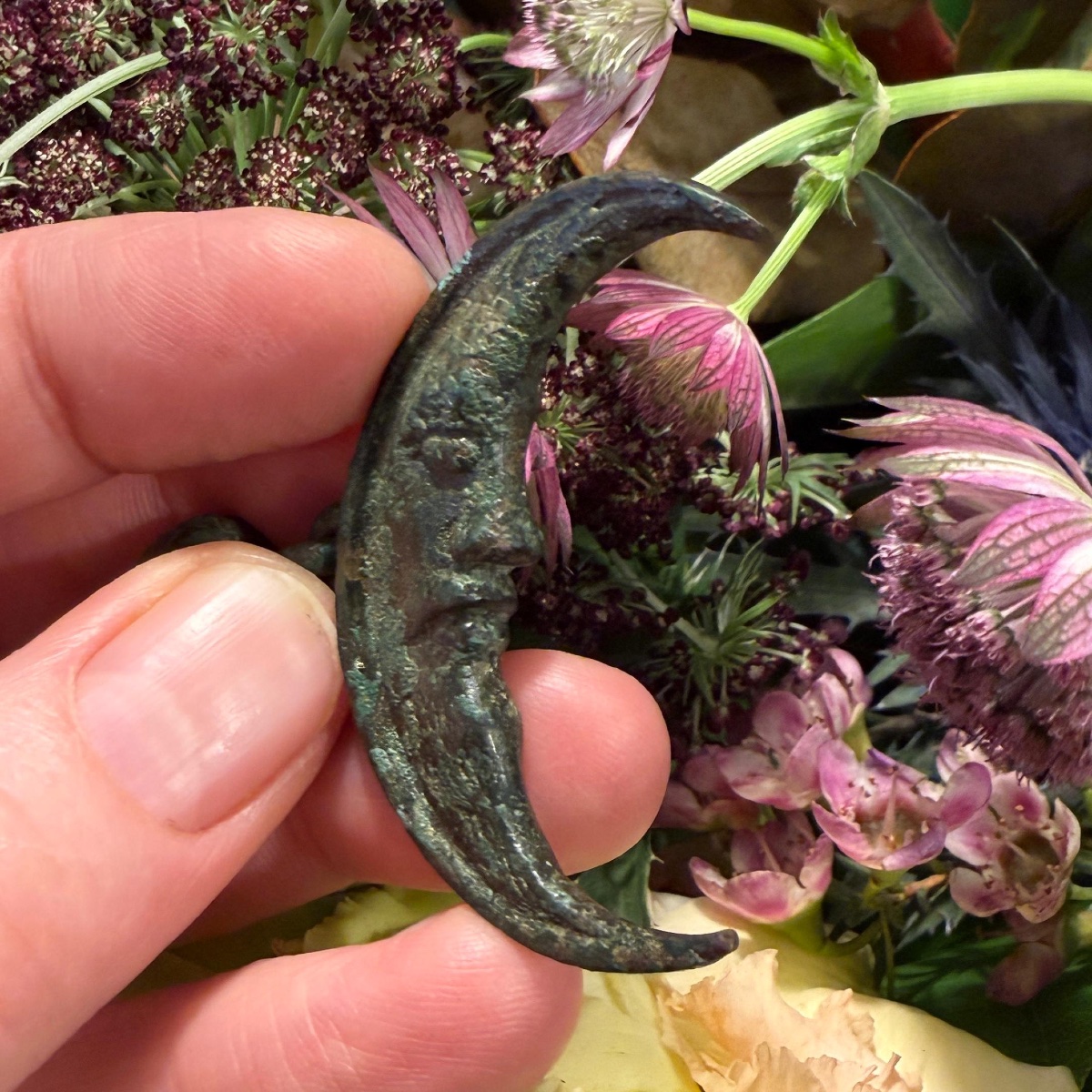
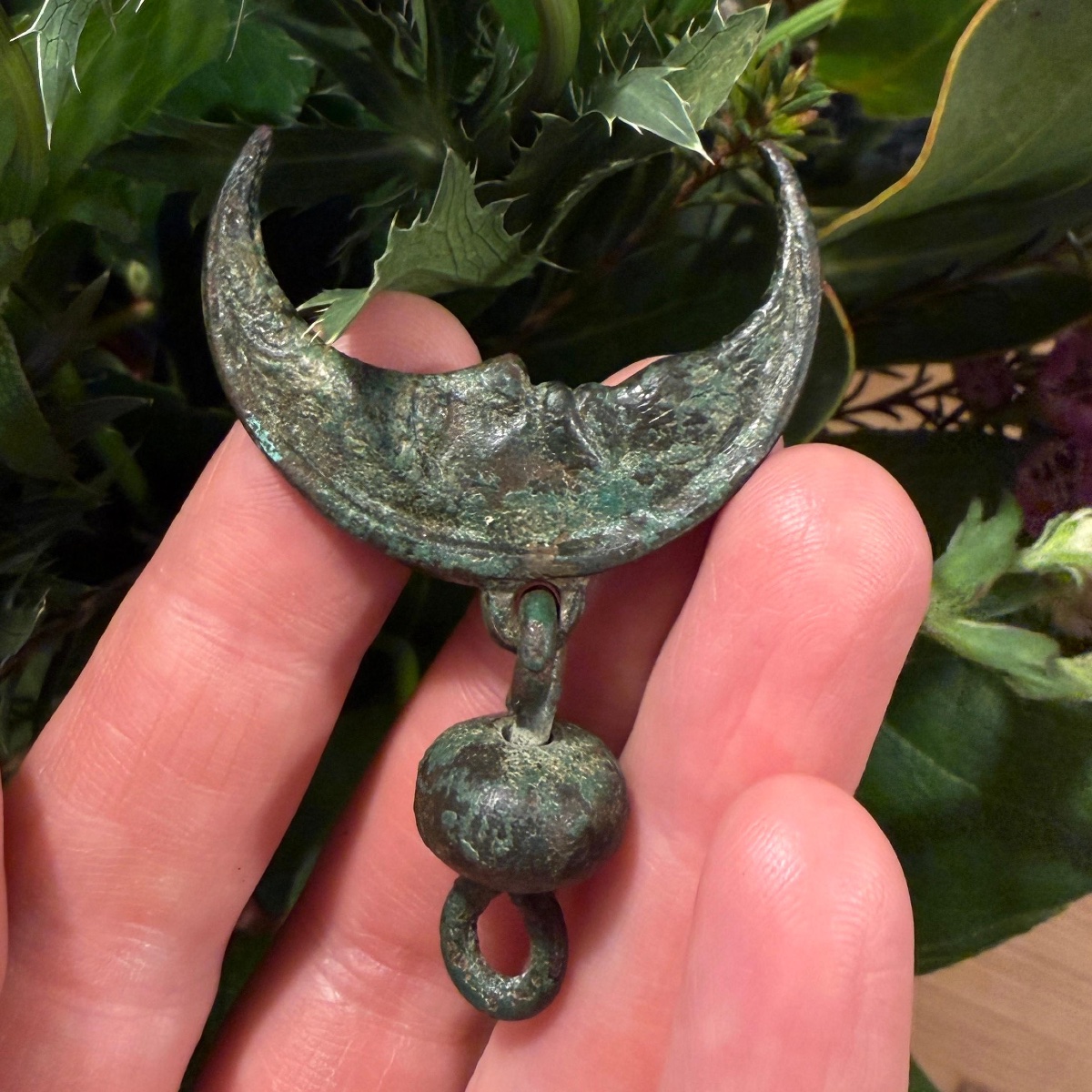
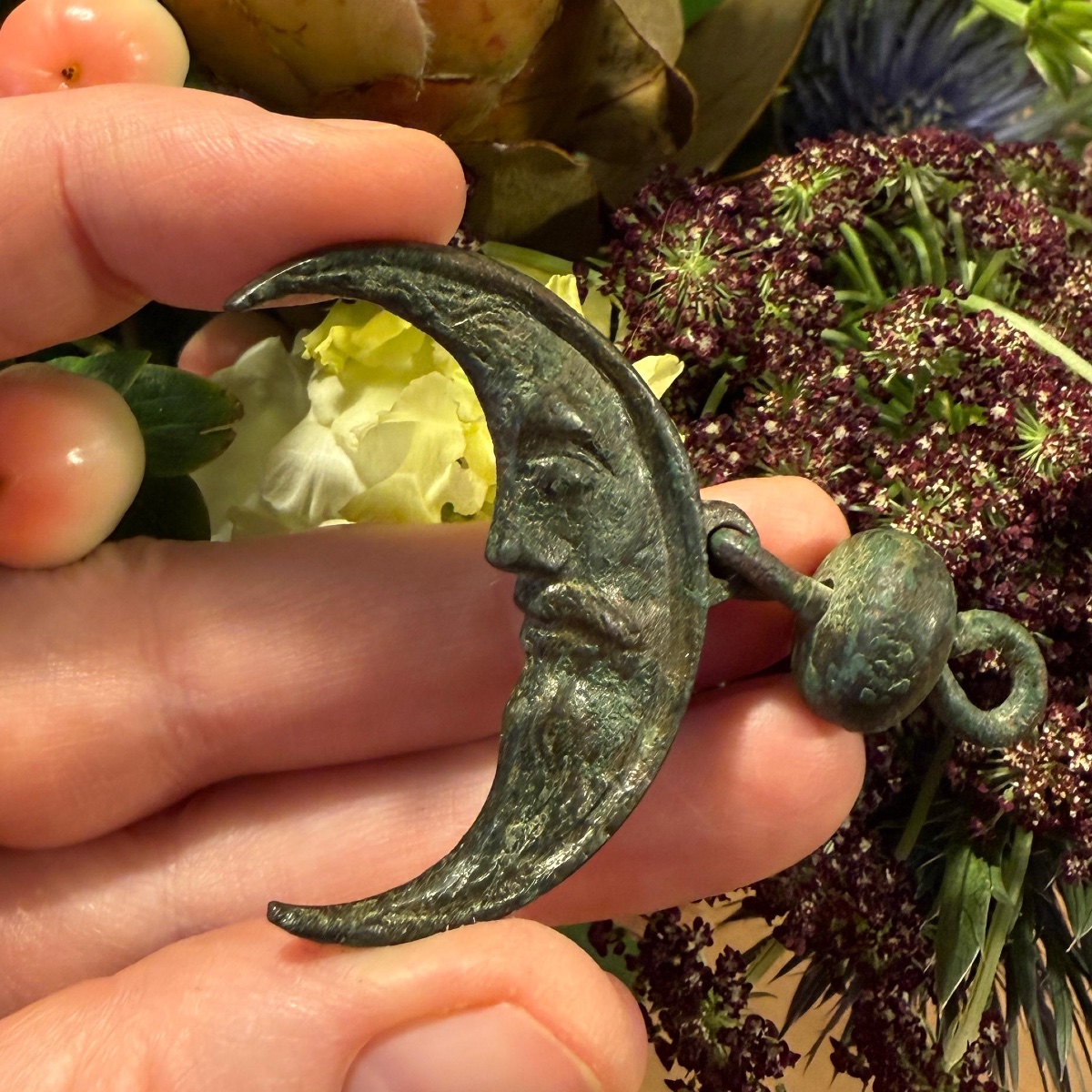

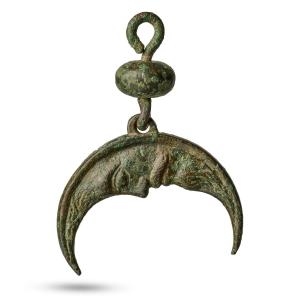


Bronze Moon Pendant With Anthropomorphic Face. Finland Or Gotland, 14th Century.
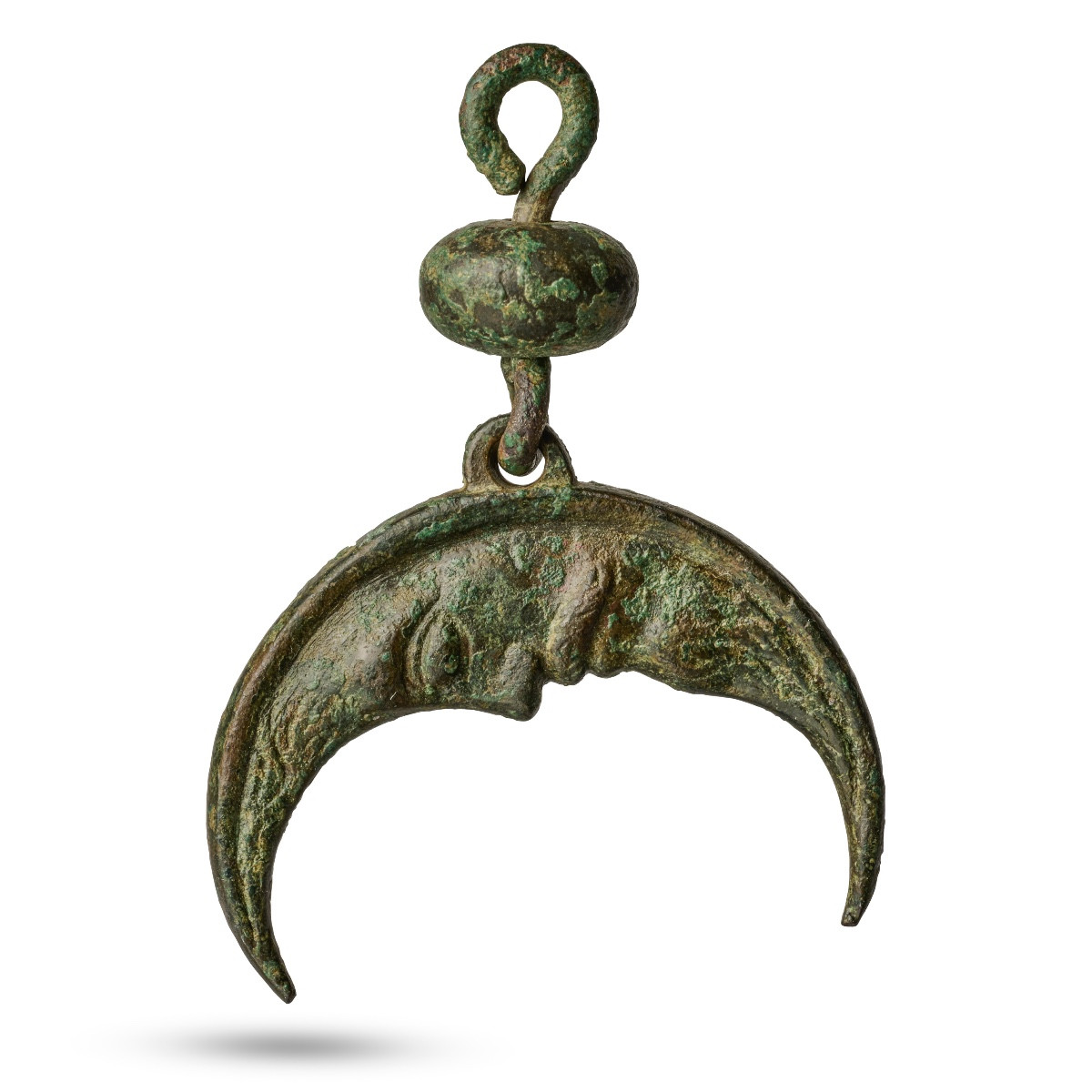
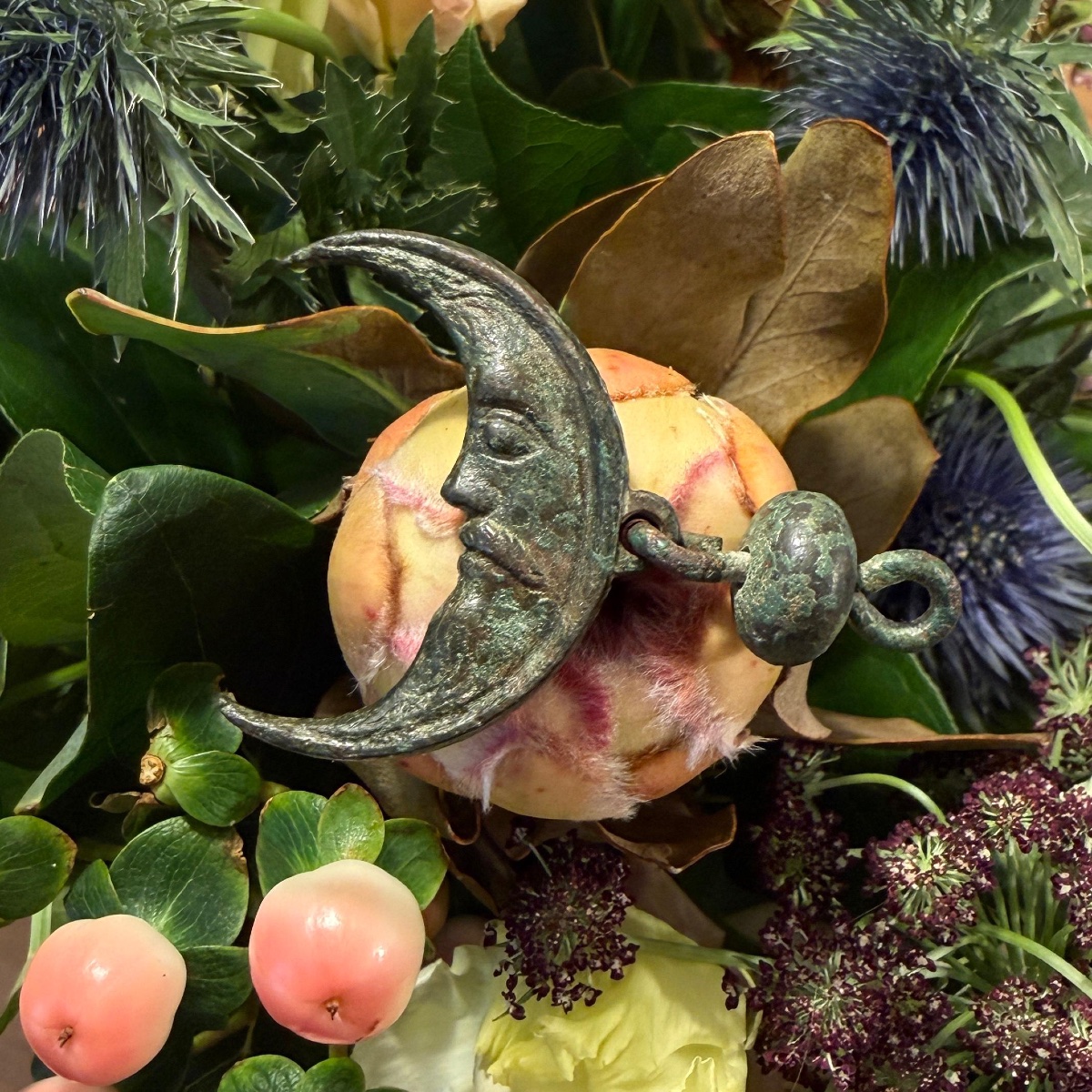
Bronze crescent-moon pendant with anthropomorphic face.
Southern Finland or Gotland, mid-14th century.
Measures 5.8 × 4.4 × 1.4 cm.
Condition: Cast bronze, the surface with green corrosion / verdigris typical of excavated artefacts.
Provenance: Private collection, Belgium.
Likely a horse-ornament / bridle pendant (a lunular pendant attached to horse tack); the anthropomorphic, grinning face has been read as a grotesque/apotropaic device intended to ward off malicious gaze or protect the horse and rider. The pendant is a waxing crescent (D-shape) with a bearded moustachioed face in high relief; Visa Immonen connects the motif both to a long pan-European tradition of lunular mounts (including Roman and medieval uses on horse tack) and to medieval grotesque faces used for apotropaic protection.
Comparable pendants are known from southern Finland (Sauvo, Espoo, Ulvila) and Gotland (including a parallel in the Amunde hoard, deposition c. 1361), and the group is generally dated to the mid-14th century.
Parallels:
Finnish stray pendants from Sauvo, Espoo and Ulvila. Sauvo Espoo Ulvila
A Gotlandic pendant (Västerhejde) and the Amunde hoard pendant (Gotland). Västerhejde Gotland These parallels (stylistic and technical—holes for suspension, bead/loop attachments) are discussed and illustrated in Immonen (2013).
References:
Immonen, Visa, 2013. “Connecting Things through the Visual Arts: Medieval Crescent Moon Pendants as Horse Ornaments.” Norwegian Archaeological Review 46(2): 175–193. DOI: 10.1080/00293652.2013.836679. Visa Immonen University of Helsinki
Southern Finland or Gotland, mid-14th century.
Measures 5.8 × 4.4 × 1.4 cm.
Condition: Cast bronze, the surface with green corrosion / verdigris typical of excavated artefacts.
Provenance: Private collection, Belgium.
Likely a horse-ornament / bridle pendant (a lunular pendant attached to horse tack); the anthropomorphic, grinning face has been read as a grotesque/apotropaic device intended to ward off malicious gaze or protect the horse and rider. The pendant is a waxing crescent (D-shape) with a bearded moustachioed face in high relief; Visa Immonen connects the motif both to a long pan-European tradition of lunular mounts (including Roman and medieval uses on horse tack) and to medieval grotesque faces used for apotropaic protection.
Comparable pendants are known from southern Finland (Sauvo, Espoo, Ulvila) and Gotland (including a parallel in the Amunde hoard, deposition c. 1361), and the group is generally dated to the mid-14th century.
Parallels:
Finnish stray pendants from Sauvo, Espoo and Ulvila. Sauvo Espoo Ulvila
A Gotlandic pendant (Västerhejde) and the Amunde hoard pendant (Gotland). Västerhejde Gotland These parallels (stylistic and technical—holes for suspension, bead/loop attachments) are discussed and illustrated in Immonen (2013).
References:
Immonen, Visa, 2013. “Connecting Things through the Visual Arts: Medieval Crescent Moon Pendants as Horse Ornaments.” Norwegian Archaeological Review 46(2): 175–193. DOI: 10.1080/00293652.2013.836679. Visa Immonen University of Helsinki
1 100 €
Period: Before 16th century
Style: Renaissance, Louis 13th
Condition: En l'etat
Reference (ID): 1720708
Availability: In stock
Print