THIS OBJECT WAS SOLD
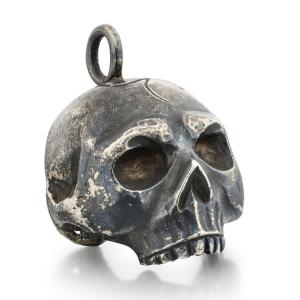
Bronze Skull Finial From The Base Of A Crucifix. French Or German, 17th Century.



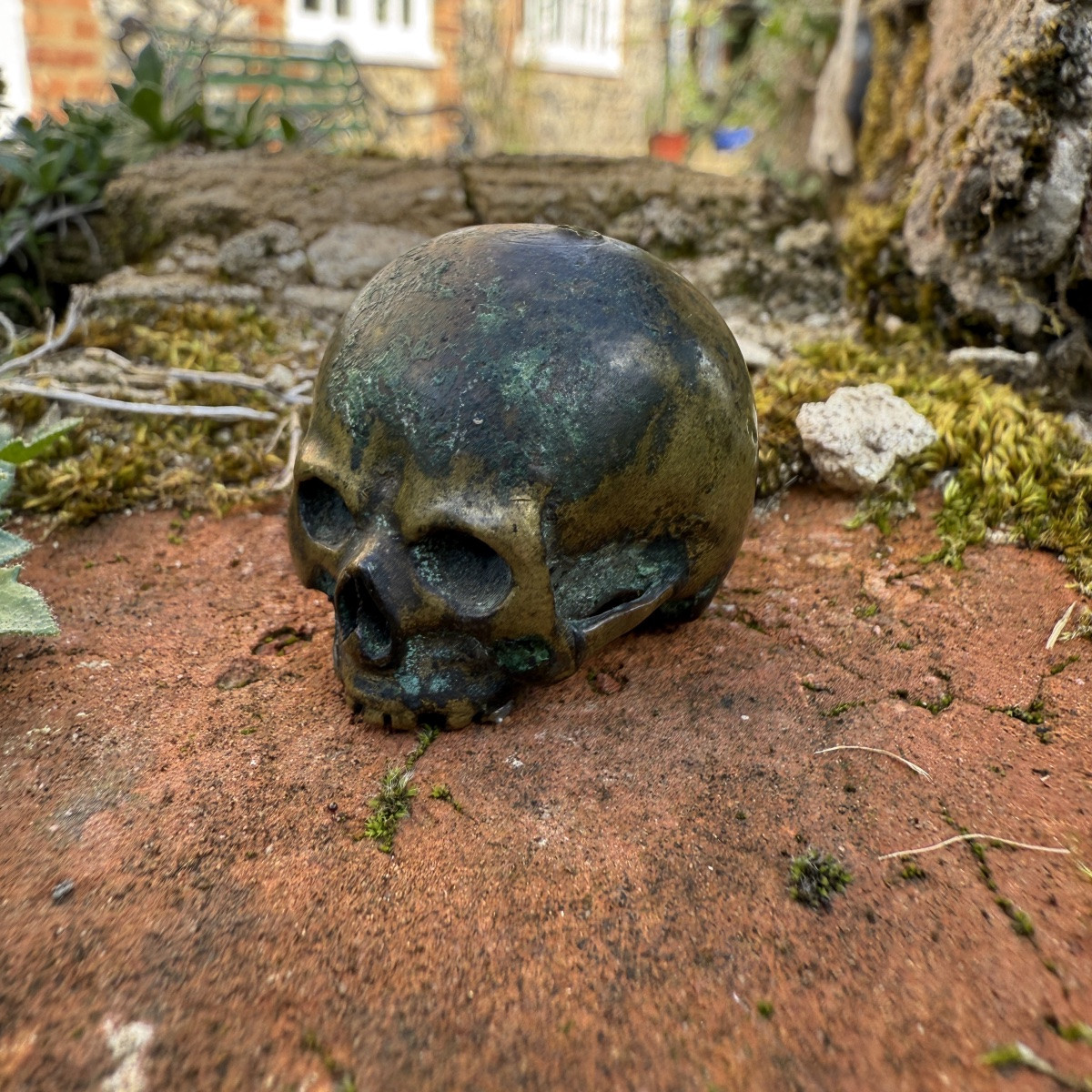
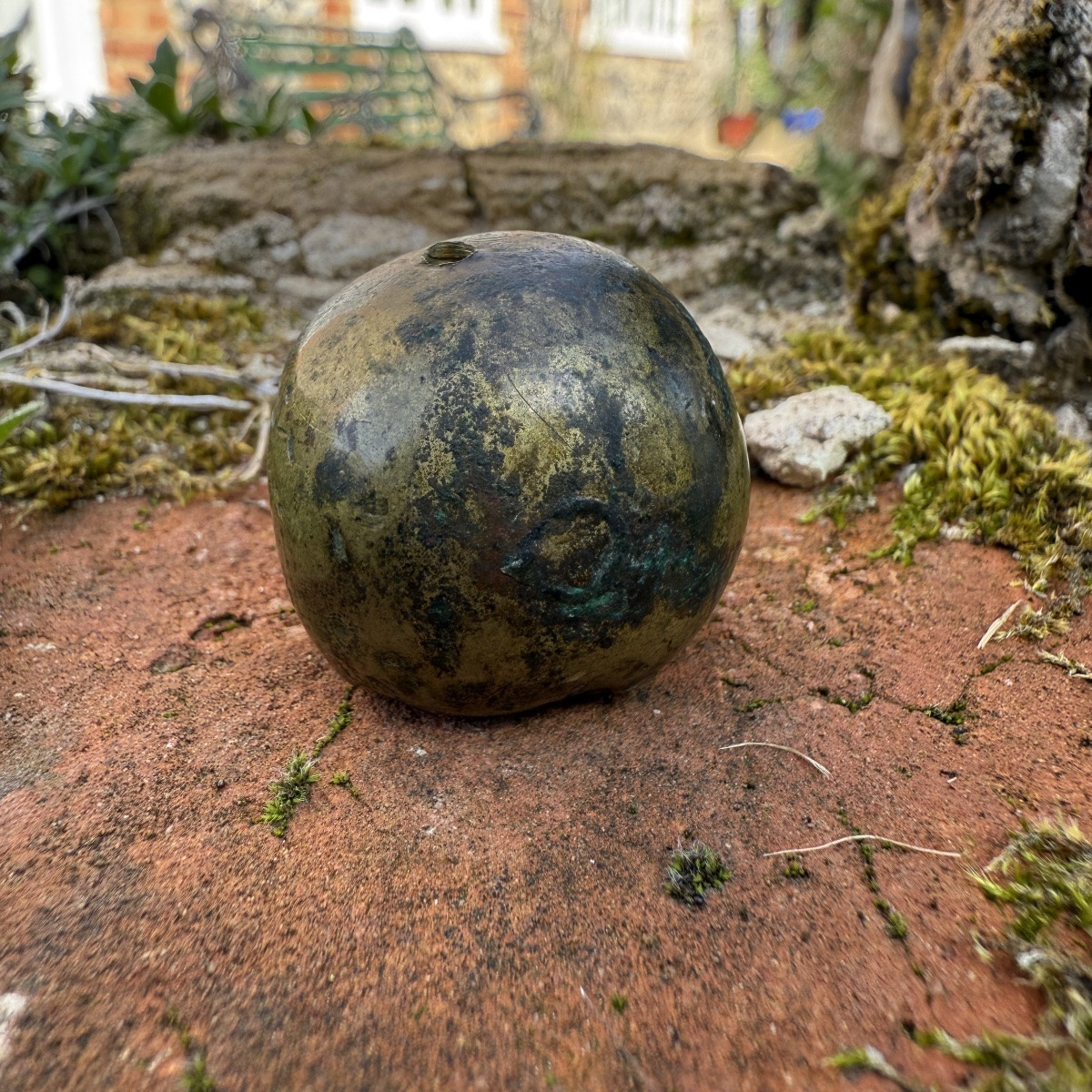


Bronze Skull Finial from the Base of a Crucifix.
French or German, 17th century.
Measurements
3.3 × 3.1 × 2.8 cm
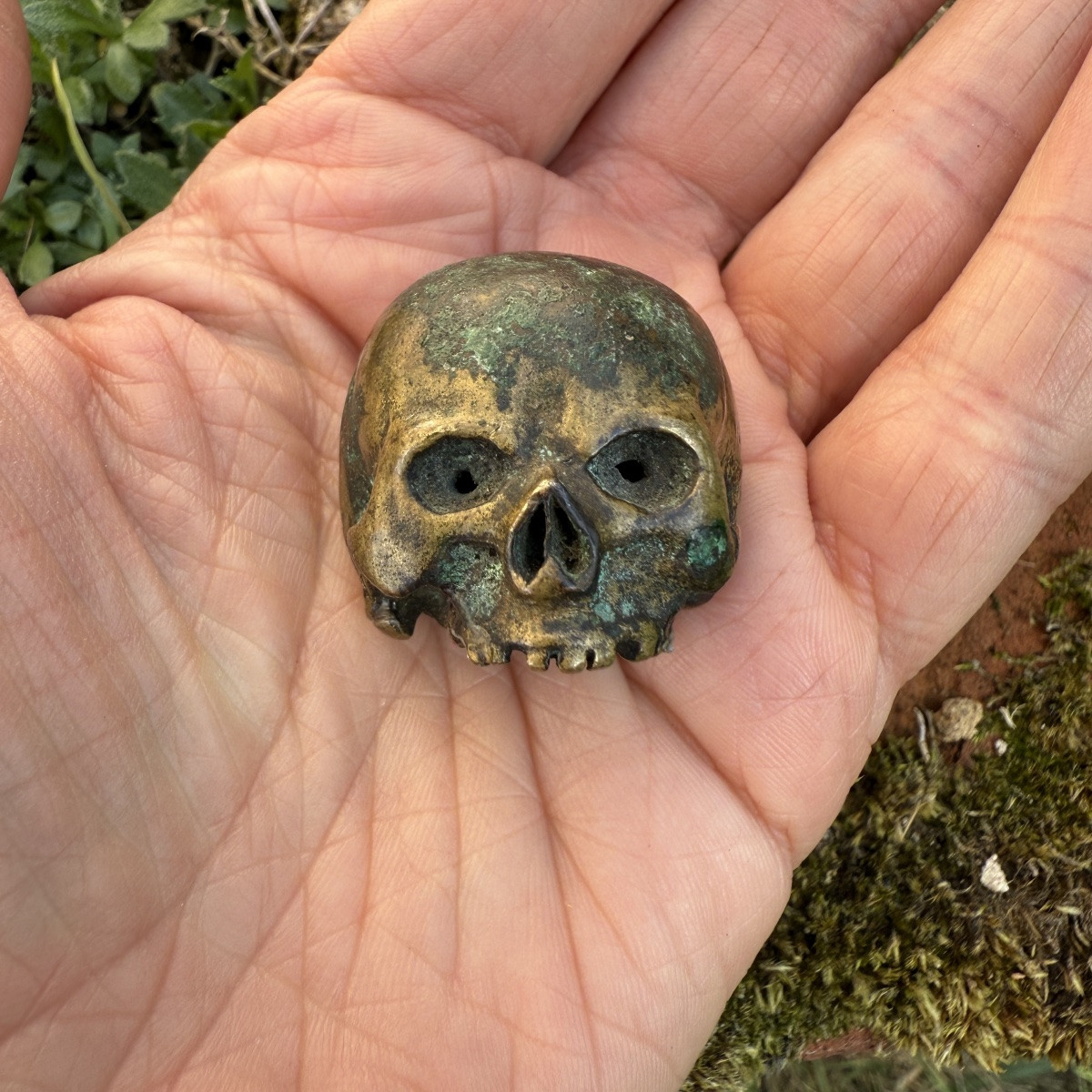
Cast in the form of a human skull, this small bronze would originally have served as a symbolic finial at the base of a crucifix, representing Golgotha, the hill of the crucifixion, and the bones of Adam. The modelling is strikingly naturalistic, with hollowed eyes, nasal aperture, and defined teeth. The surface has acquired an attractive green and brown patina with areas of verdigris, suggestive of burial or long exposure. A hole is drilled through both the crown and base of the skull, a later adaptation which may indicate that the piece was at some point worn as a pendant or strung as a chaplet bead on a rosary.
The skull motif was a powerful emblem of memento mori and vanitas, reminding the faithful of mortality and the transient nature of earthly life. Positioned beneath the figure of Christ on a crucifix, it evoked the site of Calvary and the redemption of Adam’s sin through the sacrifice of Christ. Detached examples such as this are rare survivals and demonstrate the enduring resonance of the skull as a devotional image.
French or German, 17th century.
Measurements
3.3 × 3.1 × 2.8 cm
Cast in the form of a human skull, this small bronze would originally have served as a symbolic finial at the base of a crucifix, representing Golgotha, the hill of the crucifixion, and the bones of Adam. The modelling is strikingly naturalistic, with hollowed eyes, nasal aperture, and defined teeth. The surface has acquired an attractive green and brown patina with areas of verdigris, suggestive of burial or long exposure. A hole is drilled through both the crown and base of the skull, a later adaptation which may indicate that the piece was at some point worn as a pendant or strung as a chaplet bead on a rosary.
The skull motif was a powerful emblem of memento mori and vanitas, reminding the faithful of mortality and the transient nature of earthly life. Positioned beneath the figure of Christ on a crucifix, it evoked the site of Calvary and the redemption of Adam’s sin through the sacrifice of Christ. Detached examples such as this are rare survivals and demonstrate the enduring resonance of the skull as a devotional image.
Explore similar pieces and discover your ideal find:
Curiosities