THIS OBJECT WAS SOLD
Sèvres 18th Century The Birth Of Bacchus - Large Biscuit Porcelain Group From The 18th Century
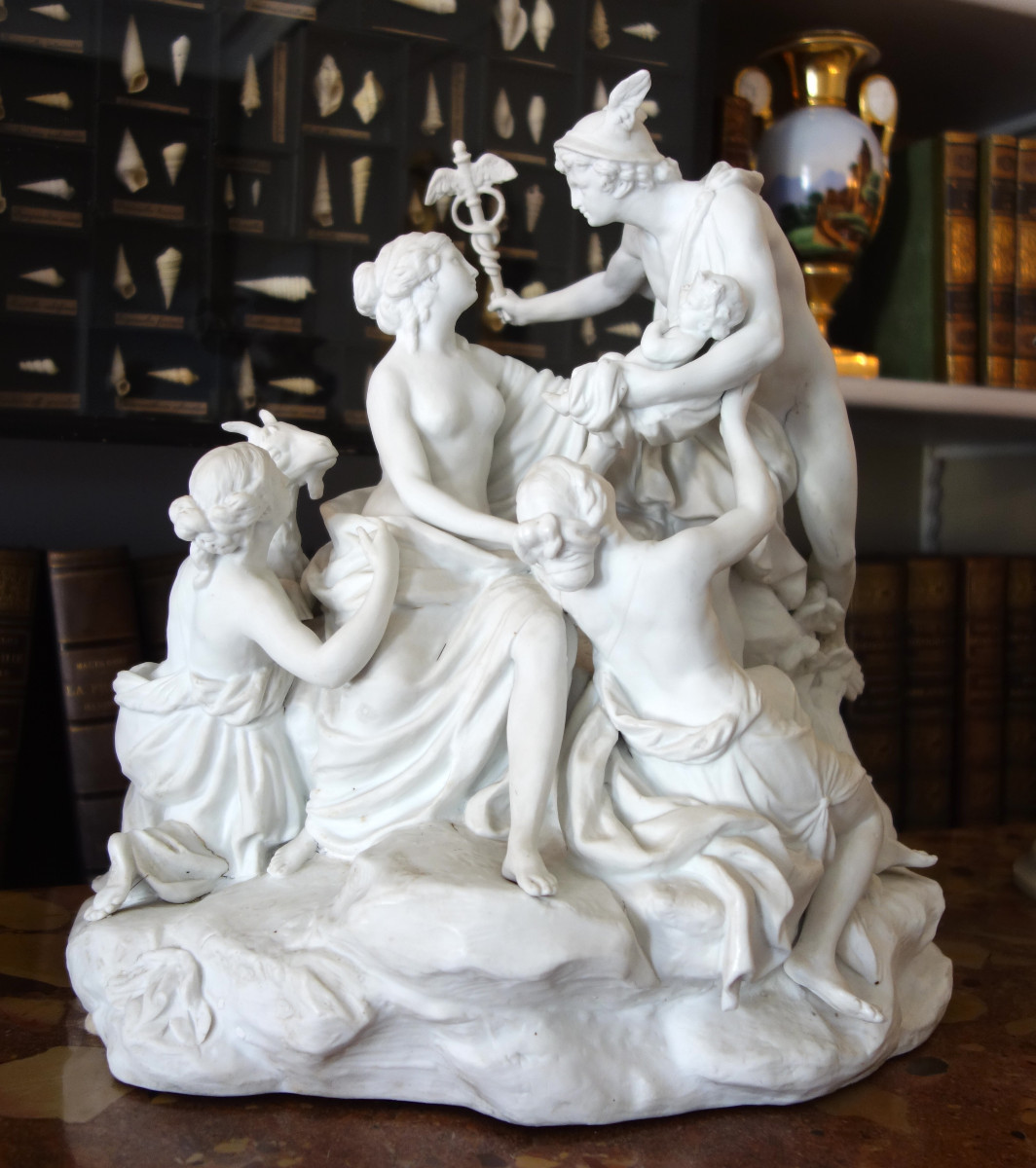
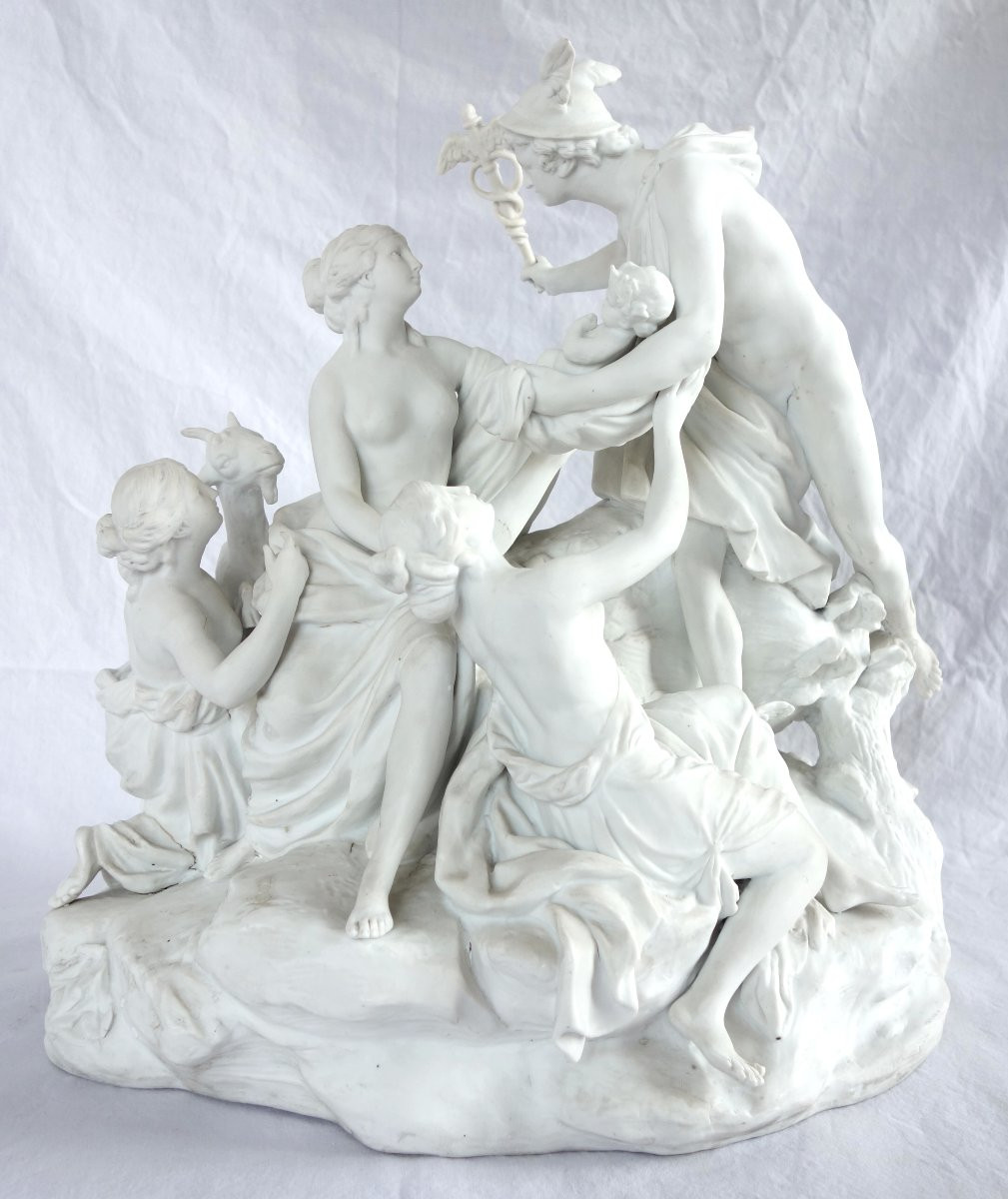
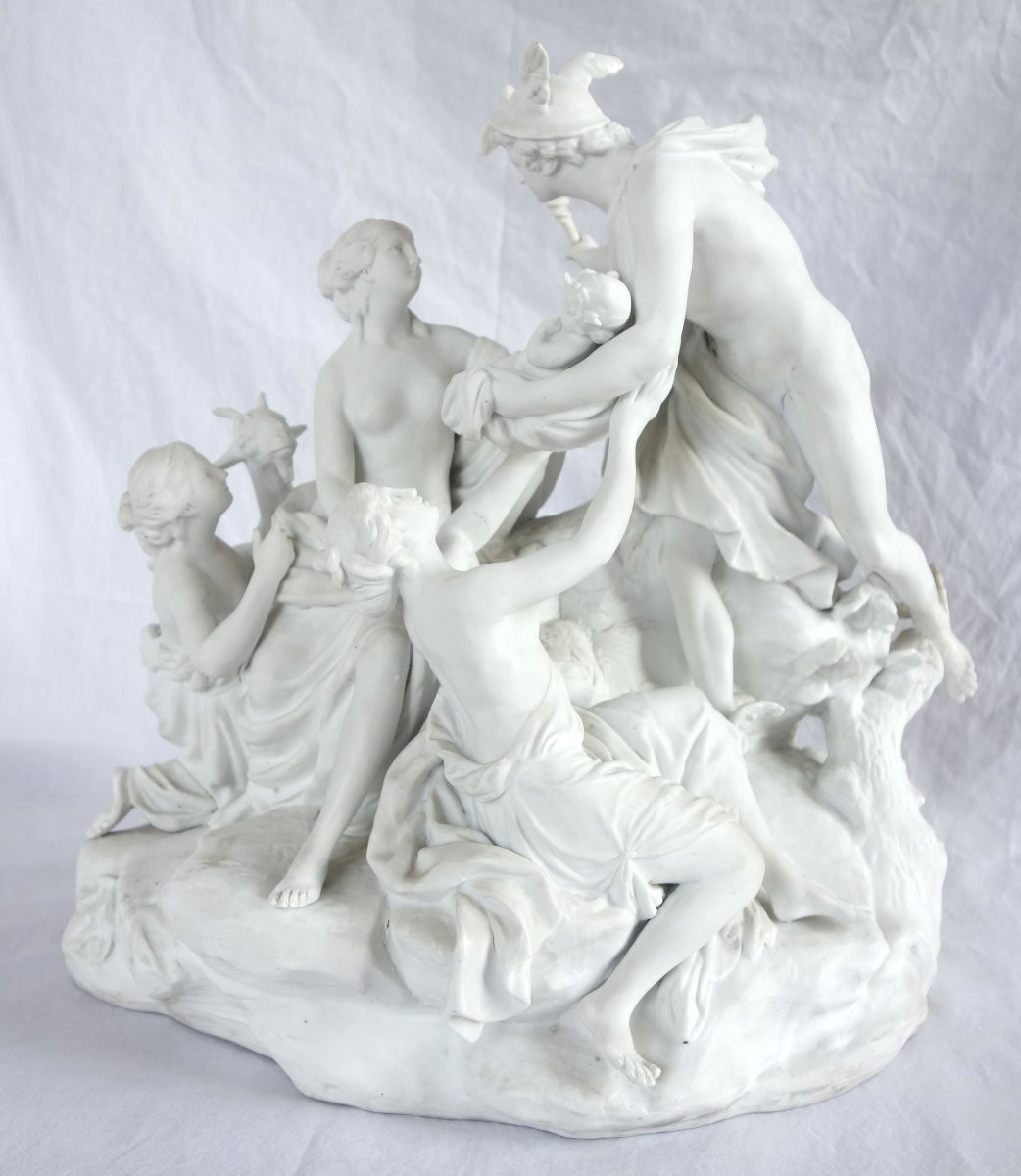
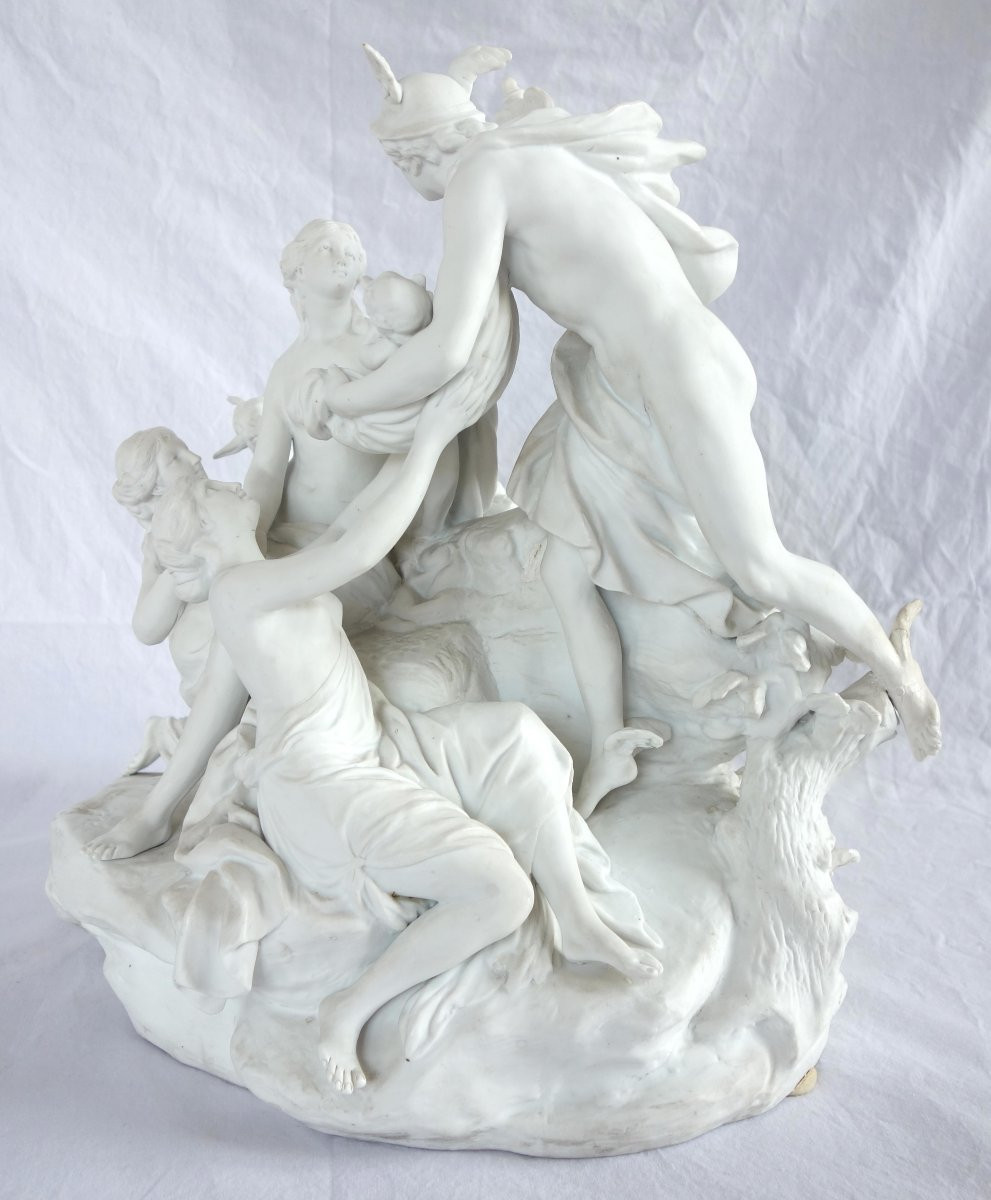
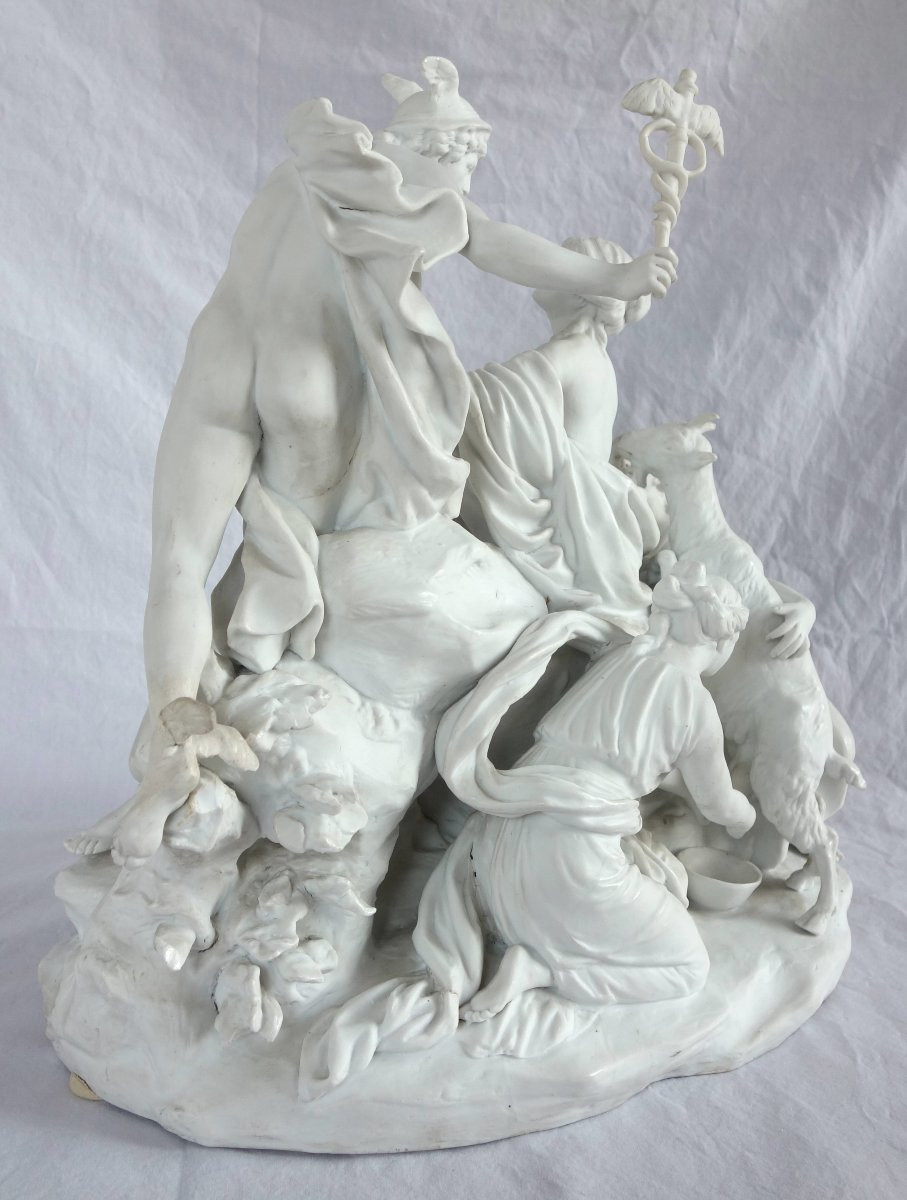
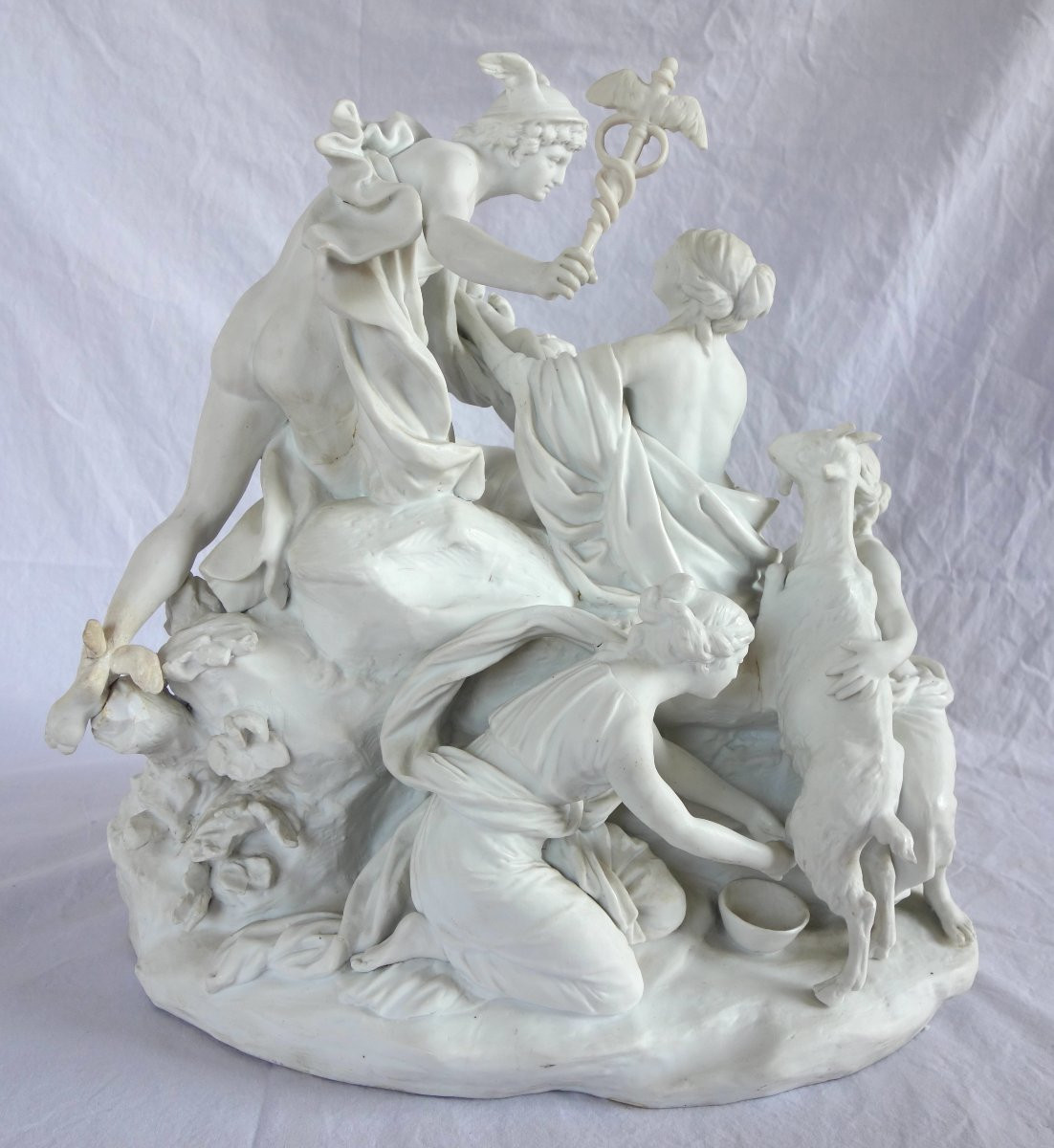
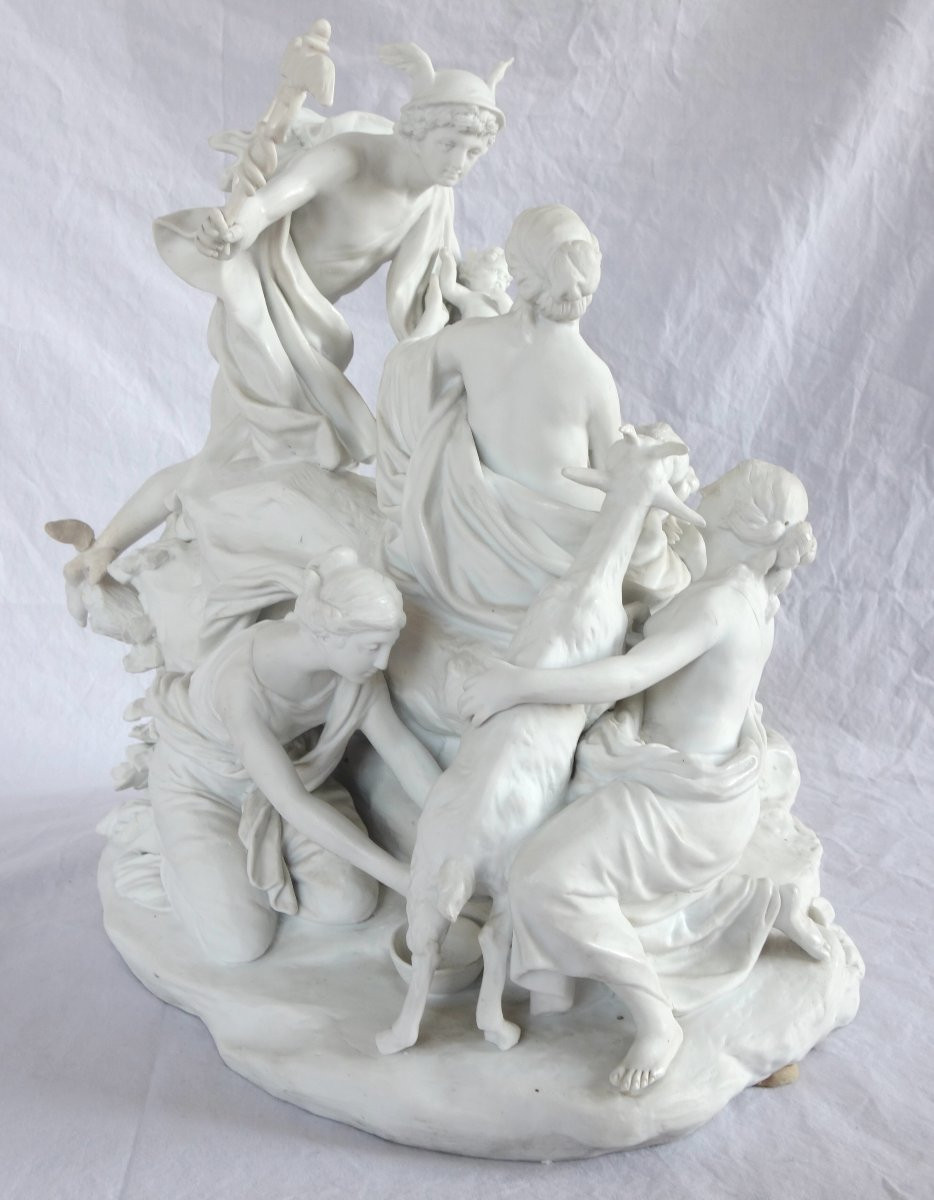
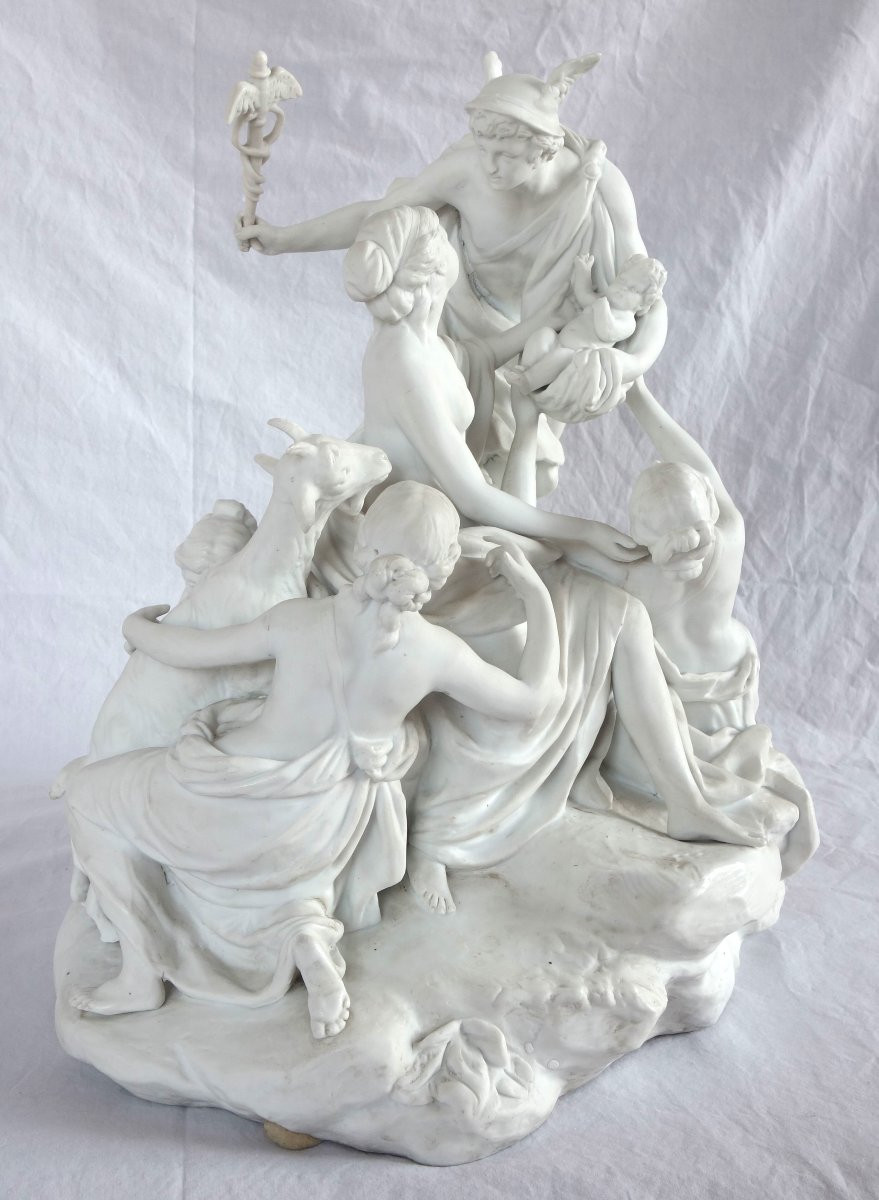
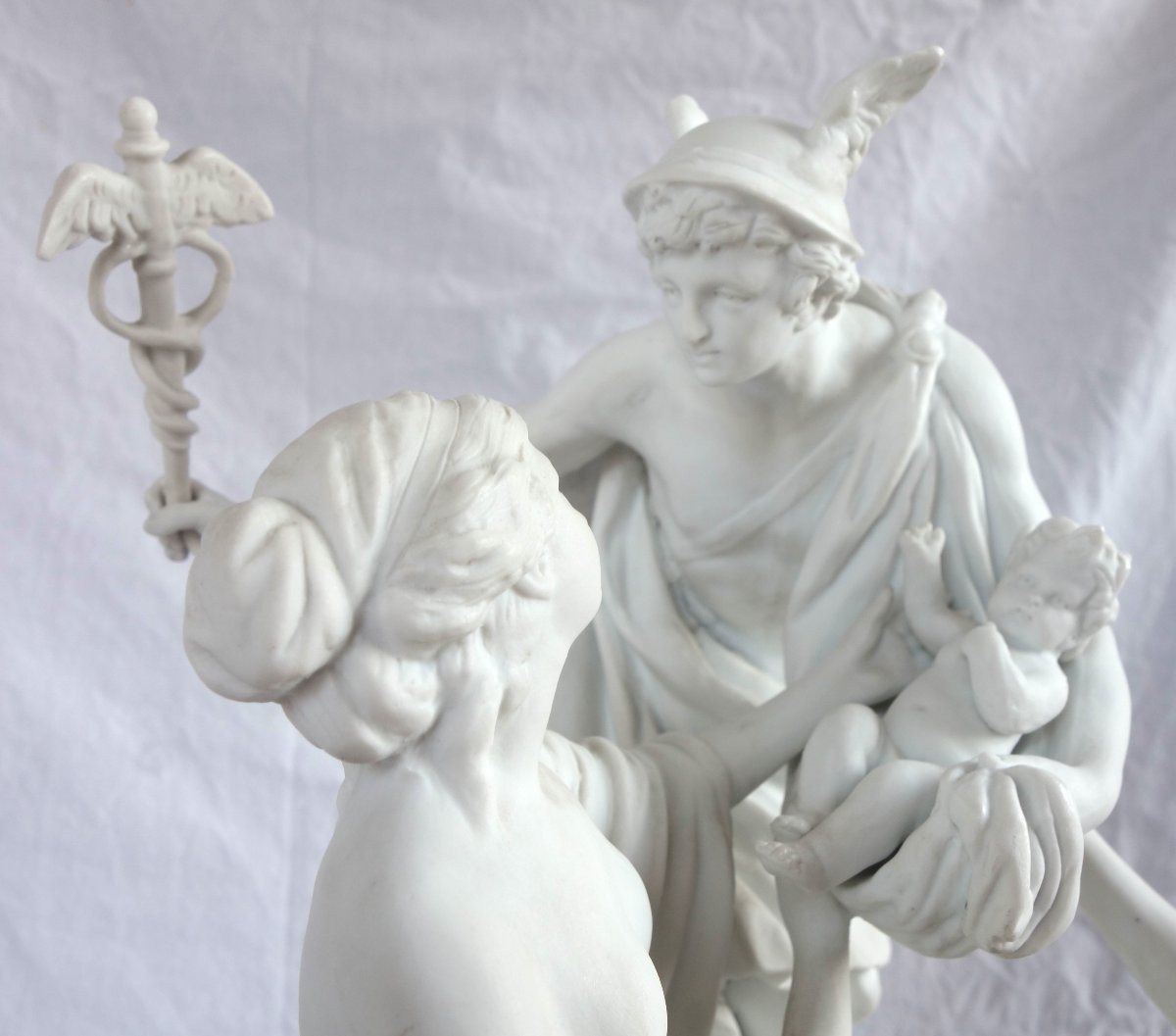
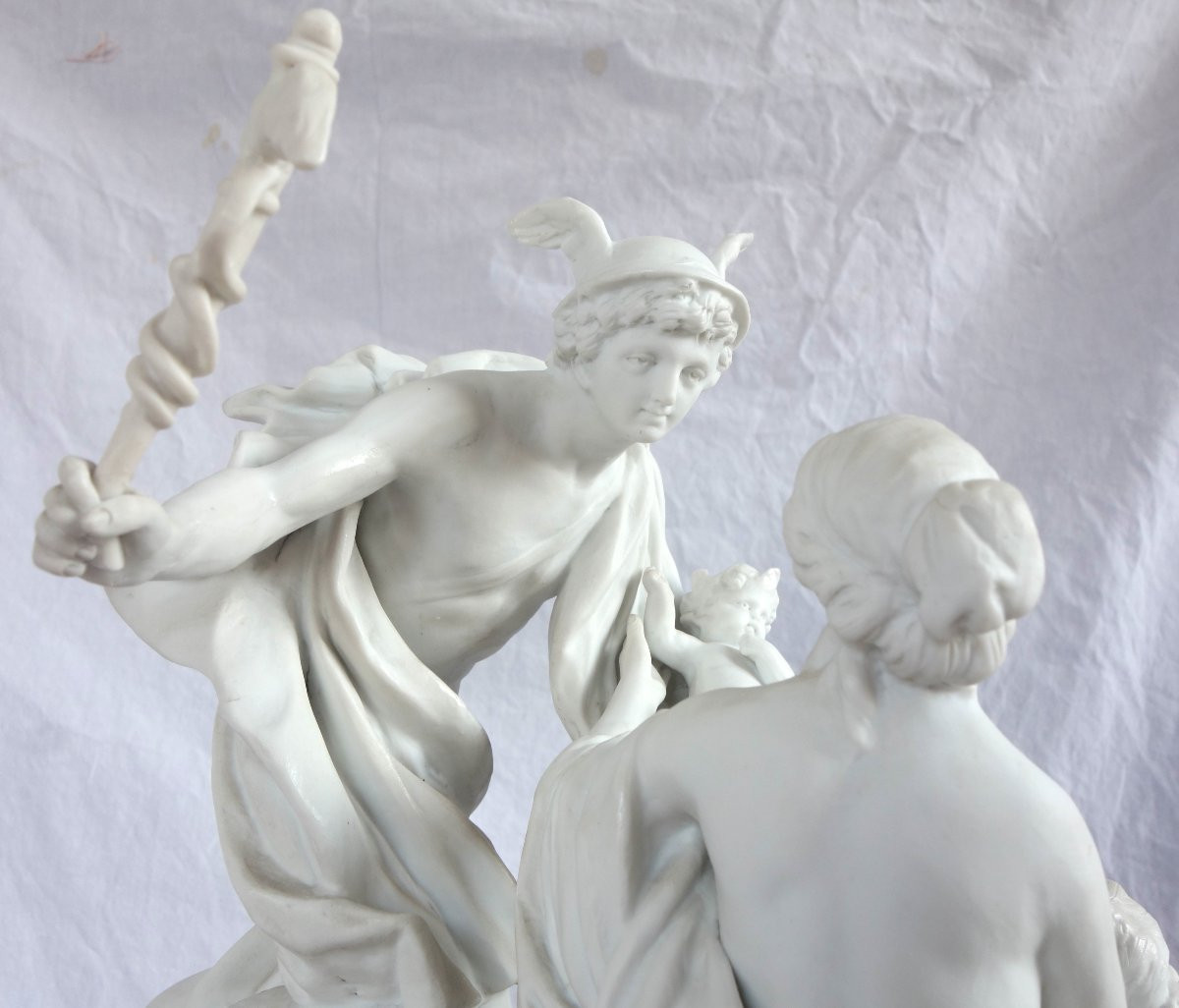
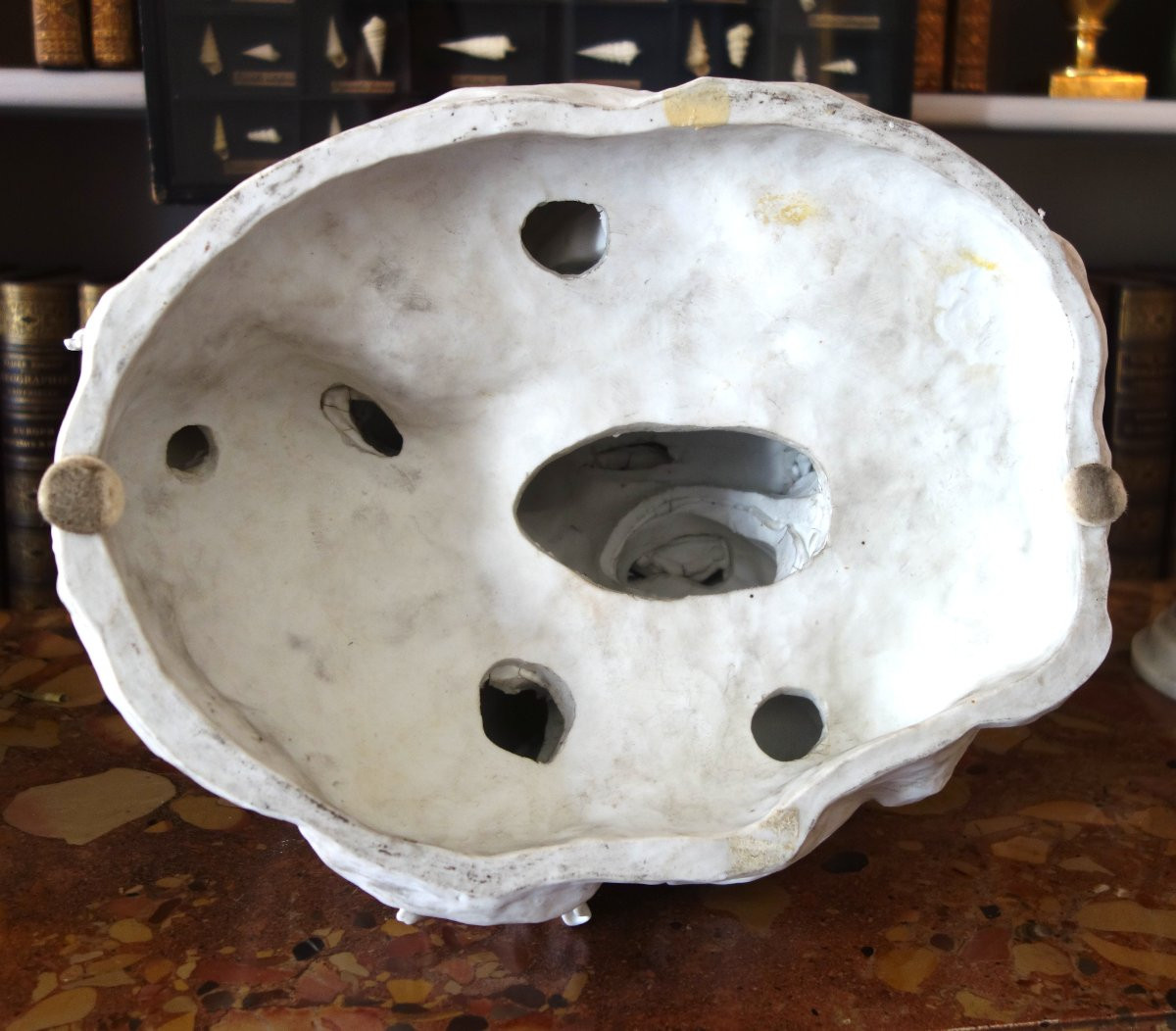
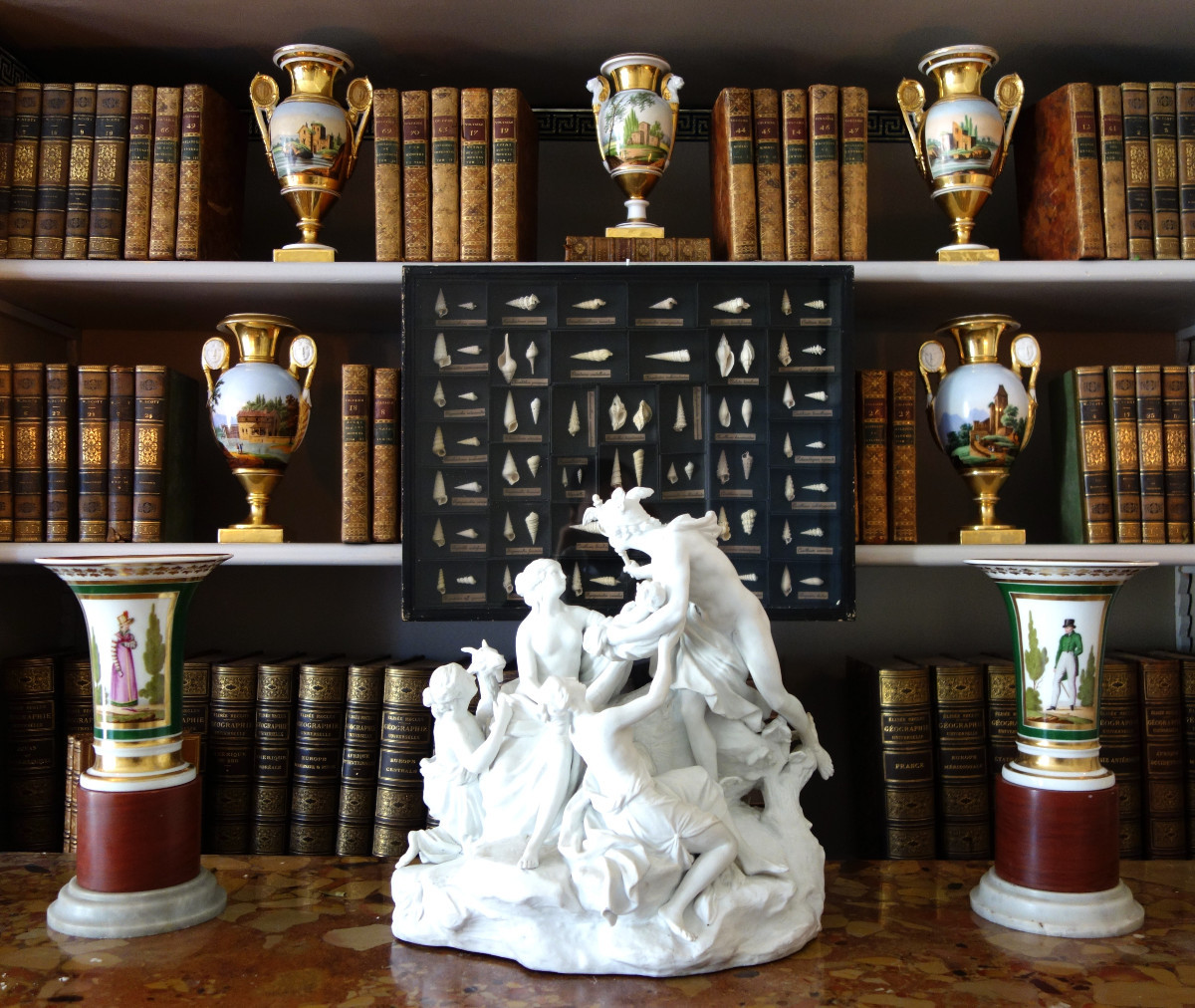


Important biscuit porcelain group, a mythological scene, "The Birth of Bacchus," depicting the god Hermes, easily recognizable by his helmet, winged feet, and caduceus, entrusting the young Bacchus to the three nymphs living on Mount Nysa. Royal Sèvres Manufactory, circa 1783-1785. The model was created by Louis-Simon Boizot in 1783 for the Royal Sèvres Manufactory. Our biscuit porcelain piece is an 18th-century production, the original, which was reissued by Sèvres in the 19th century, but only by Sèvres. From a mythological perspective, Bacchus (Dionysus to the Greeks) is a god born under complex circumstances: he is the son of Jupiter/Zeus and the mortal Semele. Hera, jealous, causes Semele's death. Zeus saves the child by sewing him into his thigh until birth. At birth, the child is immediately threatened by Hera's wrath. Zeus must therefore hide him. Mercury/Hermes is the messenger of the gods, but also the one who protects passages, transitions, and difficult births. In this myth, he receives an essential mission: to protect the newborn from Hera's vengeance and entrust him to safe and discreet nurses. To do this, he takes the child to a distant and mysterious place: Mount Nysa. The nymphs take the child under their care and nourish him with goat's milk. Ideal for complementing an 18th-century decor, these decorative objects are typical of this period, to be placed on a chest of drawers or mantelpiece alongside a clock, or especially as a centerpiece for a refined dinner. It is a large piece, ornate from all angles, designed to be viewed from all sides, for example, in the center of a table or with its back to a mirror. A great many biscuit porcelain groups were produced throughout the 19th century, copying Sèvres. Our group is an authentic piece from the prestigious Sèvres manufactory, the original 18th-century production. It is a very fine representation, conforming to Sèvres' standards of perfection, with numerous meticulous details: facial expressions, details of the clothing. It is in very good overall condition, with minor restorations (one wing of Mercury's foot has been replaced, the scepter has been reattached), otherwise intact. The Domaine de Sceaux houses a similar group, but lacking the scepter, the wings on the helmet, and the feet; our piece is in better condition. The Birth of Bacchus is also exhibited in major international museums such as the Metropolitan Museum of Art in New York. Dimensions: 30 x 24 cm; Height: 34 cm
Explore similar pieces and discover your ideal find:
Porcelain Figurines, Biscuit Porcelain