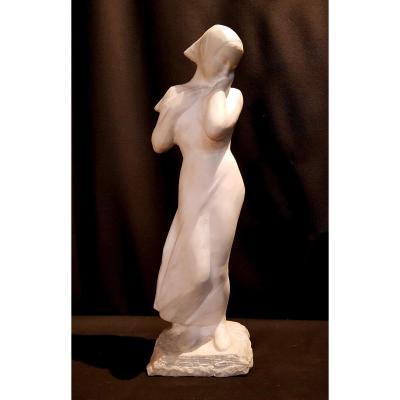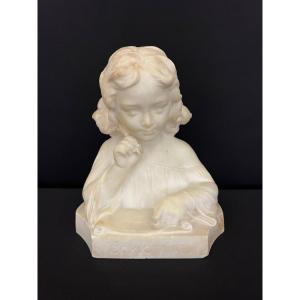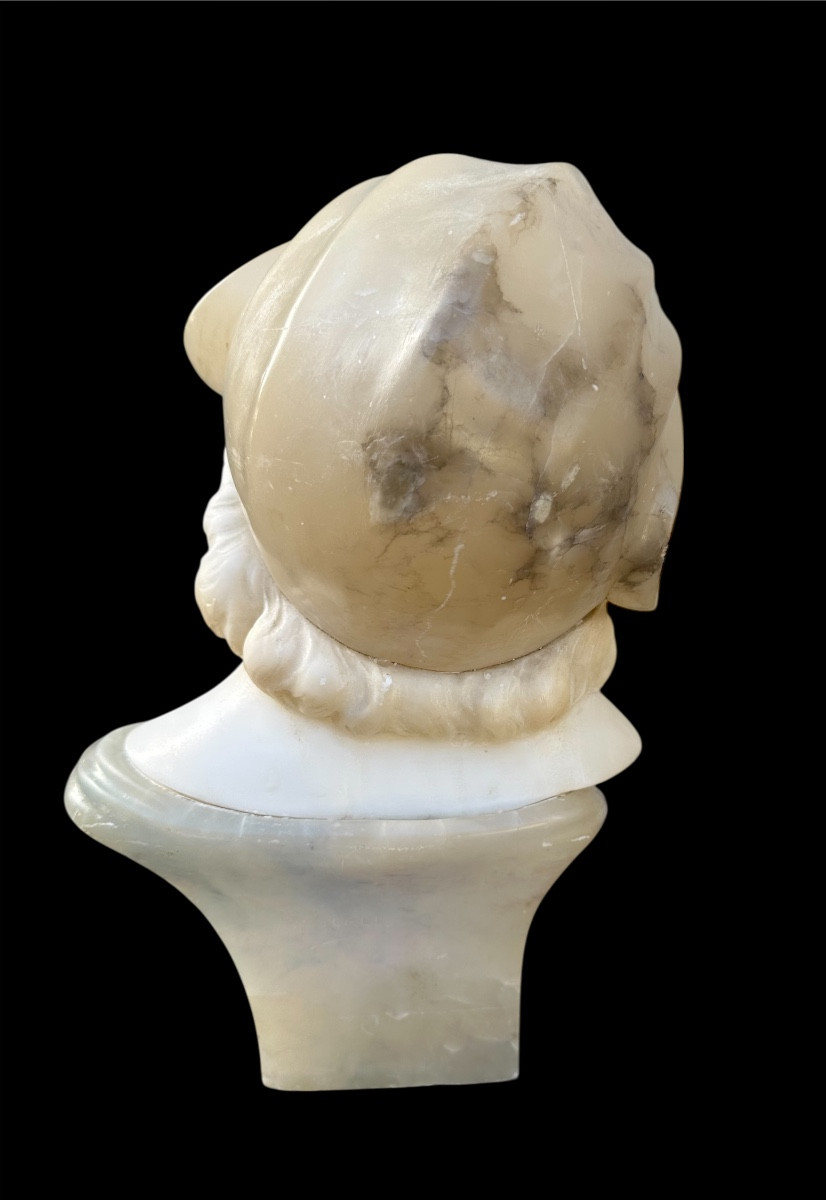
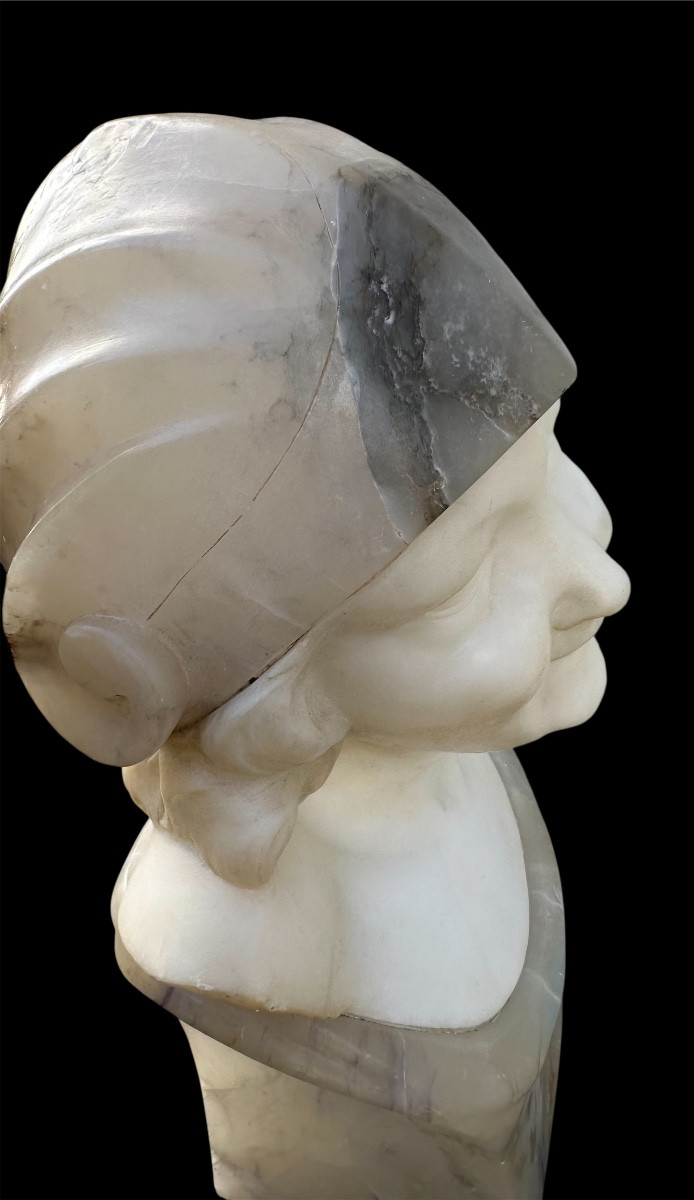
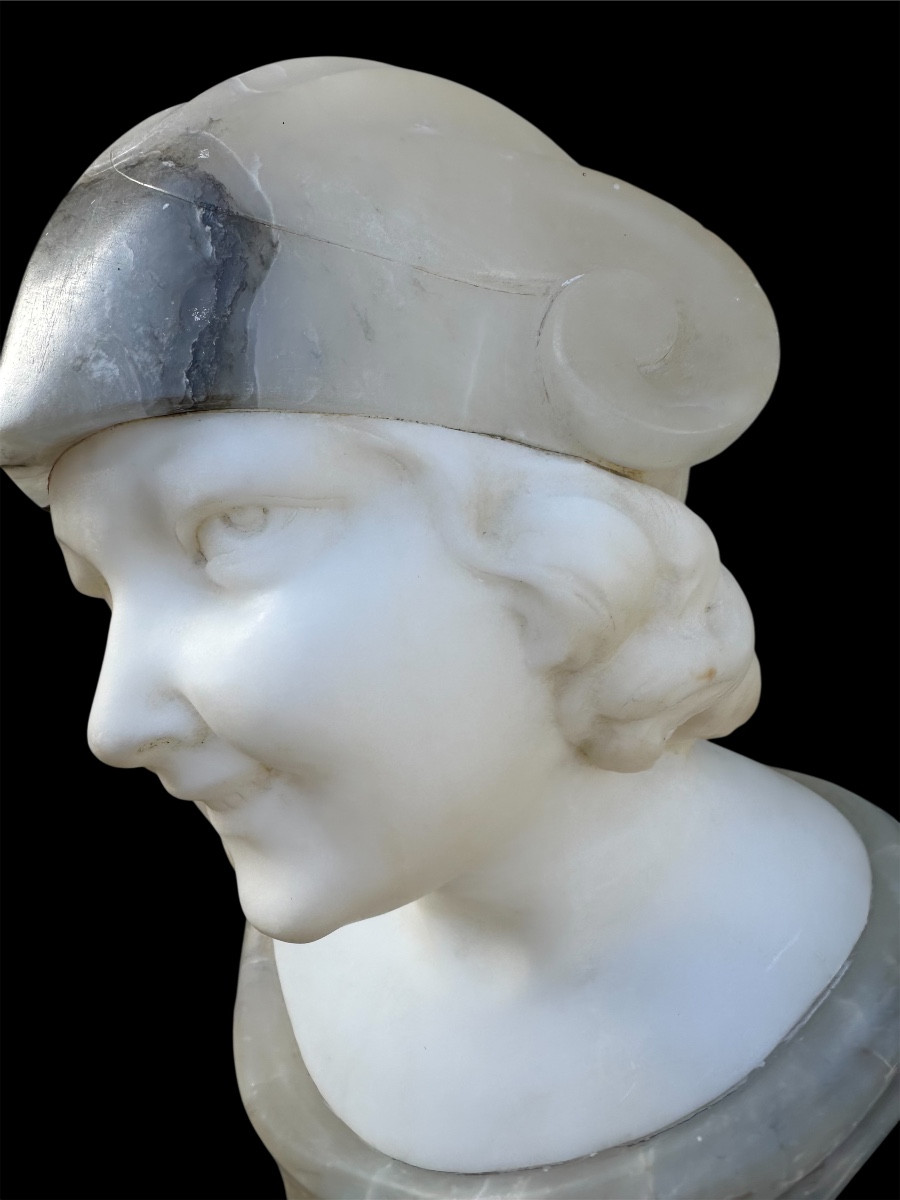
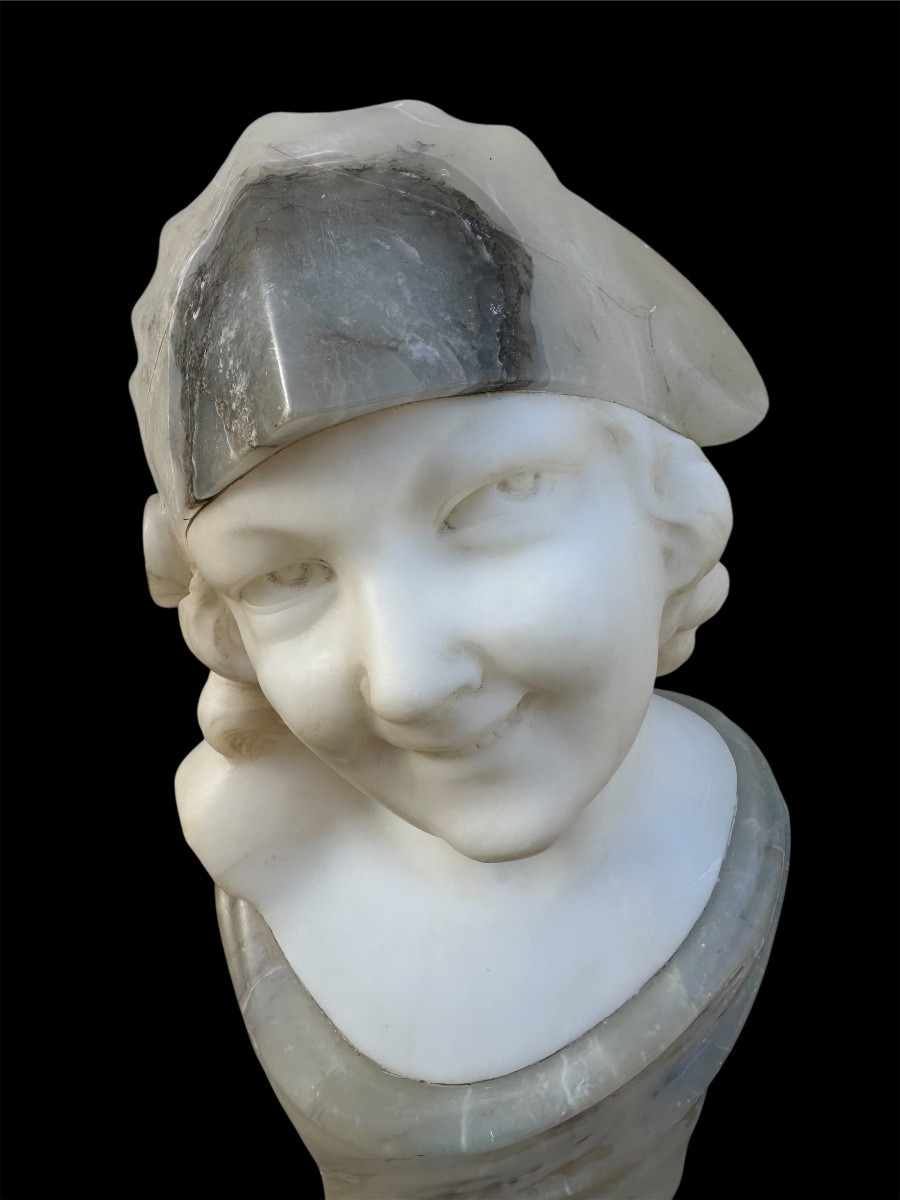
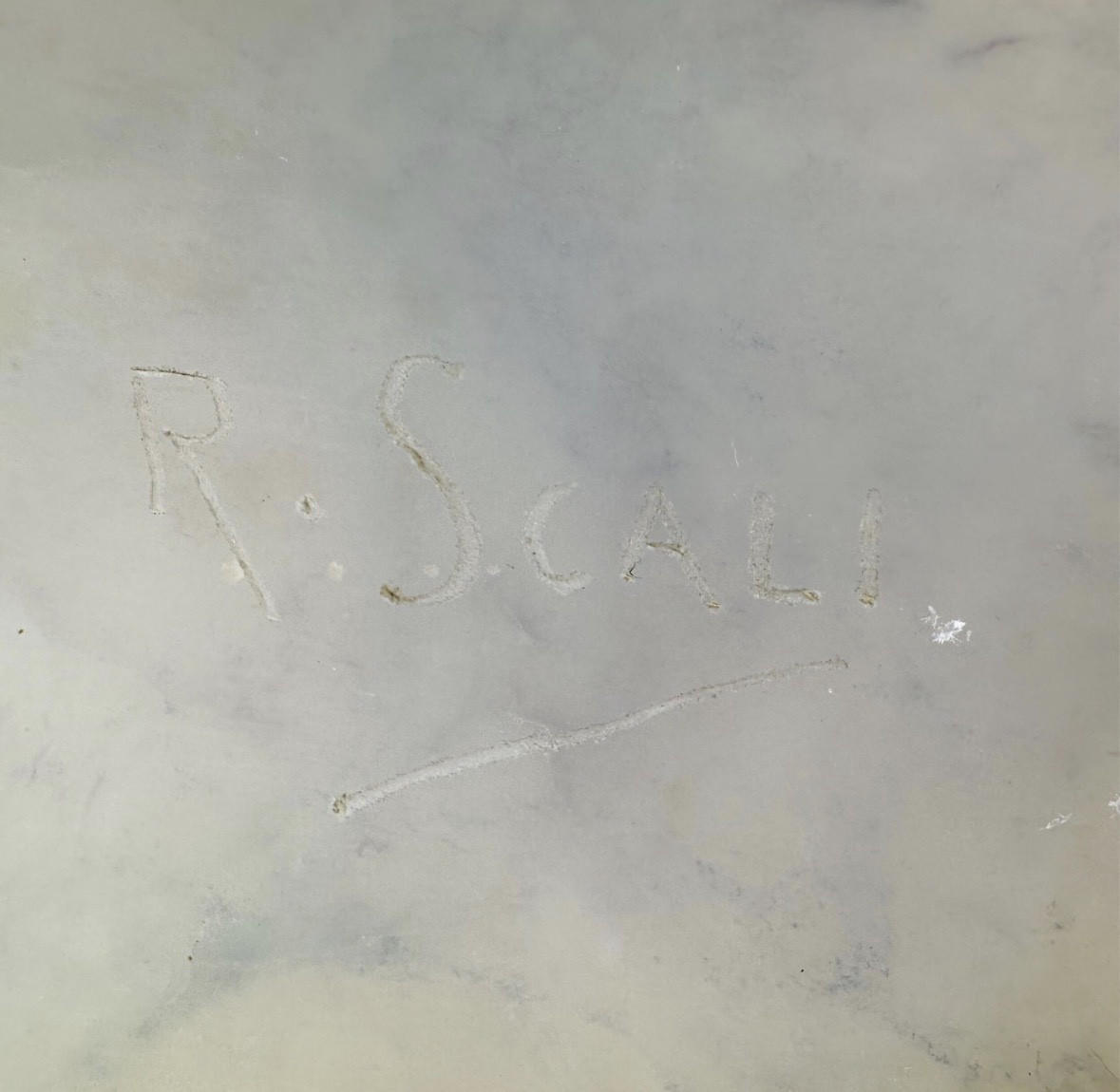
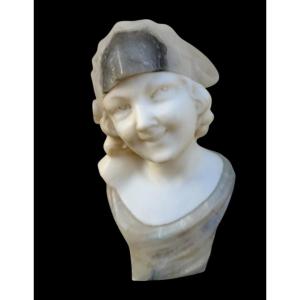


Alabaster Bust Of Raphael Scali Art Déco
Artist: Raphaelo Scali
Raffaello Scali was born in Livorno, Italy, in 1887. On November 18, 1923, he arrived in Belgium to work at the Joseph Chardon sculpture factory. Alongside his work, he became deeply involved in the social life of his village, Rance. He joined a musical society, began giving mandolin lessons, and founded his own orchestra. As part of his job, he and his partner, Gentili, were tasked with teaching other workers how to work with Carrara marble, a material then unknown in Belgium. However, these new materials did not meet with the expected success. He then decided to create his own workshop, exploring various materials. Initially, this initiative struggled to gain traction in the Hainaut region: the choice of materials made his creations expensive. His plaster works proved more profitable. To meet demand, and also to secure his income, Scali turned to mass production using less costly materials. He made molds of his works and reproduced them in large quantities, primarily in plaster. In 1937, Scali settled in Antwerp, where he established himself as an independent sculptor. This period was short-lived, however, as he returned to Hainaut in 1940. After the Second World War, he settled in Brussels, where he died in 1971 at the age of 84. As a sculptor, he acquired immense renown, mainly in Belgium, and became particularly known as the sculptor of the Scouts. In the second half of the 1940s, he created his first Scout sculptures. This type of work had already begun twenty years earlier in the French-speaking part of Belgium.
1 250 €
Period: 20th century
Style: Art Deco
Condition: Good condition
Material: Alabaster
Height: 37cm
Reference (ID): 1712351
Availability: In stock
Print