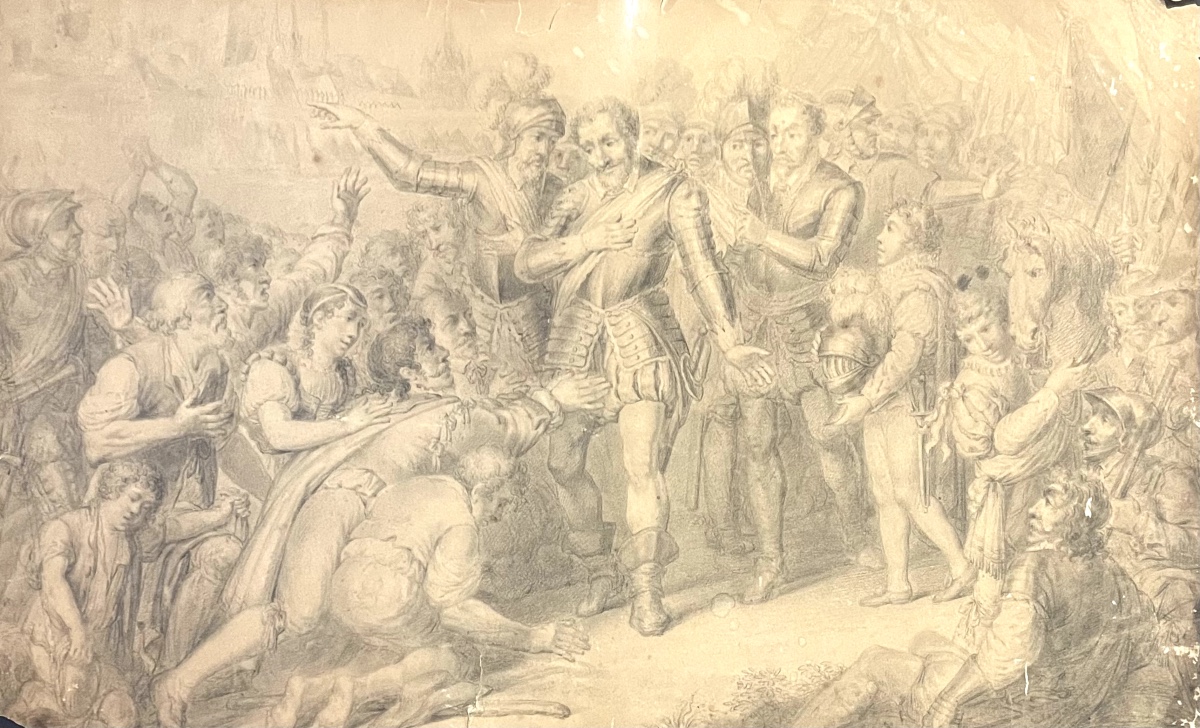
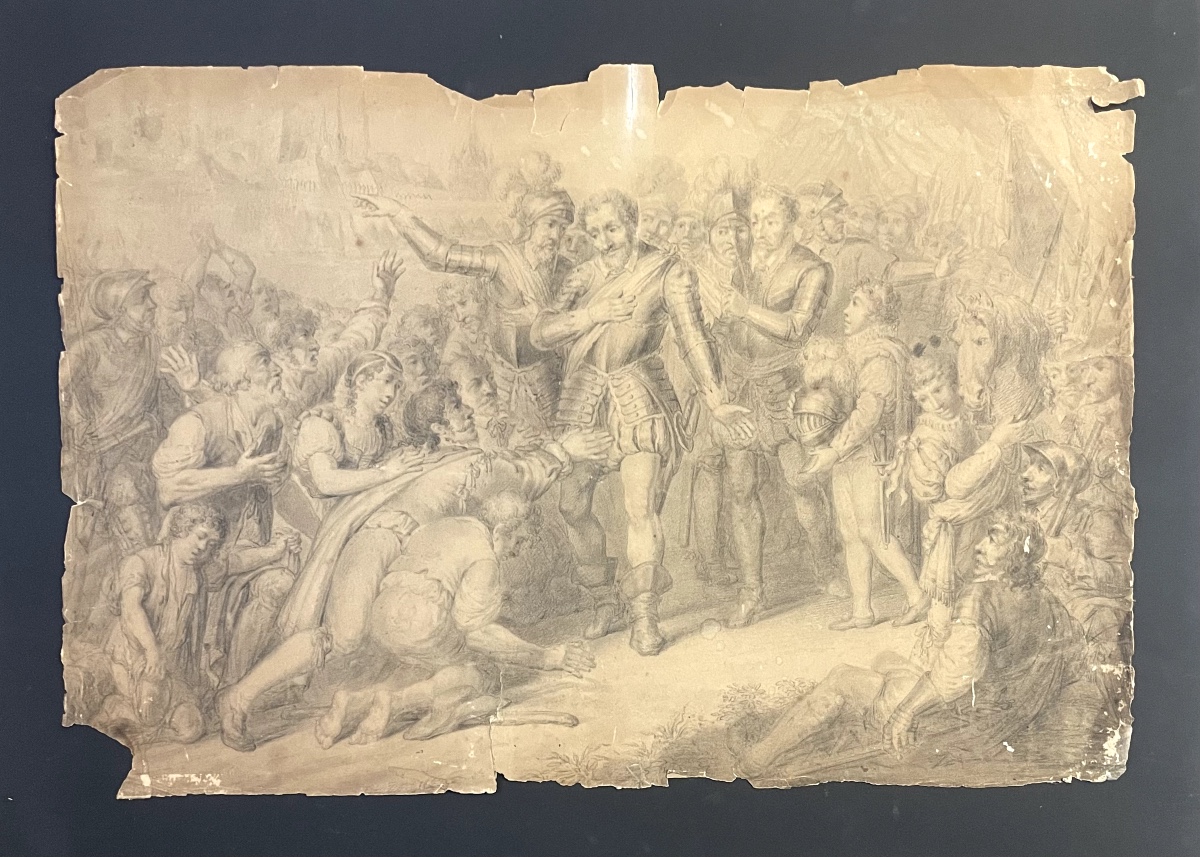


Mademoiselle Rivière – Henry IV Arriving In Paris – Drawing
Artist: Mademoiselle Rivière
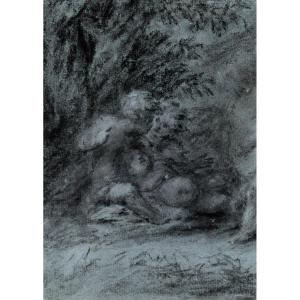
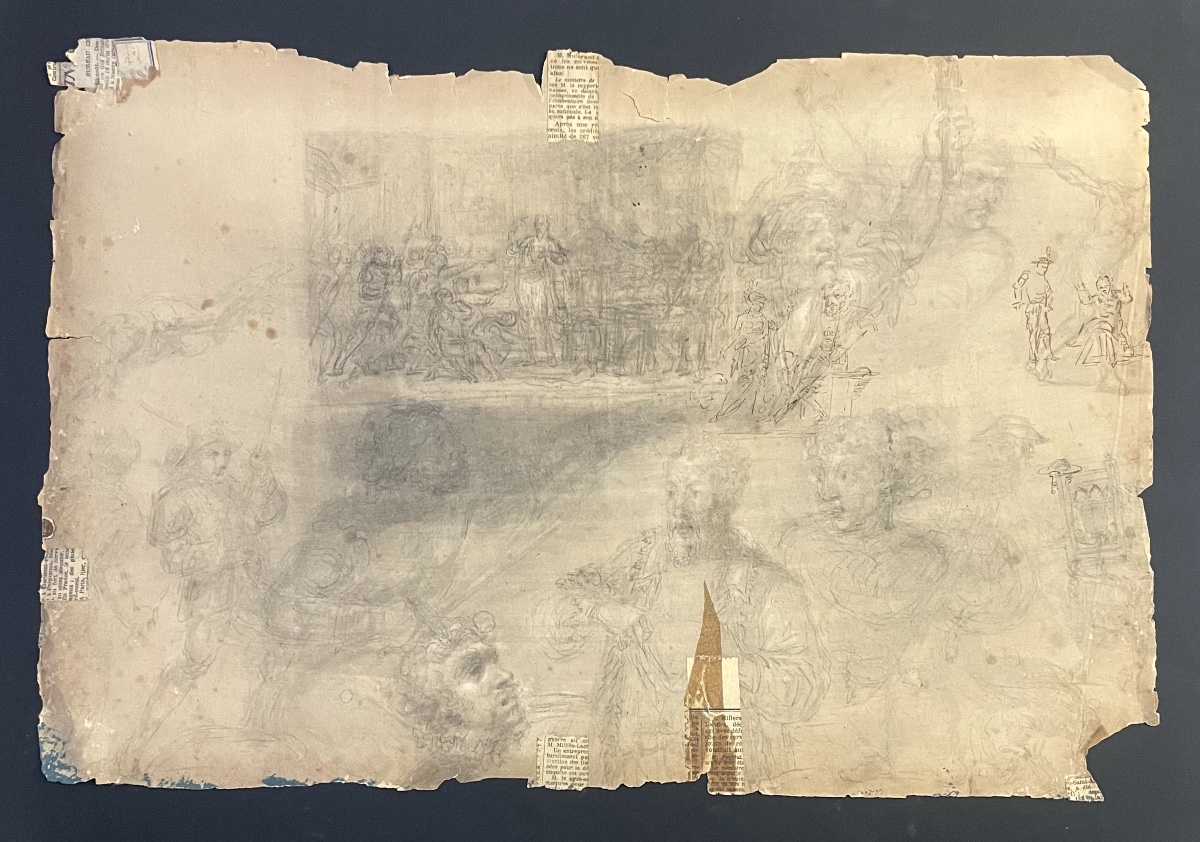
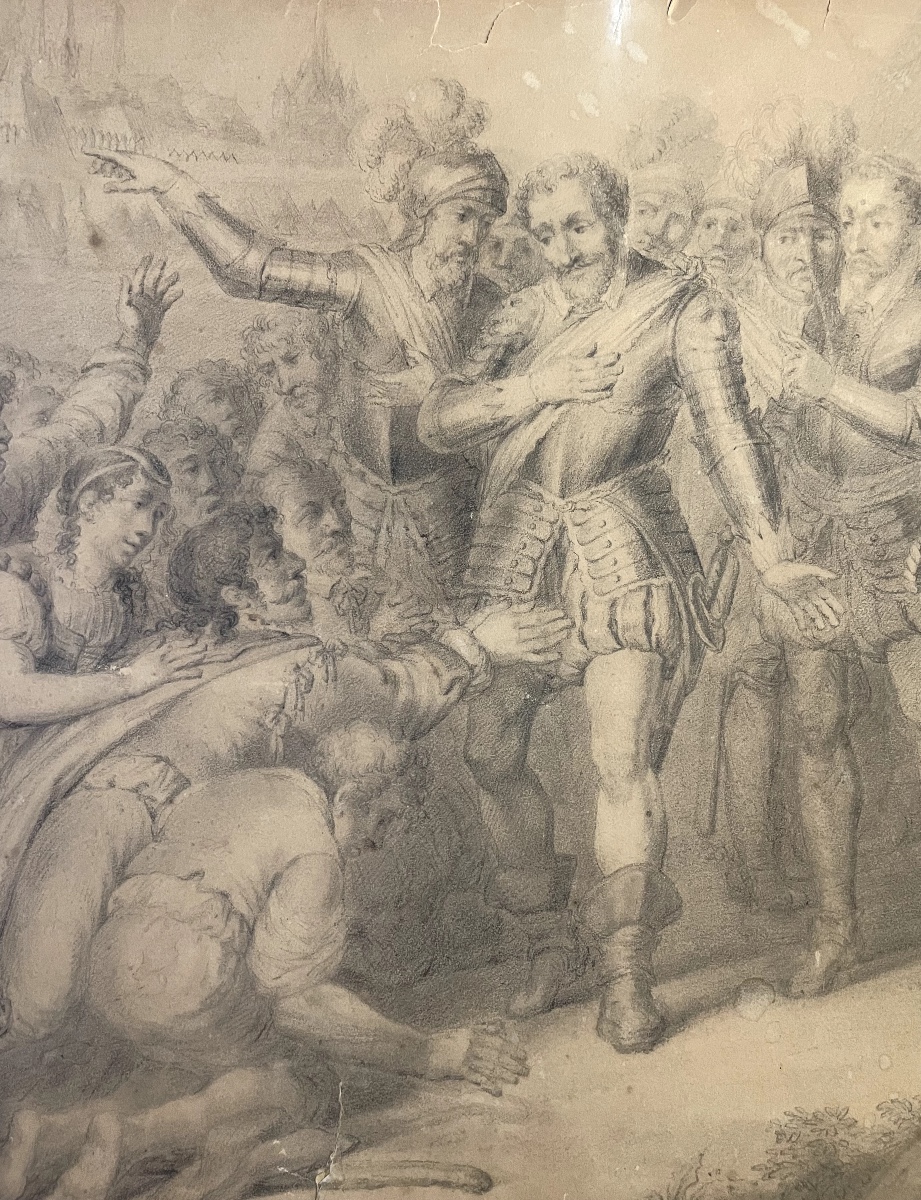
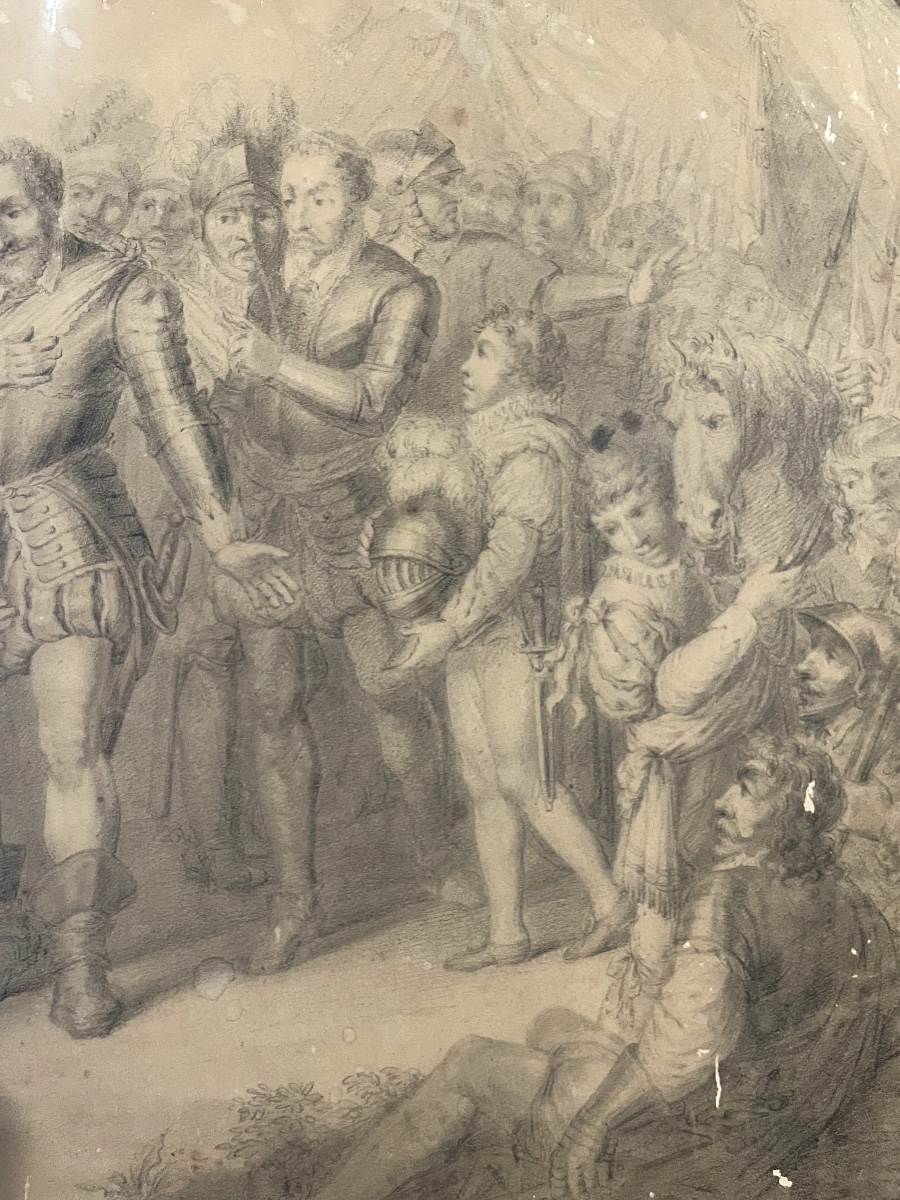
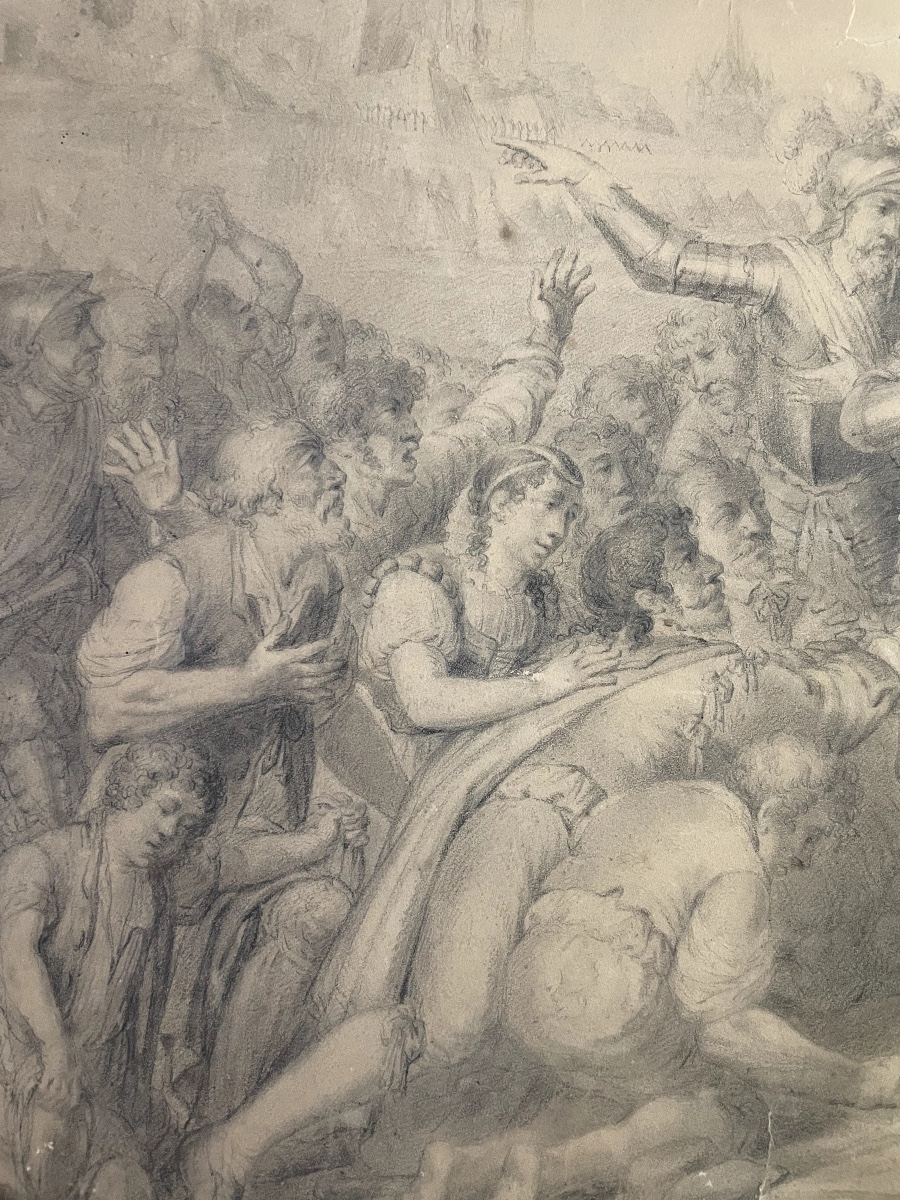
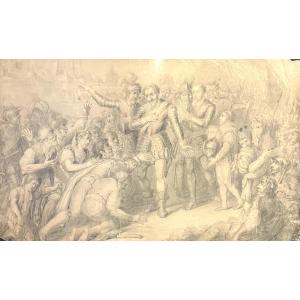
A highly detailed drawing; in the center, Henry IV is surrounded by a large number of Parisian citizens cheering his arrival, against the backdrop of the city of Paris. On March 22, 1594, Henry IV entered Paris in armor, "without bloodshed or any harm to a single citizen, either in person or property," in his own words. The city's governor, Count Charles de Cossé-Brissac, presented him with the keys to the city. The king's return to the capital, from which he had been forced to flee nearly twenty years earlier, brought an end to five years of civil war and thirty years of religious wars. The composition of Henry IV and the figure pointing at him towards Paris (probably Sully) is reminiscent of Mademoiselle Rivière's work "Henri IV Leaving Gabrielle d'Estrées" (oil on canvas), which was painted and exhibited at the Salon of 1819. The composition and the artist's style reflect the style of the period, led by Jean-Auguste-Dominique Ingres. On the back of the drawing are various studies of faces and scene compositions. Few of the artist's works have been cataloged to date, although her style is of very high quality. Mademoiselle Rivière is known as a portraitist. It is known that she was born in Paris and that she was a student of Griait, of the Ancien Académie. She ran a studio for students and gave private lessons. She exhibited a large number of portraits and some genre scenes at the Salons of 1806, 1808, 1810, 1812 and 1819, including: in 1806, "Woman Embroidering, Head Study"; in 1810, "Savoyard Dance", "Portrait of a Woman Holding a Book", "Portrait of a Woman Drawing"; in 1812, "Portrait of a Woman"; in 1819, "Henry IV Bequeathed Gabrielle d'Estrées". One of her works, "Portrait of Josephine Budaevskaya or Woman with a Lyre", is kept at the Pushkin Museum in Moscow (Russia).
850 €
Period: 19th century
Style: Consulat, Empire
Condition: En l'etat
Material: Paper
Length: 54 cm
Width: 37 cm
Reference (ID): 1710649
Availability: In stock
Print