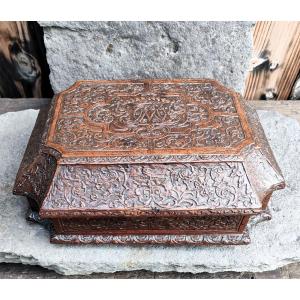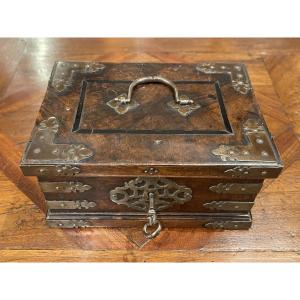



Mudéjar Walnut Casket Inlaid With Bone - Spain, 16th Century
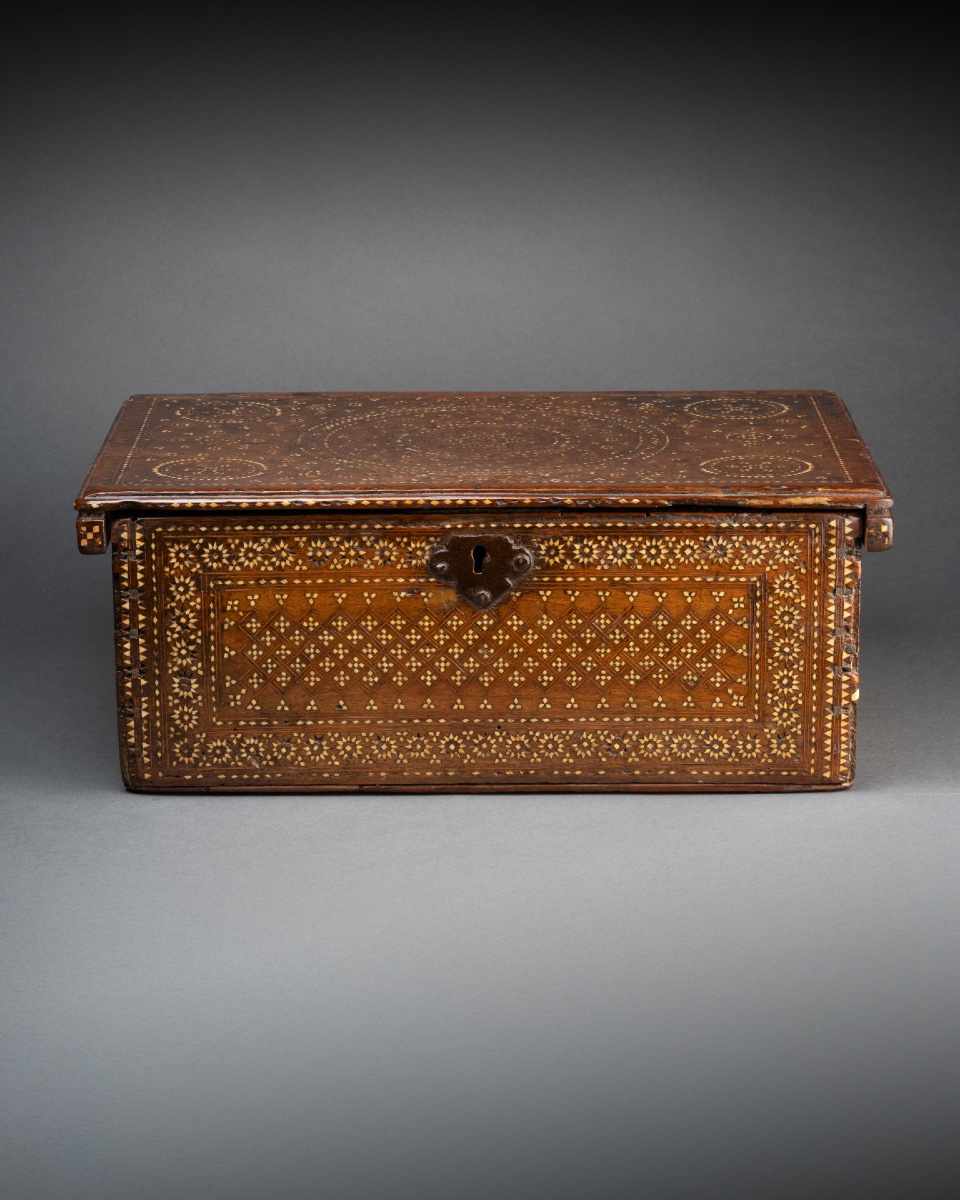
Hispano-Moresque Mudéjar Bone-Inlaid Walnut Chest
Spain, 16th–17th century
Walnut, bone inlay, iron fittings
44.5 × 30.5 × 18 cm
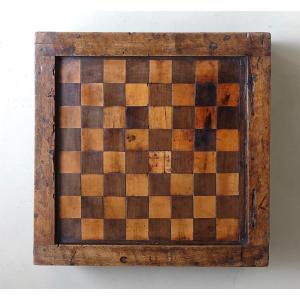
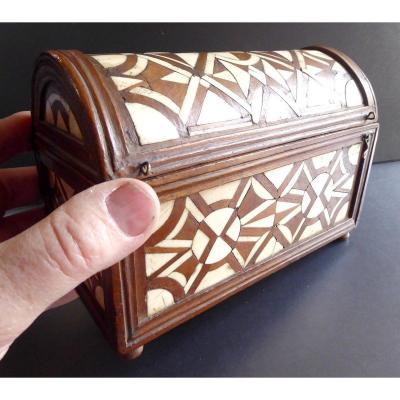
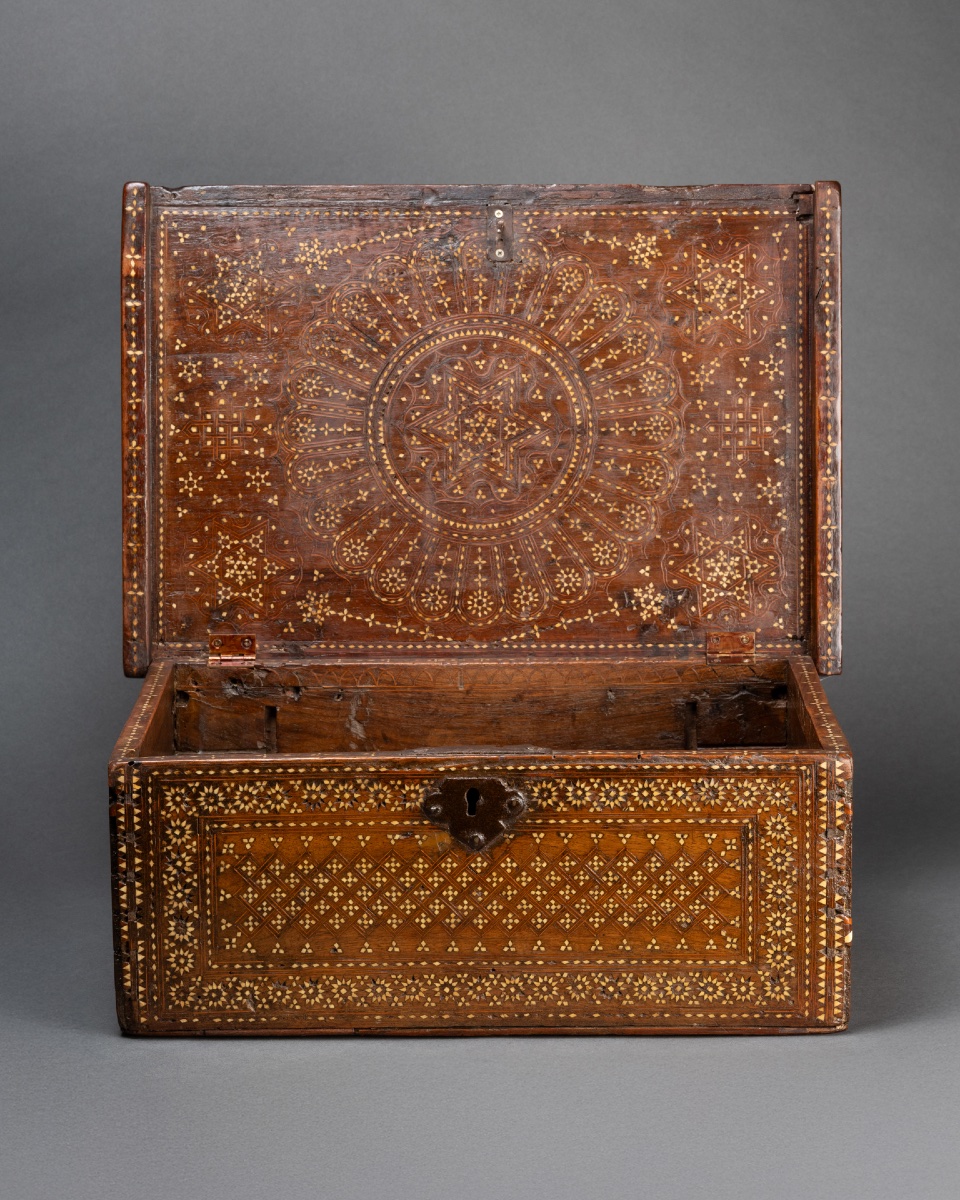
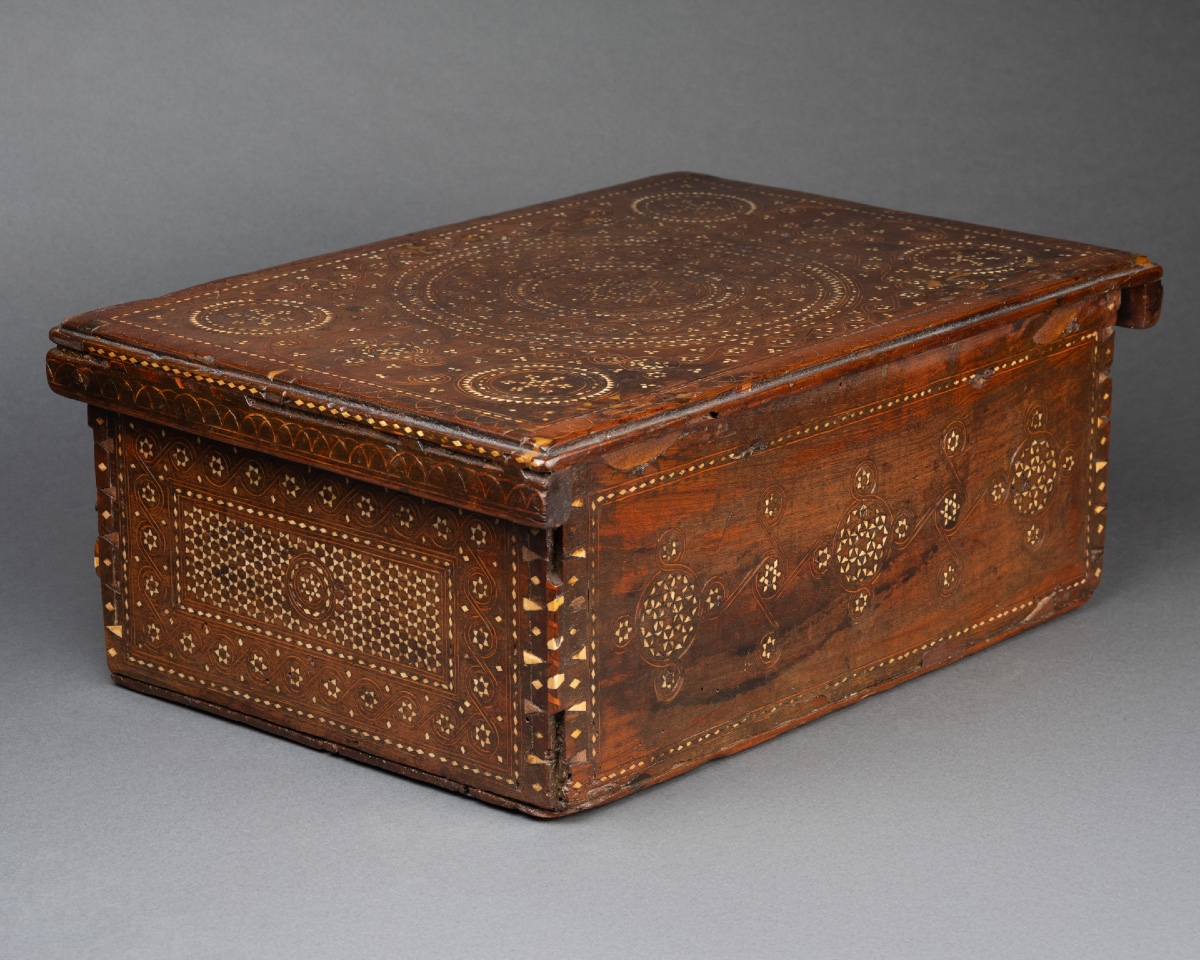
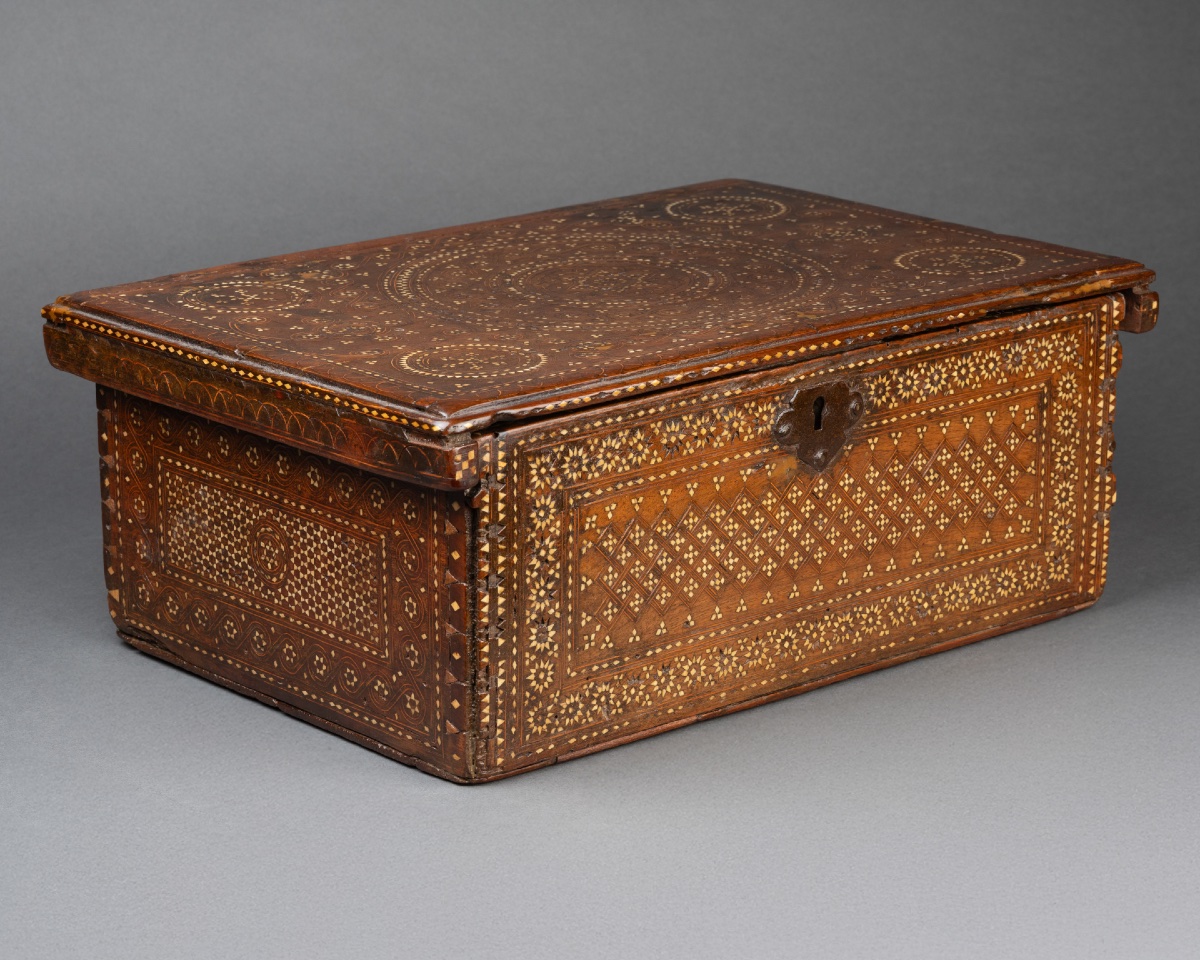
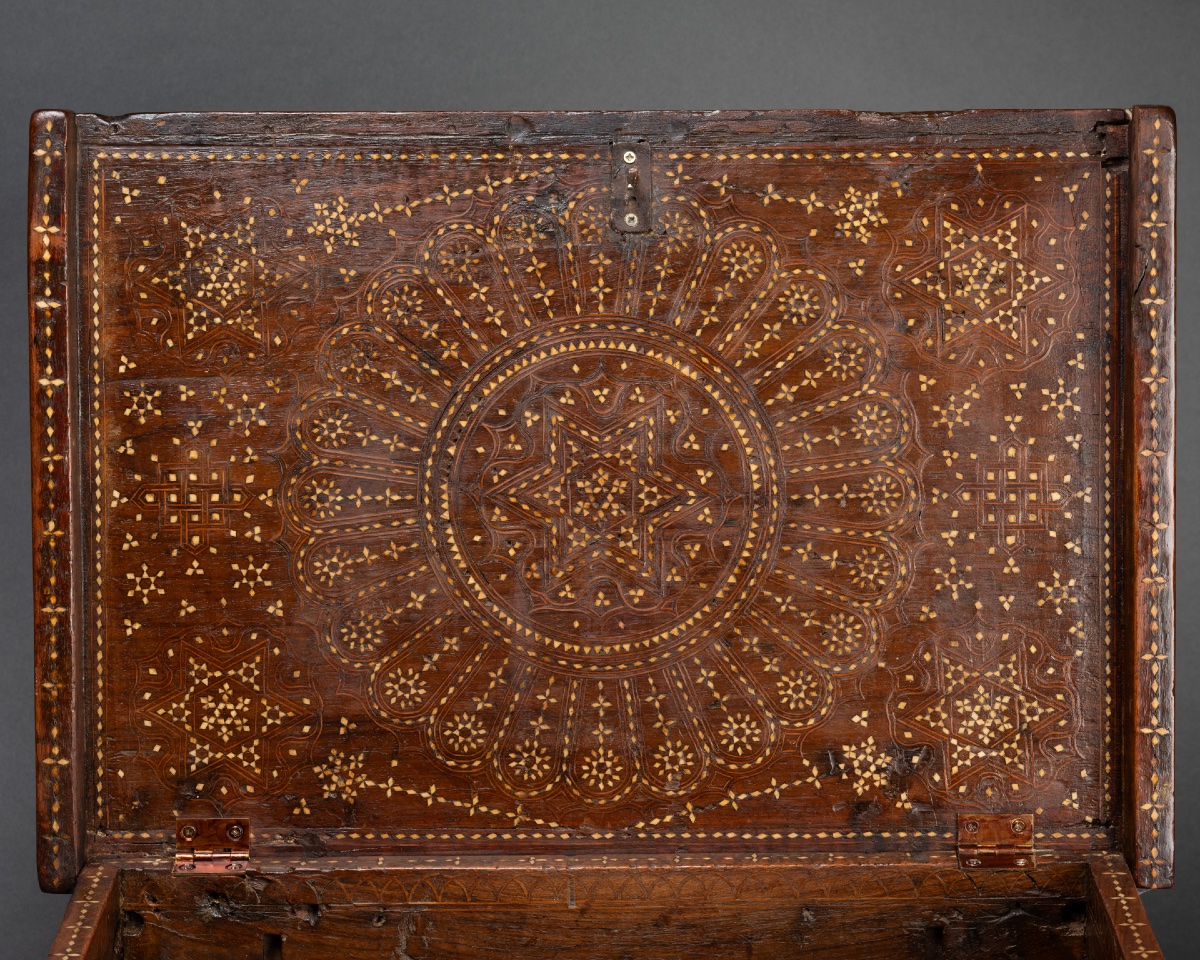
This rectangular walnut chest, richly ornamented with bone inlay, exemplifies the Hispano-Moresque decorative tradition that flourished in late medieval and Renaissance Spain. Its surfaces are covered with intricate geometric and stellar motifs, among them a radiant rosette on the interior of the lid and lattice-like patterns along the sides. The refined decoration, combining geometrical and floral forms, recalls the visual language of textiles, carpets, and embroidery, while the stellar rosettes evoke manuscript illumination, both Islamic and Mudéjar.
Intended to rest on a tabletop, such chests were designed to hold valuables, writing implements, or personal objects. Their exuberant decoration continues the Islamic tradition of marquetry, a craft with deep roots in Nasrid Granada, where inlaid wooden furnishings were produced for palaces and private interiors. Surviving examples include the inlaid doors of the Museo de la Alhambra and a compartmentalized chest in the Museo Arqueológico Nacional, similar to the example preserved in the Hispanic Society of America, which Juan Zozaya has identified as a writing desk. The present chest, though later in date, reflects this same technical and ornamental lineage, adapted by Mudéjar artisans working in Christian Spain.
Furniture decorated with micro-mosaic inlays reached particular sophistication under Nasrid patronage in the 14th and 15th centuries. Although produced in the 16th–17th century, this chest demonstrates the enduring prestige of that tradition, reinterpreted in workshops of Andalusia and Castile, where craftsmen trained in both Islamic and European practices developed hybrid forms that appealed to elite Christian patrons. Known as Mudéjar, this style derives from the Arabic Mudajjan (“tamed”), a term applied to Muslims who remained in Iberia under Christian rule. Objects in this mode were typically secular in function—repositories for jewels, documents, or precious goods—yet their decoration speaks to a dialogue between cultures, combining technical virtuosity with the persistent resonance of Islamic geometry in Renaissance Spain.
Although few have survived, such inlaid chests must have been relatively common in 16th-century Spain. A closely related bone-inlaid walnut chest is published in Caliphs and Kings: The Art and Influence of Islamic Spain. Selections from the Hispanic Society of America (New York, 2004, cat. 86, p. 108).
Period: 16th century
Style: Renaissance, Louis 13th
Condition: Excellent condition
Width: 44,5
Height: 18
Depth: 30,5
Reference (ID): 1710389
Availability: In stock