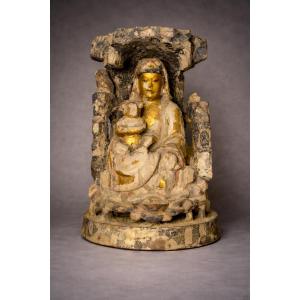


"Kannon Maternal To The Child — Possible Maria-kannon"
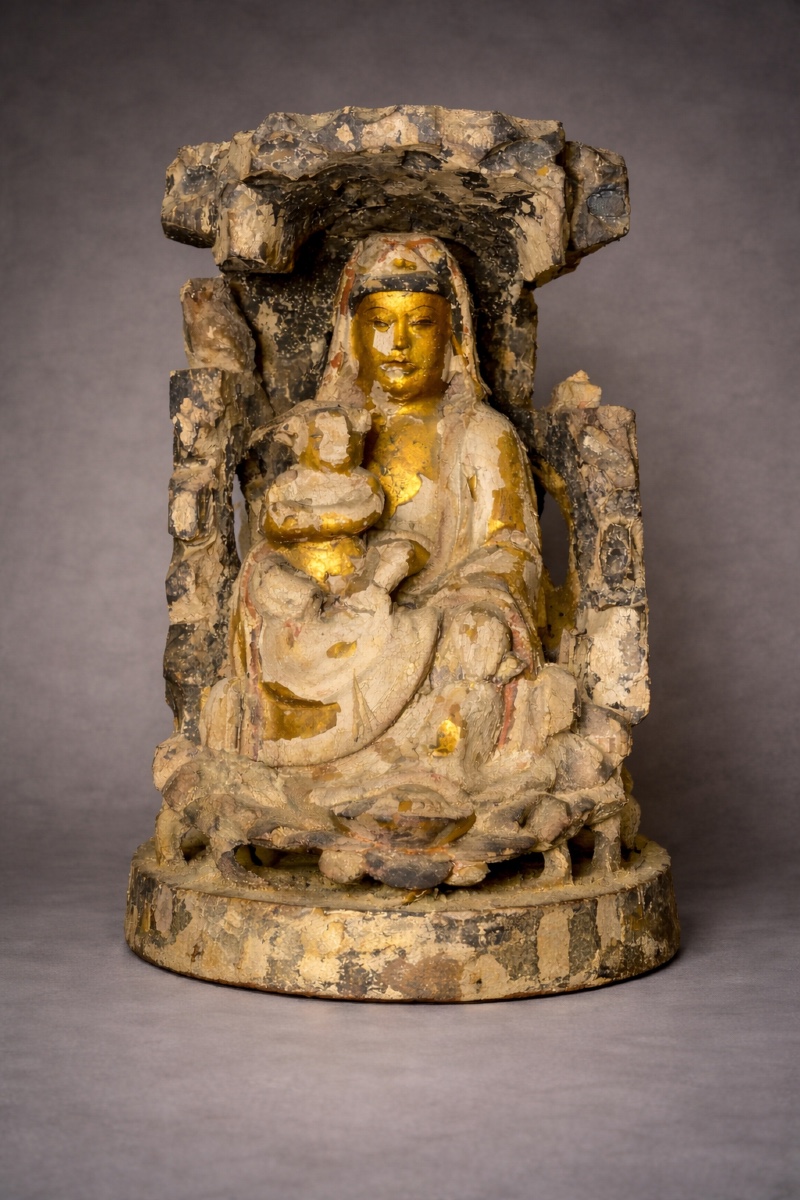
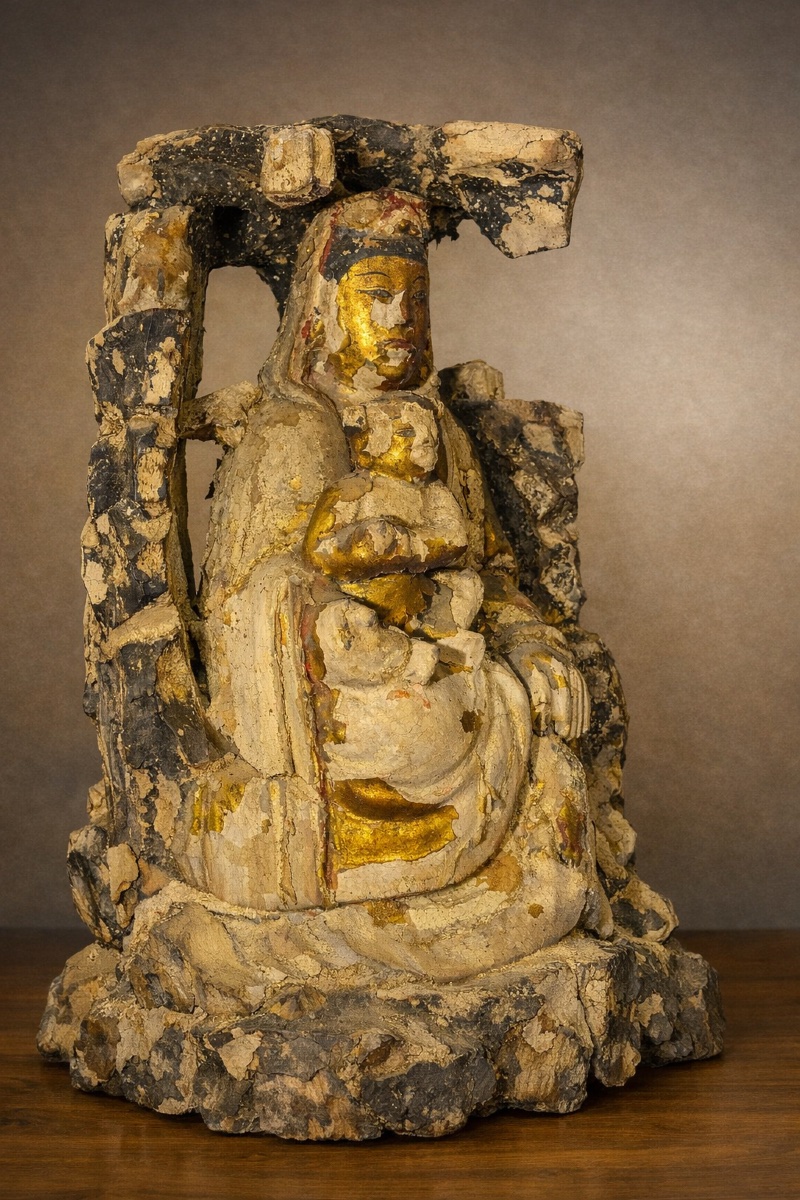
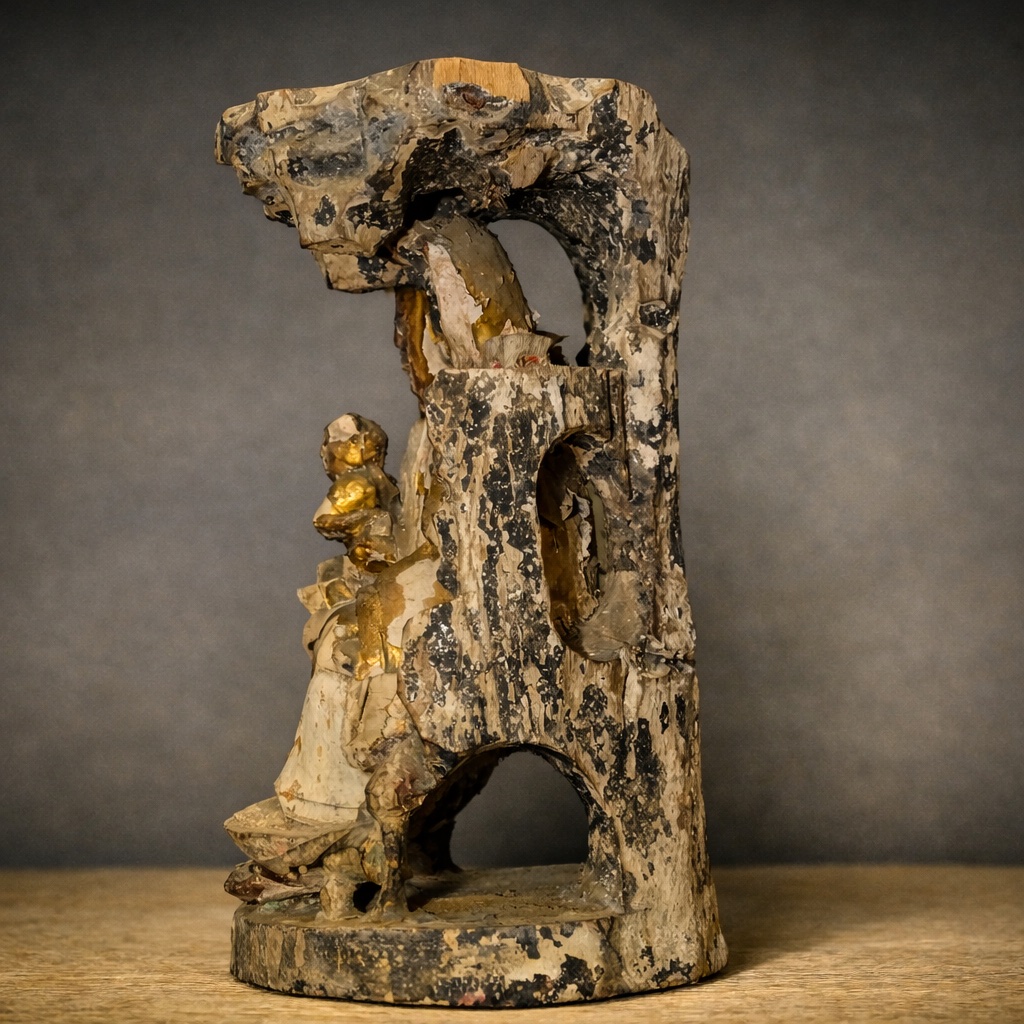
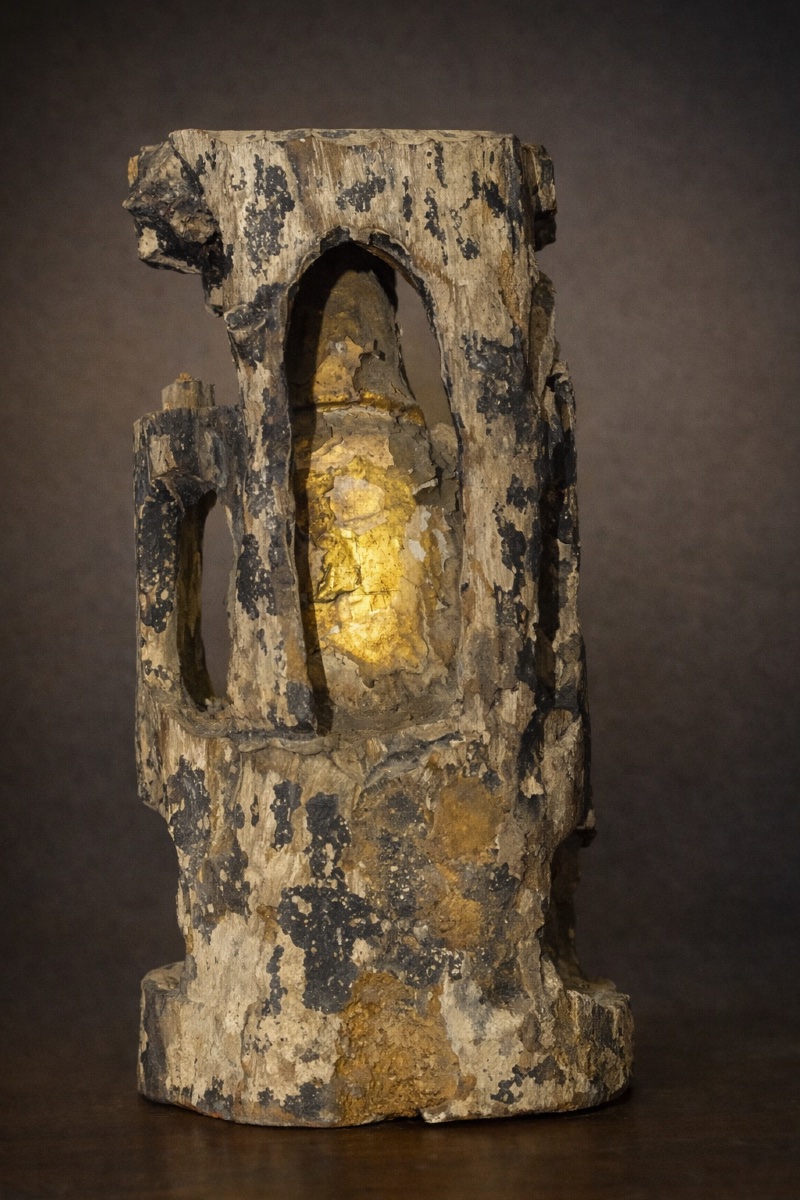
Japan, Edo period, 17th–18th century. Carved from a single block of wood, with early polychromy using gofun, red gesso, and gold leaf. H. 26 cm — Diam. approx. 15 cm — Weight: 640 g. Provenance: former European collection. This small Japanese figure, intended for private devotion, depicts a maternal Kannon holding a child, set within a rocky niche forming a miniature shrine. The gentleness of the face, the verticality of the veil, and the silent presence of the child place the work within the tradition of Koyasu/Jibo Kannon, protectors of motherhood. The simplicity of the composition and the iconographic ambiguity also allow for a subtle Marian interpretation, sometimes associated with the Maria Kannon figures of the Edo period, without any dogmatic pronouncements. The sculpture retains a remarkable early stratigraphy—thick white ground, red gesso, and traces of gilding—now fragmentary but stable. The wood, deeply hollowed and very light, testifies to a handcrafted production intended for domestic devotion. A bird carved in relief animates the composition, while an old dwelling reveals the original presence of a now-lost added element, confirming a composite construction typical of popular cult images. The old deposits and slightly blackened areas suggest prolonged exposure to incense smoke or a votive flame, reinforcing the spiritual and lived dimension of the whole. Condition: old wear, losses and material damage; fragmentary polychromy; Partially missing lateral elements. This work lies at the intersection of popular Buddhism and a possible discreet Marian reception, revealing the religious complexity of Edo-period Japan. Points of authenticity: • Heavily hollowed-out single-piece wood, structural lightness consistent with Edo domestic imagery. • Legible ancient stratigraphy: thick gofun, red gesso, and remnants of gold leaf. • Composite construction: bird carved from a single piece and an old housing for an added element. • Thermal patina and ancient deposits suggesting prolonged devotional use (incense/votive flame). • Modeling of faces with half-closed eyes and restrained expressiveness, typical of early folk art. 








 Le Magazine de PROANTIC
 TRÉSORS Magazine
 Rivista Artiquariato