

"Sculptural Narrative Tsuba — Kyōto (yamashiro-no-kuni) — Signed Tenpō — Edo Period"
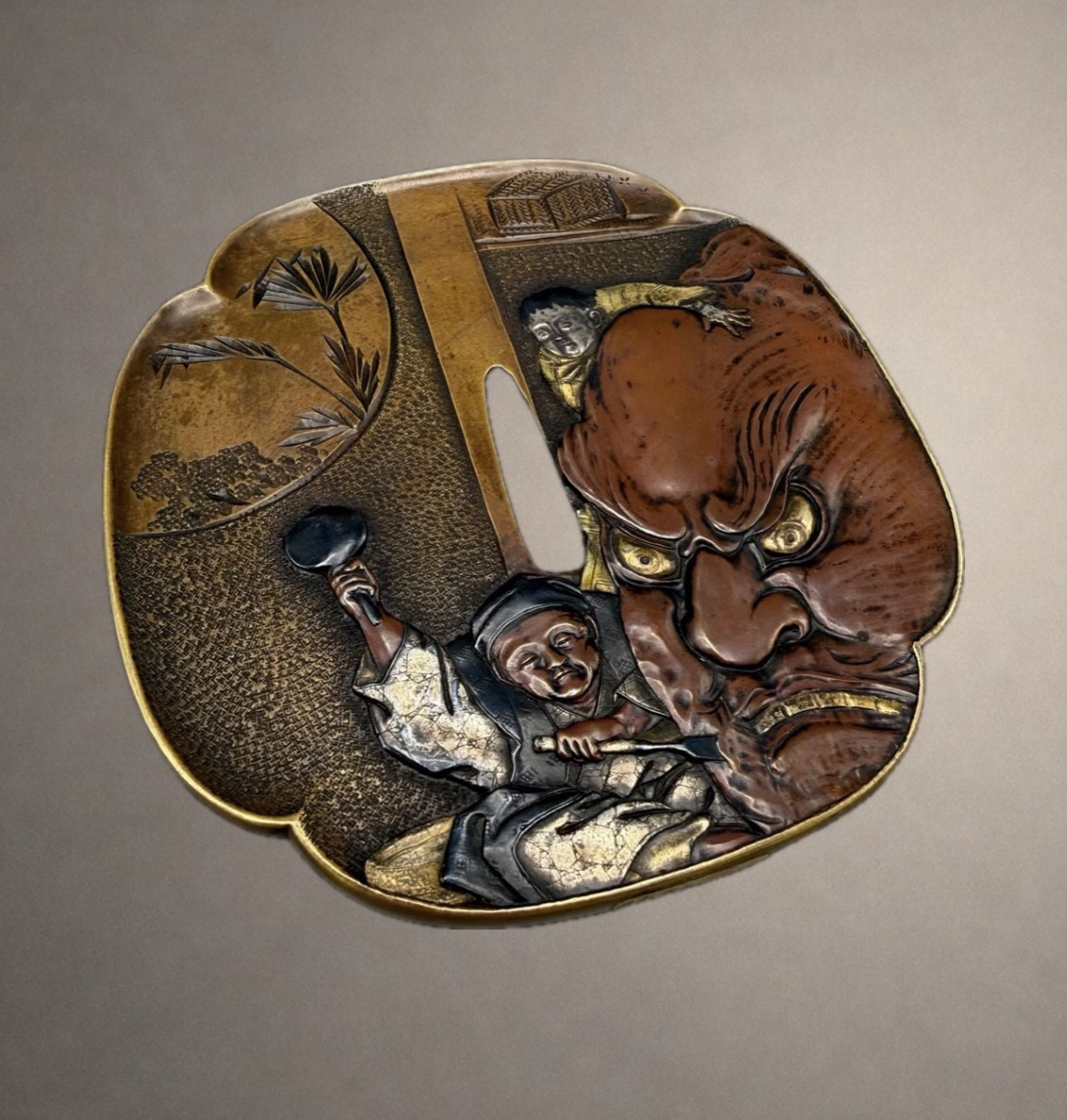
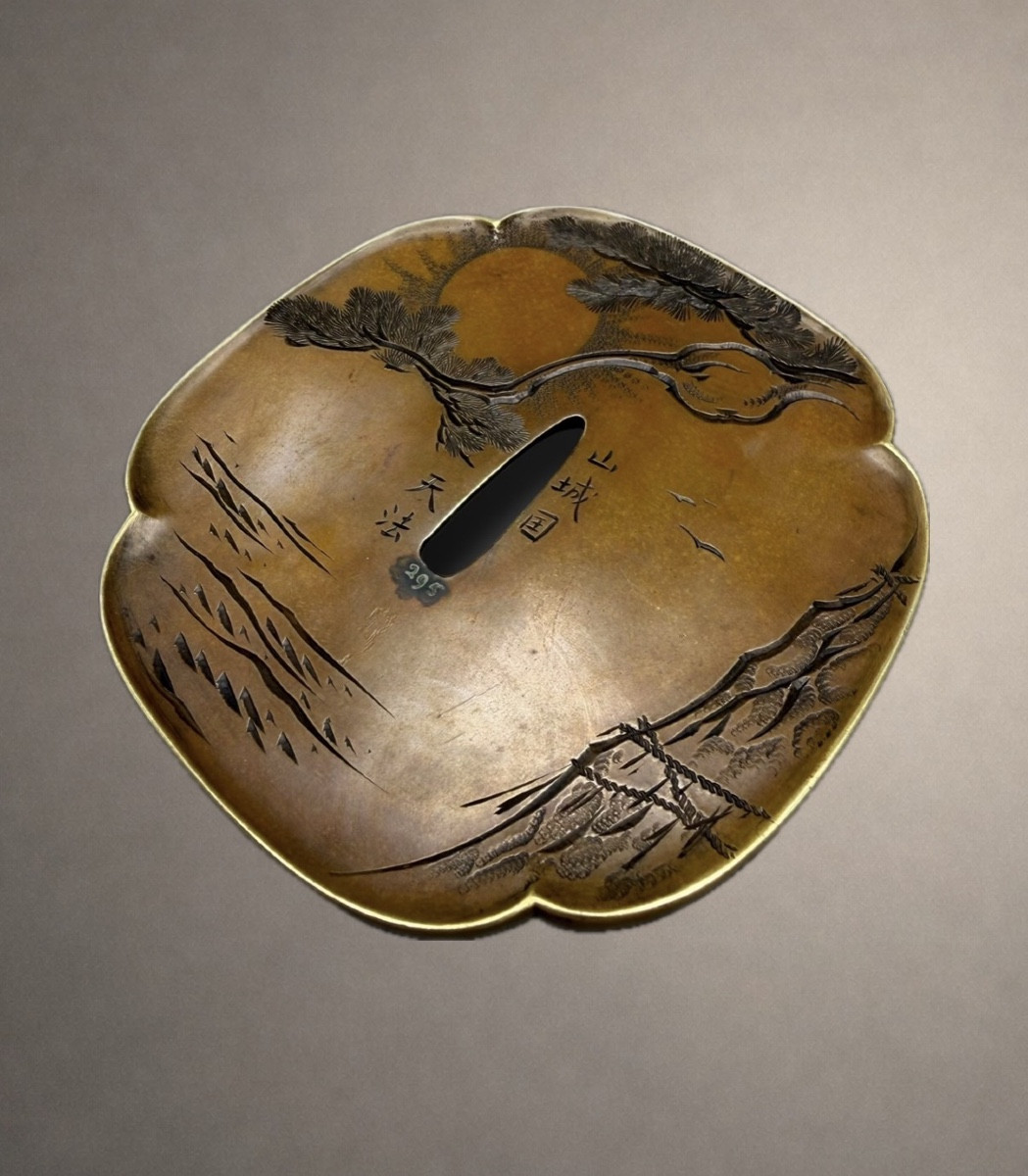
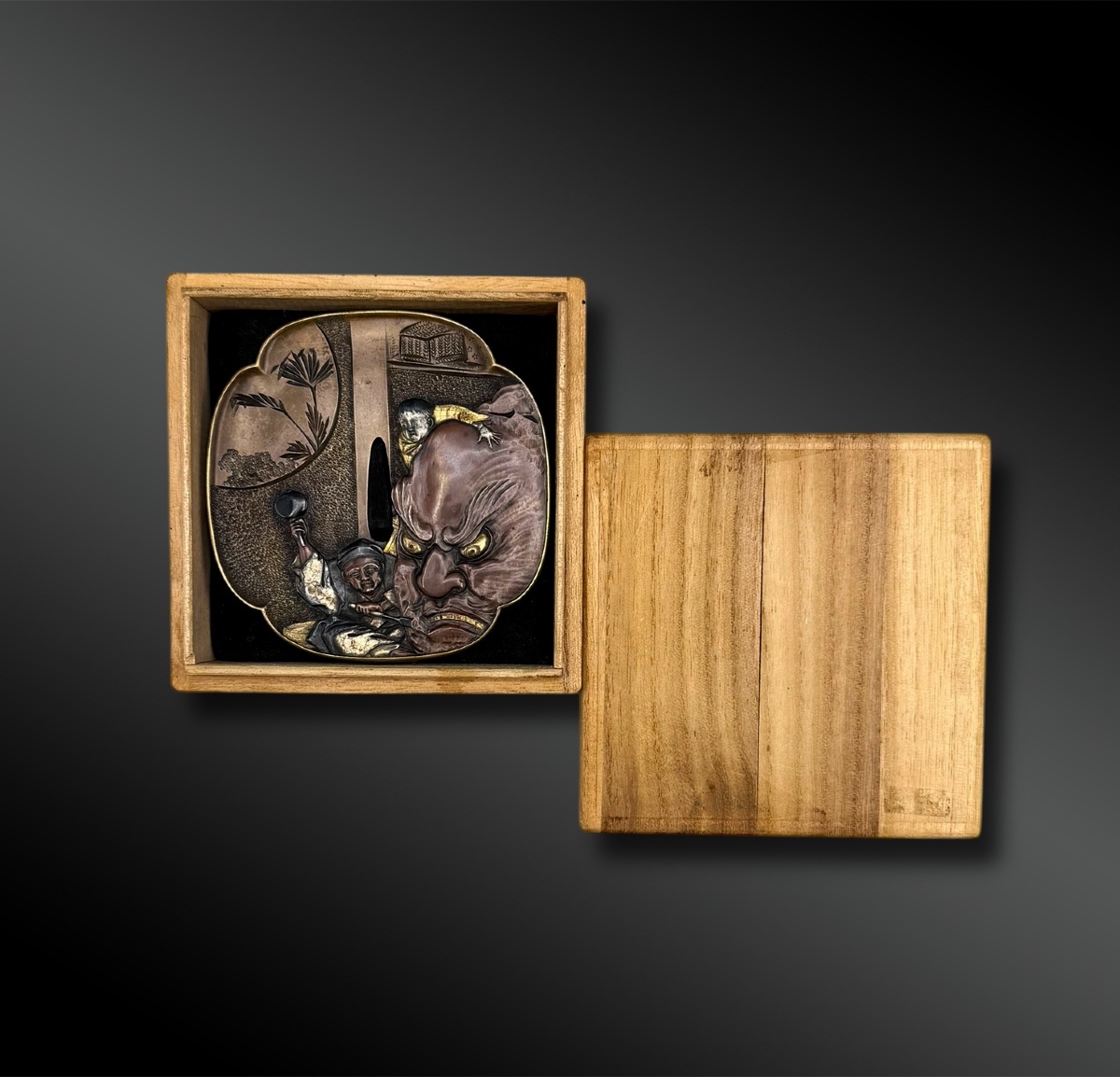
A true miniature sculpture born from Kyoto's artistic refinement, this mokkō-gata tsuba embodies the evolution of Japanese sword mounts at the end of the Edo period, when the sword guard became a medium of aesthetic expression for a cultivated urban elite. Through the power of its relief and the richness of its alloys, the piece transcends its utilitarian function to become a major decorative art. The finely textured sentoku plaque depicts a highly intense narrative scene: an artisan, accompanied by a young assistant, is shaping an oni head with a profoundly sculptural form. The inlays of shakudō, shibuichi, silver, gold, and copper enliven the surface with a subtle interplay of contrasts, lending the mask a theatrical presence reminiscent of the aesthetics of Noh and Kabuki, emblematic worlds of late Edo-period Kyoto. The reverse, treated as a poetic counterpoint, presents a pine landscape beneath the moon, a motif imbued with serenity and literary sensibility. This duality between dramatic energy and meditative calm reflects a fully artistic conception of the object, characteristic of the refined productions of Yamashiro Province. The seppa-dai is signed "Yamashiro-no-kuni Tenpō" (山城国 天法), indicating production linked to the Kyoto region. Two visible former collection numbers attest to its earlier history in private collections. Preserved in its wooden case (kiri-bako), the piece is now presented as a major collector's item, straddling the line between ceremonial weaponry and sculptural miniature. Japan, Kyoto region (Yamashiro) Edo period (1603-1868) Sentoku, shakudō, shibuichi, silver, gold and copper H.: 10.7 cm; W.: 10 cm; D.: 6 mm Nakago-ana: 3.1 cm Very good condition, homogeneous old patina. 










 Le Magazine de PROANTIC
 TRÉSORS Magazine
 Rivista Artiquariato