

Pink Opaline Vase From The Charles X Period
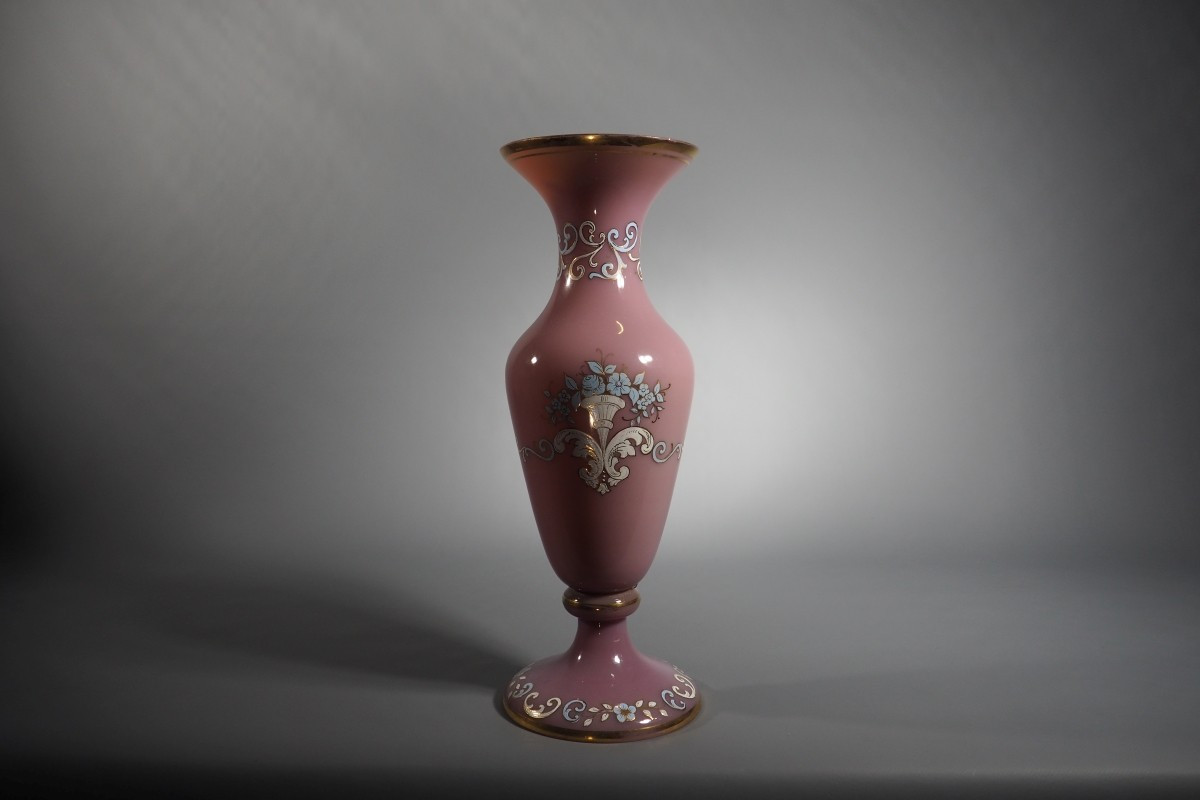
"Pink Mist under Charles X" Vase.
Pink opaline glass.
Hand-painted decoration in enamels and gold. France.
Charles X period (1824–1830). Height: 37.7 cm. Condition: very good.
Historical context:
the birth of French opaline glass. This vase belongs to the first phase of the development of opaline glass in France, during the Restoration and the reign of Charles X. The 1820s were a pivotal moment: opaline glass established itself as an independent artistic production, distinct from simple colored glass.
Under Charles X, French workshops perfected both the chemical composition of the glass and the aesthetics of its forms. Production was primarily aimed at an aristocratic clientele and the refined interiors of high society. This period is now considered one of the high points of French opaline glass, with authentically datable pieces from 1824–1830 being significantly rarer than those from subsequent decades.
Material and Technology:
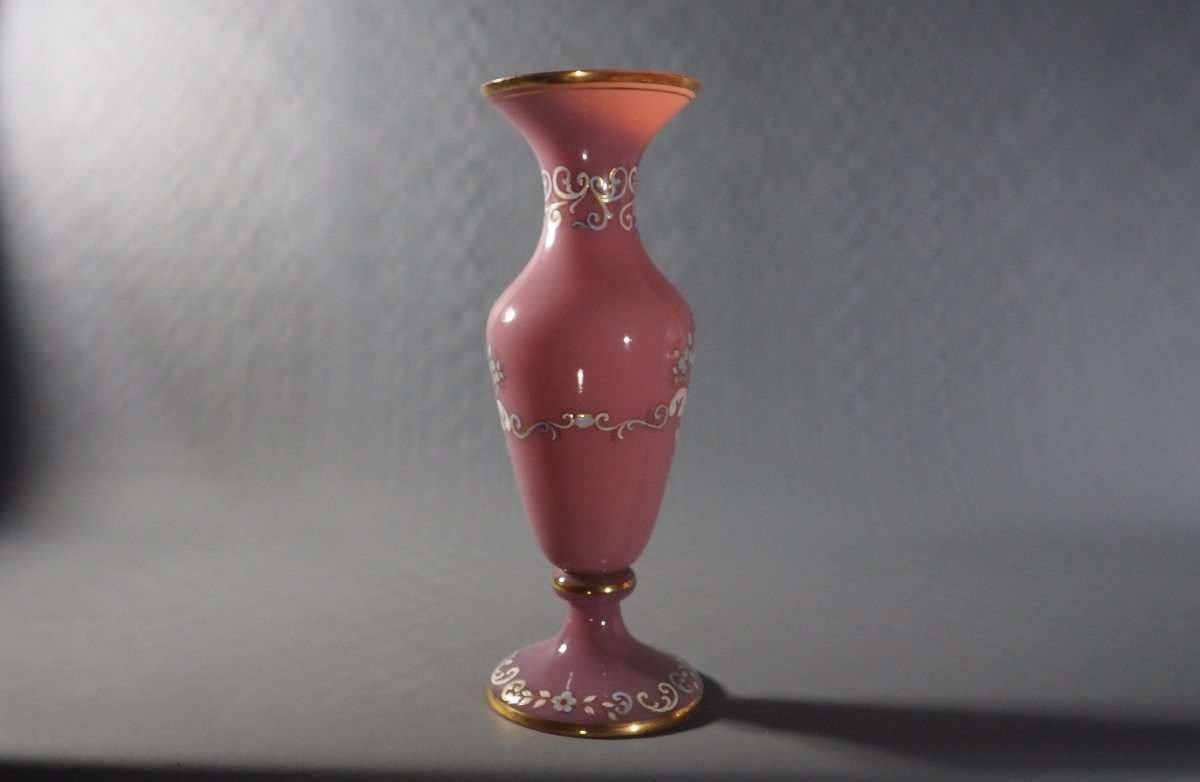
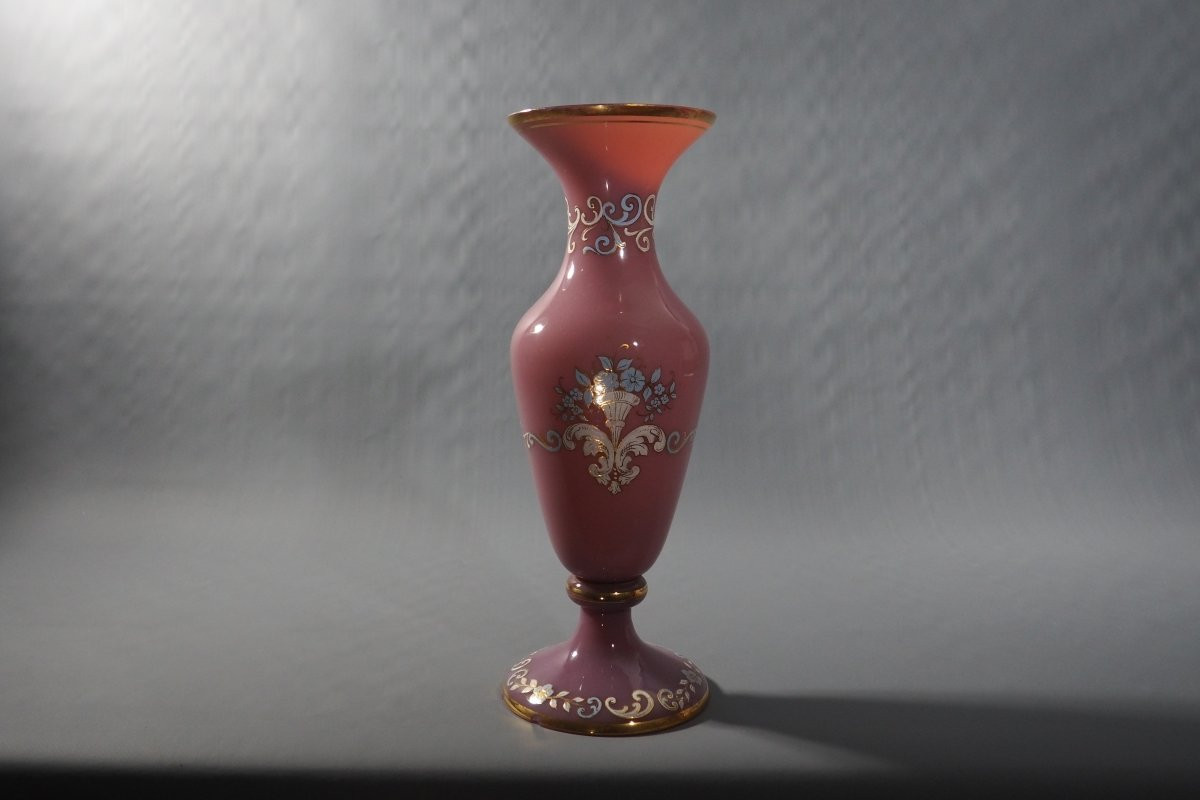
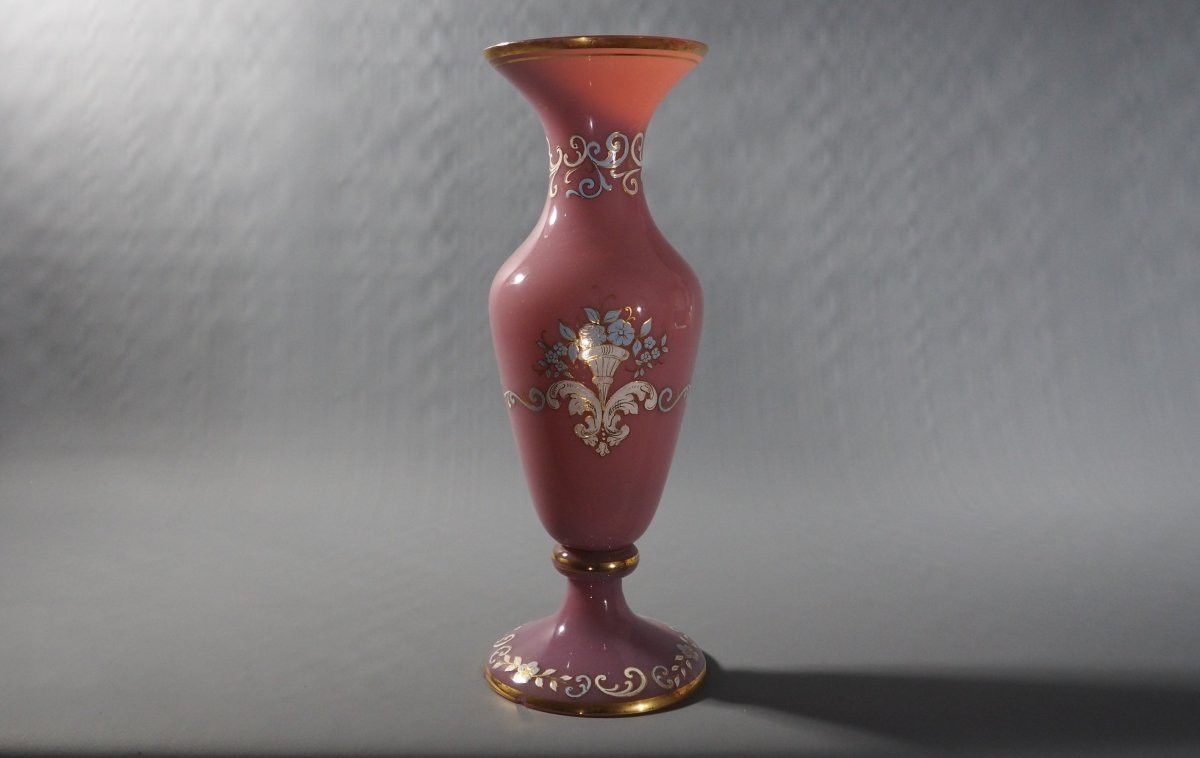
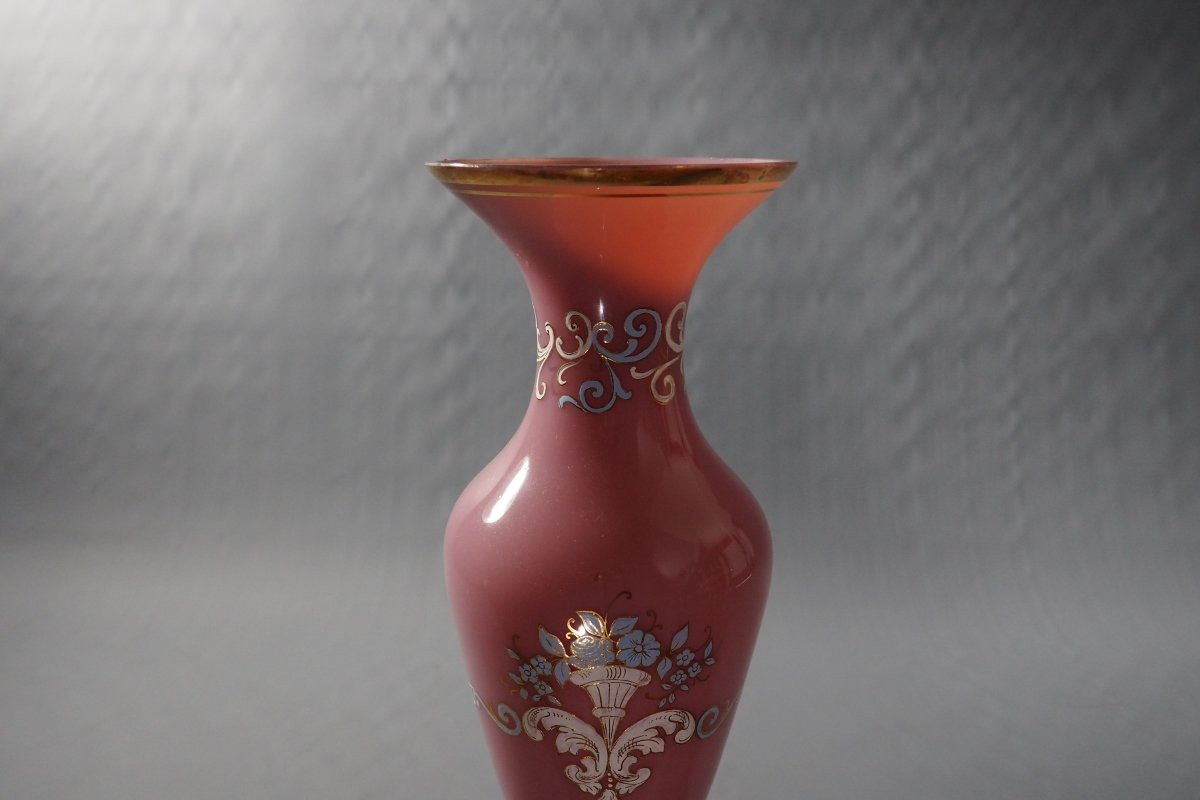
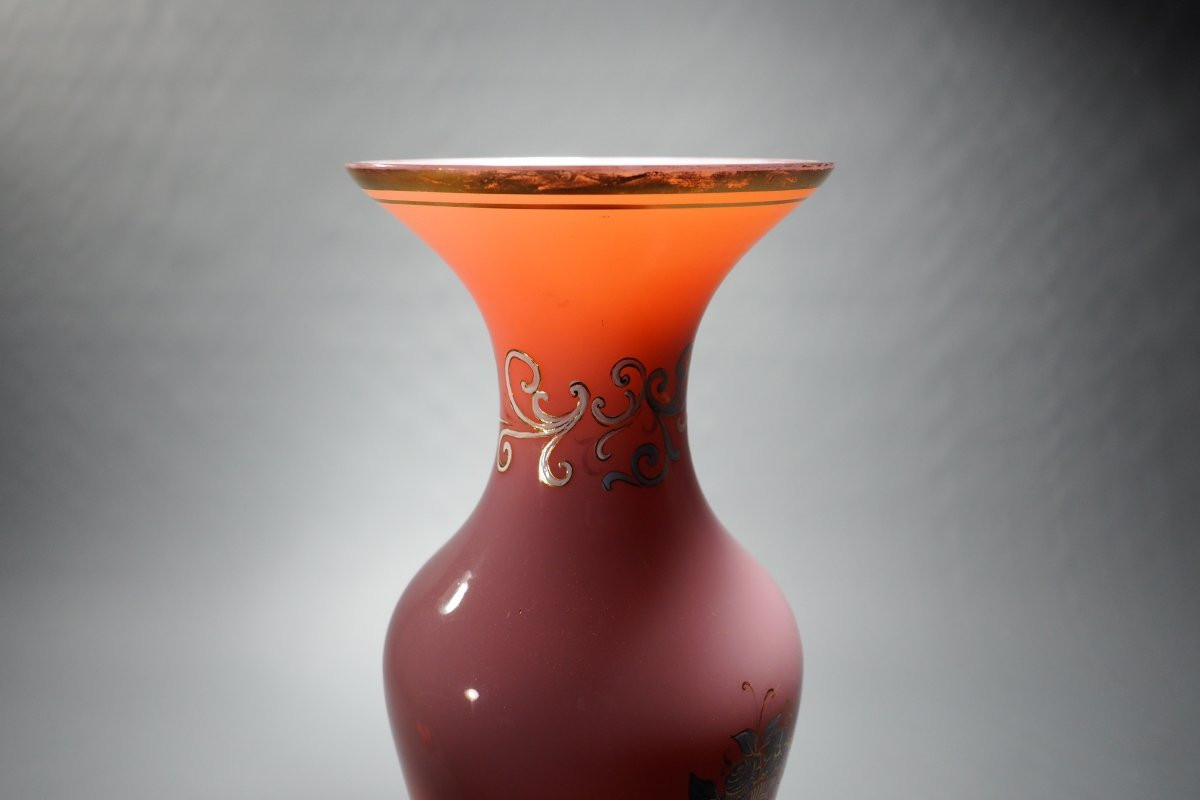
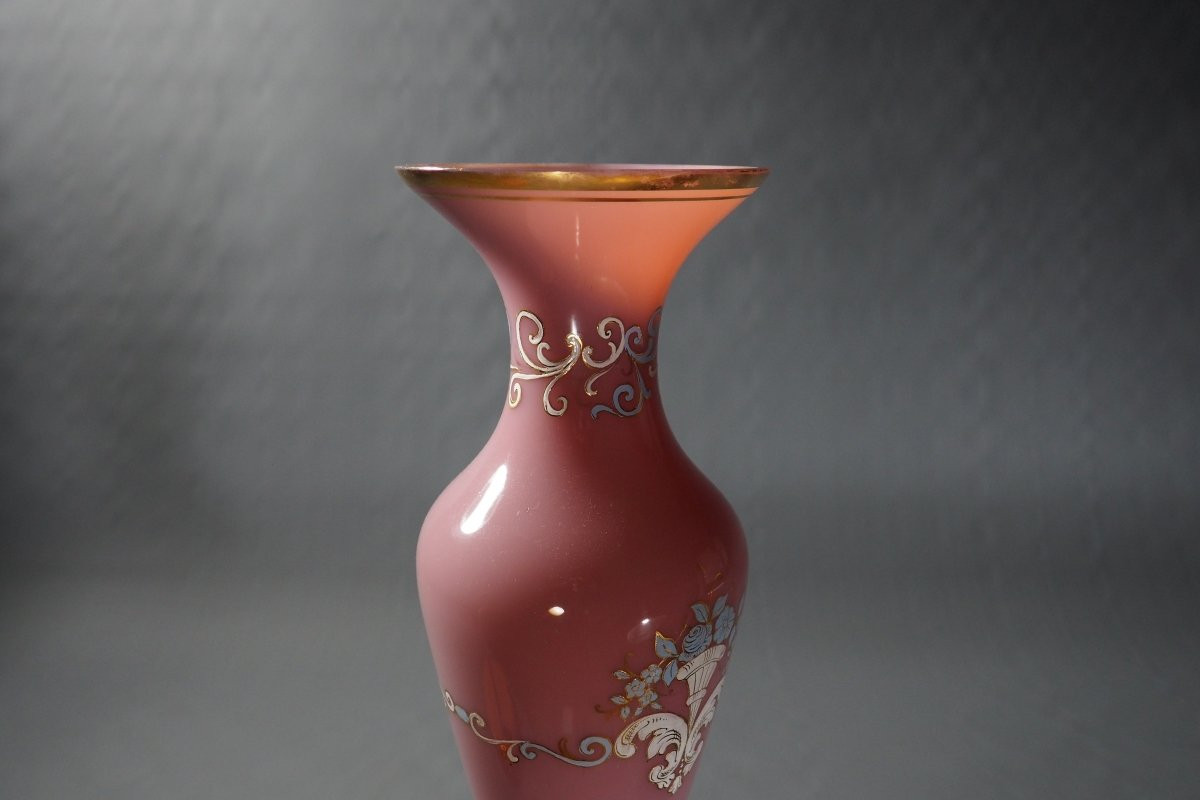
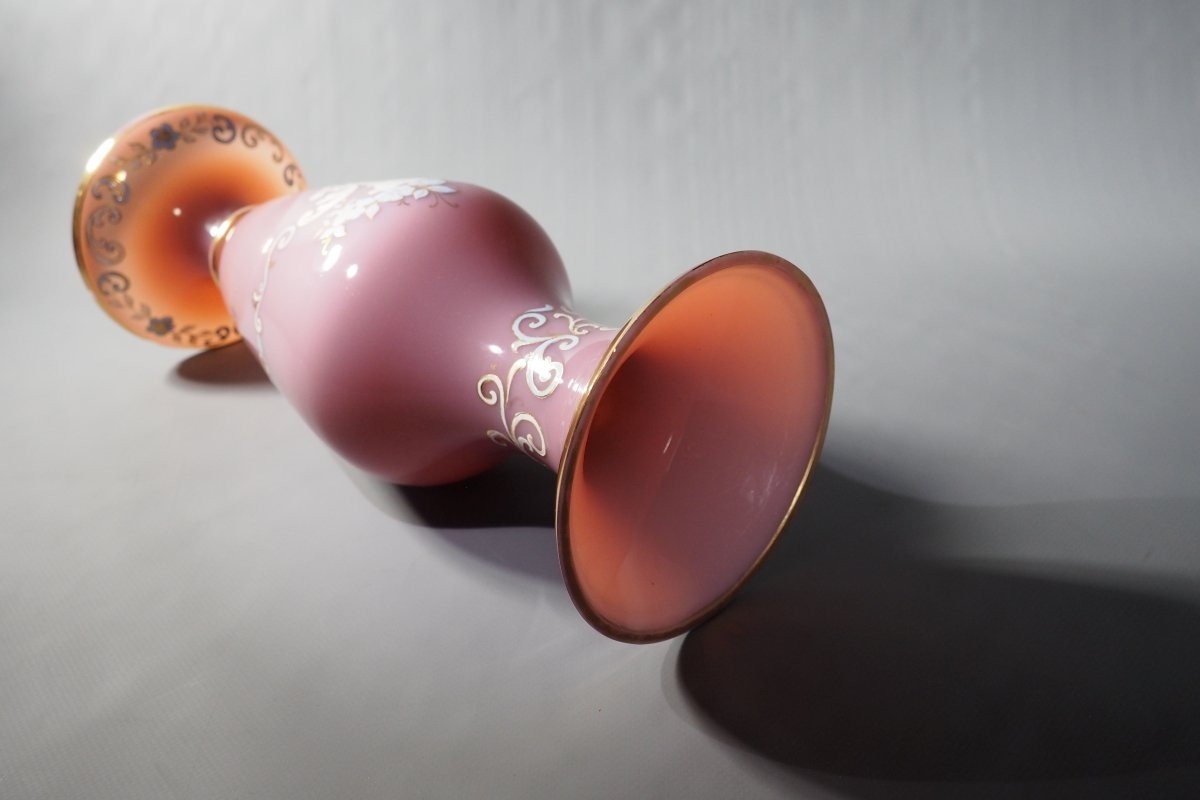
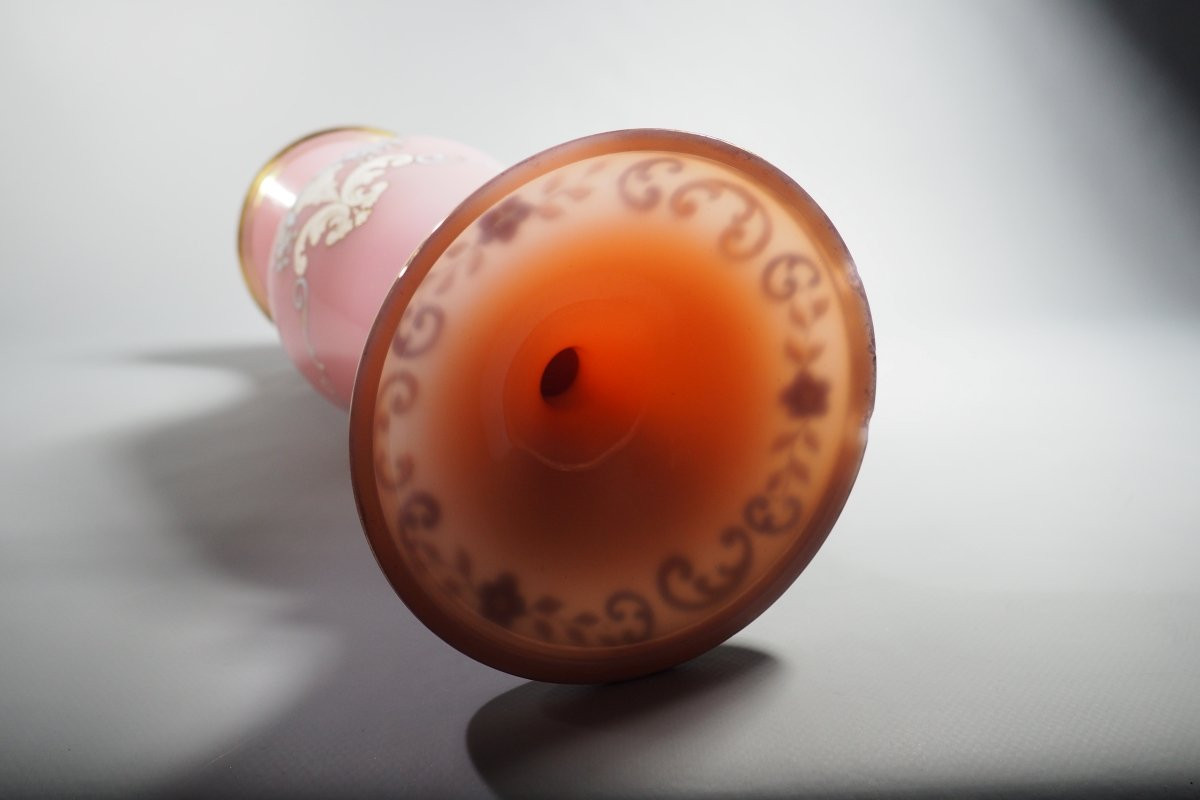
The opaline glass of this example is distinguished by its density and depth, as well as by a soft, almost satiny translucency. The pink hue, enlivened by a slight amber halo in the neck, indicates coloring achieved by incorporating the oxides directly into the molten glass, rather than by surface application.
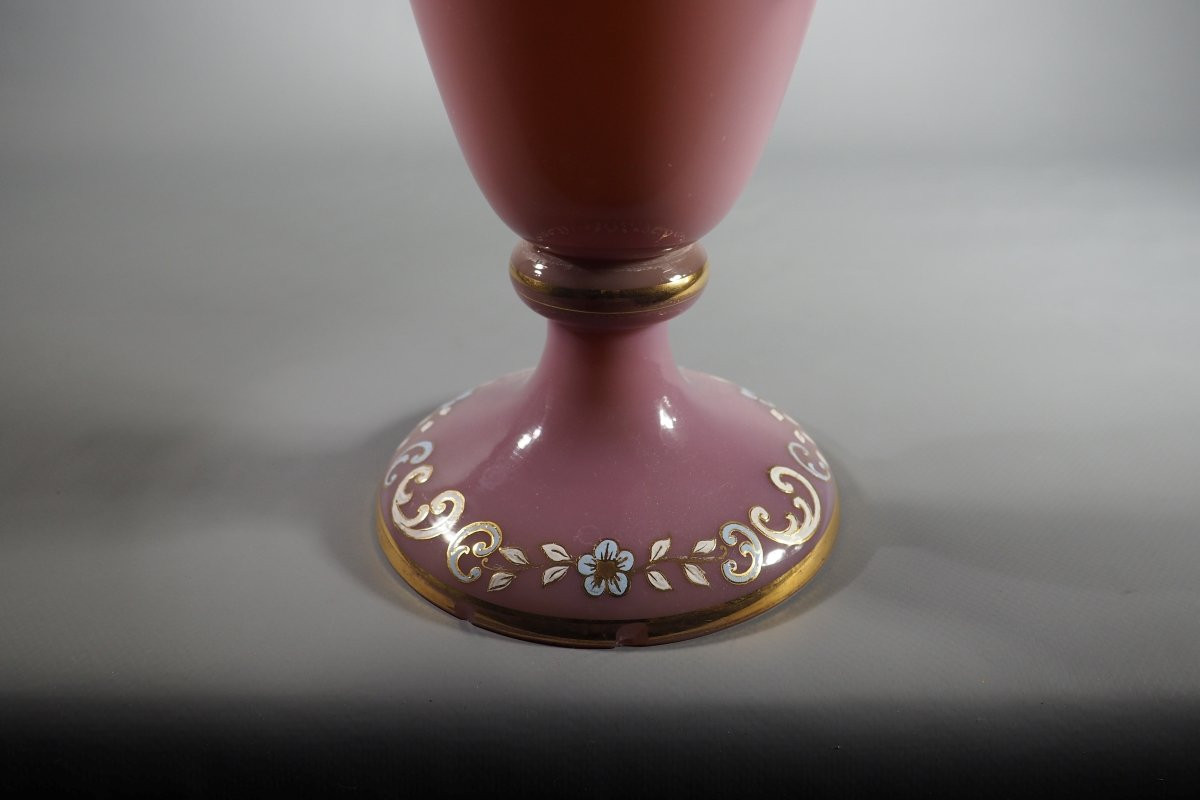
This process, characteristic of the first decades of production, gives the glass an internal vibrancy and a luminous quality particularly noticeable under side lighting. This is an important technical indicator for attributing it to the 1820s. Form and Style: The slender silhouette, structured by a strong verticality, reflects the aesthetic of late Neoclassicism characteristic of the Restoration period. The body rises smoothly towards a flared neck, resting on a tall foot that stabilizes the whole. The proportions are balanced and controlled, without excessive decoration. This formal restraint distinguishes the productions of the Charles X era from the more opulent creations of the mid-19th century.
Decorative Program:
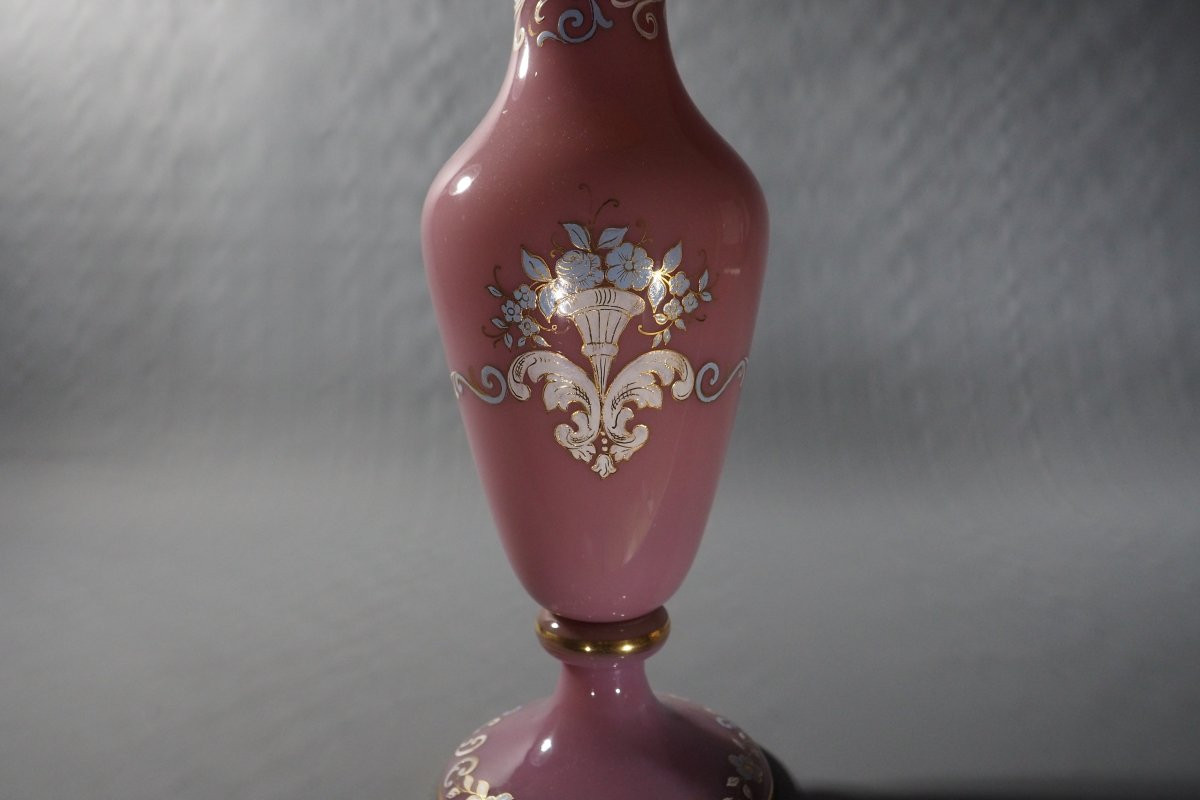
The decoration, executed by hand in enamels and enhanced with gold, is organized around a central motif of a cornucopia, a traditional symbol of prosperity and fertility in European decorative arts. The arabesques and garlands adhere to strict symmetry and reflect a taste for measured ornamentation, still imbued with classical clarity.
The finely applied gilding contributes to the overall elegance without disrupting the chromatic harmony of the whole.
Intended for Interior Use and Collector's Significance:
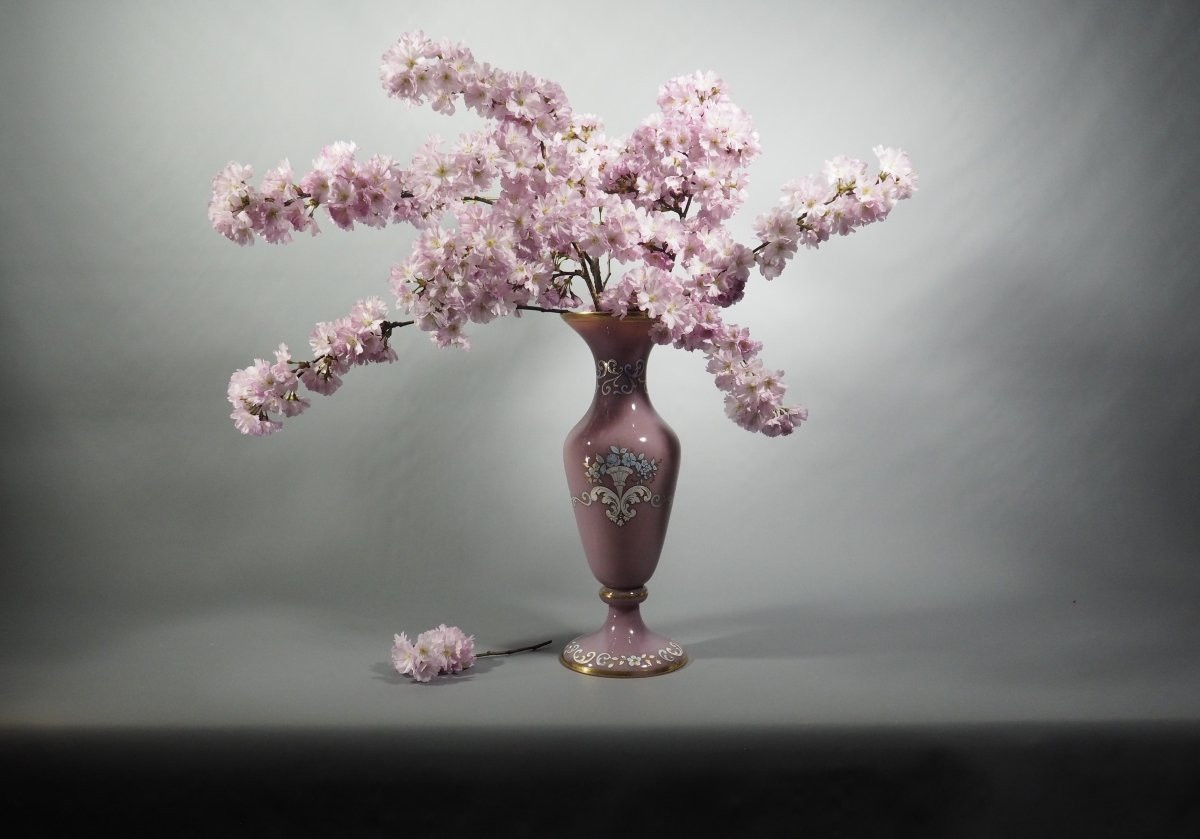
Due to its substantial size (37.7 cm), this vase was intended to occupy a prominent place in a drawing room or boudoir, as a standalone object and focal point of the interior composition. It fully embodies the refined aesthetic of the Restoration period: a subtle synthesis of technical mastery, formal balance, and decorative symbolism.
As such, it constitutes a representative and sought-after example of French opaline glass under Charles X, a period considered one of the most elegant in its history.
Ref 5033
Pink opaline glass.
Hand-painted decoration in enamels and gold. France.
Charles X period (1824–1830). Height: 37.7 cm. Condition: very good.
Historical context:
the birth of French opaline glass. This vase belongs to the first phase of the development of opaline glass in France, during the Restoration and the reign of Charles X. The 1820s were a pivotal moment: opaline glass established itself as an independent artistic production, distinct from simple colored glass.
Under Charles X, French workshops perfected both the chemical composition of the glass and the aesthetics of its forms. Production was primarily aimed at an aristocratic clientele and the refined interiors of high society. This period is now considered one of the high points of French opaline glass, with authentically datable pieces from 1824–1830 being significantly rarer than those from subsequent decades.
Material and Technology:
The opaline glass of this example is distinguished by its density and depth, as well as by a soft, almost satiny translucency. The pink hue, enlivened by a slight amber halo in the neck, indicates coloring achieved by incorporating the oxides directly into the molten glass, rather than by surface application.
This process, characteristic of the first decades of production, gives the glass an internal vibrancy and a luminous quality particularly noticeable under side lighting. This is an important technical indicator for attributing it to the 1820s. Form and Style: The slender silhouette, structured by a strong verticality, reflects the aesthetic of late Neoclassicism characteristic of the Restoration period. The body rises smoothly towards a flared neck, resting on a tall foot that stabilizes the whole. The proportions are balanced and controlled, without excessive decoration. This formal restraint distinguishes the productions of the Charles X era from the more opulent creations of the mid-19th century.
Decorative Program:
The decoration, executed by hand in enamels and enhanced with gold, is organized around a central motif of a cornucopia, a traditional symbol of prosperity and fertility in European decorative arts. The arabesques and garlands adhere to strict symmetry and reflect a taste for measured ornamentation, still imbued with classical clarity.
The finely applied gilding contributes to the overall elegance without disrupting the chromatic harmony of the whole.
Intended for Interior Use and Collector's Significance:
Due to its substantial size (37.7 cm), this vase was intended to occupy a prominent place in a drawing room or boudoir, as a standalone object and focal point of the interior composition. It fully embodies the refined aesthetic of the Restoration period: a subtle synthesis of technical mastery, formal balance, and decorative symbolism.
As such, it constitutes a representative and sought-after example of French opaline glass under Charles X, a period considered one of the most elegant in its history.
Ref 5033
170 €
Period: 19th century
Style: Louis Philippe, Charles 10th
Condition: Excellent condition
Material: Opale
Height: 37,7
Reference (ID): 1709478
Availability: In stock
Print