THIS OBJECT WAS SOLD
Blois Faience Wall Medallion – Large Dish (44 Cm) - Gaston Bruneau




BLOIS, Gaston Bruneau (1881–1965)
Faience (pierced/openwork decoration), polychrome decoration.
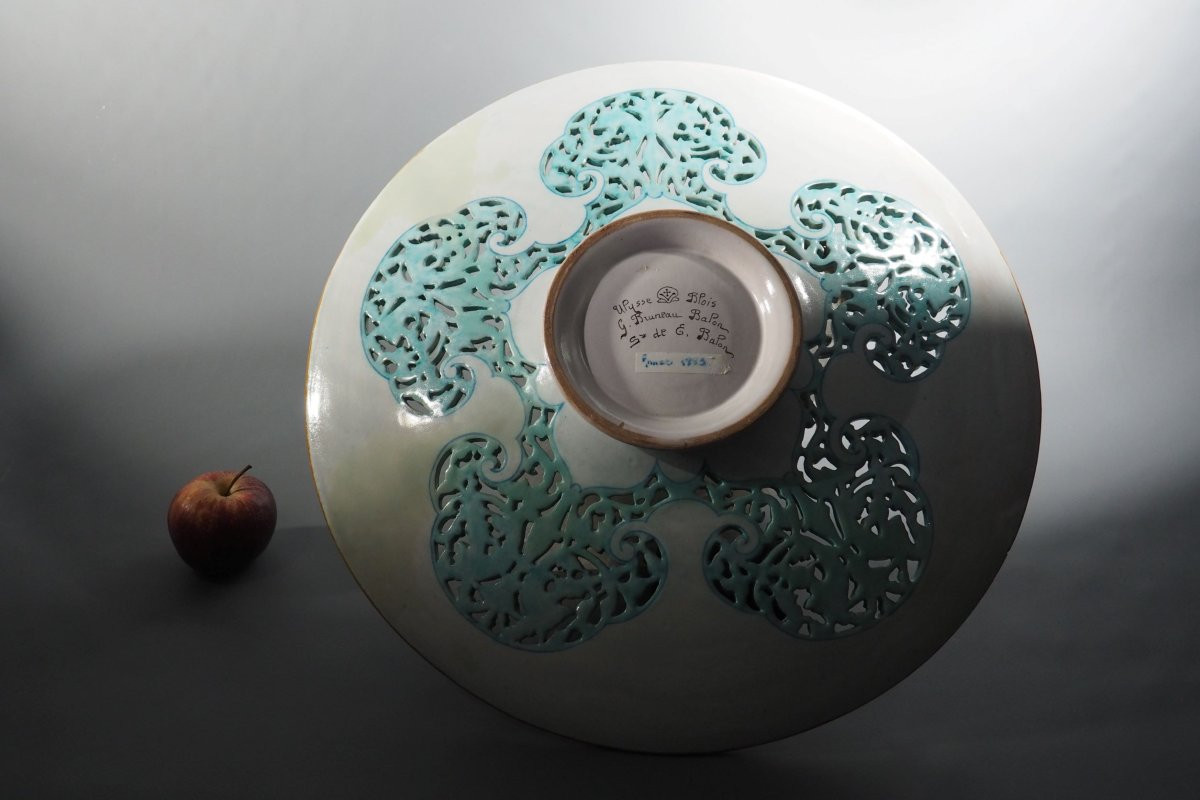
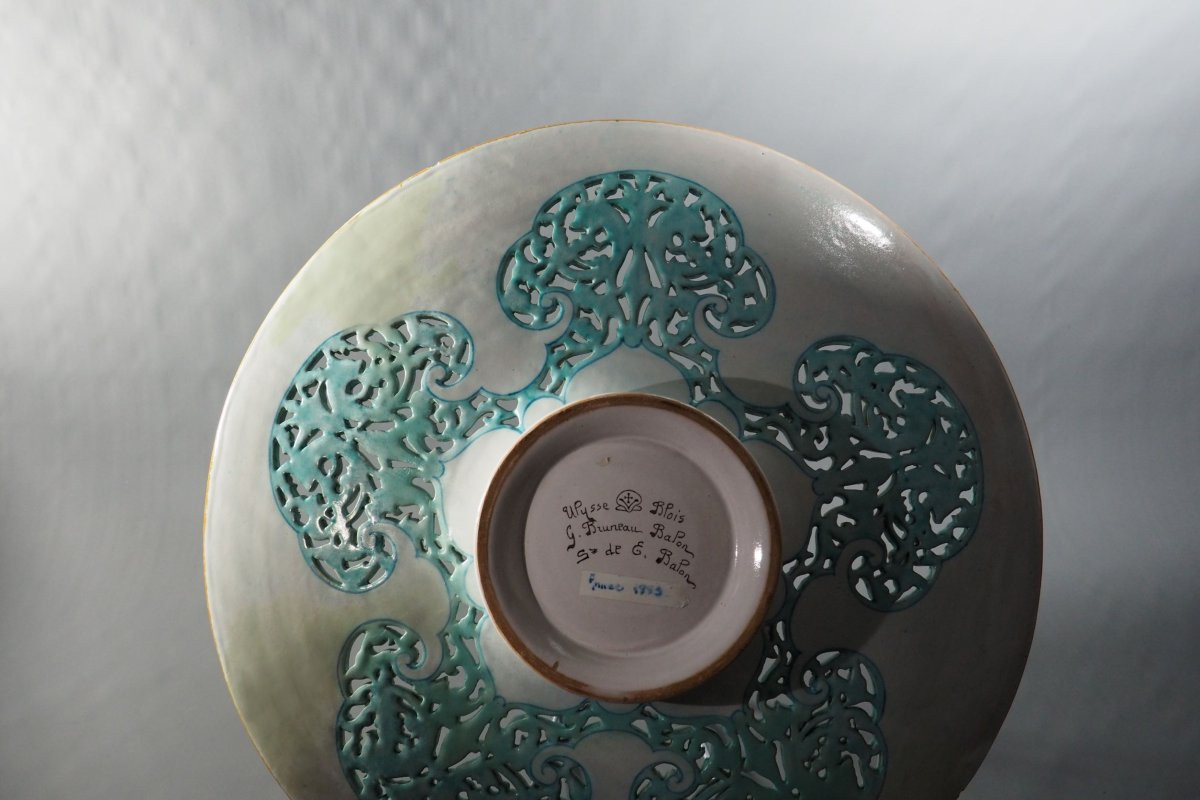
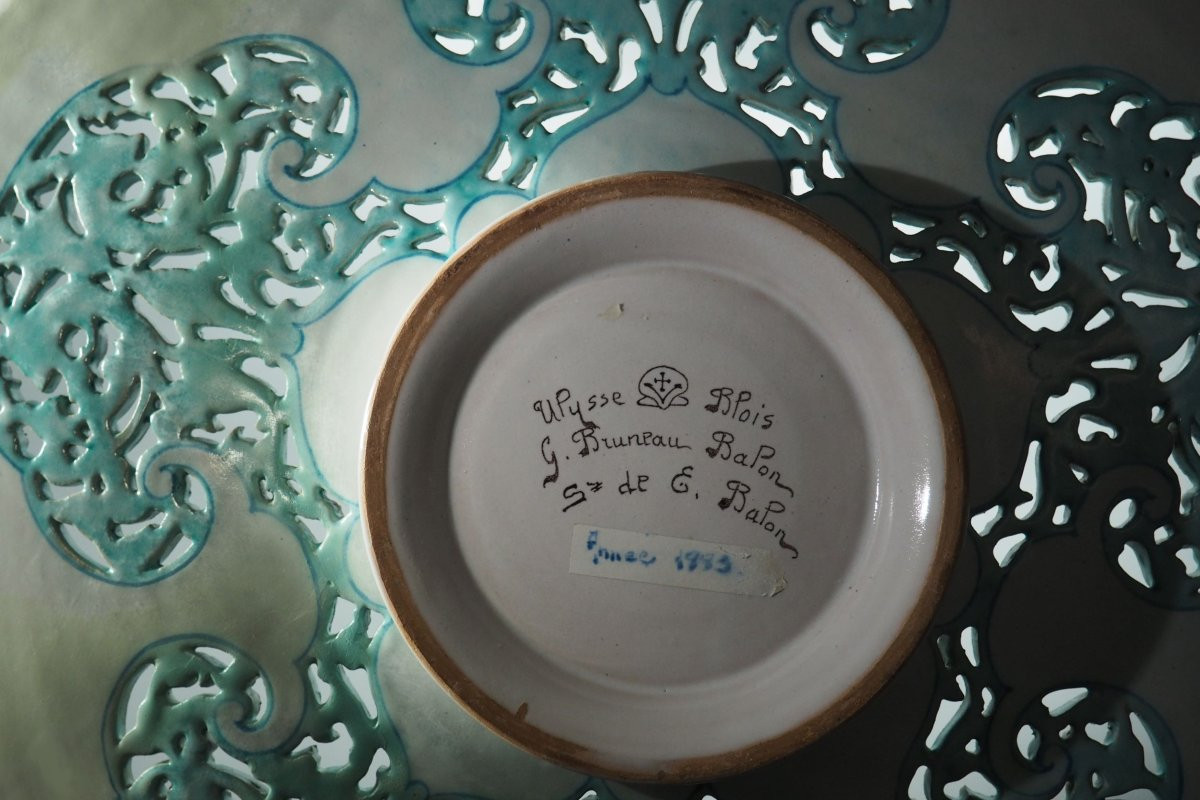
Inscriptions / marks on the reverse: “Ulisse” (with shell symbol), “Blois”, “G. Bruneau”, as well as the mention “Balon / Sr de E. Balon”.
France, first half of the 20th century.
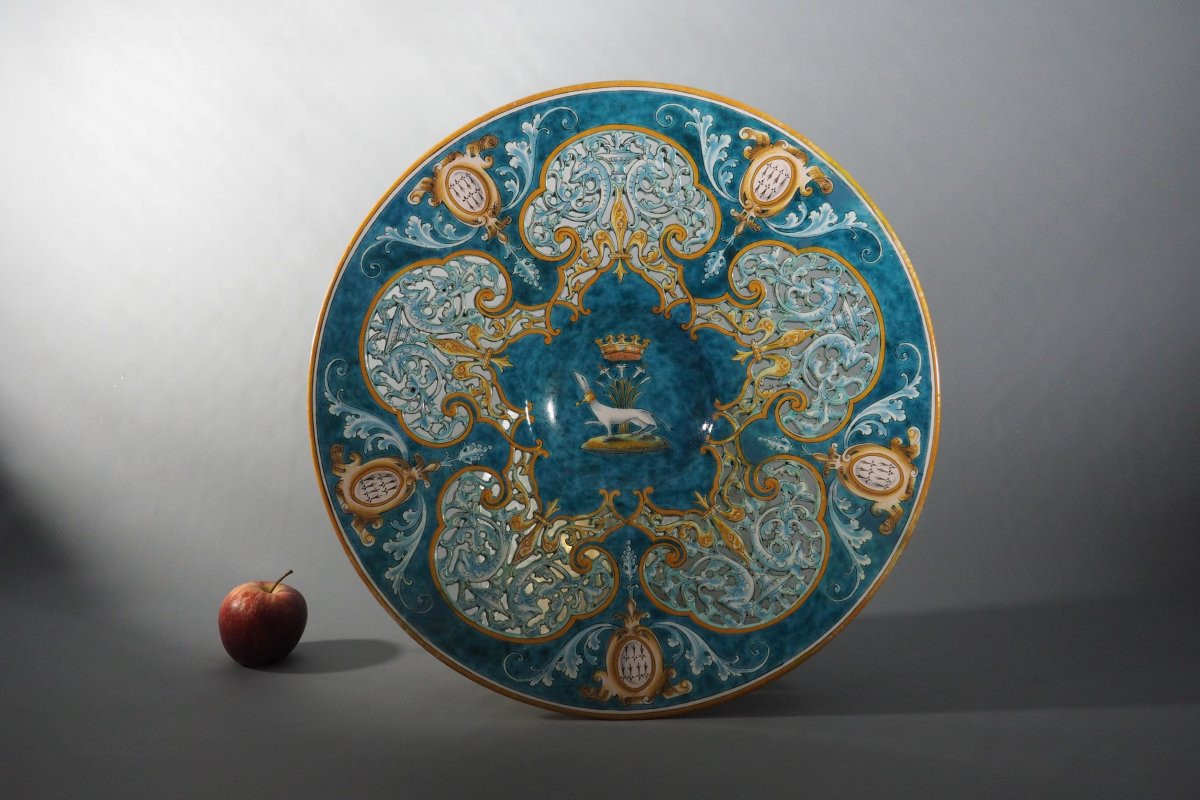
Diameter: 45 cm.
Weight: 2.3 kg.
Condition: excellent condition; minor technical firing irregularities.
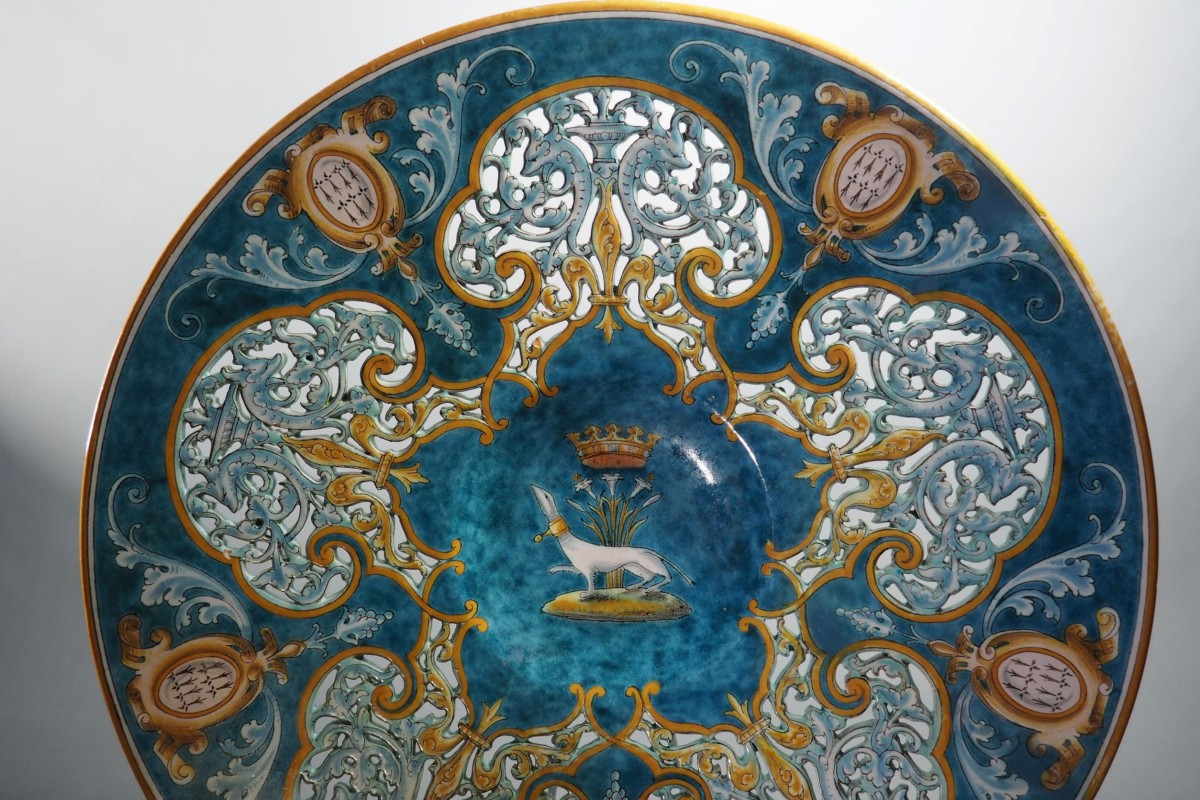
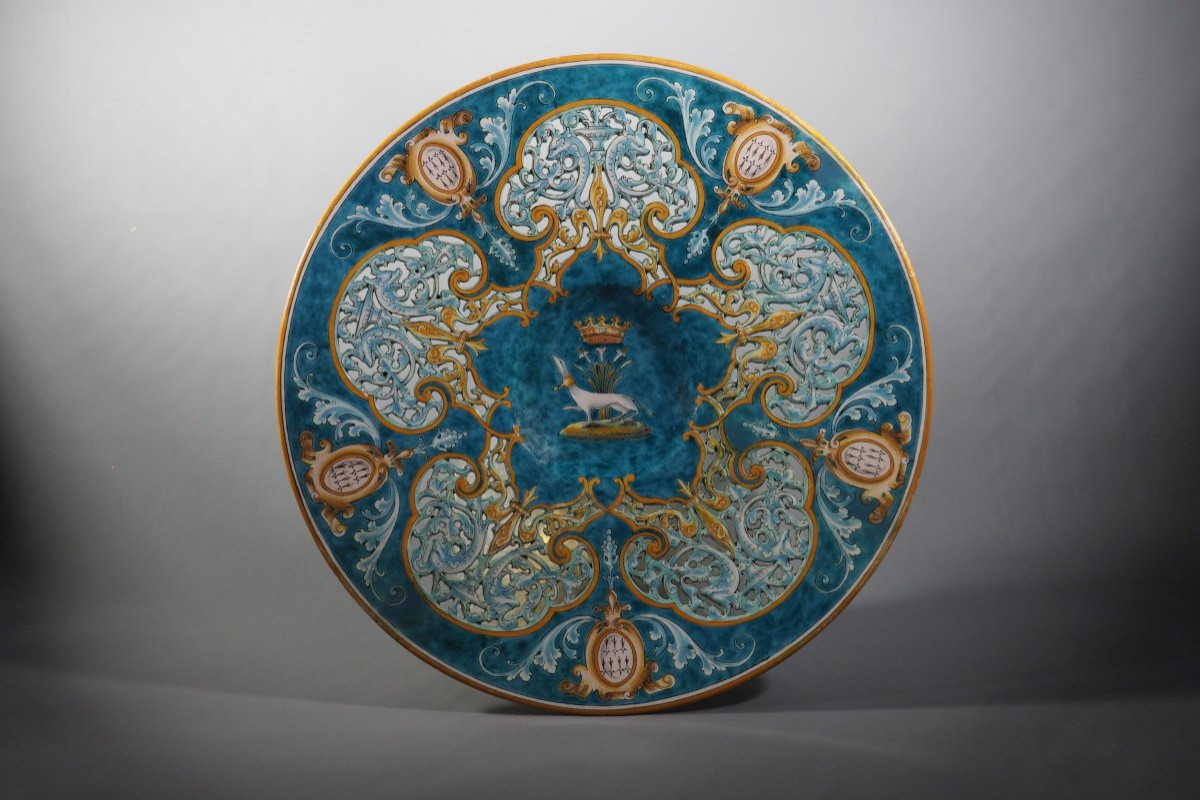
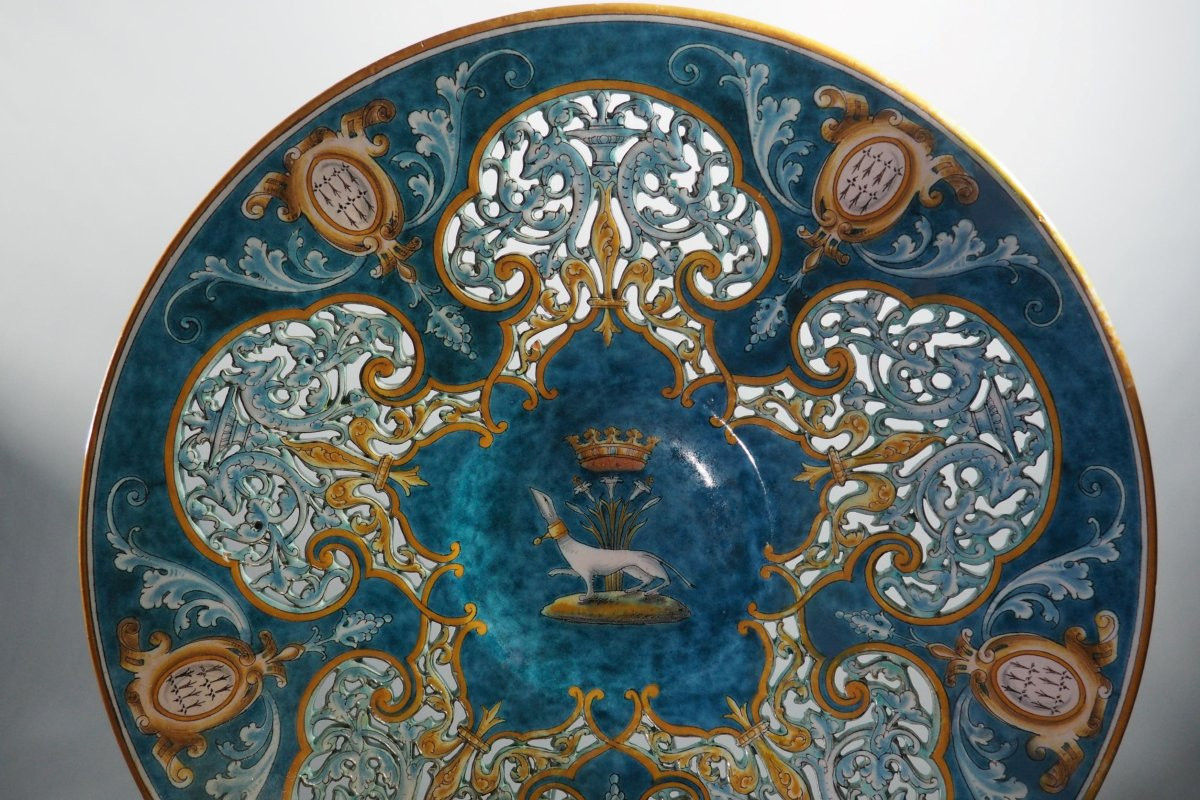
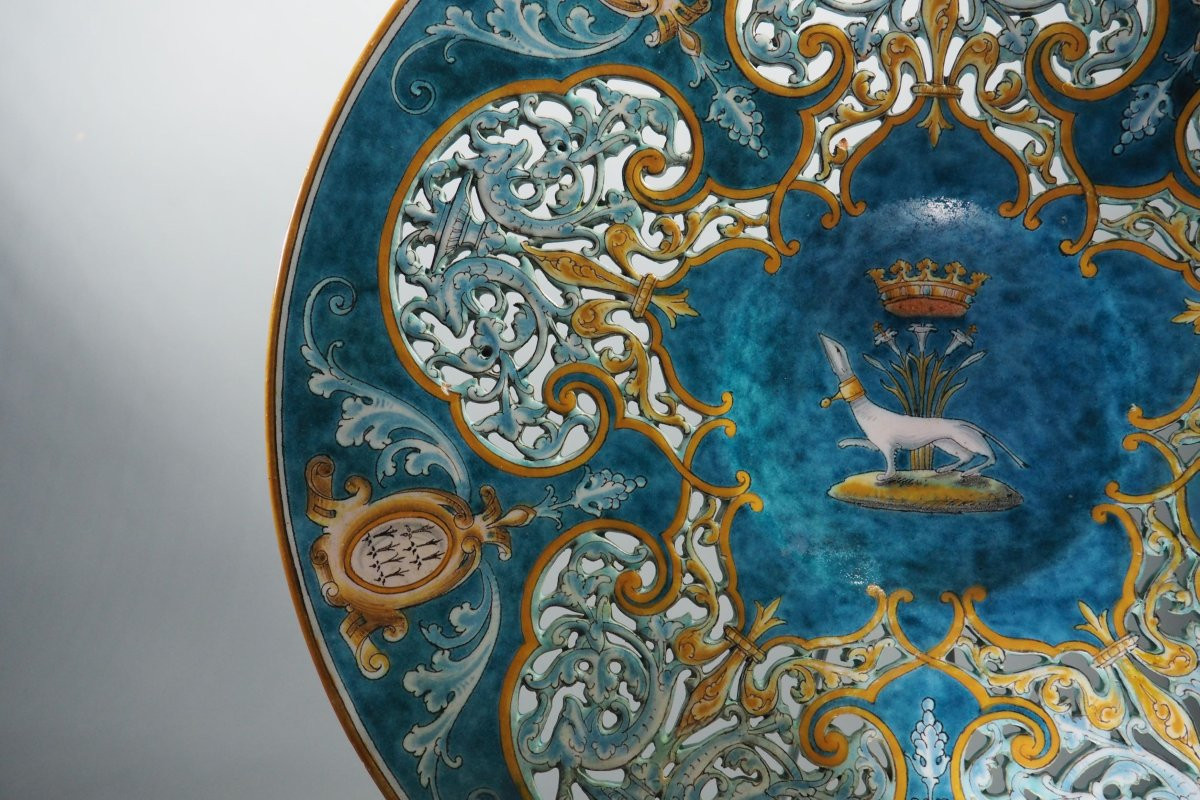
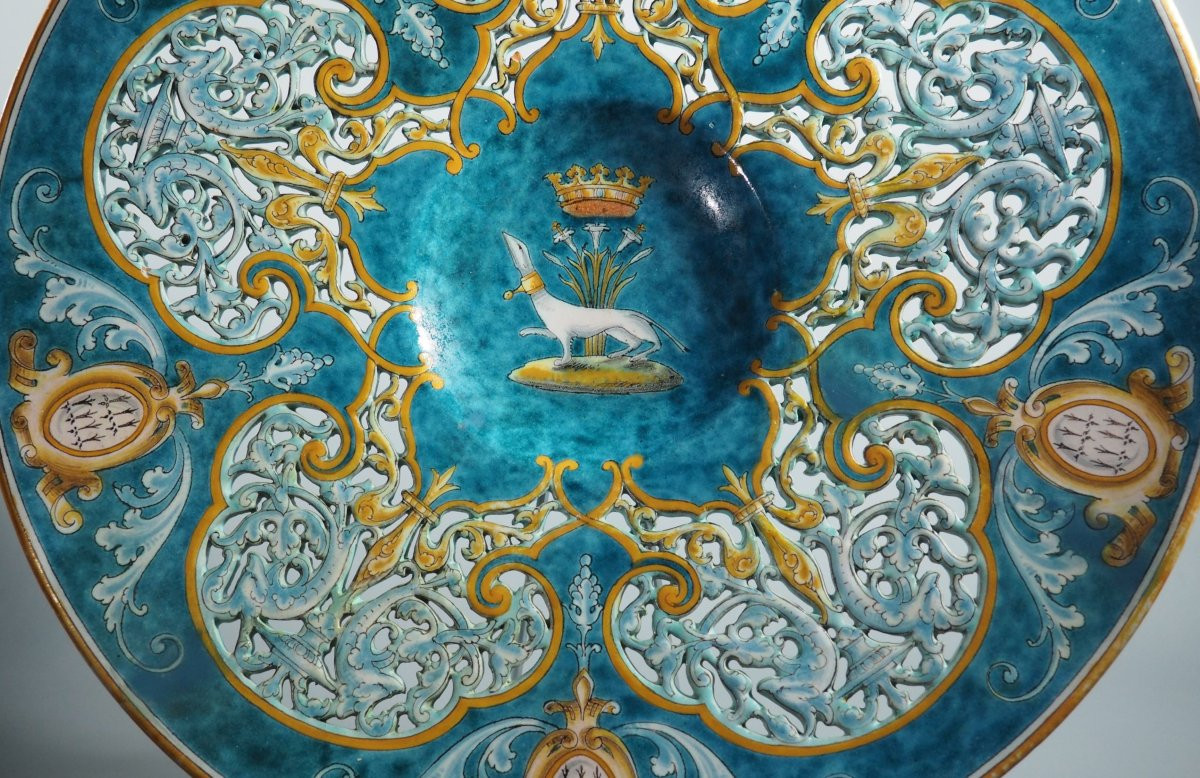
Large-format wall medallion executed in openwork faience with polychrome decoration and gilt highlights. The work belongs to the artistic tradition of Blois faience from the first half of the 20th century and was conceived for wall display as a decorative object of representative character.
The composition is based on the combination of a deep blue ground, an elaborate openwork decoration, and a clearly structured heraldic programme, giving the piece both strong decorative impact and symbolic coherence.
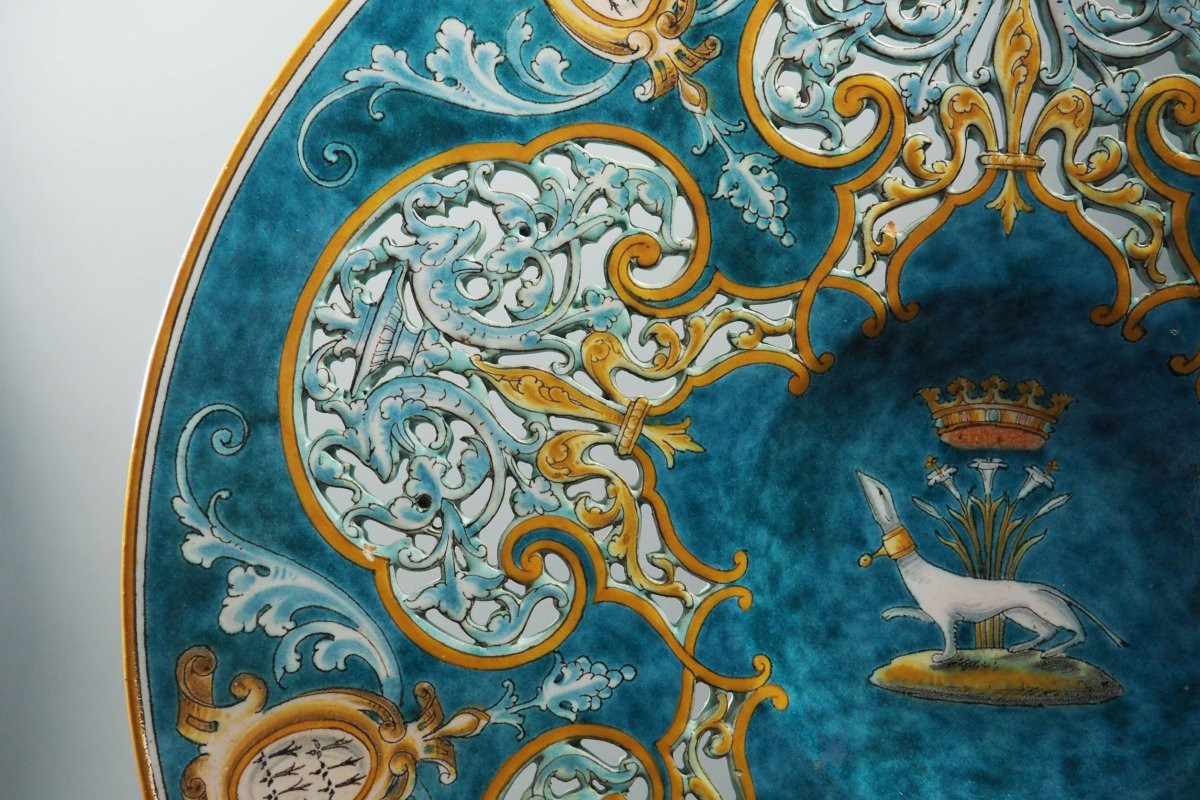
The medallion is circular in shape and distinguished by a richly developed openwork decoration running along the rim, creating an effect reminiscent of ceramic lace. The broad band is adorned with large cartouches featuring scrolls, foliage, and arabesques, executed in a Renaissance-inspired decorative language characteristic of artistic faience from Blois.
At the centre of the composition is a medallion depicting an ermine, shown beneath a crown and accompanied by stylised royal attributes. The animal is placed on a conventionally indicated ground and presented in a stable, calm posture, emphasising the emblematic nature of the image.
The oval medallions, regularly distributed around the perimeter, are decorated with ermine spots (mouchetures d’hermine), set within decorative cartouches and highlighted by fine painting.
ICONOGRAPHY AND SYMBOLISMThe central motif—the ermine—is one of the most recognisable heraldic symbols, traditionally associated with Brittany. In French and European symbolism, the ermine is linked to notions of purity, fidelity, and moral integrity, as well as to the idea of legitimate power and noble lineage.
The crown and royal attributes give the image a clearly asserted monarchical character and allow the subject to be interpreted as an allegorical evocation of the “royal ermine,” referring to the historical tradition associated with Brittany and the figure of Anne of Brittany.
The ermine spots depicted in the oval medallions correspond fully to the heraldic elements of the coat of arms of Brittany, traditionally represented as a field strewn with black ermine spots. The decorative programme thus follows a rigorous logic: the central image is complemented by the repetition of the symbol along the periphery, forming a coherent and unified heraldic ensemble.
MATERIALS AND TECHNIQUESFaience, polychromy, openwork decoration, gilt highlights.
The colour palette is based on a deep blue ground, nuanced with turquoise and green tones, enriched with ochre and gilded lines that emphasise the relief and structure of the ornament.
Minor surface irregularities are related to the firing process and are characteristic of works with complex openwork forms.
MANUFACTURE AND MARKINGSThe reverse bears handwritten inscriptions and marks including the mention “Ulisse,” a shell symbol, the indication “Blois,” the name “G. Bruneau,” as well as the mention “Balon,” attesting to the workshop context and artistic connections within the community of Blois faience makers.
Taken together, these elements allow the work to be attributed to the workshop of Gaston Bruneau (1881–1965), one of the leading representatives of artistic faience in Blois during the 20th century.
DATING AND HISTORICAL CONTEXTThe work is dated to the period after 1929 and belongs to the first half of the 20th century, a time marked by a strong interest in historical styles and symbolic subjects within the decorative arts.
Wall medallions of this type were conceived as elements of interior decoration and occupied an intermediate position between artistic ceramics and decorative sculpture.
CONDITIONExcellent condition (faience intact, polychromy and openwork decoration perfectly preserved).
COLLECTOR’S VALUEThis wall medallion constitutes a representative and high-quality example of artistic faience from Blois in the first half of the 20th century. Its value is based on the combination of a substantial format, a complex openwork technique, clearly legible heraldic iconography, and a secure attribution.
The piece is of particular interest for collections devoted to Blois faience, to historicist decorative arts, as well as for interiors sensitive to French history and heraldic tradition.
Ref:4980
Explore similar pieces and discover your ideal find:
Faience Vases and Decorative Objects