Antonio Zanchi (1631-1722) Socrates Teaches Young People Self-knowledge
Antonio Zanchi
(Este 1631- Venezia 1722)
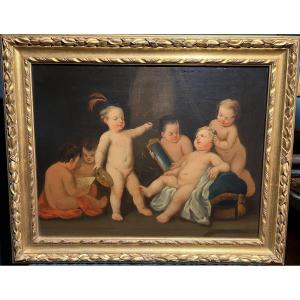
Socrates teaches young people self-knowledge
Oil on canvas
cm 107x87
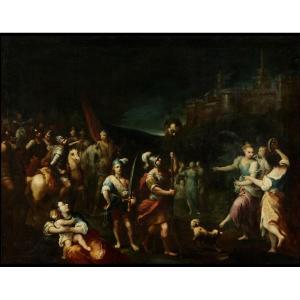
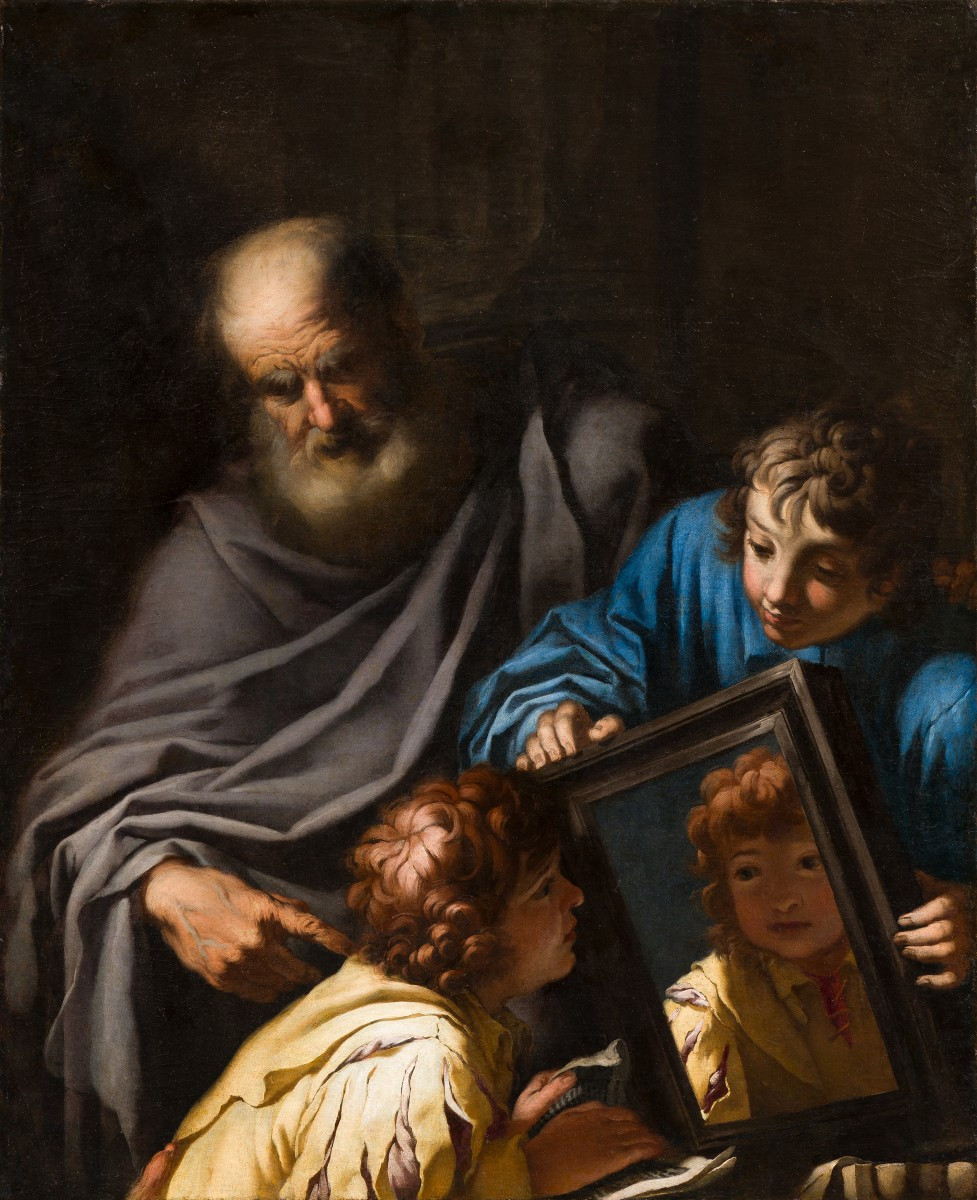
Painting with a valuable carved wooden frameAntonio Zanchi, born in Este, was one of the leading figures in Venetian painting in the second half of the 17th century. He is traditionally considered one of the “tenebrosi veneziani”, i.e. those painters who, following in the footsteps of Caravaggio, developed a style based on sharp contrasts between light and shadow and pronounced naturalism. Having moved to Venice at a very young age, Zanchi trained at the school of Francesco Ruschi, a Roman painter working in the lagoon. His work, documented by a large body of altarpieces and major decorative cycles for Venetian churches such as Santa Maria del Giglio, was accompanied by commissions for private clients, which frequently featured philosophical and moral subjects. The iconography refers to Socrates teaching young people self-knowledge, a theme that enjoyed limited but significant success in the Veneto region between the 17th and early 18th centuries, as evidenced by similar versions in the collections of the Castello Sforzesco and in the circle of Pietro della Vecchia, where the figure of the philosopher invites young people to look at themselves in a mirror to begin an exercise in introspection.
From a stylistic point of view, the work belongs to Zanchi's mature period, between the eighth and ninth decades of the 17th century, when the painter developed a fully personal style, characterised by intense light that decisively shapes the forms and by vivid colours in reds, yellows and blues.
(Este 1631- Venezia 1722)
Socrates teaches young people self-knowledge
Oil on canvas
cm 107x87
Painting with a valuable carved wooden frameAntonio Zanchi, born in Este, was one of the leading figures in Venetian painting in the second half of the 17th century. He is traditionally considered one of the “tenebrosi veneziani”, i.e. those painters who, following in the footsteps of Caravaggio, developed a style based on sharp contrasts between light and shadow and pronounced naturalism. Having moved to Venice at a very young age, Zanchi trained at the school of Francesco Ruschi, a Roman painter working in the lagoon. His work, documented by a large body of altarpieces and major decorative cycles for Venetian churches such as Santa Maria del Giglio, was accompanied by commissions for private clients, which frequently featured philosophical and moral subjects. The iconography refers to Socrates teaching young people self-knowledge, a theme that enjoyed limited but significant success in the Veneto region between the 17th and early 18th centuries, as evidenced by similar versions in the collections of the Castello Sforzesco and in the circle of Pietro della Vecchia, where the figure of the philosopher invites young people to look at themselves in a mirror to begin an exercise in introspection.
From a stylistic point of view, the work belongs to Zanchi's mature period, between the eighth and ninth decades of the 17th century, when the painter developed a fully personal style, characterised by intense light that decisively shapes the forms and by vivid colours in reds, yellows and blues.
42 000 €
Period: 17th century
Style: Louis 14th, Regency
Condition: Excellent condition
Width: 87
Height: 107
Reference (ID): 1709289
Availability: In stock
Print