THIS OBJECT WAS SOLD
Vietnam, 10th-12th Century, Ancient Kingdom Of Champa, Large Antefix Decorated With A Dvarapala, Sandstone

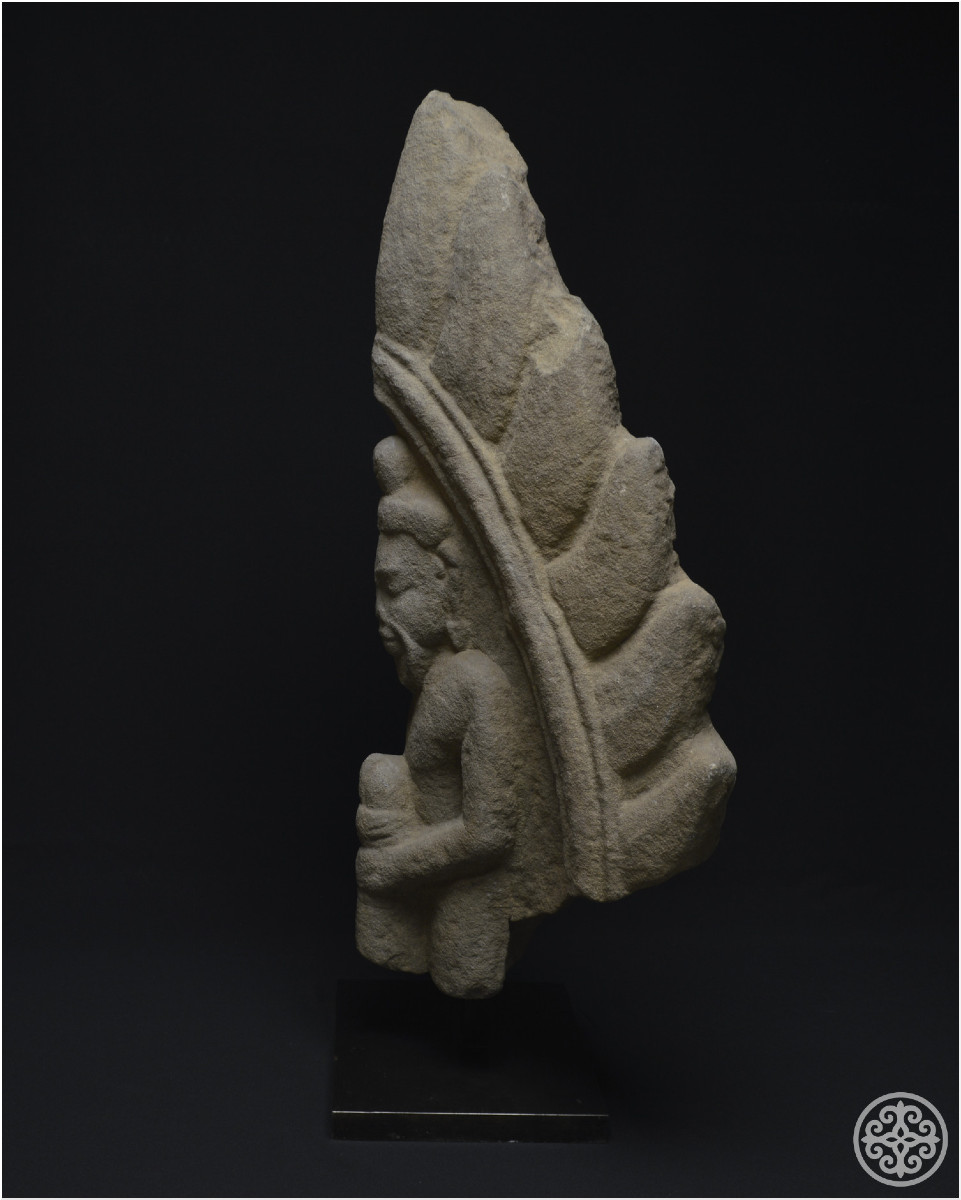
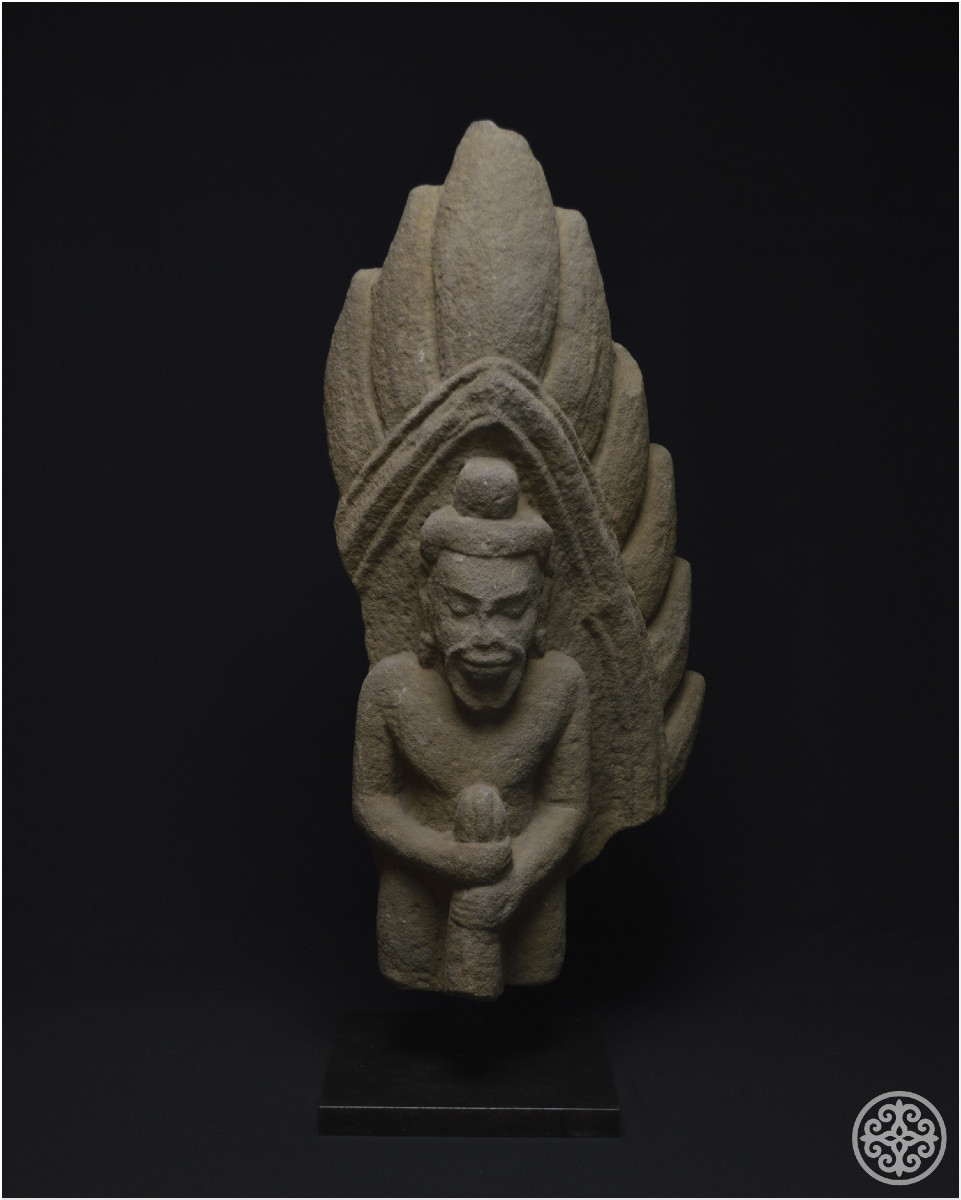


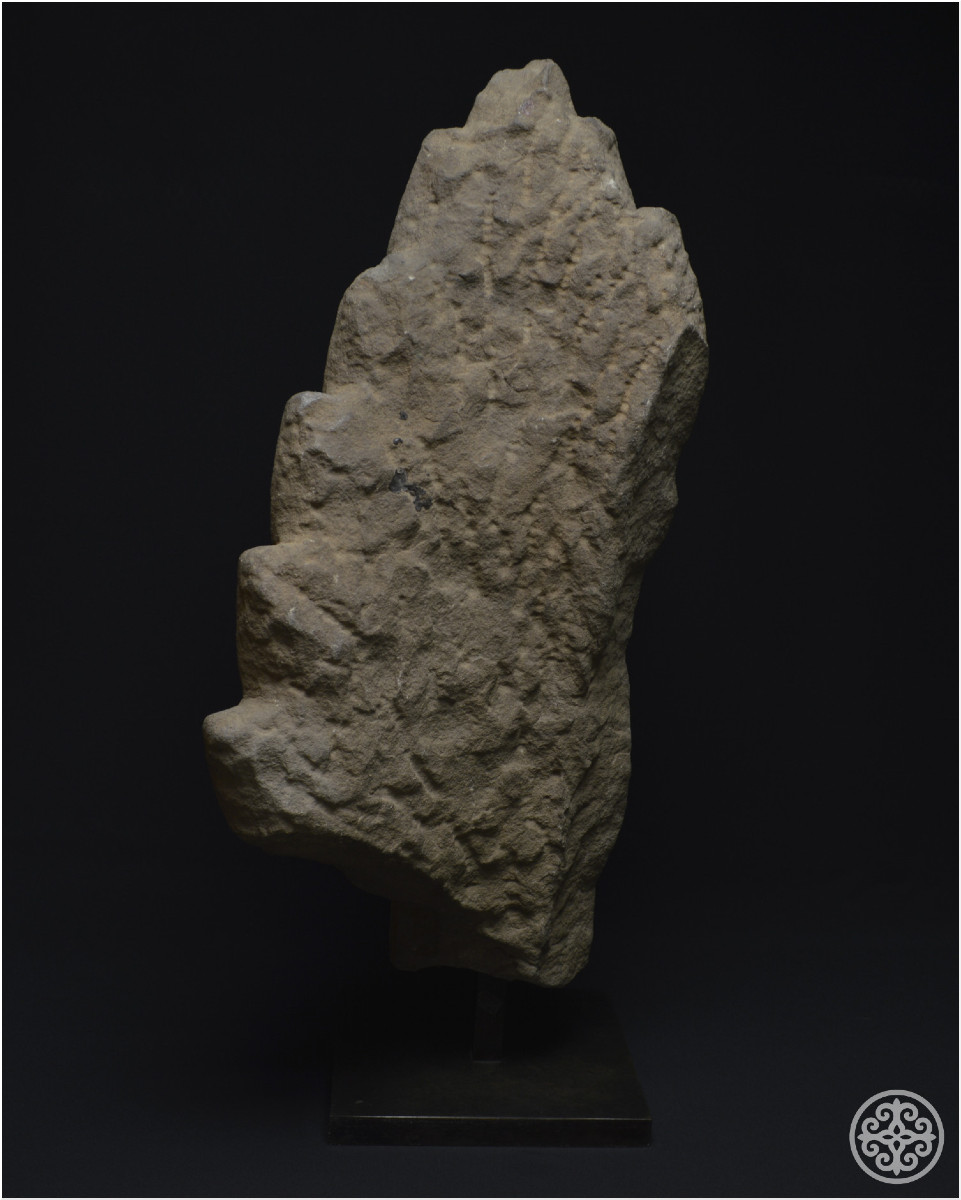
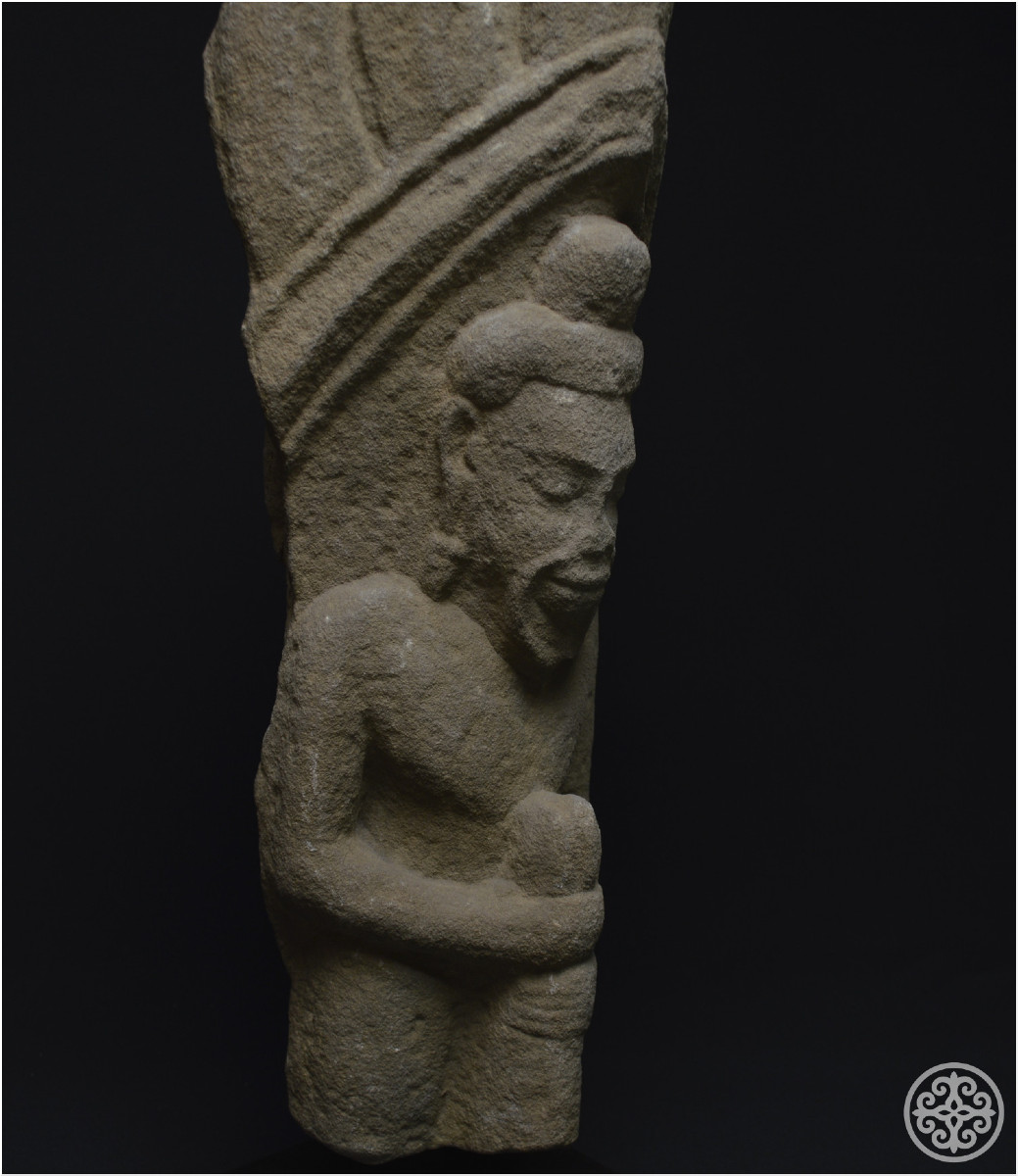

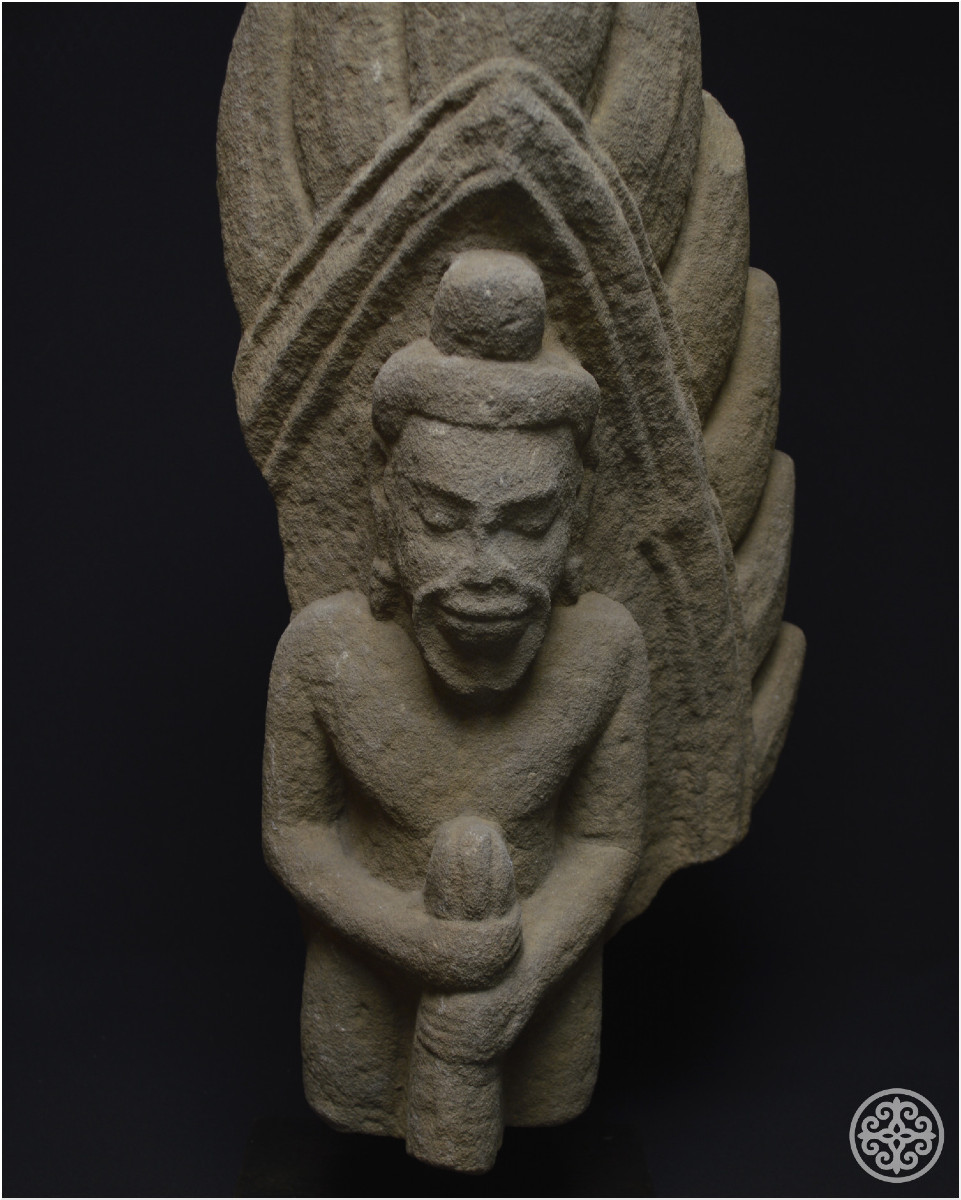
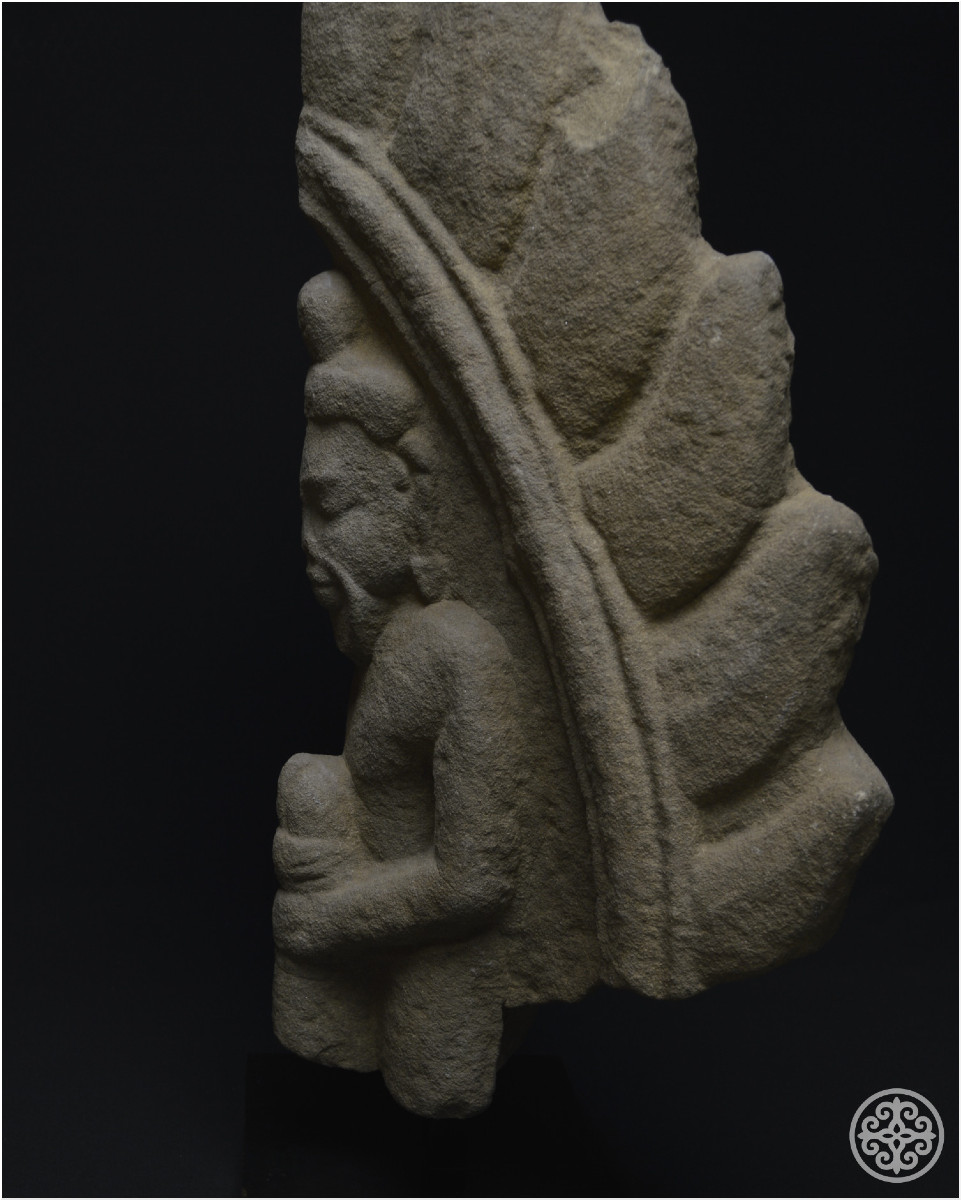
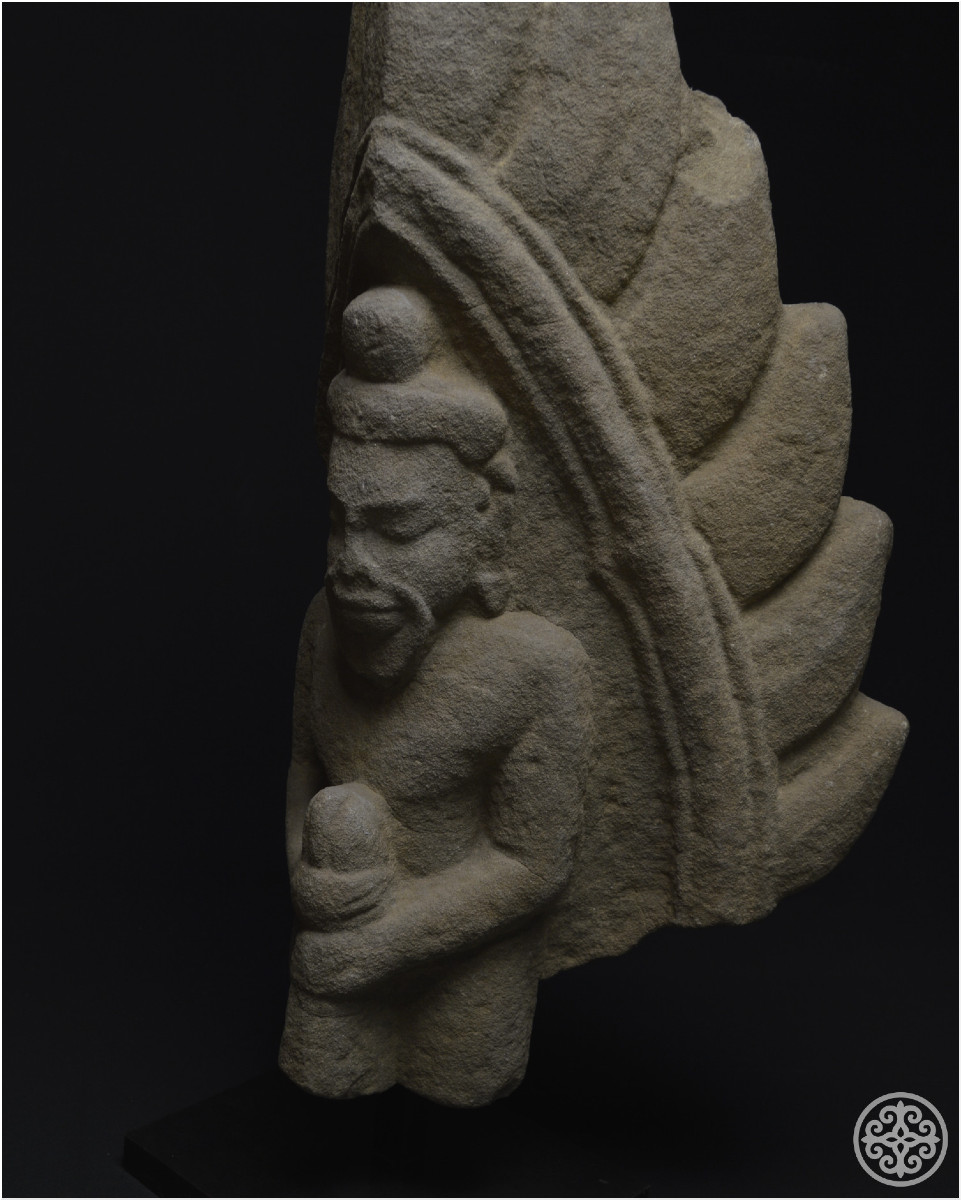



Important and rare sandstone antefix depicting a temple guardian
Central Vietnam
Ancient Kingdom of Champa
10th-12th century
The figure represents a dvarapala (temple guardian), leaning against a mandorla from which stylized flames emerge. Depicted in a hieratic posture, he has his arms pressed against his body, his hands placed at his abdomen, grasping a mace.
The face, imbued with great self-assurance, is characterized by fine brow ridges meeting at the base of the nose and closed eyes framing a broad nose. The mouth has thick lips surrounded by a beard, the ears have distended lobes adorned with earrings, and the hair is gathered into a high bun.
The Kingdom of Champa, which developed from the 2nd century onwards on the central and southern coasts of present-day Vietnam, flourished thanks to maritime trade and cultural exchanges with India and Southeast Asia. These contacts profoundly influenced Vietnamese art, particularly Hinduism, which inspired the construction of brick temples dedicated primarily to Shiva, as well as rich sculpture depicting deities, sacred symbols, and mythological scenes, as evidenced by the My Son site. From the 9th to 10th centuries, close, sometimes conflictual, relations with the Khmer Empire introduced new artistic forms: more monumental sculpture, stylized faces, and more ordered architecture.
Sandstone architectural elements of this type are a recurring feature of Hindu temples built by the Cham kingdoms of central and southern Vietnam. The temples are generally single-cella shrines, surmounted by a tower that rises and tapers. They are built of baked bricks, with doorposts, tympana, and, a typically Cham innovation, antefixes like this one, projecting from the tower.
For a type relatively close to ours, see the illustration of a dvarapala at the Wat Mahachai Museum.
Beige sandstone
Surface wear and visible losses
60.5 x 30.5 cm excluding base
Private collection
Contact us: culturesetcivilisations@orange.fr
Explore similar pieces and discover your ideal find:
Marble & Stone Sculptures