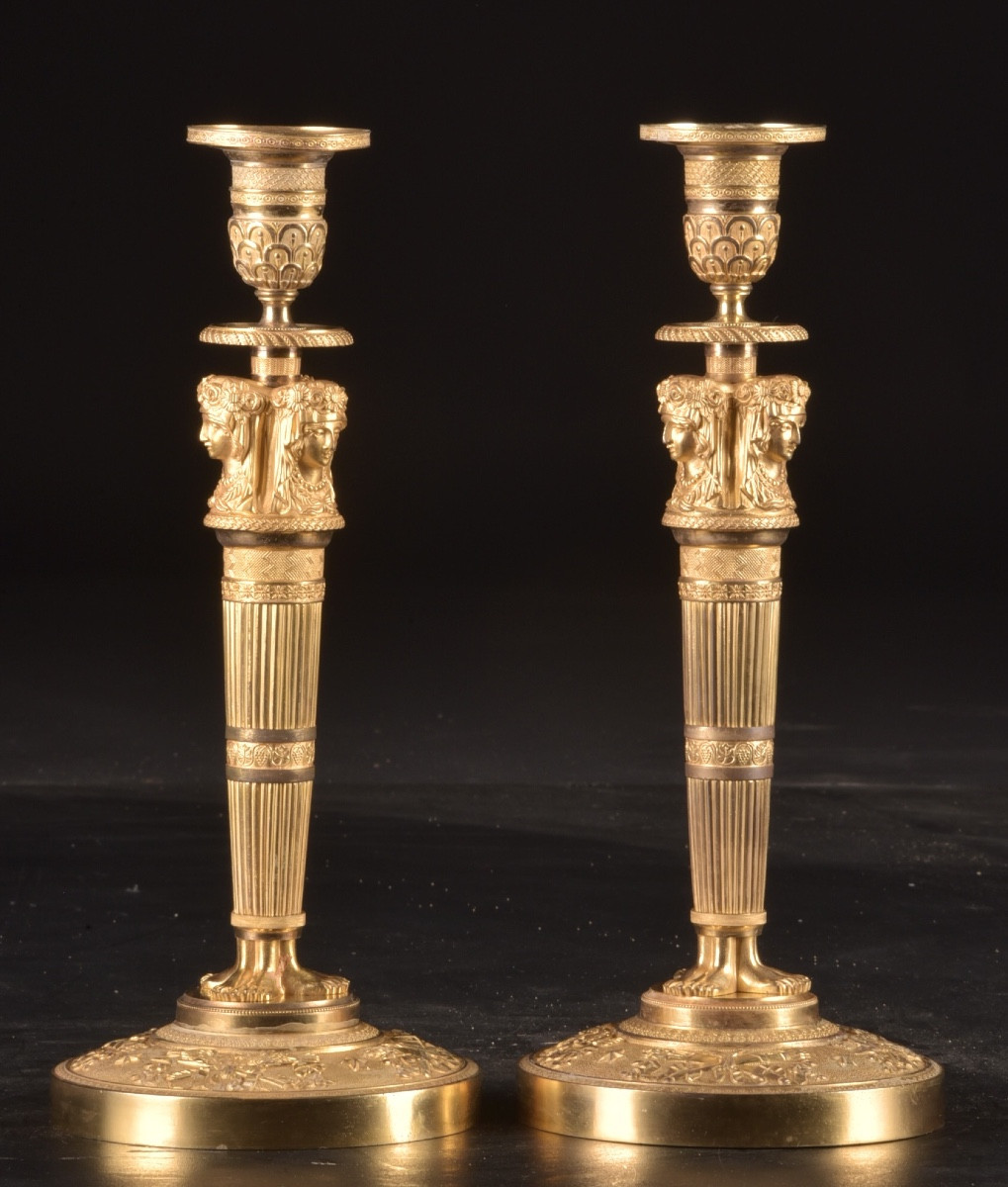
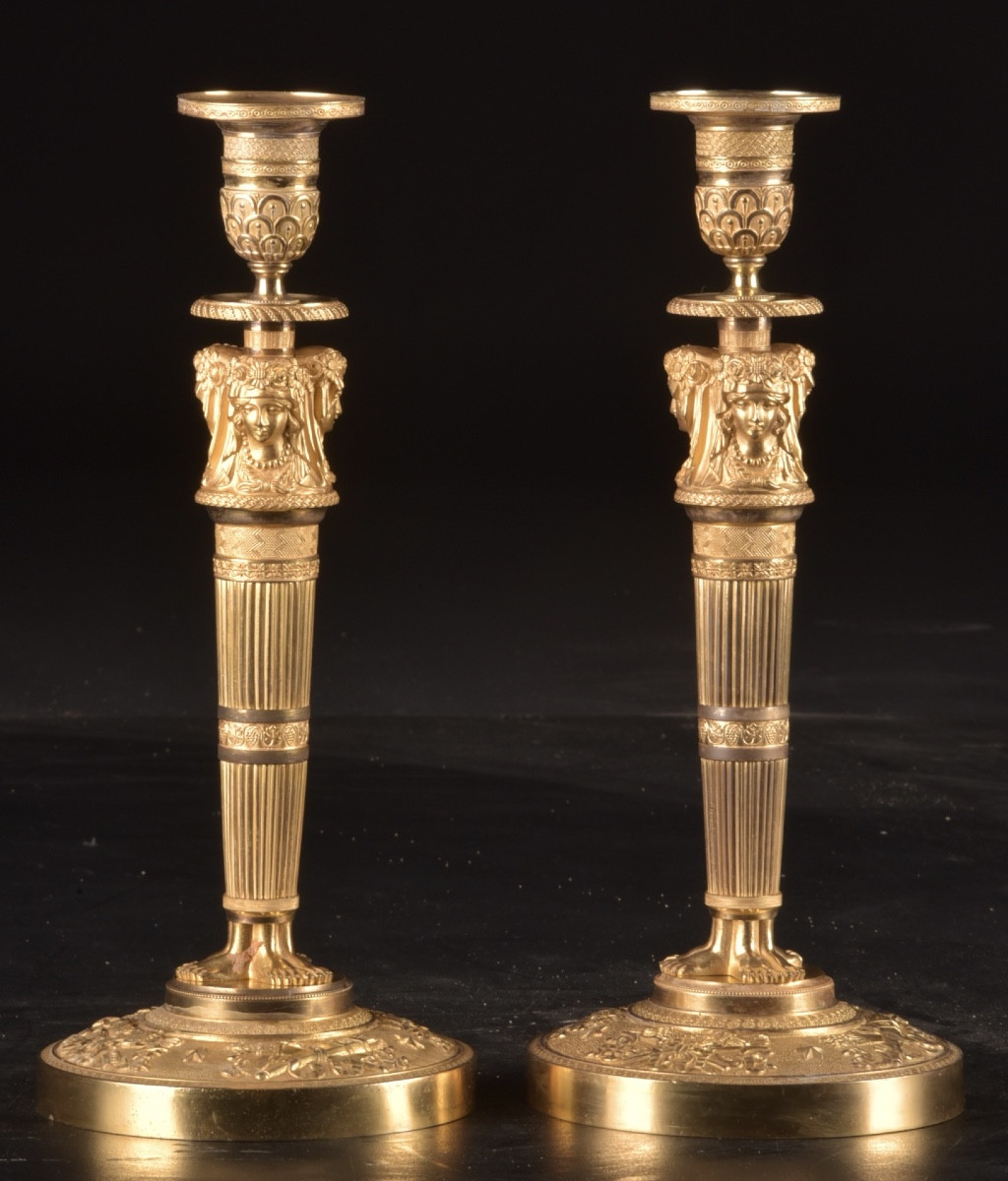




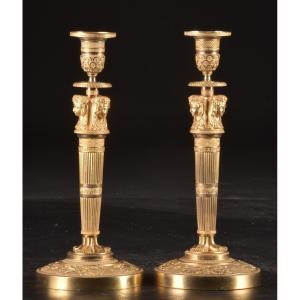


"A Pair Of Empire Candlesticks In Chased And Gilded Bronze, Attributed To Claude Galle, Paris"
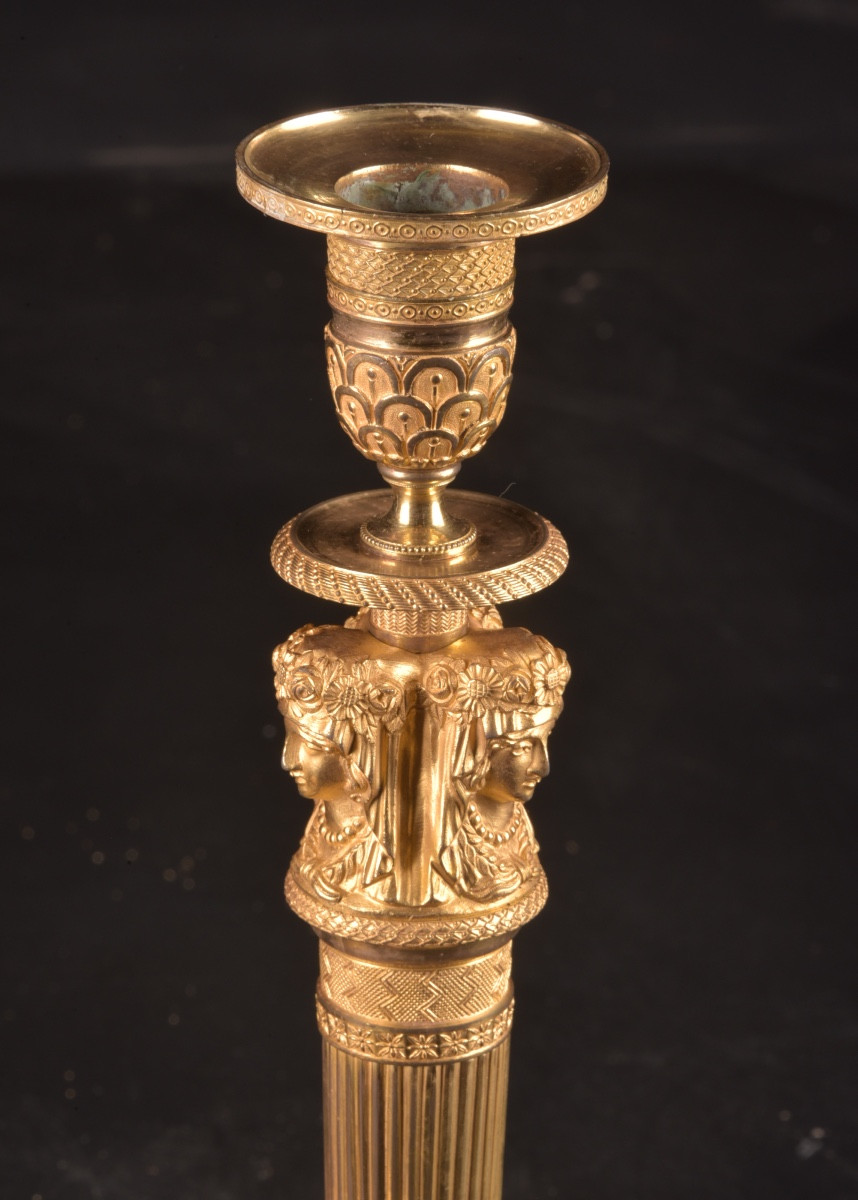
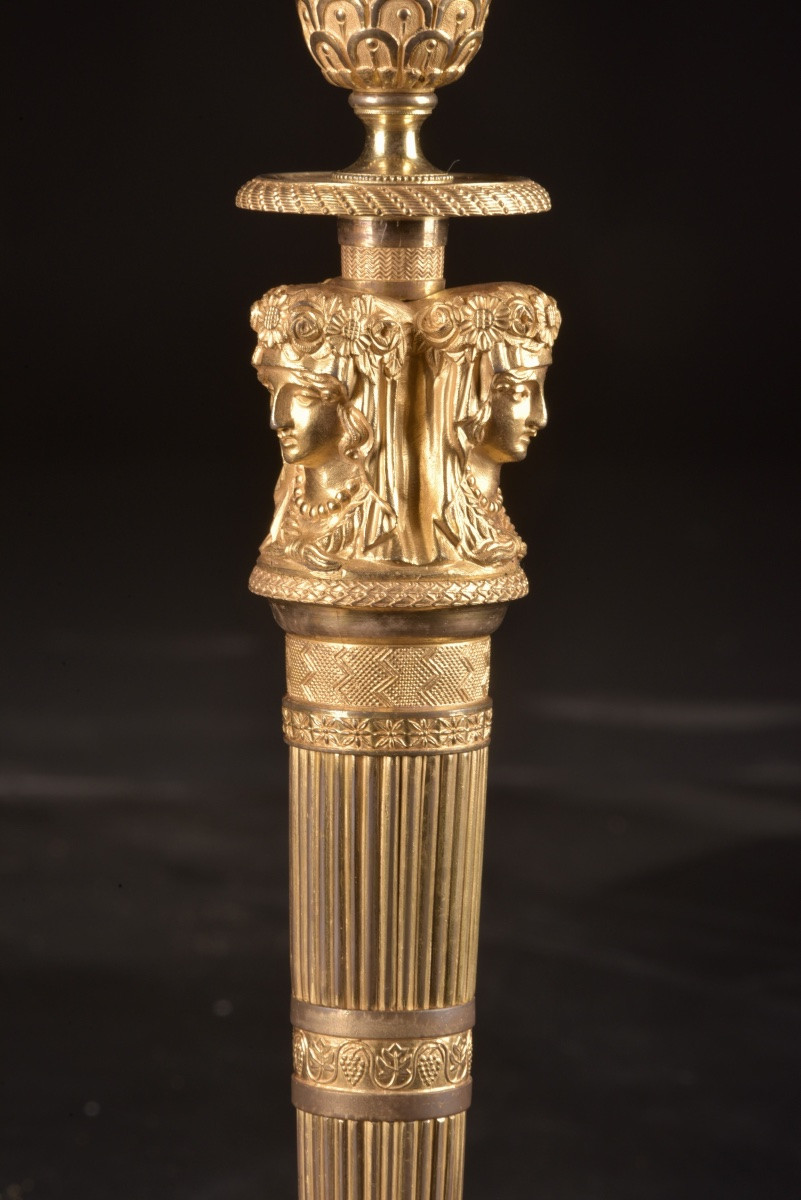
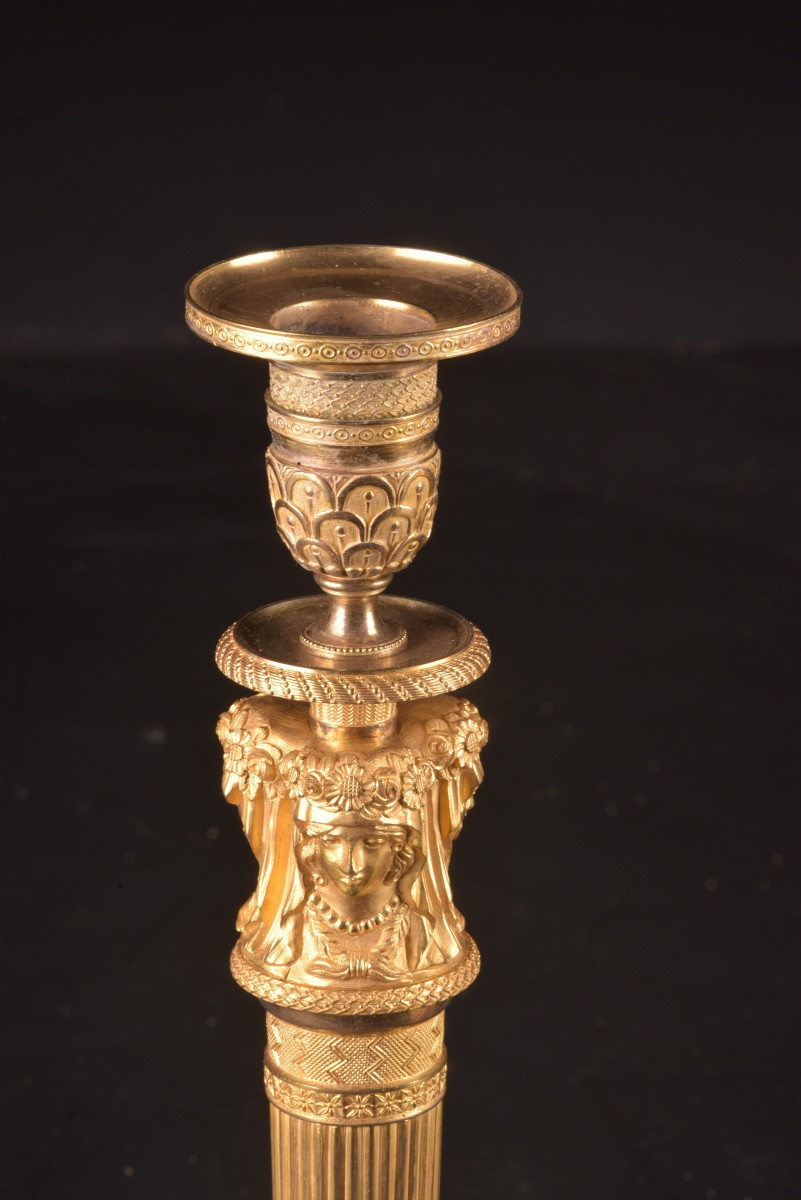
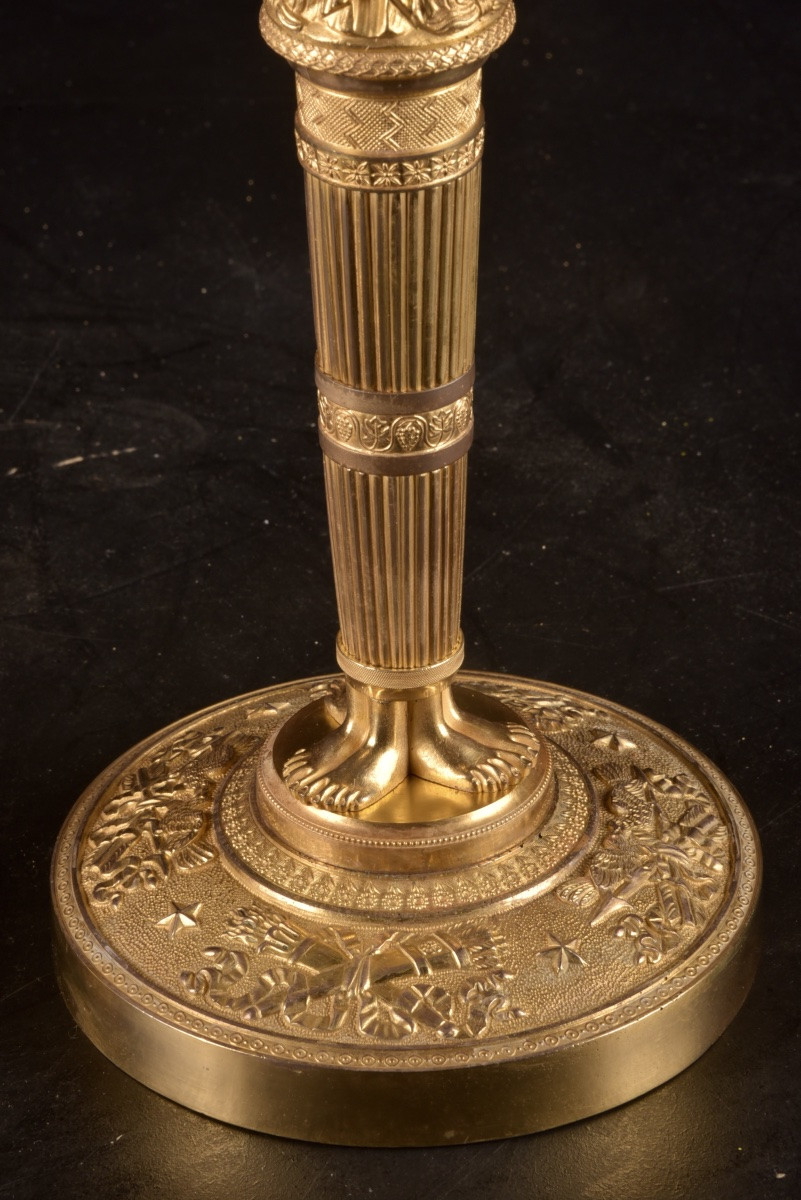
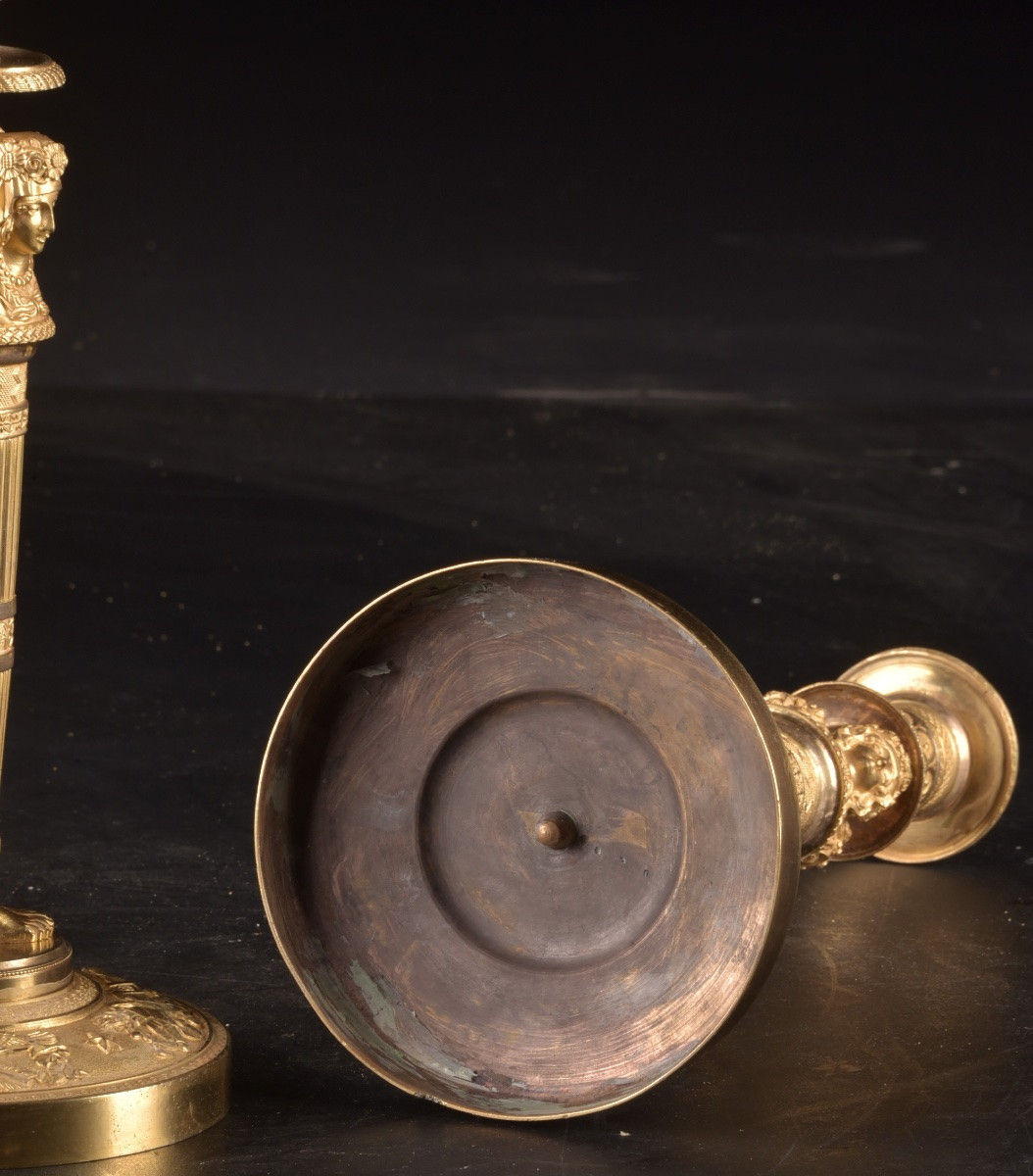
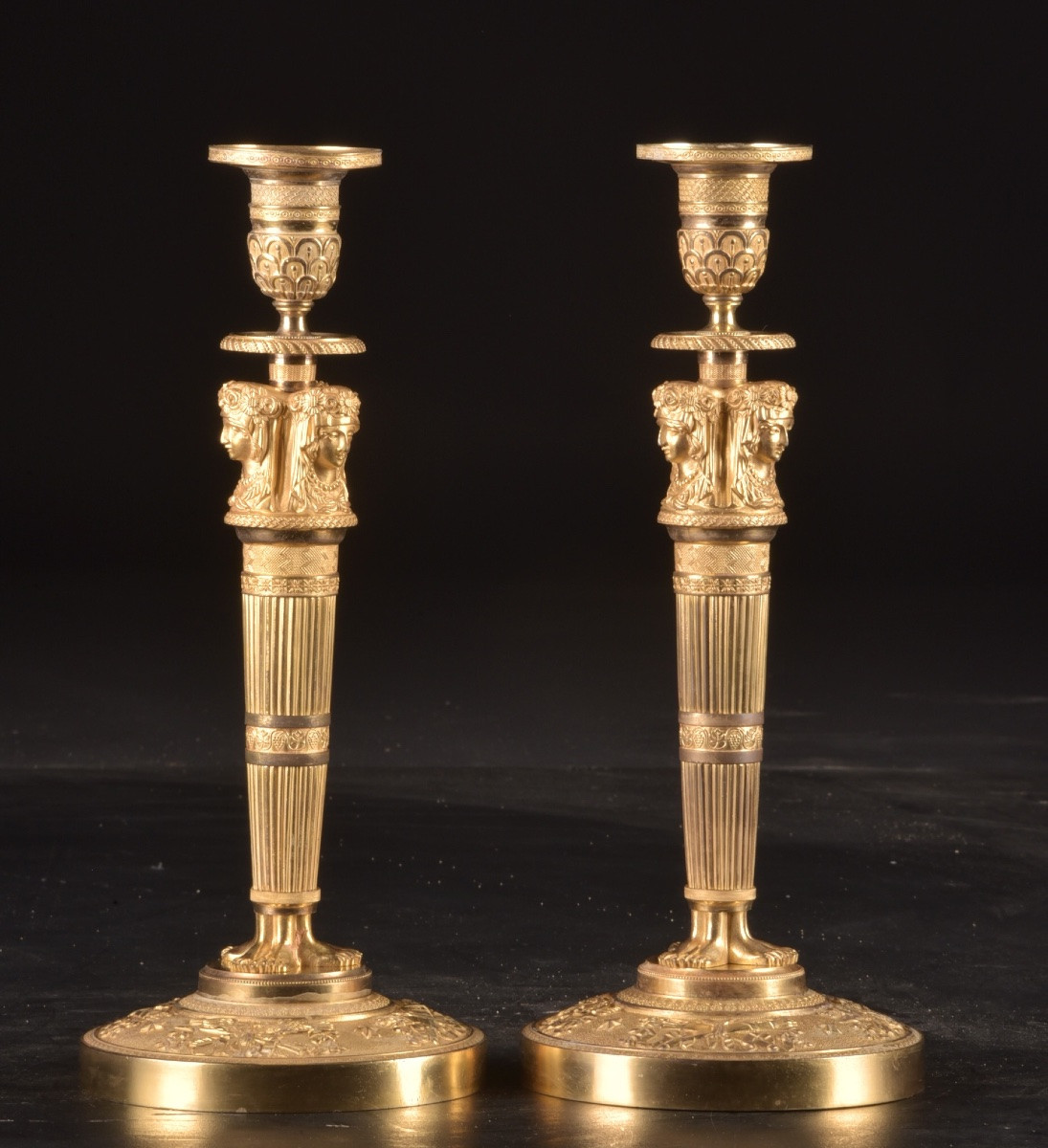
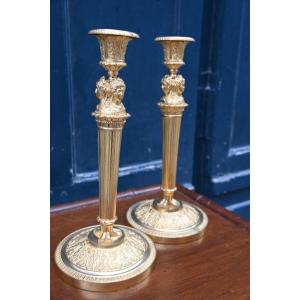
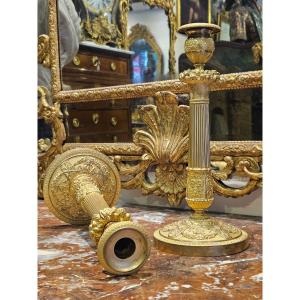
This elegant pair of Empire-style candlesticks is crafted from finely chased and fire-gilded bronze. Based on stylistic criteria, it can be attributed to the workshop of Claude Galle, one of the leading Parisian bronze casters of the early 19th century. Each candlestick is surmounted by a baluster-shaped drip pan with a tray, resting on a slender, fluted stem. The central section is adorned with three finely sculpted, high-relief female caryatids inspired by antiquity, wearing foliate headdresses and pearl necklaces. The stem terminates in three pairs of stylized human feet, resting on a flared circular base decorated with a frieze of rigid leaves. The balance between sculptural richness and architectural rigor is characteristic of high-quality Parisian bronzes of this period. Comparable examples are extensively documented in specialist literature. Hans Ottomeyer and Peter Pröschel published, in Vergoldete Bronzen (1986, p. 326, pl. 5.1.6 and 5.1.7), related candlesticks, including one decorated with three Egyptian female herms dating from around 1810, as well as a very similar candlestick design featuring female busts of classical caryatids, a fluted stem, and three pairs of human feet. The latter is reproduced from a plate in a trade catalogue from around 1810, now in the collection of the Musée des Arts Décoratifs in Paris. Candlesticks of this type, drawing both on the heritage of ancient Rome and on the contemporary fascination with archaeology, enjoyed great success in Paris during the first decade of the 19th century and remain emblematic of the refined decorative arts of the Empire period. Height: 33 cm each. 













 Le Magazine de PROANTIC
 TRÉSORS Magazine
 Rivista Artiquariato