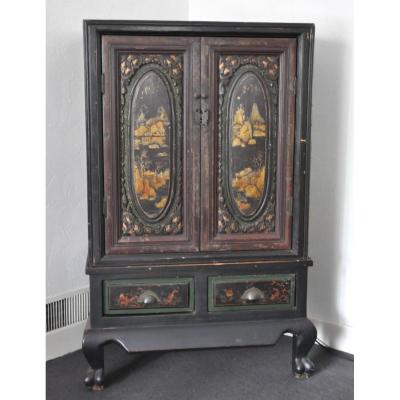
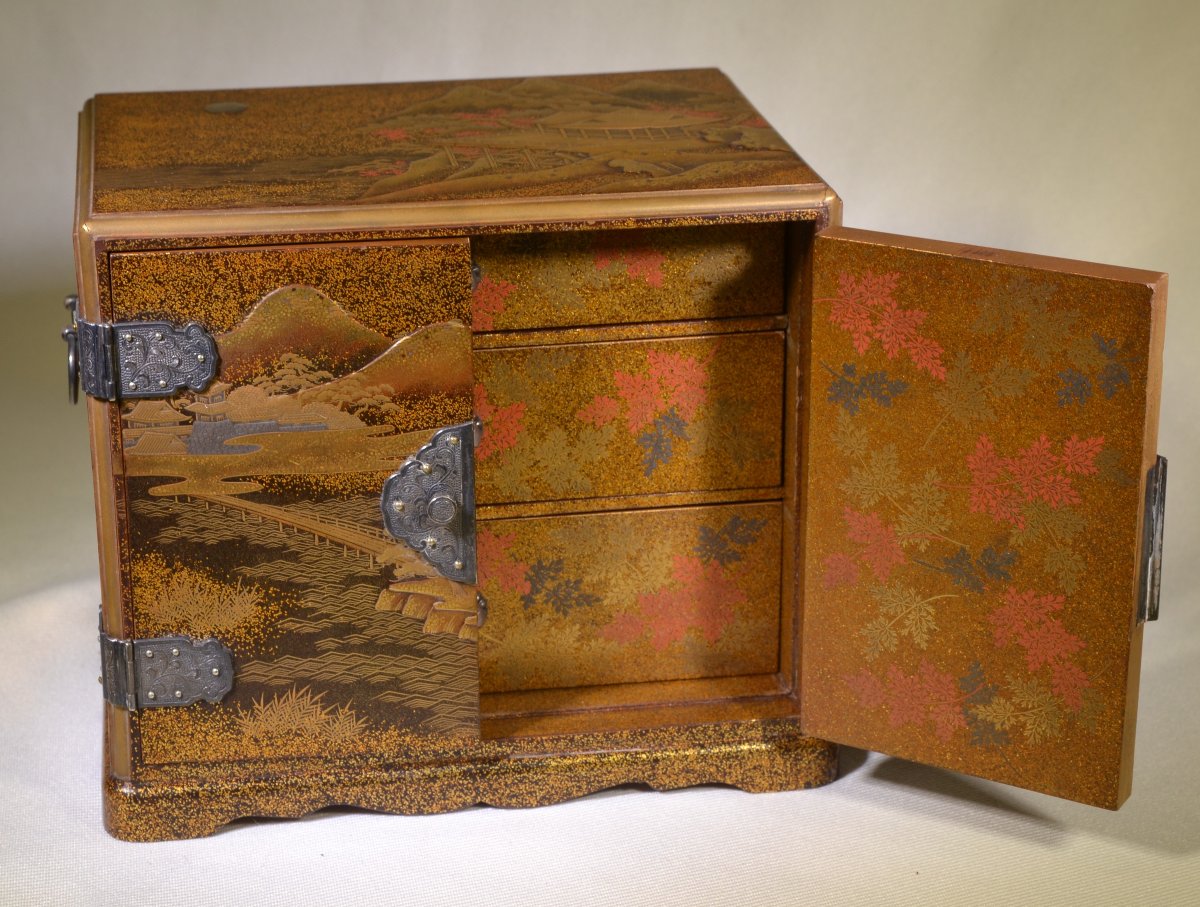
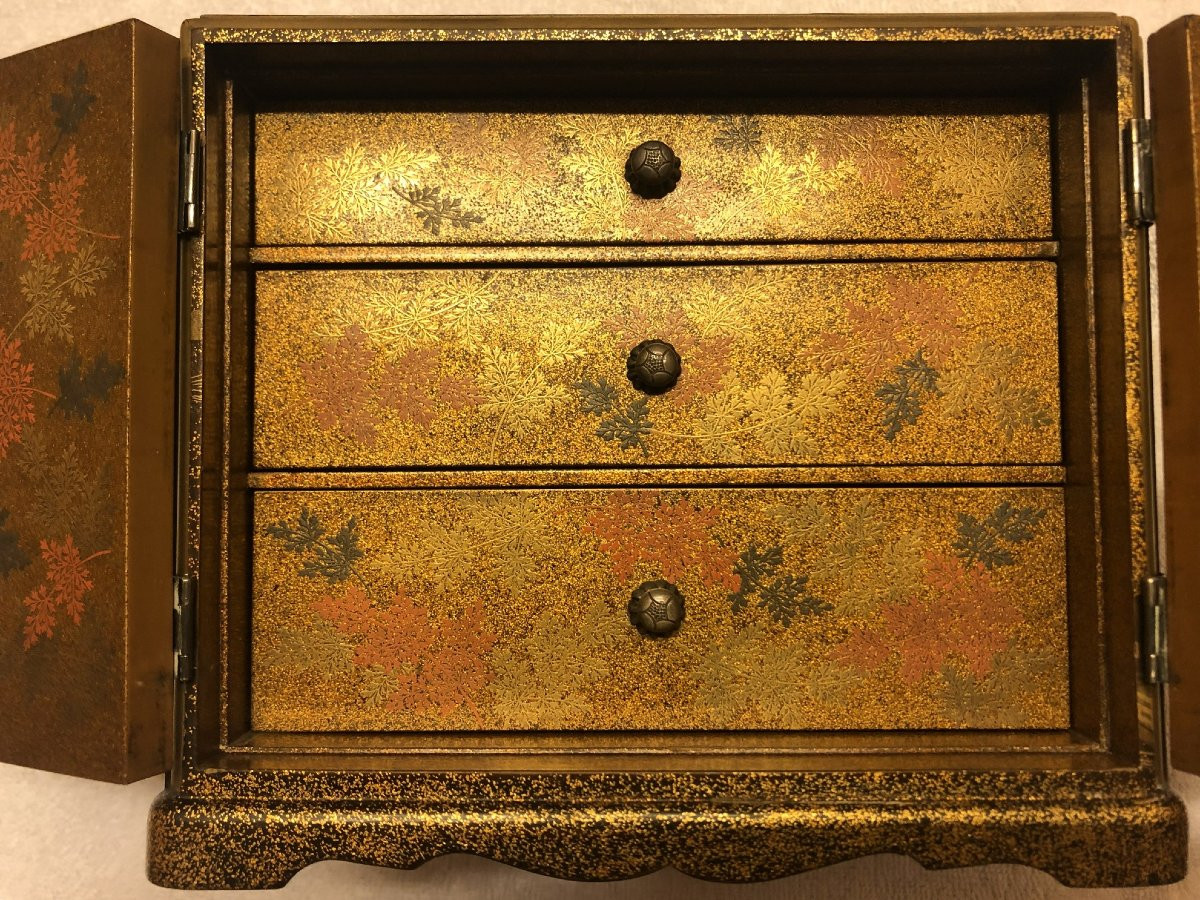
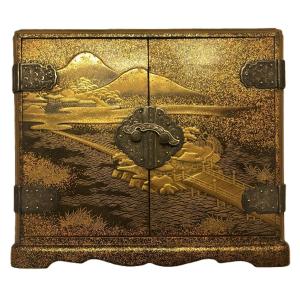


Japanese Gold Lacquer Cabinet (kodansu). Japan, Edo Period. 18th Century.
Artist: Edo
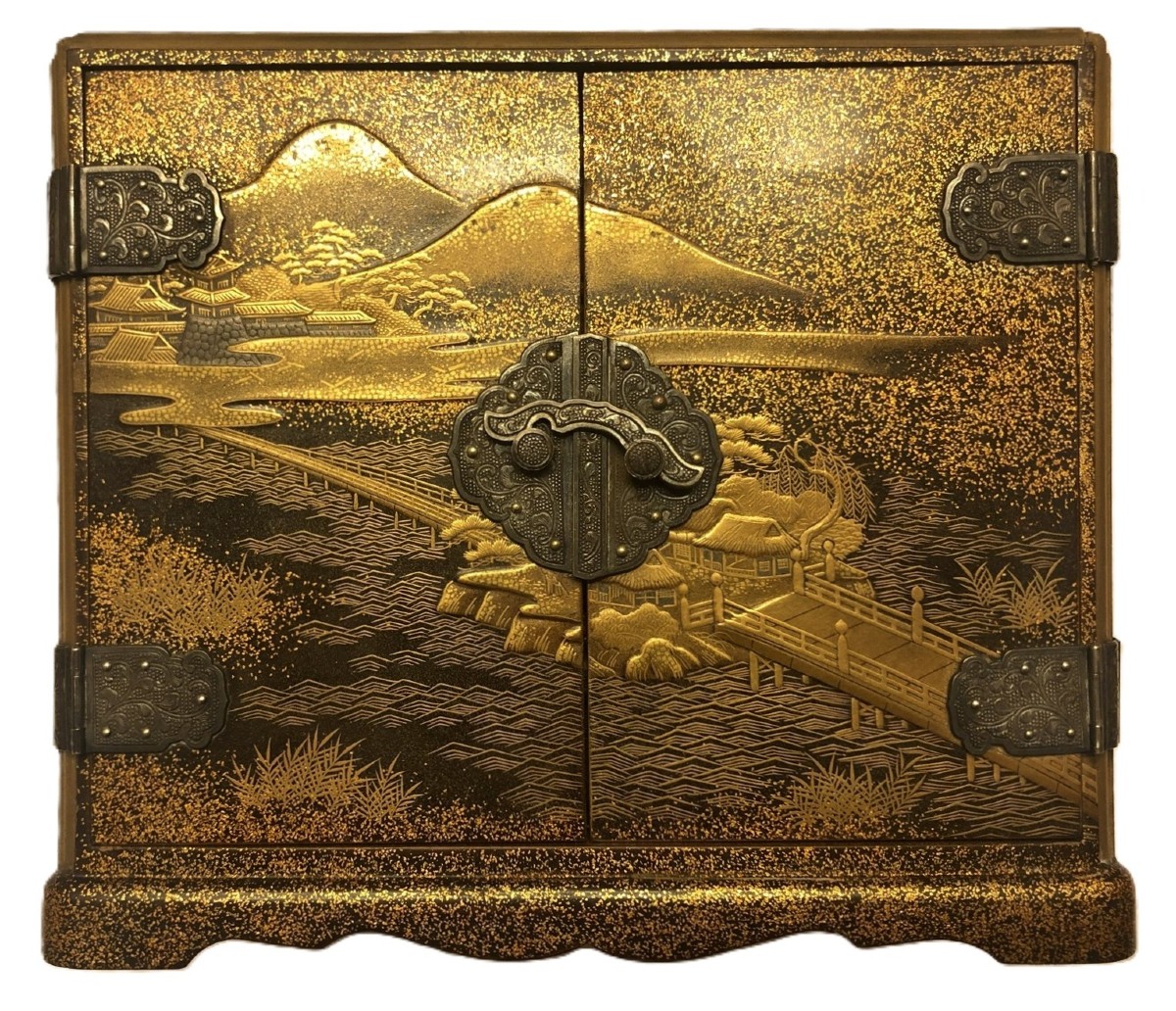
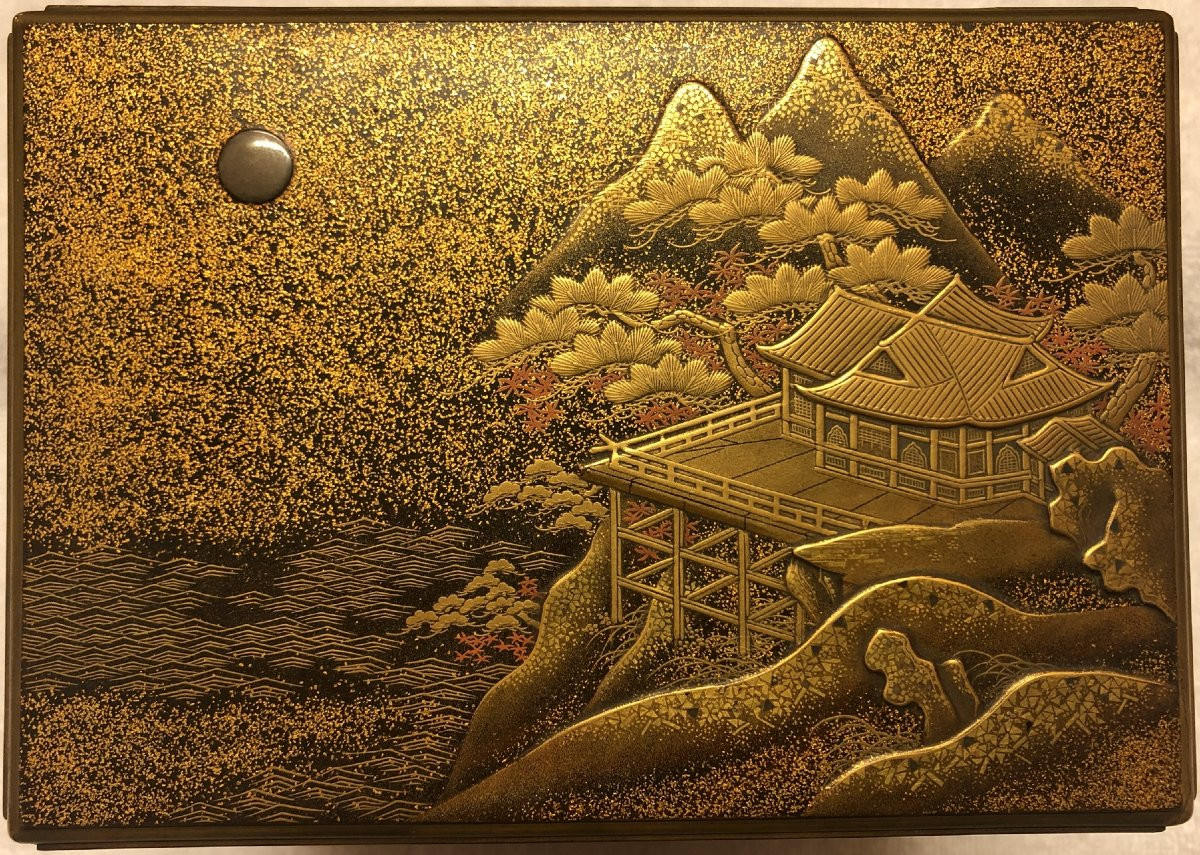
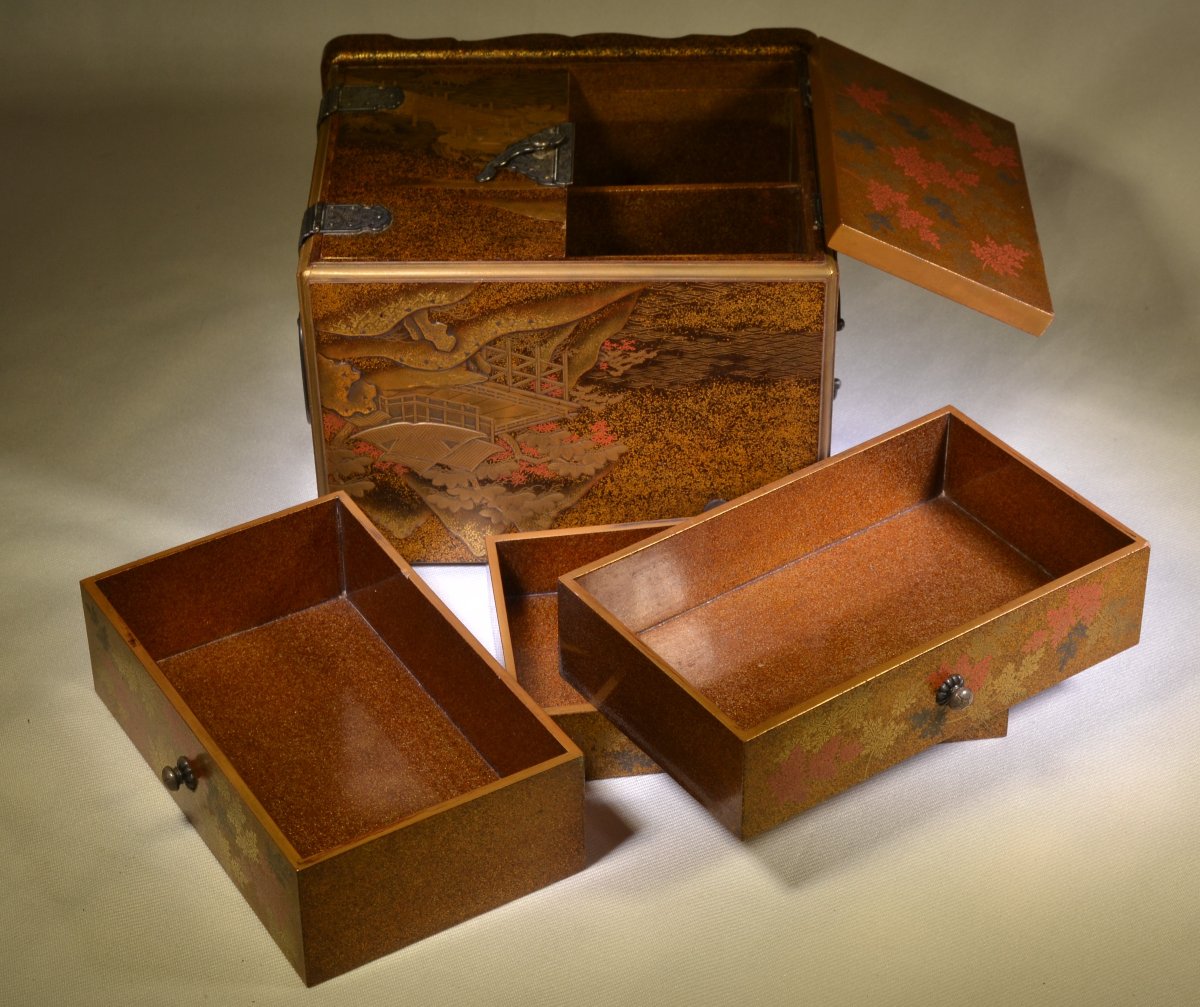
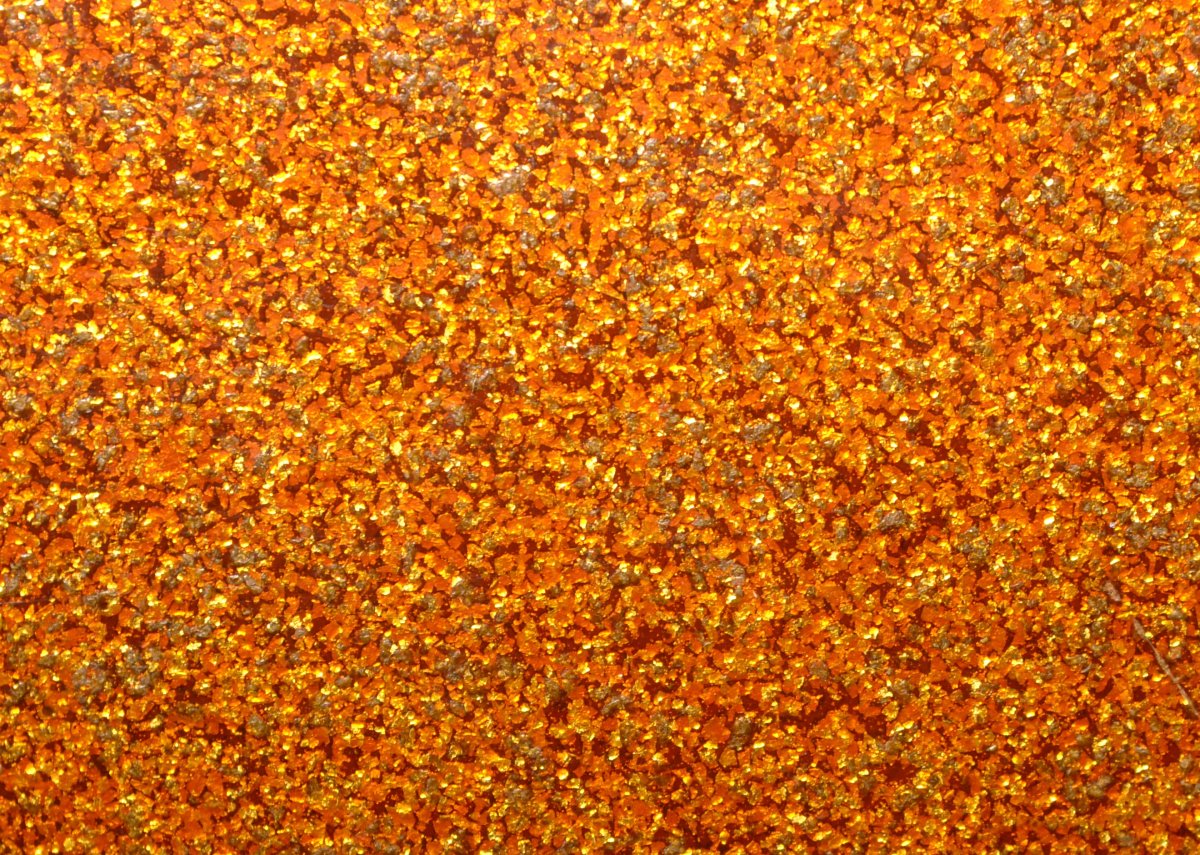
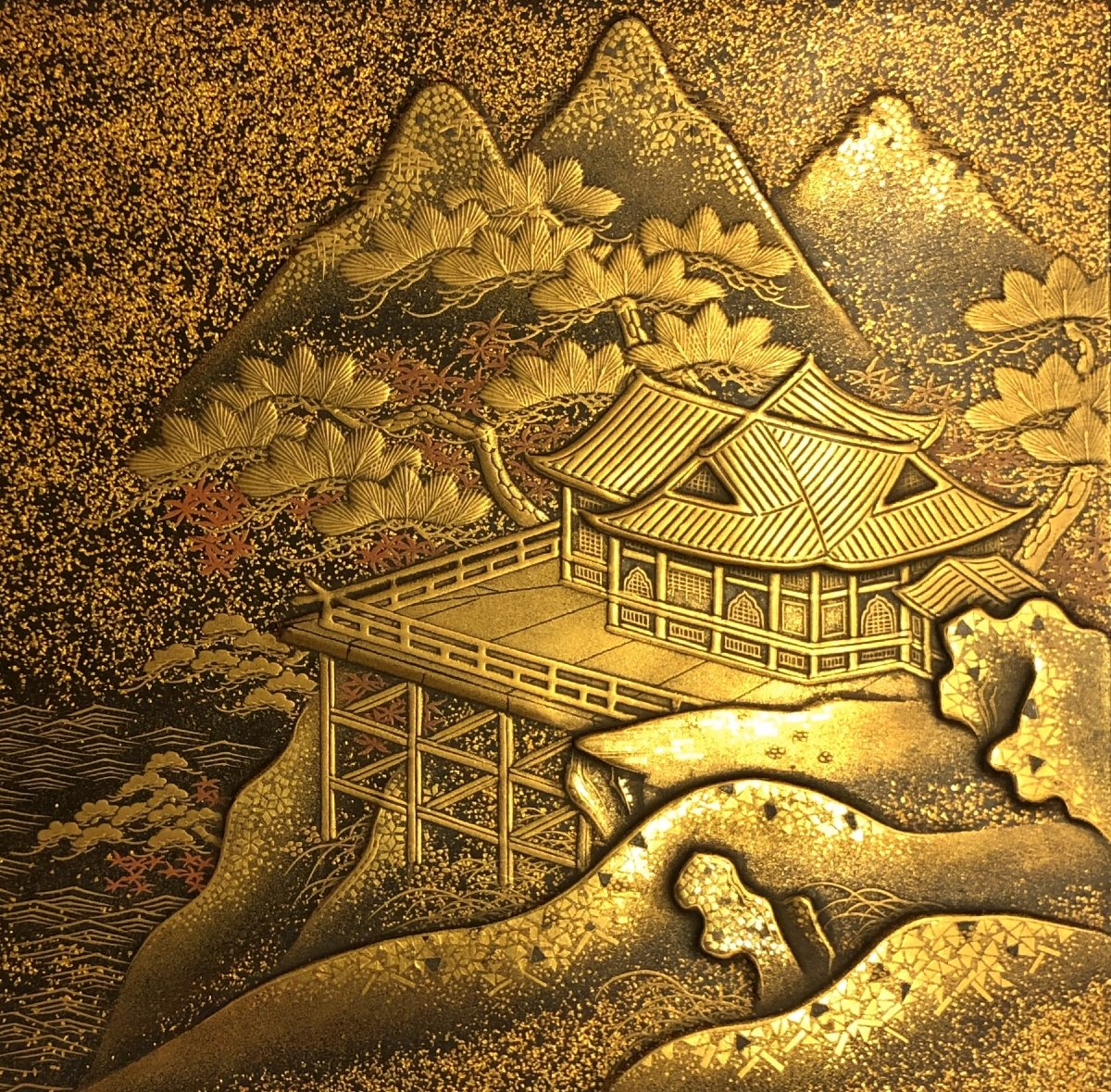
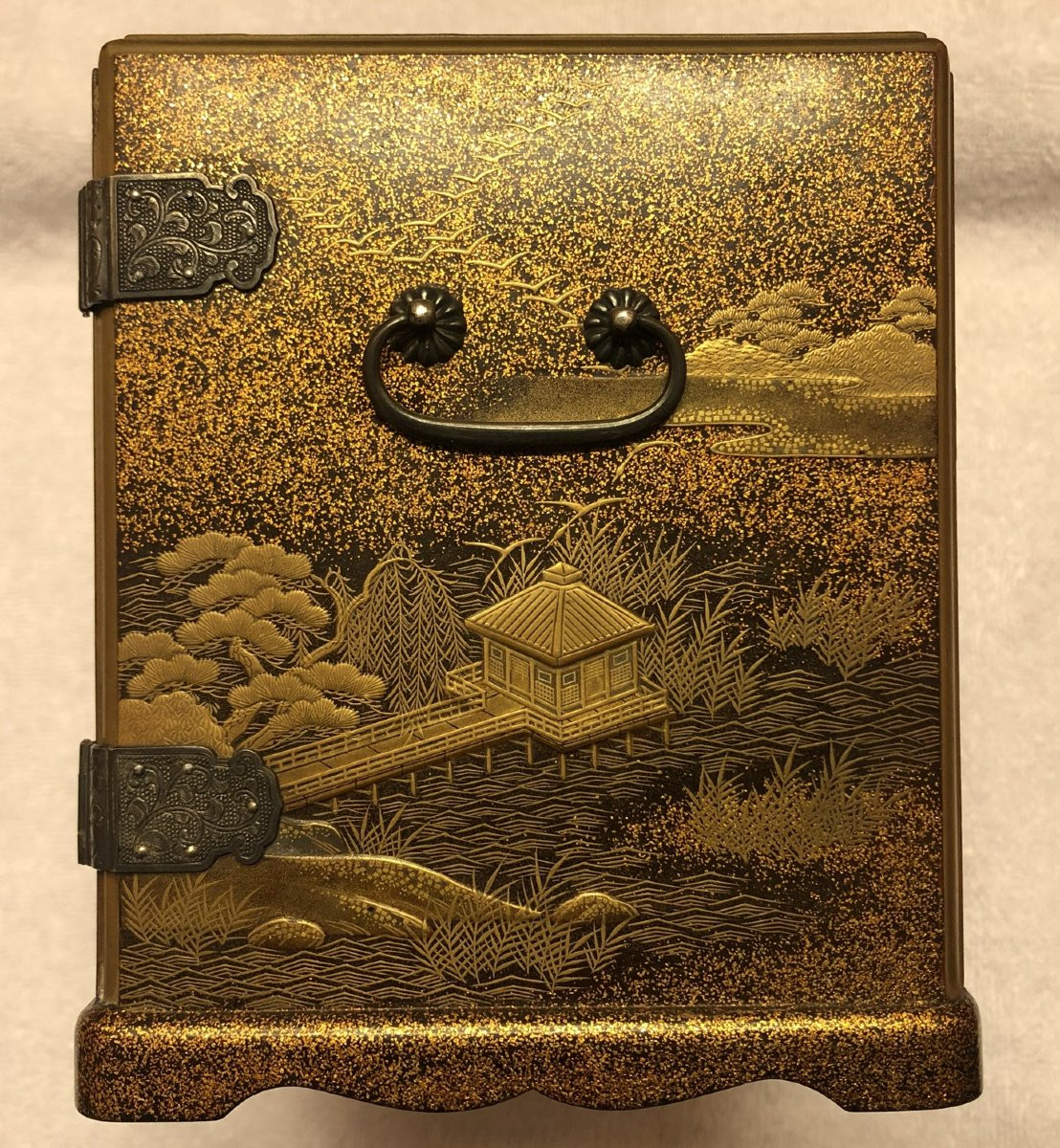
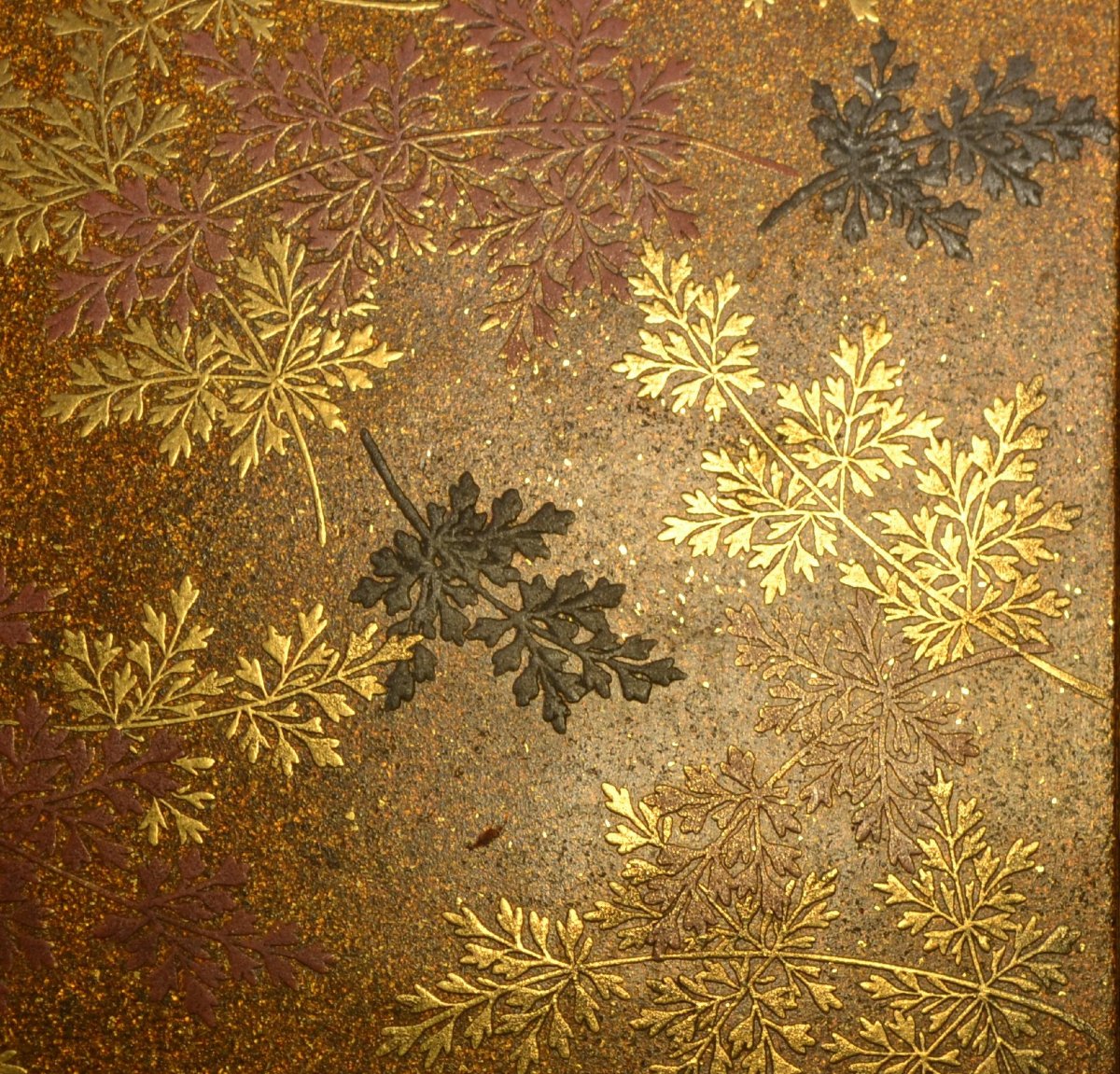
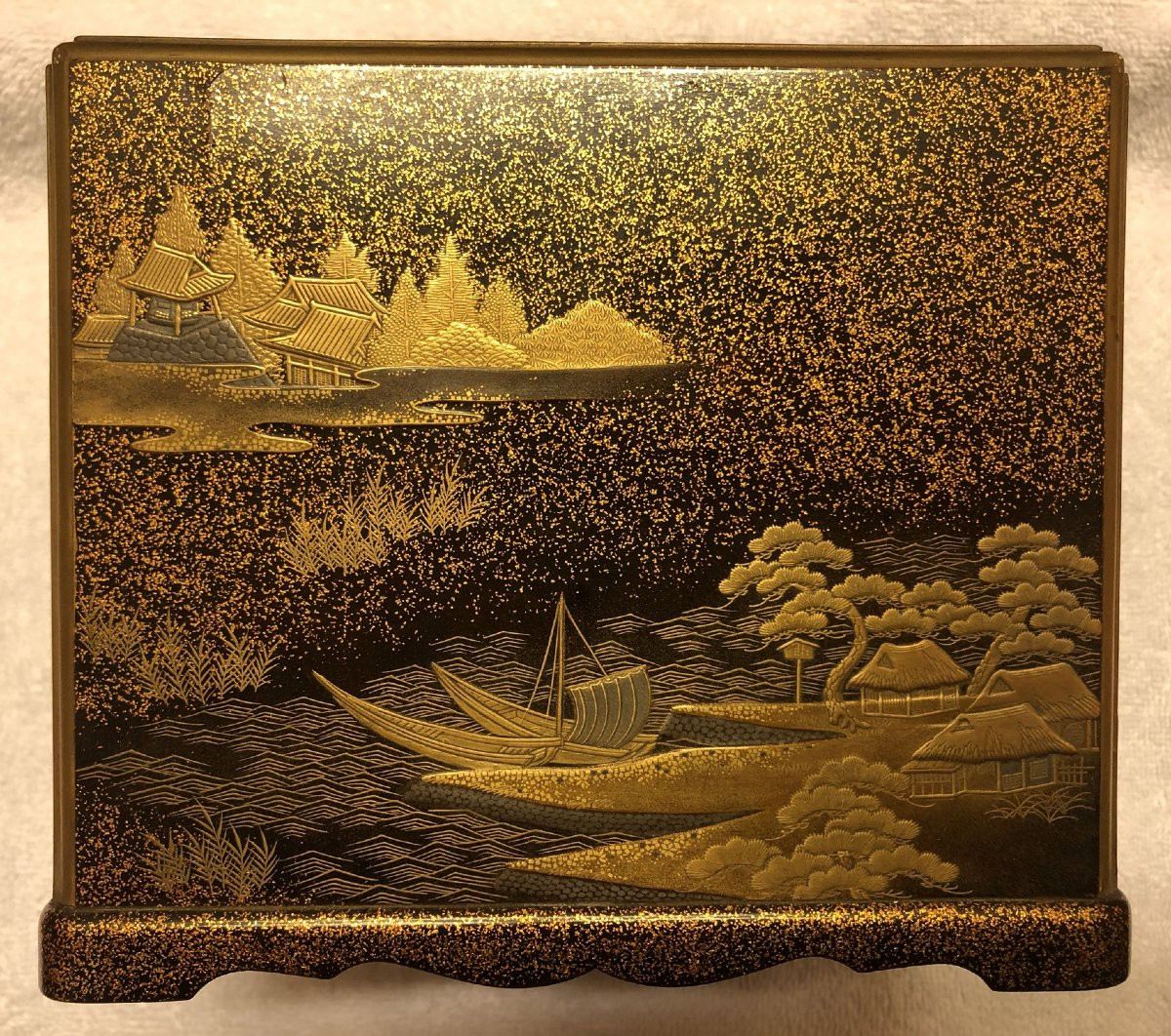
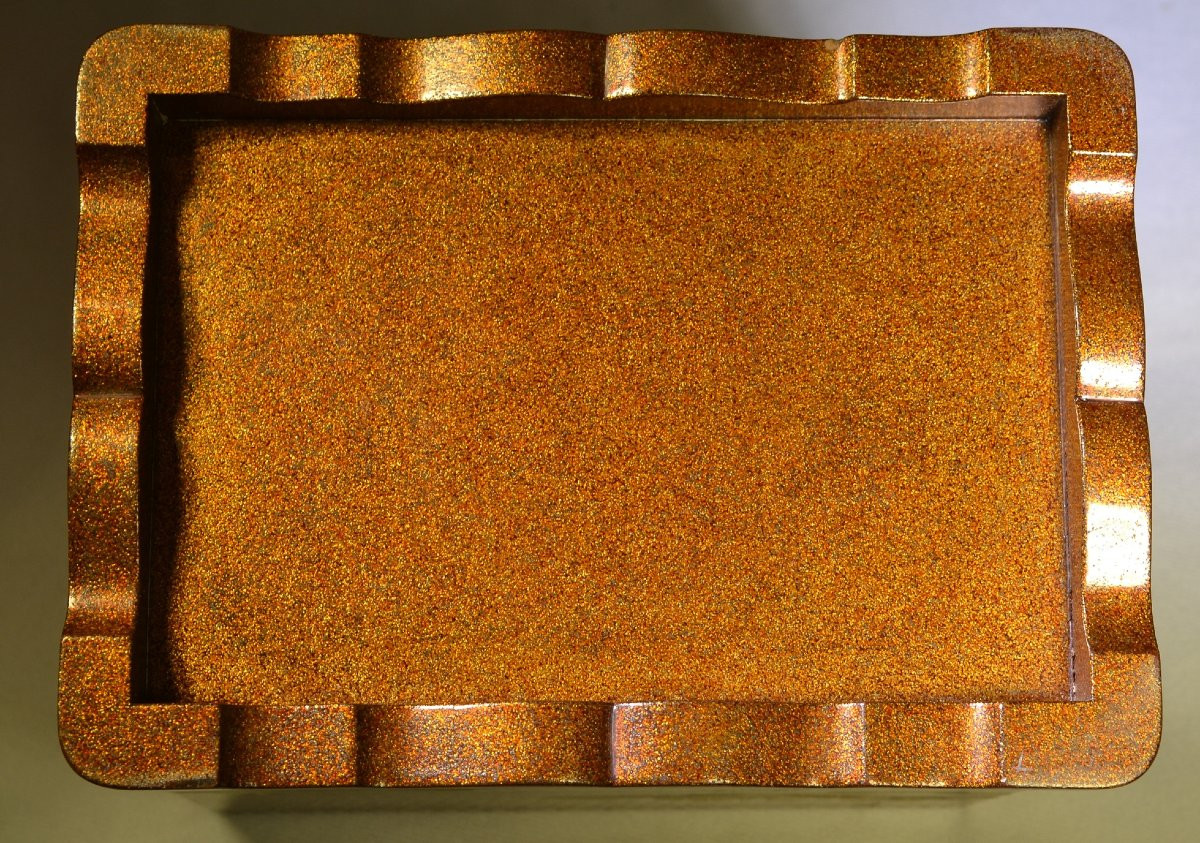
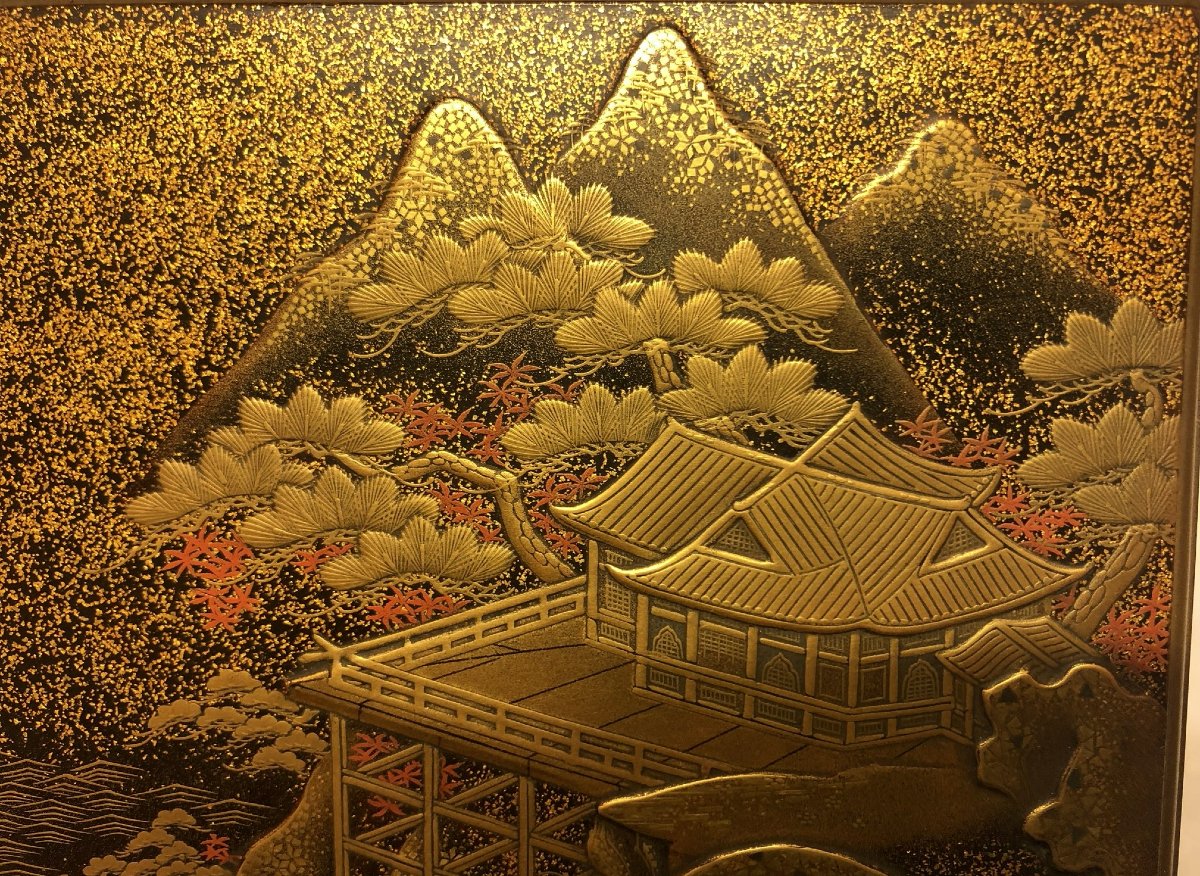
A small urushi lacquer cabinet with two doors and three drawers. The decoration depicts a lakeside landscape, including a temple, bridge, and mountains, rendered in maki-e lacquer dusted with gold and inlaid with silver and gold mosaics (kirikane) on a nashiji (aventurine) background. The kirikane are remarkable for their diversity of form, as they are not all square as is typical; the silver ones have naturally darkened with age. The interior is decorated with stylized fern motifs (shida) in discreet polychrome maki-e on a nashiji background. This understated fern motif is of remarkable quality; this discretion, highly valued by scholars, suggests that this kodansu was created for a Japanese aesthete. For the European market, the decoration would have been ostentatious and intended to impress. This fern motif is often found in Zen settings and lends itself to meditation. While Meiji lacquer impresses, Edo lacquer is something to be earned. The mounts are made of finely crafted silver, contributing to the cabinet's luxurious character. Dimensions: 153 × 138 × 140 mm. Perfect for a Kodansu, neither too large nor too small. Good condition, no restoration. Some minor wear and cracks are visible in the photos. Late Edo period, late 18th – early 19th century. The shape, quality, age, and remarkable state of preservation make it an exceptional object worthy of the finest collections.
24 000 €
Period: 18th century
Style: Asian art
Condition: Good condition
Material: Gold
Length: 153mm
Width: 138mm
Height: 140mm
Reference (ID): 1703822
Availability: In stock
Print