

Cornelis De Baellieur I (1607–1671) (circle Of) - Iconography Surrounding Saint Begga
Artist: Circle of Cornelis De Baellieur I (1607–1671)
Title: Iconography Surrounding Saint Begga
Medium: Oil on canvas
Dimensions: 104 × 105 cm; framed: 121 × 122 cm
Style: Flemish Baroque
Signature: Unsigned
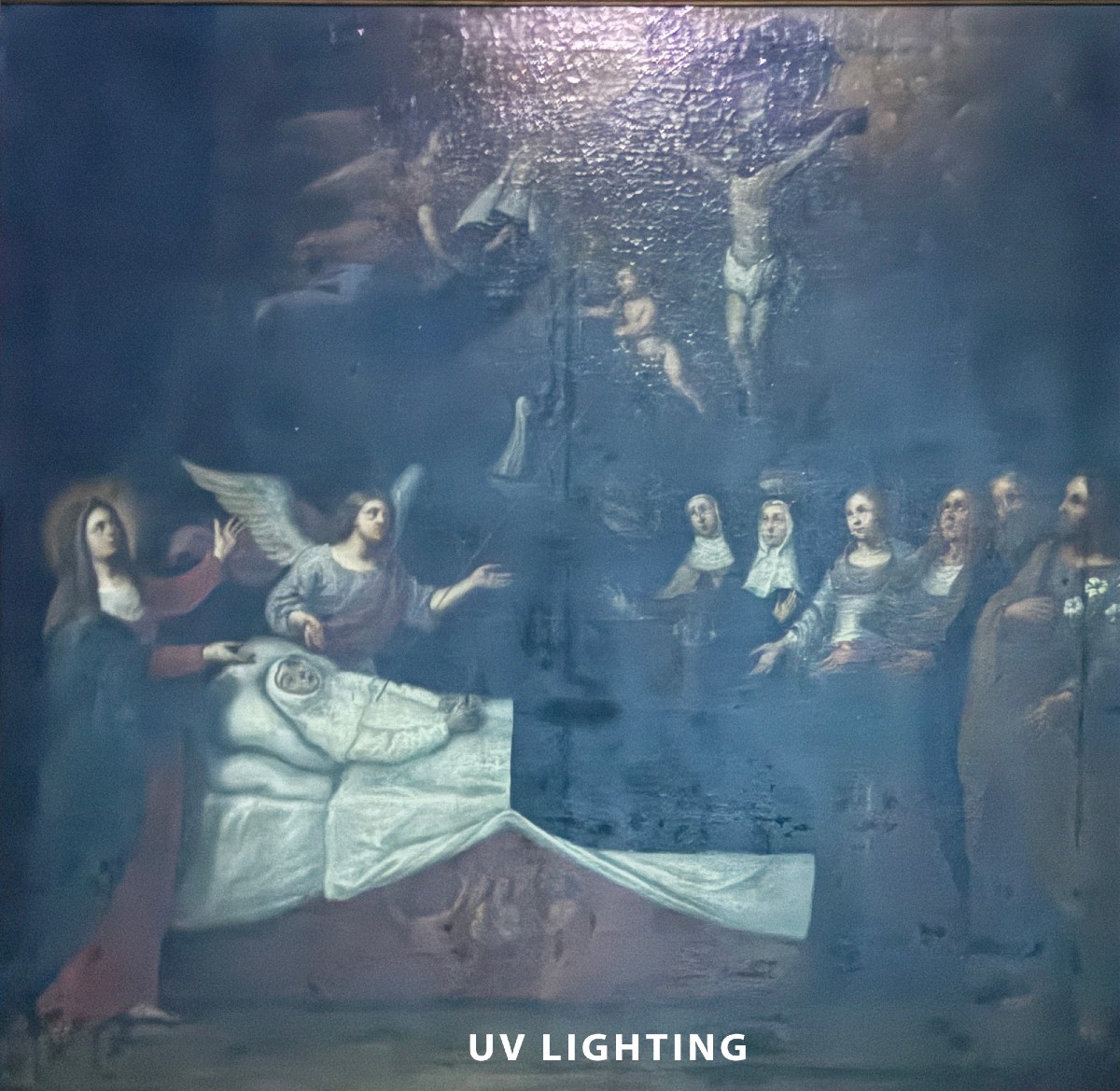
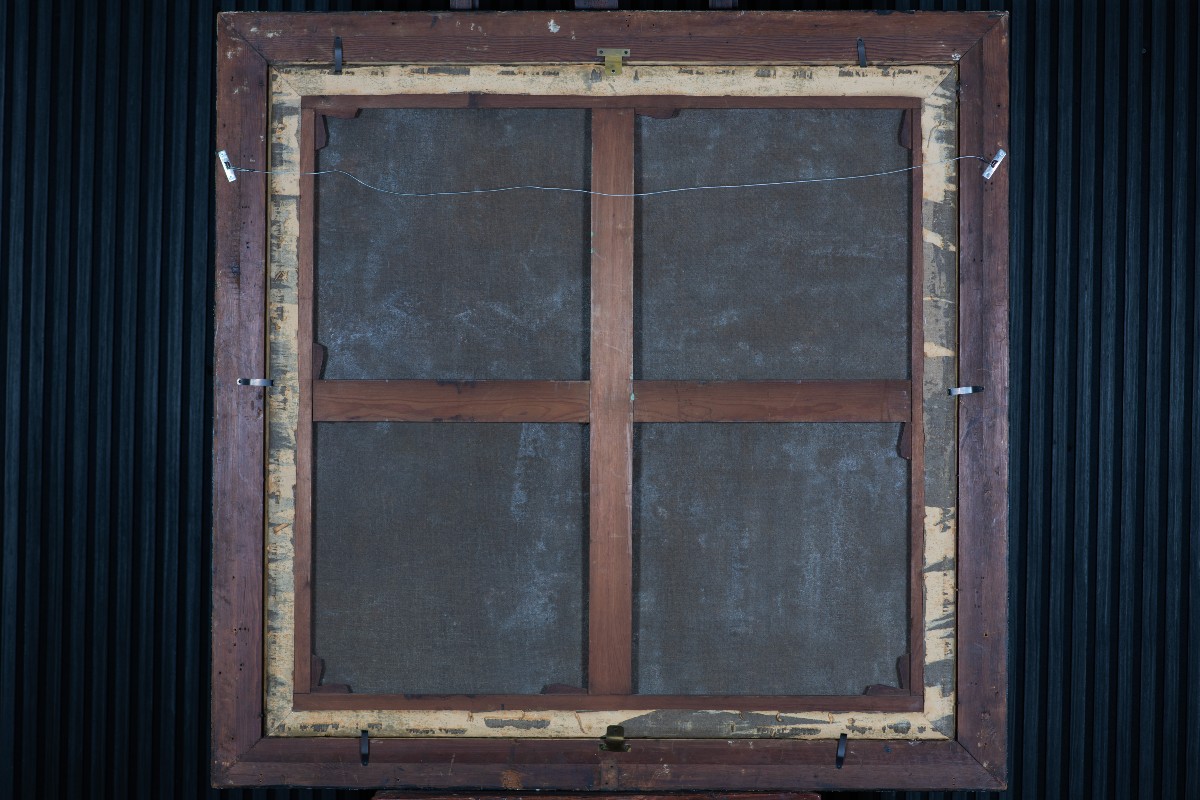
Condition: Relined canvas; earlier restorations visible under UV light
Notable details: Likely a devotional and didactic iconographic program centered on Saint Begga and Beguine spirituality; no secure connection to a specific beguinage can presently be established
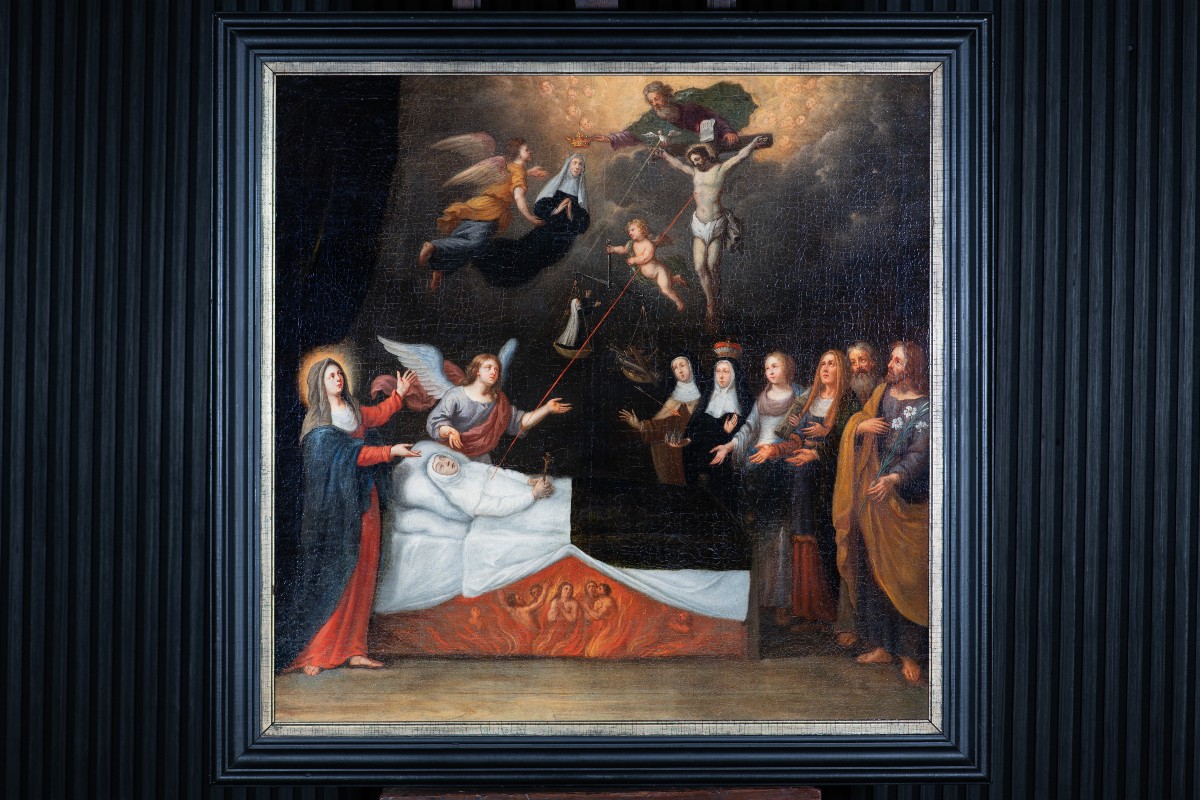
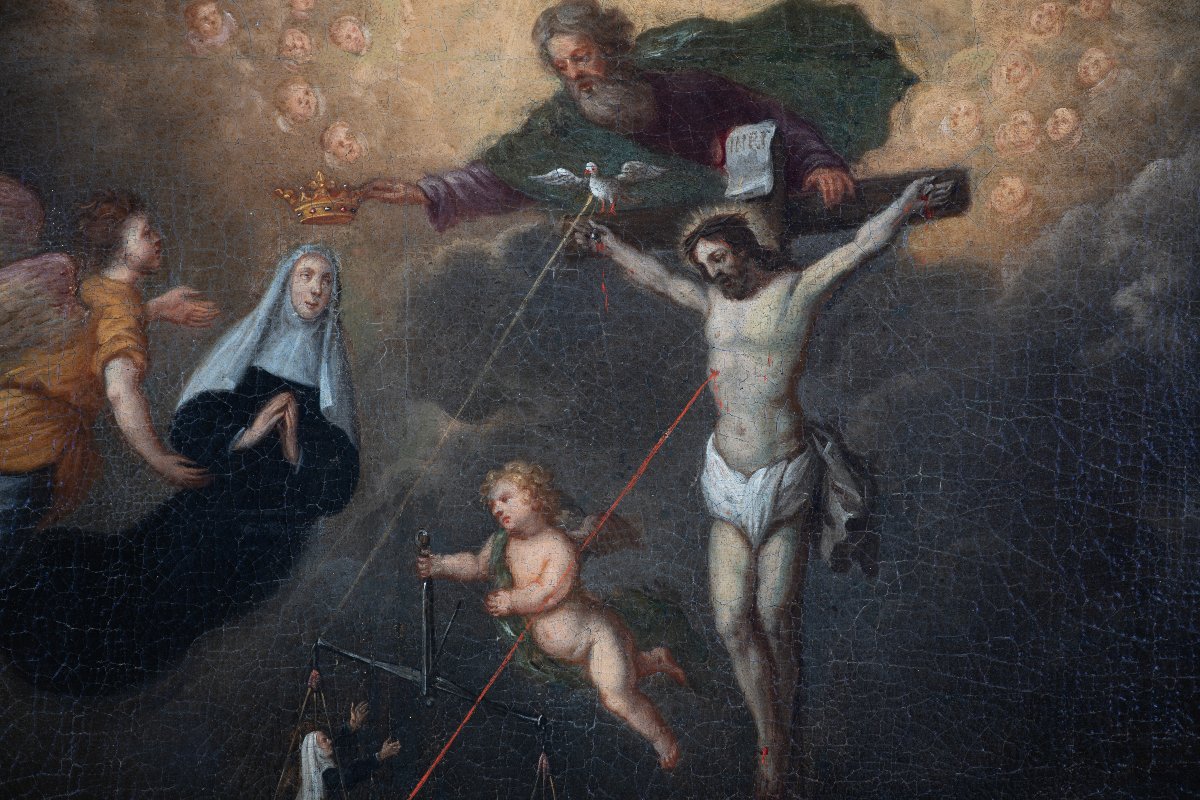
IntroductionThis large, nearly square composition is a compelling example of religious painting from the Southern Netherlands in the Baroque tradition. The work unites deathbed devotion, saintly intercession, purgatorial theology, and the promise of heavenly redemption within a single, coherent visual field. In terms of style and iconographic structure, it aligns convincingly with the circle of Cornelis De Baellieur I, an Antwerp master active in the seventeenth century.
The Artist and His ContextCornelis De Baellieur I (Antwerp, 1607–1671) belongs to the Antwerp artistic milieu of the Flemish Golden Age. Admitted as a master in the Guild of Saint Luke in 1626, he is associated with religious imagery and finely executed compositions for a learned and devout audience.
In the present case, the designation “circle of” is methodologically sound: the painting shows strong affinities with that milieu, yet in the absence of a signature and continuous provenance, a definitive autograph attribution is not currently supportable.
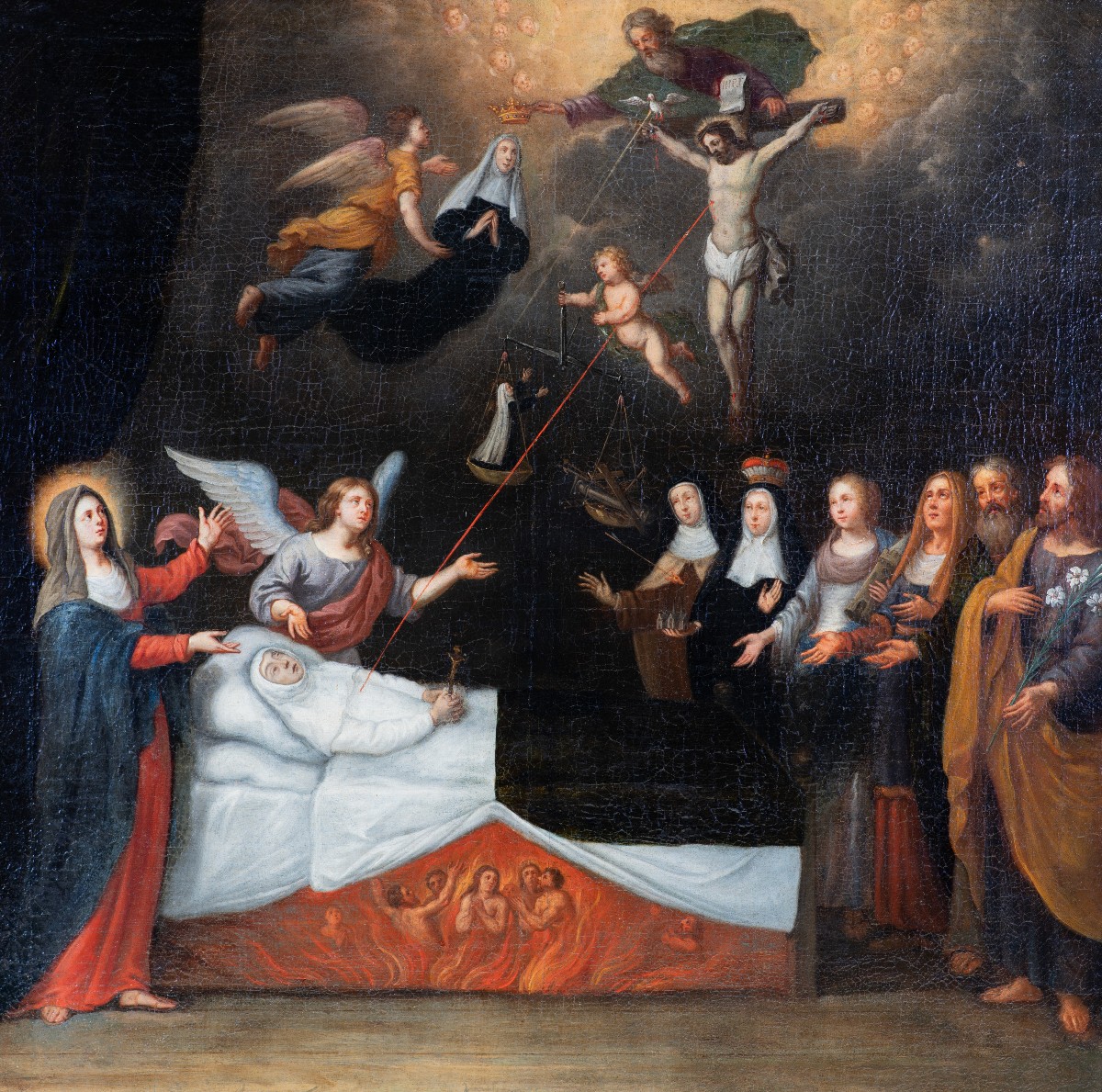
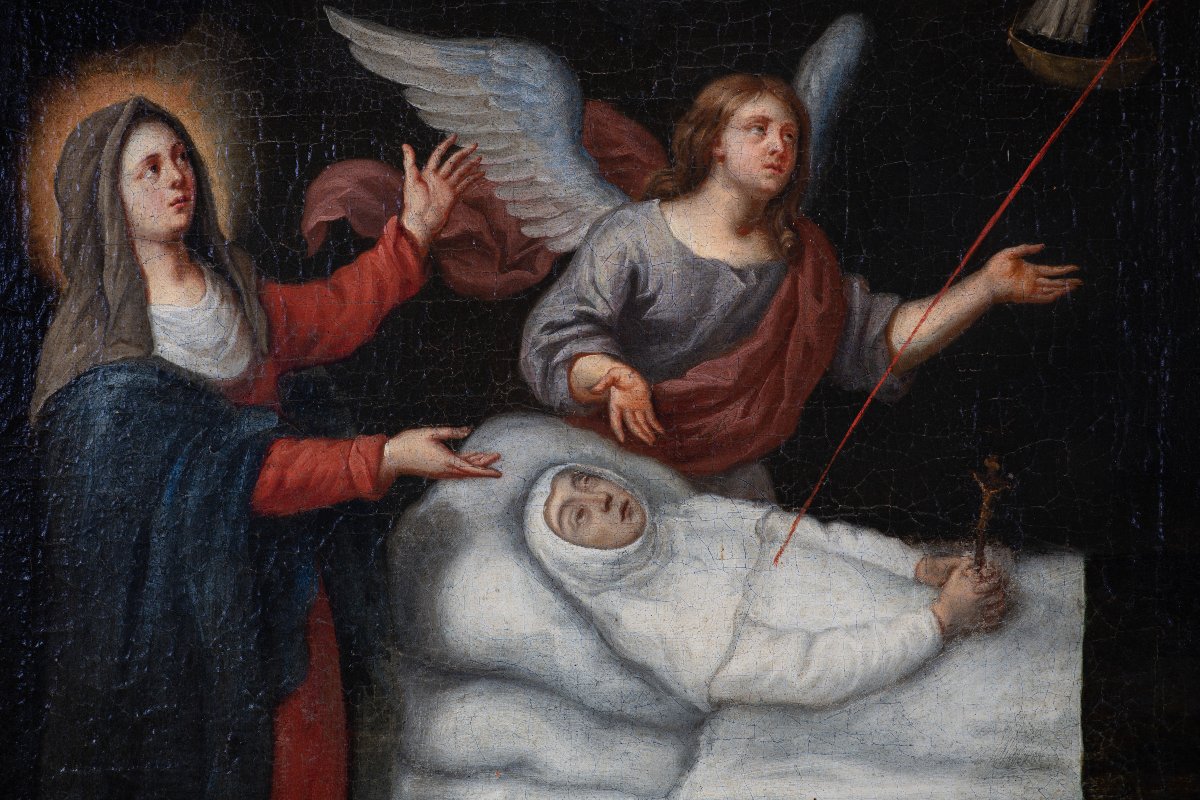
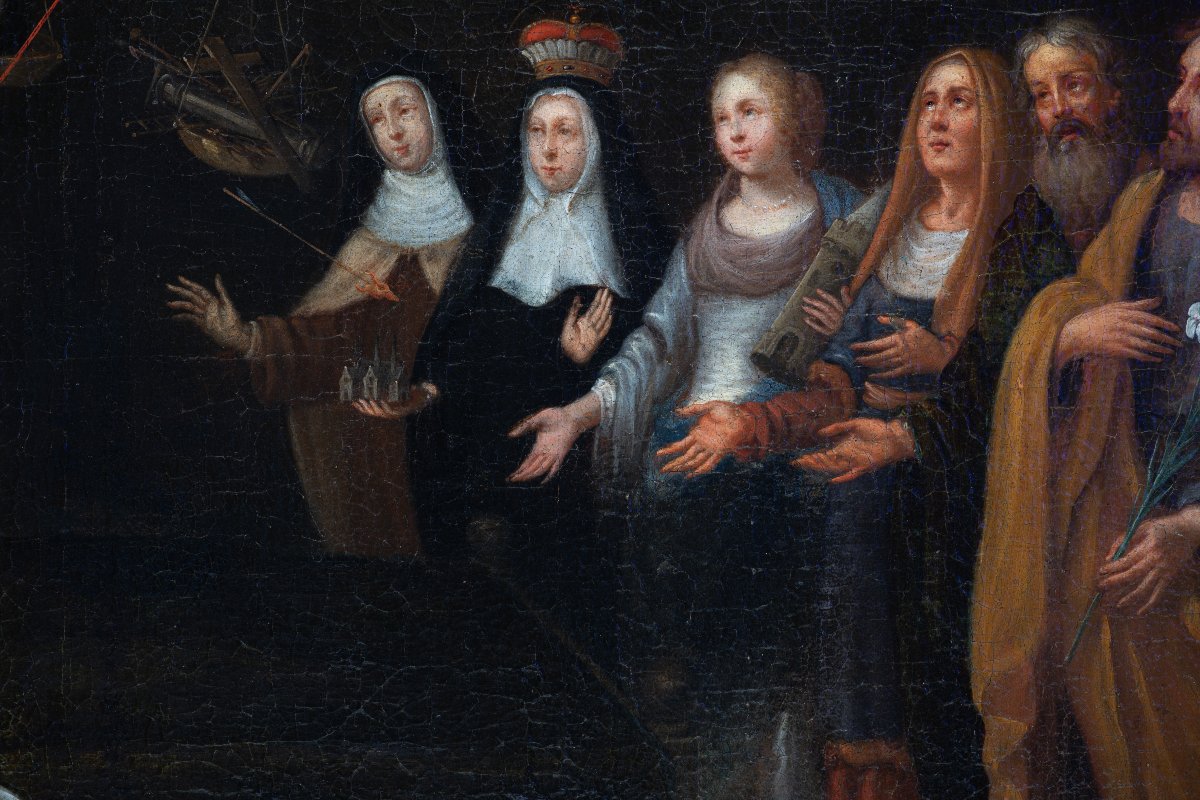
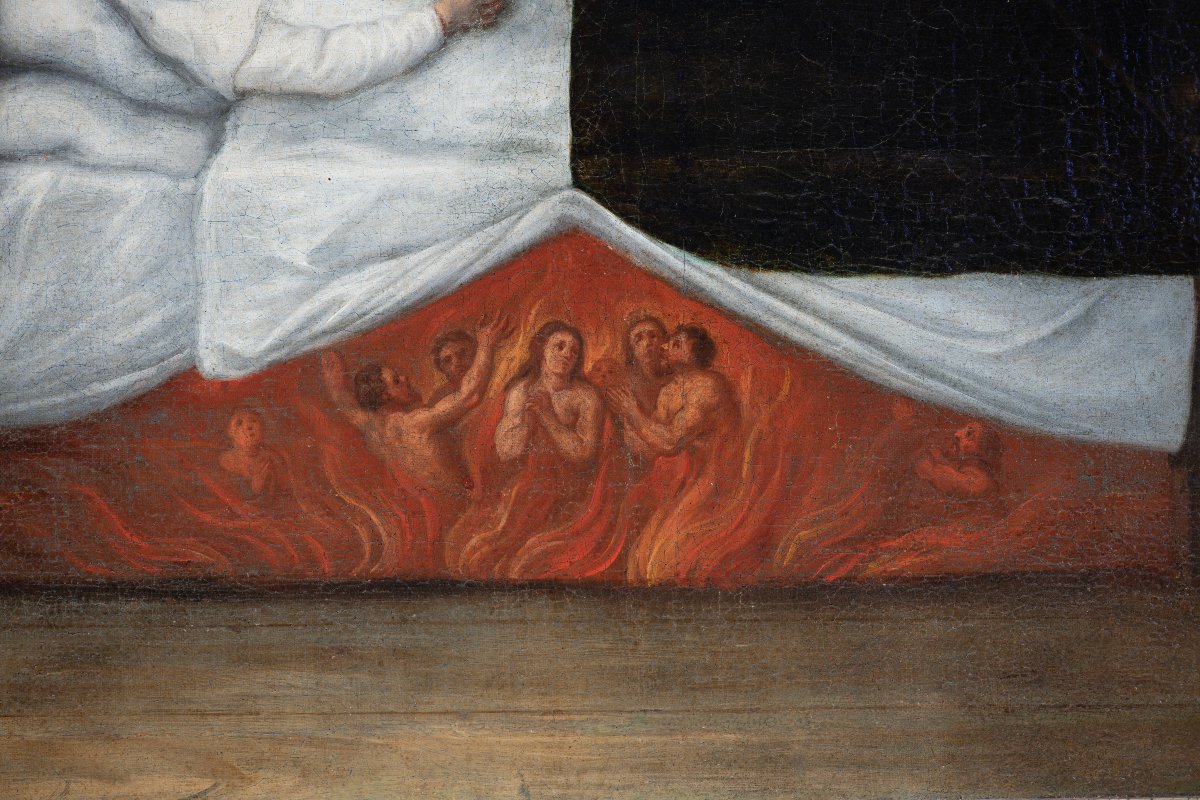
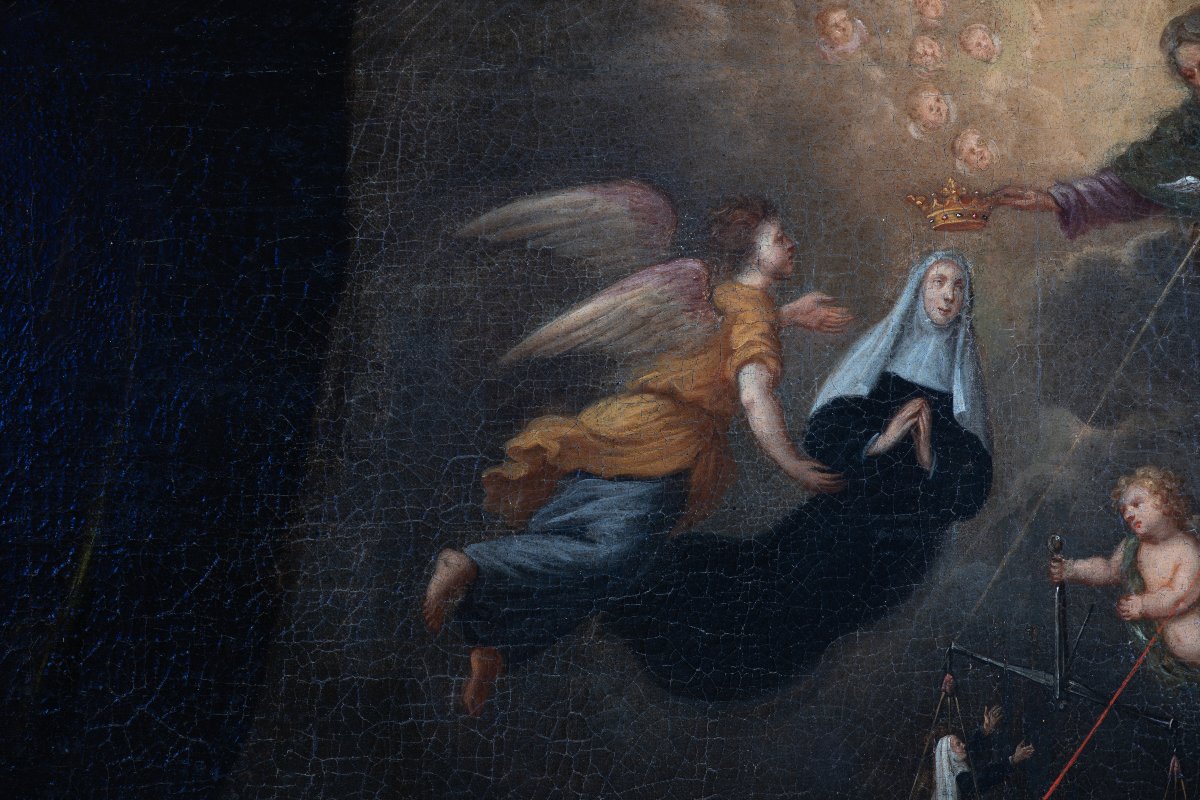
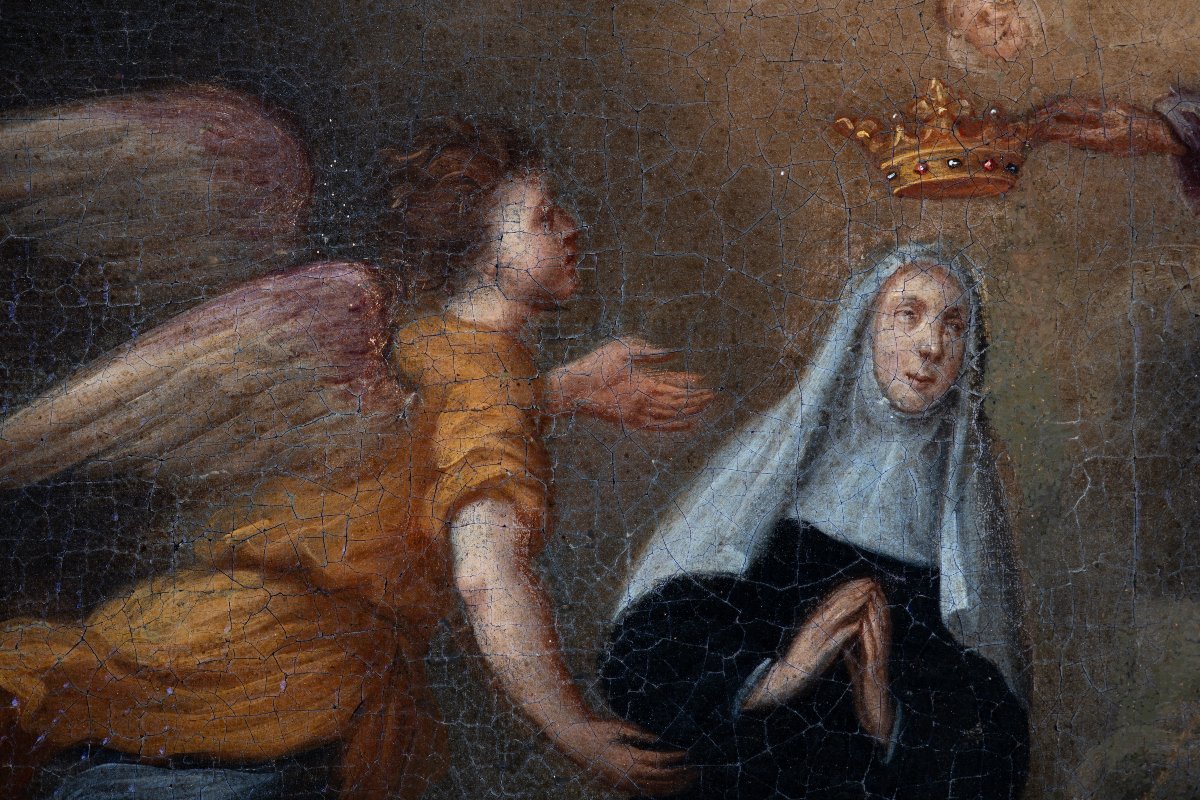
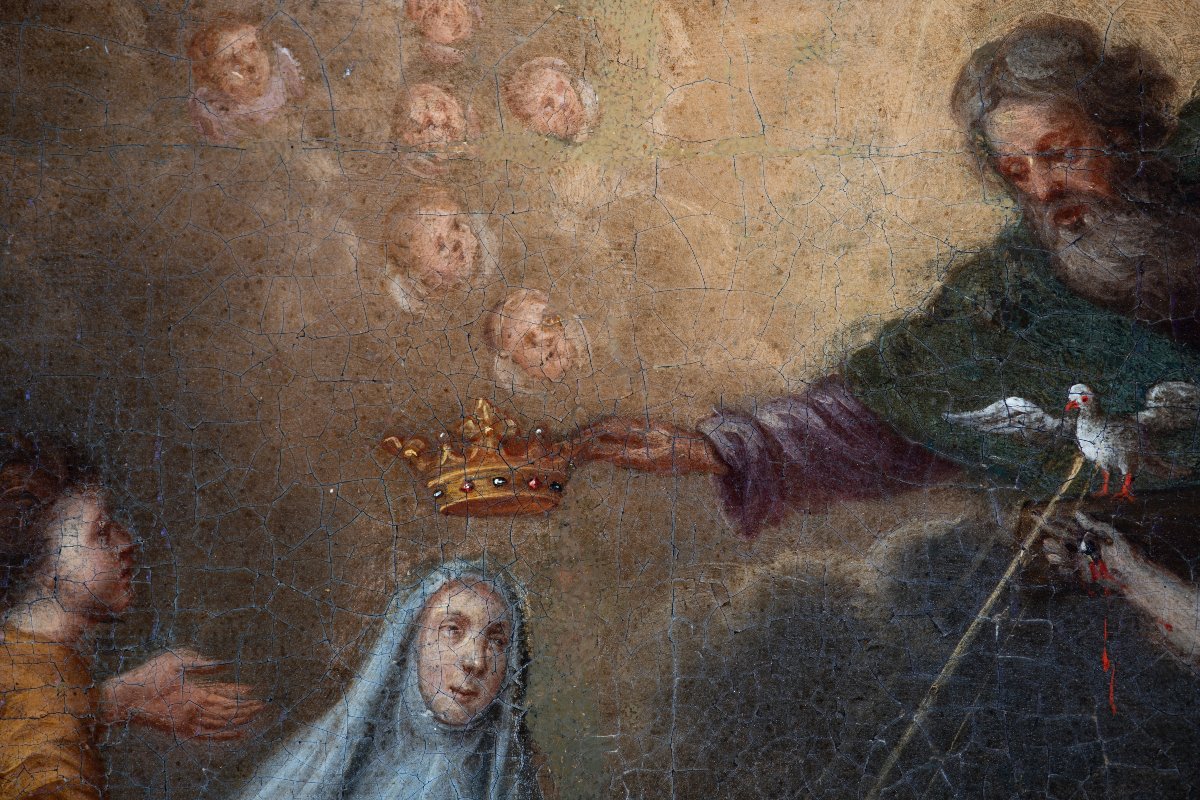
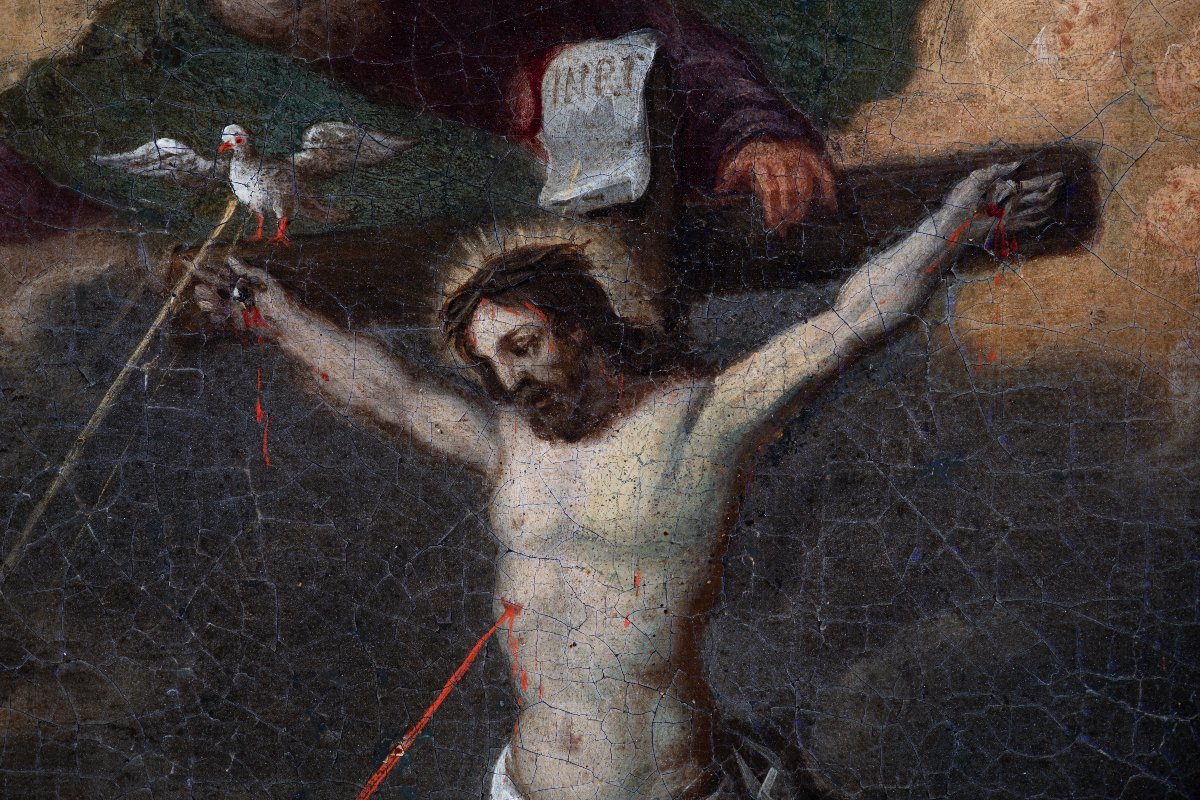
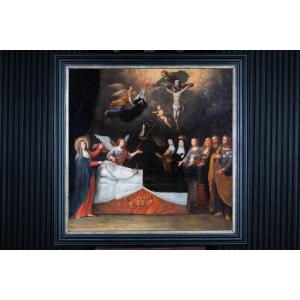
Subject and Iconographic ReadingThe scene unfolds as a visionary moment at the threshold of death. At the center lies a veiled religious woman in white habit, suspended between earthly life and salvation. Around her, mediating figures—an angel and saints—guide the soul’s passage, while the upper register opens onto the celestial realm, including Christ and symbols of judgment tempered by mercy.
The lower zone, showing souls in flames, refers explicitly to Purgatory. This is not treated as a merely punitive image; rather, it visualizes the efficacy of intercession, prayer, and hope of redemption. The vertical axis—from purgation below to glory above—structures the painting’s theological logic.
The group at right—Begga, Barbara, Anne, Joachim, and Joseph—gives the composition a precise devotional and genealogical framework. The presence of Saint Begga strongly supports a Beguine context: the image could have functioned as an exemplar of piety, contemplation, and perseverance in religious life. The hypothesis of a broader cult-promotional setting remains plausible, but should remain a careful hypothesis in the absence of decisive documentary evidence.
CompositionThe painting is organized in three clearly legible registers:
Earthly register: deathbed, witnesses, and human mortality.
Mediating register: angelic intervention and saintly intercession.
Heavenly register: fulfillment of salvation and divine ratification.
This layered structure combines immediate readability with substantial symbolic density. The viewer is led through an ascending sequence: suffering, prayer, purification, and hope.
Technique and Pictorial ExecutionExecuted in oil on canvas, the work combines relatively smooth paint handling in faces and hands with more atmospheric treatment in the dark background and cloud passages. Notable features include:
targeted highlights on faces and gestures to establish narrative hierarchy;
effective chromatic contrasts (white, red, blue, and golden accents) that anchor iconographic meaning;
a dark ground that projects the figures forward and heightens the visionary atmosphere.
Its monumental, almost square format reinforces the work’s devotional presence and display impact.
Stylistic Position in Art HistoryThe painting belongs fully to the Flemish Baroque, with emphasis on narrative clarity, devotional function, and affective persuasion. Rather than relying on excessive theatricality, it favors a structured religious rhetoric that is both intelligible and spiritually charged.
Comparable artists: Frans Francken II, David Teniers II, Erasmus Quellinus II, Johann König, Carlo Saraceni.
Condition and ConservationThe canvas has been relined, an earlier structural intervention intended to stabilize the support. UV examination reveals older retouching and restorations, a common condition in works of this period and part of their material history. Despite these interventions, the principal iconographic zones—main figures, celestial vision, and purgatorial register—remain clearly legible and visually effective.
ConclusionThis painting stands out for the coherence of its spiritual program, the control of its narrative structure, and the strength of its Flemish Baroque visual language. Its Saint Begga-centered iconography, the dramatic passage from death to redemption, and its stylistic proximity to seventeenth-century Antwerp religious painting make it a highly compelling work for collectors of early devotional art.
Given current evidence, attribution to the circle of Cornelis De Baellieur I remains the most accurate, responsible, and persuasive formulation.
Period: 17th century
Style: Renaissance, Louis 13th
Condition: Fully restored
Material: Oil painting
Width: 122cm
Height: 121cm
Reference (ID): 1703408
Availability: In stock