THIS OBJECT WAS SOLD
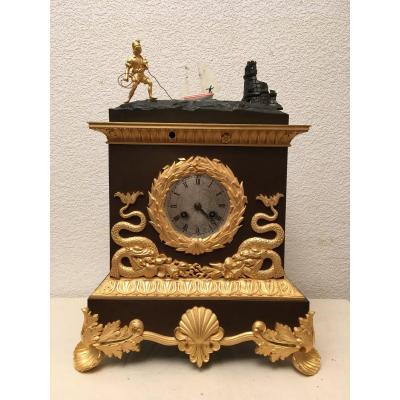
Gilt Bronze Clock - The Study Of Alexander The Great - Empire/restoration Period
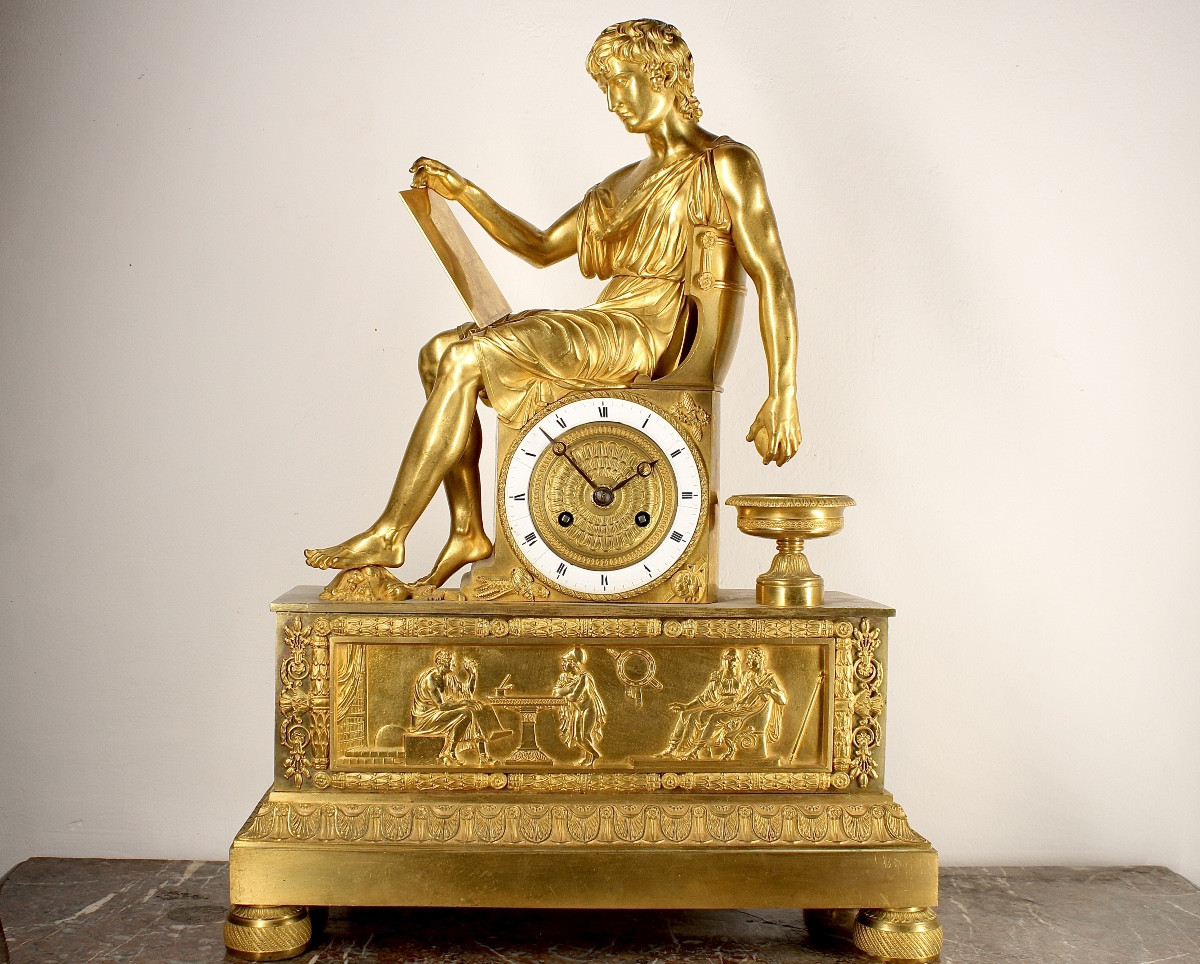
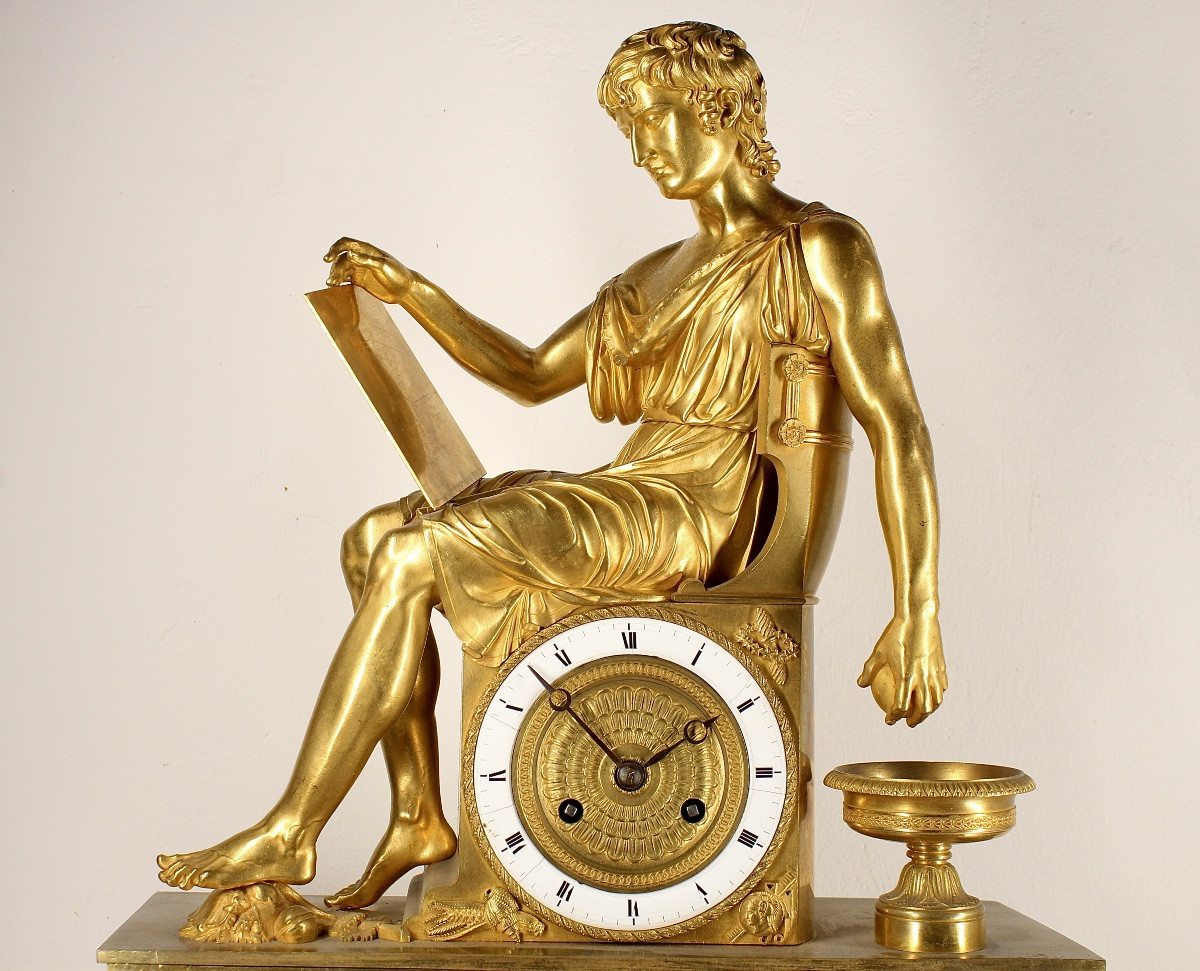
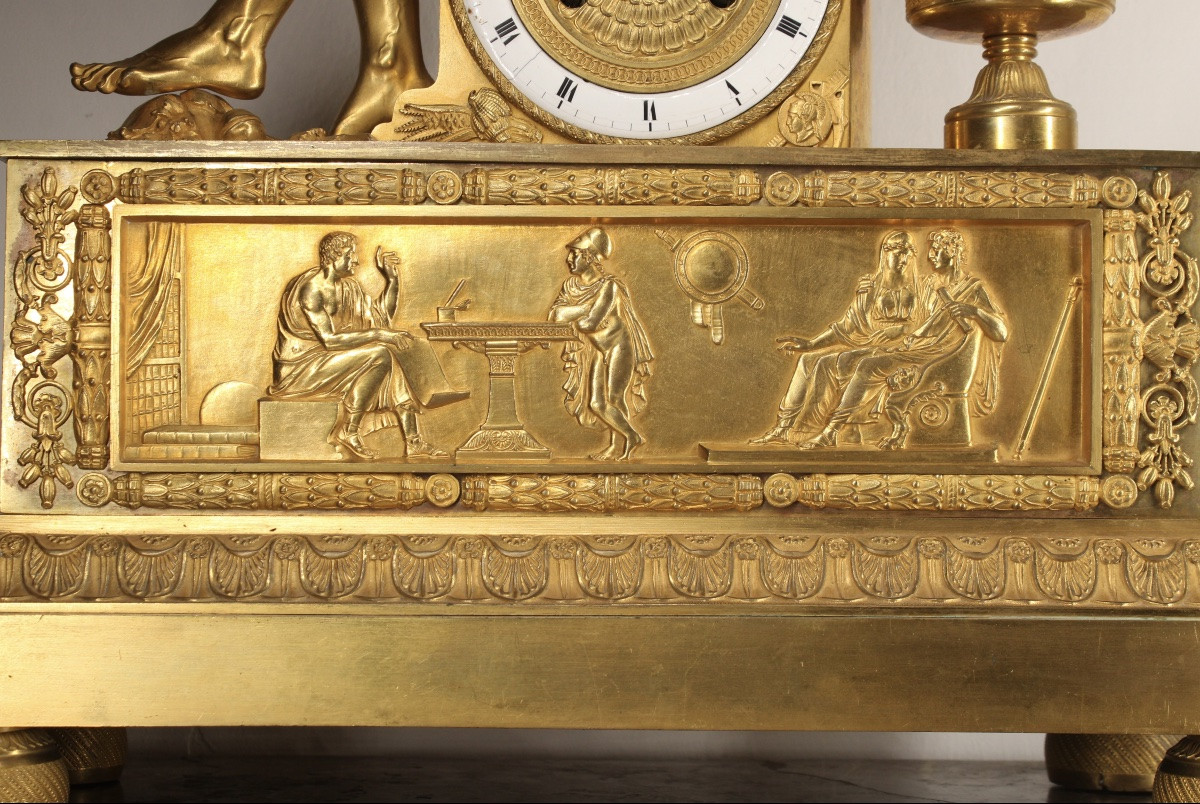
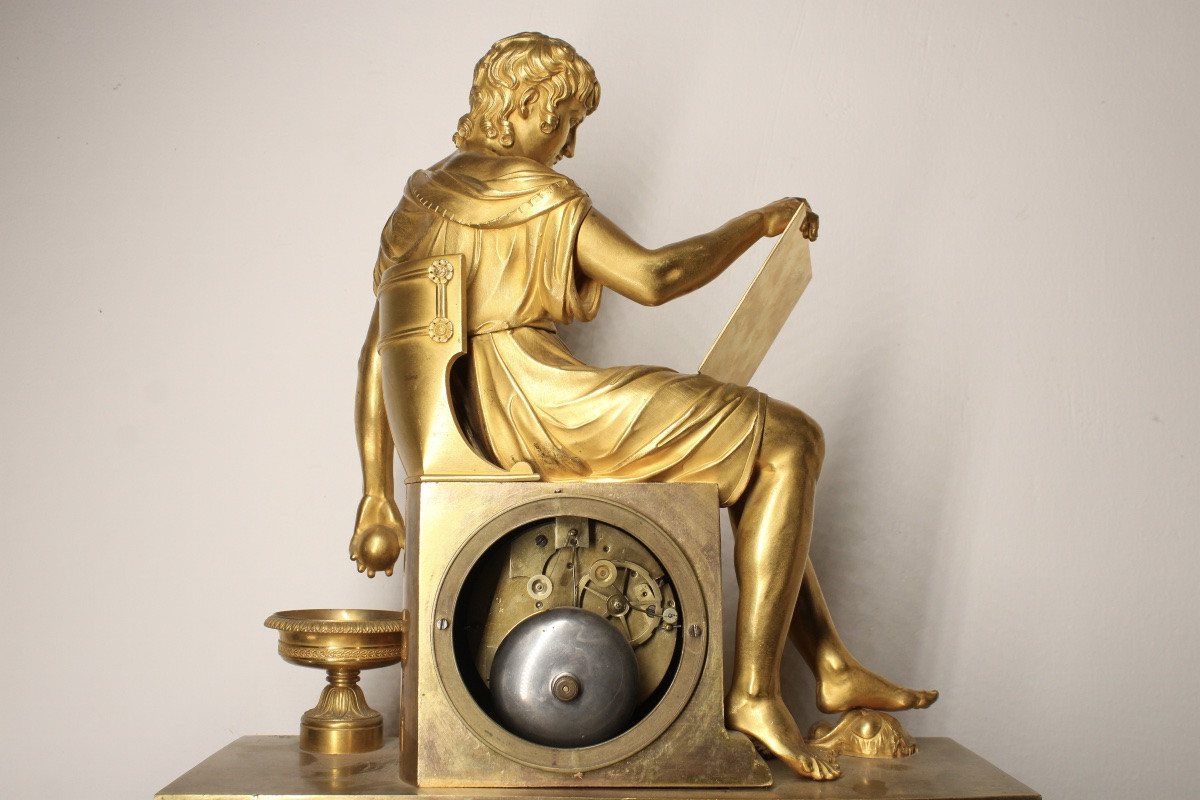
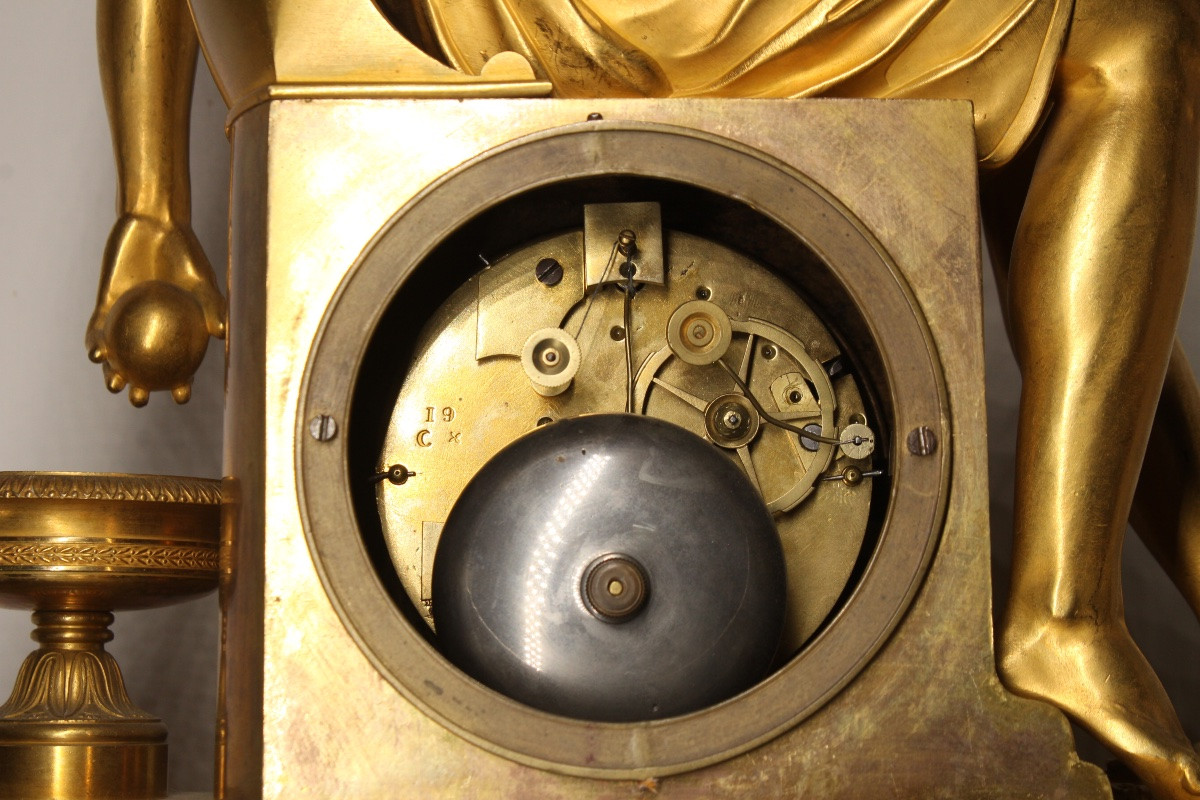
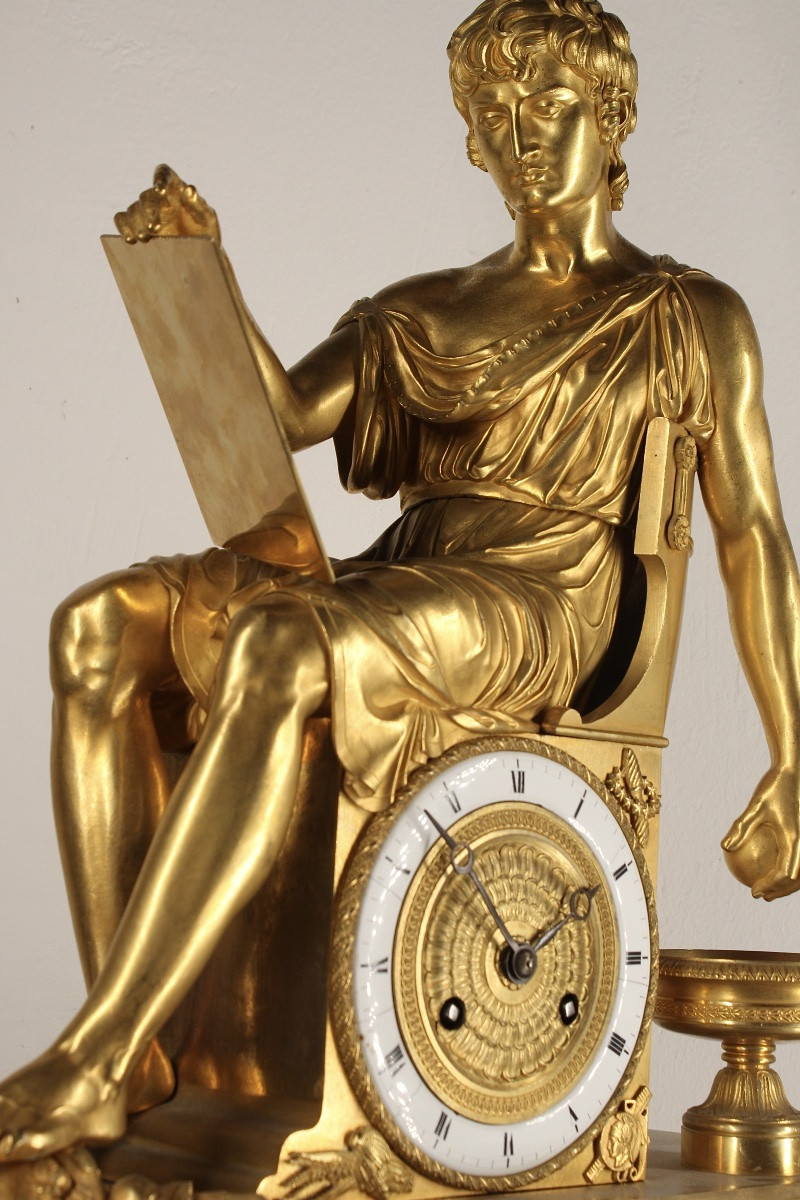
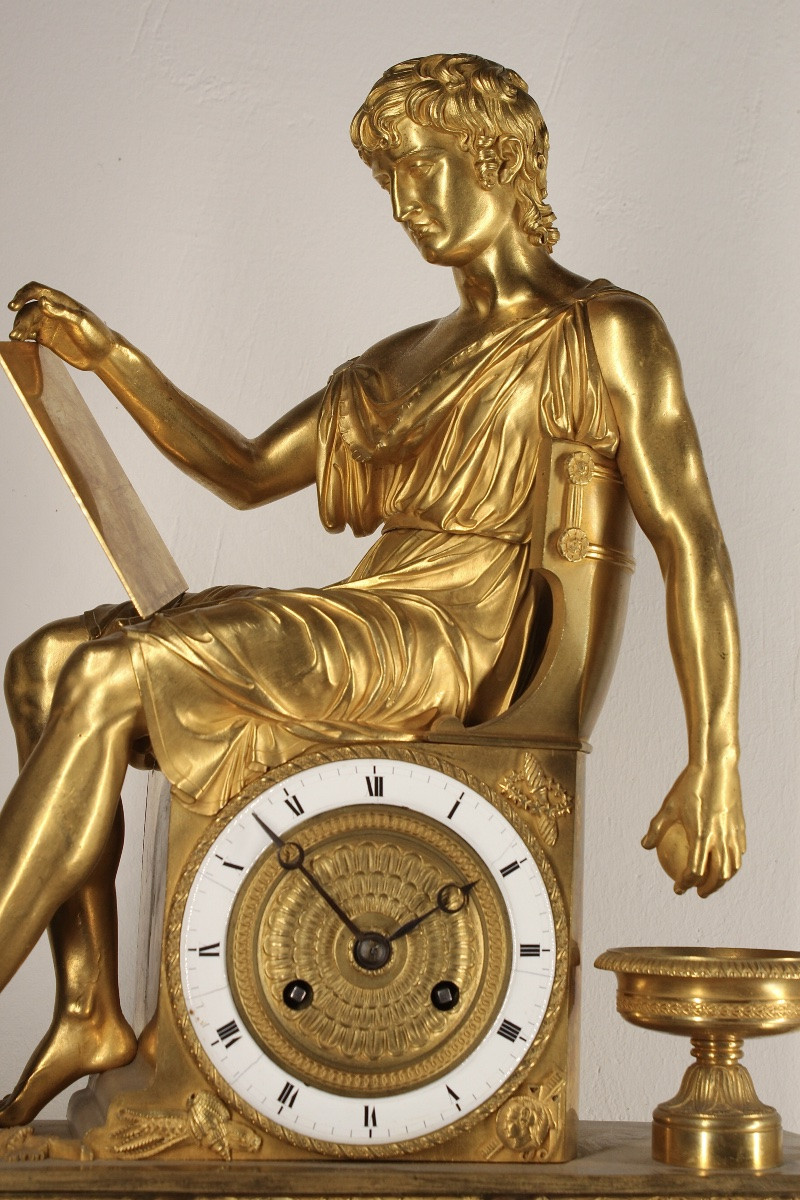
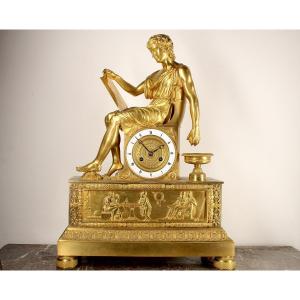


An important Empire/Restoration period gilt bronze clock depicting Alexander the Great in his study. Alexander is shown holding a bronze ball above a basin, an iconographic detail directly inspired by an ancient anecdote attributed to Aristotle. The clock rests on four chased, half-round feet supporting a stepped plinth set with a scene depicting Alexander studying Aristotle, surrounded by his parents Philip and Olympia. According to this tradition recounted by ancient authors, Aristotle used a ball held in his hand above a basin filled with water or empty to avoid dozing off during his long hours of study: at the slightest lapse in concentration, the ball would fall, and the noise or splash would immediately awaken him. In this clock, Alexander is intentionally depicted in the same manner as his teacher, repeating this symbolic gesture. This iconographic transposition underscores the intellectual lineage between the disciple and the philosopher, presenting Alexander as the direct heir to Aristotle's rigor and discipline. The piece features finely chiseled bronze work, combining matte and burnished mercury gilding, characteristic of high-quality productions from the Empire/Restoration period. The dial, harmoniously integrated into the composition, is fully in keeping with the Neoclassical aesthetic. A clock of considerable presence, with a scholarly subject rich in historical significance, ideal for collectors of figurative bronzes, ancient history, or ceremonial clocks. Height: 50.5 cm; Width: 39 cm. Pendulum and winding keys included. Minor hairline cracks on the dial; servicing recommended for proper operation.
Explore similar pieces and discover your ideal find:
Mantel Clocks